On this page
Last updated October 3, 2026. Terminal location, transport links, train services and attraction booking rules checked against operators’ notices and official sites. Note that the Campania Express tourist train is suspended from October 1, 2026 until further notice.
The Naples cruise port is the Stazione Marittima on the Molo Angioino, right in the city center of Naples, Italy. You can walk off the ship to Castel Nuovo in five minutes and Piazza del Plebiscito in about ten. With a normal port day, do Naples itself or Pompeii; Capri and the Amalfi Coast are tighter.
Naples is one of the few big Mediterranean cruise ports where the ship ties up in the middle of the city. There’s no shuttle bus to a distant container terminal and no hour-long transfer: you walk out of the terminal building and Castel Nuovo, a medieval castle with a moat, is across the road. The old center, one of the largest historic centers in Europe and a UNESCO World Heritage Site, starts a 20-minute walk away. That changes the whole calculation of how to spend your day.
Cruise lines will sell you excursions to Pompeii, Capri, the Amalfi Coast and Vesuvius, and some of them make good sense. But the honest answer for a lot of passengers is the one the excursion desk doesn’t push: walk into Naples, and spend the day on some of the best food, art and street life in Italy, for the price of lunch. This guide goes through every sensible option from the cruise port with the time it really takes, the risks, and my verdict, so you can choose the day that suits you without missing the ship. For everything the city offers, see the things to do in Naples guide.
Naples cruise port at a glance
| Option | Time to allow | How | Risk of missing the ship | My verdict |
|---|---|---|---|---|
| Walk into Naples on your own | 3 to 7 hours | On foot, plus the metro if you like | Very low | The best value day, and my top pick |
| Underground tour and pizza in the old center | 3 to 5 hours | On foot | Very low | Perfect for a shorter port day |
| National Archaeological Museum and the old center | 4 to 6 hours | Metro from the port, walk back | Very low | For history lovers, especially before or after Pompeii |
| Herculaneum on your own | 4 to 5 hours | Metro or walk, then the Circumvesuviana train | Low | The smart ruins choice on a tight day |
| Pompeii on your own | 6 to 7 hours | Metro or walk, then the Circumvesuviana train | Moderate | Very doable with an early start and a good margin |
| Capri | 7 hours or more | Hydrofoil from Molo Beverello, next to the terminal | Moderate to high | Only on a long port day with a calm sea |
| Pompeii and Vesuvius together | 8 hours or more | Organized tour | High if done independently | Book a ship or private excursion |
| Sorrento, Positano or the Amalfi Coast | 8 hours or more | Organized tour or long boat and bus trip | High | A ship excursion, or save it for another trip |
| Hop-on hop-off bus | 2 to 4 hours | Departs from Piazza Municipio by the port | Very low | Good for limited mobility |
Where cruise ships dock in Naples
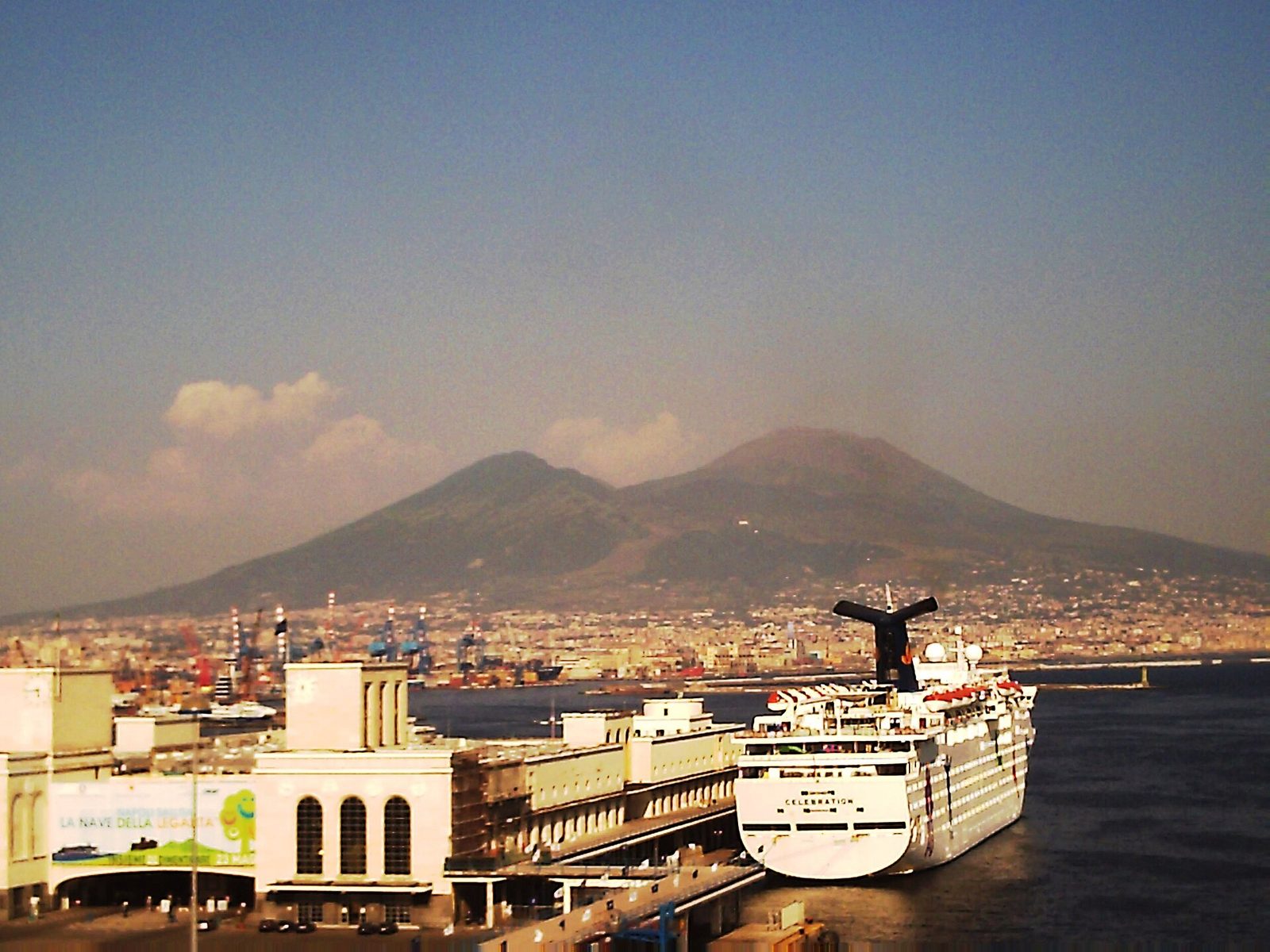
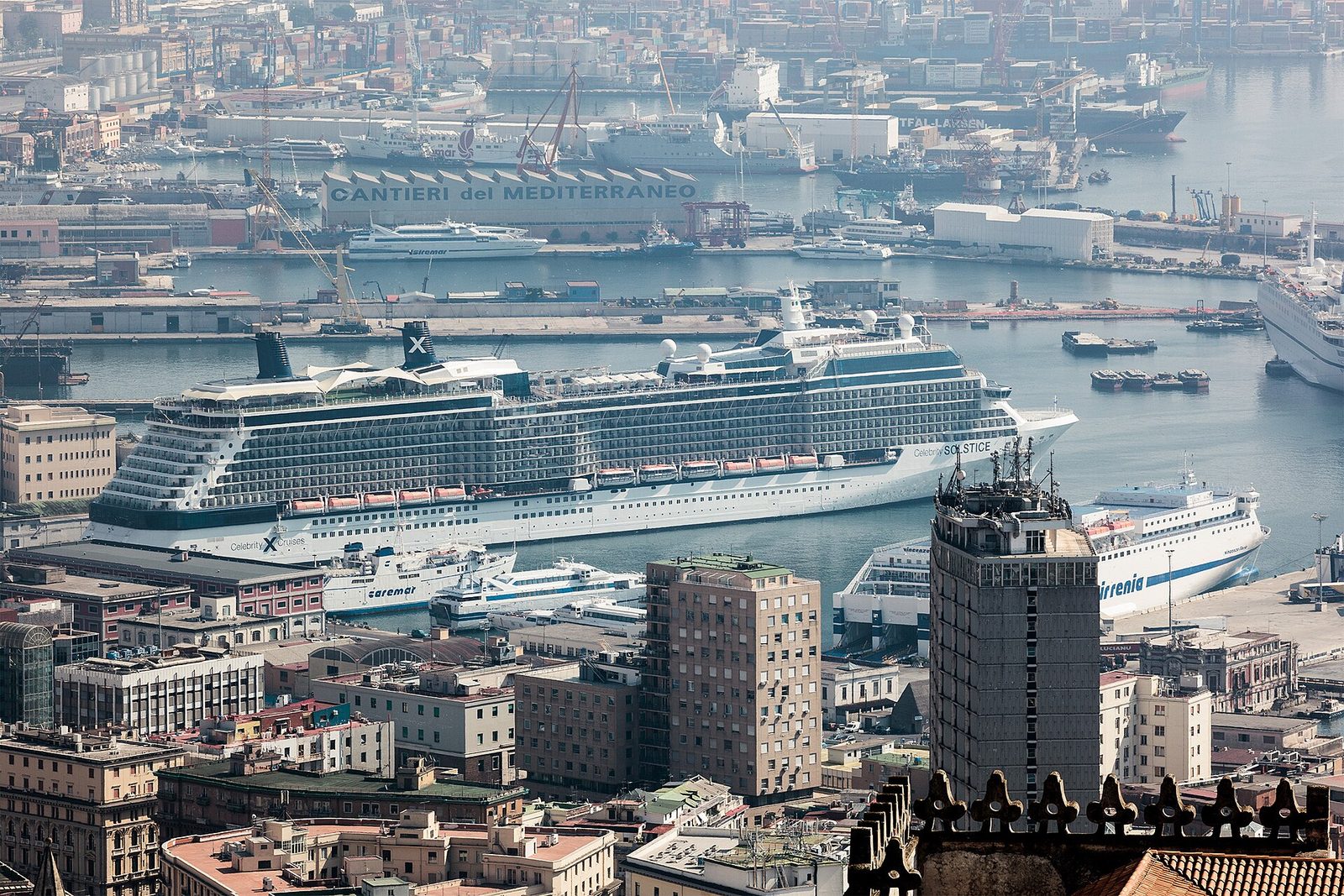
Cruise ships in Naples berth at the Stazione Marittima, the maritime station on the Molo Angioino, the pier directly in front of Castel Nuovo and Piazza Municipio. The terminal building itself is a 1930s rationalist landmark, modernized inside, and when several ships are in, the cruise area extends along the neighboring quays, including the Molo Pisacane. Naples is a docking port, so you won’t need a tender. It’s also one of Italy’s busiest cruise ports, with around 1.9 million cruise passengers and just over 500 ship calls forecast for 2026.
Right next door is Molo Beverello, the terminal for hydrofoils and fast ferries to Capri, Ischia, Procida, Sorrento and, in season, the Amalfi Coast. It’s a five-minute walk from the cruise terminal. The slower car ferries leave from Calata Porta di Massa, about a kilometer east along the waterfront. If you’re heading for the islands under your own steam, make sure you know which one you need; the Naples ferry guide explains the difference.
At the land end of the terminal, the Municipio metro station serves Line 1, which runs to the old center, the central station, the National Archaeological Museum and the Vomero, and Line 6 toward the seafront at Chiaia and Mergellina. The station was designed by the Portuguese architects Álvaro Siza and Eduardo Souto de Moura, and digging it uncovered the ancient harbor of Neapolis, including the remains of several Roman ships. There’s a taxi rank by the terminal, and the Alibus airport bus stops at Molo Beverello and the Immacolatella, at the edge of the port.
Your first fifteen minutes off the ship
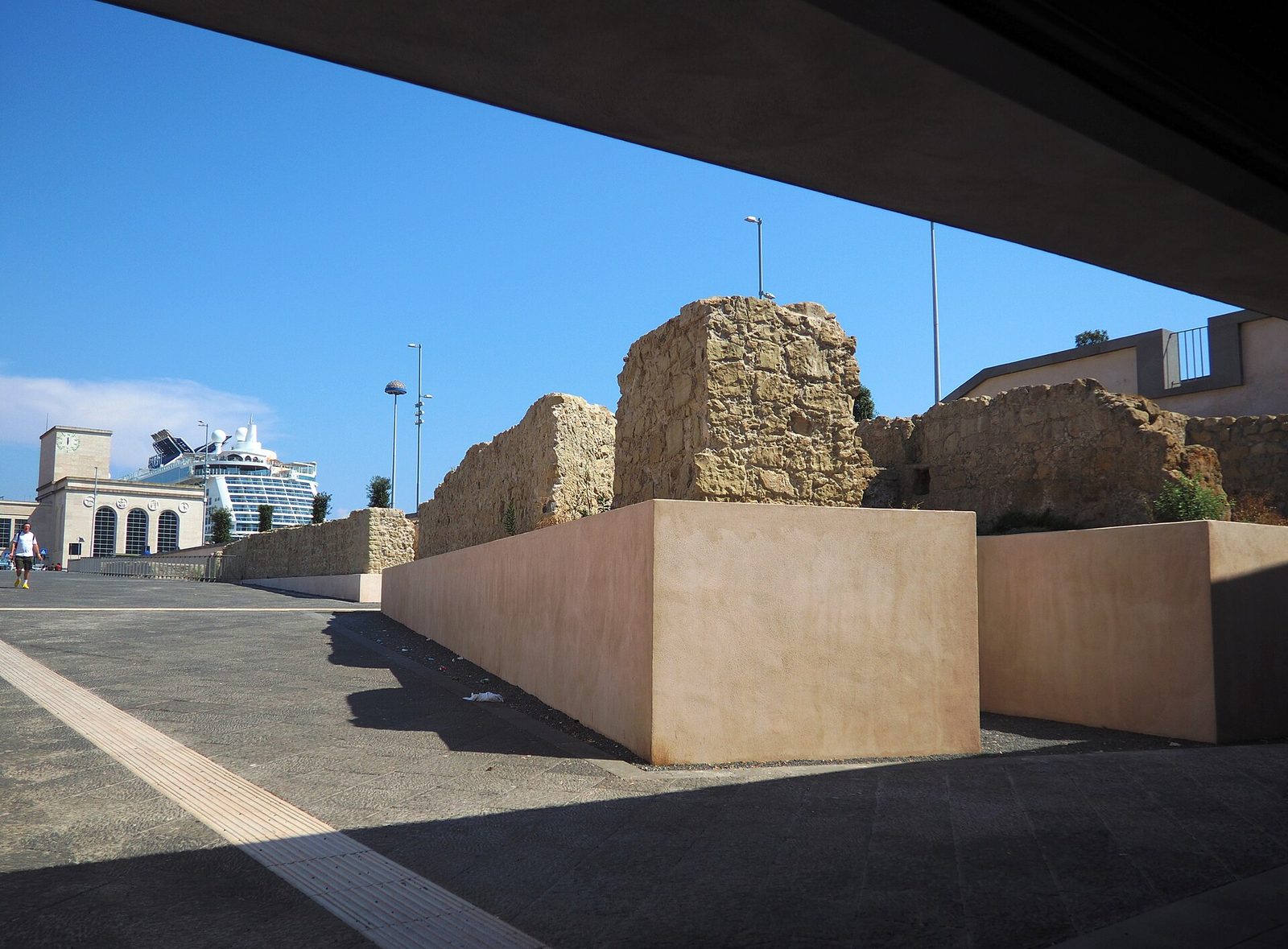
Walk out of the terminal toward the city and you’re on Piazza Municipio, a broad, newly landscaped square sloping up from the port to the City Hall. Castel Nuovo is on your left, the metro station in front of you, and Via Toledo, the main shopping street, a few minutes’ walk uphill. Here’s what to do and not do in those first minutes:
- Ignore the touts. People offering tours, taxis and “special prices” wait at the terminal exit. If you want a tour, you’ll do better choosing one in advance.
- Use only official taxis. Licensed Naples taxis are white, with a meter and a taxi sign. For some destinations there are fixed fares; ask for the tariffa predeterminata before you set off, or make sure the meter is running. The getting around Naples guide covers taxis, tickets and the metro.
- Check the time. Set your watch or phone to ship’s time and confirm it matches local time. Then write down the all-aboard time and the ship’s agent’s phone number, and keep them on you.
- Get some euros if you need them. Cards are widely accepted, but a little cash helps for coffee, snacks and small shops.
Option 1: walk into Naples
This is the option I’d choose for most first-time visitors, and it’s the one the cruise lines are least likely to recommend, because it costs them nothing. Naples is a dense, walkable city, and almost everything in the historic center lies within half an hour’s walk of the ship. You can see more in a day on foot here than on most excursions, eat better, and never be more than a short taxi ride from the gangway.
A walk from the ship to the old center
Here’s a route that works for a typical port day, with the main sights in order of distance from the ship:
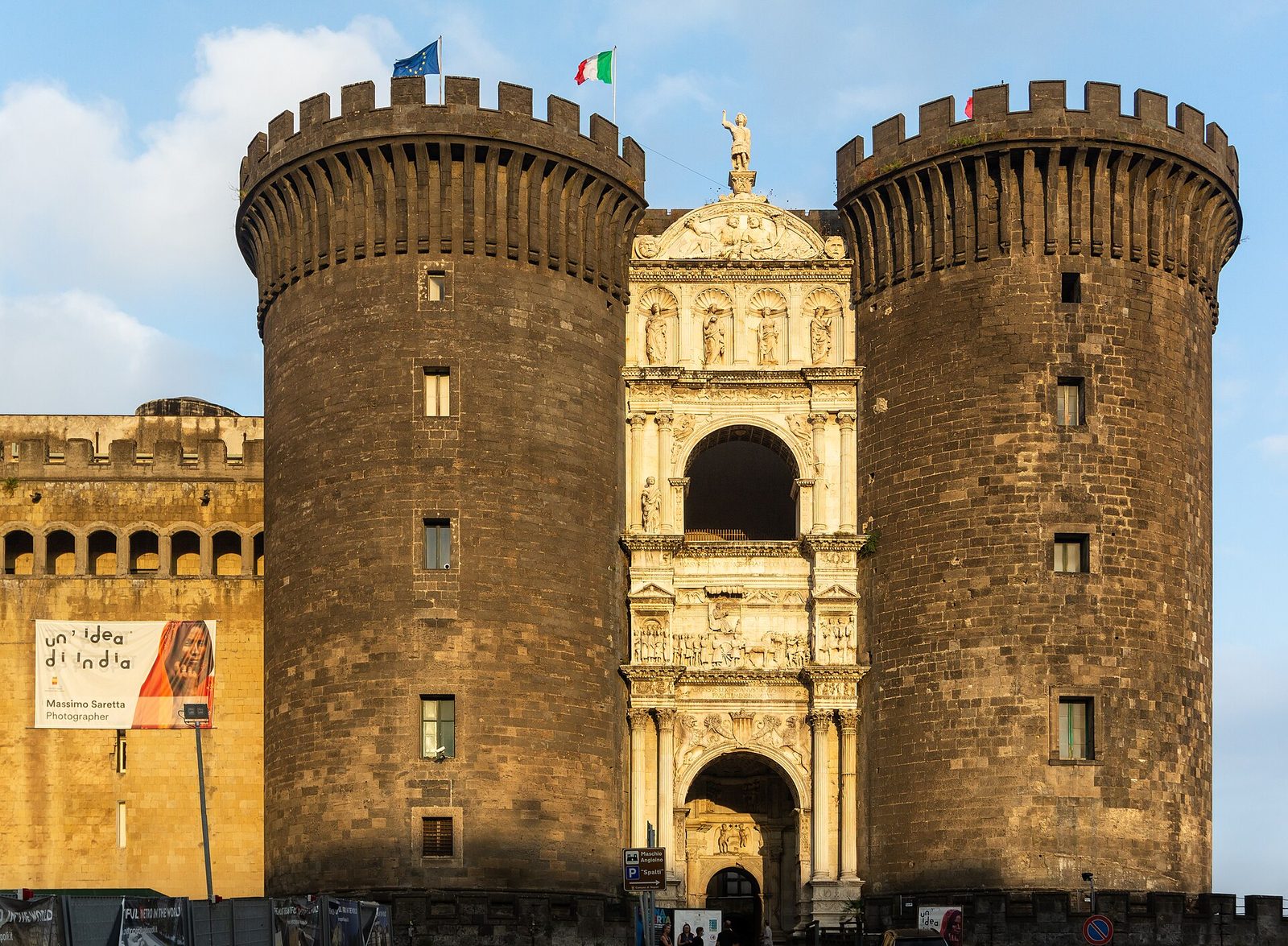
- Castel Nuovo, across the road from the terminal. The medieval and Renaissance castle has a museum and rooms you can visit; even from outside, the white marble triumphal arch squeezed between its towers is worth a look.
- Galleria Umberto I, a few minutes up the hill, a soaring 19th-century shopping arcade under a glass dome.
- Teatro di San Carlo, opposite the Galleria, the oldest working opera house in Europe, with guided tours on most days.
- Piazza del Plebiscito and the Royal Palace, the city’s great ceremonial square, about ten minutes from the ship. Stop for an espresso at the historic Gran Caffè Gambrinus on the corner.
- Via Toledo and the Quartieri Spagnoli: walk up the main shopping street, and dip into the steep lanes of the Spanish Quarter to see the Maradona mural and real Neapolitan street life.
- Spaccanapoli: from Piazza del Gesù Nuovo, the long straight street that cuts through the Greek and Roman city, past Santa Chiara and its majolica cloister and San Domenico Maggiore.
- The Sansevero Chapel and its Veiled Christ, one of the most astonishing sculptures in the world. Entry is by timed ticket only, booked online, so book as soon as your port date is confirmed; tickets go on sale 60 days ahead, with a second small release two days before, and the chapel is closed on Tuesdays.
- Via San Gregorio Armeno, the street of nativity workshops, and Via dei Tribunali, the parallel street lined with pizzerias.
- Napoli Sotterranea, the guided tour of the tunnels and cisterns beneath the city, about 90 minutes, with tours in English at set times.
- The Duomo, the cathedral, with the Treasury Chapel of San Gennaro.
From the Duomo, it’s about 25 minutes’ walk back to the ship down Via Duomo and along the waterfront, or a few minutes on metro Line 1 from Duomo station back to Municipio. For more on the old center and its churches, see the centro storico guide.
How long it takes
The full route above, with the Sansevero, the underground tour and a pizza lunch, fills about six hours at an unhurried pace. On a shorter day, cut the underground tour and the Duomo, and you can still see the castle, the Plebiscito, Spaccanapoli and the Sansevero, and eat a proper Neapolitan pizza, in three to four hours.
Lunch
Eat pizza. The classic pizzerias of Via dei Tribunali and the streets near the station serve some of the best pizza in the world for less than you’ll pay for a sandwich on board, and they’re fast enough for a port day. Expect a queue at the famous names around midday, or go a little earlier. My guide to the best pizza in Naples has the shortlist. Finish with a sfogliatella, the shell-shaped ricotta pastry, and an espresso standing at the bar, the way Neapolitans have it.
My verdict: unless you’ve already seen Naples or have your heart set on Pompeii or Capri, this is the best day you can have from the Naples cruise port, and the cheapest.
Option 2: the underground, museums and castles
If you’d like more structure, build the day around one or two of the city’s big sights.
- The underground. Besides Napoli Sotterranea in the old center, the Bourbon Tunnel runs under the hill behind Piazza del Plebiscito, close to the port, with old cars and motorbikes abandoned in its galleries. The Naples underground guide compares them.
- The National Archaeological Museum. The treasures of Pompeii and Herculaneum, from frescoes and mosaics to everyday objects, plus the Farnese sculptures. It’s three stops from the port on metro Line 1 (Museo station). If you’re doing Pompeii on another cruise, this is the perfect companion. Note that the museum is closed on Tuesdays, its mosaics collection is closed until November 30, 2026, and the Alexander Mosaic is under restoration. See the Naples museums guide.
- The castles. Castel Nuovo is beside the ship, and Castel Sant’Elmo, high on the Vomero hill, has the best view in the city, over the bay, the port and your ship. The Naples castles guide has the details.
Option 3: Pompeii or Herculaneum on your own
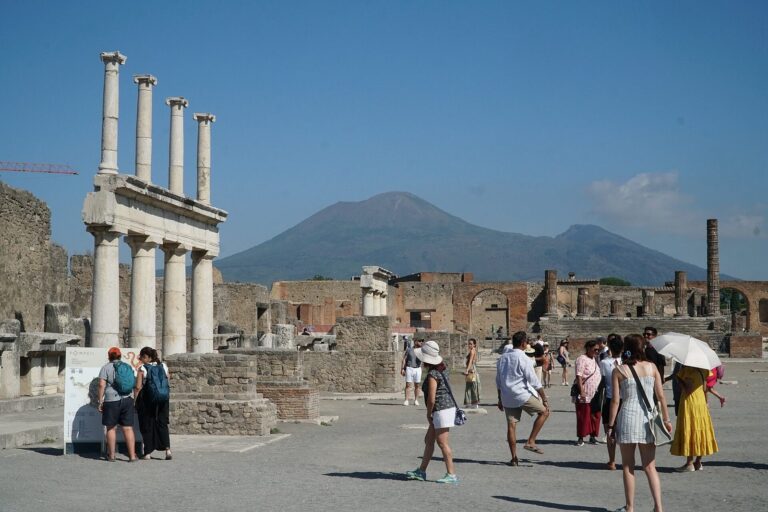
Pompeii is the reason many people book a Mediterranean cruise, and you can do it independently from the Naples cruise port for a fraction of the cost of an excursion. It’s not complicated, but it needs an early start, a ticket booked in advance and a healthy margin for the trip back.
How to get there
- Get to Garibaldi. Take metro Line 1 from Municipio, at the terminal exit, to Garibaldi, three stops and a few minutes away, or walk about 30 minutes along Corso Umberto I.
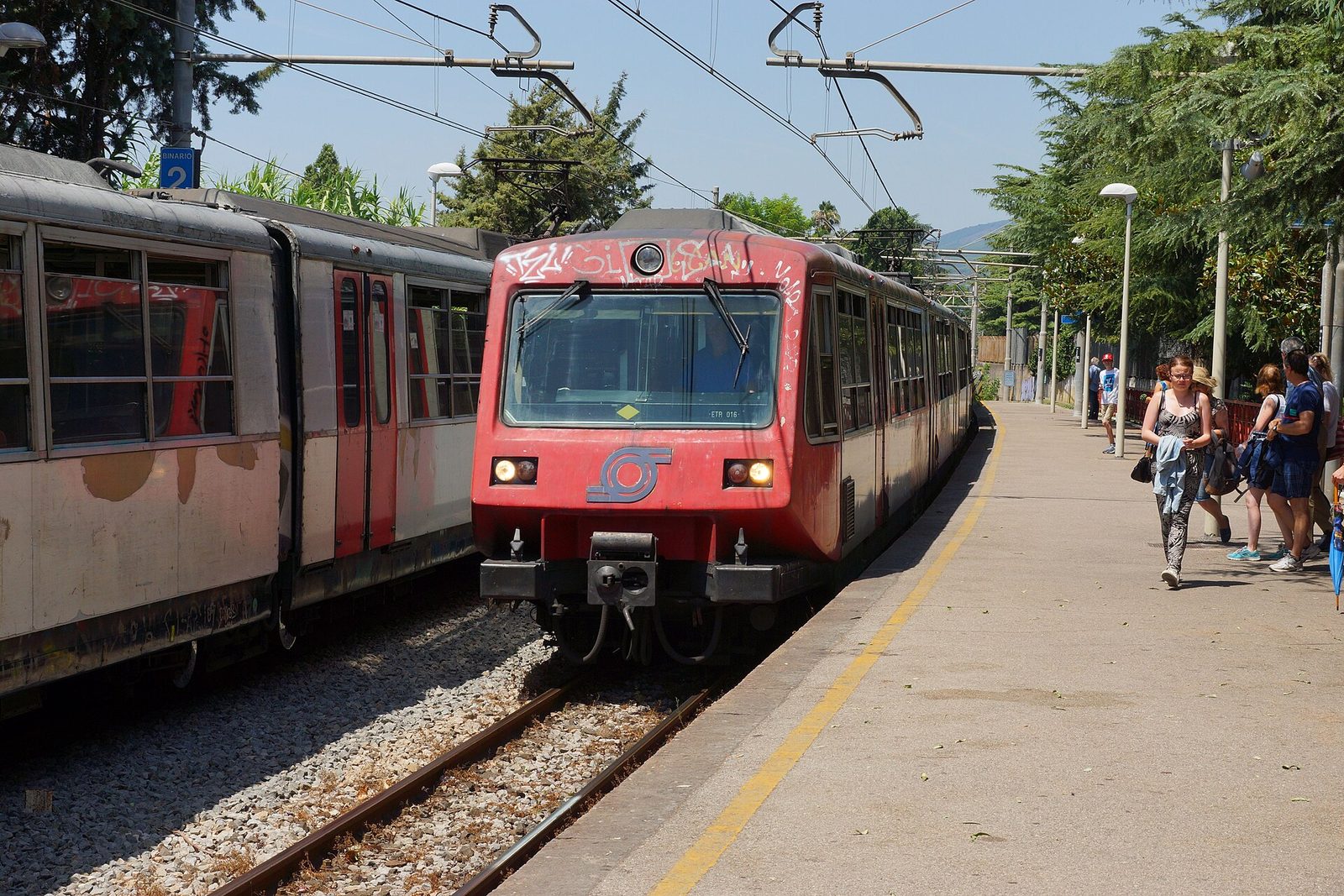
- Find the Circumvesuviana. The trains to Pompeii leave from the Circumvesuviana’s Napoli Garibaldi station on the lower level under Piazza Garibaldi, by the central station. There’s no lift down, so expect stairs. Follow the signs for the Circumvesuviana, not for the mainline trains.
- Take a Sorrento train. Board a train on the line to Sorrento, which usually leaves from platform 3, and get off at Pompei Scavi–Villa dei Misteri, about 35 to 40 minutes away. The classic mistake is boarding a train on the Sarno branch, which doesn’t stop at Pompei Scavi. Check the destination on the front of the train and the departure board.
- Walk to the gate. The Porta Marina entrance is a couple of minutes from the station.
The Campania Express, the tourist train that used to run between Naples, Herculaneum, Pompeii and Sorrento with reserved seats, is suspended from October 1, 2026 until further notice, so for now the regular Circumvesuviana is the only train. It’s crowded in summer, and pickpockets work it, so keep bags closed and in front of you. Tickets and routes are covered in the Pompeii from Naples guide.
Tickets and timing
Book your Pompeii ticket online before you sail. Tickets are sold for timed entry windows with a daily cap on visitor numbers, and they’re named, so carry the ID you booked with. A standard ticket costs in the €20–25 range for adults, and under-18s go free. Bags larger than a small daypack have to be left in the cloakroom, so pack light. Allow about an hour each way door to door between the ship and the site, plus three hours inside, and you have a six-to-seven-hour day.
On a day when the ship sails in the early evening, aim to be on the train back to Naples by mid-afternoon at the latest. Trains can be cancelled or delayed, and strikes (scioperi) are announced in advance, so check for them before you set out. If something goes wrong, a taxi from Pompeii back to the port is your emergency exit, and it’s worth knowing that before you need it.
Herculaneum: the smart alternative
If your port day is short, or you’ve seen Pompeii before, go to Herculaneum. It’s on the same Circumvesuviana line, at Ercolano Scavi, only about 20 minutes from Garibaldi, and the site is a ten-minute walk downhill from the station. It’s smaller than Pompeii and far better preserved, with upper floors, wooden beams and colored walls, and you can see it properly in two hours. Door to door, the whole trip fits into four to five hours with no stress. The Herculaneum guide has everything you need.
My verdict: Pompeii on your own is very doable on most port days, but Herculaneum is the better choice if your time is tight. Either way, book the ticket before you sail.
Option 4: Capri from the cruise port
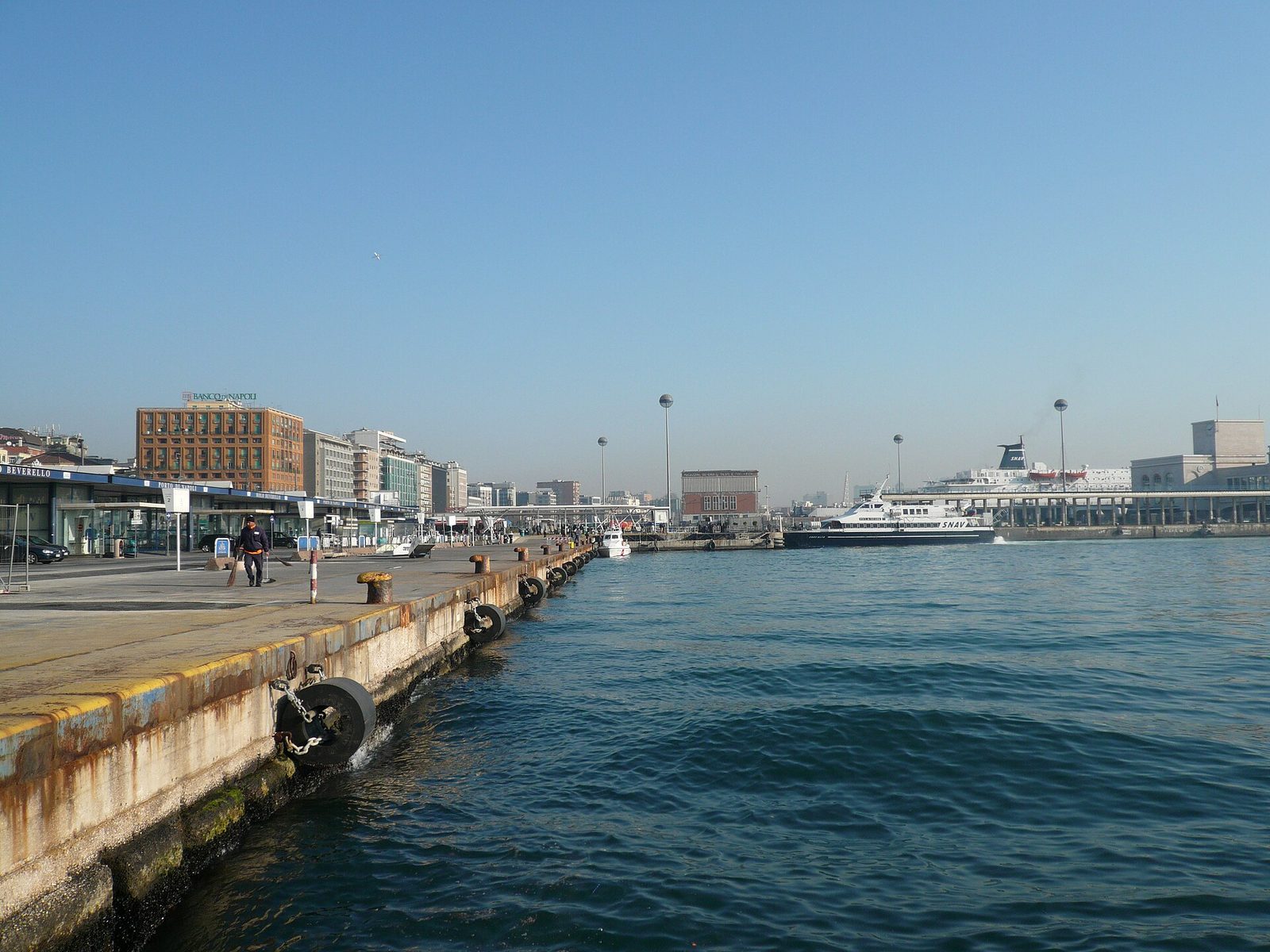
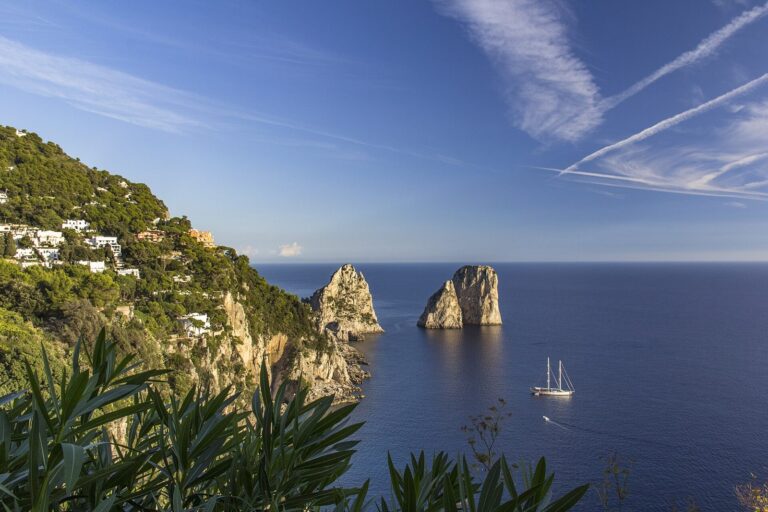
Capri is tempting, because the hydrofoils leave from Molo Beverello, a five-minute walk from your ship, and the crossing takes about 50 minutes. On a long port day with a calm sea, it works well. On a short one, or in rough weather, it can turn into a stressful race.
The risks are specific. Hydrofoils are the first boats to be cancelled in rough seas, and return boats in the afternoon can be full in summer, with long queues at the ticket windows on the island. The Blue Grotto closes in wind and swell, and when it’s open the wait for the rowboats can be long. Capri also gets extremely crowded on summer days when several ships are in port.
If you go, take one of the first boats of the morning, buy your return ticket for a specific sailing as soon as you can, and plan to be back in Naples at least two hours before all-aboard. Rather than trying to do everything, pick one thing: the Piazzetta and the gardens, a boat trip around the island, or Anacapri. The Capri from Naples guide covers the island, the landing fee and the Blue Grotto, and the Naples ferry guide the boats.
My verdict: only with nine hours or more in port and a good weather forecast. Otherwise, a ship excursion with guaranteed boats is worth the extra cost.
Option 5: Sorrento, the Amalfi Coast and Vesuvius
Sorrento is reachable on your own, by hydrofoil from Molo Beverello in season or by the Circumvesuviana in just over an hour, and it’s a pleasant town for a few hours of strolling and lemon-everything shopping. But it’s not more interesting than Naples, and I’d only choose it if you’ve already seen the city. See the Sorrento guide.
The Amalfi Coast is a different matter. Positano is about an hour and a half from Naples by ferry in season, and the coast road beyond Sorrento is slow, narrow and jammed in summer. On a single port day, doing it independently leaves you very little time there and very little margin for getting back. If the Amalfi Coast is your dream, this is the day to pay for a ship excursion or a private driver, or to save it for a land trip. The Amalfi Coast from Naples guide explains the options.
Vesuvius is reached from Ercolano Scavi station by shuttle bus to the car park below the crater, about 20 minutes each way, then a steady walk to the rim. Tickets for the crater path are sold online in timed slots, and the path closes at short notice in strong wind. Combining Herculaneum and Vesuvius is possible on a long day, but the shuttle timetables and the risk of closure make it a better job for an organized tour. See the Mount Vesuvius guide.
Ship excursion or do it yourself?
The cruise lines’ main argument for their excursions is the guarantee: if a ship’s tour runs late, the ship waits. If you’re on your own and you’re late, it doesn’t, and you’ll be making your own way to the next port at your own expense. That’s a real risk, and you should weigh it honestly. Here’s how I see it:
- Do it yourself for Naples itself, Herculaneum and, with a normal port day and an early start, Pompeii. The transport is simple, the distances are short, and you’ll save a lot of money and see more.
- Book an excursion for the Amalfi Coast, for Pompeii combined with Vesuvius, and for Capri on a short port day or when the forecast is poor. These are the trips where delays are most likely and hardest to recover from.
- Consider a private tour if you’re a group or a family. Licensed guides and drivers who work with cruise passengers know the timings, and many offer their own return guarantees. Compare a few, and check reviews. The Naples tours guide covers the options.
Whatever you choose, build in a margin. My rule is to be back at the terminal at least an hour before all-aboard on a day in the city, and earlier still after a trip out of town.
Practical tips for your port day
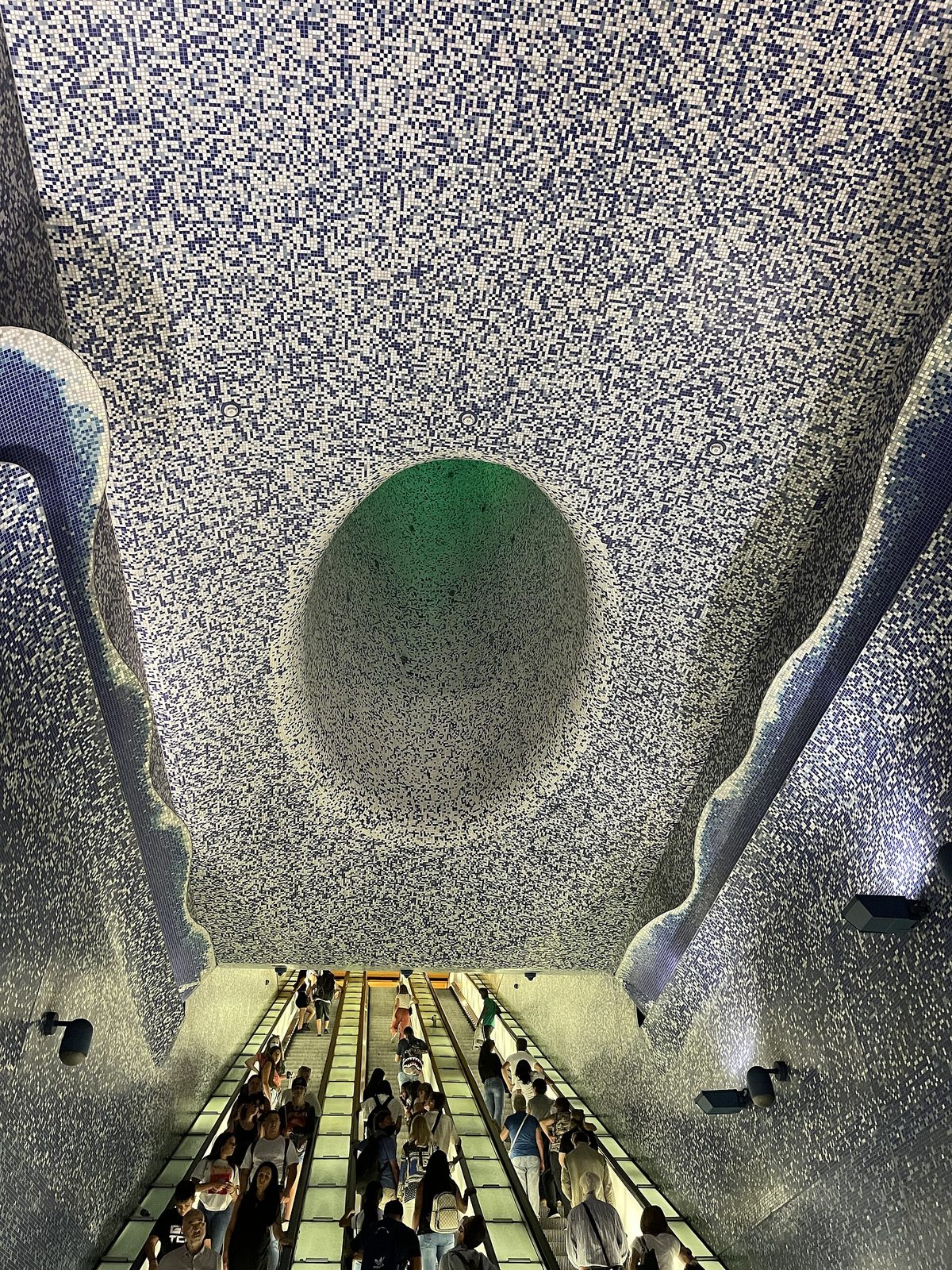
- See a metro station. Naples’ Line 1 “art stations” are attractions in their own right. Toledo, one stop from Municipio, has a deep shaft lined with blue mosaics that make you feel you’re underwater. Ride one stop and back for the price of a ticket.
- Check the closing days. The Sansevero Chapel and the National Archaeological Museum are closed on Tuesdays. State museums and archaeological sites are free on the first Sunday of the month, which also makes them much busier.
- Watch your belongings. Pickpockets work the metro, the Circumvesuviana and crowded streets. Use a zipped bag worn in front, and keep your phone out of reach of passing scooters.
- Dress for churches. Covered shoulders and knees are expected in churches, including the Duomo and the Sansevero. Carry a light scarf.
- Wear proper shoes. The old center is paved with uneven stone, and Pompeii and Herculaneum are hard on feet.
- Bring water and sun protection in the warmer months, especially for Pompeii, where shade is scarce.
- Check for strikes. Transport strikes in Italy are announced in advance. A quick search for sciopero plus the date and the operator’s name before you sail can save your day.
- If walking is hard, the City Sightseeing hop-on hop-off buses leave from Largo Castello on Piazza Municipio, right by the port, with a historic route through the old center and a panoramic route along the seafront to Posillipo. A 24-hour ticket costs around €25 (checked October 2026). For an honest look at accessibility in the city, see the guide to Naples for families and every kind of traveler.
Starting or ending your cruise in Naples
If your cruise starts or ends in Naples, the terminal’s central location makes things easy. From Napoli Centrale, the main railway station, take metro Line 1 from Garibaldi to Municipio, or a taxi, which takes 10 to 15 minutes outside rush hour. From the airport, there’s no train or metro, but the Alibus runs to the port, and taxis charge a fixed fare to the port area; the Naples airport to city center guide has the details.
Better still, arrive a day or two early, or stay on after the cruise. Naples deserves more than a port day, and a couple of nights let you add Pompeii, Capri or the Amalfi Coast without watching the clock. Hotels around the port, Via Toledo and the seafront are the most convenient for the day you board.
Only two hours to spare?
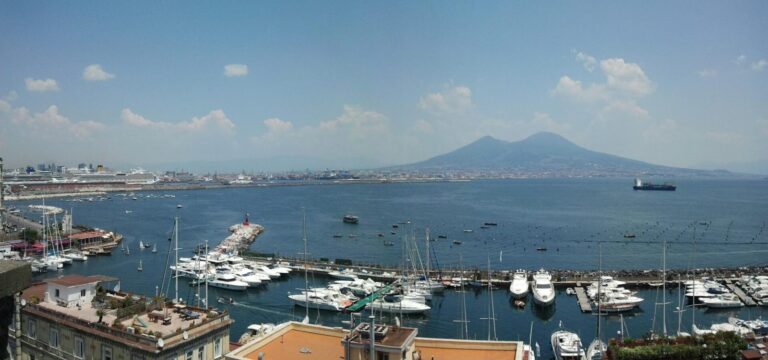
Even a short window is worth using. From the terminal, walk past Castel Nuovo and up to Piazza del Plebiscito, step inside the church of San Francesco di Paola, modeled on the Pantheon in Rome, and look into the Galleria Umberto I on the way back. Or follow the waterfront west, past Molo Beverello and below the Royal Palace, to the Castel dell’Ovo and the little harbor of the Borgo Marinari, about 20 minutes each way, with Vesuvius across the water the whole time. Both walks are free, flat enough for most people, and finish with an espresso and a sfogliatella before you reboard. Ride one stop on the metro to see Toledo station if you have ten minutes left over.
The sail-in and the sail-away
Don’t miss the view from the deck. Naples has one of the most dramatic harbor approaches in the Mediterranean, and arriving in the early morning light is a show in itself: Vesuvius rising straight ahead, the city spread around the bay, the Castel dell’Ovo on its rock and the green hill of Posillipo to the west. Depending on your course, you’ll also pass Capri and the tip of the Sorrento peninsula, or Procida and Ischia. On the way out, find a spot on the stern or the open deck on the city side and watch the whole bay slide past as the sun goes down. Have your camera ready for Castel Sant’Elmo and the Certosa di San Martino on the ridge above the city.
Sample port days, by hours ashore
Ship schedules vary, but most calls in Naples run from early morning to late afternoon or early evening. Here’s how I’d use the time, with the return margin built in. Count your hours from when you can actually get off the ship, not from the arrival time, and work back from all-aboard.
Four to five hours ashore
Stay in the city. Walk from the ship to Piazza del Plebiscito, with a look inside the Galleria Umberto I on the way, have an espresso at the Gambrinus, then walk up Via Toledo and into the old center along Spaccanapoli. Visit the Sansevero Chapel if you’ve booked a slot, eat a pizza on Via dei Tribunali, and take metro Line 1 back from Duomo or Università to Municipio. You’ll be back at the ship with time to spare, having seen the heart of the city.
Six to seven hours ashore
Choose between Naples in depth and the ruins. For the city, add the Napoli Sotterranea tour and the Duomo to the four-hour plan, or swap them for the National Archaeological Museum. For the ruins, head straight for Garibaldi and the Circumvesuviana as soon as you’re off the ship: Herculaneum comfortably, or Pompeii with an early start and a firm rule about the latest train back. Either way, get back to the port area an hour before all-aboard and use any spare time for a coffee and a pastry near the terminal.
Eight hours or more ashore
This is the day for the bigger trips. Pompeii on your own with a long lunch in Naples afterward; Capri by early hydrofoil if the forecast is calm; or a ship or private excursion to the Amalfi Coast, or to Pompeii and Vesuvius together. If you’re staying in Naples, a long day lets you add Castel Sant’Elmo and the Vomero for the view over the whole bay, including your ship.
An overnight in port
Some itineraries stay overnight in Naples. Use the evening: Neapolitans eat late and spend the night outdoors, so go for an aperitivo, a seafood dinner and a walk along the seafront, and do the bigger day trip the following morning while the crowds are still thin.
Souvenirs worth carrying back on board
Naples is a good city for shopping, and much of the best of it is within walking distance of the ship.
- Nativity figures from the workshops of Via San Gregorio Armeno, from tiny shepherds to elaborate scenes. The best workshops pack them carefully for travel.
- Coffee and pastries: a bag of Neapolitan espresso blend or a moka pot, and a box of sfogliatelle to eat back on board.
- Pasta from Gragnano, the town on the Sorrento peninsula famous for bronze-die pasta, sold in delis all over the center.
- Cameos and coral, a centuries-old craft of Torre del Greco on the bay. Buy from established shops rather than street sellers.
- Silk ties from the city’s historic tailors and tie makers, a Neapolitan specialty, especially in Chiaia.
- Ceramics from the coast, and lemon-themed everything, though the best of that is in Sorrento and Amalfi.
A note on limoncello and wine: most cruise lines don’t let you take alcohol bought ashore to your cabin. They hold it until the end of the cruise, or restrict it, so check your line’s rules before you buy. And be wary of fake designer goods from street sellers, which are illegal to buy in Italy as well as sell.
A port day with kids or limited mobility
With children, Naples is easier than it looks from the ship. The walk to Piazza del Plebiscito is short and flat, the underground tour is a guaranteed hit with kids, pizza for lunch solves the food question, and Herculaneum is far more manageable than Pompeii for younger children. Under-18s go free at state museums and archaeological sites. Bring a carrier rather than a stroller for the old center, where the paving is uneven and the sidewalks are narrow.
For travelers with limited mobility, the area around the port is the most accessible part of the city: Piazza Municipio, the Galleria Umberto I, Piazza del Plebiscito and the car-free seafront are all flat or gently sloping. The old center is much harder going, and the Circumvesuviana to Pompeii involves stairs at Garibaldi and high steps onto the trains. The hop-on hop-off bus, a taxi tour or a ship excursion with an adapted vehicle are the more comfortable options. More detail is in the guide to Naples for every kind of traveler, linked above.
If you miss the ship
It happens, usually to people who cut it fine on the way back from Capri or Pompeii. If you realize you won’t make all-aboard, call the ship’s port agent at once; the number is on the daily program and often on your cruise card. Go to the terminal if you can, because the agent will usually meet passengers there. You’ll then have to make your own way to the next port, by train, ferry or flight, at your own expense, with your passport if you took it ashore. Travel insurance with missed-departure cover can help with the cost. Which is the best argument there is for the margin I keep going on about: leave the extra hour, and you’ll never need this paragraph.
What to skip
- The touts at the terminal exit. Book tours in advance, and take only licensed white taxis.
- Restaurants right outside the port with picture menus. Walk ten minutes into the old center and eat far better for less.
- The Amalfi Coast on your own on a short port day. Too far, too slow, too risky.
- Capri when the sea is rough. If the forecast is bad, stay in Naples.
- Vesuvius independently on a windy day. The crater path closes at short notice.
- Turning up at the Sansevero Chapel without a ticket. Booking is compulsory, so book before you sail.
- Counting on the Castel dell’Ovo. The seafront castle has been closed for restoration, and its reopening hasn’t been confirmed. The Borgo Marinari harbor around it is still a lovely walk.
- Leaving the return to the last minute. Trains, boats and Naples traffic can all let you down. Build in your margin.
Naples cruise port: frequently asked questions
Where do cruise ships dock in Naples?
Cruise ships dock at the Stazione Marittima on the Molo Angioino, in the city center opposite Castel Nuovo and Piazza Municipio. When several ships are in port, they also use the neighboring quays. Naples is a docking port, so no tenders are needed.
Can you walk from the Naples cruise port to the city center?
Yes. Castel Nuovo is across the road from the terminal, Piazza del Plebiscito is about a ten-minute walk, and Spaccanapoli in the historic center is about 20 minutes on foot. The Municipio metro station at the terminal exit connects to the rest of the city.
Is it safe to walk around Naples from the cruise port?
Yes, the route from the port to Piazza del Plebiscito, Via Toledo and the old center is busy and safe by day. The main risk is petty theft, so keep bags zipped and in front of you, watch your phone, and ignore touts at the terminal exit.
How do I get from the Naples cruise port to Pompeii?
Take metro Line 1 from Municipio to Garibaldi, then the Circumvesuviana train toward Sorrento from the lower-level station and get off at Pompei Scavi–Villa dei Misteri, about 35 to 40 minutes away. The Campania Express tourist train is suspended from October 1, 2026. Allow about an hour each way door to door.
Can I visit Pompeii on my own from a cruise ship?
Yes, on most port days. Book a timed, named ticket online in advance, leave the ship early, allow three hours on site, and be on a train back by mid-afternoon if the ship sails in the early evening. Check for train strikes before you go. If your day is short, choose Herculaneum instead.
Is Capri doable from the Naples cruise port?
On a long port day with a calm sea, yes: hydrofoils leave from Molo Beverello, next to the cruise terminal, and take about 50 minutes. Rough seas cancel hydrofoils first and afternoon return boats can be crowded, so take an early boat and allow at least two hours’ margin before all-aboard.
Do I need a ship excursion in Naples?
Not for Naples itself, Herculaneum or, with a normal port day, Pompeii. A ship excursion is worth it for the Amalfi Coast, for Pompeii and Vesuvius together, and for Capri on a short day or in poor weather, because the ship waits for its own tours.
What is there to do near the Naples cruise terminal?
Castel Nuovo is across the road, and the Galleria Umberto I, the Teatro di San Carlo, Piazza del Plebiscito, the Royal Palace and the Bourbon Tunnel are all within about ten minutes’ walk. Toledo metro station, one stop away, is worth seeing for its mosaics, and the old center starts about 20 minutes away on foot.
Photo credits
- A cruise ship in the port of Naples (featured image): photo by Angelo DeSantis from Berkeley, US, Wikimedia Commons, CC BY 2.0.
- A cruise ship at the Stazione Marittima with Vesuvius behind: photo by Adam91, Wikimedia Commons, CC BY-SA 3.0.
- The port from the Municipio metro exit: photo by Mattia Luigi Nappi, Wikimedia Commons, CC BY-SA 4.0.
- Castel Nuovo (Maschio Angioino), entrance: photo by Marco Ober, Wikimedia Commons, CC BY-SA 4.0.
- Circumvesuviana train at Pompei Scavi: photo by Chris Sampson, Wikimedia Commons, CC BY 2.0.
- The quay at Molo Beverello: photo by Dr.Conati at Italian Wikipedia, Wikimedia Commons, Public domain.
- Toledo metro station: photo by Photo2023, Wikimedia Commons, CC BY 4.0.
Sources: Campania Express suspension from EAV’s notice as reported in September 2026; cruise terminal and 2026 passenger forecast from port and industry reporting; Pompeii ticketing rules from the Pompeii archaeological park; Sansevero booking rules from the Sansevero Chapel Museum; National Archaeological Museum closures from the museum’s official schedule; hop-on hop-off routes and prices from current ticket listings. All checked September and October 2026.