On this page
Last updated September 16, 2026. Train service checked against EAV; tourist tax against Comune di Sorrento reporting for 2026; bus fares and ferry seasons against the operators’ 2026 listings. Where I couldn’t confirm something at the source, I say so.
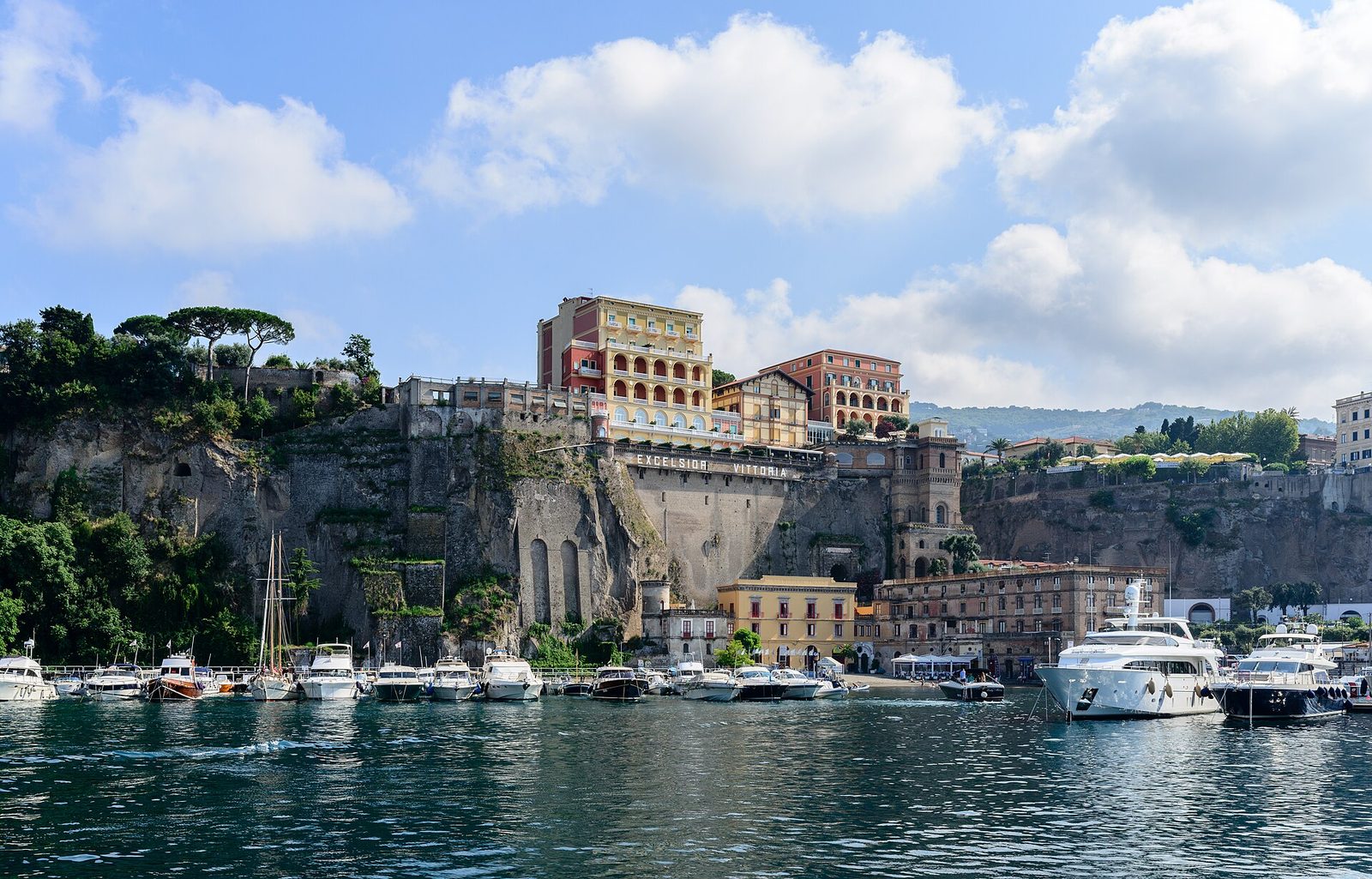
Sorrento, Italy is a clifftop town on the Sorrentine peninsula, about 50 km south of Naples, Italy, at the end of the Circumvesuviana line. It has a charming old center, lemon groves and sea views, but almost no sandy beach. Its real strength is as a base for Capri, Positano and Pompeii.
That last sentence sounds like faint praise. It isn’t. Sorrento is a genuinely pleasant town, easy to love, with a lively main square, a compact grid of old streets, grand hotels perched on the cliff edge, and views across the bay to Vesuvius that stop you mid-step. But much of what gets written about it comes from hotel booking sites, and it tends to leave out the things that shape a trip: that swimming here usually means a paid wooden platform rather than a beach, that the famous bus along the Amalfi Coast can strand you, and that choosing Sorrento over Naples as your base is a real trade-off, not an automatic upgrade.
This guide is the honest version: what’s actually in Sorrento, how to get there from Naples, how to use the town as a base, where to stay, what to eat, and what I’d skip.
Sorrento at a glance
| Question | Short answer (checked September 2026) | What catches people out |
|---|---|---|
| Where is it? | On the north side of the Sorrentine peninsula, facing the Bay of Naples | It’s not technically on the Amalfi Coast, which is on the other side of the hills |
| How do I get there from Naples? | Circumvesuviana train (about 70 minutes) or a seasonal hydrofoil from Molo Beverello | Boarding a train on the wrong branch at Garibaldi |
| Is there a beach? | Barely. Swimming is mostly from wooden bathing platforms at the two marinas | Expecting sand and free space |
| Is it walkable? | The town center, yes. The marinas are down steep steps or a lift | The climb back up from the water |
| Is it a good base? | Excellent for Capri, Positano, Pompeii and a quieter stay | Evening trips into Naples are long |
| Tourist tax? | Reported at €2–5 per person per night depending on hotel category, unchanged for 2026 | Paid in cash at the hotel, not in your online booking |
| Best-known food? | Gnocchi alla sorrentina, lemons, limoncello, walnuts, provolone del Monaco | Buying fluorescent limoncello from souvenir stalls |
A short history of Sorrento
Sorrento has been a holiday town for about two thousand years, which goes some way to explaining why it’s so good at it. The Greeks founded Surrentum on this clifftop, and the Romans built luxurious seaside villas along the coast; the ruins at the Bagni della Regina Giovanna and the gate down to Marina Grande are survivors from those centuries. Legend placed the Sirens, who tried to lure Ulysses onto the rocks, on the little Li Galli islands off the peninsula, and the town’s name is often linked to them.
Torquato Tasso, one of the great poets of the Italian Renaissance, was born here in 1544, and the main square carries his name. Only a few years later, in 1558, Ottoman raiders sacked the town and carried off many of its people into slavery, a disaster that led to the building of the watchtowers you still see along the coast.
Sorrento’s modern fame began with the Grand Tour. By the 19th century it was a favorite winter retreat for writers and artists from northern Europe. Henrik Ibsen worked on Peer Gynt during a stay here, and Friedrich Nietzsche spent a winter in the town in the 1870s. The great tenor Enrico Caruso stayed at the Excelsior Vittoria in 1921, not long before his death in Naples, and the singer-songwriter Lucio Dalla wrote his famous song “Caruso” in the same hotel decades later. And almost every visitor eventually hears “Torna a Surriento,” “Come Back to Sorrento,” the Neapolitan song from the early 1900s that did more for the town’s tourism than any brochure.
Getting to Sorrento from Naples
By Circumvesuviana train
The Circumvesuviana is the everyday way to reach Sorrento, which is the last stop on its Sorrento line. From Napoli Garibaldi, under the main station, the ride takes a little over an hour, calling at Ercolano Scavi for Herculaneum and Pompei Scavi for Pompeii along the way. Trains run roughly every half hour for most of the day, and the fare is a few euros. It’s cheap, it’s direct, and it’s the option I’d pick for most people.
It’s also crowded in summer, has no luggage racks to speak of, and has a reputation for pickpockets. Board at Porta Nolana, the terminus one stop earlier, if you want a seat, and make sure the train says Sorrento; the other branches from the same station go inland. My guide to getting around Naples, Italy has the platform details and the current fares.
The Campania Express, EAV’s faster tourist train on the same route, was suspended from October 1, 2026 “until further notice,” so plan on the regular service for autumn and winter travel.
By hydrofoil
From spring to autumn, fast boats run from Molo Beverello in Naples to Sorrento’s Marina Piccola. The crossing is quicker than the train and far more scenic, arriving beneath the cliffs with the town above you. It costs considerably more, runs less often, and gets canceled in rough seas. In winter the service thins out or stops. Ferry schedules, operators and which pier to use belong in a ferry guide, so treat this as the headline: pleasant in summer, and not something to depend on for a tight connection.
By car or transfer
The road from Naples follows the motorway to Castellammare di Stabia and then the winding coastal road around the peninsula. Traffic on summer weekends can be dreadful, and parking in Sorrento is scarce and expensive. A private transfer makes sense if you’re arriving with a lot of luggage, with small children or late at night. Driving yourself makes sense only if you’re continuing into the countryside where public transport doesn’t reach.
How Sorrento is laid out
Sorrento sits on a flat terrace of volcanic tuff, cut off from the sea by cliffs about 50 meters high and split by deep ravines. Once you understand that geography, the town makes sense.
- Piazza Tasso is the center of everything: a busy square of cafés and traffic, built over one of the ravines, with the old town to the west and the modern shopping streets to the east.
- Corso Italia is the main street, running east–west through town. The Circumvesuviana station is on it, a ten-minute walk east of the square.
- The centro storico, the old town, is a grid of narrow lanes still following the plan of the Roman town. Via San Cesareo, its main shopping lane, runs parallel to Corso Italia.
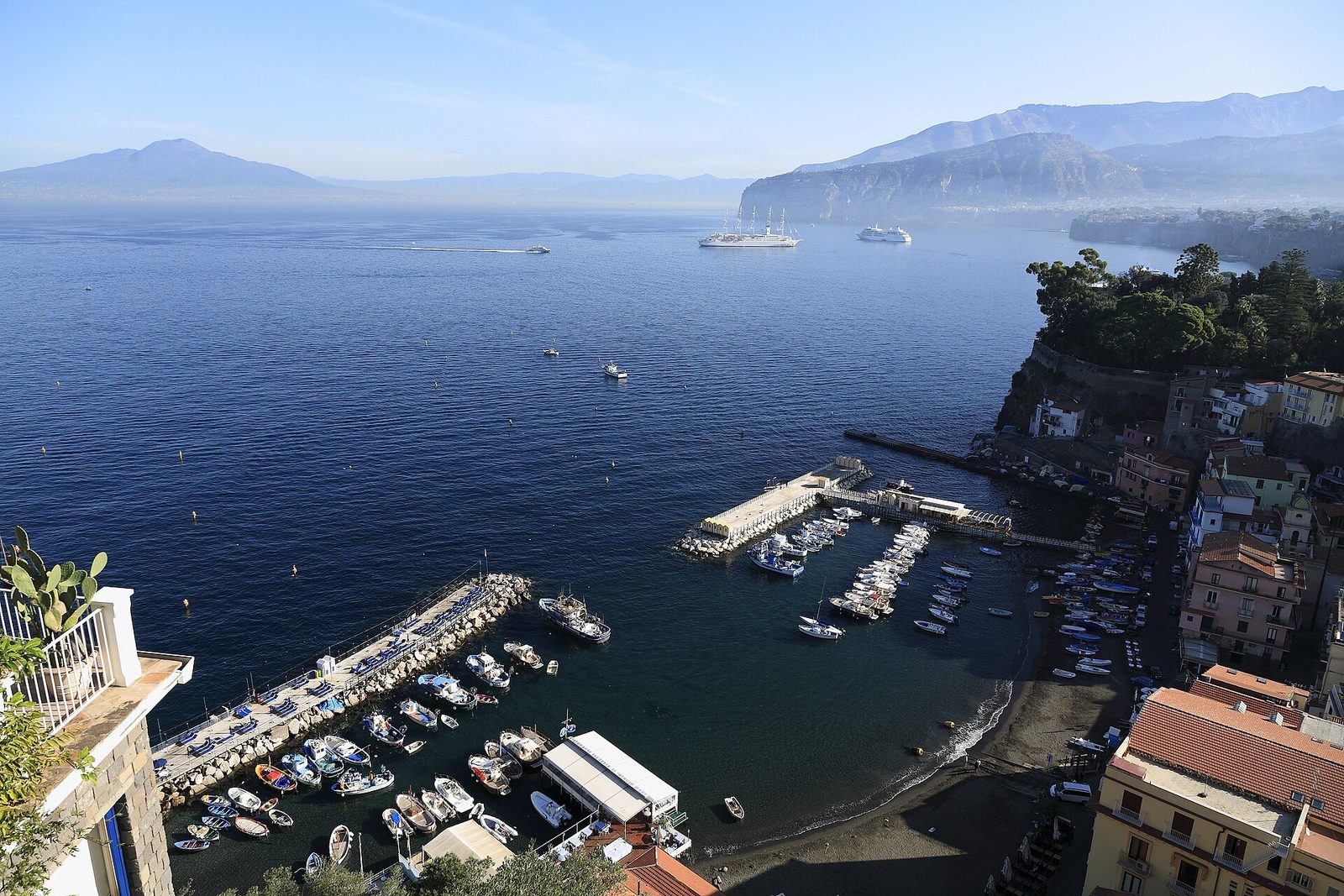
- Marina Piccola, below the cliffs just north of Piazza Tasso, is the port for ferries and hydrofoils and home to several bathing platforms. You reach it by a long flight of steps, a winding road or a lift from the Villa Comunale.
- Marina Grande, west of the old town and also at sea level, is the old fishing village: colorful boats, seafood restaurants and a small beach.
- Sant’Agnello and Piano di Sorrento merge into Sorrento to the east. Capo di Sorrento and Massa Lubrense lie to the west, greener and quieter.

Things to do in Sorrento
Sorrento isn’t a town packed with major sights. It’s a place for wandering, eating well and watching the light change over the bay. Most of the list below can be done in a day, which is exactly why the town works so well as a base for everything around it.
Walk the old town
Start at Piazza Tasso and head west into the lanes. Via San Cesareo is lined with shops selling lemons, limoncello, ceramics and inlaid wood; it’s touristy, but good-natured. Look for the Sedile Dominova, a 15th-century open loggia with a painted dome where the town’s nobles once met and where, in a very Italian twist, a men’s club now plays cards. The lanes around it are at their best in the early evening, when the day-trippers have gone and the passeggiata, the evening stroll, begins.
The cloister of San Francesco
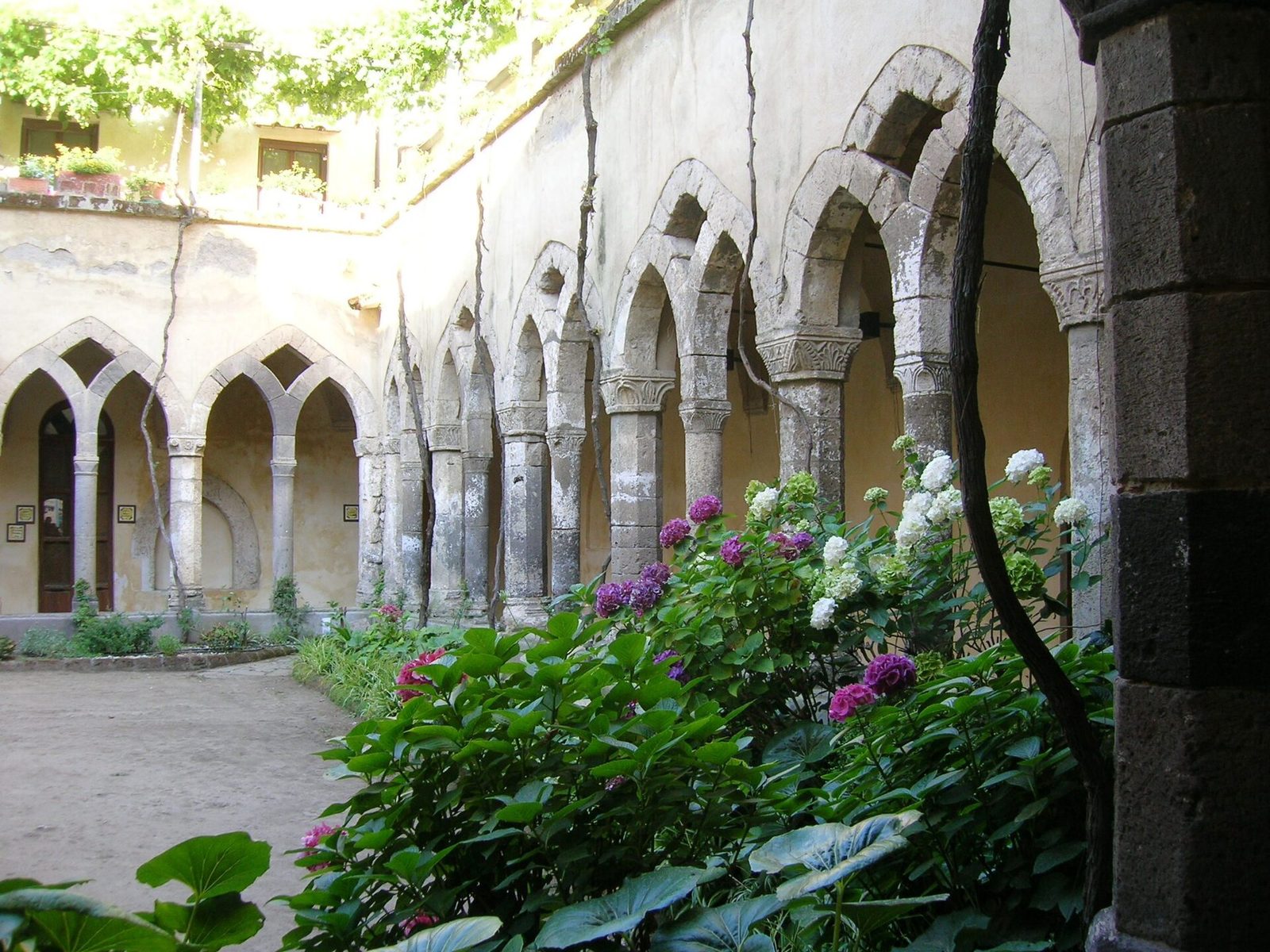
Next to the church of San Francesco, this small cloister is the most beautiful quiet corner in Sorrento. Its arcades mix styles from different centuries, with interlaced pointed arches on two sides, and bougainvillea spilling over the walls. It’s a popular wedding venue and hosts summer concerts, so part of it may be set up for an event. Pop in on your way to the Villa Comunale next door.
Villa Comunale and the sunset
The Villa Comunale is a small public garden on the cliff edge, with benches, a bar and one of the great views on the Bay of Naples: straight across the water to Vesuvius and the whole curve of the bay, with Naples itself on the far shore. It’s also where the lift down to Marina Piccola starts. Come back at sunset, when half the town does the same.
Vallone dei Mulini
From Via Fuorimura, just off Piazza Tasso, look over the railing into a deep, green ravine and you’ll see the ruins of an old flour mill, slowly being swallowed by ferns. The Valley of the Mills is fenced off and can’t be entered, so this is a two-minute stop, but it’s a striking reminder of the gorges that cut through the town.
Marina Grande
Walk down from the old town through the ancient Greek gate to Marina Grande, the fishermen’s quarter, for a seafood lunch or dinner by the water. It feels a world away from Corso Italia, with nets drying, boats pulled up and a small strip of beach. It’s where I’d send anyone who wants the Sorrento of old postcards.
Museums: Correale and the inlaid wood
The Museo Correale di Terranova, in an 18th-century villa, holds Neapolitan paintings, porcelain, furniture and archaeological finds, and its gardens run through a citrus grove to a terrace above the sea. The Museo Bottega della Tarsia Lignea tells the story of Sorrento’s intarsia, the craft of inlaid wood pictures, and shows beautiful 19th-century pieces. Neither is essential, but both are good for a hot afternoon. Check current hours before you go, as smaller Italian museums change them often.
The cathedral
Sorrento’s cathedral, on Corso Italia, has an early 20th-century facade but an interior with fine inlaid-wood panels on its doors and choir stalls and a detached bell tower built partly from Roman fragments. It’s a short stop, and worth one if you’re passing.
Lemon groves and limoncello
The peninsula’s lemons, the protected Limone di Sorrento IGP, grow in terraced groves shaded by pergolas of chestnut poles and straw mats. Several family groves in and around town welcome visitors for a short walk and a tasting of limoncello and lemon products. It’s gently commercial but pleasant, and you’ll leave knowing why the lemons here taste the way they do. Buy limoncello that’s pale and naturally colored, not neon yellow.
Bagni della Regina Giovanna
West of town at Capo di Sorrento, the remains of a Roman villa surround a natural pool of clear seawater connected to the sea by a rock arch. It’s one of the loveliest spots on the peninsula, free to visit and a 15- to 20-minute walk down a path from the main road, which you reach by local bus. The downsides are real: the walk back up is steep, there are no facilities, the rocks are uneven, and in summer it’s packed by mid-morning. Local rules and temporary access limits have been applied in busy periods, so check with the tourist office before you go. Go early, wear shoes you can scramble in, and bring water.
Punta Campanella and the end of the peninsula
Beyond Massa Lubrense, the peninsula ends at Punta Campanella, a protected marine area looking straight across a narrow strait to Capri. A walking path leads down to the tip past a watchtower, and the views of Capri are extraordinary. It’s a half-day excursion rather than a quick stop, and it’s for people who like walking on rough paths in the heat.
A walking route through Sorrento
If you have a single day in town, or an afternoon and an evening after arriving, this is the loop I’d walk. It takes in almost everything above without doubling back much.
- Start at Piazza Tasso with a coffee, then peer into the Vallone dei Mulini from Via Fuorimura around the corner.
- Walk west along Via San Cesareo through the old town’s shopping lane, stopping at the Sedile Dominova.
- Cut down to the cathedral on Corso Italia for the inlaid-wood doors and choir.
- Continue to the church and cloister of San Francesco, then step next door into the Villa Comunale for the view across the bay.
- Take the lift or the steps down to Marina Piccola if you want to see the port, or save your legs and stay up top.
- Wander back west through the old town and walk down through the ancient gate to Marina Grande for lunch or an early dinner by the boats.
- Climb back up at sunset and join the evening passeggiata on Corso Italia, finishing with a gelato or a limoncello on Piazza Tasso.
Add the Museo Correale on a hot afternoon, or a lemon-grove tasting, and you’ve covered the town well. Everything else in this guide is a trip out of it.
Sorrento beaches: the honest version
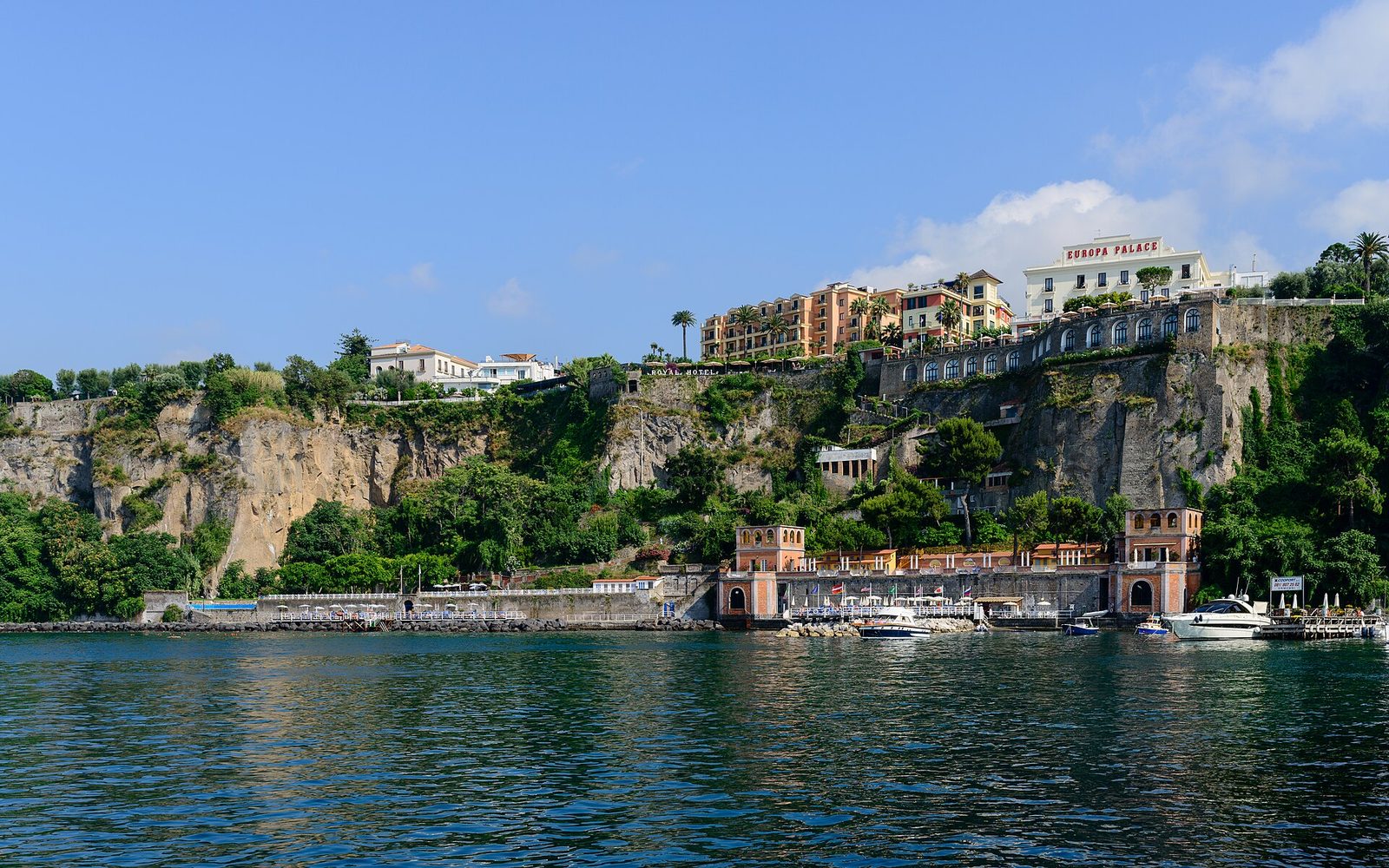
This is the part hotel sites skim over. Sorrento sits on top of sheer cliffs, and there’s very little natural beach below them. What you’ll find instead, at Marina Piccola and along the shore toward Marina Grande, are stabilimenti balneari: private bathing clubs built on wooden decks and piers out over the water, with rows of sunbeds and umbrellas, ladders into the sea, showers and a bar. You pay for a sunbed and umbrella for the day, and in July and August the price and the demand both climb steeply.
Don’t let that put you off entirely. The water is often clear, the platforms are comfortable, and swimming off a ladder beneath the cliffs with Vesuvius on the horizon is a very good way to spend a hot afternoon. Just adjust your expectations: this is sea access, not a beach holiday. Book a sunbed in advance in peak season if a particular platform matters to you, and ask at your hotel, since many have agreements with a bathing club that include a discount or a reserved spot.
If you want something more like a beach:
- Marina Grande has a small public stretch of sand and pebbles alongside its paid areas.
- Meta, a short hop east by train or bus, has the longest beaches near Sorrento, including Alimuri below the cliffs, with free and paid sections. They get very busy with locals on summer weekends.
- Puolo, west of Capo di Sorrento, is a small fishing hamlet with a narrow beach and a couple of restaurants.
- Marina del Cantone, on the far side of the peninsula near Nerano, is a longer pebble beach with excellent seafood restaurants. It’s a proper trip by bus or car.
- Bagni della Regina Giovanna is for swimming off rocks in a natural pool, not lying on sand.
If a sandy beach is central to your trip, Sorrento isn’t the place for it, and neither, frankly, is most of this coast. For the islands’ swimming spots, see my guide to visiting Capri from Naples.
Using Sorrento as a base
This is where Sorrento earns its reputation. From one comfortable, walkable, relatively calm town, you can reach most of the region’s big-name sights.
| Destination | How from Sorrento | Rough journey | My notes |
|---|---|---|---|
| Capri | Ferry or hydrofoil from Marina Piccola | About 20–30 minutes | A much shorter crossing than from Naples. Go early. |
| Positano | SITA bus from outside the station; seasonal boats | About an hour by road, traffic permitting | Buses fill up; boats are calmer in season |
| Amalfi and Ravello | SITA bus via Positano, or boat in season | Longer; change in Amalfi for Ravello | A full day. Boats beat the road in summer. |
| Pompeii | Circumvesuviana to Pompei Scavi | About 30 minutes | Easier from here than from Naples |
| Herculaneum | Circumvesuviana to Ercolano Scavi | Under an hour | Combine with Pompeii only if you’re keen |
| Mount Vesuvius | Train to Pompei or Ercolano, then shuttle | Half a day or more | Book the crater ticket first |
| Naples | Circumvesuviana or hydrofoil | About 70 minutes by train | Fine for a day; tiring for evenings |
The Amalfi Coast bus problem
The SITA bus from Sorrento to Positano and Amalfi is one of the most famous rides in Italy and one of the most frustrating. The road is narrow and spectacular, the buses are ordinary coaches, and in high season the queue outside Sorrento station can be long enough that full buses pass it by. Once on board, you may stand for an hour on hairpin bends. People prone to car sickness should sit on the right-hand side heading toward Positano for the sea views, and consider the boat instead.
Tickets aren’t sold on board. Buy them before you travel at tabacchi, bars and newsstands, or on the regional Unico Campania app, and validate them when you board. Coast-wide day tickets exist and are worth it if you’re hopping between towns. On busy days, start early, and don’t plan a tight return connection to a train or ferry. My Amalfi Coast from Naples guide covers the coast road, the boats and the traffic restrictions on the SS163 in detail.
Pompeii from Sorrento
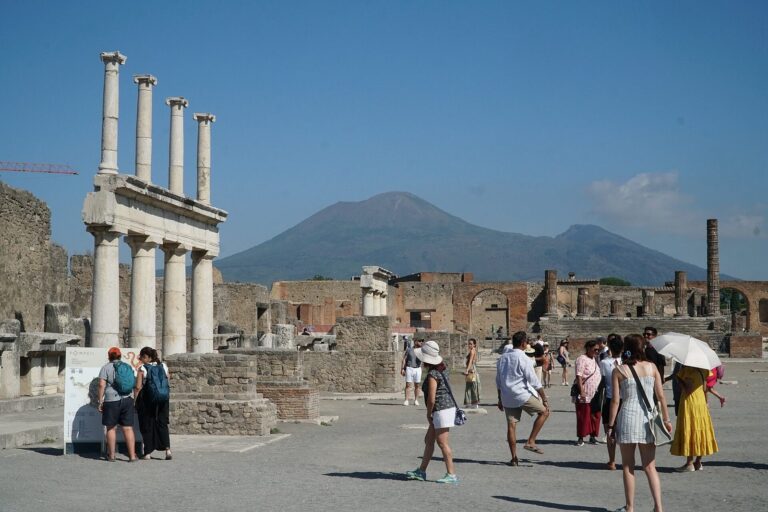
Pompei Scavi station is about half an hour from Sorrento on the Circumvesuviana, and the station is a few minutes’ walk from the Porta Marina entrance, which makes Sorrento a surprisingly good base for Pompeii. Take an early train to beat the heat and the crowds. For tickets, gates and what to see, read my Pompeii guide; the site advice is the same whichever direction you arrive from.
Sorrento or Naples: which base is right for you?
This is the decision many Southern Italy trips hinge on, so here’s how I’d make it.
| If you… | Base yourself in | Why |
|---|---|---|
| Want Capri, Positano and the coast as the core of the trip | Sorrento | Shorter boat and bus rides to the places you’ll visit most |
| Want museums, the old town, pizza and city life | Naples | Everything is on your doorstep, and evenings are the city’s best hours |
| Are traveling with young children or want calm | Sorrento | Quieter, more manageable, easier to walk with a stroller in the center |
| Are on a tight budget | Naples | Rooms and meals usually cost less, and transport hubs are central |
| Want to combine both | Split the stay | A few nights in each saves hours of commuting |
| Are traveling in winter | Naples | Many Sorrento hotels and boats close or scale back in the off-season |
My own view: Naples is the more interesting place to stay and far better value, and too many visitors sleep in Sorrento and see Naples only from a train window. But if your trip is built around the islands and the coast, Sorrento saves you real time every day. Splitting the stay is often the best answer. For the city side of that decision, see my guide to where to stay in Naples, Italy.
Where to stay in Sorrento
- Central Sorrento, around Piazza Tasso and Corso Italia. The most convenient: walk to the station, the SITA bus, the old town and the lift to the port. Can be noisy on the main streets; ask for a quiet room.
- The clifftop hotels. Sorrento’s grand old hotels line the cliff edge west of Piazza Tasso, with terraces and gardens hanging over the bay and, in some cases, private lifts down to their own bathing platforms. The Grand Hotel Excelsior Vittoria is the famous one. Expensive, often gorgeous, and worth it for a special occasion.
- Sant’Agnello. The next town east, effectively a quieter suburb, with good hotels and a flat walk into Sorrento. A good compromise for families.
- Capo di Sorrento and Massa Lubrense. Greener, calmer and often cheaper, with country hotels and agriturismi. You’ll depend on local buses, taxis or a car.
- Near the station. Practical for early trains and cheaper, but less atmospheric.
Sorrento charges a tourist tax on top of your room rate, collected by the hotel. For 2026, local reporting says the town kept its rates unchanged: €2 per person per night in hotels up to three stars, €4 in four-star hotels, B&Bs and holiday homes, €5 in five-star hotels and €1.50 at campsites and agriturismi (checked September 2026). Confirm with your hotel, since categories and exemptions vary.
What to eat in Sorrento
The peninsula has its own food identity, built on lemons, dairy from the Monti Lattari hills and the sea.
- Gnocchi alla sorrentina. Soft potato gnocchi baked in tomato sauce with melted mozzarella and basil, served bubbling in a small dish. It’s Sorrento’s signature, and it’s comfort food at its best.
- Lemons. The Limone di Sorrento IGP is large, fragrant and thick-skinned. It flavors everything from pasta to desserts, like the delizia al limone, a lemon-cream dome of sponge.
- Limoncello. Made from lemon zest steeped in alcohol with sugar syrup, served ice cold after dinner. Local producers offer tastings.
- Provolone del Monaco. A protected, aged stretched-curd cheese from the hills above the peninsula, sharp and nutty.
- Fior di latte and treccia. Fresh cow’s-milk mozzarella from the local dairies; the peninsula is famous for it.
- Sorrento walnuts. Grown here for centuries, and found in cakes and nocino, a walnut liqueur.
- Seafood at the marinas. Spaghetti alle vongole, fried anchovies, and fish of the day at Marina Grande.
For the dishes you’ll eat back in the city, see my guide to Naples food.
Getting around Sorrento
The center is small and flat, so you’ll walk almost everywhere. The exceptions are the marinas, which lie at the foot of the cliffs. To reach Marina Piccola and the ferries, use the lift from the Villa Comunale, walk down the steps from Piazza Tasso, or take the small local bus. Marina Grande is a steep walk down from the old town. Local EAV buses run out to Capo di Sorrento, Massa Lubrense and Sant’Agata sui Due Golfi. Taxis are available, but they’re expensive by Naples standards, so ask the price before you set off.
Evenings in Sorrento
Sorrento isn’t a party town, and that’s part of its appeal. Evenings revolve around the passeggiata along Corso Italia and through the old town, a long dinner, and a drink on Piazza Tasso or on a hotel terrace watching the lights come on around the bay. A handful of bars in the old town stay busy late in summer, and some hotels and cultural venues put on Neapolitan song shows and tarantella performances aimed at visitors, which are cheerful if a little staged. Summer also brings concerts in the San Francesco cloister, which I’d pick over any of the dinner shows.
If you want real nightlife, Naples is the place for it, and the last trains back along the Circumvesuviana leave earlier than you’d like. Plan a taxi or a transfer if you’re coming back late.
Sorrento out of season
Sorrento is very much a seasonal town. In high summer it’s full, hot and expensive, with long queues for buses and boats. In the cooler part of the year it’s a different place: calmer, cheaper and much more local, with clear days that show off the views. The trade-off is that many hotels, bathing clubs and some restaurants close for the winter, boat services to the Amalfi Coast stop, and connections to Capri are fewer and more exposed to rough seas.
If you’re traveling outside the warm months, Naples usually makes the better base, with Sorrento as a day trip on a clear day. For how the seasons compare across the region, see my guide to the best time to visit Naples, Italy.
Into the hills: Sant’Agata and the two gulfs
Most visitors never leave the clifftop, which is a shame, because the hills behind Sorrento are some of the most beautiful countryside on the whole coast. Terraces of olives, lemons and vines climb toward the ridge of the peninsula, and the small village of Sant’Agata sui Due Golfi sits right on top of it, so named because it looks over two gulfs: the Bay of Naples on one side and the Gulf of Salerno, the Amalfi Coast side, on the other.
The best viewpoint is the old convent known as the Deserto, a short, steep walk above the village, from whose terrace you can see both seas and Capri. Sant’Agata also has a long-standing reputation among food lovers for fine dining in the hills. Local EAV buses climb here from Sorrento, and a network of old footpaths links the villages of Massa Lubrense for anyone who likes to walk; pick up a trail map locally and carry water, because shade is patchy.
Boat trips from Sorrento
Seeing the peninsula from the water is one of the best things you can do here, and Sorrento’s marinas are full of operators offering it. The main options are:
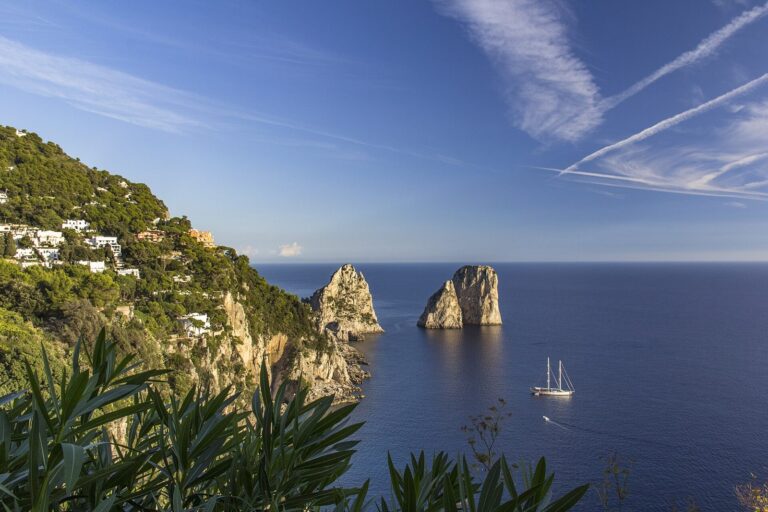
- Small-group boat tours to Capri, which usually circle the island past the Faraglioni and the sea caves, stop for swimming, and leave you some free time on the island. They’re more relaxed than the public hydrofoil, though the Blue Grotto is never guaranteed, as it depends on the sea.
- Trips along the Amalfi Coast to Positano and sometimes Amalfi, avoiding the bus entirely and showing you the coast the way it looks best, from offshore.
- Private charters on a gozzo, the traditional wooden fishing boat of the Bay of Naples, which you can shape around swimming coves, lunch and the Punta Campanella marine area.
- Sunset cruises along the Sorrento cliffs, short and romantic, with a drink on board.
A few things to check before booking: how many passengers share the boat, whether lunch and drinks are included, what happens if the sea is too rough (a good operator offers a refund or a new date), and how much free time you get on land. Boat days are the first thing to be canceled when the wind gets up, so schedule them early in your stay and leave a spare day.
Shopping in Sorrento
Sorrento is a good town for souvenirs, provided you look past the mass-produced ones. The local specialties are:
- Intarsia, the inlaid-wood craft the town has practiced for centuries: music boxes, trays, tables and framed pictures made from different colored woods. Genuine pieces are handmade and priced accordingly; cheap versions are often printed.
- Handmade leather sandals, made to measure in a few hours at workshops in the old town.
- Lace and embroidery, a traditional craft of the peninsula.
- Ceramics, often from Vietri sul Mare on the other side of the coast, decorated with lemons and sea motifs.
- Lemon products: limoncello, lemon soap, lemon candies and marmalade.
Ask where things are made. A good shop will tell you, and the difference between a handmade inlaid box and a factory copy shows up quickly once you’ve seen both side by side.
Sorrento with children and limited mobility
Sorrento is one of the easier places in the region with children. The center is flat, the Villa Comunale has space to run around, gelato is everywhere, and hotels with pools are common. The trickier parts are the marinas, the crowded trains and buses, and the bathing platforms, where ladders drop straight into deep water; a hotel with its own pool or a beach at Meta may suit small children better.
For travelers with limited mobility, the flat center and the lift to Marina Piccola help, but the Circumvesuviana, the steep lanes down to Marina Grande and many boats involve steps. A private transfer from Naples and a central hotel with a lift make the biggest difference.
What to skip
- Booking Sorrento for a beach holiday. You’ll be swimming off a paid platform. Lovely, but not a beach.
- Driving the Amalfi Coast road yourself in summer. Traffic, parking and alternate-plate restrictions make it miserable. Take the boat or the bus.
- Restaurants with menu touts on Piazza Tasso. Walk five minutes into the old town or down to Marina Grande.
- Neon limoncello and “free tastings” with a hard sell. Buy from a producer whose bottle lists real lemons, not coloring.
- Sleeping in Sorrento and never seeing Naples properly. Give the city at least one full day.
- Relying on the Campania Express after October 1, 2026. It’s suspended; take the regular Circumvesuviana.
Sorrento, Italy: frequently asked questions
Is Sorrento worth visiting?
Yes, especially as a base. The old town, cliff views, lemon groves and Marina Grande make for a lovely day, and it’s the most convenient place to stay for Capri, Positano and Pompeii. It’s less rewarding if you want a sandy beach or big-city sights.
How do I get from Naples to Sorrento?
Take the Circumvesuviana train from Napoli Garibaldi or Porta Nolana to the end of the Sorrento line, about 70 minutes. From spring to autumn, hydrofoils also run from Molo Beverello to Marina Piccola, faster and more scenic but pricier.
Does Sorrento have a beach?
Not much of one. Swimming in Sorrento is mostly from paid wooden bathing platforms at Marina Piccola and Marina Grande. For longer beaches, go to nearby Meta, or farther to Marina del Cantone.
Is Sorrento on the Amalfi Coast?
No. Sorrento is on the Sorrentine peninsula facing the Bay of Naples. The Amalfi Coast is on the southern side of the same peninsula, starting around Positano, about an hour away by road.
Is it better to stay in Sorrento or Naples?
Stay in Sorrento if Capri, Positano and a calmer atmosphere are the priority. Stay in Naples for museums, food, city life and lower prices. Many travelers split their nights between the two.
Can you do a day trip to Capri from Sorrento?
Yes. Ferries and hydrofoils from Sorrento’s Marina Piccola reach Capri in around 20 to 30 minutes, a shorter crossing than from Naples. Take an early boat to get ahead of the crowds.
Is Sorrento walkable?
The town center is compact and flat, so yes. The two marinas are at the bottom of the cliffs, reached by steps, a steep road or the lift from the Villa Comunale.
Is Sorrento expensive?
It’s pricier than Naples for hotels and restaurants, especially in summer, but cheaper than Positano or Capri. Eating away from Piazza Tasso and staying in Sant’Agnello or Massa Lubrense can keep costs down.
What is Sorrento famous for?
Lemons and limoncello, inlaid woodwork, gnocchi alla sorrentina, clifftop grand hotels, views of Vesuvius across the bay, and its role as the gateway to Capri and the Amalfi Coast.
How far is Sorrento from Pompeii?
About half an hour on the Circumvesuviana train from Sorrento to Pompei Scavi, the station a few minutes’ walk from the Porta Marina entrance to the ruins. It’s an easy morning trip, so start early to avoid the midday heat.
Photo credits
- Sorrento and the bay from above the marina: photo by Falk2, Wikimedia Commons, CC BY-SA 4.0.
- Church facade in central Sorrento: photo by Steven Chiefa, Wikimedia Commons, public domain.
- Cloister of San Francesco: photo by Mentnafunangann, Wikimedia Commons, CC BY-SA 3.0.
- Marina Piccola port: photo by Norbert Nagel, Wikimedia Commons, CC BY-SA 3.0.
- The cliffs and bathing platforms: photo by Norbert Nagel, Wikimedia Commons, CC BY-SA 3.0.
Sources: Circumvesuviana service and the Campania Express suspension from EAV; SITA SUD and Unico Costiera ticketing from 2026 operator listings; Sorrento tourist tax from 2026 local reporting on the Comune di Sorrento’s decision; Bagni della Regina Giovanna access from 2026 visitor information. Checked September 2026. Boat timetables and museum hours change seasonally; check before you travel.