On this page
Last updated September 16, 2026. Crime figures from Il Sole 24 Ore’s 2025 crime index; police deployments from the Polizia di Stato and 2026 local reporting; the US travel advisory from the State Department’s September 2026 update; tourist tax from the Comune di Napoli. I describe risks as they are, not as the movies show them.
My top Naples travel tips: Naples, Italy is safe for visitors who guard against petty theft. Keep phones and wallets in front pockets on the Circumvesuviana, around Piazza Garibaldi and on crowded Via Toledo, use only licensed taxis, ignore street card games and “bargain” electronics, and don’t leave your phone on a café table. Violent crime against tourists is rare.
Naples has a reputation that arrives before you do. Friends warn you about it, some guidebooks still treat it as a place to pass through on the way to Pompeii, and the city’s organized crime has had a long run on screens around the world. Then you get there and find a loud, warm, astonishingly beautiful city full of families, students, grandmothers on balconies and other travelers having the time of their lives.
The honest picture sits between the fear and the boosterism. Naples has more petty street crime than a small Italian town and less reported crime than several cities people visit without a second thought. The risks are specific: particular trains, particular squares, particular tricks. Know them and you can relax and enjoy one of Europe’s great cities. This guide covers exactly that, then the practical things nobody tells you until you’ve already made the mistake, from cash and the tourist tax to church dress codes, strikes and the volcano next door.
Naples travel tips at a glance
| Risk or hassle | Where it happens | What to do | How worried to be |
|---|---|---|---|
| Pickpocketing | Circumvesuviana, Metro Line 1 at rush hour, Piazza Garibaldi, Via Toledo, crowded buses | Front pockets, zipped bag worn in front, alert at train doors | The main thing to watch |
| Phone and bag snatching | Café tables, seafront, streets where scooters pass | Phone off the table, bag on the wall side, away from the curb | Worth real attention |
| Unlicensed taxis | Airport arrivals, outside Napoli Centrale | Official white taxis from the rank only; ask for the fixed fare | Easy to avoid |
| Street card games | Via Toledo, Piazza Garibaldi | Walk past; every “player” is on the same team | Only costs you if you play |
| The “pacco” (boxed goods scam) | Around the station, street sellers | Never buy electronics on the street | Only costs you if you buy |
| Unofficial parking attendants | Anywhere you park a car | Use a staffed garage; better still, don’t drive | Irritating, not dangerous |
| Traffic and scooters | Everywhere, especially the old town lanes | Walk predictably, look both ways on one-way streets | Honestly the most likely way to get hurt |
| Campi Flegrei earthquakes | Pozzuoli and the western suburbs | Check Civil Protection before visiting the area | Know the alert level, then carry on |
Is Naples safe? What the numbers say
Every year the Italian financial daily Il Sole 24 Ore publishes a crime index ranking Italy’s provinces by crimes reported to police per 100,000 residents. In the 2025 edition, based on 2024 reports, the province of Naples ranked 13th. Milan came first, Florence second and Rome third, followed by Bologna, Rimini, Turin, Prato, Venice, Livorno and Genoa. Naples recorded roughly 4,478 reports per 100,000 people, and the total fell by more than 3,000 compared with the previous year.
Read that carefully, because it’s easy to overstate either way. The index measures crimes reported, not crimes committed, and cities with huge visitor numbers, like Florence and Venice, rank high partly because tourists report stolen phones and wallets for insurance. It also covers whole provinces, not just the historic center. And the same index puts the Naples area at or near the top for extortion, smuggling and vehicle theft, which reflects organized crime’s grip on local businesses and neighborhoods rather than any threat to someone eating pizza on Via dei Tribunali.
What the numbers do show is that the idea of Naples as uniquely dangerous doesn’t stand up. If you’d visit Milan, Florence or Rome without a second thought, you can visit Naples with the same sensible precautions.
What the US government says
The US State Department rates Italy as a whole at Level 2, “Exercise increased caution,” citing the risk of terrorism, and it reaffirmed that rating in September 2026. There’s no separate, higher warning for Naples. The advisory does note that petty crime such as pickpocketing and purse snatching is common in tourist areas and on public transportation across Italy, which matches everything in this guide. Level 2 isn’t a warning against travel; many popular European destinations sit at the same level.
The Camorra question
Yes, organized crime exists in Naples, and yes, it’s serious for the city. But the Camorra’s business is drugs, extortion, construction and counterfeit goods, and its violence is directed at rivals, not at visitors. Tourists don’t figure in it, and you won’t see it. The only way it touches your trip is indirectly: the counterfeit bags on blankets, and the unofficial parking attendants. Don’t buy the former, and avoid needing the latter.
Where pickpockets actually work

Petty theft in Naples is concentrated in a handful of predictable places. That’s good news, because it means you can be relaxed most of the time and alert at the right moments.
The Circumvesuviana
The train to Herculaneum, Pompeii and Sorrento is the single most common place visitors get robbed. It’s crowded, it’s full of people carrying cameras and day bags, and everyone is distracted by station names. Thieves work the doors at Garibaldi and the busier stops, where a crush of people boarding and leaving gives cover. In summer 2026, the Railway Police began weekly escorts, in uniform and plain clothes, on the Naples–Pompeii–Sorrento line, which is a welcome step but not a reason to drop your guard. Wear your backpack on your front, keep your phone in a zipped pocket, and be most alert in the few seconds when the doors open. My guide to getting around Naples, Italy covers the tickets and platforms.
Piazza Garibaldi and Napoli Centrale
The huge square outside the main station has been rebuilt and is better than it was, but it’s still a transit hub with everything that brings: crowds, people who are lost, people selling things, and a few people looking for an opportunity. The station itself is busy and policed. Take extra care with luggage, don’t accept “help” with bags or ticket machines, and if you’re arriving at night, go directly to your hotel or the taxi rank.
Via Toledo and the Metro Line 1
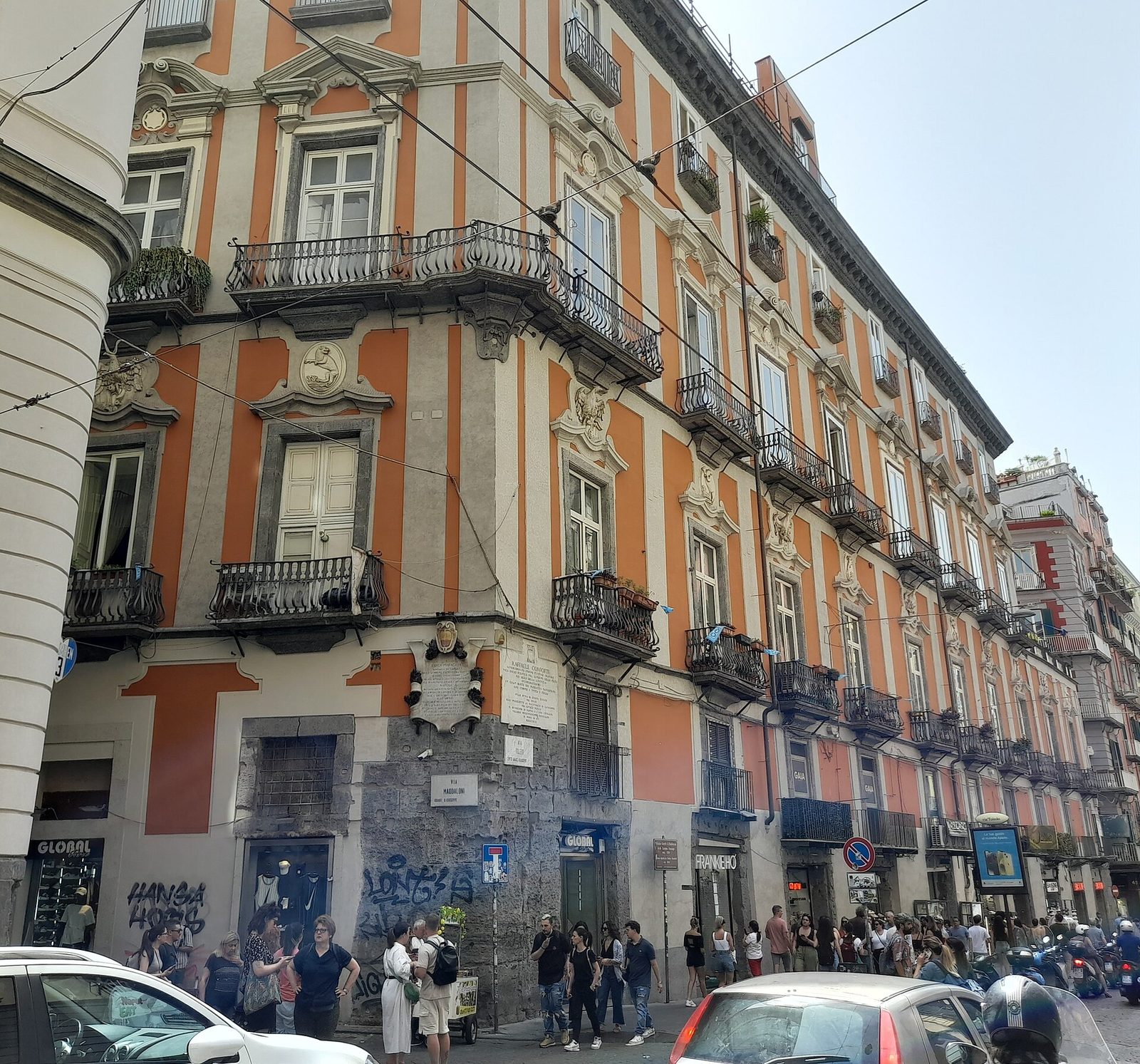
Via Toledo is the city’s main shopping street and, in the evenings and on weekends, one of the most crowded streets in Italy. Crowds attract pickpockets anywhere. Line 1 at the station and in the center gets packed at rush hour. Since 2025, a dedicated metro police unit, the Polmetro, has patrolled stations on Lines 1 and 6 through the day, which you’ll notice as uniformed officers on platforms. Keep valuables in front and you’ll be fine.
Buses
Crowded city buses are classic pickpocket territory, and a few routes through the center and to the station are notorious among locals. Since I suggest avoiding buses in the center anyway, this is one more reason. If you do take one, stand where you can see your bag.
How the teams work
Most pickpocketing here, as across Europe, is done by small groups rather than lone thieves. Knowing the moves makes them easy to spot:
- The door squeeze. One person blocks the train or bus door as you board, while another presses from behind and lifts your wallet or phone.
- The distraction. Someone spills something on you, drops coins, asks directions with a map held up in front of your chest, or thrusts a clipboard petition at you. While you’re dealing with it, a partner works your pockets or bag.
- The helper. At ticket machines, a friendly stranger offers to show you how to buy a ticket, watches your PIN, or palms your change.
- The table grab. A phone left on an outdoor café table disappears under a leaflet or a menu placed on top of it by someone “selling” something.
Bag snatching, phones and watches
The scippo, a bag or phone snatched by someone on a passing scooter or on foot, is the petty crime Naples is most associated with. It’s much less common than it was a generation ago, but it still happens. The fixes are simple: carry your bag on the side away from the road, wear it across your body, don’t walk along the edge of the curb holding your phone out for navigation, and step into a doorway to check a map.
Expensive watches have long been targeted in Naples, sometimes by thieves on scooters in the smarter parts of town, as local news reports regularly. If you own a very valuable watch, leave it at home. The same goes for obvious designer jewelry. Nobody in Naples dresses to impress on a Tuesday morning at Pompeii, and you don’t need to either.
Common Naples scams, and how to avoid them
Scams are the other half of the story, and none of them work if you know them.
Unlicensed taxis and meter tricks
At the airport and outside Napoli Centrale, you may be approached by drivers offering a ride. Don’t go. Official Naples taxis are white, have a roof sign and a license number on the door, and wait at designated ranks. For the most common routes, including the station, the port and the airport, the city sets fixed fares; ask for the tariffa predeterminata before you get in. If there’s no fixed fare for your trip, make sure the meter is running when you set off.
The three-card game
On Via Toledo and around the station you may see a small crowd around a man shuffling three cards or shells on a cardboard box, with people apparently winning €50 notes. Every one of the winners is part of the act. The game is unwinnable, and while you watch, someone may be picking your pocket. Keep walking.
The pacco
Naples practically invented this one, and it has its own word: il pacco, the package. Someone offers you a new phone, camera or laptop at a huge discount, shows it to you, takes your money, and hands over a sealed box. Later you open it and find a brick, a bag of sand or a bottle of water. Never buy electronics from anyone on the street, however convincing the demonstration.
Counterfeit goods
The designer bags and sunglasses spread out on sheets are counterfeit, the profits go to organized crime, and in Italy the buyer can be fined as well as the seller. It’s not worth it.
Friendship bracelets, roses and “gifts”
Someone ties a bracelet on your wrist, hands your partner a rose, or gives you a small trinket “for free,” then demands payment. Keep your hands to yourself, say “no, grazie” firmly and keep moving.
Unofficial parking attendants
If you park on the street, a man may appear, wave you into a space and expect a few euros. These parcheggiatori abusivi are illegal, and the implied threat is to your car. The simple answer is to use a staffed garage, or better, not to bring a car into Naples at all.
Bill padding and card tricks
Most Naples restaurants are honest. In the few places that aren’t, you’ll see dishes you didn’t order, “fish by weight” at an unstated weight, or an unexplained service charge. Read menus with prices before ordering, ask the price of the day’s fish, and check the bill. When you pay by card and the machine offers to charge you in dollars, choose euros. The conversion offered at the till, known as dynamic currency conversion, is nearly always worse than your bank’s rate.
Neighborhood by neighborhood: where to relax and where to pay attention
Naples isn’t one place, and its reputation doesn’t apply evenly. Here’s how I’d think about the areas visitors actually spend time in. For choosing a base, see my guide to where to stay in Naples, Italy.
| Area | By day | At night | Notes |
|---|---|---|---|
| Centro storico (Spaccanapoli, Via dei Tribunali) | Busy and fine | Lively until late around the pizzerias; quieter lanes empty out | Pickpockets in crowds; scooters in the lanes |
| Quartieri Spagnoli | Fine, full of visitors | Main lanes busy with bars and restaurants | Transformed in the last decade; stick to the lively streets late at night |
| Via Toledo and Piazza del Plebiscito | Fine, very crowded | Crowded in the evening, well lit | Pickpocket and card-game territory |
| Chiaia and the seafront | Relaxed, upmarket | Busy bar scene, generally safe | Watch and phone snatching reported occasionally |
| Vomero | Residential and calm | Calm | One of the city’s safest-feeling areas |
| Sanità | Fine, especially with a guide or on the main streets | Quieter; I’d take a taxi back if it’s late | A neighborhood being revived through culture and tourism |
| Piazza Garibaldi and the Vasto | Busy and chaotic | The area I’d least like to wander | Convenient for trains, not my pick for a base |
| Scampia and Secondigliano | No reason to visit | No reason to visit | Outlying housing estates; not a tourist destination |
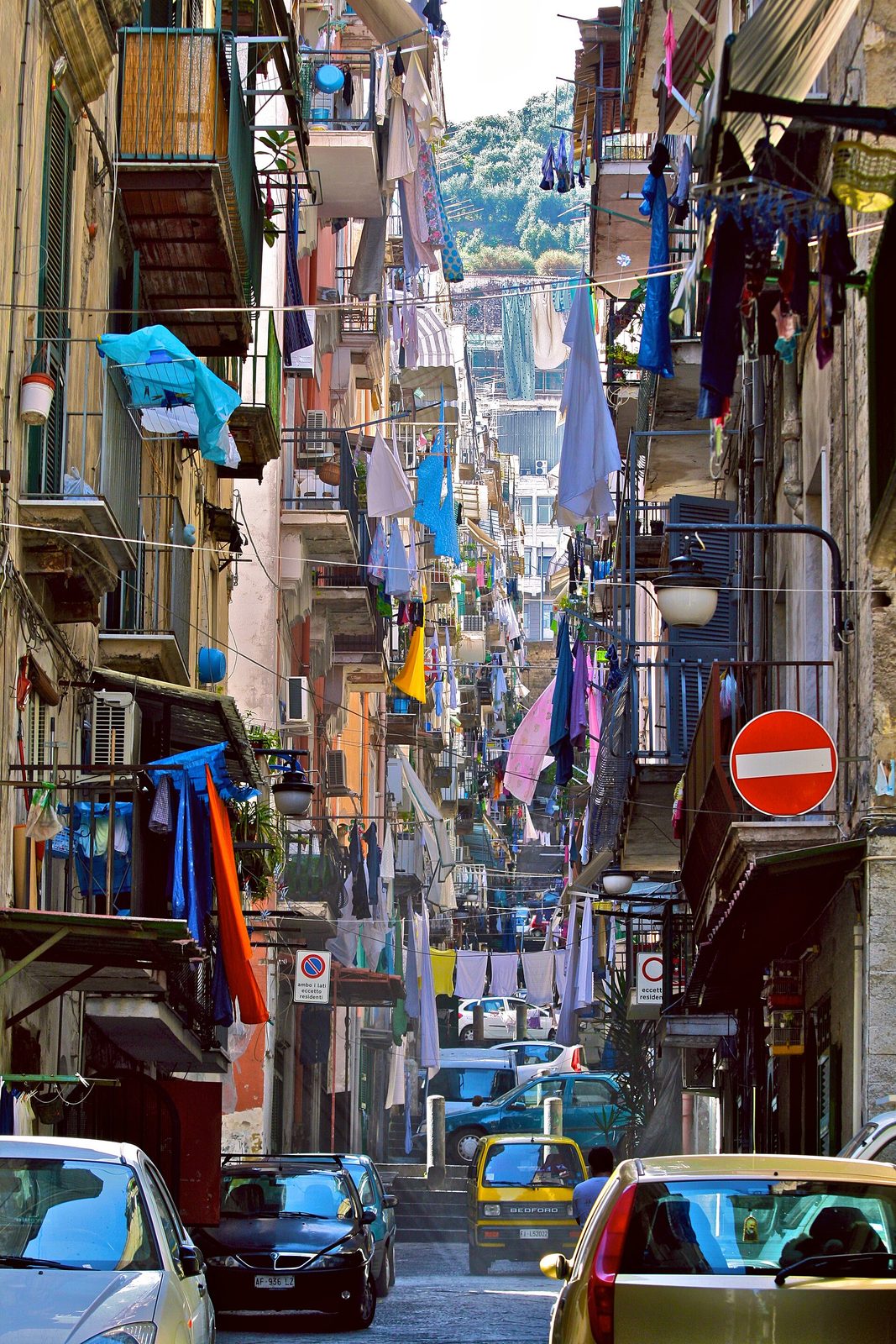
The Quartieri Spagnoli deserves a special word. For decades it was the neighborhood guidebooks told you to skip. Today it’s one of the most visited parts of the city, with murals of Maradona, street food and small trattorie on every corner. It’s still a real, dense, working neighborhood where people live on the street, and I’d treat it with the same awareness you’d bring to any busy part of a big city. But the warnings you may have read are out of date.
Naples at night
Naples is a late city. Neapolitans eat dinner after 8 p.m., the seafront is busy until well past midnight in summer, and the squares in the centro storico fill with students. Most visitors will feel comfortable walking between the main areas in the evening.
After midnight, use the same judgment you would in any big city. Stick to lit, populated streets; the lanes of the old town can go from buzzing to empty within a block. The metro and funiculars stop in the evening, so plan your ride back or have a taxi app installed. And if you’ve been drinking, take the taxi.
Solo and female travelers
Women travel alone in Naples all the time, and the main risks are the same petty ones everyone faces. What you may notice more is attention: comments, stares and the occasional persistent conversation, which is usually more annoying than threatening. A firm “no, grazie” and walking on generally ends it. Choose accommodation on a lively street rather than a dark lane, check reviews for comments about the neighborhood at night, and share your plans with someone at home, as you would anywhere.
For LGBTQ travelers, Naples is broadly open and tolerant, with a visible community and an annual Pride. Public affection draws less attention in central Naples than in some small southern towns.
If something goes wrong
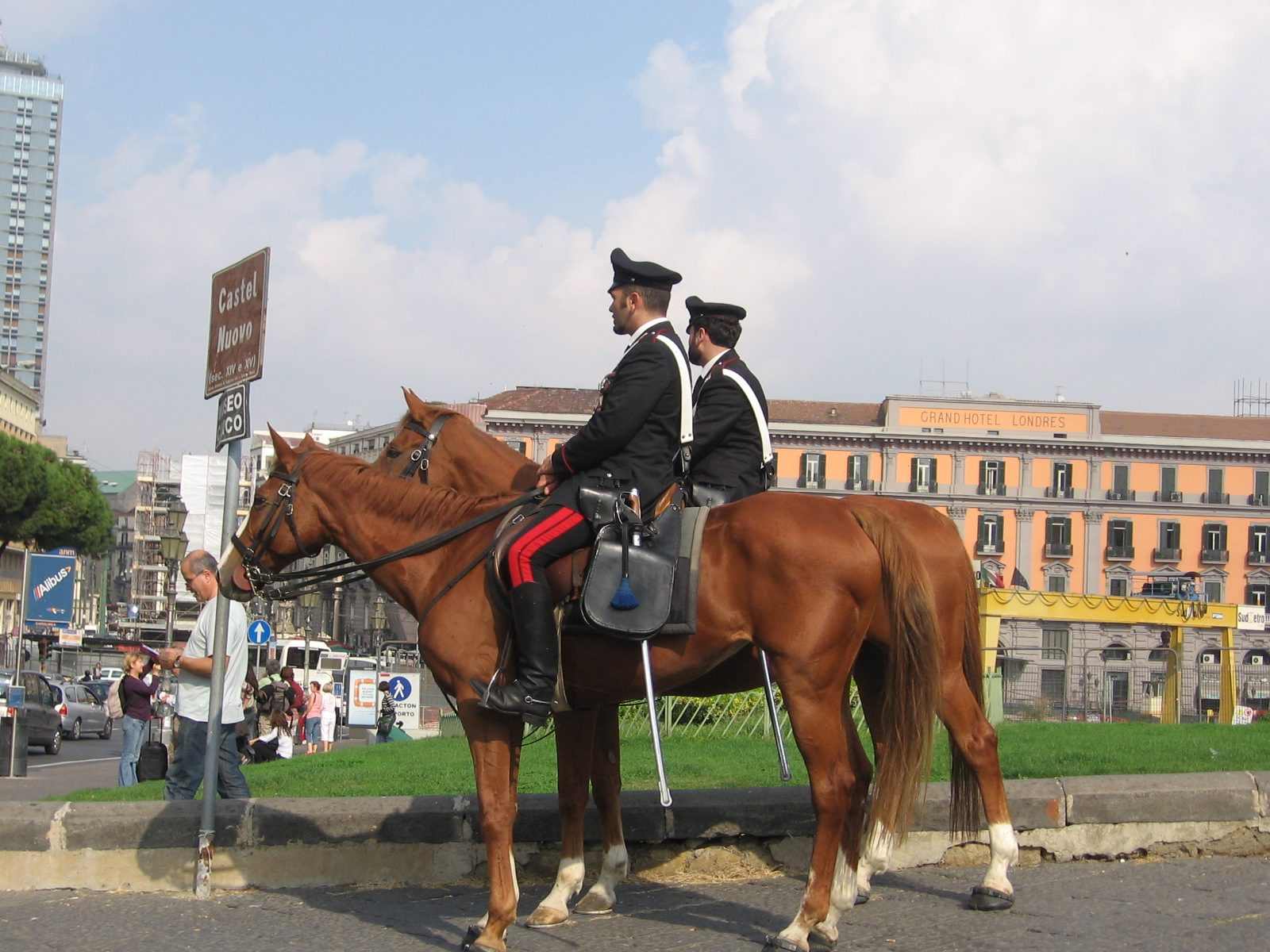
Emergency numbers
- 112: the European emergency number. It works from any phone, and operators can transfer you to English speakers.
- 113: State Police (Polizia di Stato).
- 118: medical emergencies and ambulance.
- 115: fire service.
Reporting a theft
If something is stolen, you’ll need a police report (denuncia) for insurance and for replacing documents. You can file it at a Polizia di Stato station (a commissariato or the Questura) or at a Carabinieri station. Bring ID, and a description of what was taken, with serial numbers if you have them. Expect some waiting. Cancel cards immediately through your bank’s app, and use your phone’s find-my-device service before the thief switches it off.
Lost passport
US citizens can get emergency passport help from the US Consulate General in Naples, on Piazza della Repubblica on the seafront. Check the consulate’s website for current appointment rules before you go. Other nationalities should check their own embassy or consulate; several countries have consulates in Naples, and others cover the city from Rome.
The volcanoes: Vesuvius and the Campi Flegrei
Naples sits between two active volcanic areas, and it’s a fair thing to wonder about.
Vesuvius is one of the most closely monitored volcanoes on Earth, watched around the clock by the Vesuvius Observatory. As of September 2026 its alert level was green, the lowest, with no sign of unrest. Walking the crater is a normal tourist activity; see my Mount Vesuvius guide.
The Campi Flegrei, west of the city around Pozzuoli, are a different matter right now. The area is experiencing bradyseism, a slow rise of the ground accompanied by swarms of earthquakes, and the alert level has been yellow, the second of four levels, meaning heightened scientific monitoring rather than danger to the public. A magnitude 4.7 earthquake on July 31, 2026 was the strongest of the current crisis, damaged buildings in Pozzuoli, and was felt across Naples. Some transport in the area was disrupted as a result.
For a visitor staying in central Naples, the practical advice is this: know that you may feel a tremor, check Italy’s Civil Protection Department and the INGV observatory for the current status before visiting Pozzuoli and the Campi Flegrei sites, and follow any local instructions. If you feel a strong earthquake, move away from windows and anything that could fall, and once it stops, go outside to open space away from buildings.
Practical Naples travel tips nobody tells you first
Money: cash, cards and ATMs
Cards are widely accepted in hotels, restaurants and most shops, and Italian law requires businesses to accept card payments. In practice, some small bars, market stalls, street-food counters and older family trattorie still prefer cash, and a few will look pained if you pay €2 by card. Carry some euros in small notes. Use ATMs attached to real banks (look for a bank name, and a Bancomat sign) rather than the freestanding machines in tourist areas, which often charge high fees. When an ATM or card machine offers to convert to dollars, always decline and pay in euros.
The tourist tax
Naples charges a per-person, per-night tourist tax, collected by your hotel or host, usually in cash at check-in or checkout and not included in many online booking prices. From May 1, 2026, the Comune di Napoli set it at €6 a night in four- and five-star hotels and short-term rentals, €5.50 in three-star hotels and B&Bs, €4.50 in two-star hotels and €4 in one-star hotels (checked September 2026). It applies to guests over 14, for up to 14 nights. For a couple staying five nights in a short-term rental, that’s €60 you’ll want to budget for.
Tap water
Naples tap water is safe to drink and generally good. You’ll also find public drinking fountains around the city. Buy bottled water if you prefer the taste, but there’s no health reason to. Carry a refillable bottle, especially in summer and at Pompeii, where the site has drinking fountains along the main streets and the queues for bottled water at the cafeteria are long. In restaurants, ordering tap water (acqua del rubinetto) is less common than in the US; most tables order a bottle of still (naturale) or sparkling (frizzante) water, which is cheap.
Dress codes for churches
Naples has hundreds of churches, many of them extraordinary. Cover shoulders and knees to enter, especially at the Duomo and at working churches during services. A light scarf in your day bag solves the problem in summer. Don’t walk around during Mass, and check whether photography is allowed.
Opening hours and closures
Many small shops close for a long lunch in the early afternoon and reopen until evening. Some churches close in the middle of the day too. Sundays are quieter, with many shops shut. Museums often close one day a week, which varies by site, and many family businesses close for a week or two in August. Check hours for anything you’ve built a day around.
Strikes
Italian transport strikes (scioperi) are common, usually brief and announced in advance, with guaranteed minimum service at certain times. Check the operators’ websites and the Ministry of Infrastructure and Transport’s strike calendar a few days before any important train or ferry trip.
Traffic, crossings and noise
The thing most likely to hurt you in Naples isn’t a criminal; it’s a scooter. Traffic rules are treated as suggestions, one-way streets carry two-way scooters, and zebra crossings require confidence. Walk predictably, make eye contact with drivers, and look both ways even on one-way streets. The city is also loud, at all hours. If you’re a light sleeper, pack earplugs and ask for a room at the back.
Heat
Summer in Naples is hot and humid, and the old town traps the heat. Do Pompeii and anything outdoors early, rest in the middle of the day like the locals, carry water and wear a hat. Many visitors underestimate how exposed Pompeii and the Vesuvius crater path are; there’s very little shade at either. For how the seasons compare, see the best time to visit Naples, Italy.
Phones, plugs and connectivity
Italy uses 230-volt power with type F and type L plugs; US travelers need an adapter and, for older devices, a converter. Buying an eSIM before you arrive is the easiest way to get data, and most phones sold in the US in recent years support them. Wi-Fi is standard in hotels and common in cafés.
Tipping and the coperto
Tipping isn’t expected in the American way. Restaurants may add a coperto, a small per-person cover charge that should be printed on the menu. Rounding up or leaving a few euros for good table service is generous. For more on eating well and cheaply, see my guide to Naples food.
A few words of Italian go a long way
Neapolitans are famously friendly and talkative, and English is more common among younger people and in hotels than in family trattorie and markets. “Buongiorno,” “per favore,” “grazie” and “scusi” will change the tone of every exchange. You’ll also hear Neapolitan, a language of its own, spoken all around you.
Football matters
SSC Napoli is close to a religion here, and Diego Maradona is its patron saint, with shrines in the Quartieri Spagnoli. Match days bring crowds and traffic around the stadium in Fuorigrotta and celebrations across the city. Be respectful of the team in conversation, and you’ll make friends.
Your first hour in Naples
Arrival is when visitors are most tired, most loaded down and most distracted, which is why it’s when a lot of trouble happens. A little planning takes the edge off.
Arriving by train at Napoli Centrale
Decide before you step off the train how you’ll reach your bed, on foot, by metro or by taxi, and have the address of your accommodation saved offline. The official taxi rank is directly outside the main entrance on Piazza Garibaldi. Ignore anyone inside the station offering a car or asking to carry your bags. If you’re taking Metro Line 1 or the Circumvesuviana, follow the signs downstairs and buy your ticket from a machine or the ticket office, not from a “helper.”
Arriving at the airport
Capodichino is close to the city, but there’s still no train or metro link to it. Your choices are the official airport bus, a licensed taxi from the rank outside arrivals, or a transfer you’ve booked in advance. Walk past anyone who approaches you inside the terminal offering a ride; that’s the unlicensed-taxi scam in its natural habitat.
Arriving by ferry or cruise ship
Cruise passengers and ferry travelers land at the port by Piazza Municipio, a short walk from Via Toledo and the Castel Nuovo, and a Line 1 stop sits right there. The port area is busy and straightforward. Just note that hydrofoils and car ferries use different piers about a kilometer apart, so check which one your ticket names before you set off to catch a boat.
Short-term rentals, ID and check-in
Apartments are a big part of the Naples accommodation scene, and a few Italian rules affect you as a guest. Every legal short-term rental in Italy must have a national identification code, the CIN, displayed in its online listing and at the property; if a listing doesn’t show one, I’d book somewhere that does. Italian law also requires hosts to register every guest’s identity document with the police, so expect to show your passport at check-in or send a copy in advance.
Self check-in with a key box has been caught up in a long legal back-and-forth over whether hosts must verify guests’ identity in person. As of 2026 the final guidance was still being settled, and some hosts now ask for a video call or meet guests at the door. Read your booking’s check-in instructions carefully, and allow time for it if you’re arriving late.
In a hotel or an apartment, keep your passport secure, locked in a safe if there is one, and carry a photo or photocopy of it on your phone. Italian law expects you to be able to identify yourself if asked, so on days when you’ll be traveling or checking into museums with ID-linked tickets, such as Pompeii, bring the original in a zipped inner pocket.
Health, pharmacies and insurance
Italian pharmacies, marked by a green cross, are the first stop for minor problems. Pharmacists are trained to advise on everyday ailments and can sell many medicines over the counter that would need a prescription in the US. A rota of pharmacies stays open at night and on Sundays; the schedule is posted on the door of every pharmacy. In a real emergency, call 118 or go to a hospital emergency department (pronto soccorso).
Bring any prescription medicines in their original packaging, with a copy of the prescription using the generic name. US health insurance often won’t cover you in Italy, so travel insurance with medical cover is worth having, particularly if your trip includes the Vesuvius crater path, ferries or a scooter ride along the coast. Keep the policy number and emergency line on your phone.
Entry rules for American travelers
US citizens don’t need a visa for tourist stays of up to 90 days in any 180-day period in the Schengen area, which includes Italy. Your passport should be valid for at least three months beyond your planned departure from the area, and ideally six. The EU has been rolling out its Entry/Exit System, which records non-EU travelers’ fingerprints and a facial photo at the border in place of passport stamps, and it plans to introduce ETIAS, an online travel authorization for visa-exempt visitors. Check the EU’s official travel site before you fly for what applies on your dates.
Naples with children
Neapolitans adore children, and families with kids get a warmer welcome here than almost anywhere in Europe. Waiters will fuss over them, strangers will talk to them, and nobody minds a toddler in a pizzeria at 9 p.m. The practical challenges are physical rather than cultural.
Strollers are hard work in Naples. Sidewalks are narrow or missing, the old town is paved with uneven volcanic stone, and many sights, stations and funiculars involve stairs. A baby carrier is far easier for small children, and a light, folding stroller beats a big one. Hold hands on the streets, because scooters appear without warning in lanes that look pedestrian. Pompeii and the Vesuvius path are exposed and hot in summer, so go early with hats, water and snacks, and plan a rest in the middle of the day. And count on children being a hit: the babà, the gelato and the funicular rides tend to win them over quickly.
What to skip
- “Gomorra tours” and crime tourism in Scampia. It’s a residential area where people are trying to change the story. There’s nothing for a visitor to see.
- Leaving your phone on a café table. It’s the easiest theft in the city.
- Anything sold on a blanket or out of a box on the street. Counterfeits and the pacco scam.
- Rides from people who approach you. Official taxis wait at ranks.
- Carrying everything in a back pocket or open tote on the Circumvesuviana. It’s where visitors get robbed most.
- Staying away because of the reputation. The data doesn’t back the fear, and you’d miss one of the best cities in Europe.
Naples travel tips: frequently asked questions
Is Naples safe for tourists?
Yes, with normal big-city precautions. The main risks are pickpocketing and bag or phone snatching in crowded places such as the Circumvesuviana, Piazza Garibaldi and Via Toledo. Violent crime against tourists is rare, and the Naples province reports less crime per resident than Milan, Florence or Rome.
Is Naples safe at night?
The main areas, including the centro storico’s busy streets, Via Toledo, Chiaia and the seafront, stay lively and are generally fine in the evening. Late at night, stick to lit, populated streets, avoid wandering around Piazza Garibaldi, and take a taxi after the metro stops.
What areas of Naples should tourists avoid?
There’s little reason to visit the outlying estates of Scampia and Secondigliano. Be more careful around Piazza Garibaldi and the station area at night, and in empty old-town lanes late in the evening. The Quartieri Spagnoli and Sanità are fine to explore by day.
Is Naples more dangerous than Rome?
Not by the numbers. In Il Sole 24 Ore’s 2025 crime index, the Naples province ranked 13th for crimes reported per resident, below Milan, Florence and Rome. Both cities have pickpockets in tourist areas; Naples has more bag snatching.
Is Naples safe for solo female travelers?
Generally yes. Expect the same petty-theft risks as anyone, plus occasional unwanted attention that’s usually more annoying than threatening. Stay on lively streets at night, choose a well-reviewed base in a central area, and take taxis late.
What are the most common scams in Naples?
Unlicensed taxis, the three-card game on Via Toledo, the “pacco” (a boxed phone or camera that turns out to be a brick), counterfeit goods, “free” bracelets or roses that come with a demand for money, and unofficial parking attendants.
What is the emergency number in Naples, Italy?
Dial 112, the European emergency number, from any phone. You can also call 113 for the State Police, 118 for an ambulance and 115 for the fire service.
Can you drink the tap water in Naples?
Yes. Naples tap water is safe to drink, and there are public drinking fountains around the city. Bottled water is a matter of taste, not safety.
How much is the tourist tax in Naples?
Since May 1, 2026, it’s €6 per person per night in four- and five-star hotels and short-term rentals, €5.50 in three-star hotels and B&Bs, €4.50 in two-star and €4 in one-star hotels, for guests over 14 and up to 14 nights.
Is it safe to visit Naples with the Campi Flegrei earthquakes?
For central Naples, yes; you may feel an occasional tremor. The unrest is centered on Pozzuoli, west of the city. Check Italy’s Civil Protection Department for the current alert level before visiting the Campi Flegrei area, and follow local instructions.
On money: carry some cash for bars, markets and street food, use ATMs attached to banks, and always choose to be charged in euros rather than your home currency. For daily budgets, tipping and the costs that catch visitors out, see the guide to what Naples, Italy costs.
Much of Naples’s rough reputation comes from guidebooks written decades ago. Neighborhoods like the Quartieri Spagnoli and the Sanità are now full of visitors, and the real risks are the ordinary big-city ones, concentrated around the station. The neighborhood-by-neighborhood guide to Naples gives the honest version, area by area.
Photo credits
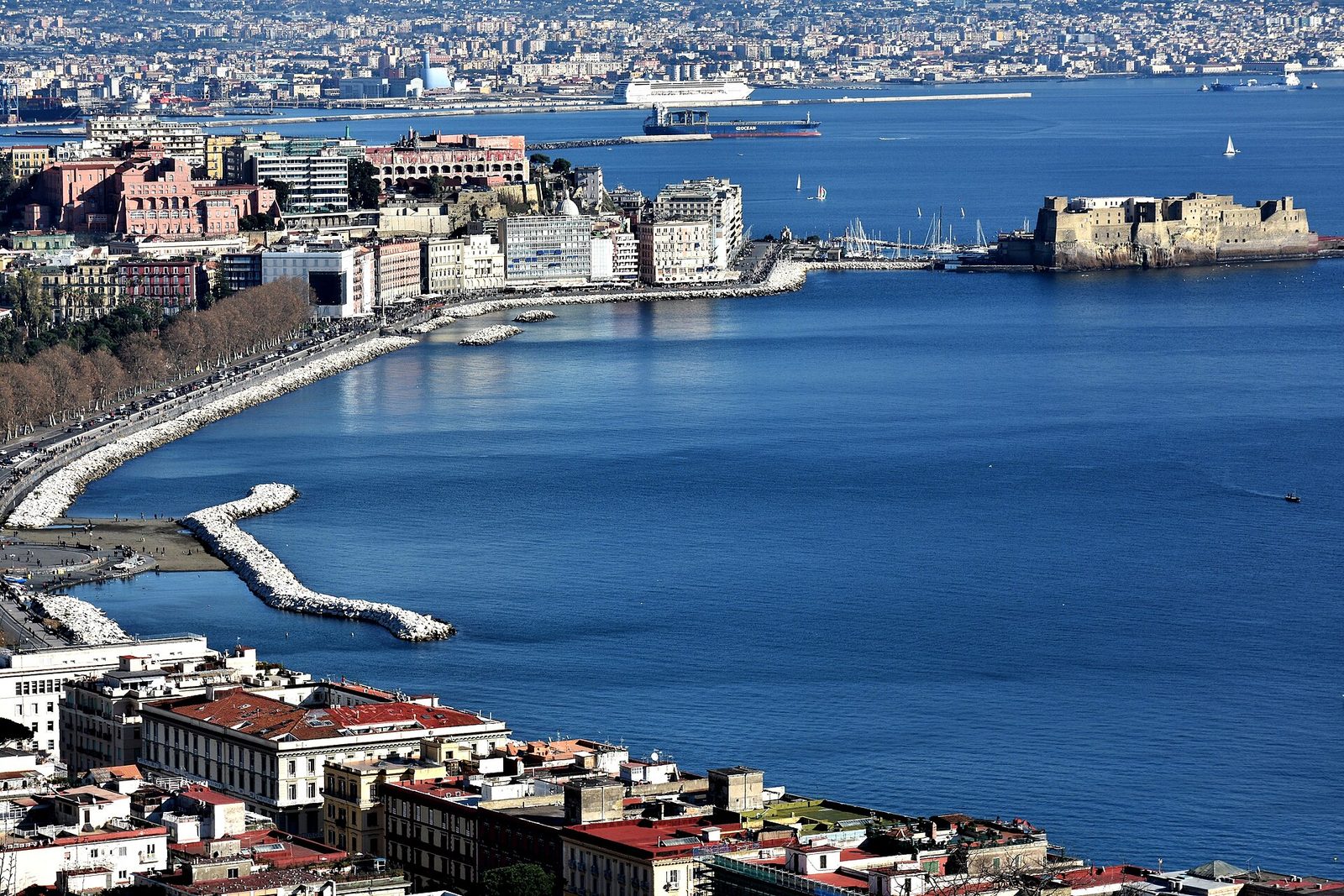
- The Naples seafront and Castel dell’Ovo: photo by Giuseppe Guida, Wikimedia Commons, CC BY-SA 4.0.
- Piazza Garibaldi: photo by CAPTAIN RAJU, Wikimedia Commons, CC BY-SA 4.0.
- Mounted Carabinieri: photo by Szczepan2, Wikimedia Commons, CC BY-SA 3.0.
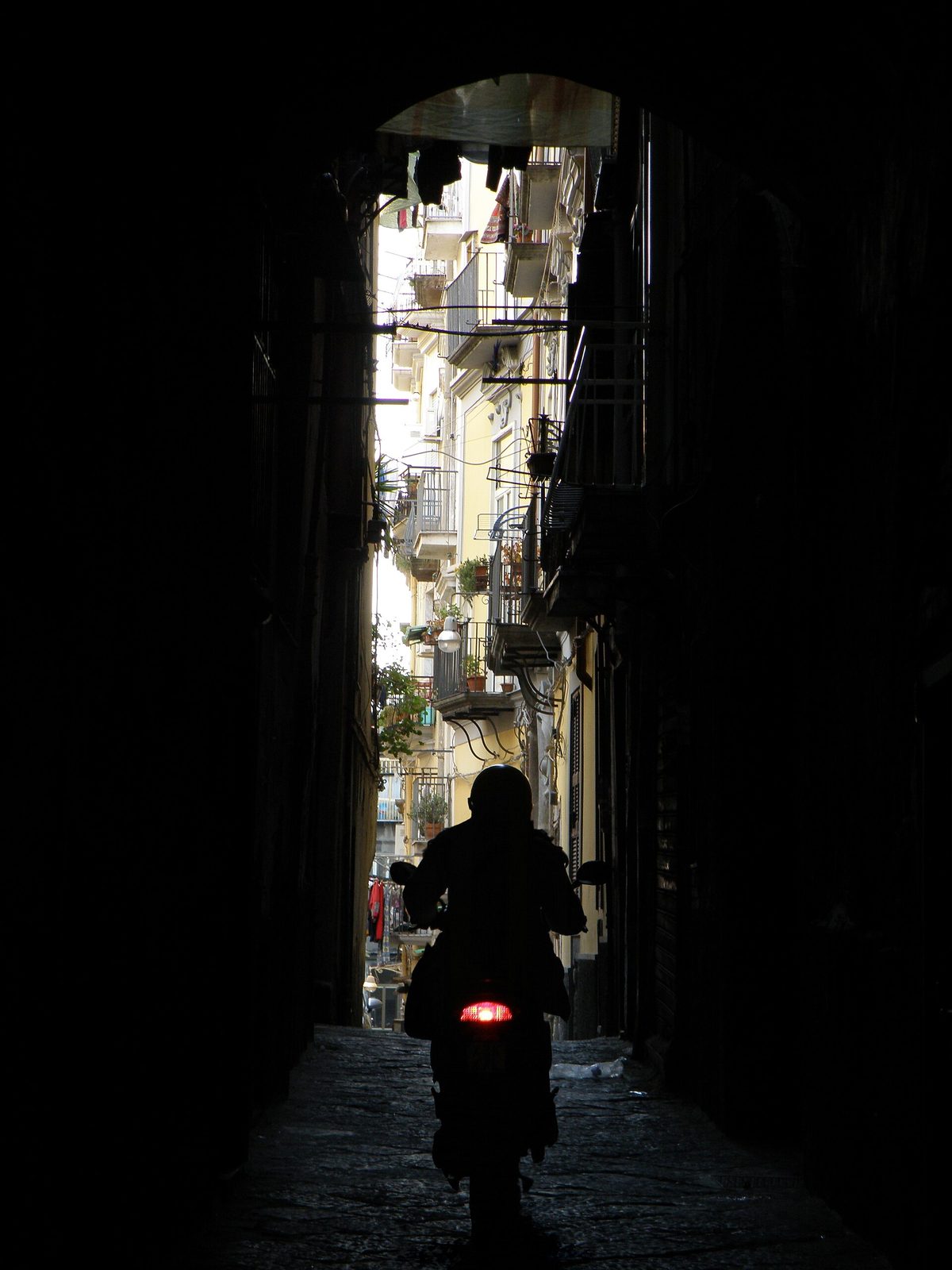
- A scooter in the alleys: photo by Mattia Luigi Nappi, Wikimedia Commons, CC BY-SA 3.0.
- Via Toledo and Palazzo Carafa di Maddaloni: photo by Argo Navis, Wikimedia Commons, CC BY-SA 4.0.
Sources: Il Sole 24 Ore crime index 2025 (2024 data); Polmetro deployment from the Polizia di Stato and Naples press; 2026 Circumvesuviana police escorts from local reporting (July 2026); US State Department Italy advisory (September 2026); tourist tax from the Comune di Napoli; Vesuvius and Campi Flegrei status from INGV’s Osservatorio Vesuviano and Italy’s Civil Protection Department. All checked September 2026.