On this page
Last updated September 25, 2026. Prices checked against official sources where they exist (the City of Naples for the tourist tax, museum and site ticket pages), the 2026 pizza price survey, and crowd-sourced September 2026 data for restaurant and everyday costs. All figures in euros.
A realistic Naples, Italy cost for 2026 is about €60–100 per person per day on a budget and €150–220 in mid-range comfort, with two people sharing a room. Pizza, coffee, pastries, public transport and most museums are cheap; hotel rooms in season and sit-down meals in the tourist center are where the money goes.
You’ll read everywhere that Naples is the cheapest big city in Italy, the land of the five-euro pizza and the one-euro espresso. Some of that is true, and some of it is a few years out of date. The pizza is still cheap: the average margherita in Naples costs a little under €7, below the national average. The espresso has crept up, though, and in central Naples you’ll usually pay €1.10–1.30 for one standing at the bar. A sit-down restaurant meal in the historic center now costs about what it does in Rome. Where Naples still saves you serious money is on the things Neapolitans themselves spend on: street food, pizza, the bar, the metro, and above all rooms, which cost noticeably less than in Rome, Florence or Venice.
This page is the money hub for the whole site. It covers the daily budget bands, what things actually cost, where the costs hide, how cash and cards work in a city that still likes cash, and the itemized cost of the big day trips. Everything is priced as of September 2026, and I’ve tried to be honest about which figures are firm and which are ranges.
Naples, Italy cost at a glance: daily budgets
Here’s what a day costs per person, assuming two people share a room. Solo travelers should add the other half of the room. The bands are built from the prices on the rest of this page, not plucked from the air.
| Per person, per day | Budget | Mid-range | Splurge |
|---|---|---|---|
| Bed (half a double, or a hostel bed) | €15–30 | €50–80 | Five-star or a suite on the seafront: no real ceiling |
| Tourist tax | €4–5.50 | €5.50–6 | €6 |
| Breakfast | Espresso and a pastry at the bar, €3–4 | Cappuccino and pastry at a café table, €5–8 | Hotel breakfast, often included |
| Lunch | A pizza or street food, €6–10 | Trattoria, around €15–25 | A proper lunch with wine |
| Dinner | Another pizza or a cheap trattoria, €10–15 | Mid-range restaurant, around €35–45 | Tasting menu at a starred restaurant |
| Getting around | Metro and buses, under €6 for a day ticket | Transit plus the odd taxi | Taxis and private drivers |
| Sights | One paid sight, €10–20, or a free day | Two paid sights, €25–40 | Private guides and boat days |
| Typical total | €60–100 | €150–220 | €350 and up |
Three things move these numbers more than anything else. The first is when you travel: rooms cost far more in the busy seasons and over the big holidays, which the best time to visit Naples guide covers in detail. The second is where you eat: the same pizza costs a few euros more on a tourist square than on a back street. The third is day trips. A day on Capri can cost more than two days in the city, and I’ve itemized that below.
Solo, couple or family?
Solo travelers take the biggest hit, since a room doesn’t get cheaper for one person; budget on the upper end of each band or use hostels and single rooms in B&Bs. Couples get the best value from the bands above. Families do better than you might expect. Children under 18 get into Italy’s state museums and archaeological sites free, including Pompeii and Herculaneum, and pizza is the cheapest good meal in Europe for a table of four. Under-14s are also exempt from the Naples tourist tax.
Is Naples expensive? An honest comparison
The short answer: not for what it gives you, and not if you live like a Neapolitan. It isn’t the bargain-basement city some blogs describe, though, and it helps to know where the savings really are.
Against Rome. Crowd-sourced data from Numbeo in September 2026 puts overall day-to-day costs in Naples only slightly below Rome, about 1% lower excluding rent. Restaurant prices come out about 3% higher in Naples, and a mid-range dinner for two averages €70 in Naples against €60 in Rome. Rent, though, is about 27% lower, and that flows through to hotel and apartment prices. Treat those numbers as a snapshot. They’re built from a few dozen contributors’ entries, mostly reflecting residents’ spending rather than tourists’. The direction matches what you see on the ground: the meal isn’t cheaper, the bed is.
Pizza. The 2026 survey by the Osservatorio della Pizza Napoletana put the average margherita at €6.74 in Naples, against €7.04 nationally and €7.66 in the north of Italy. In the historic center most pizzerias charge €6–7 for a margherita, and there are still places cheaper than that. For the quality you’re getting, it’s absurdly good value, and it’s why the budget column works.
Coffee. The one-euro espresso is mostly a memory. Local reporting in August 2026 found that the price of a coffee at the bar in Naples had risen by more than a third in five years, and central Naples bars now mostly charge €1.10–1.30, much the same as the national average. It’s still one of the great cheap pleasures of the city. Just don’t expect it to cost a euro.
Where Naples is genuinely cheap: pizza, pastries, street food, coffee, public transport, churches (most are free), and the big museums, which are good value for what’s inside. Where it isn’t: hotel rooms in the center at peak times, restaurants on the busiest tourist streets, taxis if you don’t insist on the fixed fares, and anything involving Capri or the Amalfi Coast, which are priced as the resorts they are.
Accommodation costs in Naples
Rooms are the biggest single item in most budgets, and the one where Naples compares best with other Italian cities. Prices swing a lot by date, so treat these as September 2026 snapshots from the big booking sites rather than promises.
- Hostel beds: from about €13 a night in a dorm at the cheapest end, more for small dorms and private rooms.
- Budget hotels and B&Bs: doubles from roughly €35–60 a night at quieter times, more in season. The historic center is full of small B&Bs in old palazzi, which are the best-value way to stay in Naples.
- Mid-range hotels: the booking sites’ average for a Naples hotel room in September 2026 was around $119 a night, roughly €100. Expect €100–160 for a good three- or four-star in a central location in season.
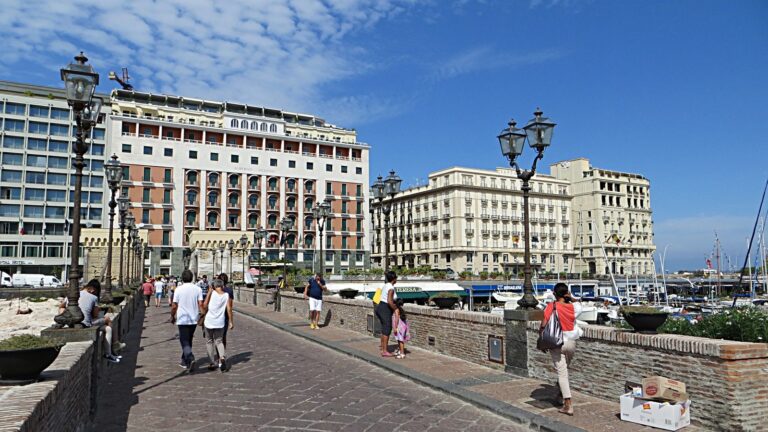
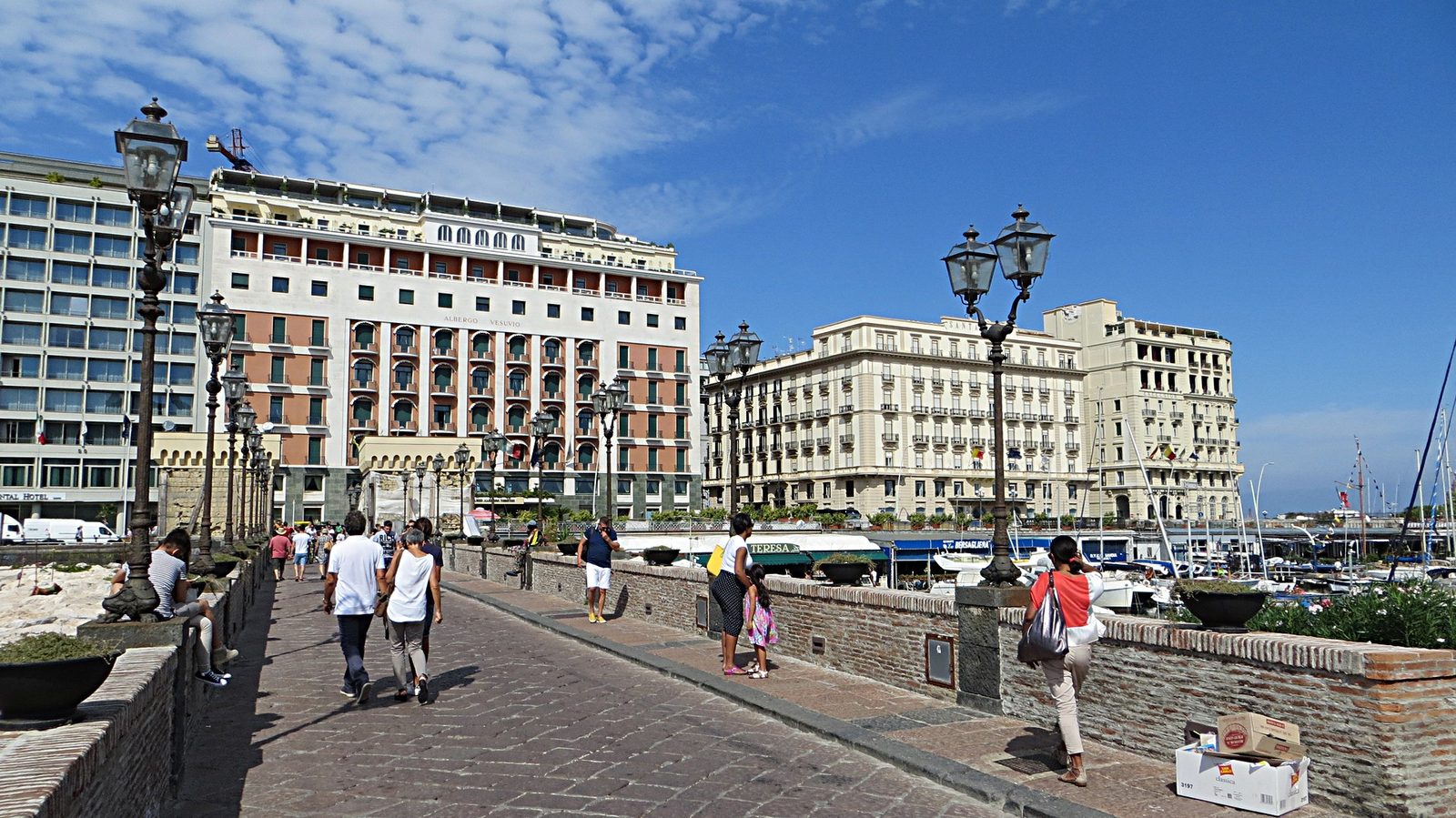
- Top-end hotels: the grand hotels on Via Partenope and the best boutique hotels are priced like their equivalents in Rome, with sea-view rooms at a big premium. They’re the one part of Naples that isn’t a bargain.
Where you stay matters as much as the star rating. A cheap room near the station can cost you in taxis and time, while a slightly dearer B&B in the historic center puts you on foot distance from almost everything. The where to stay in Naples guide compares the neighborhoods, and the best hotels in Naples page names specific places at each level.
The Naples tourist tax
Since May 1, 2026, Naples charges a higher tourist tax, per person per night, paid at your accommodation on top of the room rate. The rates, from the City of Naples:
| Type of accommodation | Per person, per night |
|---|---|
| Four- and five-star hotels, and short-term rentals | €6.00 |
| Three-star hotels and B&Bs | €5.50 |
| Two-star hotels | €4.50 |
| One-star hotels | €4.00 |
It applies to guests over 14, for up to 14 nights. For a couple spending four nights in an apartment, that’s €48 on top of the booking. It’s sometimes collected separately on arrival and isn’t always included in the price you saw online. Check whether your booking includes it, and budget for it if not. Other towns set their own rates. Sorrento, for example, has kept its 2026 rates lower than Naples.
Food and drink prices: the cheap part
This is where Naples earns its reputation. You can eat extremely well here for very little, as long as you eat the way the city does: coffee standing at the bar, pizza for lunch, fried things from a paper cone in the afternoon, and a trattoria that doesn’t have a man outside holding a menu.
Coffee and pastries
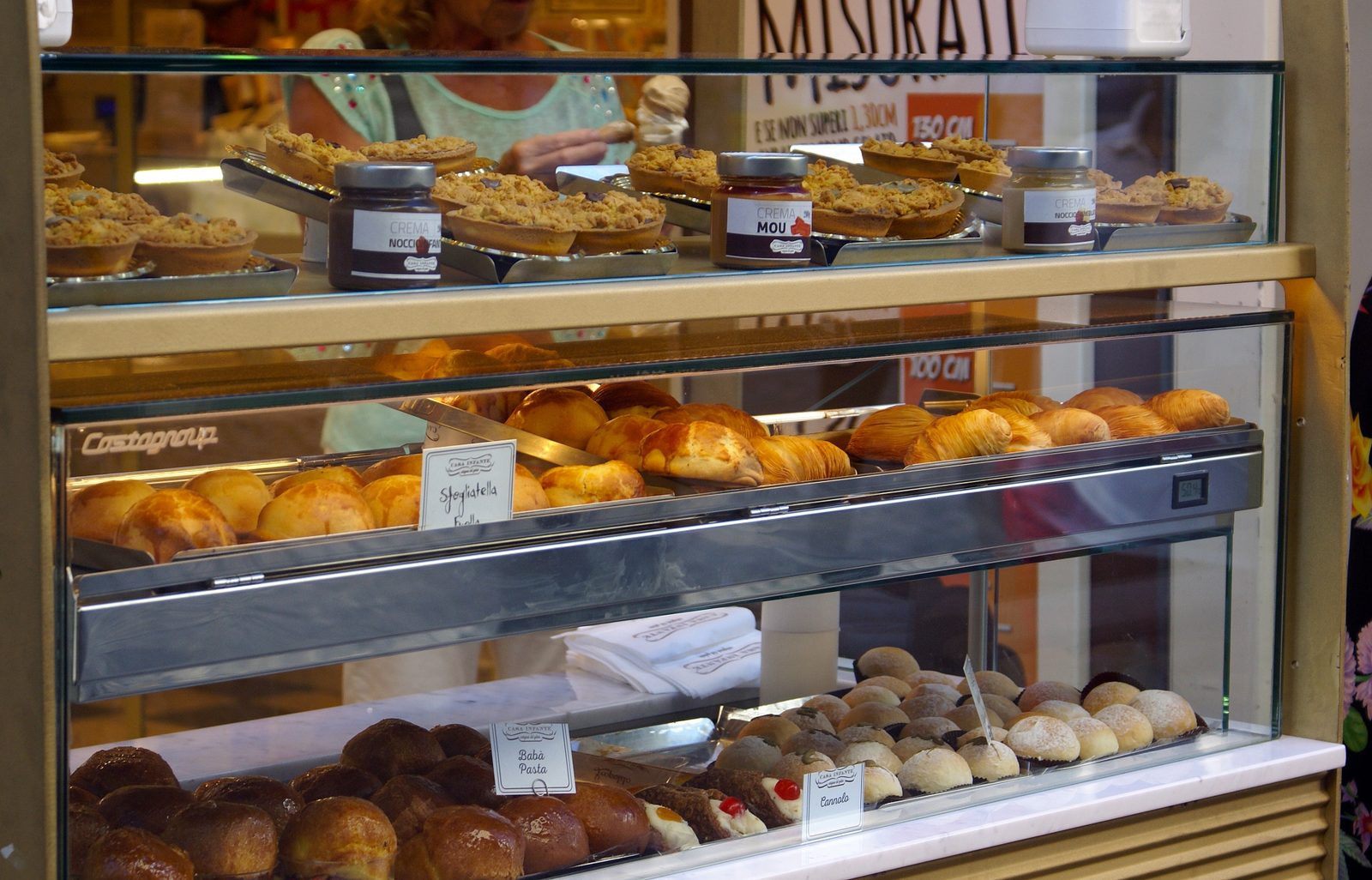
An espresso at the bar costs €1.10–1.30 in most of central Naples, and a cappuccino about €2. Those prices are for standing at the counter, which is what Neapolitans do. Sit down at a table, especially at the grand historic cafés, and the same order costs considerably more, since table service is priced separately. That isn’t a scam, it’s how Italian bars work, and the menu or price list on the wall will show both. A sfogliatella, the ridged shell-shaped pastry, costs from about €1.50 at most bars and pastry shops, a little more at the famous names. A coffee and pastry breakfast standing up is €3–4, and it’s one of the best-value meals in Europe.
Pizza
The average margherita in Naples cost €6.74 in the 2026 survey, and in the historic center €6–7 is normal. A marinara is usually cheaper, and the fancier toppings push the price toward €10 or a bit beyond. Drinks add a few euros. Even at the famous pizzerias, where the queue is the main expense, a pizza and a drink rarely run much past €10–12 a head. The pizza a portafoglio, a smaller pizza folded into quarters and eaten from paper in the street, costs just a few euros and makes a perfect cheap lunch on the move.
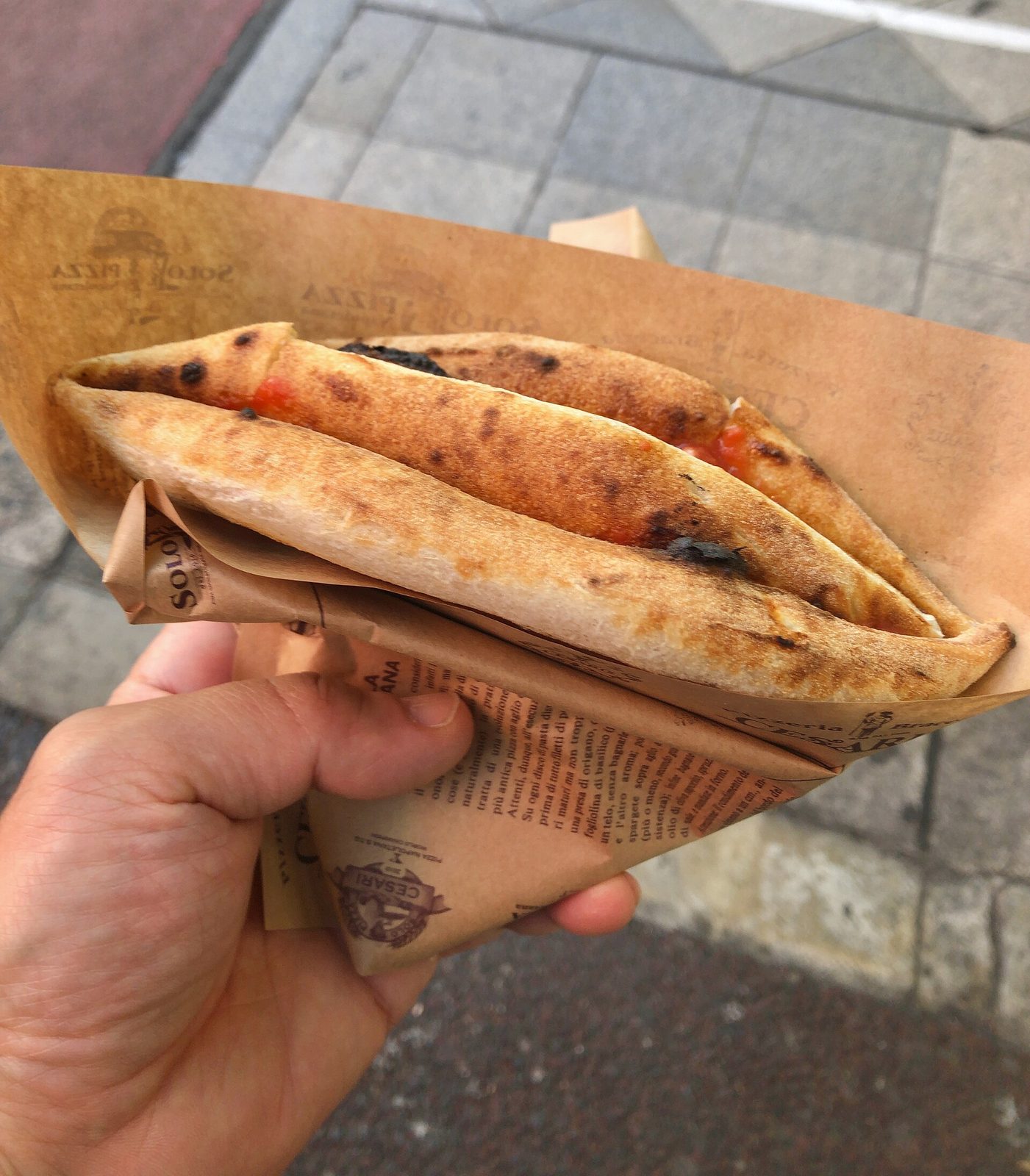
For where to go, the best pizza in Naples guide covers the classic pizzerias and the newer ones, with the queues to expect.
Street food
Neapolitan street food is fried, filling and cheap. There’s the frittatina (a fried disc of pasta, béchamel and peas), the arancino (fried rice ball), crocchè (potato croquettes), and the cuoppo, a paper cone of fried seafood or vegetables. Most items cost a few euros each, and a snack that fills you up for the afternoon costs less than a sandwich at an airport. The friggitorie (fry shops) on Via dei Tribunali, around the Pignasecca market and in the Quartieri Spagnoli are the places to look.
Restaurants
Crowd-sourced figures from September 2026 put a meal at an inexpensive restaurant in Naples at around €15 and a three-course dinner for two at a mid-range restaurant at around €70. That matches what you’ll see on menus. At a normal trattoria, a plate of pasta with a glass of house wine usually comes in around that inexpensive-meal figure; fish and meat mains cost more, and the house wine is cheap. Fish priced by weight (a peso, or marked “s.q.” for secondo quantità) is the one place a bill can surprise you, so ask the price before you order.
At the top end, Naples and the coast have a cluster of Michelin-starred restaurants, including George and Veritas in the city. Tasting menus cost what they do anywhere in Italy, and they’re the one part of the food scene where Naples offers no discount. For names at every level, see the best restaurants in Naples, and for the dishes themselves, the Naples food guide.
Drinks and groceries
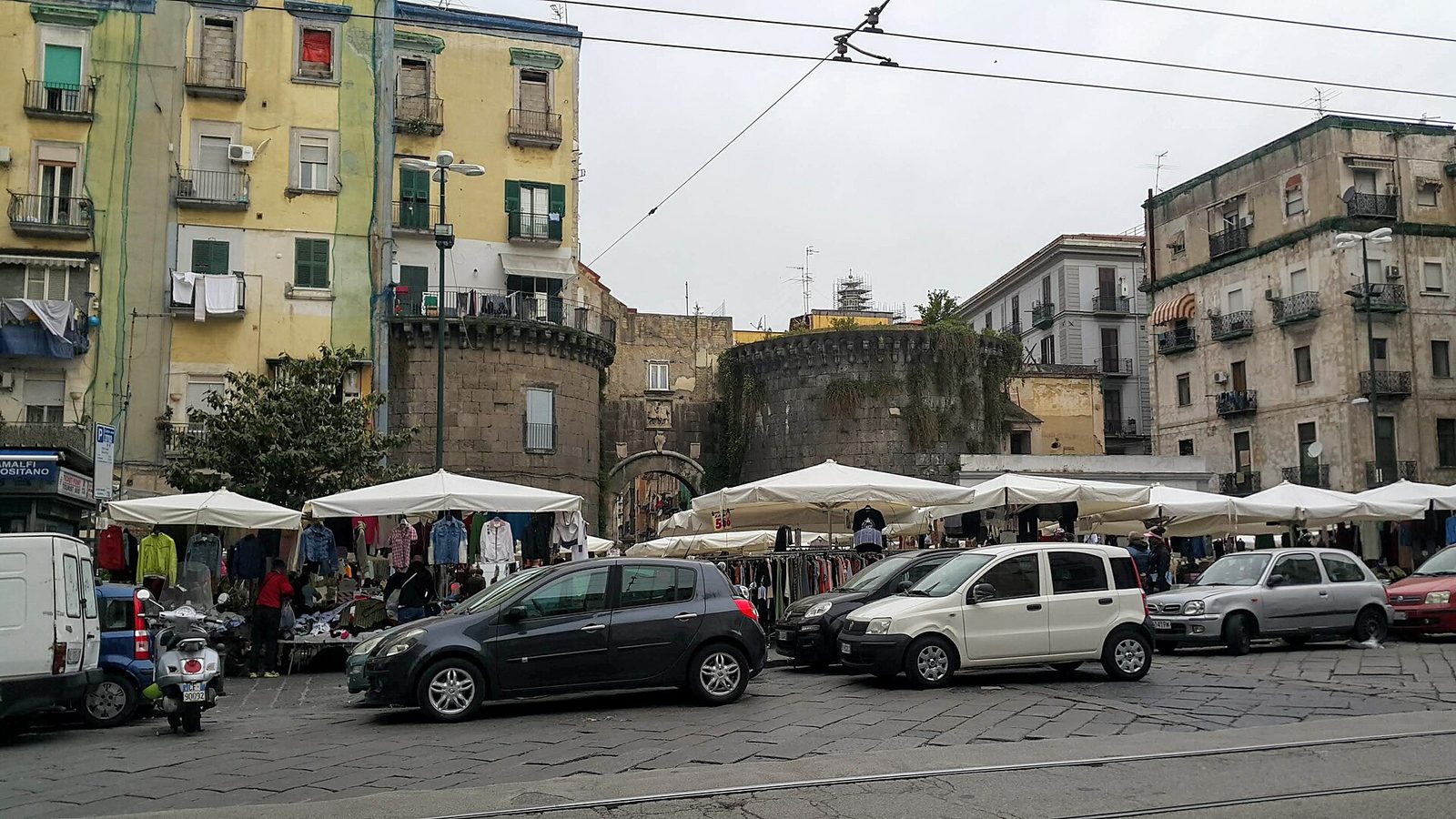
A half-liter of draft beer in a bar or restaurant costs around €5, similar to Rome, and a small bottle of water at a table about €1. Supermarkets are where you save. A 1.5-liter bottle of water costs around €0.55, a half-liter of local beer about €1.60, and a perfectly decent bottle of Campanian wine €5–6, according to the same September 2026 data. For picnics on the seafront or an apartment stay, the supermarkets and the market stalls of the Pignasecca and Porta Nolana are a real saving.
The bill: coperto, service and tipping
Many restaurants add a coperto, a small per-person cover charge for bread and the table setting. It’s legal and normal, and it should be printed on the menu. Some add a servizio (service charge) instead or as well, which should also be on the menu. If service is included, you don’t need to tip on top.
Tipping in Naples is appreciated but not expected the way it is in the United States. Rounding up the bill, or leaving a few euros for good service at a sit-down meal, is plenty. At the bar, nobody expects anything, though leaving the small change on the counter is a nice habit. If you’re offered a menu with no prices, or a waiter recommends “today’s special” without saying what it costs, ask.
Shopping and souvenirs: where the money leaks
Naples is a good city for souvenirs, and an easy one to overspend in, because the cheap version and the real thing often sit side by side on the same street.
Nativity figures. Via San Gregorio Armeno, the street of the nativity workshops, sells everything from mass-produced resin figures to hand-modeled terracotta pieces made in the workshops behind the shopfronts. The price gap is huge, and it’s usually honest: a handmade figure with a real artisan’s name behind it costs many times what a molded one does. Ask what you’re looking at. The workshops are proud of the difference and happy to explain it.
Food to take home. Limoncello, Gragnano pasta, local coffee and jars of Vesuvian tomatoes are all far cheaper in a supermarket than in the souvenir shops of the historic center, and often the same brands. Check your airline’s liquid rules before buying bottles for hand luggage.
The corno. The little red horn charm against bad luck is everywhere, and costs very little in its plastic form. Tradition says it only works if it’s given to you as a gift, so buy one for someone else and hope they return the favor.
Coral and cameos. These are traditional crafts of Torre del Greco, just down the coast, and good pieces are expensive. Buy them from established workshops that explain the material and the origin, not from street stalls.
Getting around: what transport costs
Public transport in Naples is cheap. A single metro or bus ride costs well under €2, and a day ticket for the city network costs under €6, so even a busy day of sightseeing by metro, bus and funicular rarely costs more than a coffee and a pastry. The exact fares, which ticket covers which line, and the regional trains to Pompeii and Sorrento are all on the getting around Naples page. Much of the historic center is best seen on foot anyway, which costs nothing.
From the airport, the Alibus shuttle costs about €5 to the station or the port. Taxis run on fixed fares from the airport to the main central zones, roughly €20–30 depending on the destination. The airport to city center guide has the exact fares and the rules for insisting on them.
Ferries are the one transport cost that adds up. A return trip to Capri costs anything from around €30 to over €60, depending on which boats you take, and the island adds a €5 landing fee in season to every ticket. Procida and Ischia are cheaper. The Naples ferry guide has fares by route and the difference between the fast boats and the slow ferries, which is also the difference in price.
Sightseeing costs: museums, sites and passes
Naples is good value for sightseeing. The churches, many of them extraordinary, are mostly free to enter, and the paid museums and sites are priced below the big-ticket attractions of Rome and Florence. Here are the cost bands for the major sights as of September 2026. Each has its own page on this site with the current exact price.
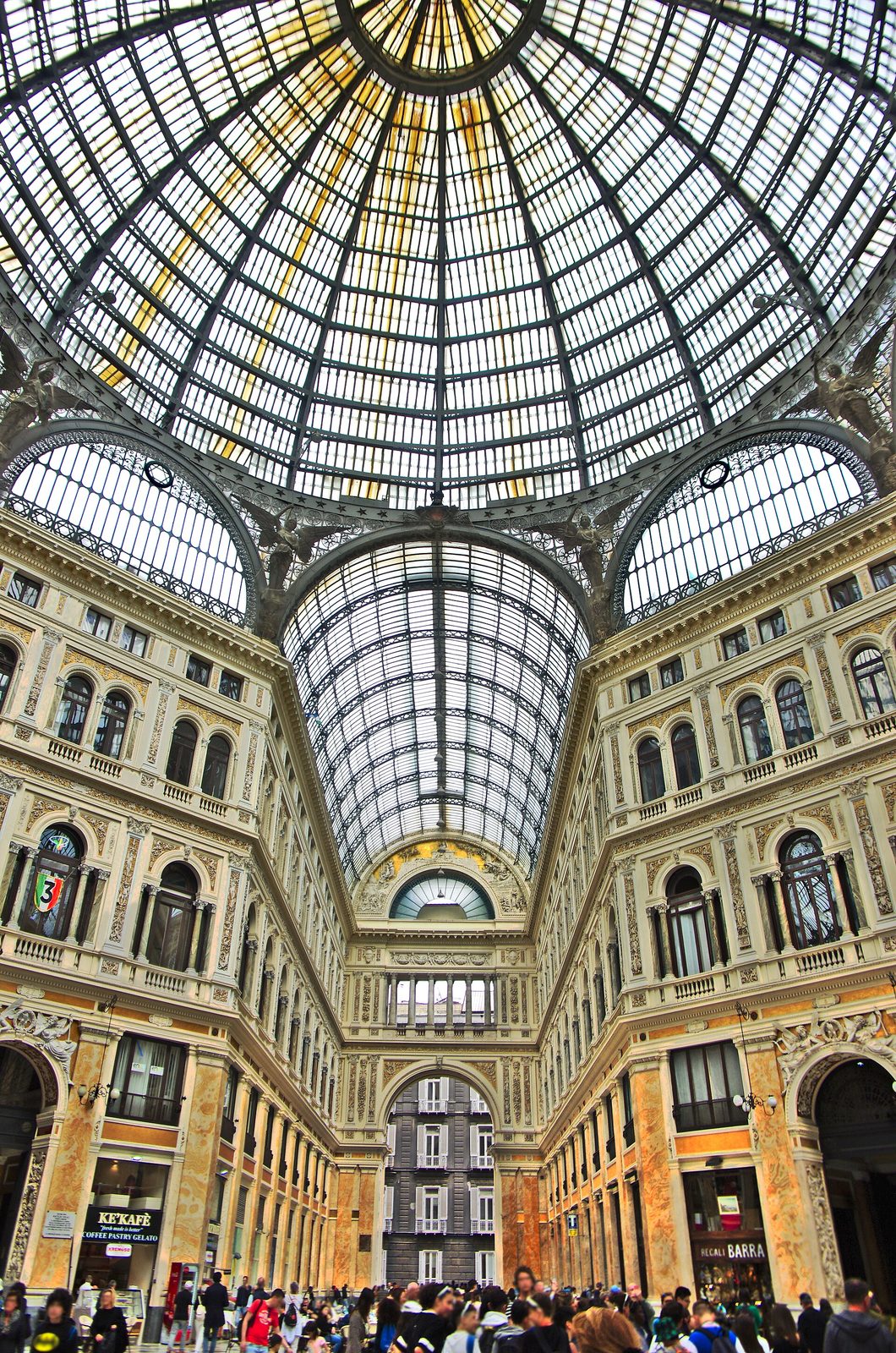
- Free: the Duomo, most churches in the historic center, Galleria Umberto I, Piazza del Plebiscito, the seafront, and the view from the Pedamentina steps.
- Under €10: Castel Sant’Elmo, the Certosa di San Martino, the Roman excavations under San Lorenzo Maggiore, the Fontanelle cemetery.
- €10–15: the Sansevero Chapel with the Veiled Christ, the Napoli Sotterranea tour, the Catacombs of San Gennaro, Mount Vesuvius, and Capodimonte.
- €15–20: the Palazzo Reale, Herculaneum, and the National Archaeological Museum (MANN).
- €20–25: Pompeii, depending on the ticket you choose.
Free days and discounts
Italy’s state museums and archaeological sites are free on the first Sunday of every month, a scheme that continues in 2026. That includes Capodimonte, Herculaneum and Pompeii. The catch is the crowds, so it’s a better deal for the less famous sites than for Pompeii. Children under 18 get in free at state sites all year, and EU citizens aged 18 to 25 pay a token €2 at many of them, including MANN and Herculaneum. Private sites like the Sansevero Chapel and the underground tours set their own rules and don’t follow the free Sundays.
Is the Artecard worth it?
The regional Artecard sightseeing pass comes in several versions. In 2026, the Napoli 3 Days card costs €27, the Campania 3 Days €41 and the Campania 7 Days €43, and there are annual versions at €26 (365 Lite) and €50 (365 Gold). The key detail: the two three-day cards include public transport (the Napoli card covers the city’s metro, buses and funiculars, and the Campania card the regional network), while the seven-day and annual cards don’t. Each card gives free entry to a set number of sites, from two to five depending on the card, and discounts of up to 50% on the rest.
My view: the Napoli 3 Days card pays for itself if you’ll visit two or three of the big paid museums in those three days, since MANN and Capodimonte alone add up to more than the card. It’s poor value if you mostly want churches, free sights and the underground, which aren’t state museums. The Campania 3 Days card makes sense if Pompeii or Herculaneum are on your list along with the city museums, since it also covers the regional trains. The 7 Days card suits a longer stay with more sites, but you buy your own tickets. Check the current list of included sites on the Artecard website before buying, since it changes. For how the museums fit together, see the Naples museums guide.
What the big day trips really cost
Day trips are where budgets quietly double. Here’s an itemized view per person, from central Naples, as of September 2026. Transport fares are ranges; the linked pages have the details.
Pompeii
The Circumvesuviana train costs a few euros each way, and the site ticket is €20–25 depending on whether you add the outlying villas. Add an audio guide or a licensed guide if you want one, plus lunch and water. A realistic total is €35–60 without a private guide, and much less for anyone under 18, who gets in free. The Pompeii from Naples guide has the ticket choices and the trains.
Herculaneum
Cheaper and closer: a short train ride each way and a ticket in the €15–20 band. It’s the best-value archaeological day in the region, and you can be back in Naples for a late lunch. See the Herculaneum guide.
Mount Vesuvius
The crater trail ticket itself is in the €10–15 band and must be booked online in advance. The bigger cost is getting up there. The shuttle buses from Ercolano and Pompeii sell packages of return ride plus crater ticket from a little over €30, and the train to Ercolano adds a few euros more. Guided tours from Naples cost more again. The Vesuvius guide covers the options.
Capri
The expensive one. Return ferries cost from around €30 on the slowest boats to over €60 on the fastest, including the landing fee. On the island, the funicular and buses cost a few euros per ride, the Blue Grotto costs extra on top of a boat from the harbor, and food and drink are priced for a luxury resort. Take the fast boats, the funicular and the Blue Grotto, and a day on Capri easily reaches €100 per person before lunch. Take the slow ferry and skip the grotto, and it’s closer to half that. If money is tight, I’d rather spend two days in Naples than one rushed, expensive day there. The Capri from Naples guide shows how to keep it under control.
The Amalfi Coast
By public transport, the Amalfi Coast is surprisingly cheap once you’re there. The SITA buses along the coast cost a couple of euros per hop, and a 24-hour ticket costs €10. Getting there from Naples by boat in season costs around €30 each way to Positano. Food and hotels on the coast are expensive, especially in Positano. See the Amalfi Coast from Naples guide.
Procida and Ischia
Cheaper than Capri on every count. Ferries to Procida cost roughly €13–22 each way depending on the boat, and both islands have far more normal prices once you land. If you want an island day without the Capri price tag, Procida is the answer.
Cash, cards and ATMs in Naples
Naples runs on a mix of cash and cards, and it has moved a long way toward cards in the last few years. Italian law has required shops, bars and restaurants to accept card payments since 2022, with fines for refusing, and contactless payment works almost everywhere that takes cards. The regional railway has also added contactless ticket gates at the main Circumvesuviana stations, including Garibaldi, Ercolano Scavi, Pompei Scavi and Sorrento.
In practice, though, cash is still king for small spends. The bar that sells you a €1.20 espresso would rather have coins. So would the friggitoria, the market stall and some of the smaller B&Bs, and the tourist tax is sometimes collected separately. I’d carry €30–50 in small notes and coins at any given time and pay for the bigger things by card.
Getting cash without losing money
- Use bank ATMs. Look for a bancomat built into the wall of an actual bank. Standalone cash machines in tourist areas, usually run by private operators, tend to charge higher fees and push poor exchange rates.
- Always choose to pay in euros. When a card machine or ATM offers to charge you in your home currency, that’s dynamic currency conversion, and it comes with a worse exchange rate. Choose euros every time, at the ATM, in shops and in restaurants.
- Skip airport currency exchange. The rates at exchange desks are poor. Withdraw from a bank ATM instead, or arrive with a small amount of euros from home.
- Tell your bank you’re traveling if your card issuer still asks for that, and carry a second card from a different account in case one is blocked or swallowed.
- Keep the cash where pickpockets can’t reach it. Crowded buses and the Circumvesuviana are the usual problem spots. The Naples travel tips page covers the basics of staying safe.
Hidden costs that catch visitors out
Most of what surprises people in Naples isn’t a scam, just a cost they didn’t know about. Here are the ones to budget for.
- The tourist tax, €4–6 per person per night depending on the accommodation, and not always included in the booking price.
- Table service. Sitting down at a café costs more than standing at the bar for the same order, particularly at the famous historic cafés.
- Coperto and servizio on restaurant bills. Both are legal as long as they’re on the menu.
- Fish sold by weight. Ask the price per portion before ordering.
- Luggage on the fast boats. Some ferry companies charge €5–7 for each extra bag on hydrofoils.
- The Capri landing fee, €5 per person in season, added to your ferry ticket automatically.
- Reseller mark-ups and booking fees. Mount Vesuvius, Pompeii and most museums sell tickets directly through their official channels. Buying through a third-party site can cost noticeably more for exactly the same ticket.
- Taxis that aren’t on the fixed fare. From the airport and the station to the central zones, there are fixed fares. Agree the fare before you set off, and use the official taxi ranks.
- Cars. Parking, hotel garages and fines for driving into restricted traffic zones add up quickly. Unless you’re heading into the countryside, you don’t need a car in Naples.
How to save money in Naples
You don’t need to scrimp in Naples to spend less. Most of the savings come from doing things the local way, which also happens to be the most enjoyable way.
- Stay in a historic-center B&B. They’re cheaper than hotels of the same comfort and put you in walking distance of most sights, saving on transport.
- Make pizza your main meal at least once a day. A margherita at a good pizzeria costs about what a starter costs in a restaurant, and it’s the best food in the city.
- Drink coffee standing at the bar, as everyone else does.
- Eat street food for lunch. A frittatina and a pizza a portafoglio is a filling lunch for a few euros.
- Buy a day ticket on days when you’ll take three or more rides. The transport guide explains which ticket to buy.
- Use the free days. The first Sunday of the month is free at state museums and sites, children under 18 are always free at those sites, and EU travelers aged 18 to 25 pay a token amount.
- Do the Artecard math before you buy one, rather than assuming it saves money.
- Book tickets on official sites, never through resellers, unless you’re buying a genuine guided tour.
- Take the slow ferry. It’s often half the price of the fast boat, with better views.
- Shop in supermarkets and markets for water, snacks, fruit and wine, especially if you’re in an apartment.
- Travel outside the peak periods if your dates are flexible. The room you’d pay top rates for in the busiest weeks costs much less at other times of year.
- Walk. The historic center, the seafront and the Quartieri Spagnoli are best seen on foot, and walking is free.
A day at each budget: what the money actually buys
Numbers only mean so much. Here’s what a realistic day in Naples looks like at each budget, per person, with the same two people sharing a room.
The budget day: around €70
Breakfast is an espresso and a sfogliatella standing at the bar. The morning goes on the Napoli Sotterranea tour on Via dei Tribunali, followed by the Roman street under San Lorenzo Maggiore across the square, both from the cheaper end of the sightseeing bands. Lunch is a pizza a portafoglio and a frittatina eaten on the move. The afternoon is free: the churches of Spaccanapoli, the Duomo and a walk down to the seafront. Dinner is a margherita and a beer at a neighborhood pizzeria. A day ticket covers the funicular up to the Vomero for the sunset view. Add your share of a B&B room and the tourist tax, and you’re at roughly €70 for a very full day. The Naples underground guide explains which of the underground tours suits you best.
The mid-range day: around €180
A better-located hotel, with breakfast at a café table. The morning is spent at the National Archaeological Museum, then lunch at a trattoria with a glass of wine. In the afternoon, the Sansevero Chapel (booked ahead) and an aperitivo. Dinner at a good mid-range restaurant, a taxi back to the hotel, and your share of a three- or four-star room plus the tourist tax. That’s around €180, and a very comfortable way to see the city.
The splurge day: from around €350
A sea-view room at one of the grand hotels on Via Partenope. A private guide for Pompeii in the morning, with a driver. Lunch on a terrace, a late-afternoon aperitivo with a view of Vesuvius, and dinner at one of the city’s starred restaurants. There’s no real ceiling, and the costs here depend mostly on the hotel and the restaurant you choose. Even at this level, though, pizza for lunch is still the best meal in town.
What to skip
- Restaurants with touts and photo menus, especially around the station and the busiest squares. The food is usually worse and the bill higher than a block away.
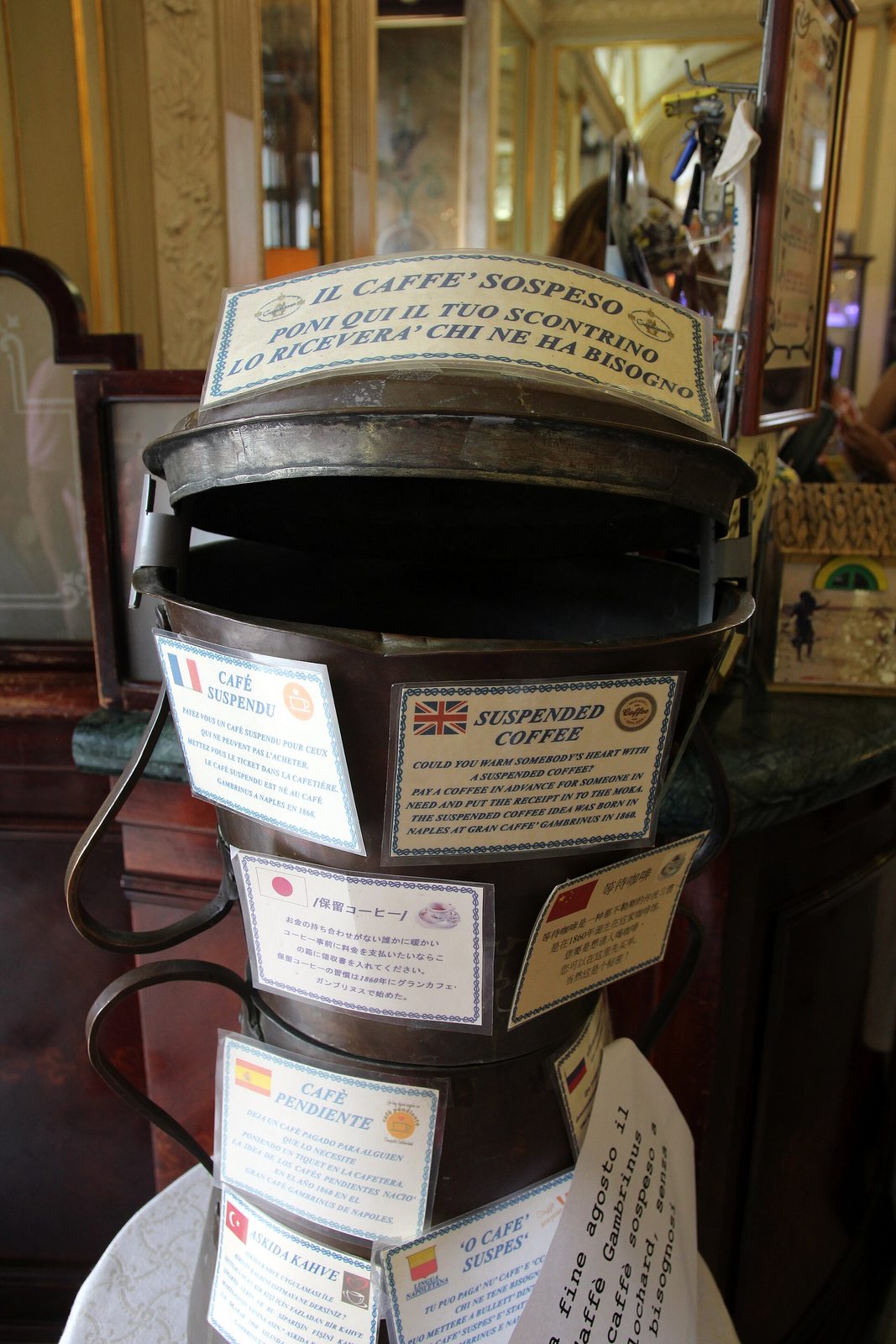
- Table service at the famous cafés for a quick coffee. If you want the experience of sitting at Gambrinus, go for it. If you just want a coffee, stand at the bar.
- Reseller “skip the line” tickets for places with no line, or for sites that sell the same ticket on their official website.
- Currency exchange desks at the airport and standalone cash machines in tourist areas.
- Bottled water from street sellers at the sights. Buy it at a supermarket or a bar for a fraction of the price.
- A rushed day trip to Capri if money is tight. Procida or Herculaneum give you more for much less.
- Unofficial taxis, or any taxi that won’t confirm the fixed fare or use the meter.
Naples cost frequently asked questions
Is Naples expensive to visit?
Not by Italian standards. Pizza, coffee, street food, public transport and most museums are cheap, and rooms cost noticeably less than in Rome, Florence or Venice. Sit-down restaurant meals in the tourist center now cost about the same as in Rome, and day trips to Capri and the Amalfi Coast are expensive. Budget travelers can manage on €60–100 a day.
How much money do I need per day in Naples?
About €60–100 per person per day on a budget, and €150–220 for a comfortable mid-range trip, with two people sharing a room. That covers accommodation, the tourist tax, food, local transport and one or two paid sights. Day trips to Capri or the Amalfi Coast cost extra, and solo travelers should budget for the whole room.
Is Naples cheaper than Rome?
For accommodation, yes: crowd-sourced data from September 2026 puts rents about 27% lower in Naples, and that flows through to hotel and apartment prices. For restaurants, not really. The same data puts Naples restaurant prices slightly higher than Rome’s. Pizza and coffee are still cheap, and where the savings are depends on how you eat.
How much does a pizza cost in Naples?
The average margherita in Naples cost €6.74 in the 2026 survey by the Osservatorio della Pizza Napoletana, below the national average of €7.04. In the historic center, €6–7 is normal, a marinara is usually cheaper, and a pizza a portafoglio, folded and eaten in the street, costs just a few euros.
How much is a coffee in Naples?
An espresso at the bar costs €1.10–1.30 in most of central Naples in 2026, and a cappuccino about €2. Those prices are for standing at the counter. Sitting at a table costs more, especially at the grand historic cafés. The famous one-euro espresso has largely disappeared as prices have risen over the last five years.
How much is the tourist tax in Naples?
Since May 1, 2026, the Naples tourist tax is €6 per person per night in four- and five-star hotels and short-term rentals, €5.50 in three-star hotels and B&Bs, €4.50 in two-star hotels and €4 in one-star hotels. It applies to guests over 14 for up to 14 nights and is paid at the accommodation.
Do I need cash in Naples?
Yes, some. Cards and contactless payment are widely accepted, and the law requires businesses to take them, but small bars, market stalls, street food stalls and some B&Bs still prefer cash. Carry €30–50 in small notes and coins, use ATMs attached to banks, and always choose to be charged in euros rather than your home currency.
Do you tip in Naples?
Tipping is appreciated but not expected. Check the bill for coperto or a service charge first. If service isn’t included, rounding up or leaving a few euros for good service at a sit-down meal is plenty. Nobody expects a tip for coffee at the bar, though leaving small change on the counter is common.
Tours are where sightseeing budgets swing most. A good guide at Pompeii or a food walk on your first day is money well spent, while a reseller’s “skip the line” ticket at a museum with no queue isn’t. For which tours earn their price, see what to book and what to skip in Naples.
Photo credits
- Pastries on display in Naples: photo by Enzo Abramo, Wikimedia Commons, CC0.
- Porta Nolana market: photo by Rémy Lee, Wikimedia Commons, CC BY-SA 4.0.
- Caffè sospeso at Gran Caffè Gambrinus: photo by Bex Walton, Wikimedia Commons, CC BY 2.0.
- Pizza folded to eat while walking: photo by KKPCW, Wikimedia Commons, CC BY-SA 4.0.
- Galleria Umberto I: photo by Paolo Villa, Wikimedia Commons, CC BY-SA 4.0.
- Grand Hotel Vesuvio and Via Partenope: photo by Mister No, Wikimedia Commons, CC BY 3.0.
Sources: tourist tax rates from the City of Naples; pizza prices from the Osservatorio della Pizza Napoletana 2026 survey (reported by Italia a Tavola, March 2026); coffee prices from Neapolitan press reporting, August 2026; restaurant, grocery and Rome comparison figures from Numbeo crowd-sourced data, September 2026; hotel price ranges from the major booking sites, September 2026; Artecard prices from campaniartecard.it; museum and site prices from each site’s official ticket page. All checked September 2026.