On this page
Last updated September 25, 2026. Terminals, crossing times, fare ranges and luggage rules checked against 2026 operator and island timetable listings; the Pozzuoli situation against September 2026 reporting. Fares move with the season, so treat them as ranges and confirm when you book.
Almost every Naples ferry to the islands leaves from one of two terminals about a kilometer apart: Molo Beverello, opposite Castel Nuovo, for most hydrofoils and fast jets, or Calata Porta di Massa, further east, for the slower car ferries. For Capri, Ischia and Procida from Naples, Italy, go by the terminal printed on your ticket.
That sounds like a small detail, and it’s the one that costs people their boat every single day in summer. Someone books the cheapest Capri crossing online, heads to Molo Beverello because every guide says that’s where the boats go, and finds out at the ticket window that their ferry is leaving from another pier a fifteen-minute walk away with luggage. If you remember nothing else from this page, remember this: read the departure point on the ticket.
Everything else about sailing from Naples follows from a handful of decisions. Hydrofoil or car ferry? Which terminal? Book ahead or buy at the port? And what happens if the wind gets up? This page is where all of that lives. The island guides stay about the islands; this one is about getting there, back, and between them without drama.
Naples ferry terminals at a glance
The port of Naples is big and busy, with cruise ships, overnight ferries to Sicily and Sardinia, cargo and the constant traffic of the Bay of Naples boats all sharing the same waterfront. For island trips you only need to know two terminals in the city, plus a third out west at Pozzuoli.
| Terminal | Where | What usually sails | Main destinations | Watch out for |
|---|---|---|---|---|
| Molo Beverello | Opposite Castel Nuovo, at the foot of Piazza Municipio | Hydrofoils and fast jets (SNAV, NLG, Alilauro and others) | Capri, Ischia, Procida, Sorrento; Positano and Amalfi in season | Crowds and queues at the ticket booths on summer mornings |
| Calata Porta di Massa | About 1 km east along Via Marina, toward the station end of the port | Slower car and passenger ferries (Caremar, Medmar), and some Caremar fast units | Capri, Ischia, Procida | Being mistaken for Beverello; the walk between them with luggage |
| Pozzuoli | West of the city, in the Campi Flegrei | Car ferries and some fast boats | Ischia and Procida, on the shortest crossings | 2026 disruption from the bradyseism; check status before relying on it |
Two things the table can’t fully convey. First, the “hydrofoils from Beverello, ferries from Porta di Massa” rule is a good rule of thumb but not a law. In 2026, Caremar’s Capri services, including its faster boat, are listed from Calata Porta di Massa, not Beverello. Second, the terminals are close enough that people assume they can dash between them and far enough that with a suitcase, a queue and the traffic on Via Marina, they often can’t.
Molo Beverello vs Calata Porta di Massa: the kilometer that loses people their boat
Molo Beverello is the one everyone knows. It’s the pier in the middle of the city, directly below Castel Nuovo, a short walk from Piazza Municipio and the Municipio metro station on Line 1. The terminal building has ticket windows for the different companies, and outside there’s a jostle of people, luggage and boats coming and going. Most of the fast boats in the bay leave from here: hydrofoils (aliscafi) and the larger fast catamarans that the companies call jets. If you’re heading to Capri, Ischia, Procida or Sorrento on a fast boat, or to the Amalfi Coast in season, this is probably your pier.
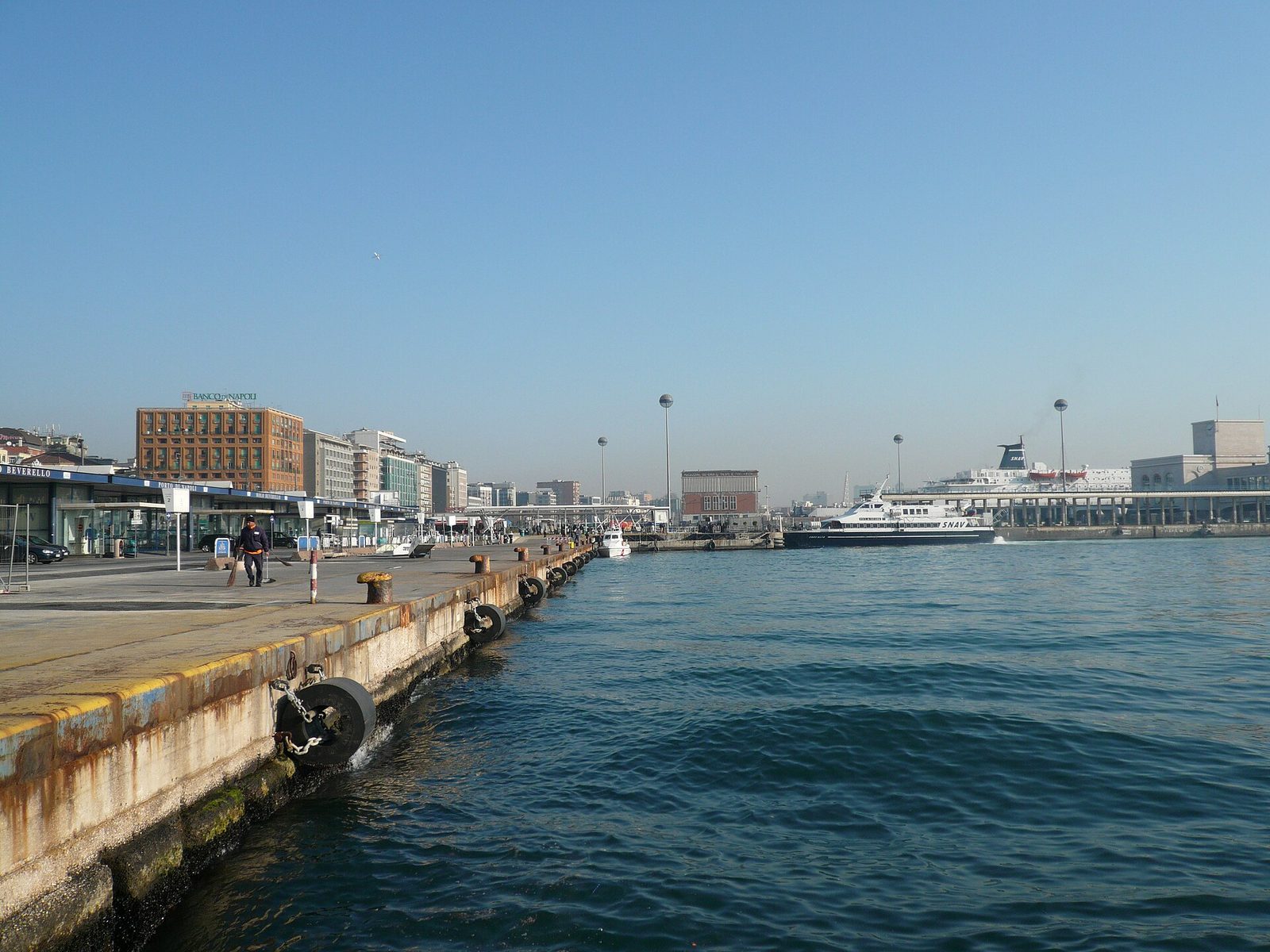
Calata Porta di Massa is further east along the port, past the cruise terminal (the Stazione Marittima), toward the end of the waterfront nearer the central station. It’s where the traghetti leave: the big, slower car and passenger ferries run chiefly by Caremar and Medmar. These are the boats with car decks, open outdoor decks and a café inside, and they’re the cheapest way to the islands. They’re also the boats for anyone taking a vehicle, and, for now, the heavy trucks diverted from Pozzuoli.
How far apart, and how long it takes
The two are around a kilometer apart along the port road. On foot, with a suitcase, allow at least fifteen minutes, and more if you’re unsure of the way or it’s the height of summer. The route runs along Via Marina, a busy multilane road, past the port gates. It isn’t scenic and it isn’t hard, but it’s exactly the wrong walk to discover you need to do with ten minutes to departure.
The fix is simple. When you buy the ticket, look for the departure point. It will say Molo Beverello (sometimes just “Beverello”), Calata Porta di Massa (sometimes “Porta di Massa”), or Pozzuoli. If you’re booking through a third-party site, check the terminal on the confirmation before you leave the hotel. Treat “Napoli” alone as a warning sign and look it up. Give yourself enough time to be at the right pier, not just in the right city.
Which one to aim for
If you have no reason to choose, Beverello is the more convenient terminal for most visitors. It has more departures, it’s central, and it’s reachable by metro. Porta di Massa is worth the extra walk if you want the cheapest crossing, if you’re taking a car, if you get seasick on small fast boats, or if you like the idea of sitting outside on deck for the whole ride. Plenty of people take the fast boat out in the morning and the slow ferry back in the late afternoon, which is a lovely way to end an island day.
Hydrofoil or car ferry: which should you take?
There are three kinds of boat on the bay, and the differences matter more than the price tag suggests.
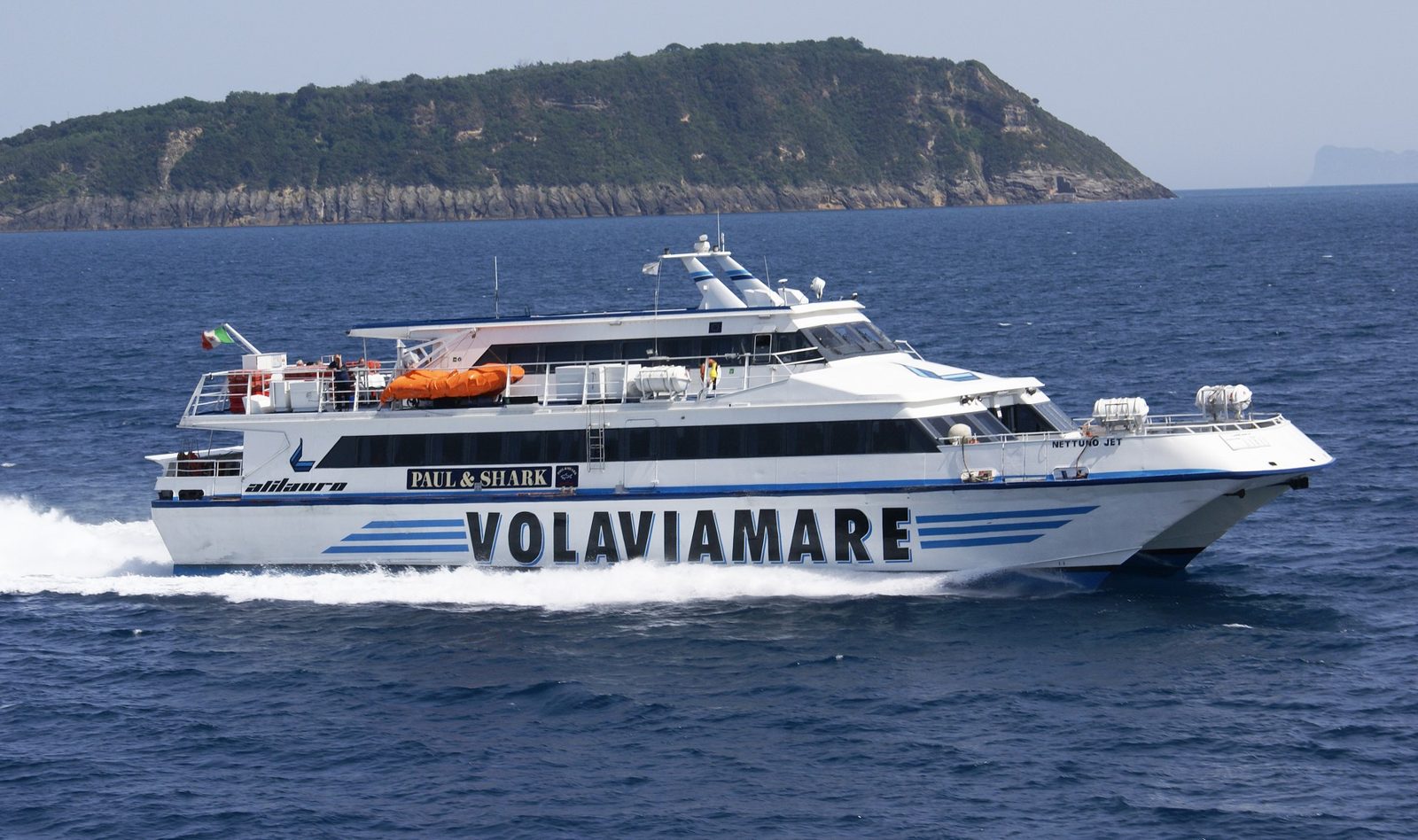
Hydrofoils (aliscafi) are the small, fast boats that rise on underwater wings at speed. They’re quick, but the cabin is enclosed, the windows are small and often salty, and in a choppy sea the ride can be rough. Fast jets (catamarans) are bigger and a little steadier, and usually have some outside space. Car ferries (traghetti) are the slow, big ships with outdoor decks, a bar and room to walk around.
| Factor | Hydrofoil or fast jet | Car ferry |
|---|---|---|
| Speed | Fastest; Naples to Capri in about 50 minutes on the quickest boats | Slower; Naples to Capri in about 85 minutes on Caremar’s regular ferry |
| Price | Higher | Lower, often by a wide margin |
| Comfort | Enclosed seating; bumpy in a swell | Open decks, room to move, steadier in most seas |
| Views | Limited through small windows | Excellent from the outside decks |
| Luggage | Tight limits and supplements on some lines | More generous |
| Weather | The first boats cancelled in rough seas | Usually keep sailing when the hydrofoils stop |
| Terminal in Naples | Mostly Molo Beverello | Calata Porta di Massa |
My own rule: take the fast boat when you’re squeezing an island into a day and every hour counts, and take the ferry when the crossing is part of the pleasure or you’re on a budget. If you’re prone to seasickness, choose the car ferry whenever the forecast shows any wind. A big ship in a moderate sea is a different experience from a hydrofoil in the same conditions. If you do end up on a hydrofoil on a lively day, sit toward the back and low down, where the motion is gentlest, and keep your eyes on the horizon rather than your phone.
Ferry routes from Naples
These are the main routes visitors actually use, with the terminal, the crossing time and a fare range as of September 2026. Fares change by season and by company, and each island’s own page covers what to do once you arrive.
Naples to Capri
The busiest route in the bay. From Molo Beverello, SNAV and NLG run fast boats that take about 50 minutes, with one-way fares in the region of €26.50–31. From Calata Porta di Massa, Caremar runs a regular ferry of about 85 minutes, for roughly €14–19, and a faster boat of about an hour, for around €25. Every ticket to Capri includes the island’s landing fee: €5 per person from April through October and €2.50 in the low season. You’ll see it on the receipt rather than paying it separately.
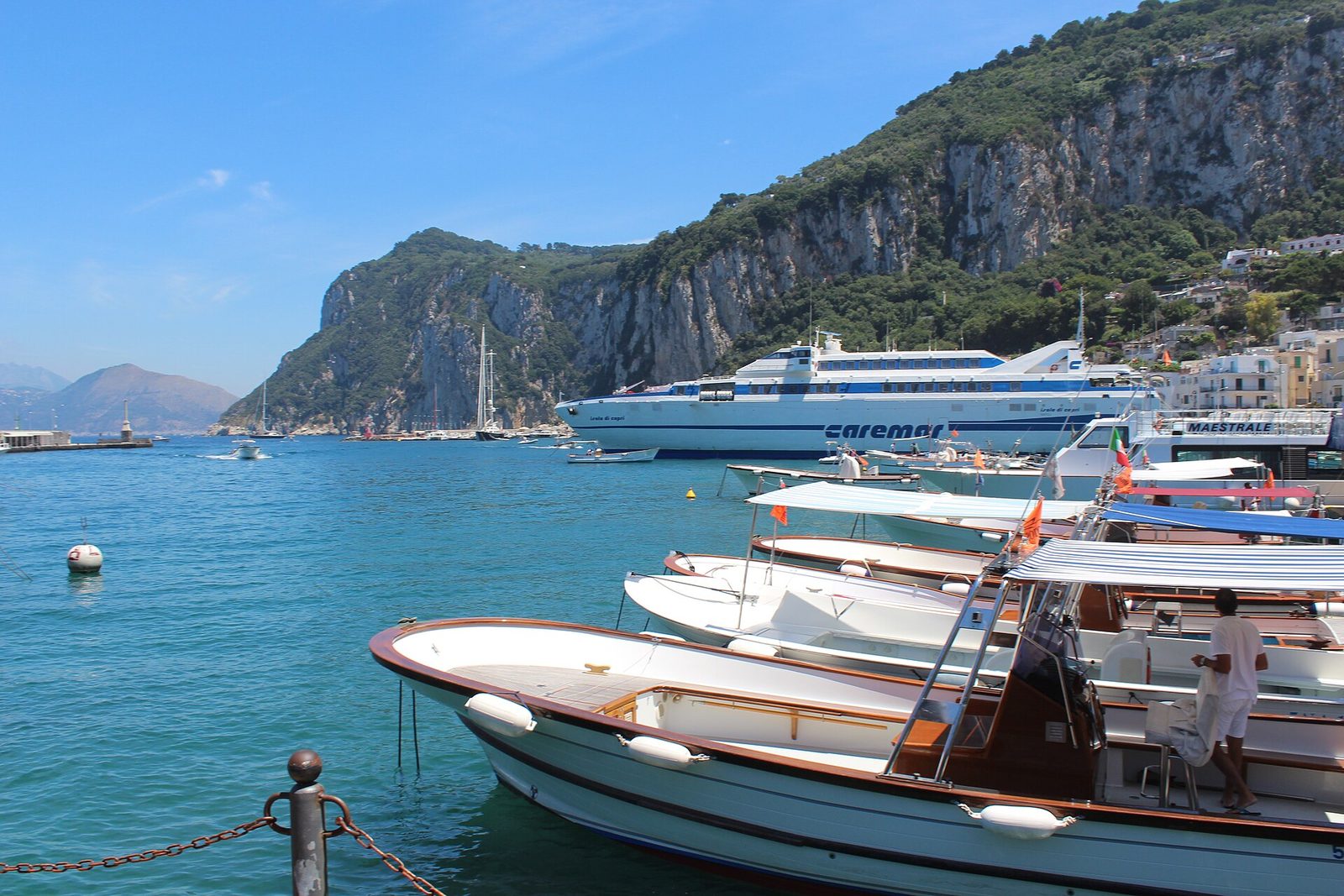
In summer the crunch is the first boats of the morning and the return sailings in the late afternoon, when day-trippers all want to come back at once. Book both legs ahead in high season. Capri also restricts cars for non-residents for most of the year, so leave the car on the mainland. For what to do on the island and how to structure the day, see the Capri from Naples guide.
Naples to Ischia
Ischia is the biggest island and has three ports: Ischia Porto, Casamicciola and Forio. Fast boats from Molo Beverello, run by companies including Alilauro and SNAV, take about an hour. Car ferries from Calata Porta di Massa, mainly Caremar and Medmar, take noticeably longer and cost less. Ischia is also the island where the Pozzuoli crossing matters most, since it’s shorter and popular with locals and anyone driving (more on the 2026 situation below). Check which Ischia port your boat lands at. They’re some distance apart around the island, and it makes a real difference to where you’re staying. The Ischia guide covers the island’s towns and thermal parks.
Naples to Procida
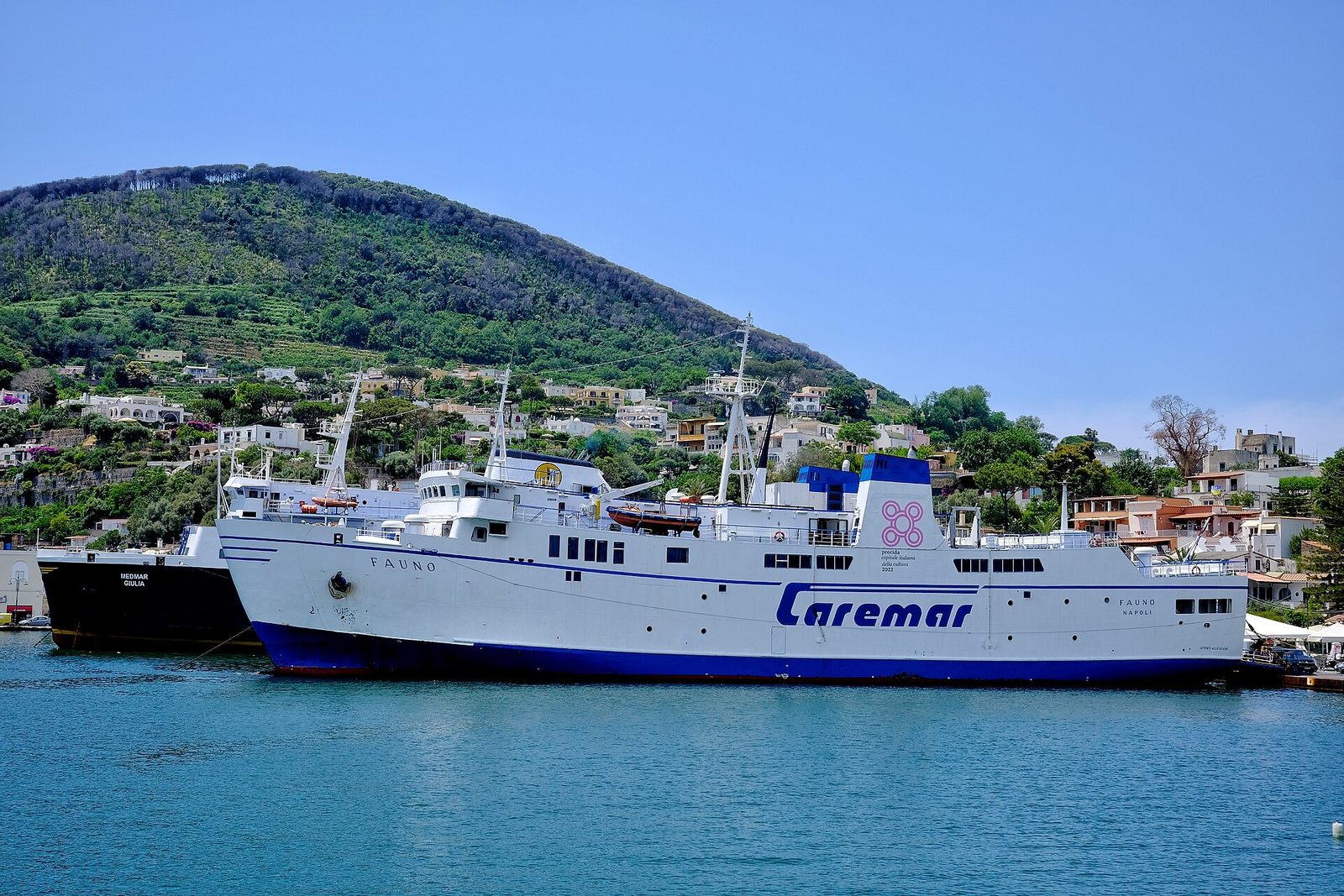
Procida is the smallest and closest of the three. From Molo Beverello, hydrofoils run by SNAV and Caremar take about 40 minutes, for roughly €20–22. From Calata Porta di Massa, Caremar’s ferry takes about an hour, for around €13–16. The quickest and cheapest crossing of all is from Pozzuoli, 30 to 35 minutes, with Medmar fares from around €10 and Caremar’s from around €16, when that port is running normally. Procida bars non-resident vehicles for most of the warmer months, so arrive on foot.
Naples to Sorrento
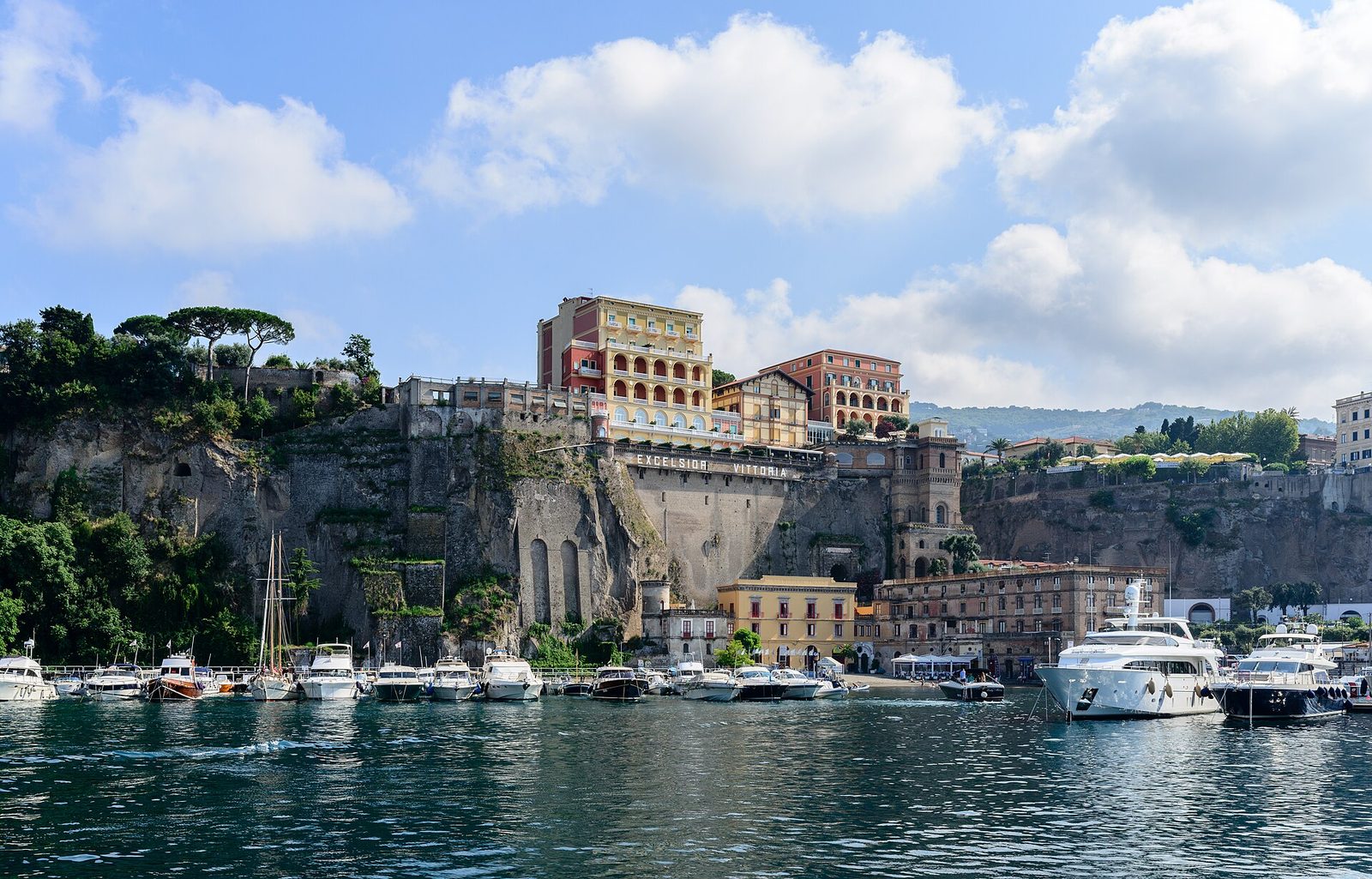
Fast boats link Molo Beverello with Sorrento’s harbor at Marina Piccola, below the cliffs. For most visitors the train is the default way to Sorrento, and the sea is the pleasant alternative when the water is calm and a boat happens to suit your timing. Sea service to Sorrento is thinner outside the main season, so check the current timetable before building a plan around it. Note that the Campania Express, the tourist train on the same corridor, is suspended from October 1, 2026, until further notice. The Sorrento guide covers the town itself.
Naples to Positano and Amalfi
In season, which in practice runs roughly from April to October, with some boats continuing into early November, fast boats run from Molo Beverello down the Amalfi Coast. Positano is about an hour and a half away at around €30, and Amalfi about an hour and three-quarters or more, from around €32. Alilauro is the best-known name on the direct Naples route, and the one whose boats tend to run latest into the autumn, and a cluster of smaller companies runs boats along the coast itself, between Sorrento, Positano, Amalfi and Salerno. Outside the season, there’s no direct boat and you’re back to road and rail. For how the coast fits together, and why arriving by sea beats the coast road when it’s running, read the Amalfi Coast from Naples guide.
Pozzuoli: the shortcut to Ischia and Procida, and the 2026 situation
West of Naples, the port of Pozzuoli offers the shortest crossings to Procida and Ischia, and for years locals have used it to cut the journey and the fare. It sits at the heart of the Campi Flegrei, though, the volcanic area where the ground has been rising and shaking in a slow process called bradyseism. In 2026 that process has directly affected the ferries.
After the earthquake of July 31, 2026, the strongest of the current crisis, the port was closed for checks and the Ischia and Procida services were diverted to Naples. Passenger ferries restarted from Pozzuoli on August 2, with a gradual return to the normal timetable. Heavy vehicles are another story. As of mid-September 2026, trucks over 3.5 tonnes are still barred from the port road and are being sent to Calata Porta di Massa in Naples instead, with works at Pozzuoli planned to run until October 7. A temporary plan has also trimmed a couple of late-evening weekday crossings on the Ischia route. The Campi Flegrei alert level has stood at yellow, the second of four levels, through the crisis.
What that means in practice:
- Foot passengers: Pozzuoli is running, but check the company’s current timetable the day before and again on the morning you travel. Arrangements have changed at short notice all year.
- Drivers: ordinary cars have been sailing, but expect the port and its approach roads to be under pressure, and check for any new restrictions.
- Everyone: if an earthquake is felt, services may pause for inspections, as they did after the July quake. Build in flexibility and have Naples as your fallback terminal.
Getting to Pozzuoli from the city has also been affected. The Line 2 run into Pozzuoli has been suspended, and the Cumana railway’s service in the area has been disrupted and changed during the crisis. Check both on the getting around Naples page, or take a taxi if you’re carrying luggage. If you’re staying in central Naples, the honest answer for most visitors in 2026 is that the time saved by the shorter crossing is eaten up by the trip out to Pozzuoli. Unless you’re driving, sail from the city.
Summer and winter timetables
The bay runs on two timetables. The summer timetable runs roughly from Easter to early November, with frequent departures on every island route and the seasonal boats to Positano and Amalfi. The winter timetable runs from November to around Easter, with fewer departures, earlier last boats and no direct Amalfi Coast sailings from Naples.
The switchover weeks catch people out. A timetable found online in spring may still be last winter’s, and one found in October may not show the thinner service coming in November. Always check the company’s own site for the date you’re traveling, not a general “schedule” page from a third party that may be out of date. That applies doubly to the last boat back from the islands. In summer you can linger over dinner on Capri or Ischia and still catch a boat back to Naples. In winter, the last fast boats leave far earlier, and missing the last one means a night on the island whether you’d planned it or not.
Outside the summer peak, one more thing changes: the sea. Autumn and winter storms are more frequent, which brings us to the question everyone should plan for.
Weather cancellations: what happens when the sea gets up
Ferries in the Bay of Naples are cancelled for rough seas more often than first-time visitors expect, particularly outside summer. The order is predictable. Hydrofoils go first, since they’re the most sensitive to wave height. The larger fast jets follow. The big car ferries usually keep sailing when the smaller boats have stopped, and in the April–October season they are only rarely suspended.
How to deal with it:
- Check on the morning. Each company posts cancellations on its website or app, and the ticket windows at Beverello will tell you what’s running. If your hydrofoil is cancelled, ask about moving to a car ferry the same day; you may have to change terminals to Calata Porta di Massa.
- Don’t cut it fine before a flight. If you’re staying on Capri, Ischia or Procida at the end of a trip, spend your last night on the mainland, or at least make sure there’s a whole day between your planned crossing and your flight. A cancelled hydrofoil on the morning of a flight is a miserable way to end a holiday.
- Know the refund position. If the company cancels a sailing, you’re entitled to a refund or a transfer to another boat. If you simply miss your boat, the ticket’s terms apply, and cheap fares are often non-refundable.
- Don’t sail on a rough day if you don’t have to. Even when the boats run, a lively crossing on a hydrofoil is unpleasant. If the forecast is bad and your plan is flexible, swap your island day for a city day.
This is one of the reasons the best time to visit Naples matters so much for island trips. The same weather that closes the sea also makes the islands far less pleasant when you arrive.
Tickets, booking and luggage
Where to buy
There are three ways to buy a ferry ticket in Naples, and they’re not equal:
- The company’s own website or app. Usually the cheapest and the most reliable way, with the terminal clearly stated and the fastest route to a refund or change. SNAV, NLG, Alilauro, Caremar and Medmar all sell online.
- Booking platforms. Useful for comparing several companies on one screen, especially when you’re island-hopping, but many add a booking fee, and a few obscure the terminal until late in the process. Check the total and the departure point before you pay.
- The ticket windows at the port. Perfectly fine outside the peak and for last-minute plans, but on summer mornings the queues at Beverello can be long enough to make you miss the boat you meant to catch.
When to book ahead
You don’t need to book most crossings weeks in advance. You do need to book ahead for the first boats of the morning in summer, for any crossing on a summer weekend or around the big Italian holidays, and above all for the return sailings from Capri in the late afternoon, when every day-tripper wants the same few boats. Outside those times, buying at the port or the day before is usually fine. If you’re traveling in the height of summer and your plans are fixed, book both legs online and relax.
Most tickets are for a specific sailing. Some companies let you change the time for a fee, but the cheaper fares often can’t be changed or refunded, so read the terms before you choose the cheapest option.
The Capri landing fee
Capri charges a landing fee to non-residents, €5 per person from April through October and €2.50 from November to March. It’s added to your ferry ticket automatically, so you don’t need to do anything, but it explains why a Capri crossing costs a little more than a similar distance to the other islands.
Luggage rules
This is where the fast boats and the car ferries differ most. On Caremar’s ferries you can bring one piece of hand luggage and a trolley bag of up to 20 kg. On the fast boats, the rules are tighter. SNAV includes a hand bag of up to 50 × 35 × 20 cm and 9 kg, with further bags charged at around €5 each. NLG includes a hand bag of up to 50 × 30 × 15 cm and just 5 kg, with supplements of €5–7 for anything more. Suitcases go in a luggage area near the door, and on busy boats you’ll be handing them over to crew and collecting them in a scrum at the other end.
If you’re moving hotels between the islands with large cases, the car ferries are much easier. And if you’re doing a day trip, leave the luggage at the hotel. On Capri, porter services at Marina Grande will take bags up to hotels for a fee. The Capri guide has the details.
Mobility and accessibility
Boarding the smaller fast boats involves a gangway that can be steep at some tides, and the cabins are compact. The big car ferries, with their wide ramps and roomier decks, are generally easier for anyone with limited mobility. If you use a wheelchair or need assistance, contact the company before you book to confirm what’s possible on your chosen sailing. The answer varies from boat to boat.
Island hopping around the Bay of Naples
You don’t have to go back through Naples every time you change islands, and in summer island-hopping is easy. Ischia and Procida are close neighbors: Caremar runs a car ferry between them of about 30 minutes and a hydrofoil of about 20, so they combine naturally on one trip. From Capri, fast boats reach Sorrento in 30 to 40 minutes, and in season they continue along the Amalfi Coast. Amalfi is about an hour away, at around €26–28. Direct boats between Capri and Ischia run in the main season, though far less often than the Naples routes.
In winter it’s a different picture. Most inter-island services thin out or stop, and the simplest way between two islands is often to sail back to Naples and out again. Check before you commit to a winter island-hop that looks easy on a summer map.
A few combinations that work well:
- Ischia and Procida together: a few nights on Ischia with a day trip to Procida is the easiest pairing in the bay.
- Capri, then the Amalfi Coast: in season, sail from Capri to Positano or Amalfi rather than back to Naples, and let the sea save you the coast road.
- Sorrento as a base for Capri: if you’re staying in Sorrento, the crossing to Capri is short and frequent, and saves the trip into Naples.
For how many days each combination deserves, the Naples itinerary page lays out the options.
Getting to the port in Naples
Both city terminals are easy to reach, but not equally so, and the right choice depends on where you’re coming from.
- By metro: Line 1’s Municipio station is right by Piazza Municipio, a few minutes’ walk from Molo Beverello. From Napoli Centrale, go to Garibaldi station and ride Line 1 to Municipio. For Calata Porta di Massa, either walk east from Municipio along the port or approach from the station end of Via Marina.
- From the airport: the Alibus shuttle runs from the airport via the central station to the port, with stops at Porto Beverello and at Immacolatella, which is closer to Porta di Massa. Taxis from the airport run on a fixed fare to the port area. The Naples airport transfer guide has the current fares and timings for both.
- From the central station: the Alibus and Line 1 both work, and a taxi is sensible with heavy bags. The walk is long, around the busy port road, and I wouldn’t do it with luggage.
- From the seafront hotels: if you’re staying along Via Partenope or in Santa Lucia, Beverello is a pleasant walk past the Castel Nuovo, or a very short taxi ride.
Allow more time than you think. Traffic on Via Marina can be heavy, the ticket windows can be busy, and the boats leave on time even when the rest of the city doesn’t. I’d allow at least half an hour before a fast boat in summer, and more if you still have to buy a ticket or change terminals. If you’re choosing a hotel partly for an early boat, the where to stay in Naples guide covers the areas closest to the port.
What happens at the pier: boarding a Naples ferry step by step
If you’ve never taken a boat in the bay, the process at Molo Beverello can look chaotic. It’s actually simple once you know the sequence.
Find your company, not just your boat. Each company has its own ticket window and its own boarding point along the quay, and the departure boards show the company name and destination rather than a gate number. If you already have an e-ticket, you can usually go straight to the boarding area. Keep the QR code or the booking reference on your phone, with a screenshot in case the signal drops.
Listen for the call. Boarding for the fast boats is called shortly before departure, and a crowd forms at the gangway quickly. The crew check tickets at the bottom of the gangway and take larger bags from you at the door. Put anything you’ll need during the crossing, like medication, water or a jacket, in your hand bag before you get to the front.
On board. On the fast boats you’ll be in an enclosed cabin for the crossing. Stay seated when the sea is lively, since standing on a hydrofoil at speed is a good way to fall over. On the car ferries you can go straight up to the outside decks, and there’s usually a bar selling coffee and snacks. Foot passengers on car ferries board by the same ramp as the vehicles or by a separate walkway, depending on the ship, so follow the crew’s directions rather than the car in front.
Arriving. Everyone stands up at once as the boat docks, and bags come off in a heap by the door. Keep your ticket handy until you’re off the quay, and keep an eye on your luggage in the scrum. On busy days, the fastest way off the pier is to let the first rush go past and then walk off with your bag in one calm trip.
Longer ferries from Naples: Sicily, the Aeolians and Sardinia
Naples is also a port for longer journeys, and a few of them make great routes for a slow trip south. Overnight ferries run to Palermo in Sicily, operated by companies including GNV and Tirrenia, and there are sailings to Sardinia. In the summer season, fast boats run from Naples to the Aeolian Islands, stopping at islands such as Stromboli and Lipari on the way. There are also seasonal connections with the Pontine islands of Ponza and Ventotene.
These services leave from the main commercial port rather than the island piers, and the berth is given on your booking, so check it carefully and allow extra time to find the right gate. Overnight ferries also need proper check-in time, especially with a car. They’re outside the scope of a Bay of Naples trip, but if you’re traveling on to Sicily, a cabin on the overnight boat saves a hotel night and a long train journey.
A simple plan for a first island day
If this is your first time and you want a template, this is the approach I’d use for a day trip to any of the three islands from central Naples. It works for most of the year.
- Decide the night before which island, and check the forecast. If the sea looks rough, swap days.
- Book an early fast boat out from Molo Beverello, and check the terminal printed on the ticket.
- Book the return in summer, ideally on a slightly earlier or later boat than the crowd’s late-afternoon favorite. Outside the season, check the time of the last boat back and make sure yours is at least one before it.
- Leave the luggage at the hotel, carry a light layer for the crossing, and take something for seasickness if you need it.
- On the morning, check the company’s app or website for cancellations before you leave for the port, and arrive with a margin.
- Consider the slow ferry back if you’re not in a hurry; it lands at Calata Porta di Massa. Sitting on deck at sunset with Vesuvius in view is one of the best cheap experiences in Naples.
For which island suits which kind of day, the day trips from Naples guide weighs the islands against Pompeii, the Amalfi Coast and the rest of the region.
What to skip
- Assuming every boat leaves from Beverello. Many do, but not all. Some of the cheapest crossings, and in 2026 Caremar’s Capri boats, leave from Calata Porta di Massa. Read the ticket.
- Capri and Ischia in one day. It can technically be done in summer, and it’s a miserable way to see either. Pick one island per day.
- The last boat back in winter. It leaves early, and if it’s cancelled or full, you’re staying the night. Aim for the one before it.
- Booking fees you don’t need to pay. For a simple return to one island, the company’s own website is usually cheaper than a booking platform.
- The hydrofoil on a rough day if you get seasick. Take the car ferry, or move your island day.
- Taking a car to the islands. Capri and Procida restrict non-resident vehicles for much of the year, and even on Ischia you rarely need one.
- Relying on Pozzuoli in 2026 without checking. The port is running for passengers, but the bradyseism has disrupted it more than once this year.
Naples ferry frequently asked questions
Which port do ferries leave from in Naples?
Most fast boats and hydrofoils leave from Molo Beverello, opposite Castel Nuovo near Piazza Municipio. Slower car ferries leave from Calata Porta di Massa, about a kilometer east along the port. Some boats, including Caremar’s Capri services in 2026, leave from Porta di Massa. The shortest crossings to Ischia and Procida leave from Pozzuoli, west of the city.
How far is Molo Beverello from Calata Porta di Massa?
About a kilometer, along Via Marina and the port road. Allow at least fifteen minutes on foot with luggage, and more at busy times. There’s nothing difficult about the walk, but it’s easy to underestimate, so if your ticket says Porta di Massa, head straight there rather than to Beverello first.
Is the hydrofoil or the ferry better from Naples?
The hydrofoil is faster and better for a day trip where every hour counts. The car ferry is cheaper, steadier in a swell, better for luggage and much better for views from its open decks. If you get seasick or the forecast shows wind, take the car ferry. Many people go out by fast boat and come back on the slow one.
Do I need to book Naples ferries in advance?
Not usually, but it’s wise in summer for the first boats of the morning, for weekend and holiday sailings, and above all for the late-afternoon return sailings from Capri, when every day-tripper wants the same few boats. Outside the peak, buying the day before or at the port is usually fine. Book with the company directly where you can.
How much is the ferry from Naples to Capri?
As of September 2026, fast boats from Molo Beverello cost around €26.50–31 one way and take about 50 minutes, while Caremar’s regular ferry from Calata Porta di Massa costs around €14–19 and takes about 85 minutes. Every Capri ticket includes the island’s landing fee, €5 from April to October and €2.50 in the low season.
Are Naples ferries cancelled because of bad weather?
Yes, especially outside summer. Hydrofoils are cancelled first when the sea is rough, then the larger fast boats. The big car ferries usually keep running when the smaller boats stop. Check the company’s website or app on the morning you travel, and never plan an island crossing for the same day as your flight home.
Can I take luggage on the hydrofoil from Naples?
Yes, but limits are tight and supplements apply. SNAV includes one hand bag up to 50 × 35 × 20 cm and 9 kg, and charges around €5 for each extra bag. NLG allows a smaller, lighter hand bag and charges €5–7 for extra luggage. Caremar’s ferries are more generous, with a hand bag and a trolley of up to 20 kg included.
Are ferries running from Pozzuoli in 2026?
Yes, for passengers. After the July 31, 2026, earthquake briefly closed the port, passenger services to Ischia and Procida restarted on August 2. Heavy trucks have been diverted to Naples while works run to October 7, and some evening crossings have been trimmed. Check the company’s timetable close to your travel date, since arrangements have changed repeatedly.
Is there a ferry from Naples to the Amalfi Coast?
In season, yes. From roughly April to October, fast boats run from Molo Beverello to Positano, about an hour and a half away, and to Amalfi, a little further, with a few sailings continuing into early November. Outside the season there’s no direct boat, and you travel by train and bus or by road instead.
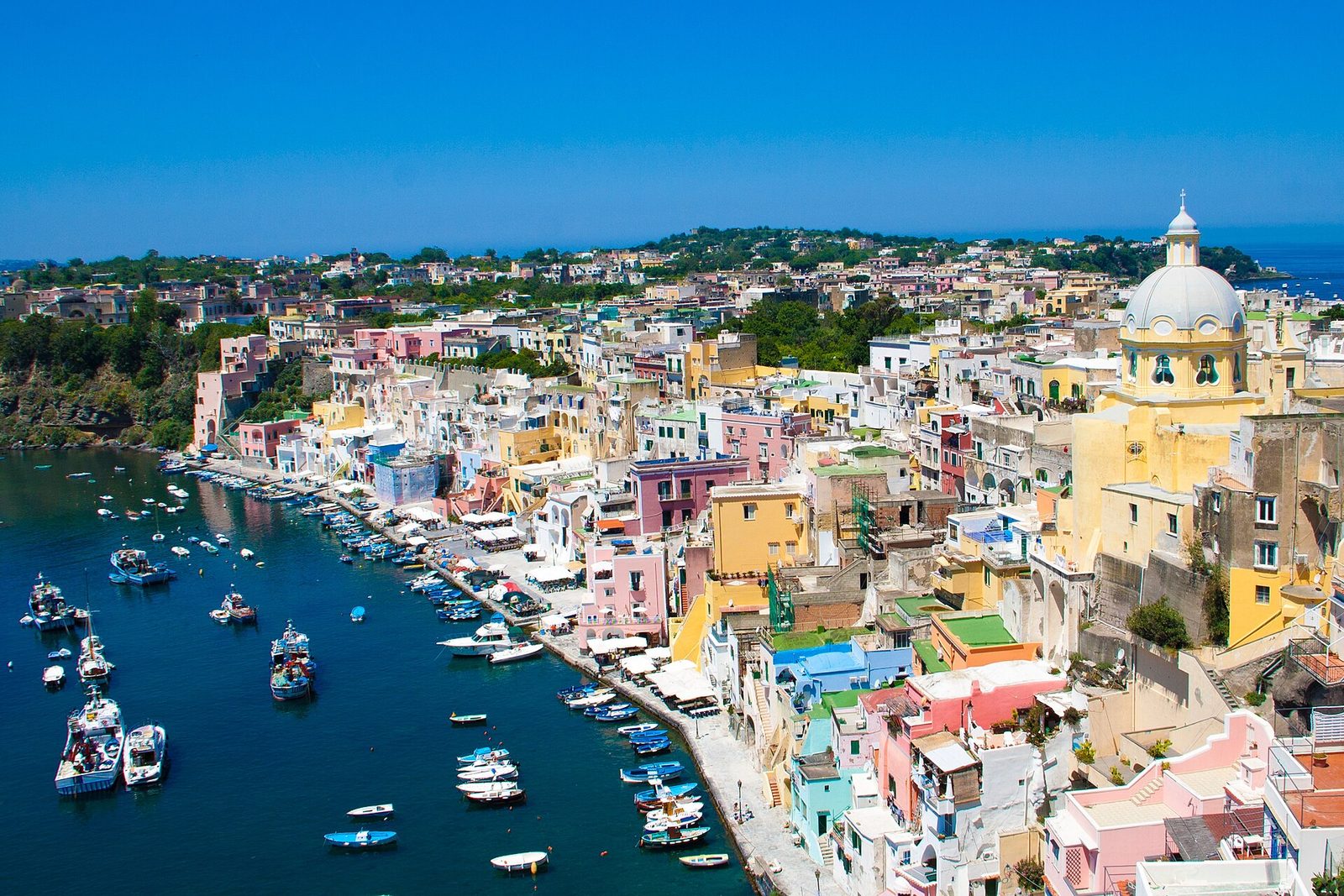
Once you’ve landed at Procida’s Marina Grande, the guide to Procida takes over. It covers the walk up to Terra Murata, lunch at Marina Corricella, the island’s buses and microtaxis, and how to fit it all in before the last boat back.
Photo credits
- Hydrofoil in the Gulf of Naples: photo by Enzo Abramo, Wikimedia Commons, CC0.
- Molo Beverello quay: photo by Dr.Conati at Italian Wikipedia, Wikimedia Commons, public domain.
- Caremar ferry on Ischia: photo by Jörg Fuhrmann (Intermerker), Wikimedia Commons, CC BY-SA 4.0.
- Marina Grande, Capri: photo by Deror_avi, Wikimedia Commons, CC BY-SA 4.0.
- Marina Corricella, Procida: photo by DIANA.GRYGAROVA, Wikimedia Commons, CC BY-SA 4.0.
- Marina Piccola port, Sorrento: photo by Norbert Nagel, Wikimedia Commons, CC BY-SA 3.0.
Sources: Capri routes, fares, luggage rules and vehicle restrictions from the capri.com 2026 ferry schedule; Procida routes and fares from Visit Procida’s 2026 ferry page; the Capri landing fee from the Comune di Capri; Pozzuoli port status from ANSA Campania and local press, September 2026. All checked September 2026; fares vary by season and company.