On this page
Last updated September 25, 2026. Booking rules checked against the official sites of the Sansevero Chapel, the Vesuvius National Park and the Pompeii archaeological park; Artecard terms against 2026 listings of the card. Tour verdicts are my own, and nobody paid for a mention.
The Naples tours worth paying for are a guide at Pompeii, a street food walk in the old city, and the underground sites, which you can only see guided. Book the Sansevero Chapel, Vesuvius and Pompeii ahead on their official sites. In Naples, Italy, the Artecard pays off only if you’ll see two or three big museums.
Naples has an enormous tour market, and most of it is sold through the same few booking platforms, where a plain museum ticket and a genuinely brilliant guide sit side by side with the same star ratings. Some of what’s on sale is excellent value. Some of it is a standard ticket with a markup and the words “skip the line” added. And a few things you’d assume need booking don’t, while a few things you’d assume you can buy at the door absolutely can’t.
This page sorts it out. It covers the short list of places that sell out, the difference between official tickets and resellers, whether the Artecard pays off for the trip you’re actually planning, and an honest verdict on each kind of tour. For what each sight costs on its own, see the guide to what Naples costs. For the sights themselves, start with the full list of things to do in Naples.
The Naples book-ahead list: what actually sells out
Most of Naples doesn’t need booking. The big museums, the churches, Herculaneum and most of the city’s sights can be visited on the day. A handful of places have moved to timed tickets or compulsory reservations, though, and those are the ones that catch people out. Book these first, then fit everything else around them.
| Site | The rule | How far ahead | Where to book | If you don’t |
|---|---|---|---|---|
| Sansevero Chapel (the Veiled Christ) | Compulsory timed booking; closed Tuesdays | Released 60 days ahead, with a second release 2 days before | The chapel’s official website | Busy days are sold out weeks ahead; don’t count on the door |
| Mount Vesuvius crater trail | Online tickets only, in timed slots | Released 30 days ahead | The national park’s official ticketing site | A few last-minute tickets per slot are released on site, but you can’t rely on them |
| Pompeii | Named tickets (bring ID); a daily visitor cap; timed entry windows in the high season | A few days ahead for weekends and holidays | The archaeological park’s official ticketing | Usually fine midweek, but peak days can fill |
| Catacombs of San Gennaro and San Gaudioso | Compulsory reservation; closed Wednesdays | A day or two ahead; more in peak season | The Catacombe di Napoli website | No reservation, no visit |
| Galleria Borbonica | Compulsory booking; runs Friday to Sunday and on holidays | A few days ahead | The operator’s website | Weekend slots fill |
| Cimitero delle Fontanelle | Compulsory reservation since the April 2026 reopening | A few days ahead | The City of Naples booking page | No reservation, no visit |
| Napoli Sotterranea | Guided tours; small groups can usually walk up | Book for weekends and the busy months | The operator’s website | You may wait for a later tour |
The Sansevero Chapel
This is the one that matters most. The Veiled Christ is the single most famous work of art in Naples, the chapel is small, and visits are timed. Tickets go on sale 60 days in advance, and a second batch is released two days before each date, according to the chapel’s own site in September 2026. If the Sansevero is on your list, book it the day your travel dates are fixed, then plan the rest of the day around your slot. The chapel is closed on Tuesdays and open 9:00–19:00 the rest of the week, and the ticket office has temporarily moved around the corner, to Via Raimondo di Sangro 12. The Naples churches guide explains what you’ll see.
Mount Vesuvius
Tickets for the crater trail are sold online only, through the national park’s official ticketing site, in timed slots that go on sale 30 days ahead. Each slot has a fixed number of places. A small number of extra tickets per slot are sold as last-minute tickets on site, bought over the park’s Wi-Fi at the entrance, but you’d be foolish to plan around them in summer. The trail closes at short notice in bad weather, including high winds, and when the park closes for a weather alert, tickets are refunded automatically. Resellers sell the same ticket for more, sometimes bundled with a shuttle bus, which may or may not be worth it to you. The Mount Vesuvius guide covers the shuttles and the walk.
Pompeii
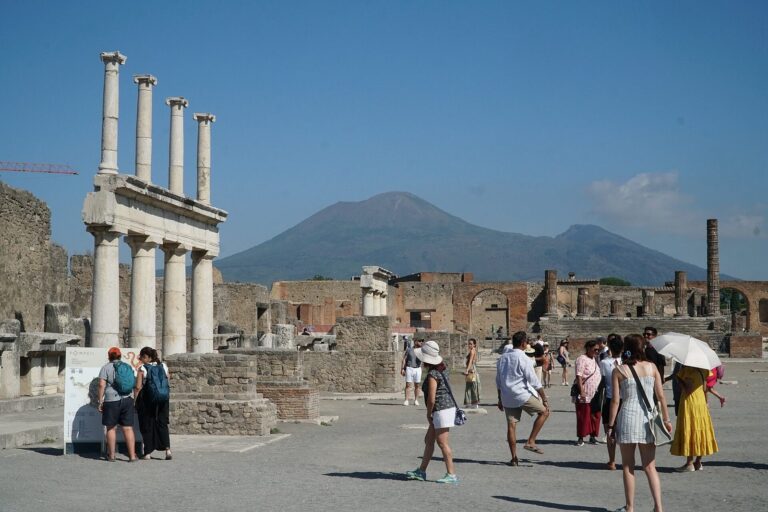
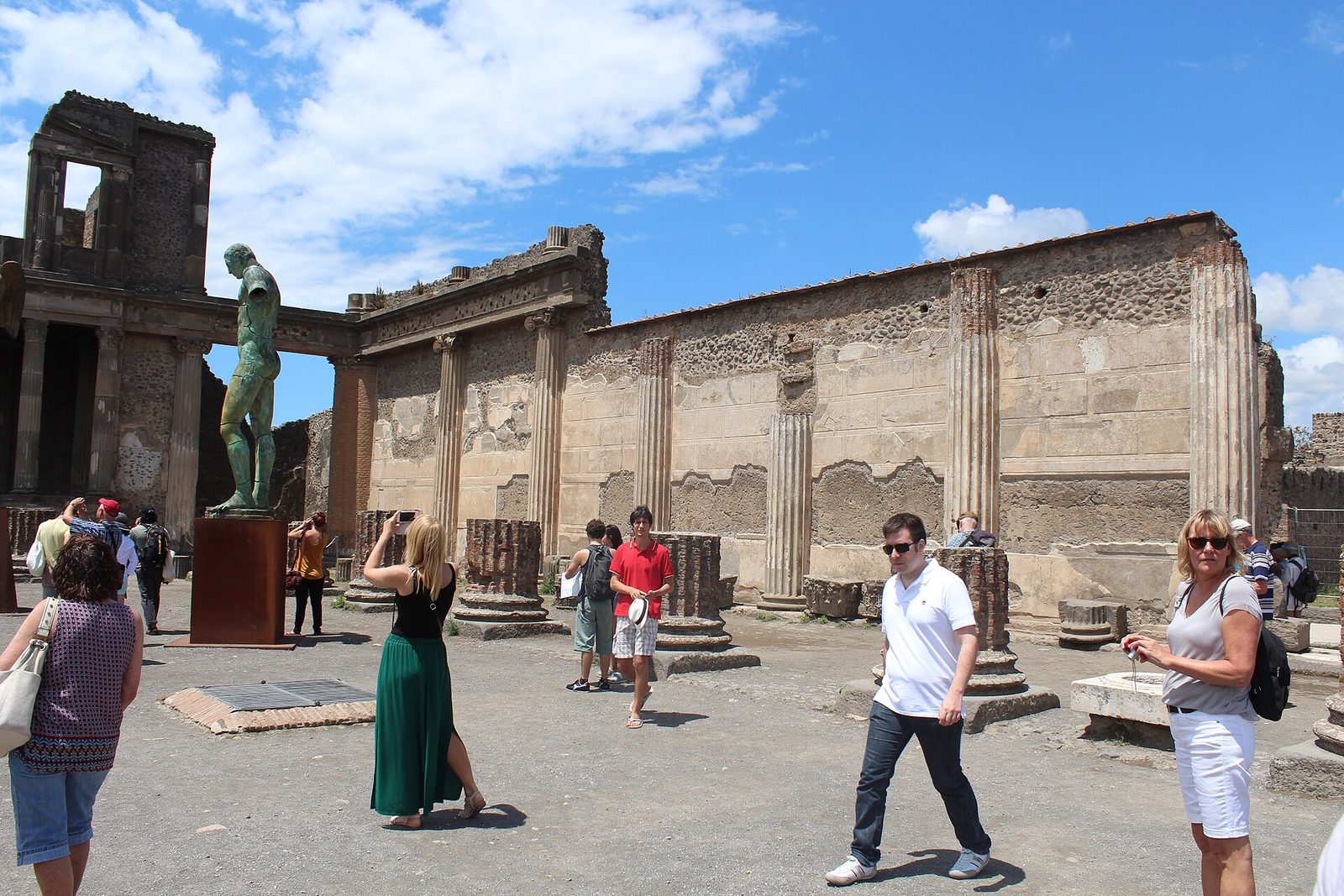
Pompeii changed its ticketing in 2026. Tickets are now sold through a new official system, they’re named and non-transferable, so you’ll need ID matching the name at the entrance, and there’s a daily cap of 20,000 visitors. From mid-March to mid-October, entry is split into two windows, a morning window that takes the bulk of the day’s visitors and a smaller afternoon one. There are also three ticket types, and the difference matters. The cheapest (Pompeii Express) covers the ancient city only. The mid-priced ticket (Pompeii+) adds the outlying villas, including the Villa of the Mysteries. A three-day ticket adds the other Vesuvian sites. If a tour’s price includes “entry to Pompeii,” find out which ticket, because the Villa of the Mysteries is on many people’s must-see list. The ancient city is free on the first Sunday of the month, and under-18s get in free all year. The Pompeii from Naples guide has the full details.
The underground sites
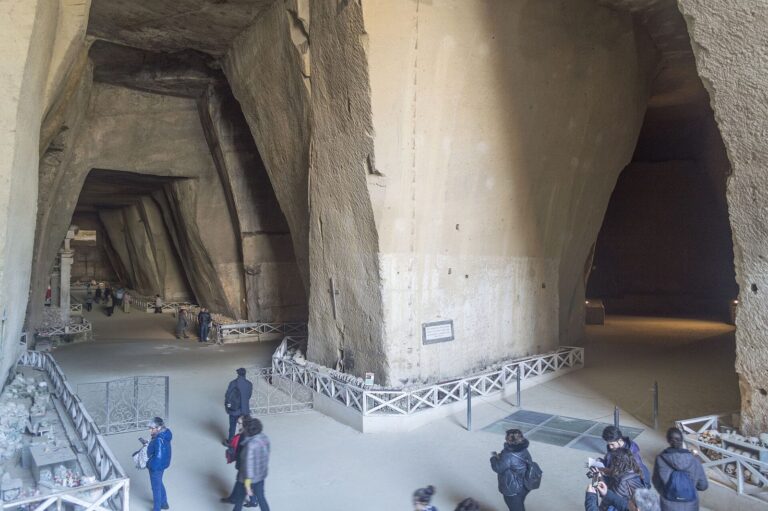
Naples’s underground attractions are guided visits by nature, so they’re effectively tours in themselves, and several now need reservations. The catacombs, the Galleria Borbonica and the Fontanelle cemetery all require booking. Napoli Sotterranea usually takes small walk-up groups. The underground Naples guide compares them and explains which suits you.
Official tickets, resellers and “skip the line”
For almost every site in Naples, the cheapest ticket is the official one, sold on the site’s own website or at its ticket office. The big booking platforms resell many of the same tickets, sometimes at the same price and sometimes with a markup. They sell guided tours too, and those are a different product.
Here’s how I’d think about it:
- For a plain entry ticket, go official. Pompeii, Vesuvius, the Sansevero Chapel, the museums and the underground sites all sell direct. You’ll pay less, you’ll know exactly what you’ve bought, and you’ll deal with the site if something goes wrong.
- For a guided visit, a platform can be fine, as long as you know who the operator is, what the group size is, and whether the entry ticket is included. The platform’s reviews are genuinely useful for comparing guides.
- When the official slots are sold out, a tour operator may still have places, especially for the Sansevero and Vesuvius, because operators buy allocations. Then paying more for a tour can be worth it, if the tour is good.
- Treat “skip the line” with suspicion. At a site where you can book online anyway, a pre-booked official ticket already lets you bypass the ticket office. Everyone then goes through the same entrance checks. Paying a premium for “skip the line” at a museum with no queue buys you nothing.
- Check the website address. Lookalike sites that resemble official ticket pages exist for the big attractions. Follow the links from the official park or museum site, and be wary of anything that looks official but charges more than the listed price.
A booking timeline: when to book what
Put the book-ahead list and the tours together, and a simple timeline falls out. Working back from your arrival date, here’s the order I’d book in.
- About 60 days out: the Sansevero Chapel, as soon as tickets for your dates are released. If you miss the first release, set a reminder for the second release two days before your chosen date.
- About 30 days out: the Vesuvius crater trail, on the day your date goes on sale if you’re traveling in summer or at a weekend. Pick a morning slot, when the air is clearer and it’s cooler on the path.
- Two to three weeks out: any guided tour you really want in the busy months, above all a small-group Pompeii tour with a good guide, a food tour on a specific evening, or a private driver for the Amalfi Coast. The best guides fill up first.
- One to two weeks out: Pompeii tickets for a weekend or holiday date, the Galleria Borbonica for a weekend slot, and the Catacombs of San Gennaro in peak season.
- A few days out: the Fontanelle cemetery, the Girolamini library, the catacombs outside peak season, and ferry tickets for a summer weekend.
- The day before: check the forecast. Wind and rough seas close the Vesuvius trail and cancel boat trips and hydrofoils, so swap your days around if the weather turns.
- On the day: Napoli Sotterranea, the big museums, the churches and Herculaneum, none of which usually need booking.
If you’re traveling outside the busy months, you can compress most of this into the last week or two, with the exception of the Sansevero Chapel, which is worth booking early whatever the season. For the dates when Naples is busiest, see the best time to visit Naples.
Is the Campania Artecard worth it?
The Campania Artecard is the region’s official sightseeing pass, and the closest thing Naples has to a city pass. It covers more than 80 museums and archaeological sites across Naples and Campania. Most of the internet describes it without answering the only question that matters: will it save you money on the trip you’re actually taking? Here’s how it works, and when it pays.
The cards in 2026
- Napoli 3 Days (€27): free entry to your first three sites in the city, discounts of up to 50% on the rest, and 72 hours of city public transport, including the metro, buses and funiculars.
- Campania 3 Days (€41): free entry to your first two sites anywhere in the region, including Pompeii, Herculaneum, Paestum and the Reggia di Caserta, discounts on the rest, and three days of regional public transport.
- Campania 7 Days (€43): free entry to your first five sites anywhere in the region and discounts on the rest, but no transport.
- 365 Lite (€26) and 365 Gold (€50): annual cards aimed at residents and repeat visitors, without transport.
The free entries are used in the order you visit, so plan to use them on the most expensive sites. Some sites need a separate reservation even with the card, and a few charge a supplement for special exhibitions. The card’s list of included sites changes, so check it before buying.
When it pays: five common trips
| Your trip | Best card | Does it pay? |
|---|---|---|
| Three days in the city, with the archaeological museum, Capodimonte and the Royal Palace | Napoli 3 Days | Yes, comfortably. The three museums alone cost about €50 at full price, before three days of transport. |
| City plus Pompeii and Herculaneum in three days | Campania 3 Days | Usually, modestly. Use the two free entries on Pompeii and one other big site, and the card covers the trains. |
| A week in the region with five or more big sites, such as Pompeii, Herculaneum, Caserta, MANN and Capodimonte | Campania 7 Days | Yes, strongly, if you really visit five. Buy your own transport tickets. |
| A trip built around churches, the underground and the old city | None | No. Most of those sites are free, private or outside the card. |
| Families with under-18s, or EU travelers aged 18 to 25 | Usually none | Rarely. Under-18s are free at state sites and young EU adults pay a token €2, so the card has little to discount. |
Two more cases where it doesn’t pay: if you’re visiting on the first Sunday of the month, when state museums and sites are free anyway, and if you’re only in Naples for a day or two and won’t reach three paid sites. For what each museum is like and when it’s free, see the Naples museums guide. For how sightseeing fits into a daily budget, see the Naples cost guide.
My verdict: for a museum-minded three-day city break, the Napoli card is one of the best-value passes in Italy, mainly because of the three free museums plus transport. For everyone else, do the sums before you buy.
Guided tours in Naples: which are worth it
A good guide in Naples does more than point at things. The city is so layered that without context you’ll walk past a Greek wall, a Roman temple column and a medieval king’s tomb in the same five minutes and notice none of them. That said, not every kind of tour is worth the money. Here’s my honest read on each kind.
Walking tours of the old city
A two- or three-hour guided walk through the Centro Storico is the single best introduction to Naples, especially on your first morning. A good guide will take you down Spaccanapoli and Via dei Tribunali, into churches you’d have missed, and through the city’s history from the Greeks to Maradona. You’ll come out knowing how to read the streets for the rest of your stay.
There are two models. Tip-based “free” walking tours are a fine, low-commitment introduction, though groups can be large and you’re expected to tip the guide at the end. Paid small-group or private tours cost more but give you more attention and a more tailored route. Verdict: worth it on day one. If you’d rather do it yourself, our Centro Storico guide covers the same ground.
Street food tours
Naples is one of the great street food cities in the world, and a food walk is one of the most enjoyable ways to see it. A typical tour runs two or three hours through the old city or the Quartieri Spagnoli, with stops for pizza fritta, a cuoppo of fried seafood, a sfogliatella, coffee, and maybe a taste of limoncello or a Neapolitan babà. The guide explains what you’re eating and takes you to places you’d never find alone.

Verdict: worth it, especially early in your trip, since you’ll then know what to order for the rest of it. Check the group size and how much food is included. If you’d rather go it alone, the Naples food guide tells you what to eat and where.
Pizza-making classes
Plenty of pizzerias and cooking schools offer classes where you stretch your own dough and bake it in a wood-fired oven. They’re fun, especially with children, and you get to eat the result. Don’t expect to go home able to make Neapolitan pizza: the dough, the oven and years of practice are the point. Verdict: a good rainy-afternoon activity and a great family one, but not a substitute for eating at the real pizzerias. The best pizza in Naples guide covers those.
Guides at Pompeii and Herculaneum
This is where a guide makes the most difference in the whole region. Pompeii is vast, the signage is limited, and without help you’ll spend half your time lost and see a fraction of the best houses. A good guide, or at least a good audio guide, turns a hot, confusing walk into one of the great experiences in Europe. Herculaneum is smaller and easier to see alone, but it rewards a guide too.
There are three ways to do it. The first is to take the train yourself and join a small-group tour that meets at the site. That’s my favorite: it’s cheaper than a tour from Naples and you control your own day. The second is to hire a private licensed guide at the site, booked in advance. The third is a full-day tour from Naples with transport included, which is easy but less efficient, since much of the day is spent in a coach. Whichever you choose, make sure the guide is licensed, find out whether the entry ticket is included, and check which ticket it is. If it’s the cheapest Express ticket, the Villa of the Mysteries isn’t included.
Verdict: book a guide for Pompeii, especially on a first visit. The Pompeii guide and the Herculaneum guide cover the trains and tickets.
Vesuvius tours
The crater walk itself is short and straightforward, and you don’t need a guide for it. The challenge is logistics. You need a timed ticket, a shuttle bus from Ercolano or Pompeii to the upper car park, and a plan for the weather. Combined tours that handle all of it, often with Pompeii on the same day, make a lot of sense if you’d rather not juggle shuttles and time slots. Verdict: a combined Vesuvius and Pompeii tour is one of the few coach day trips from Naples I’d recommend, because it solves a genuine transport problem.

Amalfi Coast day tours
A day tour of the Amalfi Coast from Naples is one of the most popular excursions on sale, and one of the most tiring. The coast is a long way from the city, the coast road is narrow and slow, and in summer it’s jammed. Group coach tours typically spend most of the day on the road, with short stops in Positano and Amalfi. Private driver tours are more flexible but cost far more.
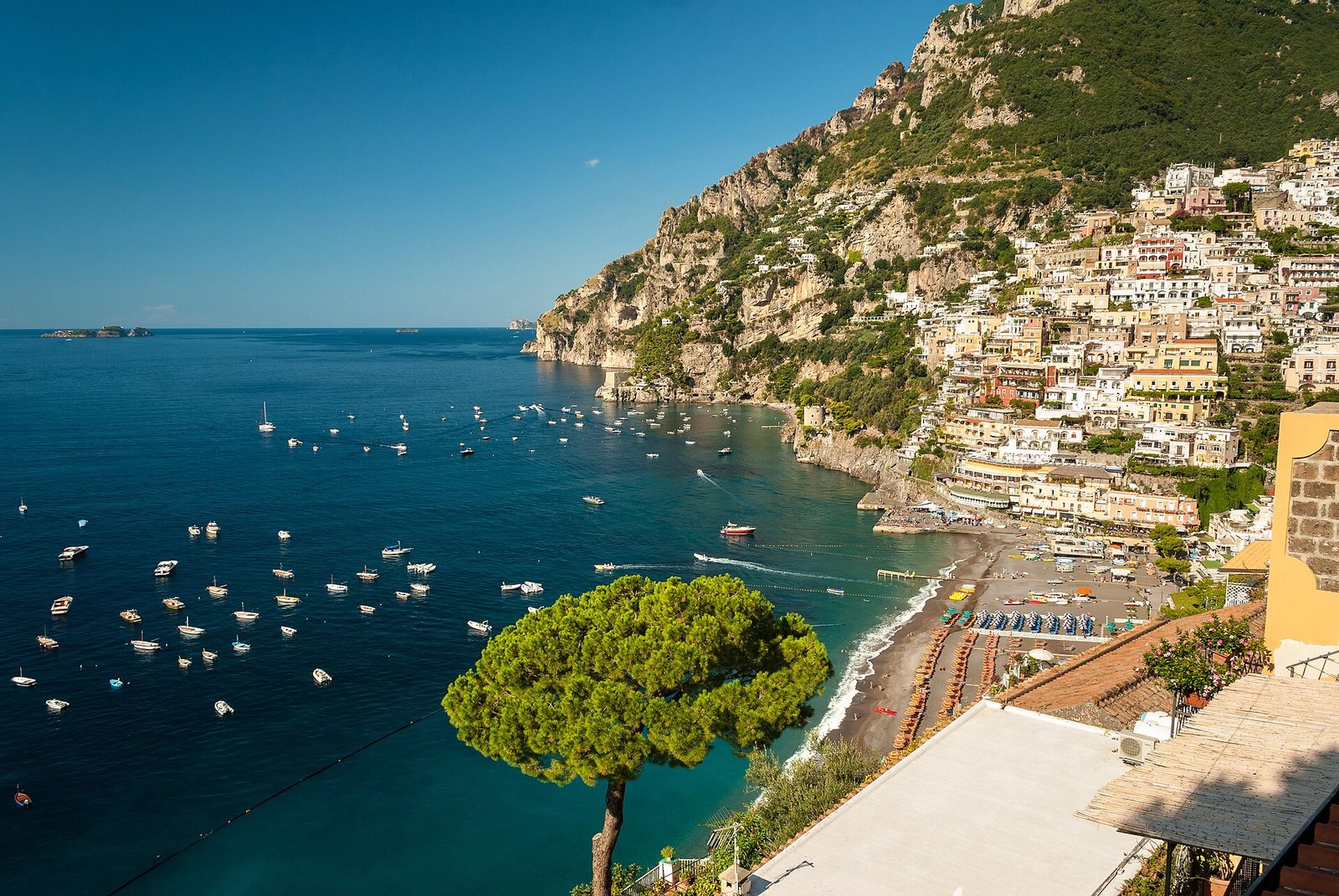
Verdict: if you have only one day, a tour is the least stressful way to see the coast, but in season I’d rather take the boat from Naples to Positano or Amalfi and move between the towns by ferry and bus. Better still, spend a night or two on the coast. The Amalfi Coast from Naples guide compares the options.
Capri day trips and boat tours
You don’t need a tour to get to Capri. The public ferries from Naples are frequent, and the island is easy to get around by bus and funicular. The Naples ferry guide explains the boats. Where a tour adds real value is on the water. A boat trip around the island, past the Faraglioni rocks, the sea caves and the coves you can’t reach on foot, is one of the best things to do on Capri, and small boats leave from the main harbor. Organized day trips from Naples bundle the ferry, a boat tour and sometimes lunch, which is convenient if you prefer not to plan.

Verdict: take the public ferry and book a boat around the island once you’re there, or choose a small-group tour that includes one. Skip anything that promises the Blue Grotto on a rough day, since it closes whenever the sea is up. The Capri from Naples guide covers the island in detail.
Hop-on hop-off buses
Open-top sightseeing buses run loops around Naples, taking in the seafront, the historic center, the Vomero and Posillipo. The idea is sound, but Naples traffic isn’t kind to it. In the center, you’ll often move more slowly than people on foot, and the historic center’s narrow streets are closed to buses anyway, so you only see its edges.

Verdict: the route along Posillipo, with its views over the bay, is the part worth doing, especially if you have limited mobility or small children. For the old city, walk. For getting around generally, the metro and funiculars are faster and cheaper. The getting around guide covers them.
Private drivers
Licensed private drivers (called NCC in Italy) are common around Naples, especially for the Amalfi Coast, airport transfers and combined days like Pompeii and Vesuvius. They cost much more than public transport, but for a family or a group of four sharing a car, the price per person can be reasonable, and a good driver doubles as a local guide. Book with established companies, agree the price and itinerary in writing, and confirm what’s included, such as tolls, parking and waiting time.
Specialist tours
Beyond the big categories, Naples has a lively scene of niche tours: street art walks through the Quartieri Spagnoli and Materdei, Caravaggio trails, nativity-workshop visits on San Gregorio Armeno, wine tastings on the slopes of Vesuvius, and volcano walks in the Campi Flegrei. The best of these are run by small local operators and are often the most memorable tours you’ll take. For anything in the Campi Flegrei, check the current situation first. The bradyseism around Pozzuoli has closed sites at short notice in 2026.
Tours with children
Naples is a better family destination than its reputation suggests, and some tours work especially well with children.
- The Galleria Borbonica is the underground site children love most, thanks to the vintage cars and scooters abandoned in the tunnels. The standard route suits most ages. The adventure routes have their own minimum ages.
- Pizza-making classes are a guaranteed hit, and children get to eat what they make.
- A boat trip around Capri, with swimming stops in summer, is usually the highlight of a family island day.
- Pompeii works with children if you keep it short and focused: the plaster casts, the amphitheater, a bakery with its millstones, a house with its mosaics. Under-18s get in free, and a guide who’s good with children can hold their attention for longer than you’d expect. Go early to avoid the heat, and carry water.
- Vesuvius is a steep gravel walk up to the crater rim, fine for most school-age children but hard work for small ones in the heat.
- Street food tours are good for older children who like trying things. They’re a long time on your feet for younger ones.
What doesn’t work as well: long coach tours to the Amalfi Coast, which mean hours in a vehicle on winding roads, and the Fontanelle cemetery, which some children find fascinating and others find upsetting. Only you know yours.
Evening and rainy-day tours
Naples has good options for evenings and wet days, when the islands and the volcano are off the table.
Underground tours are the classic rainy-day move. They’re the same whatever the weather above, and Napoli Sotterranea runs an evening tour on Thursdays by reservation. The Teatro di San Carlo, the oldest working opera house in Europe, runs guided tours of the auditorium and royal box, with English-language tours listed at 11:30 and 15:30 in 2026 and tickets in the under-€10 band. Better still, see a performance, since even the cheaper seats let you experience the house as it was meant to be seen. The big museums, above all the National Archaeological Museum and Capodimonte, can fill a wet day on their own.
In the evening, a food tour that ends with pizza is the obvious choice. Several guides also run evening walks through the old city, when the churches are closed but the streets are at their liveliest and the stories of saints, ghosts and the munaciello feel at home in the dark.
Accessibility on tours
Naples isn’t an easy city for travelers with limited mobility. It has steep streets, cobbles, stairs everywhere and crowded pavements. Some tours and sites work much better than others.
- Pompeii has a dedicated accessible route through part of the site, designed for visitors with reduced mobility, though the ancient paving is uneven even there. A private guide can plan a visit around it.
- The underground sites are mostly reached by long staircases. The exception is the Fontanelle cemetery, which you enter at street level.
- Vesuvius means a steep, loose gravel path and isn’t suitable for wheelchairs.
- Boats vary widely. Large car ferries are easier to board than small tour boats and hydrofoils.
- Private drivers are the most flexible way to see the region, and many are used to planning around mobility needs.
- The sightseeing buses are one of the few ways to see the Posillipo views without walking.
Whatever you book, contact the operator before paying to explain what you need. The good ones will tell you honestly whether the tour works.
How to choose a good tour or guide
- Licensed guides. In Italy, professional tour guides must hold a license, and at archaeological sites like Pompeii only licensed guides can legally lead groups. Reputable operators will say their guides are licensed. At the Pompeii gates, ignore unofficial guides offering tours on the spot.
- Group size. A group of 10 to 15 with a good guide is a completely different experience from a group of 40 with a flag and a microphone. Check the maximum before booking.
- What’s included. Is the entry ticket included, and which one? Is transport included? Food and drink on a food tour? Compare like with like.
- Timing. For Pompeii in summer, early morning tours beat the heat and the crowds. For food tours, a late morning or early evening start works best.
- Cancellation terms. Weather cancels boat trips and Vesuvius visits often enough that flexible cancellation is worth having.
- Meeting point. Make sure you know exactly where it is. In the old city, the same square can have three tour groups gathering at once.
Red flags: tour traps to recognize
Most tour operators in Naples are honest, and many are excellent. A few familiar tricks do come up, though, and it helps to recognize them.
- “It’s closed today, but I can take you somewhere better.” If someone on the street tells you a site is closed and offers an alternative tour, check the site’s official hours yourself before going anywhere with them.
- The on-the-spot guide at the Pompeii gates. Unlicensed guides approach visitors near the entrances. Some are charming. None can legally guide you inside, and the quality is a lottery. Book a licensed guide ahead or use an audio guide.
- The “shared” private tour. Read the listing carefully. A “private” tour that turns out to be a minibus of strangers is not what you paid for.
- Shopping stops on coach tours. Some long day tours build in stops at shops selling cameos, coral or limoncello, where the operator earns a commission. You don’t have to buy anything, and you can ask before booking whether the itinerary includes them.
- Boat trips sold on the quay with a vague itinerary. At the harbors on Capri and along the coast, ask exactly how long the trip lasts, what it includes and whether the Blue Grotto entry is extra, since it usually is.
- Anyone who won’t give you a company name. A legitimate operator has a name, a website, a phone number and a cancellation policy.
Tipping your guide
Tipping guides isn’t obligatory in Italy the way it is in some countries, and a paid tour’s price already covers the guide. Still, for a guide who has been genuinely good, a tip is appreciated, and in a region where much of the work is seasonal, it matters to the people who get it. On tip-based “free” walking tours, the tip is the guide’s pay, so give what the tour was worth to you, and don’t treat “free” as literal. Drivers on long private days are usually tipped too, if they’ve looked after you well. If you’re unsure what’s customary for a particular tour, ask the operator when you book; nobody minds the question.
What to skip
- Reseller tickets with nothing added. If a listing is just an entry ticket at a higher price, buy the official one.
- “Skip the line” at places with no line. Most Naples museums don’t have queues that justify a premium.
- Unlicensed guides at the Pompeii gates. Book a licensed guide in advance or use an audio guide.
- A coach tour to Pompeii alone, if you can take the train. The train is cheap and quick, and you can meet a guide at the site.
- The hop-on hop-off bus as a way to see the old city. Its streets are for walking.
- A Capri tour that promises the Blue Grotto on a rough day. It will be closed.
- The Artecard for a church-and-underground trip. Most of what you’ll see isn’t covered.
- Buying the Sansevero at the last minute from a reseller at a big markup, when you could have booked it officially weeks earlier.
Naples tours frequently asked questions
Do I need to book Pompeii tickets in advance?
It’s wise, especially for weekends, holidays and the busy months. Since 2026, Pompeii tickets are named and non-transferable, so you’ll need ID at the entrance, and there’s a daily visitor cap with timed entry windows from mid-March to mid-October. Book through the park’s official ticketing site, and choose Pompeii+ if you want the Villa of the Mysteries.
Is the Campania Artecard worth it?
For a three-day city break with the big museums, yes. The Napoli 3 Days card costs €27 and includes three free sites plus city transport, and the archaeological museum, Capodimonte and the Royal Palace alone cost about €50. It’s rarely worth it for under-18s, young EU adults, or trips focused on churches and the underground.
Do I need a guide for Pompeii?
You don’t need one, but a good guide or audio guide transforms the visit. The site is vast and the signage limited, and many visitors miss the best houses. A small-group tour that meets at the site, reached by train from Naples, is the best value. Make sure the guide is licensed and check whether the ticket is included.
Is a Naples street food tour worth it?
Yes, especially early in your trip. A good two- or three-hour food walk through the old city or the Quartieri Spagnoli covers pizza fritta, fried seafood, pastries and coffee, and explains what you’re eating. You’ll then know what to order for the rest of your stay. Check the group size and what food is included.
How do I book tickets for Mount Vesuvius?
Online only, through the national park’s official ticketing site, in timed slots released 30 days ahead. A few last-minute tickets per slot are sold on site over the park’s Wi-Fi, but don’t rely on them in summer. The trail closes at short notice for bad weather, with automatic refunds when the park closes. You’ll also need a shuttle or tour to reach the upper car park.
Can I buy Sansevero Chapel tickets at the door?
Don’t count on it. Visits are timed and booking is compulsory, with tickets released 60 days ahead on the chapel’s official website and a second batch two days before each date. Popular days sell out weeks in advance. The chapel is closed on Tuesdays, and its ticket office has temporarily moved to Via Raimondo di Sangro 12.
Are skip-the-line tickets worth it in Naples?
Rarely. Most Naples museums don’t have long ticket queues, and where booking is needed, an official online ticket already lets you bypass the ticket office. Everyone then goes through the same entrance checks. Paying extra only makes sense when official slots have sold out and a tour operator still has places.
Is the hop-on hop-off bus worth it in Naples?
Only for the scenic stretches, above all the Posillipo route with its views over the bay, or for travelers with limited mobility. In the center, traffic is heavy and the narrow historic streets are closed to buses. Walking, the metro and the funiculars are usually faster and cheaper ways to see the city.
Photo credits
- Visitors in the Forum of Pompeii: photo by Deror_avi, Wikimedia Commons, CC BY-SA 4.0.
- Cuoppo of fried seafood: photo by Nicholas Gemini, Wikimedia Commons, CC BY-SA 4.0.
- The crater of Vesuvius: photo by Simona.cerrato, Wikimedia Commons, CC BY 3.0.
- Positano above the Spiaggia Grande: photo by Mihael Grmek, Wikimedia Commons, CC BY-SA 4.0.
- The Faraglioni with a sailboat: photo by Flickr user 123824833@N02, Wikimedia Commons, CC BY-SA 2.0.
- Sightseeing bus in Naples: photo by Ra Boe, Wikimedia Commons, CC BY-SA 3.0 de.
Sources: Sansevero booking rules from the Museo Cappella Sansevero; Vesuvius ticketing from the Vesuvius National Park; Pompeii tickets, entry windows and visitor cap from Pompeii Archaeological Park; Artecard versions and prices from 2026 listings of the card and campaniartecard.it. All checked September 2026.