On this page
Last updated September 16, 2026. Open rooms and closures checked against the National Archaeological Museum’s official schedule; free-Sunday rules against the Capodimonte museum’s own notices; other prices and closing days against each museum’s site in September 2026. Room closures change often, and I flag the ones I know about.
The best Naples museums are the National Archaeological Museum (MANN), for the treasures of Pompeii and Herculaneum, and Capodimonte, for Caravaggio, Titian and the Farnese paintings. Add the Certosa di San Martino and the Sansevero Chapel. In Naples, Italy, see MANN before Pompeii, and plan around Tuesday and Wednesday closures.
Naples holds the greatest collection of Roman art and everyday objects in the world, one of Italy’s finest painting galleries, a monastery museum with the best view in the city, and a chapel whose marble sculpture people cross continents to see. Somehow, most visitors give them an afternoon, if that, on the way to the pizza. I understand why. The city itself is so absorbing that going indoors feels like a waste. But the museums here explain the city, and in the case of the archaeological museum, they explain Pompeii better than Pompeii does.
This guide sequences the museums against each other: which are unmissable, which you can skip, what’s closed on which day, what’s inside each one right now, and how to use the free first Sunday without getting caught out.
Naples museums at a glance
| Museum | Go for | Allow | Cost band (Sept 2026) | Closed | My verdict |
|---|---|---|---|---|---|
| National Archaeological Museum (MANN) | Pompeii and Herculaneum frescoes, bronzes and mosaics; Farnese sculptures | 3 hours | €15–20 | Tuesday | Unmissable |
| Capodimonte | Caravaggio, Titian, Bruegel, Artemisia Gentileschi; the royal park | 2–3 hours plus the park | €10–15 | Wednesday | Unmissable for art lovers |
| Certosa e Museo di San Martino | Baroque monastery, nativity scenes, the city’s best view | 1.5–2 hours | Under €10 | Check (sources differ) | My favorite combination of art and view |
| Sansevero Chapel | The Veiled Christ | 30–45 minutes | €10–15 | Tuesday | Unmissable; book ahead |
| Pio Monte della Misericordia | Caravaggio’s Seven Works of Mercy on its original altar | 30 minutes | About €10 | Rarely | Essential for Caravaggio fans |
| Palazzo Reale | Royal apartments, the grand staircase, the court theater | 1.5 hours | €10–15 | Wednesday (check) | Worth it if you like palaces |
| Gallerie d’Italia, Via Toledo | Caravaggio’s last painting | 45 minutes | Under €10 | Monday | Short, rewarding, central |
| Castel Sant’Elmo | 360-degree views; small contemporary museum | 1 hour | Under €10 | Tuesday | Go for the ramparts |
| Tesoro di San Gennaro | The saint’s jeweled treasure | 45 minutes | €10–15 | Rarely | Dazzling, if jewels are your thing |
| MADRE | Contemporary art in the old town | 1–1.5 hours | Under €10 | Check | For contemporary art fans |
Each major museum has its own dedicated guide on this site with exact ticket prices, so the table above gives cost bands only. Where two sources disagree on a closing day, I’ve said so; check the museum’s own site the week you travel.
The one rule: see MANN before Pompeii
This is the single most useful piece of advice in this guide, and almost nobody gives it. When Pompeii and Herculaneum were excavated from the 18th century onward, virtually everything portable was taken out of the houses and carried to Naples: the finest frescoes cut from the walls, the floor mosaics, the bronze and marble statues, the silverware, the jewelry, the cooking pots, the carbonized bread, even the erotic art. What you walk through at Pompeii today is, for the most part, the empty shell. What was inside those rooms is in the National Archaeological Museum.
If you see the museum first, you arrive at Pompeii with pictures in your head. You’ll stand in the House of the Faun knowing that the Alexander Mosaic lay on that floor, and in a dining room knowing what hung on its walls. See Pompeii first and you’ll spend the museum visit trying to remember which house was which. Either order works, but museum-first is much better. My guide to visiting Pompeii from Naples covers the site side.
How Naples ended up with these collections
It helps to know why a city that was, for much of the modern era, poorer than Rome, Florence or Milan holds collections to rival theirs. The answer is that for more than 120 years Naples was the capital of a kingdom, and its Bourbon kings were collectors on a grand scale.
In 1734 Charles of Bourbon became King of Naples. From his mother, Elisabetta Farnese, he inherited one of the greatest art collections in Europe, assembled over two centuries by the Farnese family in Rome and Parma: the ancient marbles, and paintings by Titian, Raphael, Parmigianino and Bruegel. He brought it south. Almost at the same moment, digging began at Herculaneum in 1738 and at Pompeii a decade later, under royal control, and the finds were treated as the king’s property, shown first in a palace museum at Portici and later moved to the building that became MANN.
To house the paintings, Charles built the palace at Capodimonte. To show off his power, he rebuilt the Palazzo Reale and began the colossal palace at Caserta. His successors kept adding. When Italy was unified in 1861, Naples lost its crown but kept its treasures, and the collections became national museums. That’s why the story of these museums is also the story of the city: a royal capital, suddenly provincial, with the contents of a kingdom still on its walls.
National Archaeological Museum of Naples (MANN)
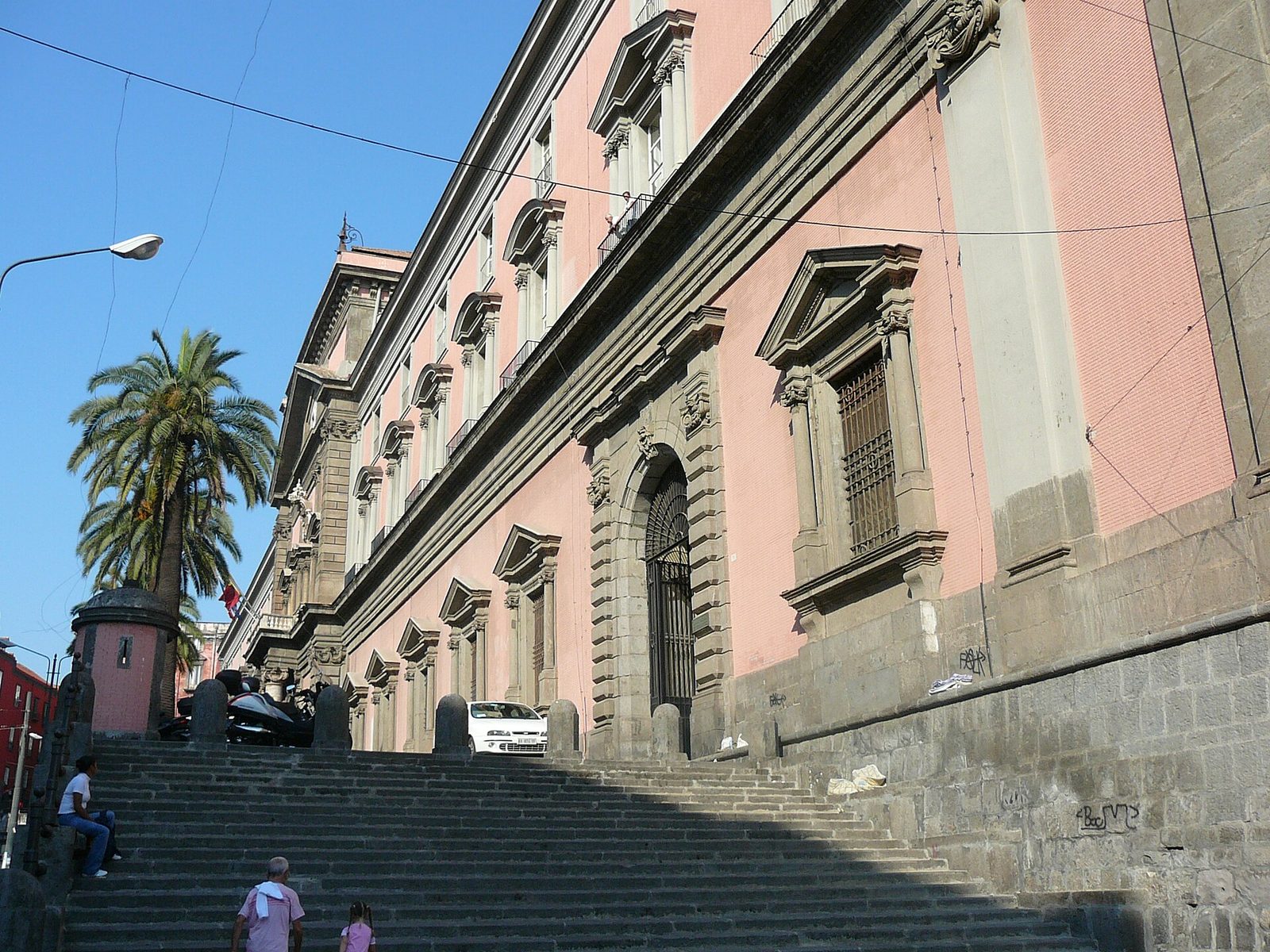
The Museo Archeologico Nazionale di Napoli, universally shortened to MANN, occupies a huge red building at the top of Via Toledo, above the Museo metro station. It was a cavalry barracks and then the university before the Bourbon kings turned it into a museum in the late 18th century to hold two extraordinary collections: the antiquities flowing out of the Vesuvian excavations, and the Farnese collection, which King Charles of Bourbon inherited from his mother, Elisabetta Farnese.
The Farnese sculptures
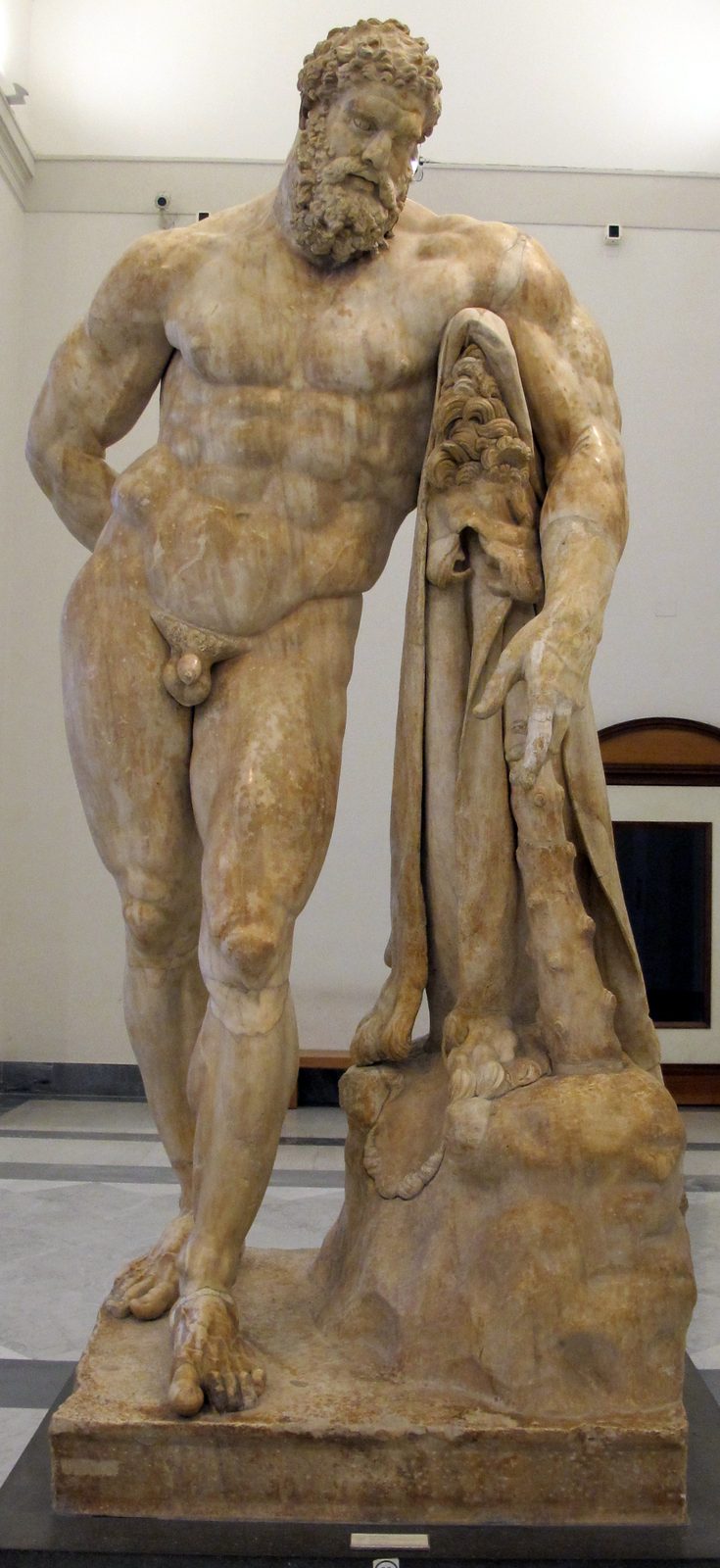
The ground floor holds the Farnese marbles, collected by a Renaissance papal family in Rome from the ruins of ancient baths and villas. The two giants are the Farnese Hercules, a colossal, weary hero leaning on his club, and the Farnese Bull, the largest single sculptural group to survive from antiquity, carved from one block of marble. Both came from the Baths of Caracalla. As of September 2026, the museum says only part of the Farnese Collection’s rooms are open, so some statues may be off view.
Frescoes from Pompeii and Herculaneum
On the mezzanine and first floor, the fresco galleries show the painted walls of Vesuvian houses: mythological scenes, gardens, still lifes, portraits and architectural fantasies in intense reds and yellows. Look for the portrait of the baker Terentius Neo and his wife, the images of Theseus and the Minotaur, and the delicate garden paintings. Standing in front of these, the bare walls you’ll see at Pompeii suddenly make sense.
The mosaics and the Alexander Mosaic
The mosaic collection is one of the museum’s glories, with its teeming marine-life panels, Nile scenes, theatrical masks and the portrait of a group of street musicians. Its centerpiece, the Alexander Mosaic, showing Alexander the Great fighting Darius of Persia and made of more than a million tiny tiles, is in the middle of a long restoration and isn’t on normal display; the museum has set up observation points onto the restoration site.
An important warning if you’re visiting this autumn: the museum’s official schedule says the entire Mosaics collection is closed from September 21 to November 30, 2026 for refurbishment (checked September 2026). If mosaics are a priority, plan around those dates or check whether any rooms reopen early.
The Secret Cabinet
The Gabinetto Segreto gathers the explicitly erotic frescoes, sculptures and amulets found at Pompeii and Herculaneum. For well over a century it was locked away and shown only to “mature men of good moral standing” with special permission. Today it’s open with the rest of the museum. Some of the pieces are funny, some are startling, and all of them say a lot about the gap between Roman attitudes and ours. Parents may want to look before bringing younger children in.
The Villa dei Papiri bronzes
A grand villa outside Herculaneum, probably owned by Julius Caesar’s father-in-law, gave up an astonishing library of carbonized papyrus scrolls and a collection of bronze and marble sculptures. The bronzes, including a pair of young runners caught mid-stride, the group of women known as the Dancers and the relaxed Resting Hermes, are among the finest ancient bronzes anywhere. The official schedule gives these rooms limited daily hours, so check before planning around them.
Objects of daily life, the model of Pompeii and the Temple of Isis
Don’t skip the rooms that sound less glamorous. The galleries of everyday objects hold surgical instruments, cooking pots, scales, glassware, jewelry and food carbonized by the eruption. The large 19th-century cork model of Pompeii is the best way to understand the city’s layout before you visit. And the reconstructed finds from the Temple of Isis at Pompeii show how an Egyptian cult thrived in a Roman town.
The Egyptian collection and the upper floors
Below ground, the Egyptian collection is one of the oldest in Italy, with mummies, sarcophagi and statues. Upstairs, the Magna Graecia rooms show the Greek colonies of southern Italy, with painted vases and bronze armor. The museum warns that the Magna Graecia, coin and upper prehistory rooms can’t be guaranteed open, so treat them as a bonus.
Practical tips for MANN
- Closed Tuesdays. If Tuesday is a public holiday, the museum opens and closes on the Wednesday instead.
- Allow three hours for the highlights, more if you love archaeology.
- Heat. The museum has advised visitors to avoid the lower floors in the hottest part of summer afternoons, and some rooms close temporarily in high heat. Go in the morning in summer.
- Get there by Metro Line 1 to Museo or Line 2 to Piazza Cavour. See my guide to getting around Naples, Italy.
- Buy an audio guide or a good guidebook. Labels are uneven, and the stories behind the objects are the point.
Museo e Real Bosco di Capodimonte
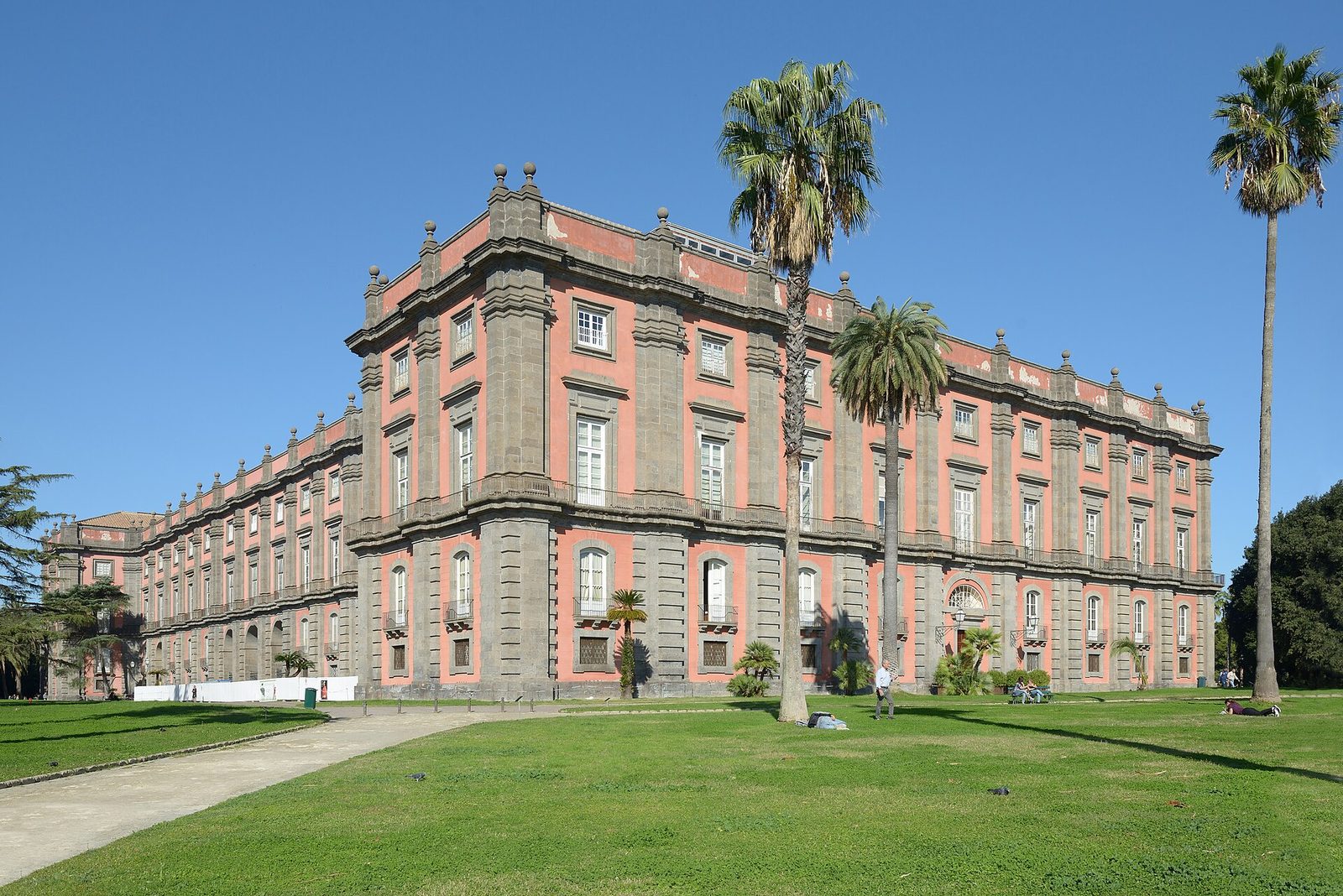
On the hill north of the center, the Bourbon kings built a hunting palace that turned into a home for the Farnese paintings. Today Capodimonte is one of the finest art museums in Italy, and on most days it’s startlingly empty compared with the Uffizi or the Vatican. For art lovers, that alone makes it worth the trip up the hill.
What to see
- The Farnese collection: Titian’s portraits of Pope Paul III and his sensuous Danaë; Parmigianino’s mysterious portrait known as Antea; Masaccio’s Crucifixion; works by Raphael, Botticelli, Mantegna and El Greco; and two of Pieter Bruegel the Elder’s late masterpieces, The Blind Leading the Blind and The Misanthrope.
- Caravaggio’s Flagellation of Christ, painted in Naples, dramatic and brutal.
- Artemisia Gentileschi’s Judith Slaying Holofernes, one of the most powerful paintings of the Baroque.
- The Neapolitan school: Ribera, Luca Giordano, Mattia Preti, Salvator Rosa and the painters who followed Caravaggio’s arrival in the city.
- The royal apartments, including the famous porcelain room made for Queen Maria Amalia, its walls entirely covered in Capodimonte porcelain.
- Contemporary art on the top floor, including Andy Warhol’s Vesuvius and Alberto Burri’s Grande Cretto Nero.
The Real Bosco
The palace sits in a huge former royal hunting park, the Real Bosco, with avenues of trees, lawns, a belvedere with views over the bay and historic buildings scattered through it. It’s a wonderful place to decompress after a morning in the galleries and a favorite with Neapolitan families on weekends.
Practical tips for Capodimonte
- Closed Wednesdays. Check the museum’s site, since hours and open floors change.
- Getting there takes planning: there’s no metro stop. Buses climb from Piazza Museo and Piazza Dante, or take a taxi. Allow 20 to 30 minutes from the center.
- On free first Sundays, some floors may be closed. On September 6, 2026, the museum’s own notice said the first floor and the third-floor modern and contemporary sections would be shut. If the paintings are the point, pay on another day.
- Combine it with the Catacombs of San Gennaro, at the foot of the hill, and the Sanità neighborhood below.
Certosa e Museo di San Martino
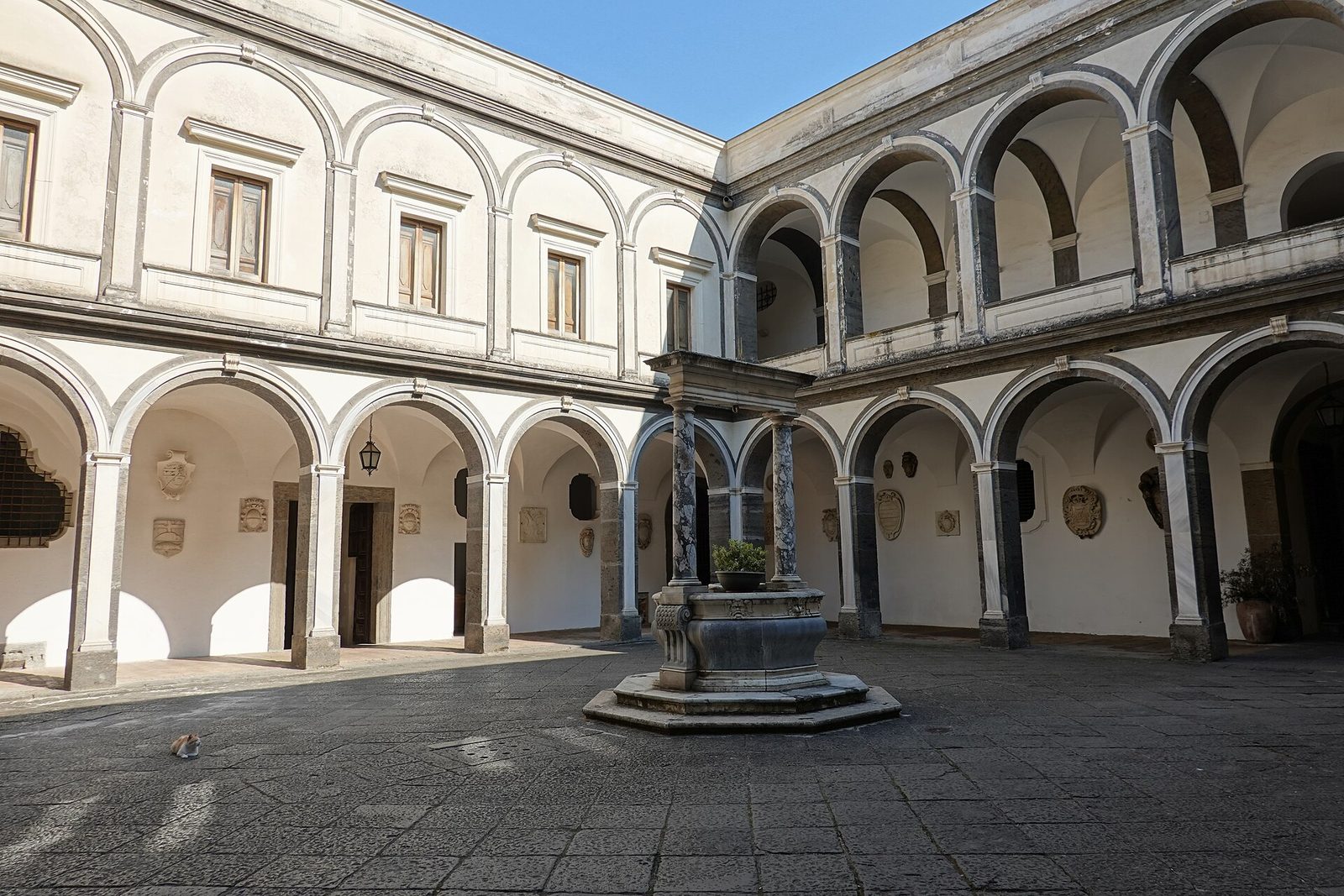
If I could send a first-time visitor to only one museum after MANN, it might be this one, because it combines three things at once. The Certosa di San Martino is a Carthusian monastery on the hill beneath Castel Sant’Elmo, rebuilt in the Baroque period into one of the most lavish religious complexes in southern Italy. Its church is a riot of marble inlay, frescoes and paintings by the great names of Neapolitan art. Its Chiostro Grande, the great cloister, has a small monks’ cemetery marked by marble skulls. And its terraces and gardens have what I think is the finest view in Naples: the whole city, the bay and Vesuvius laid out below you.
The museum inside tells the story of Naples through paintings, maps and objects, and it holds the city’s best collection of presepi, the Neapolitan nativity scenes. The Cuciniello presepe, an enormous 18th-century crib filled with hundreds of figures of shepherds, market traders, musicians and animals, is the most famous of them, and it’s a perfect introduction before you walk down Via San Gregorio Armeno, the street of nativity workshops.
Take the Montesanto or Centrale funicular up to Vomero and combine it with Castel Sant’Elmo next door. Opening hours and the weekly closing day have been listed differently by different sources, so check the official site before you go.
Castel Sant’Elmo
Right next door to San Martino, the star-shaped fortress of Castel Sant’Elmo crowns the hill of Vomero. The main reason to go in is the walk around its ramparts, which gives you a 360-degree panorama of the city, the bay, Vesuvius, the Sorrentine peninsula and, on clear days, Capri. Inside, the Museo del Novecento covers 20th-century art in Naples, a small but interesting collection that most visitors skip. The castle is closed on Tuesdays. After a rockfall in August 2026, access was rerouted through the moat and a lift, so follow the signs when you arrive, and allow extra time if you’re combining it with San Martino.
Palazzo Reale
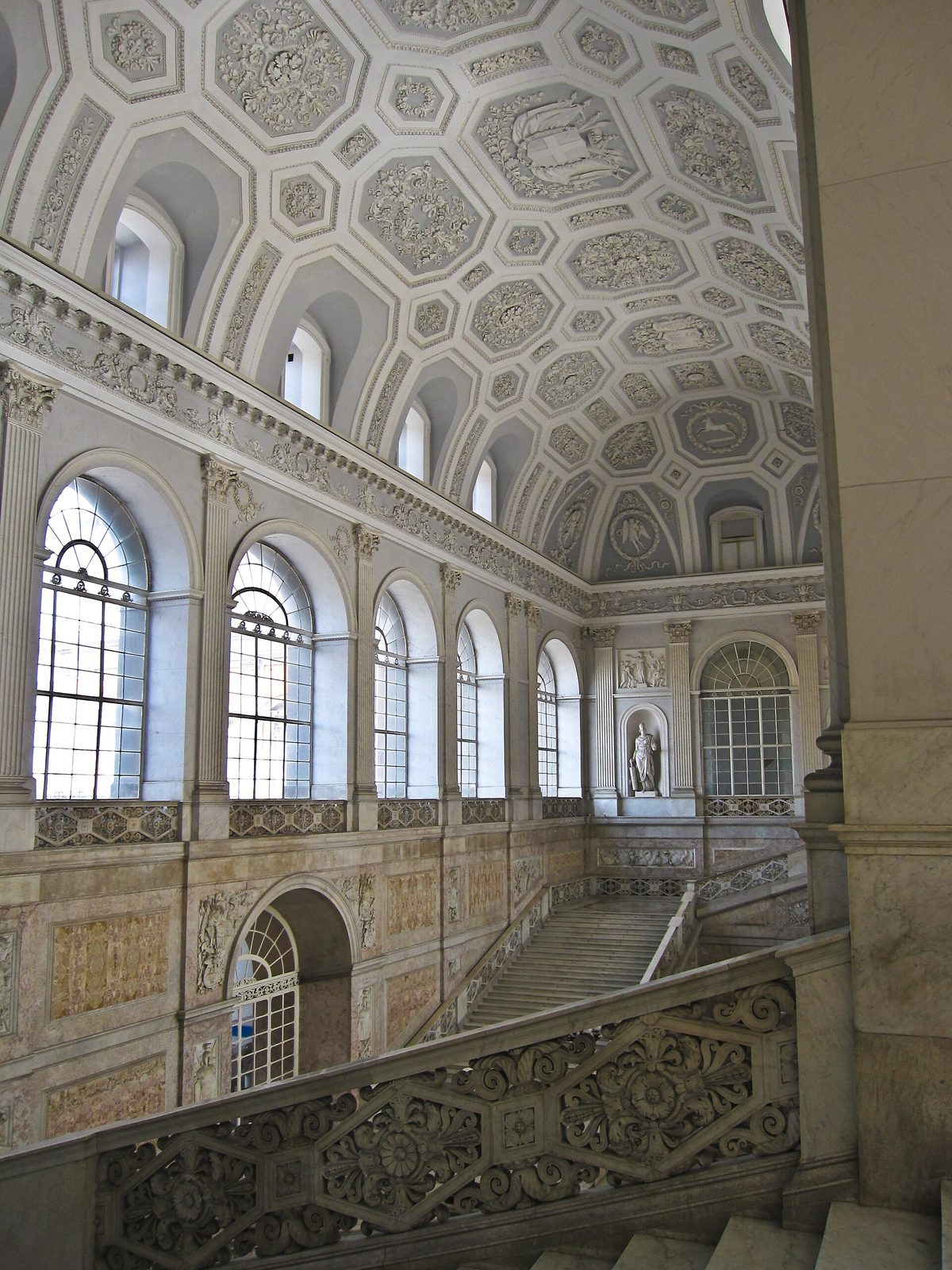
The Royal Palace on Piazza del Plebiscito was the seat of the Spanish viceroys and then of the Bourbon kings of Naples. The visit takes you up one of Europe’s most theatrical staircases into a sequence of royal apartments: throne room, private chapel, a jewel-box court theater and rooms full of tapestries, furniture and paintings. It’s grand rather than intimate, and less visited than it deserves.
The palace also houses the National Library, with its papyrus rooms holding the charred scrolls from the Villa dei Papiri. Guided tours of the roof garden and hanging gardens have run at some times of year, but they were suspended from mid-June to mid-September 2026, so ask what’s available when you visit.
Across the street, the Teatro di San Carlo, one of Italy’s great opera houses, runs guided tours of its horseshoe auditorium, royal box and backstage areas when rehearsals allow, with tours in English offered at set times in 2026. Pairing the palace and the opera house makes a good rainy-morning plan around Piazza del Plebiscito, finished with coffee at the Gran Caffè Gambrinus on the corner. Check the theater’s schedule first, since performances and rehearsals take priority over visits.
The Sansevero Chapel and the Veiled Christ
Strictly speaking, the Cappella Sansevero is a private museum-chapel rather than a museum, but it’s the most visited sight in the centro storico and belongs on this list. At its center lies the Veiled Christ, carved in 1753 by Giuseppe Sanmartino: a marble figure of the dead Christ under a shroud so thin you’d swear you could lift it. The chapel was the project of Raimondo di Sangro, Prince of Sansevero, an alchemist, inventor and Freemason, and it’s full of other virtuoso sculptures, including allegories of Modesty and Disillusion. Downstairs are the two “anatomical machines,” real human skeletons with their circulatory systems reconstructed, which have fueled legends about the prince for centuries.
The single thing to know: visits need a timed reservation booked online in advance. Tickets go on sale 60 days ahead, with a second release two days before, and popular slots disappear quickly. The chapel is closed on Tuesdays, and photography of the Veiled Christ isn’t allowed. Book this before almost anything else on your Naples list.
Caravaggio in Naples
Caravaggio spent two periods in Naples while on the run after killing a man in Rome, and the city holds three of his paintings in three different places. Seeing all three is one of the great art pilgrimages in Italy, and they’re all within reach in a day.
- The Seven Works of Mercy, at the Pio Monte della Misericordia on Via dei Tribunali, still hangs above the altar it was painted for in 1607. It packs all seven acts of mercy into one dark street corner of Naples, and seeing it in place is completely different from seeing a painting in a gallery. The small museum upstairs has more Neapolitan painting.
- The Flagellation of Christ, at Capodimonte, originally painted for a Naples church.
- The Martyrdom of Saint Ursula, at the Gallerie d’Italia on Via Toledo, is believed to be Caravaggio’s last painting, finished weeks before his death in 1610. The gallery, in a grand former bank building, is closed on Mondays and free for visitors under 26 and over 65 and on the first Sunday of the month.
Other Naples museums worth your time
Tesoro di San Gennaro
Next to the cathedral, the museum of the Treasure of San Gennaro displays the jewels, silver and gifts given to the city’s patron saint over seven centuries by kings, popes and ordinary Neapolitans. The miter studded with thousands of precious stones and the famous necklace are the showpieces. It’s worth seeing alongside the cathedral and the Chapel of San Gennaro, which you can visit without a ticket.
San Lorenzo Maggiore and underground Naples
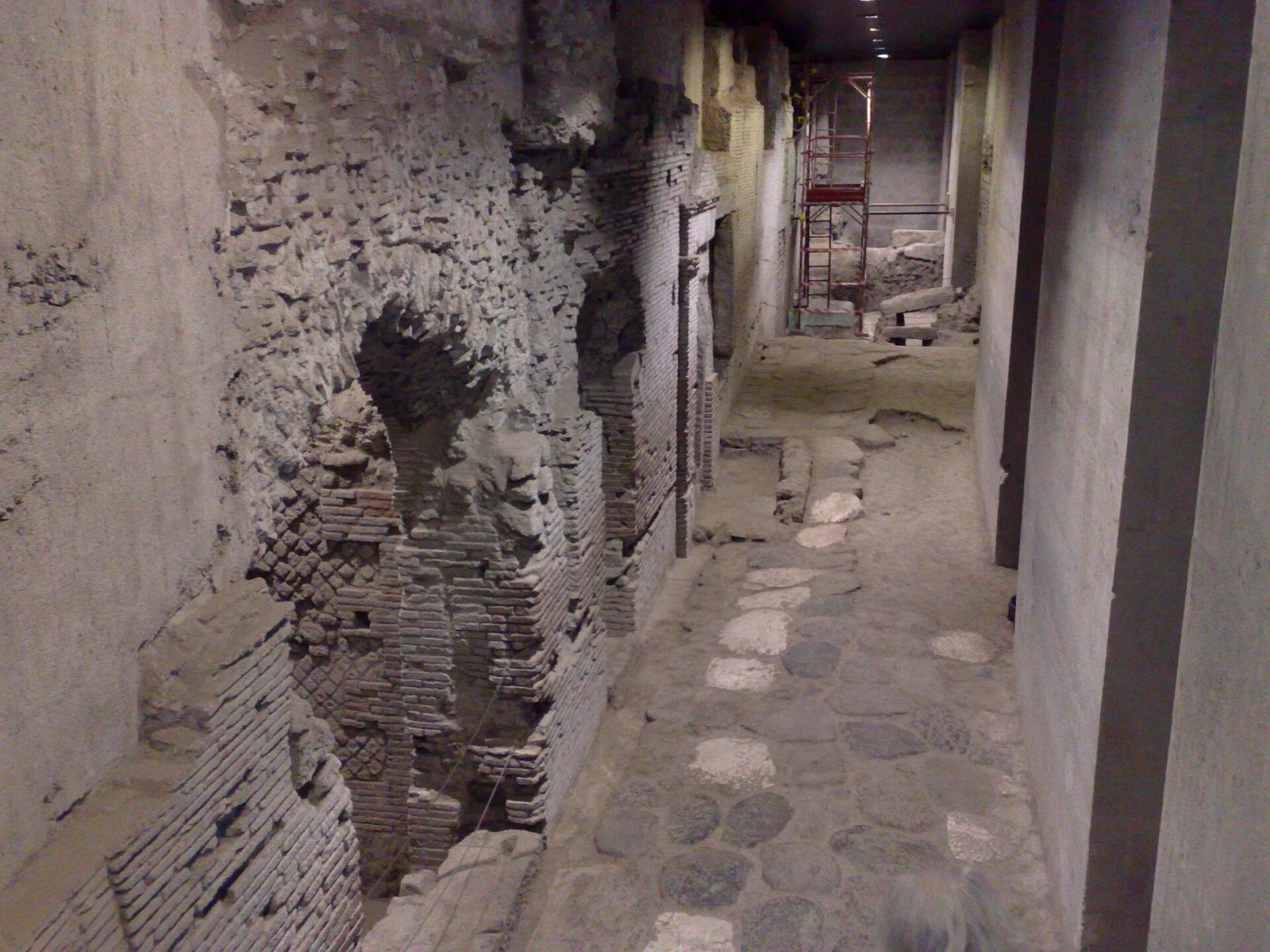
Beneath the Gothic church of San Lorenzo Maggiore, excavations have uncovered a street of the Greek and Roman city, with shops, a bakery and a covered market. Walking along it, a few meters below the modern Via dei Tribunali, is one of the most vivid experiences of the city’s layers. The complex also has a small museum of finds. It pairs perfectly with MANN, and it’s covered in my centro storico guide.
MADRE
Naples’ museum of contemporary art occupies a restored palazzo in the old town, with site-specific rooms by artists such as Anish Kapoor, Jeff Koons and Francesco Clemente and changing exhibitions. It’s a refreshing change of century after a morning among Roman bronzes.
Museo Civico Filangieri
An eccentric 19th-century private collection of arms, porcelain, paintings and curiosities, arranged in a Renaissance palazzo on Via Duomo, with a gorgeous wood-paneled gallery. Small, quirky, rarely crowded. It sits a few steps from the Duomo, so it slots easily into a morning in the old town, and the building itself, with its rusticated stone facade, is one of the finest early Renaissance palaces in the city.
Villa Floridiana and the Duca di Martina ceramics museum
In a Neoclassical villa in a hillside park in Vomero, this museum holds a fine collection of European and Asian porcelain, majolica and decorative arts. The park itself, with its views over the bay, is the draw for many visitors.
Villa Pignatelli
On the Riviera di Chiaia, a 19th-century villa with period rooms, a garden and a small collection of carriages. Pleasant if you’re staying nearby.
Castel Nuovo
The great castle by the port houses the civic museum, with the soaring Hall of the Barons and paintings and sculpture from medieval to modern Naples. The Renaissance triumphal arch at its entrance is worth seeing even if you don’t go inside. It’s closed on Sundays.
Churches that are really museums
Some of the richest art in Naples isn’t in a museum at all. The historic center has hundreds of churches, and several of them, with their cloisters, treasuries and underground excavations, work exactly like museums, with tickets, opening hours and collections to match.
Santa Chiara and its majolica cloister
The vast Gothic church of Santa Chiara was badly damaged by bombing in 1943 and rebuilt in its original austere form. Behind it lies one of the loveliest spaces in Naples: the nuns’ cloister, whose walkways are lined with 18th-century majolica tiles painted with vines, lemons, landscapes and scenes of everyday life. A small museum and Roman bath excavations are included in the ticket. It’s an oasis on a hot afternoon.
The Duomo and the Chapel of San Gennaro
Naples Cathedral is free to enter and holds the Royal Chapel of the Treasure of San Gennaro, where the phials of the saint’s blood are kept, and the ancient basilica of Santa Restituta with its baptistery, among the oldest in the West. Pair it with the Tesoro museum next door.
San Domenico Maggiore
The great Dominican church on Piazza San Domenico Maggiore was where Thomas Aquinas lived and taught. Its complex now runs guided visits through its chapter rooms, sacristy and treasures, including a row of Aragonese royal coffins in the sacristy gallery.
San Gregorio Armeno
Midway along the street of nativity workshops, this convent church is one of the most lavishly gilded Baroque interiors in Naples, and its cloister, full of orange trees and a marble fountain, is a hidden world above the crowds.
Gesù Nuovo
Behind a strange facade of diamond-pointed stone blocks, the Jesuit church of the Gesù Nuovo is a vast, bright Baroque interior of colored marble. Free to enter, and a good first taste of what Neapolitan Baroque can do.
A museum day in the old town, on foot
If you want one concentrated day of art and archaeology, this route links the best of it with almost no transport. Book the Sansevero slot first and build around it.
- MANN at opening time, while it’s cool and quiet, for about three hours.
- Walk down through Piazza Dante and Port’Alba to Via dei Tribunali, about 15 minutes, and stop for a pizza or a frittatina; my best pizza in Naples guide has the addresses.
- San Lorenzo Maggiore and its underground Roman street.
- The Pio Monte della Misericordia for Caravaggio’s Seven Works of Mercy, a few minutes east.
- The Duomo and the Chapel of San Gennaro, around the corner on Via Duomo.
- The Sansevero Chapel in your booked late-afternoon slot.
- A coffee and a sfogliatella on Piazza San Domenico Maggiore to finish. For what else to order, see my guide to Naples food.
That day covers the Roman city, Baroque painting and sculpture, and the saint who holds Naples together, and it doesn’t fall on a Tuesday, when MANN and Sansevero both close.
Naples museums with children
Children often enjoy the archaeological museum more than adults expect, as long as you pick the right rooms. The model of Pompeii, the carbonized food, the gladiator armor, the surgical tools and the Egyptian mummies tend to hold attention far longer than frescoes do. Under-18s generally enter state museums free, which helps.
Beyond MANN, Castel Sant’Elmo’s ramparts and views are a hit with most kids, the Real Bosco at Capodimonte has plenty of space to run, and underground tours of the old city, which descend into ancient tunnels and cisterns, feel like an adventure, though some aren’t suitable for very young children. In the western district of Bagnoli, the Città della Scienza science center has interactive exhibitions and a planetarium; parts of it were rebuilt after a 2013 fire, so check what’s open before making the trip.
Museums within reach of Naples
Some of the region’s best museums sit outside the city but are easy day trips. For the full comparison of excursions, see my guide to day trips from Naples.
- The Royal Palace of Caserta. The Bourbons’ answer to Versailles, a UNESCO World Heritage Site with some 1,200 rooms and a garden park stretching for kilometers, reached by train from Naples. It’s the biggest royal palace in Italy, and its gardens alone fill half a day.
- Herculaneum. The site itself preserves wood, upper floors and details lost at Pompeii. In the modern town, the MAV virtual archaeology museum uses multimedia to reconstruct the towns before the eruption, which some children love.
- Paestum. South of Salerno, three of the best-preserved Greek temples anywhere, with a superb museum that holds the painted Tomb of the Diver.
- The Castle of Baia. In the Campi Flegrei, a hilltop Aragonese fortress housing the archaeological museum of the Phlegraean Fields, with statues recovered from the sunken Roman town of Baia. After the July 2026 earthquake it reopened following safety checks; confirm the current status before you go.
Timing your visits around heat and crowds
Naples museums are rarely as crowded as those in Rome or Florence, but a few patterns are worth knowing. Morning is the best time almost everywhere, particularly in summer, when older buildings without full air conditioning get stuffy by early afternoon; MANN itself has warned visitors about heat on its lower floors. Free first Sundays bring big crowds to state museums. Cruise ship days fill the Sansevero Chapel and MANN with groups in the late morning. And rainy days send everyone indoors at once, so if the forecast turns, go early.
Many visitors find that two museums in a day is the comfortable limit, particularly with MANN as one of them. Pair a big collection with a short visit, like MANN with the Sansevero Chapel, or Capodimonte with the catacombs, and spend the rest of the day outside.
Free days, discounts and passes
The free first Sunday
Under Italy’s Domenica al museo scheme, state-run museums are free on the first Sunday of every month, and the scheme was running in 2026. In Naples that includes MANN, Capodimonte, the Palazzo Reale, the Certosa di San Martino and Castel Sant’Elmo. Private and church-run sites, such as the Sansevero Chapel, Pio Monte della Misericordia and the Tesoro di San Gennaro, aren’t included.
Is it worth it? For a budget traveler, yes, with caveats. Free Sundays bring long lines and big crowds, entry can be limited, and some sections may close: on September 6, 2026, Capodimonte shut two of its floors for the free day. If you’re paying for a trip to Naples partly to see these collections, spending a modest ticket price on a quieter weekday is money well spent.
Discounts
At Italy’s state museums, visitors under 18 generally enter free, and EU citizens aged 18 to 25 pay a heavily reduced ticket. Check each museum’s rules for other concessions, and bring ID.
Artecard
The Campania Artecard is a regional museum pass sold in several versions: city passes for Naples covering a few days, regional passes that add sites such as Pompeii and Herculaneum, and annual cards. The passes typically give free entry to a set number of sites and discounts on the rest, and some versions include public transport. Whether one saves you money depends entirely on how many paid museums you’ll really visit in the time window. Count them honestly, compare the pass price on the official Artecard site with the individual tickets, and remember that a pass is a bad deal on a free first Sunday.
The Tuesday and Wednesday trap
The biggest planning mistake with Naples museums is scheduling them on the wrong day. Several of the most important ones close on Tuesdays or Wednesdays, so a first-time visitor arriving on a Monday with a three-day plan can easily lose two major collections.
| Day | Commonly closed (check before you go) | Good choices that day |
|---|---|---|
| Monday | Gallerie d’Italia | MANN, Capodimonte, Sansevero, San Martino |
| Tuesday | MANN, Sansevero Chapel, Castel Sant’Elmo | Capodimonte, Palazzo Reale, Pio Monte, Gallerie d’Italia |
| Wednesday | Capodimonte, Palazzo Reale, possibly San Martino | MANN, Sansevero, Pio Monte, Castel Sant’Elmo |
| Sunday | Castel Nuovo | Most others; free state museums on the first Sunday |
If you only have time for a few
- One museum: MANN, ideally before you visit Pompeii.
- Two: MANN and the Sansevero Chapel, both in or near the old town, on the same day.
- Three: add the Certosa di San Martino for Baroque art, nativity scenes and the view.
- For art lovers: swap San Martino for Capodimonte, and add the Pio Monte and Gallerie d’Italia to complete the Caravaggio trail.
For fitting museums into a wider plan of sights, see my guide to things to do in Naples, Italy.
What to skip
- Visiting Pompeii without MANN. You’ll see half the story.
- Planning a mosaic-focused MANN visit between September 16 and November 30, 2026. The Mosaics collection is closed for refurbishment in that window.
- Showing up at the Sansevero Chapel without a booking. Timed reservations are compulsory and sell out.
- Capodimonte on a free Sunday if paintings are the point. Floors may be closed and the crowds are bigger.
- Buying a museum pass by default. Count your paid entries first; many visitors don’t come out ahead.
- “Skip-the-line” reseller tickets for MANN. Lines are rarely long outside free Sundays; buy at the museum or its official site.
Naples museums: frequently asked questions
What is the best museum in Naples?
The National Archaeological Museum (MANN), which holds the frescoes, mosaics, bronzes and everyday objects taken from Pompeii and Herculaneum, along with the Farnese sculptures. For painting, Capodimonte is the city’s other world-class museum.
Should I visit the Naples archaeological museum before or after Pompeii?
Before, if you can. Almost everything portable was moved from Pompeii’s houses to the museum, so seeing the frescoes and objects first helps you picture the empty rooms you’ll walk through at the site.
How long do you need at MANN?
Allow about three hours for the highlights: the Farnese sculptures, the frescoes, the Secret Cabinet, the Villa dei Papiri bronzes and the daily-life galleries. Archaeology enthusiasts can easily spend a full day.
Is the Alexander Mosaic on display?
Not in the normal way. It’s undergoing a long restoration, visible only from observation points, and the museum’s whole Mosaics collection is closed from September 21 to November 30, 2026, according to its official schedule.
Which day are Naples museums closed?
MANN, the Sansevero Chapel and Castel Sant’Elmo close on Tuesdays; Capodimonte and the Palazzo Reale on Wednesdays; Gallerie d’Italia on Mondays; Castel Nuovo on Sundays. Always check each museum’s site the week you travel.
Are Naples museums free on the first Sunday of the month?
State museums, including MANN, Capodimonte, the Palazzo Reale, San Martino and Castel Sant’Elmo, are free on the first Sunday. Private and church sites such as the Sansevero Chapel aren’t. Expect crowds and occasional closed sections.
Where can I see Caravaggio in Naples?
Three places: the Seven Works of Mercy at the Pio Monte della Misericordia, the Flagellation of Christ at Capodimonte, and the Martyrdom of Saint Ursula, his last painting, at the Gallerie d’Italia on Via Toledo.
Do I need to book the Sansevero Chapel?
Yes. Visits require a timed reservation made online; tickets are released 60 days in advance, with a second release two days before. It’s closed on Tuesdays.
Is the Artecard worth it?
Only if you’ll visit enough paid sites in its time window. Add up the individual tickets for the museums you’ll really see, compare with the pass price on the official Artecard site, and avoid using it on a free first Sunday.
Some of the best art in Naples never made it into a museum. Caravaggio’s Seven Works of Mercy still hangs above the altar at the Pio Monte della Misericordia, and the Veiled Christ lies in the Sansevero Chapel where it was carved to be seen. For those, and for the churches that work as museums in all but name, see my Naples churches guide.
Whether the Campania Artecard is worth it depends on which museums you’ll visit and how fast. For a three-day city break with MANN, Capodimonte and the Royal Palace, the Napoli card usually pays comfortably. For a church-heavy trip it doesn’t. The Naples tours and passes guide runs through five common trips.
Several of the city’s museums live inside fortresses and palaces. The civic museum fills Castel Nuovo, the Museo del Novecento occupies Castel Sant’Elmo, and the Royal Apartments of the Palazzo Reale are a museum of Bourbon court life. The Naples castles guide treats them as one set, with a plan for seeing them in two half-days.
Photo credits
- National Archaeological Museum facade: photo by M.Pardy, Wikimedia Commons, CC BY 2.0.
- Farnese Hercules: photo by Sailko, Wikimedia Commons, CC BY-SA 3.0.
- Capodimonte palace: photo by Wolfgang Moroder, Wikimedia Commons, CC BY-SA 3.0.
- Certosa di San Martino cloister: photo by Prof. Mortel, Wikimedia Commons, CC BY 2.0.
- Palazzo Reale staircase: photo by Armando Mancini, Wikimedia Commons, CC BY-SA 2.0.
Sources: open rooms, closures and hours from the MANN schedule of open rooms and its restoration page; free-Sunday notices from Capodimonte; Sansevero booking rules from the chapel’s official site; Gallerie d’Italia, Castel Nuovo and other closing days from each museum’s site. All checked September 2026.