On this page
Last updated September 25, 2026. Opening days and prices checked against the City of Naples (Castel Nuovo), the state museums service (Castel Sant’Elmo) and the Palazzo Reale’s own site; the Castel dell’Ovo reopening against the city and 2026 local reporting. Castle hours in Naples change often, and I flag what I couldn’t confirm.
The Naples castles worth visiting are Castel Nuovo (the Maschio Angioino) by the port, Castel Sant’Elmo on the Vomero for the city’s best view, and the seafront Castel dell’Ovo, plus the Palazzo Reale, the royal palace on Piazza del Plebiscito. In Naples, Italy, all four sit within a few kilometers and fit into two half-days.
Naples used to be called the city of seven castles. For centuries, fortresses guarded its harbor, its hills and its gates against a long list of would-be conquerors: Normans, Swabians, French Angevins, Spanish Aragonese, the Spanish viceroys, the Bourbons and Napoleon’s marshals, most of whom eventually got in anyway and then built a castle of their own. Four of those fortresses still stand within the city, along with the palace of the kings who ruled from here for most of seven centuries.
Oddly, almost nobody treats them as a set. Each gets its own page and its own tour, and the practical questions of which to see, in what order and whether any of them is open get lost. Castel dell’Ovo, the most photographed of them all, has spent much of the last few years closed. This guide pulls them together, with an honest verdict on each and a plan for seeing the best of them in two half-days.
Naples castles at a glance
Here’s the whole set on one screen. Prices are bands, since they change, and each castle will get its own page with the current details.
| Castle | Where | Why go | Entry | Closed | My verdict |
|---|---|---|---|---|---|
| Castel Nuovo (Maschio Angioino) | Piazza Municipio, by the port | The Renaissance triumphal arch, the Hall of the Barons, the civic museum | €10–15 | Sundays and public holidays | The essential one |
| Castel Sant’Elmo | Top of the Vomero hill | The best panoramic view in Naples | Under €10 | Tuesdays | Go for the view; pair with the Certosa |
| Castel dell’Ovo | On its islet off the seafront | The oldest castle, the legend of Virgil’s egg, the terraces over the bay | Free when open | Closed for restoration since 2023; reopening announced but unconfirmed | Walk to it at sunset either way |
| Castel Capuano | By Porta Capuana, east of the old city | A Norman castle turned palace of justice | Guided visits on some days | Most of the time | For castle completists |
| Palazzo Reale | Piazza del Plebiscito | The royal apartments, the grand staircase, the court theater | €15–20 | Wednesdays | The best palace visit in the city |
If you only have time for one, make it Castel Nuovo, which combines real medieval fortress with Renaissance art and a lively museum. If views matter more to you than history, go straight up to Sant’Elmo. And don’t skip the walk out to Castel dell’Ovo at sunset, whether or not its gates are open. It’s free, and the causeway and the little harbor around it are among the loveliest places in Naples.
Castel Nuovo (Maschio Angioino)
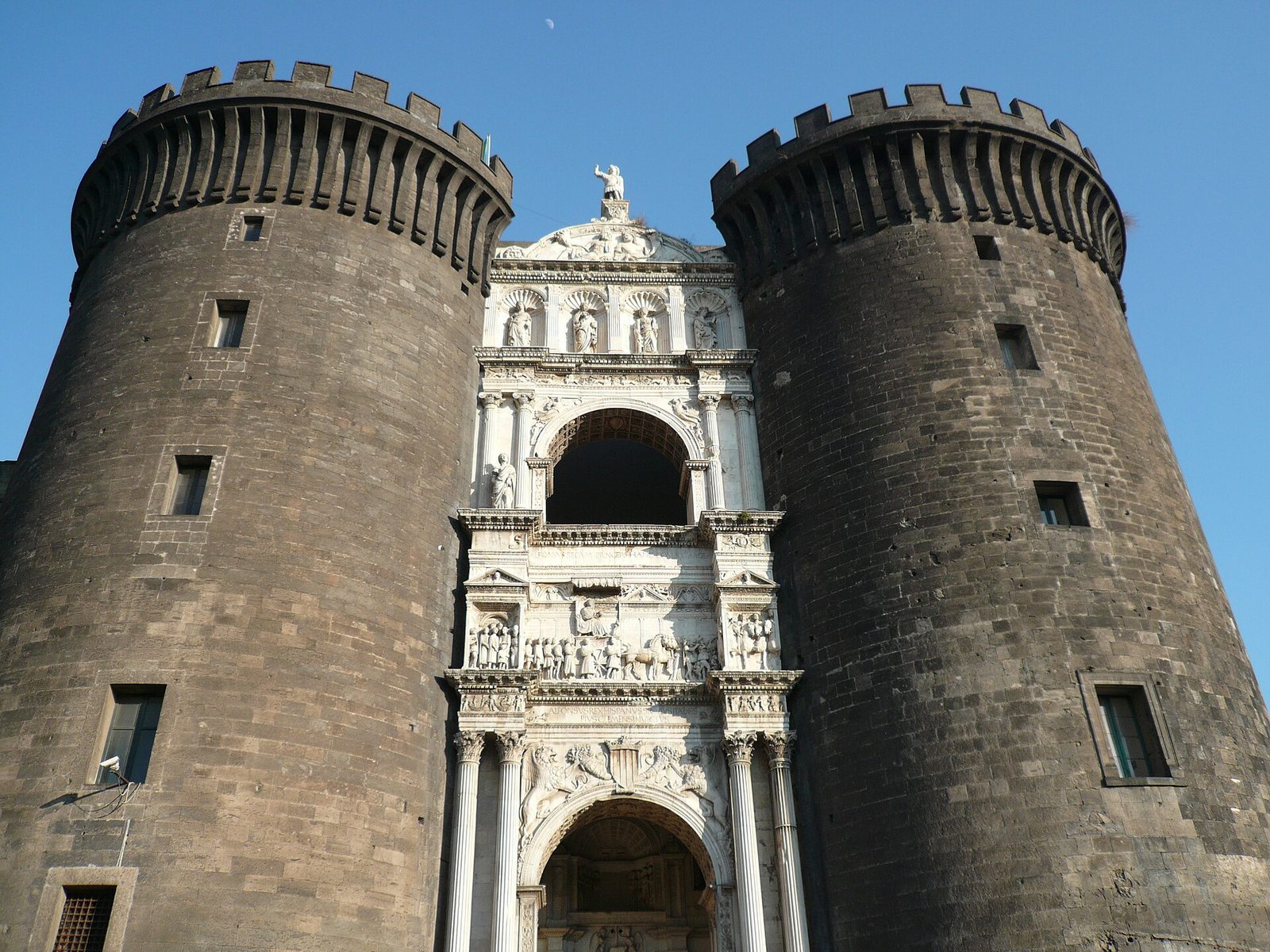
The great gray fortress on Piazza Municipio, with its five round towers and its white marble arch, is the image of Naples on a thousand postcards. Its name means the “new castle,” which it was when Charles of Anjou built it in the late 13th century, to replace the older castles as the royal residence. Neapolitans also call it the Maschio Angioino, the Angevin keep. What you see today is mostly the rebuilding by the Aragonese king Alfonso V in the mid-15th century, after he took the city.
What to see
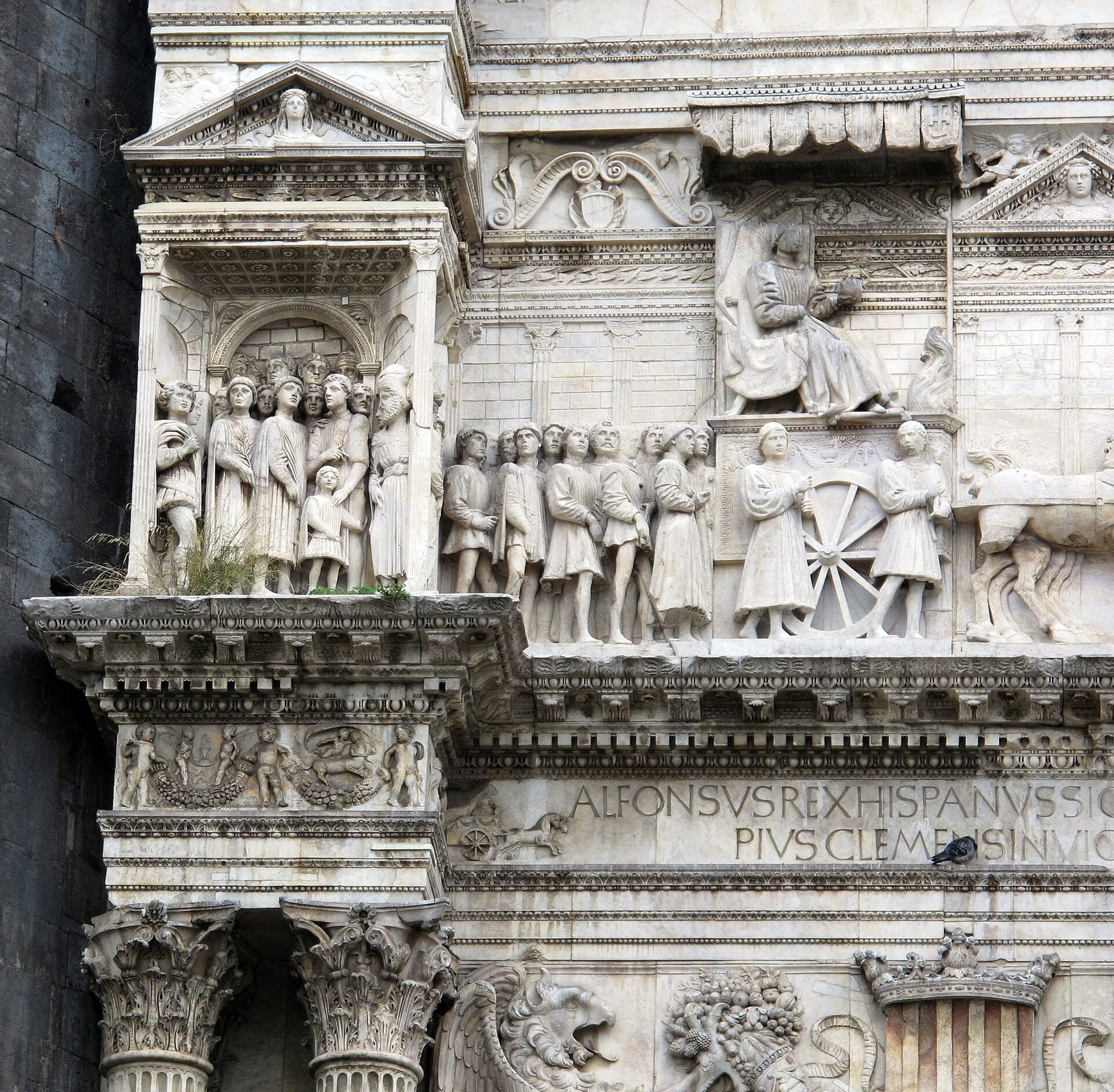
The triumphal arch. Wedged between two of the massive towers, the white marble arch celebrating Alfonso’s triumphal entry into Naples in 1443 is one of the great monuments of the early Renaissance in southern Italy. Its reliefs show the king riding in procession, and it was carved by a team of sculptors from across Italy and beyond. Take time over it before you go in, since it’s the finest thing about the castle.
The Hall of the Barons. The castle’s vast vaulted hall, with a spectacular star-shaped ribbed ceiling, takes its name from the barons who plotted against King Ferrante in the 1480s. The story goes that he invited them here for a wedding banquet and had them arrested. Today it’s used by the city council, so it isn’t always open to visitors.
The Palatine Chapel. This is the only major part of the original Angevin castle to survive. Giotto painted frescoes here in the 1330s, of which only fragments remain in the window splays, and the chapel now forms part of the civic museum.
The Armory Hall has a glass floor through which you look down on Roman remains, including a bath complex, found beneath the castle.
The civic museum fills the upper floors with paintings and sculpture from the 14th to the 20th century. It’s not a world-class collection, but it’s pleasant, and the views from the upper rooms and terraces over the port and toward Vesuvius are a bonus. Look for the castle’s old bronze doors, which still have a cannonball lodged in them from one of the castle’s many sieges.
The crocodile’s dungeon. Every castle needs a dark legend, and Castel Nuovo’s is a good one. Below the castle lie its old prison pits, and Neapolitans tell of a crocodile, supposedly arrived from Egypt on a ship, that lived in the flooded dungeon and made prisoners disappear, until it was killed and its body hung over a gate as a trophy. Historians file it firmly under folklore, but the dungeons are real, and guides love the story.
Visiting
The castle’s museum is run by the City of Naples, with tickets in the €10–15 band. It’s closed on Sundays and public holidays, which catches out a lot of weekend visitors. You don’t need to book. It’s a short walk from Molo Beverello and the Municipio stop on Metro Line 1, so it fits naturally before or after a ferry. Allow an hour and a half.
Verdict: essential. Even if you don’t go inside, stand in front of the arch.
Castel Sant’Elmo
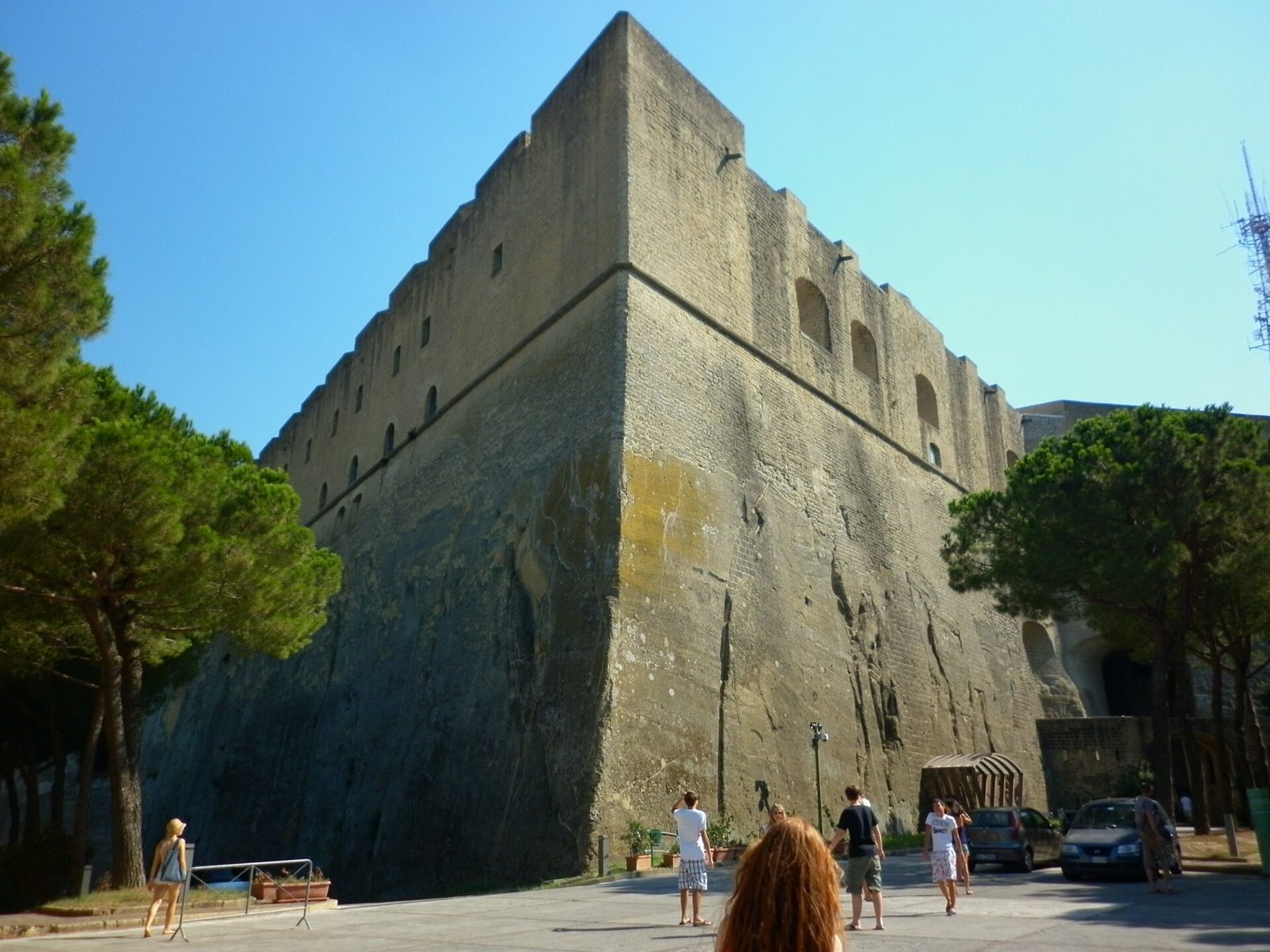
High on the Vomero hill, above the whole of Naples, sits a great star-shaped fortress of pale stone. There was a castle here under the Angevins, but the fortress you see is the one built by the Spanish viceroy Pedro de Toledo in the 1530s and 1540s, to a revolutionary six-pointed star plan designed to deflect cannon fire. It was built to defend the city, and also to point its guns at it: from these walls, the viceroys could fire into any street that rose against them. Over the centuries it served as a barracks and a prison, whose inmates included many of the patriots of the failed revolution of 1799.
What to see
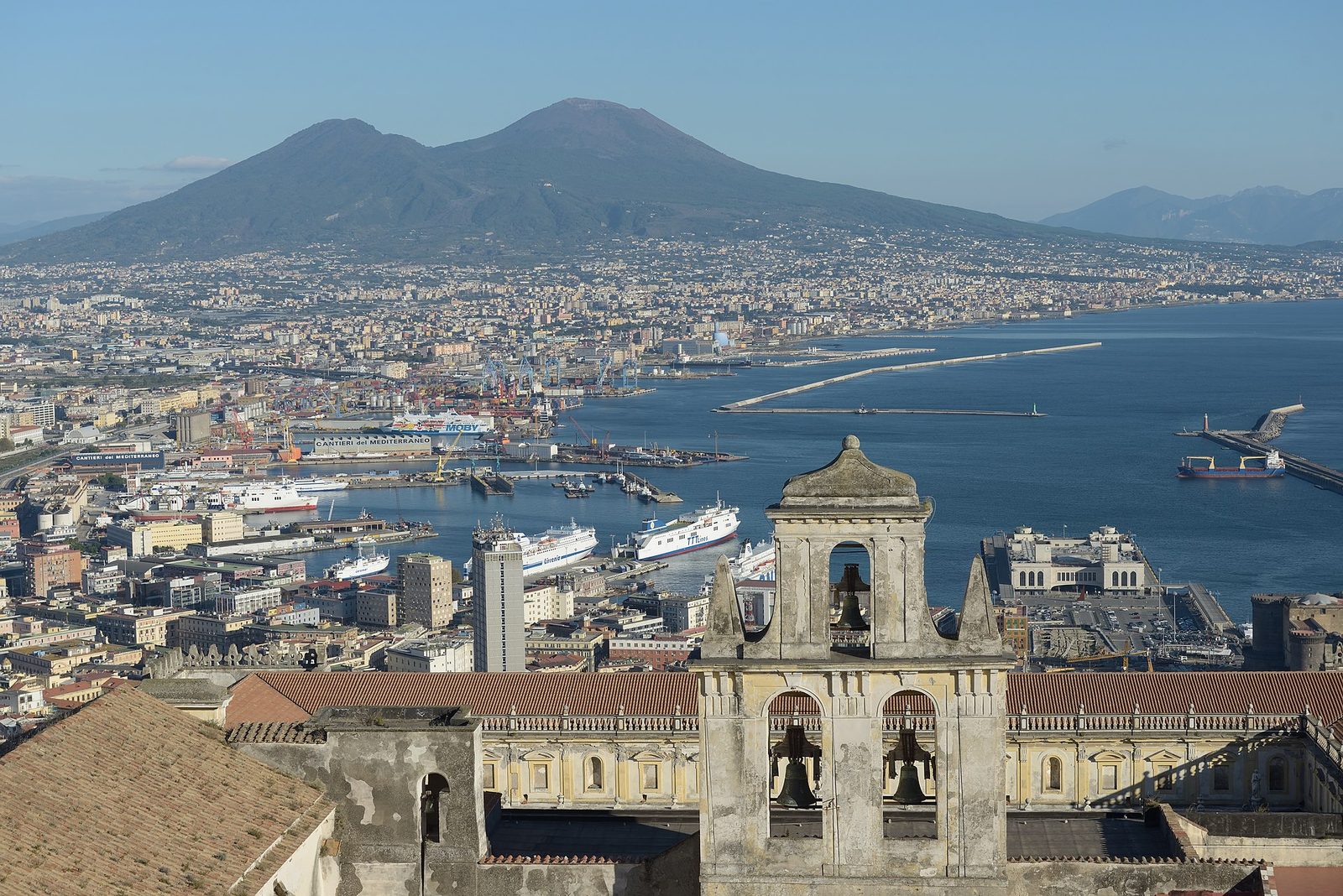
The reason to come is the view. From the ramparts you look over the whole of Naples. The old city is spread out below with Spaccanapoli cutting straight through it, Vesuvius rises across the bay, and on clear days you can see from the Sorrento peninsula and Capri round to the Campi Flegrei. It’s the best panorama in the city, and one of the best in Italy. Inside the fortress, the Museo del Novecento displays 20th-century art from Naples, and the castle hosts temporary exhibitions.
Visiting
Entry is in the under-€10 band, one of the cheapest tickets in the city. The castle is closed on Tuesdays. After a rockfall closed it briefly at the end of August 2026, visitors now enter through the moat, with a lift up to the ramparts, according to local reports. Check the state museums’ website for the current arrangements before you go.
Getting there takes some planning in autumn 2026. The Montesanto funicular is closed for a long overhaul and the Chiaia funicular closes for inspection from October 1, so take the Funicolare Centrale from Via Toledo or Metro Line 1 to Vanvitelli, and then walk up for about ten minutes. The getting around Naples guide has the details. For the way back down, the stepped Pedamentina path drops from beside the Certosa to the old city, with the whole bay in front of you.
Pairing it with the Certosa di San Martino
Just below the castle walls, the former Carthusian monastery of San Martino is the perfect companion visit, and many people end up preferring it to the castle. Its church is one of the richest baroque interiors in Naples, all colored marble inlay by Cosimo Fanzago. The great cloister has a little monks’ cemetery fenced by a marble balustrade topped with carved skulls. The museum holds the finest collection of Neapolitan nativity scenes in the city, and the terraced gardens have a view almost as good as the castle’s. Tickets are in the under-€10 band. Sources disagree on its weekly closing day, so check before you go, and don’t plan the pair for a Tuesday, when Sant’Elmo is shut.
Verdict: go for the view, and combine it with the Certosa di San Martino next door, which is one of the finest museums in Naples. The Naples museums guide covers the Certosa.
Castel dell’Ovo
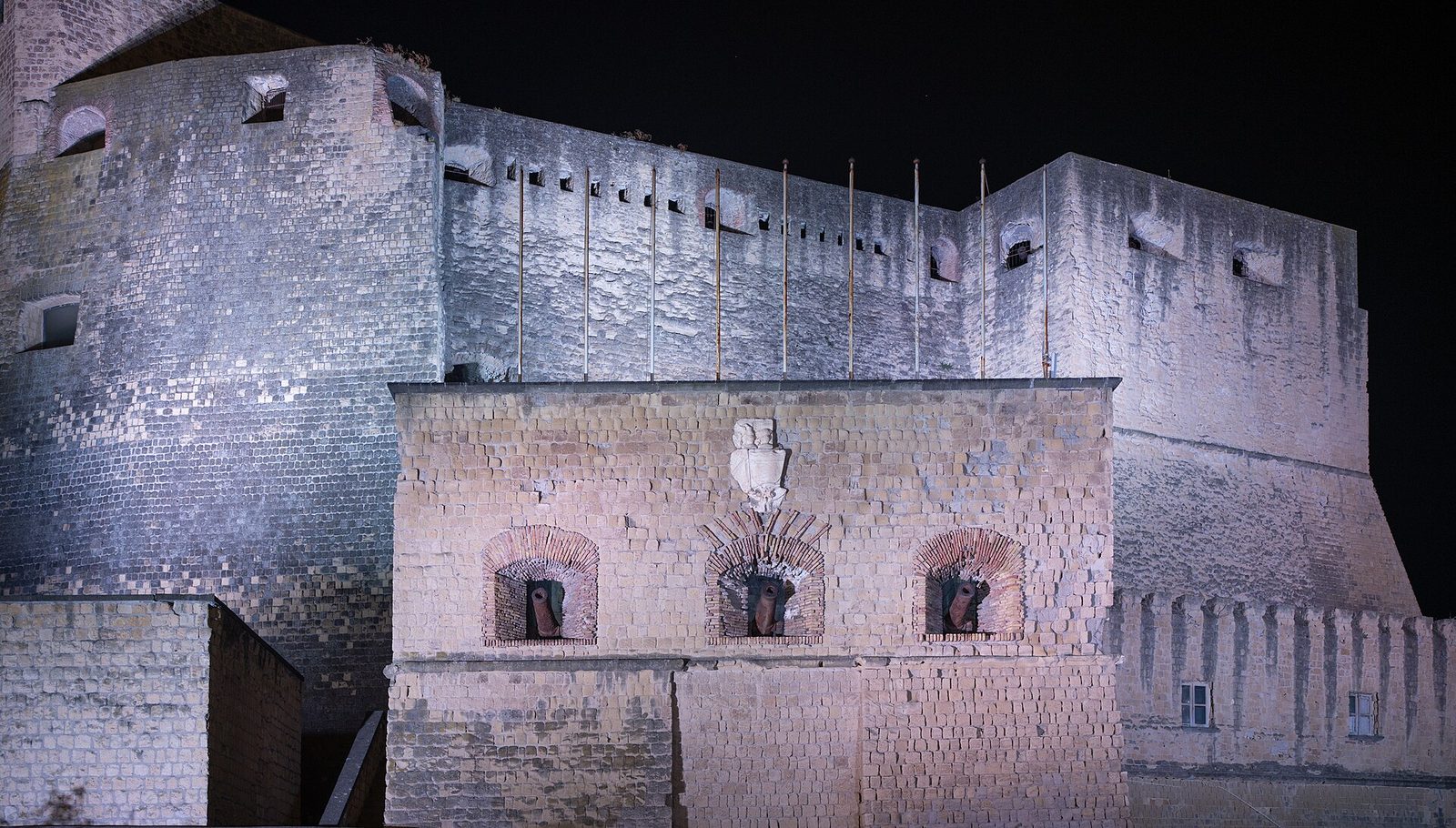
The oldest castle in Naples sits on a small rocky islet, now joined to the shore by a short causeway, at the foot of the Santa Lucia seafront. This islet, Megaride, is where Naples began. Greek sailors founded their first settlement, Parthenope, on and around it, and in Roman times the general Lucullus built a luxurious villa here, famous for its fishponds and its library. The last Roman emperor of the West, the boy Romulus Augustulus, was sent here in exile in 476 when the empire fell. Monks followed, then the Normans built the first castle, and it was fortified and rebuilt by every dynasty after them.
The legend of the egg
The castle’s name, “the castle of the egg,” comes from one of Naples’s favorite legends. In the Middle Ages, the Roman poet Virgil was remembered in Naples not only as a poet but as a magician and protector of the city. The story goes that he hid a magic egg in a glass jar inside an iron cage in the castle’s foundations, and that as long as the egg stayed whole, the castle, and Naples with it, would stand. When part of the castle collapsed in the 14th century, Queen Joan I is said to have had a new egg put in place to calm the panic. You won’t see the egg, but you’ll hear the story from every guide in town.
Is Castel dell’Ovo open?
This is the question everyone asks, and the honest answer in September 2026 is that I couldn’t confirm it. The castle closed to the public in 2023 for a major restoration of its structures, terraces and internal routes. The City of Naples announced a reopening for Easter 2026, with free entry and daily opening hours. Local reports have also tied the reopening to the America’s Cup, which will be raced off this seafront in 2027. But the city’s own page for the castle still listed it as closed when I last checked, and I haven’t found confirmation that the doors actually reopened. Check the City of Naples website before making a special trip.
Either way, walking out to it is worth it. The causeway and the Borgo Marinari, the little fishermen’s harbor tucked around the base of the castle, are always open, lined with seafood restaurants and boats. The rocks along the seafront beside it are where Neapolitans sunbathe and swim in summer. When the castle is open, entry is free, and the climb to its terraces gives you a magnificent view back along the seafront to Posillipo, and across the bay to Vesuvius and Capri.
Verdict: go at sunset, whatever the status of the gates, and bring someone you like; it’s the most romantic walk in the city. The Naples neighborhoods guide covers the seafront around it.
Castel Capuano
At the eastern edge of the old city, beside the Renaissance gate of Porta Capuana, stands the least famous of the four castles, and the one that looks least like a castle. Castel Capuano was built by the Norman king William I in the 12th century as a royal residence, and the Swabian emperor Frederick II enlarged it. In the 16th century, the Spanish viceroy Pedro de Toledo turned it into the city’s palace of justice, gathering all the courts of the kingdom under one roof. It stayed the courthouse of Naples for more than four centuries, until the courts moved to a modern complex in the 1990s.
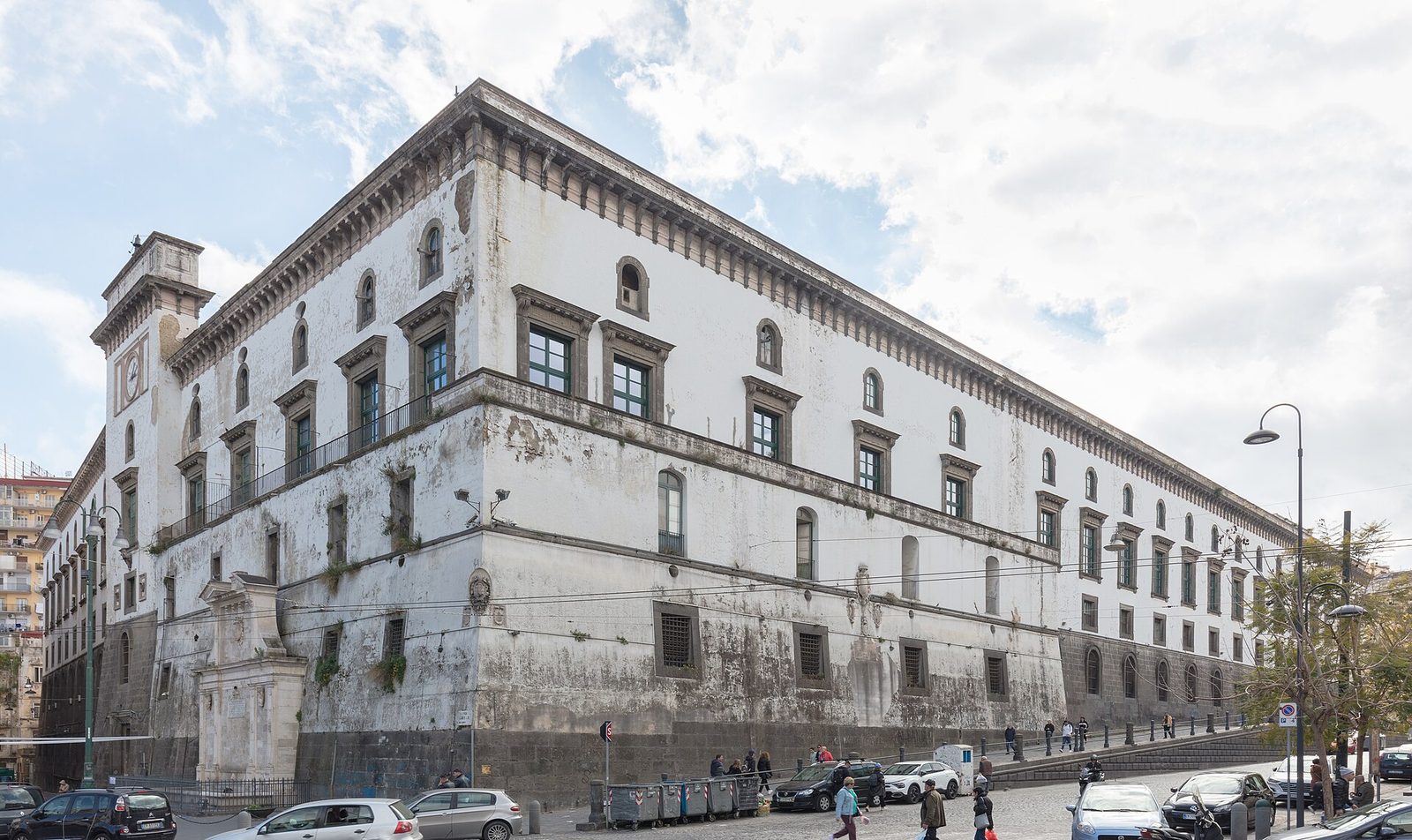
Today it’s home to a foundation that promotes legal culture and hosts events and exhibitions. Its finest rooms include the frescoed chapel of the Sommaria and grand halls decorated with busts of the city’s jurists. They’re opened for guided visits on some days, and during city events like the Maggio dei Monumenti. There’s no regular daily opening, so check the foundation’s program if you want to see inside.
Verdict: for castle completists and lovers of legal history. Otherwise, admire the facade on your way past Porta Capuana, one of the handsomest Renaissance gates in southern Italy, and wander the lively market streets around it.
The lost castles: Carmine, Nisida and Vigliena
The “seven castles” count included three more that you won’t be visiting. The Castello del Carmine, which guarded the eastern waterfront near Piazza Mercato, was demolished in the early 20th century. Only two of its towers survive, marooned beside the traffic on Via Marina. The fortress on the island of Nisida, off Bagnoli, became a prison and is now a juvenile detention center, so it’s closed to visitors, though the island itself makes a striking sight from the Posillipo coast. And the Forte di Vigliena, on the eastern shore, was blown up in 1799, when its defenders detonated the powder store rather than surrender to the royalist army. Its ruins survive in a neglected corner of the eastern suburbs.
The Palazzo Reale: the royal palace
The long red-and-gray facade that closes one side of Piazza del Plebiscito belongs to the royal palace of Naples. It was begun in 1600 for the Spanish viceroys, to a design by Domenico Fontana, and it became the main residence of the Bourbon kings from the 18th century. Along its facade, in niches, stand statues of eight kings from each of the dynasties that ruled Naples, from the Norman Roger II to Victor Emmanuel II. They were added in the late 19th century, after Italian unification. Locals enjoy the way the statues seem to gesture, as if commenting on the square.
What to see
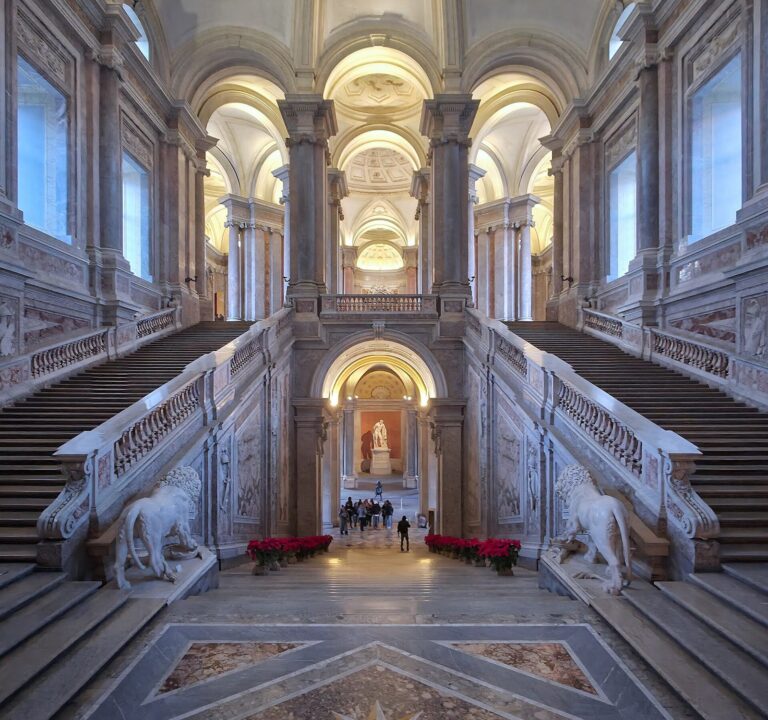
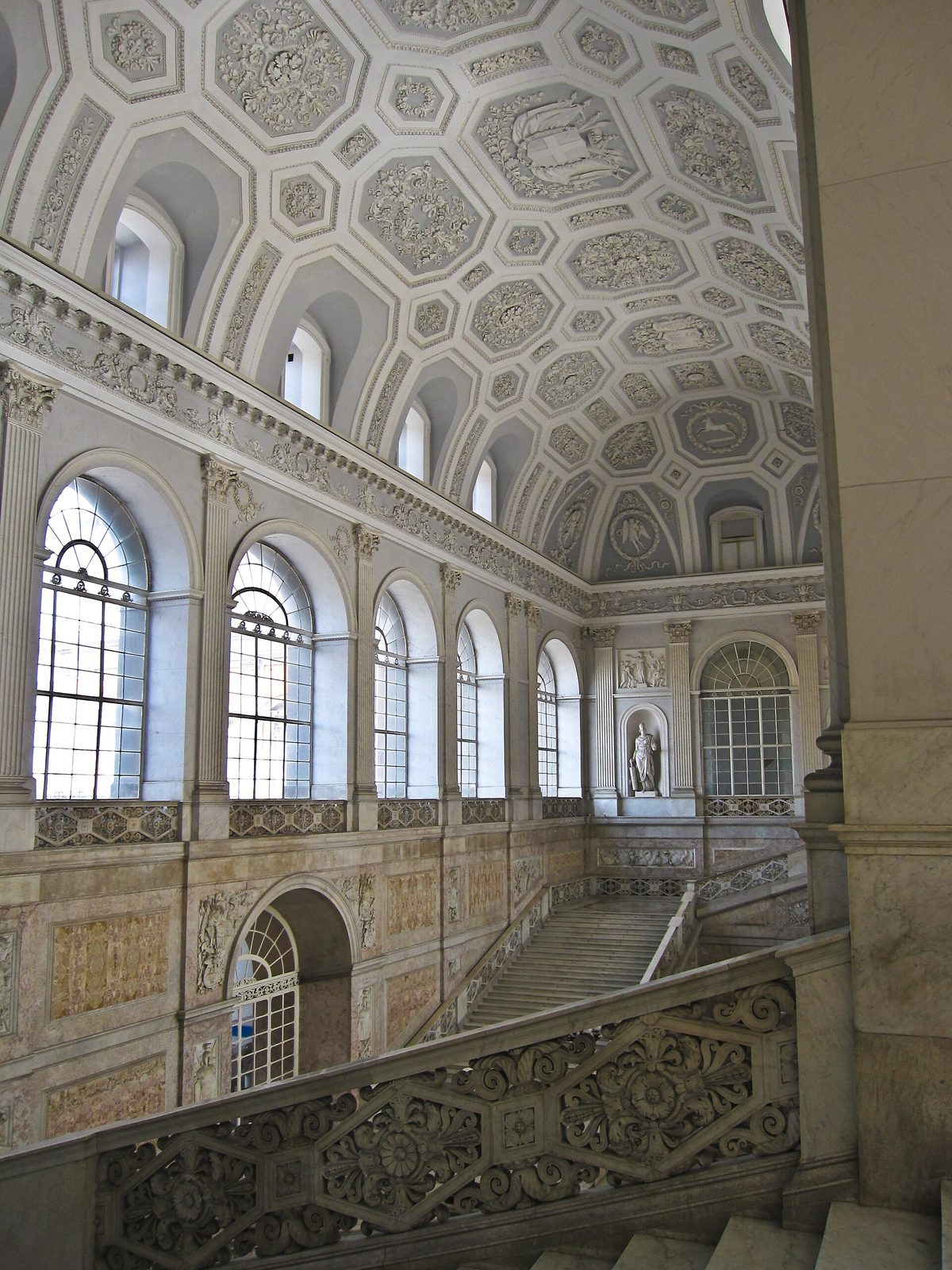
You enter by one of the grandest staircases in Italy, a broad double flight of marble rising under a coffered vault, built to impress visiting ambassadors and still doing its job. Upstairs, the Royal Apartments run through a long sequence of state rooms with their furniture, tapestries, paintings, porcelain and chandeliers: the throne room, the ambassadors’ hall, the royal chapel, and the charming court theater, built for the Bourbon court in the 18th century. The palace also houses the National Library, one of the great libraries of Italy, whose treasures include the carbonized papyrus scrolls from Herculaneum. A hanging garden on the terraces looks over the port. Guided visits to the roof garden were suspended through the summer of 2026, so check whether they’ve resumed.
Visiting
Tickets are in the €15–20 band, and the palace is usually closed on Wednesdays. It doesn’t need booking. It’s next door to the Teatro di San Carlo, whose own tours make a natural pairing, and a few minutes from Castel Nuovo. Allow about an hour and a half for the apartments, more if you’re a fan of Bourbon decorative art.
Verdict: the best palace visit in the city, and a good complement to the castles. You see the fortress where the kings defended themselves, then the palace where they lived.
Naples’s history, told through its castles
The castles make much more sense once you see them as chapters in one story, since each dynasty that took Naples left a fortress behind.
The Normans (12th century). When the Normans took Naples, they fortified the old monastery on the islet of Megaride, the future Castel dell’Ovo, to watch the sea, and built Castel Capuano by the landward gate to watch the roads. For the first time, Naples was the seat of a kingdom rather than a duchy.
The Swabians (13th century). The emperor Frederick II, who founded the University of Naples in 1224, enlarged both castles. His line ended violently. His grandson Conradin was beheaded in Naples’s market square in 1268 by the new French rulers.
The Angevins (1266–1442). Charles of Anjou moved the court to the city and built Castel Nuovo, the new castle by the port, as his residence. His successors built the first fortress on the Sant’Elmo hill, along with the great Gothic churches of the old city, like Santa Chiara. Our guide to Naples churches covers them.
The Aragonese (1442–1501). Alfonso V of Aragon took Naples in 1442, entered in triumph, and rebuilt Castel Nuovo as a modern fortress with the marble arch to celebrate himself. His son Ferrante faced down the barons’ revolt, and the Hall of the Barons still carries its name.
The Spanish viceroys (1503–1707). Naples became part of the Spanish empire, ruled by viceroys. Pedro de Toledo, the most energetic of them, rebuilt Sant’Elmo as the star-shaped fortress you see today, turned Castel Capuano into the courts, laid out Via Toledo and the Quartieri Spagnoli, and began the process that led to the Palazzo Reale.
The Bourbons (1734–1860). Charles of Bourbon made Naples the capital of an independent kingdom again, and his dynasty filled the city with palaces, at Capodimonte, Portici and, grandest of all, Caserta. In 1799 a short-lived revolution declared a republic. Its last defenders blew up the Forte di Vigliena, and many of its leaders were imprisoned in Castel Sant’Elmo before being executed. After a decade of French rule under Joseph Bonaparte and Joachim Murat, the Bourbons returned, and ruled until Garibaldi’s arrival in 1860 brought Naples into a united Italy.
Walk from Castel Capuano past the churches of the old city to Castel Nuovo and the Palazzo Reale, and you’ll have walked through seven centuries of that story. The Centro Storico guide covers the streets in between.
The other royal palaces
The Bourbons didn’t stop at one palace. The Palazzo Reale di Capodimonte, on the hill north of the old city, was built as a hunting lodge and to house the great Farnese art collection that Charles of Bourbon inherited from his mother. Today it’s one of Italy’s finest picture galleries, with Caravaggio, Titian and much more, set in a vast royal park. The Naples museums guide covers it in detail. Further afield, the Bourbons built their largest palace of all at Caserta, north of Naples, a rival to Versailles with one of the most spectacular gardens in Europe. Around the bay they had summer palaces too, including the Reggia di Portici, on the road to Herculaneum, now part of the university’s agriculture faculty.
Castles around the Bay of Naples
If you’re taking day trips around the bay, several more castles are worth building into your plans.
- The Castello Aragonese, Ischia. The most spectacular castle in the bay rises on a rocky islet off Ischia Ponte, joined to the island by a stone causeway. It’s a whole fortified citadel, with churches, a ruined cathedral, gardens, terraces and a grim convent cemetery. It’s open all year. The Ischia guide has the details.
- The Castello di Baia. This Aragonese castle on a headland in the Campi Flegrei houses the archaeological museum, with the statues recovered from the sunken Roman resort below. See the Campi Flegrei guide.
- Terra Murata, Procida. Procida’s walled village on the island’s highest point is crowned by the Palazzo d’Avalos, a palace that became a prison. It’s covered in the Procida guide.
- Castello Barbarossa, Capri. The ruins of a medieval castle stand above Anacapri, named after the pirate who sacked it in the 16th century.
- The watchtowers of the Amalfi Coast. Dozens of stone towers line the coast from Sorrento to Salerno, built to warn of pirate raids. Several have been turned into homes, restaurants and hotels. See the Amalfi Coast from Naples guide.
How to see the castles: two half-days
The castles fall neatly into two groups, and each makes a satisfying half-day.
Half-day one: the port and the palace
- Castel Nuovo first, as soon as it opens, and don’t forget it’s closed on Sundays. Stand in front of the arch, then visit the Hall of the Barons (if open), the Palatine Chapel and the museum.
- The Palazzo Reale, five minutes’ walk away, for the staircase and the Royal Apartments. Remember it’s usually closed on Wednesdays.
- Piazza del Plebiscito and the Teatro di San Carlo, next door. Add a tour of the opera house if you have time, then a coffee at the Gran Caffè Gambrinus.
- Castel dell’Ovo, fifteen minutes’ walk along the seafront, for the causeway and the Borgo Marinari. If the castle is open, climb to the terraces. Come back at sunset if you can.
Mondays, Tuesdays, Thursdays, Fridays and Saturdays are the days when both Castel Nuovo and the Palazzo Reale are normally open, so avoid Wednesdays and Sundays for this half-day.
Half-day two: the Vomero
- Take the Funicolare Centrale from Via Toledo, or Metro Line 1 to Vanvitelli.
- Castel Sant’Elmo for the view (closed on Tuesdays).
- The Certosa di San Martino next door, for its museum, church, cloister and the collection of Neapolitan nativity scenes.
- Walk down the Pedamentina steps to the old city, with the bay spread out in front of you.
If you’re short of time, Castel Nuovo, the Palazzo Reale and a sunset walk to Castel dell’Ovo together make one excellent full day. The Naples itinerary page shows how that fits into a short stay, and the full list of things to do in Naples puts the castles in context.
Tickets, passes and the Artecard
There’s no single ticket for all the castles, since they’re run by different bodies. Castel Nuovo belongs to the City of Naples, Castel Sant’Elmo and the Certosa to the state museums service, the Palazzo Reale to its own state museum, and Castel Capuano to a foundation. Castel dell’Ovo, when open, is free.
The regional Artecard can help. Its Napoli 3 Days card gives free entry to the first three sites you visit and discounts on the rest, plus city transport. Its free entries go furthest on the most expensive sites, so use them on the Palazzo Reale and the big museums rather than on Castel Sant’Elmo, which is cheap anyway. Check the card’s current list before assuming a castle is included. For the full math on whether the card pays off, see the guide to Naples tours, tickets and passes. The state sites, including Castel Sant’Elmo and the Palazzo Reale, are also free on the first Sunday of the month, and free for under-18s all year.
The castles with children
Castles are an easy sell to children, and Naples’s have good stories: an egg that holds up a castle, barons arrested at a wedding banquet, a cannonball stuck in a bronze door, a fortress shaped like a star. Castel Nuovo’s glass floor over Roman ruins goes down well, and the ramparts of Sant’Elmo give children room to run, with a view to match. The walk out to Castel dell’Ovo, past the boats of the Borgo Marinari, finishes with a gelato on the seafront. The Palazzo Reale’s apartments are the hardest sell, so keep that visit short.
Photographing the castles
Each castle has its moment. Castel Nuovo’s arch faces the square and catches the morning light, so go early for the best photos, before the traffic around Piazza Municipio builds up. Castel dell’Ovo is at its most beautiful at sunset, seen from Via Partenope or from the rocks by the causeway, when the stone turns gold and the lights of the Borgo Marinari come on. For the classic shot of the castle with Vesuvius behind, walk along the seafront toward Mergellina and look back. From Castel Sant’Elmo, the late afternoon light rakes across the old city and picks out the domes, and on a clear winter day you can see snow on the mountains inland. The Palazzo Reale’s facade is best in the late afternoon from the far side of Piazza del Plebiscito.
Accessibility
The castles were built to keep people out, and they’re not the easiest places to visit with limited mobility. Castel Sant’Elmo is now entered through its moat, with a lift up to the ramparts, according to local reports, which makes the view easier to reach than it used to be. Castel Nuovo and the Palazzo Reale have long flights of stairs, and access to the upper floors varies, so contact them before your visit to ask about lifts and step-free routes. Castel dell’Ovo’s causeway and the Borgo Marinari are flat, though the castle’s own ramps and terraces are steep and uneven. The seafront walk out to it is one of the easiest and most rewarding strolls in Naples for anyone.
Where to eat near the castles
Each castle comes with its own lunch plan.
- Castel Nuovo and the Palazzo Reale: the streets behind Via Toledo and around the Galleria Umberto I have plenty of bars for a quick lunch, and Via Chiaia’s cafés are a short walk away. For a proper meal, head into the lanes of the Quartieri Spagnoli, where the trattorie are cheaper and better than on the main squares.
- Castel dell’Ovo: the restaurants of the Borgo Marinari, around the castle’s harbor, are all about the setting. The food is generally good, but you pay for the view. For better value, walk back along the seafront toward Chiaia, or grab a pizza on the way.
- Castel Sant’Elmo: the Vomero around Piazza Vanvitelli and Via Scarlatti is full of good cafés, pastry shops and pizzerias used by locals, and the prices are lower than down in the center.
- Castel Capuano: you’re at the edge of Forcella and the old city, a few minutes from some of the most famous pizzerias in Naples. The best pizza in Naples guide shows where.
For restaurants across the city, see the best restaurants in Naples.
Events in the castles
The castles aren’t only museums. Castel Nuovo’s courtyard and halls host exhibitions, concerts and civic events through the year, and Castel Sant’Elmo stages exhibitions in its vaulted rooms and events on its ramparts, with the city lit up below, in summer. During the city’s spring festival of open monuments, the Maggio dei Monumenti, places that are normally closed, including parts of Castel Capuano, open for guided visits. Check the city’s events listings when you arrive. A concert on Sant’Elmo’s ramparts on a summer evening, with the lights of the bay spread out below, is one of the great Naples experiences.
What to skip
- Castel Nuovo on a Sunday. It’s closed on Sundays and public holidays.
- A special trip to Castel dell’Ovo without checking. Its reopening hasn’t been confirmed. The walk out is worth it anyway, but don’t plan your day around the terraces.
- Climbing to Sant’Elmo on foot from the old city in the heat. Take the Funicolare Centrale or the metro up, and walk down.
- Castel Capuano on a normal weekday, unless there’s a guided visit on.
- Using your Artecard free entries on the cheap castles. Save them for the expensive sites.
- Paid “castle tours” that just walk you past the outsides. The castles are close together and easy to see on your own.
Naples castles frequently asked questions
How many castles are there in Naples?
Naples was once called the city of seven castles. Four still stand within the city: Castel dell’Ovo, Castel Nuovo (the Maschio Angioino), Castel Sant’Elmo and Castel Capuano. Of the other three, the Castello del Carmine was mostly demolished, the fortress on Nisida is a juvenile prison, and the Forte di Vigliena was blown up in 1799.
Is Castel dell’Ovo open?
It’s uncertain as of September 2026. The castle closed in 2023 for restoration, and the city announced a free reopening for Easter 2026, but its own page still listed the castle as closed and I couldn’t confirm it reopened. Check the City of Naples website before you go. The causeway and the Borgo Marinari harbor around the castle are always open.
Which castle in Naples is best to visit?
Castel Nuovo is the most rewarding all-round visit, with its Renaissance arch, the Hall of the Barons and a museum. Castel Sant’Elmo has the best view in Naples. Castel dell’Ovo is the most atmospheric, especially at sunset, and it’s free when open. If you only have time for one, choose Castel Nuovo.
How much does it cost to visit the castles in Naples?
Not much. Castel Sant’Elmo costs under €10, Castel Nuovo’s museum is in the €10–15 band, the Palazzo Reale in the €15–20 band, and Castel dell’Ovo is free when open. State sites, including Sant’Elmo and the Palazzo Reale, are free on the first Sunday of the month and for under-18s. Each castle’s own page has current prices.
How do you get to Castel Sant’Elmo?
Take the Funicolare Centrale from Via Toledo, or Metro Line 1 to Vanvitelli, and walk up for about ten minutes. In autumn 2026, the Montesanto funicular is closed for an overhaul, and the Chiaia funicular closes for inspection from October 1. Walking up from the old city is a steep climb, so save the Pedamentina steps for the way down.
What is the Maschio Angioino?
It’s the popular name for Castel Nuovo, the “new castle” on Piazza Municipio, meaning the Angevin keep. Charles of Anjou built the original in the late 13th century, and the Aragonese king Alfonso V rebuilt it in the 15th century, adding the famous marble triumphal arch. Today it houses the city’s civic museum and council chamber.
Can you visit Castel Capuano?
Only at certain times. Castel Capuano, the Norman castle that served as the courthouse of Naples for more than four centuries, is now home to a foundation. Its frescoed chapel and grand halls are opened for guided visits on some days and during city events. Check the foundation’s program before going.
What is the legend of Castel dell’Ovo?
Medieval Neapolitans believed the poet Virgil, remembered as a magician, hid a magic egg in the castle’s foundations, and that as long as the egg stayed whole, the castle and the city would stand. When part of the castle collapsed in the 14th century, Queen Joan I reportedly had a new egg put in place to calm the panic.
Photo credits
- Castel Nuovo’s triumphal arch between the towers: photo by Dr.Conati at Italian Wikipedia, Wikimedia Commons, public domain.
- Relief of Alfonso’s triumph, Castel Nuovo: photo by Sailko, Wikimedia Commons, CC BY 3.0.
- Castel Sant’Elmo: photo by Voello, Wikimedia Commons, CC BY-SA 4.0.
- Naples from Castel Sant’Elmo with the Certosa di San Martino, the port and Vesuvius: photo by Wolfgang Moroder, Wikimedia Commons, CC BY-SA 3.0.
- Castel dell’Ovo at night: photo by PaestumPaestum, Wikimedia Commons, CC BY 4.0.
- Castel Capuano: photo by Diego Delso, Wikimedia Commons, CC BY-SA 4.0.
- Palazzo Reale staircase: photo by Armando Mancini, Wikimedia Commons, CC BY-SA 2.0.
Sources: Castel Nuovo opening days and prices from the City of Naples; Castel Sant’Elmo from the state museums service and local reporting on the August 2026 rockfall; Palazzo Reale from its official site; Castel dell’Ovo’s reopening from City of Naples announcements and 2026 local press. All checked September 2026.