On this page
Last updated September 25, 2026. Transport links between neighborhoods (including the 2026 funicular closures), the Largo Maradona works and the America’s Cup plans checked against the City of Naples, the transport operators and 2026 local reporting. Character reads and verdicts are my own.
The Naples neighborhoods worth your time are the Centro Storico (the old Greek city), the Quartieri Spagnoli, Toledo and the Royal Palace area, the seafront of Santa Lucia and Chiaia, the Vomero hill and the reviving Rione Sanità. In Naples, Italy, they sit a few kilometers apart but feel like separate villages.
That’s the key to understanding the city. Naples isn’t one place with a center and some suburbs. It’s a cluster of very different villages packed into an amphitheater of hills around a bay, each with its own character, its own dialect of the city’s life and its own reputation, some of it deserved and a lot of it out of date. The loud, ancient, crowded old town sits a fifteen-minute walk from the polished boutiques of Chiaia. The residential calm of the Vomero is a funicular ride above the washing lines of the Quartieri Spagnoli. People who come for a day often see only one of them and go home thinking that was Naples.
This guide is the mental map. It covers where each neighborhood is, how they connect, what each is actually like, what’s there, how safe it really is, and which ones to point yourself at depending on what kind of traveler you are. If you’re choosing a place to sleep, the where to stay in Naples guide handles the booking decision. This page is about knowing the city well enough to use it.
Naples neighborhoods at a glance
Officially, the city is divided into ten numbered municipalities and thirty quarters. Nobody uses those in conversation. Neapolitans talk about their rioni and quartieri by their old names, and so will I. Here are the ones that matter to a visitor, roughly from the most essential to the most optional.
| Neighborhood | Character | Go for | Time to give it | Safety read | My verdict |
|---|---|---|---|---|---|
| Centro Storico | The Greek grid: loud, crowded, ancient | Churches, underground sites, pizza, street life | At least a full day | Busy and fine by day; watch bags in crowds | The heart of the city; unmissable |
| Quartieri Spagnoli | Steep lanes, washing lines, street shrines | Street life, the Maradona mural, cheap trattorie | A few hours, often in passing | Transformed; normal city care | Walk through it, don’t just look down it |
| Toledo, Municipio and Plebiscito | Grand, civic, commercial | Royal Palace, San Carlo, Galleria Umberto, shopping | Half a day | Busy and central | The formal Naples; easy to love |
| Santa Lucia and the Lungomare | Seafront promenade, grand hotels | Evening walks, seafood, views of Vesuvius | An evening or two | Among the calmest areas | The best sunset walk in the city |
| Chiaia | Elegant, residential, fashionable | Boutiques, the Villa Comunale, bars at night | An afternoon and an evening | Calm | Where Naples dresses up |
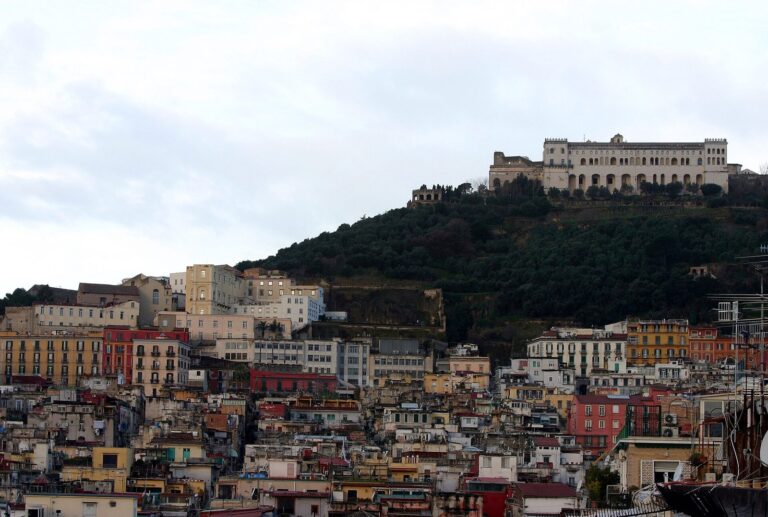
| Vomero | Hilltop residential, orderly | Castel Sant’Elmo, the Certosa, views, shopping | Half a day | Calm | Go for the view and the Certosa |
| Rione Sanità | Working neighborhood in a valley, reviving | Catacombs, baroque palaces, the Fontanelle | Half a day | Fine by day with ordinary care | The most rewarding area most visitors skip |
| Posillipo, Marechiaro and Mergellina | Villas, coves, a fishing harbor | Swimming spots, views, seaside dinners | Half a day | Calm | Naples at its most beautiful |
| Capodimonte | Hilltop park and palace | The museum and the royal park | Half a day | Calm in the park | For art lovers, essential |
| Piazza Garibaldi and the station | Transport hub, market streets | Trains, buses, the Porta Nolana market | As little as possible | The one area to be alert in, especially at night | Pass through |
How the city fits together: a mental map
Picture Naples as three levels stacked against a hillside facing south over the bay.
At sea level is the long waterfront. From the port and the ferry piers in the east, it runs past the Royal Palace and the Castel dell’Ovo, along the promenade of Santa Lucia and Via Caracciolo, past the gardens of Chiaia to the fishing harbor of Mergellina, and out to the villas of Posillipo.
On the flat ground behind the port lies the old city, laid out by the Greeks on a grid of three long parallel streets (the decumani) crossed by narrow lanes. Its eastern edge is the central station at Piazza Garibaldi. Its western edge is Via Toledo, the long, straight 16th-century street that is the city’s spine, running from Piazza del Plebiscito up toward the National Archaeological Museum. West of Toledo, climbing the hill, is the tight grid of the Quartieri Spagnoli.
On the hills ringing the whole thing are the Vomero, above the Quartieri and Chiaia, crowned by Castel Sant’Elmo; Capodimonte to the north, with its palace and park; and Posillipo to the west, dropping to the sea. Tucked into the valley between the old city and Capodimonte is the Sanità.
The distances are small. You can walk from the station to the Royal Palace in about half an hour, and from the Duomo to the seafront in twenty minutes. The gradients are not. Getting from sea level to the Vomero is a serious climb, which is why Naples built funiculars.
Getting between neighborhoods in 2026
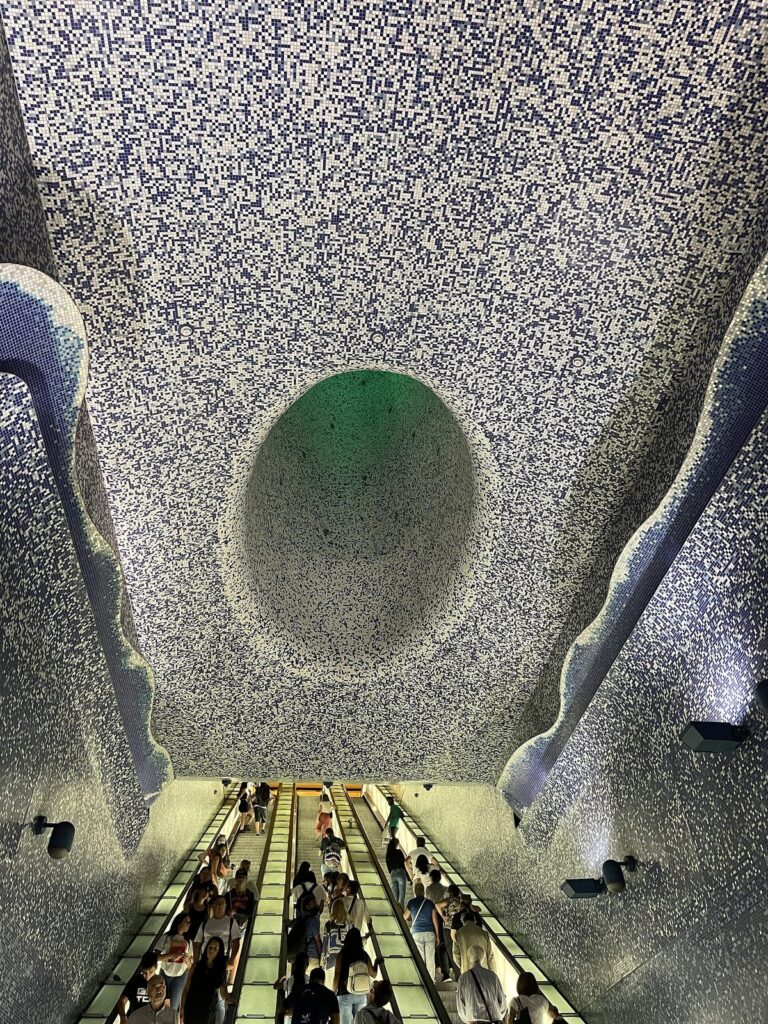
Most of the time, the best way between the old city, Toledo, the Quartieri and the seafront is on foot. For longer hops, Metro Line 1 runs from the station through the old city (Università, Municipio, Toledo, Dante, Museo) and up to the Vomero (Vanvitelli), with some famously beautiful stations. The getting around Naples guide covers tickets and fares.
The funiculars are the other link to the hills, and 2026 has been a messy year for them. The Montesanto funicular, which climbs from the edge of the old city to the Vomero, has been closed since May 15, 2026, for its twenty-year overhaul, with work expected to last around nine months. The Chiaia funicular closes from October 1, 2026, for its own inspection, with bus 128 replacing it. The Funicolare Centrale, from Via Toledo to the Vomero, and the Mergellina funicular, up to Posillipo, are the ones running as of late September 2026. Until the others reopen, the Centrale and Metro Line 1 are your routes to the Vomero, or you can walk. The old stepped paths up the hill, above all the Pedamentina from the Certosa down to Corso Vittorio Emanuele, are beautiful on the way down and hard work on the way up.
Centro Storico: the old city
This is Naples in its most concentrated form, and the reason most people come. The Centro Storico is the Greek and Roman city, still laid out on its original street plan and still lived in, and its whole historic center is a UNESCO World Heritage Site. Three parallel streets run east to west: Via dei Tribunali in the middle, Spaccanapoli (the local name for the line of streets including Via Benedetto Croce and Via San Biagio dei Librai) to the south, and the quieter Via Anticaglia and Via Sapienza to the north. The lanes that cross them, including San Gregorio Armeno with its nativity workshops, tie it all together.
What’s here: most of the great churches, including the Sansevero Chapel, Santa Chiara, the Gesù Nuovo, San Lorenzo and the Duomo; the Napoli Sotterranea tour and the Roman streets beneath San Lorenzo; the Pio Monte’s Caravaggio; the pizzerias of Via dei Tribunali; and the National Archaeological Museum on its northwestern edge. The guide to Naples churches and the underground Naples guide cover the two things it does best.
Character: dense, noisy, packed with people and scooters, smelling of coffee, fried dough and incense, and busy from breakfast until late at night. It’s not quaint or restored. Laundry hangs over baroque doorways, and the ground floors of palaces are workshops and tiny homes. Some visitors find it overwhelming for the first hour and then can’t stop walking.
Safety read: it’s full of people at all hours, which makes it safer than its reputation suggests. The concern is petty theft in crowds, so keep your phone and wallet out of reach and your bag zipped. Late at night the side lanes empty out, but the main streets stay lively.
Verdict: unmissable, and worth at least a full day. The Centro Storico guide has the streets, sights and walking routes in detail.
Quartieri Spagnoli: the Spanish Quarter
Climbing west from Via Toledo is a grid of narrow, steep, straight lanes laid out in the 16th century to house the Spanish garrison. For most of the 20th century the Quartieri Spagnoli had a reputation as one of the toughest areas in Naples, and older guidebooks warned visitors away. Today it’s one of the most visited parts of the city, and much of that reputation belongs to the past.
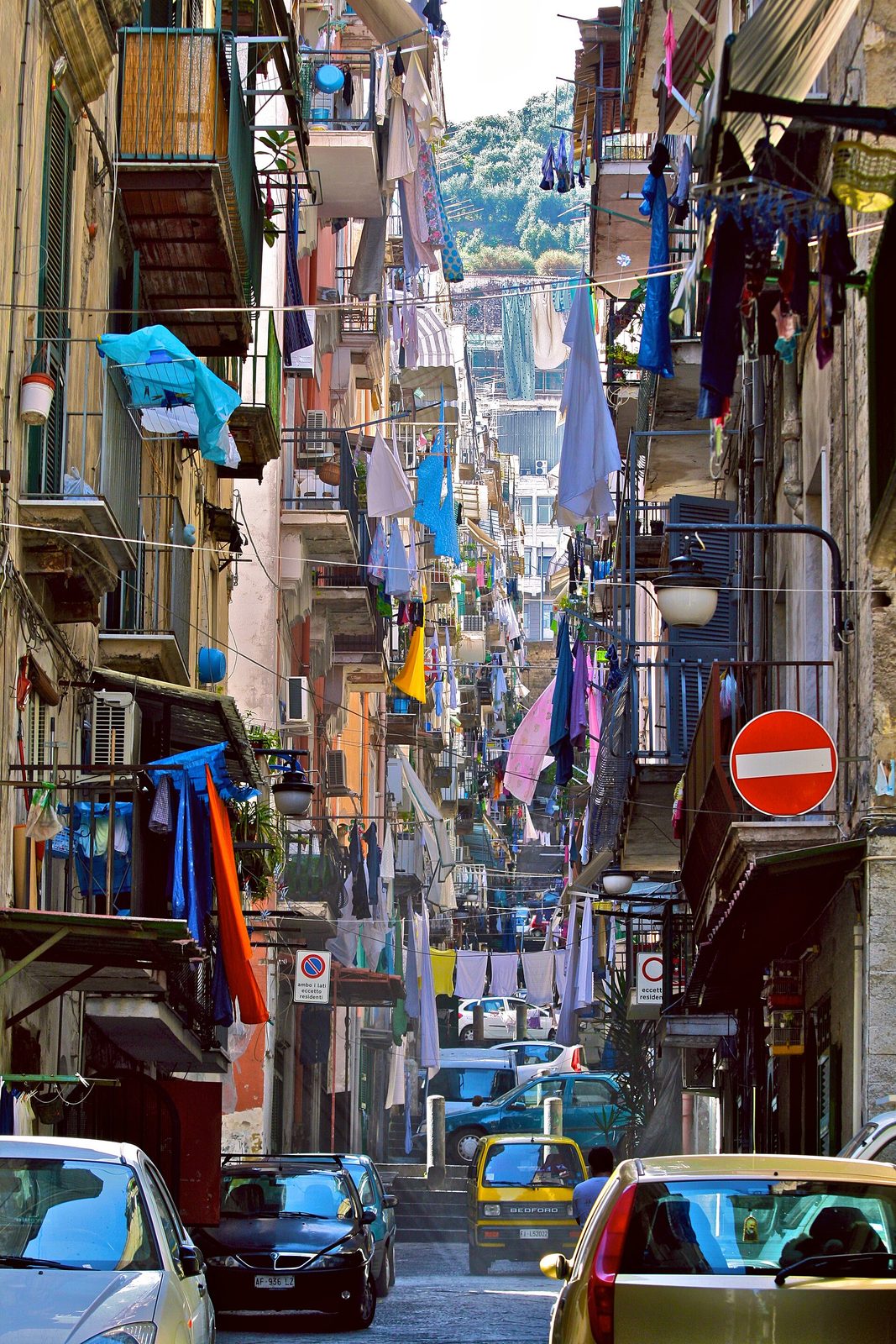
What’s here: street life above all. There are the bassi, one-room homes opening straight onto the lane, and shrines to saints and to Diego Maradona. There are murals, cheap trattorie and friggitorie, and an ever-growing number of B&Bs, bars and souvenir stalls. The biggest draw is the mural of Maradona on Via Emanuele De Deo, at the spot now called Largo Maradona, which has become a shrine to the Argentine footballer who won Napoli its first league titles. The city approved a project to turn the little square into a proper public space. Works began in May 2026, the mural was restored over the summer, and the new square was due to reopen in early September 2026. If you’re making a special trip, check it’s open.
Character: vertical, intimate, loud and funny. The lower streets near Toledo are packed with visitors and increasingly commercial. The upper lanes toward Corso Vittorio Emanuele are quieter and more residential, and they’re where you’ll still get a sense of how the neighborhood has always lived.
Safety read: by day it’s busy and friendly. Take the ordinary care you’d take in any dense city neighborhood, and watch for scooters, which use the lanes as fast as they can. Late at night the upper lanes are dark and empty, and I’d stick to the busier streets.
Verdict: walk through it, rather than just peering up it from Via Toledo. Climb from Toledo up to Corso Vittorio Emanuele, stop for a pizza fritta, and come back down a different lane.
Toledo, Municipio and Plebiscito: royal and civic Naples
Via Toledo was opened in the 1530s by the Spanish viceroy Pedro de Toledo, and it’s been the city’s main street ever since. Most of it is pedestrianized and it’s lined with shops, banks, cafés and palazzi, running from the edge of the old city down to Piazza Trieste e Trento and Piazza del Plebiscito. This end of the city, the old quarter of San Ferdinando, is where the kings lived and where Naples still does its official business.
What’s here: the Royal Palace; the Teatro di San Carlo, the oldest working opera house in Europe, which also runs guided tours; the glass-roofed arcade of the Galleria Umberto I; the vast semicircle of Piazza del Plebiscito with the church of San Francesco di Paola; the historic Gran Caffè Gambrinus; and, down toward the port, the Castel Nuovo and the ferry piers of Molo Beverello. Toledo’s metro station, with its deep-blue lower level, is worth a detour on its own.
Character: grand and a little formal, busy with office workers and shoppers by day and with families walking in the evening. It feels more like a European capital than anywhere else in Naples, which makes sense, since for centuries it was one.
Safety read: central, busy and well policed around the palace and the piazza. The usual crowd-related care on Via Toledo applies, especially on weekend evenings, when it’s packed.
Verdict: a half-day of Naples at its most monumental. It’s also the most convenient base for ferries and for the seafront. If you’re catching boats to the islands, the Naples ferry guide explains which pier is which.
Montesanto and the Pignasecca: the market quarter
Between Via Toledo and the foot of the Vomero, where the Quartieri Spagnoli run out, is the little square of Montesanto and the street market of the Pignasecca, the oldest market in Naples. It’s a long, crowded, noisy lane of fishmongers with their catch laid out on ice, fruit and vegetable stalls, butchers, bakers, cheap clothes, kitchenware and friggitorie selling fried pizza and paper cones of seafood. It’s at its best in the morning, when the city is shopping for lunch.
Montesanto is also a transport node. It has a metro station, the terminus of the Cumana railway toward Pozzuoli, and the lower station of the Montesanto funicular, which is closed for its overhaul until around early 2027. The bottom of the Pedamentina steps from the Certosa comes down nearby, on Corso Vittorio Emanuele.
Verdict: an hour in the morning is one of the best food experiences in the city, and it costs next to nothing. Pair it with the Quartieri Spagnoli, which start right next door.
Piazza Bellini and the university quarter
On the northwestern edge of the old city, between Via dei Tribunali and Via Toledo, is the student quarter around the university and the Academy of Fine Arts. Its living room is Piazza Bellini, a leafy square with the excavated remains of the Greek city walls sunk in the middle, cafés and bars all around, and a young crowd that fills it every evening. Just along from it, the archway of Port’Alba leads to Piazza Dante, and the lane under the arch is lined with secondhand bookstalls, as it has been for generations.
What’s here: the bars and cafés of Piazza Bellini, the bookshops of Port’Alba, the Conservatory of San Pietro a Majella, whose students you’ll hear practicing through the windows, and the big semicircle of Piazza Dante on Via Toledo, with its metro station.
Safety read: busy and sociable late into the evening. The usual care with phones and bags applies in the crowd.
Verdict: the best place in the old city for an evening drink outdoors, and a good place to finish a day of sightseeing.
Santa Lucia and the Lungomare: the seafront
South of Plebiscito, the city meets the sea. The old fishing quarter of Santa Lucia gives way to Via Partenope, lined with grand hotels facing the water, and then to the long pedestrian promenade of Via Caracciolo, which runs past the gardens of the Villa Comunale toward Mergellina. Together they’re the Lungomare, the seafront, and on a clear evening, with Vesuvius across the water and Capri on the horizon, there are few better walks in Italy.
What’s here: the Castel dell’Ovo, on its islet at the end of a causeway, and the little harbor of the Borgo Marinari around it, packed with seafood restaurants. The castle interior spent years closed for restoration, so check whether it’s open before you plan around it. Beyond it are the rocks where Neapolitans swim and sunbathe in summer, the Rotonda Diaz, the Villa Comunale gardens, and a string of bars and restaurants with sea views. From July 2027 this seafront will also be the grandstand for the America’s Cup, whose races are planned close to the city’s waterfront. A preliminary regatta was held on the bay in late September 2026.
Character: open, breezy and sociable. Families stroll here on Sunday afternoons, couples come in the evening, and runners take over in the early morning. It’s the part of Naples most like the Naples on postcards.
Safety read: among the calmest parts of the city, busy until late on summer nights.
Verdict: come for at least one sunset walk, from the Castel dell’Ovo toward Mergellina. The restaurants in the Borgo Marinari are about the setting as much as the food, and they’re priced accordingly. The best restaurants in Naples guide has better-value places nearby.
Chiaia: where Naples dresses up
Behind the seafront, between the Villa Comunale and the slopes of the Vomero, lies Chiaia. It’s the city’s smartest neighborhood, with elegant 19th-century palazzi, designer shops on Via dei Mille and Via Filangieri, antique dealers, and the cafés of Piazza dei Martiri. At night, the little lanes around Vico Belledonne fill with the young crowd of the baretti, the small bars where Naples goes out for a drink.
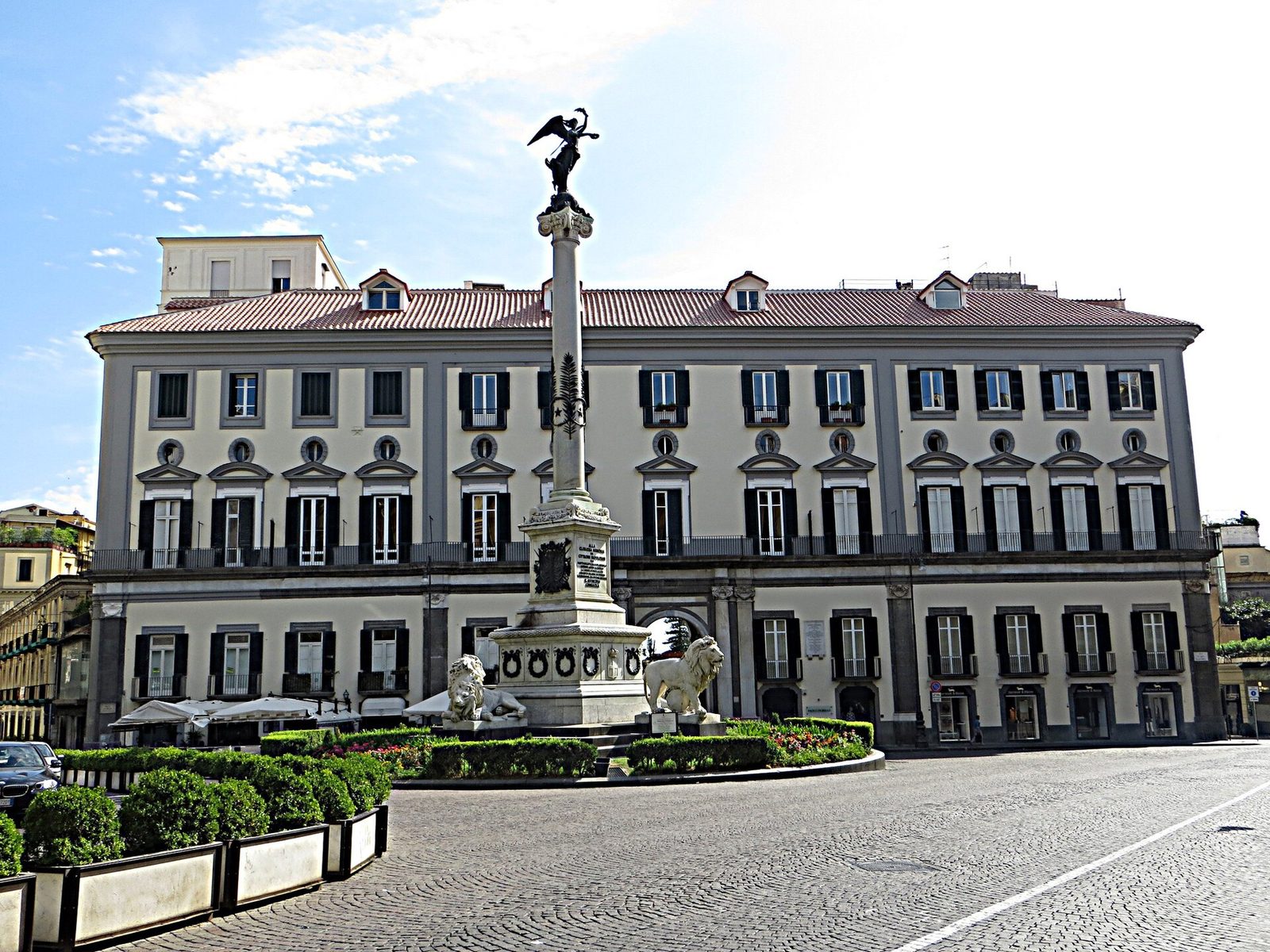
What’s here: shopping, the gardens of the Villa Comunale along the Riviera di Chiaia, the neoclassical Villa Pignatelli with its museum and park, some of the city’s best restaurants and aperitivo bars, and Via Chiaia itself, the shopping street that climbs to Piazza Trieste e Trento.
Character: polished, residential and well-heeled, with a pace that feels closer to Rome or Milan than to the old city. It’s where you’ll see Neapolitans at their most dressed-up.
Safety read: calm. The busier bar streets are noisy and crowded late on weekend nights, but not threatening.
Verdict: an afternoon of window-shopping and a gelato, then an evening drink. The Chiaia funicular, which links the neighborhood to the Vomero, closes for inspection from October 1, 2026, with a replacement bus in the meantime.
Vomero: the hill above the city
The Vomero is the big residential district on the hill above Chiaia and the Quartieri Spagnoli, mostly built in the late 19th and 20th centuries. It’s a grid of apartment blocks and shopping streets like Via Scarlatti and Via Luca Giordano, around Piazza Vanvitelli, with a very different pace from the city below: orderly, residential and middle-class. What brings visitors up here is at its edge, overlooking the whole of Naples.
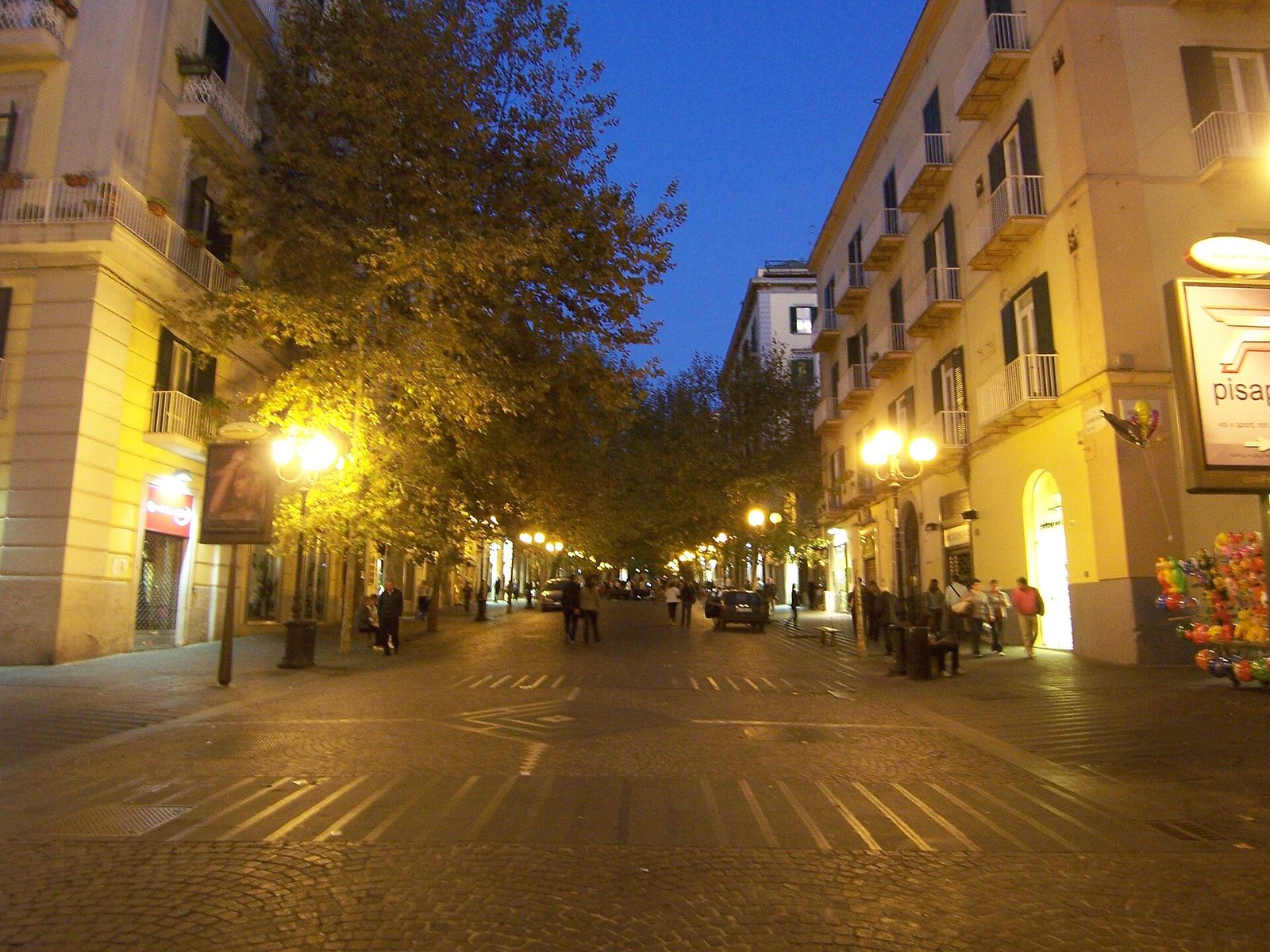
What’s here: Castel Sant’Elmo, the star-shaped fortress with the best panoramic view in Naples; the Certosa di San Martino, a former Carthusian monastery that houses one of the city’s finest museums and an extraordinary baroque church; the park and ceramics museum of the Villa Floridiana; and the steps of the Pedamentina, which zigzag down from the Certosa to the old city with the whole bay in front of you.
Character: residential and relaxed, with good everyday shopping, a lot of locals and relatively few tourists, apart from the stretch between the funicular stations and the castle.
Safety read: calm.
Verdict: go for the view from Sant’Elmo and the Certosa, and walk down the Pedamentina afterwards. With the Montesanto and Chiaia funiculars closed in autumn 2026, take the Funicolare Centrale from Via Toledo or Metro Line 1 to Vanvitelli. The Naples museums guide covers the Certosa and Castel Sant’Elmo.
Rione Sanità and Materdei: the revival
North of the old city, in a valley below the hill of Capodimonte, lies the Rione Sanità. The Greeks and Romans buried their dead here, outside the walls, and the early Christians dug catacombs into its hillsides. In the 17th and 18th centuries noble families built palaces here, with the city’s most theatrical staircases. Then, in the early 19th century, the French built the Ponte della Sanità, a bridge carrying the new road to Capodimonte straight over the valley. The traffic stopped passing through, and the Sanità slowly became a poor, isolated neighborhood with a hard reputation. The comic actor Totò, Naples’s great popular hero, was born here.
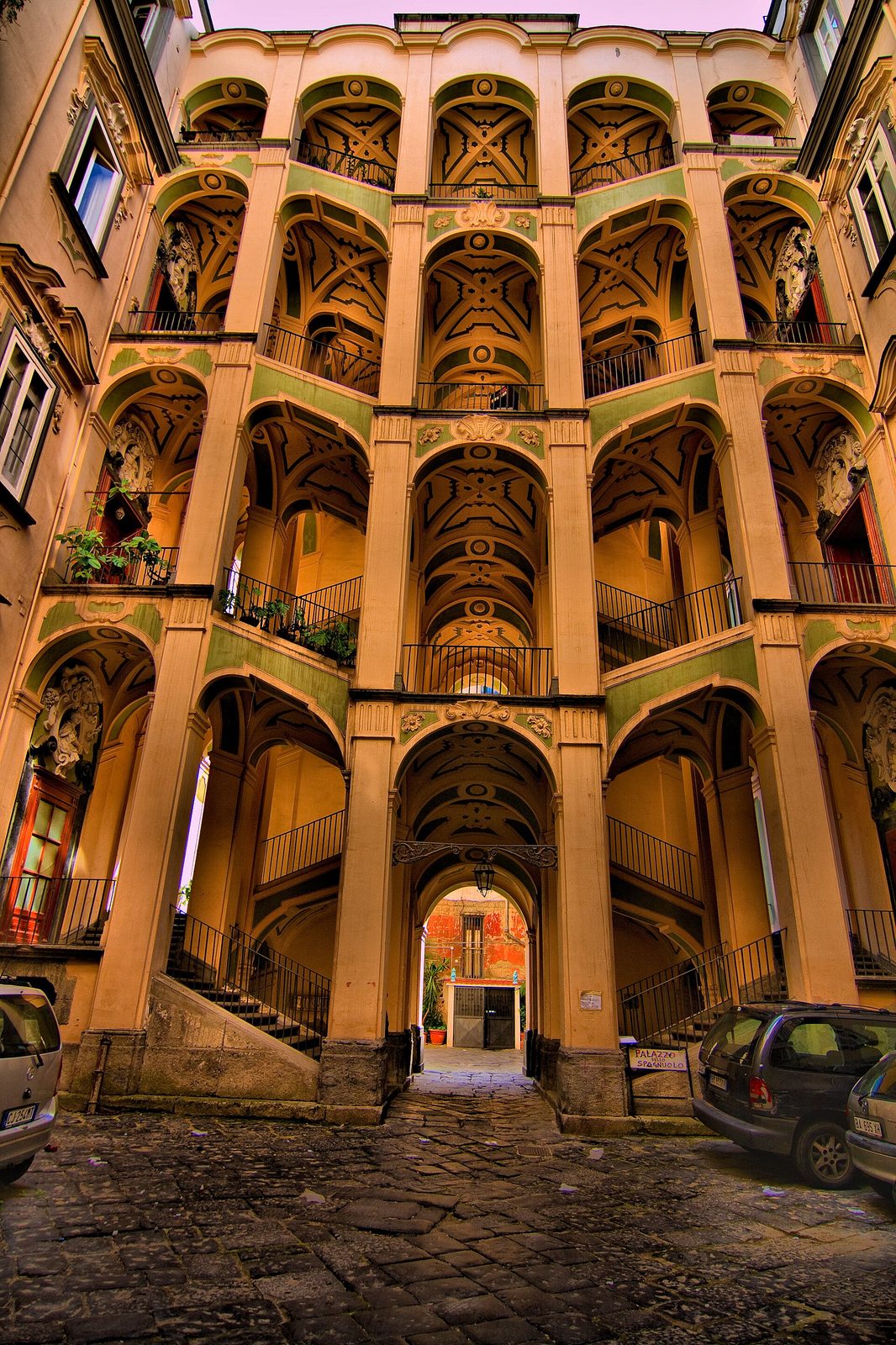
The revival of the last two decades is one of the best stories in the city. A cooperative of young people from the neighborhood reopened and now runs the catacombs, the churches were restored, and new B&Bs, pizzerias and cultural projects followed. It’s still a working neighborhood, poorer than most of the places on this page, with a lively street market and people living their lives on the street.
What’s here: the Catacombs of San Gennaro and San Gaudioso; the church of Santa Maria della Sanità; the baroque staircases of Palazzo dello Spagnolo and Palazzo Sanfelice; the Fontanelle cemetery at its edge, toward Materdei; and some famously good pizzerias. Materdei, on the slope above, is a similar lived-in neighborhood with its own metro stop on Line 1.
Character: warm, crowded, proud and very much itself. You’ll be looked at as a visitor, and often welcomed.
Safety read: this is where outdated guidebooks do the most damage. By day, with the ordinary care you’d take anywhere in a big city, the Sanità is fine to explore, and thousands of visitors do so every week on their way to the catacombs. At night, I’d stick to the main streets and go with a purpose, such as a pizzeria, rather than wandering.
Verdict: the most rewarding neighborhood most visitors skip. Give it a morning with the catacombs. The underground guide explains how to book them.
Capodimonte: the palace and the park
On the hilltop above the Sanità stands the Bourbon royal palace of Capodimonte, now one of Italy’s great picture galleries, surrounded by the Real Bosco, the former royal hunting park, with shady avenues and views over the city. It’s a green, quiet escape from the streets below. Art lovers should consider the museum essential, with its Caravaggio, Titian and the Farnese collection. The park is free, and it’s where local families come on weekends to walk and picnic.
Verdict: half a day, ideally combined with the catacombs on the way down.
Posillipo, Marechiaro and Mergellina: Naples by the sea
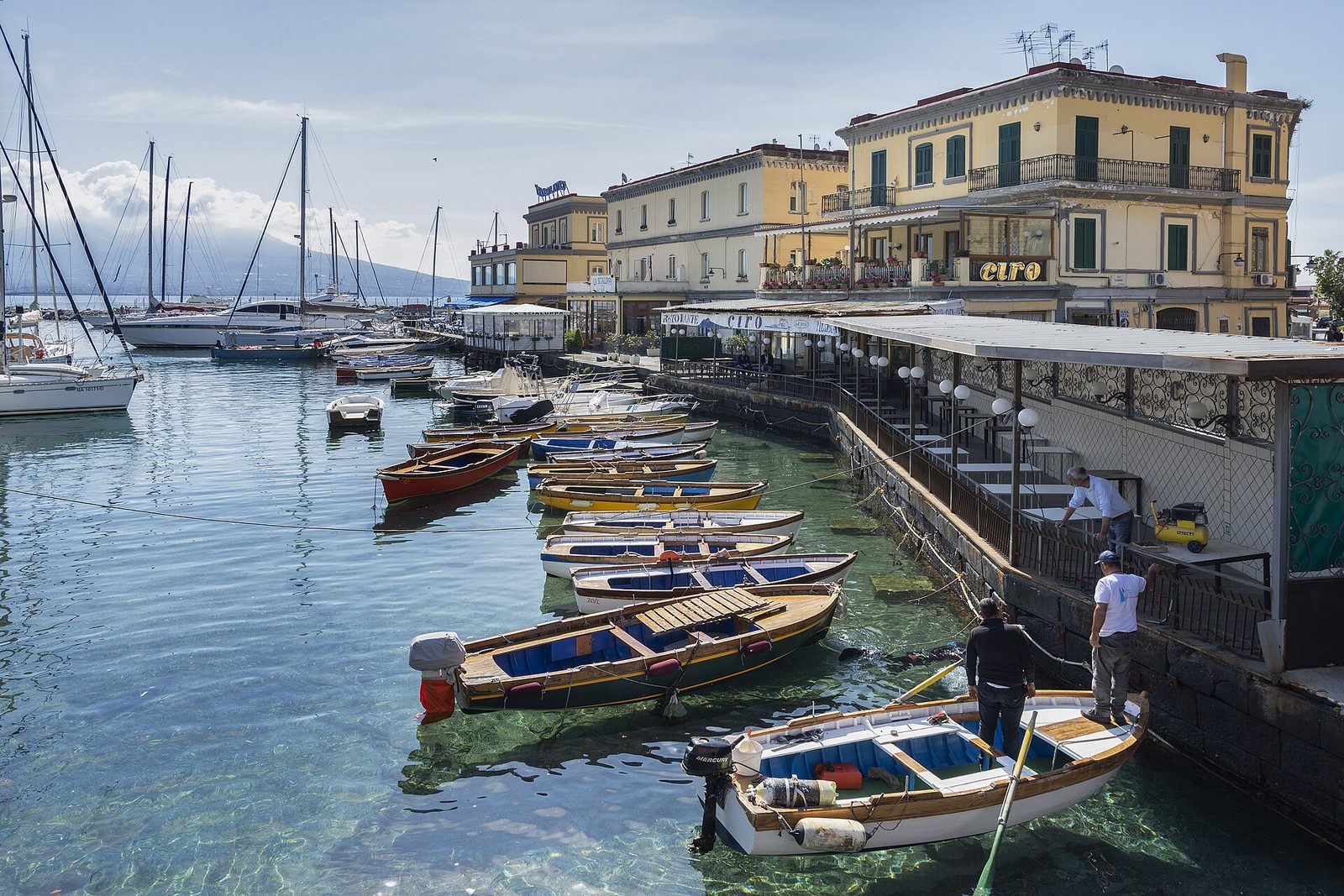
West of Chiaia, the seafront road curves past the fishing harbor of Mergellina, with its boats, its seafront kiosks and the little church of Santa Maria del Parto, where the Renaissance poet Jacopo Sannazaro is buried. Behind it, in a small park at Piedigrotta, is the tomb traditionally said to be Virgil’s, alongside the tomb of the poet Giacomo Leopardi. From Mergellina the road climbs onto Posillipo, the long green headland that separates the bay of Naples from the bay of Pozzuoli.
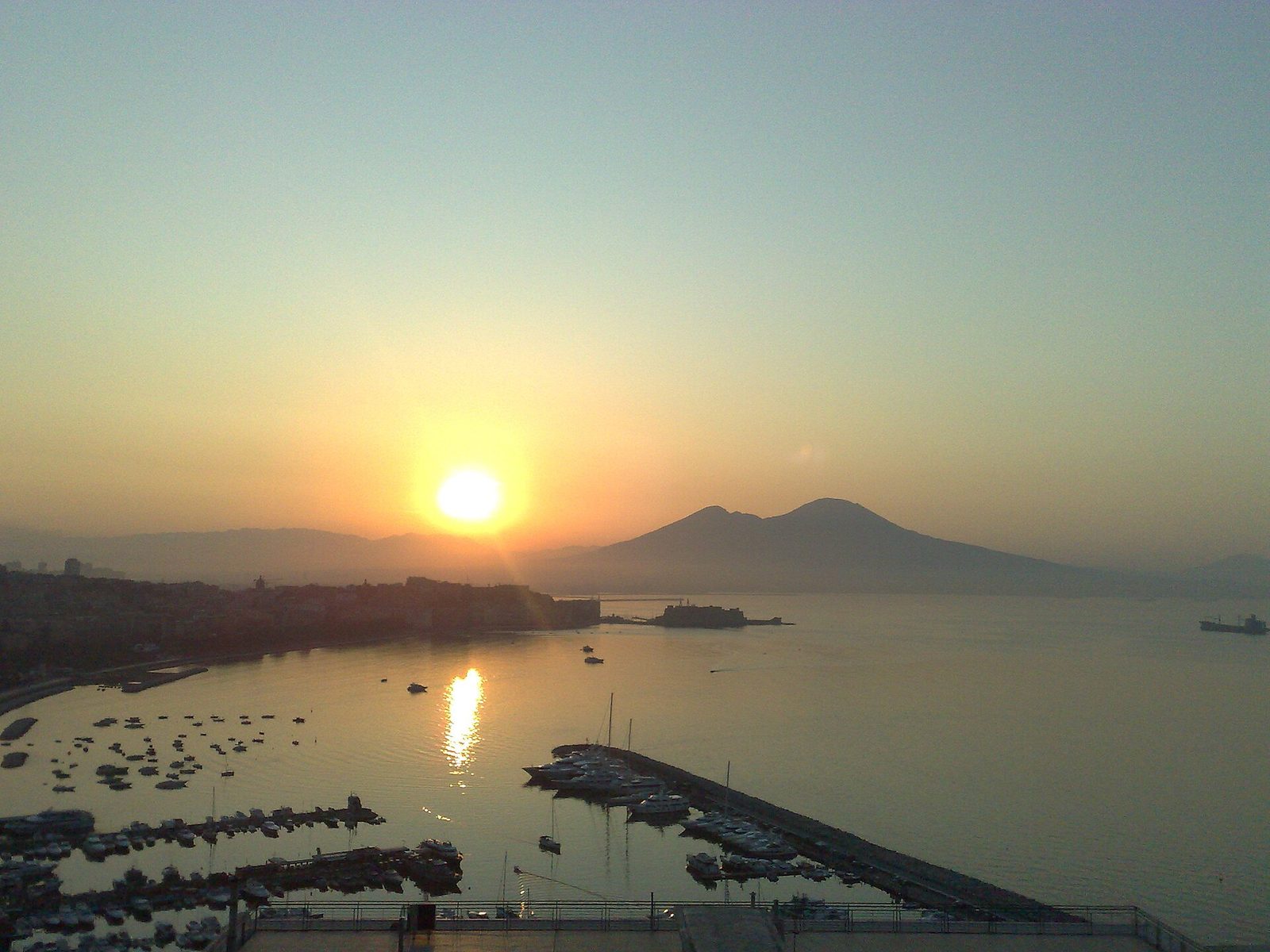
Posillipo has been where rich Neapolitans build their villas since Roman times, and it still is. The road along it, Via Posillipo, passes the ruined 17th-century Palazzo Donn’Anna, rising straight out of the sea, and a string of private villas and bathing clubs. Below the road, lanes and stairways drop to tiny coves. Marechiaro is a fishing village at the bottom of one of them, with restaurants on the rocks and a famous little window celebrated in a Neapolitan song. Nearby, the Gaiola underwater park protects two small islands and the remains of Roman villas under the water, and the Parco Virgiliano at the top of the hill has some of the widest views in the region, over Nisida, Ischia and the Campi Flegrei.
Character: leafy, residential and wealthy, with a seaside-resort feel in summer. Neapolitans come here to swim, to eat fish by the water and to watch the sunset.
Safety read: calm.
Verdict: Naples at its most beautiful. Spend half a day here, walking down to Marechiaro or the Gaiola, and stay for dinner by the sea. Access is easiest by bus along Via Posillipo or by the Mergellina funicular, and the coves are steep walks from the road.
Piazza Garibaldi and the station area
Most visitors arriving by train, and many arriving by bus from the airport, first meet Naples at Piazza Garibaldi, the huge square in front of Napoli Centrale. It has been rebuilt in recent years, with a steel-and-glass canopy over the metro entrance, but it remains a chaotic transport hub, and the streets around it, in the district known as the Vasto, are among the least appealing in the city.
What’s here: the central station, with the high-speed trains and the underground platforms for the Circumvesuviana to Pompeii and Sorrento; the airport bus stop; the Porta Nolana fish and produce market; the old city gate of Porta Capuana; and, just to the west, the edge of the Forcella neighborhood, home to one of the most famous pizzerias in the world.
Character: busy, scruffy and transient, full of travelers, traders, taxi touts and people waiting for buses.
Safety read: this is the one area where I’d genuinely advise extra alertness, especially at night. Keep bags zipped and in front of you, keep your phone in your pocket, ignore anyone offering unsolicited help with tickets or luggage, and use official taxis from the rank. By day it’s busy rather than dangerous. At night I’d move through it rather than linger.
Verdict: pass through. If you’re staying near the station for an early train, fine, but for a longer stay the old city is ten minutes’ walk away and far nicer. The Naples travel tips page has more on staying safe and avoiding the common scams around the station.
Further out: Fuorigrotta, Bagnoli and the east
Beyond the neighborhoods above, the rest of Naples is mostly residential and rarely seen by visitors, but a few areas have a reason to go.
Fuorigrotta, west of Posillipo through the tunnels, is home to the Stadio Diego Armando Maradona, where SSC Napoli play, and the Mostra d’Oltremare exhibition grounds. If you’re going to a match, this is where you’ll be.
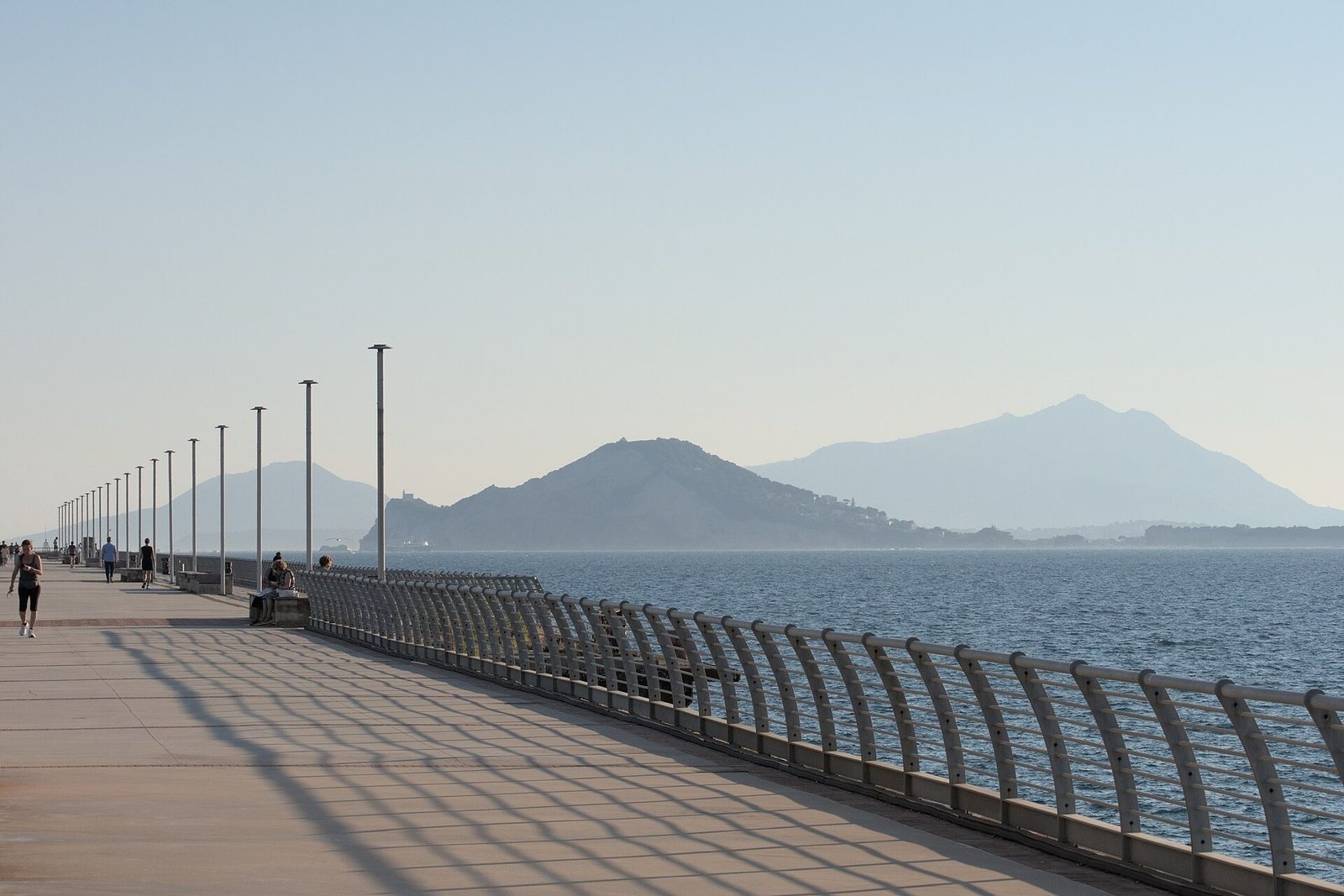
Bagnoli, on the coast beyond it, was the site of a vast steelworks that closed at the start of the 1990s, leaving a polluted industrial wasteland that the city has been trying to clean up for decades. It’s about to change fast. The former industrial waterfront has been chosen to host the team bases for the America’s Cup in 2027, and the long pier of the Pontile Nord, a former loading dock, is now a public promenade with views of Nisida and Ischia. Bagnoli sits inside the Campi Flegrei, the volcanic area where the ground has been rising and shaking in 2026, so keep an eye on local news and advice if you visit.
San Giovanni a Teduccio, on the eastern edge, is a former industrial district now home to a university campus and the Apple Developer Academy, and to some of the city’s large-scale street art. Scampia, in the north, is the district made famous by the TV series Gomorrah. Its notorious Vele housing blocks are being demolished and replaced. It’s a residential area with a long history of problems and a lot of community effort to change it, not a sightseeing destination.
Safety in Naples neighborhoods: the honest version
Naples’s reputation for danger is older and louder than the reality. The Sole 24 Ore newspaper’s 2025 index of reported crime, which compares Italy’s provinces per head of population, placed the province of Naples 13th, below Milan, Florence, Rome and several other big-city provinces. That doesn’t mean there’s nothing to watch for. It means the risks for a visitor are the ordinary big-city ones, and they’re concentrated in predictable places.
- Petty theft is the main risk. Pickpocketing in crowds, on buses and on the Circumvesuviana, and the occasional grab of a phone or bag, sometimes from a passing scooter. Keep your phone away from the curb, your bag on the wall side and zipped, and your wallet in a front pocket.
- The station area deserves extra care, especially at night.
- Empty lanes late at night, in any neighborhood, are best avoided. Stick to busy streets after dark.
- The Quartieri Spagnoli and the Sanità are not the no-go zones older guides describe. By day they’re full of visitors, and the ordinary care you’d take anywhere is enough.
- The seafront, Chiaia, the Vomero and Posillipo are among the calmest urban areas in southern Italy.
The travel tips page covers scams, taxis and the rest of the practical detail.
The neighborhoods by time of day
Naples changes character through the day, and so does each neighborhood. Plan around that and you’ll see every part of the city at its best.
Early morning. Go to the markets: the Pignasecca, or the fish stalls at Porta Nolana, when the day’s catch is laid out. Have your coffee standing at a bar in the old city, among people on their way to work. The seafront is also lovely early, when it’s full of runners and the light on Vesuvius is soft.
Late morning. This is the time for the Centro Storico’s churches and the underground sites, before the midday closures, or for the museums. It’s also the best time for the Sanità and the catacombs.
Early afternoon. Many churches shut from around lunchtime. Eat a long lunch, or head for something that stays open, like the Royal Palace, the Capodimonte museum or the Certosa di San Martino. In summer, this is also the time to be up on the Vomero or out at Posillipo, where there’s a breeze.
Late afternoon and sunset. Go up for the view from Castel Sant’Elmo, or walk the seafront from the Castel dell’Ovo toward Mergellina as the sun goes down behind Posillipo. This is when the whole city comes out for its evening walk, the passeggiata, along Via Toledo and the Lungomare.
Evening. Chiaia’s baretti and Piazza Bellini fill up for drinks from around aperitivo time. Dinner in Naples starts late, often after 20:30, and the pizzerias of Via dei Tribunali and the Sanità are at their busiest after that.
Late at night. Stick to the lively places: Chiaia, Piazza Bellini, the seafront in summer, and the main streets of the old city. The empty back lanes are best left until morning.
Which neighborhood suits which traveler?
- First-time visitors with two or three days: the Centro Storico, Toledo and Plebiscito, and a sunset walk on the Lungomare. Add the Vomero for the view if you can.
- Art and history lovers: the Centro Storico for the churches and the underground, then the Sanità and Capodimonte.
- Food lovers: Via dei Tribunali for pizza, the Quartieri Spagnoli and Pignasecca for street food, the Sanità for pizzerias locals queue for, and Chiaia for restaurants. The Naples food guide tells you what to order.
- Travelers who want calm: Chiaia, the seafront and the Vomero, with forays into the old city.
- Swimmers and sea lovers: Posillipo, Marechiaro and the Gaiola.
- Night owls: Chiaia’s baretti, the squares of the old city around Piazza Bellini, and the seafront on summer nights.
- Families: the seafront, the Villa Comunale and the Real Bosco di Capodimonte for space to run around, with shorter doses of the busy old city.
- Budget travelers: the Centro Storico, where B&Bs and pizza are cheapest. The guide to what Naples costs has daily budgets.
For how many days to give it all, the Naples itinerary page lays out the options, and the full list of things to do in Naples covers the sights neighborhood by neighborhood.
What to skip
- Judging Naples by Piazza Garibaldi. It’s a transport hub, not the city. Walk ten minutes west before deciding what you think.
- Looking at the Quartieri Spagnoli only from Via Toledo. Walk up into it.
- Skipping the Sanità because of an old guidebook. It’s one of the most rewarding parts of the city.
- Climbing to the Vomero on foot in summer heat. Take the Funicolare Centrale up and walk down the Pedamentina instead.
- Posillipo without a plan. The coves are steep and the buses slow, so decide where you’re going before you set off.
- Wandering empty lanes late at night, in any neighborhood.
- Scampia as a “Gomorrah tour.” It’s a residential neighborhood working hard to move on, not a film set.
Naples neighborhoods frequently asked questions
What are the main neighborhoods of Naples?
For visitors, the main neighborhoods are the Centro Storico (the historic center), the Quartieri Spagnoli, Toledo and Plebiscito, Santa Lucia and the seafront, Chiaia, the Vomero, the Rione Sanità, Capodimonte, and Posillipo with Mergellina. Officially, Naples is divided into ten municipalities and thirty quarters, but locals use the old neighborhood names.
Which area of Naples is best for tourists?
The Centro Storico is the best area to spend time in, with most of the churches, the underground sites and the pizzerias. Toledo and Plebiscito are the most convenient for transport and ferries. Chiaia and the seafront are the calmest and most elegant. For choosing a base, the where-to-stay guide compares them in detail.
Is the Quartieri Spagnoli safe?
By day, yes, with the ordinary care you’d take in any dense city neighborhood. It has changed enormously and is now one of the most visited parts of Naples, full of B&Bs, trattorie and visitors heading to the Maradona mural. Watch for scooters in the narrow lanes, and at night stick to the busier streets.
Is the Rione Sanità safe to visit?
Yes, by day. The Sanità is a working neighborhood with a lively street market, and thousands of visitors pass through each week to see the catacombs, the baroque palaces and the Fontanelle cemetery. Take ordinary big-city care with bags and phones. At night, go with a purpose, such as a pizzeria, and stay on the main streets.
What is the nicest part of Naples?
It depends on what you like. For beauty, Posillipo and the seafront from Santa Lucia to Mergellina. For elegance, Chiaia. For atmosphere and history, the Centro Storico. For views, the Vomero around Castel Sant’Elmo. Most visitors fall hardest for the old city, despite its noise and chaos.
How do you get from the center of Naples to the Vomero?
Take the Funicolare Centrale from Via Toledo, or Metro Line 1 to Vanvitelli. The Montesanto funicular has been closed for its twenty-year overhaul since May 2026, and the Chiaia funicular closes for inspection from October 1, 2026, with a replacement bus. Walking up is a steep climb, so save the Pedamentina steps for the way down.
Which areas of Naples should tourists avoid?
No central neighborhood needs avoiding by day. Take extra care around Piazza Garibaldi and the central station, especially at night, and avoid empty lanes late at night anywhere. The outer districts known from crime dramas are residential areas with nothing for visitors, rather than places of real danger to them.
Where is the historic center of Naples?
The historic center lies between the central station at Piazza Garibaldi in the east and Via Toledo in the west, and between the port and the National Archaeological Museum. Its heart is the grid of three long parallel streets, including Via dei Tribunali and Spaccanapoli, laid out by the Greeks. It’s a UNESCO World Heritage Site.
Three of the city’s castles anchor these neighborhoods: Castel Nuovo at the port end of Toledo, Castel dell’Ovo at the start of the seafront, and Castel Sant’Elmo on top of the Vomero. For what’s inside each, and the Palazzo Reale on Piazza del Plebiscito, see the guide to the castles of Naples.
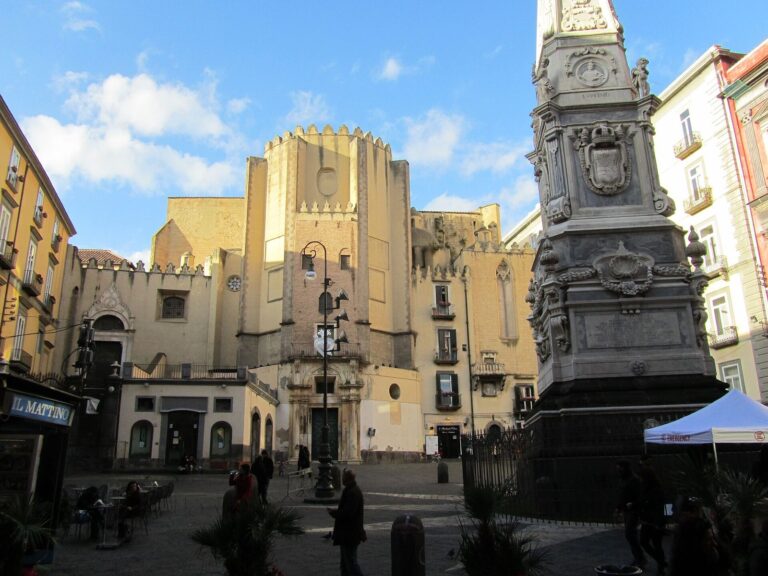
Each of these neighborhoods has its own night, too. Chiaia’s narrow lanes fill with the baretti crowd from aperitivo onward, the centro storico gathers around Piazza Bellini and San Domenico Maggiore after dinner, and the Vomero keeps a relaxed, local evening scene. The Naples nightlife guide goes through them one by one.
Photo credits
- Borgo Marinari: photo by Sordelli, Wikimedia Commons, CC BY-SA 3.0.
- Laundry day in the Quartieri Spagnoli: photo by Jeroen Bennink from Amsterdam, The Netherlands, Wikimedia Commons, CC BY 2.0.
- Piazza dei Martiri, Chiaia: photo by Mister No, Wikimedia Commons, CC BY 3.0.
- Via Alessandro Scarlatti, Vomero, by night: photo by Johnnyrotten, Wikimedia Commons, public domain.
- Palazzo dello Spagnolo: photo by alterdimaggio1957, Wikimedia Commons, CC BY-SA 2.0.
- Dawn over the bay from Posillipo: photo by TatsuoTabei, Wikimedia Commons, public domain.
- Pontile Nord, Bagnoli: photo by RBC, Wikimedia Commons, CC BY 4.0.
Sources: funicular closures from the City of Naples (Montesanto, May 2026) and local transport reporting (Chiaia, September 2026); Largo Maradona works from the City of Naples and local press, May to August 2026; America’s Cup venue and dates from americascup.com; crime index from Il Sole 24 Ore’s Indice della criminalità 2025. All checked September 2026.