On this page
Last updated October 3, 2026. Dates checked against the City of Naples tourism department’s festival calendar, reporting on the 2026 San Gennaro rites and the city’s 2025–26 New Year program. Many feasts fall on fixed dates; for the movable ones I give the 2026 dates and the usual pattern, and organizers confirm each year’s program only a few weeks ahead.
Naples festivals are mostly religious, local and free. In Naples, Italy the big three are the liquefaction of San Gennaro’s blood (three times a year), Christmas among the nativity workshops of San Gregorio Armeno, and Easter. Add the Maggio dei Monumenti in May, summer saints’ feasts with fireworks, Piedigrotta and a raucous New Year.
Naples doesn’t really do the big ticketed festival. What it does instead is the street feast: a saint carried through a neighborhood on the shoulders of men who’ve done it all their lives, a bell tower set “on fire” with fireworks, a cathedral full of people waving white handkerchiefs because a relic has turned liquid. Most of it is free, most of it is local, and a lot of it happens in places you’d never otherwise go. It’s one of the best reasons to time a trip.
The catch is that it’s easy to be misled. English-language lists of Naples festivals mix world-class occasions with neighborhood events that are lovely if you live there and baffling if you’ve crossed the city to find them, and they rarely mention that dates move, venues change and programs appear a few weeks before. So in this guide I start with a calendar, then go through the year season by season, with my honest verdict on what’s worth planning a trip around and what’s worth catching only if you happen to be in town. For the weather and crowds through the year, see the best time to visit Naples; for everything else, the things to do in Naples guide.
Naples festivals at a glance
| Event | When | Where | What happens | Plan a trip around it? |
|---|---|---|---|---|
| Sant’Antonio Abate | January 17 | Neighborhoods across the city | Bonfires and blessings of animals | Only if you’re here |
| Carnival | February or early March (movable) | The city and towns like Palma Campania | Children in costume, chiacchiere pastries, parades out of town | No |
| San Giuseppe | March 19 | Every pastry shop | Zeppole di San Giuseppe, Father’s Day | No, but eat the zeppole |
| Holy Week and Easter | Movable (Easter 2027 is March 28) | Procida, Sorrento, Naples churches | Hooded processions, the Misteri of Procida, pastiera | Yes, for Procida or Sorrento |
| San Gennaro in May | Saturday before the first Sunday of May | The Duomo to Santa Chiara | Procession of the saints’ busts; the blood liquefies | Yes |
| Maggio dei Monumenti | May (2026: May 2 to June 2) | Citywide | Free openings, guided routes, concerts | Yes |
| Festa dei Gigli, Nola | Sunday after June 22 | Nola, inland from Naples | Eight towers about 25 meters high carried and “danced” | Yes, a great day trip |
| Campania Teatro Festival | Usually mid-June to mid-July | Theaters and courtyards | Theater, dance and music | For culture lovers |
| Napoli Pizza Village | July (2026: July 7 to 12) | Lungomare Pertini, Pozzuoli, in 2026 | Dozens of pizzerias and free concerts | If you like crowds |
| Madonna del Carmine | July 15 and 16 | Piazza Mercato | The bell tower “fire” fireworks | Yes, if you’re in town |
| Sant’Anna, Ischia | July 26 | Ischia Ponte | Boat parade and the “burning” of the Aragonese castle | Yes, if you’re on Ischia |
| Ferragosto | August 15 | Everywhere | The city empties to the beaches; many places close | Plan around it |
| Piedigrotta | Early September | Mergellina | The old song festival, revived with concerts and stalls | Pleasant if you’re here |
| San Gennaro feast day | September 19 | The Duomo and Via Duomo | The liquefaction, Mass and a street fair | Yes |
| San Gennaro in December | December 16 | The Duomo | The quietest of the three rites | For the devoted |
| Christmas and the presepe season | November to January 6 | Via San Gregorio Armeno and every church | Nativity workshops, crib scenes, Christmas sweets | Yes |
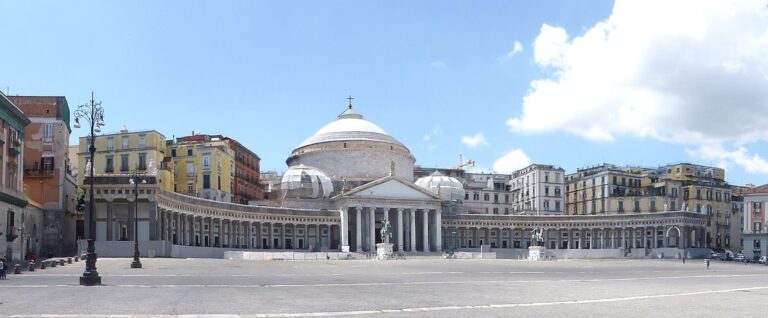
| New Year’s Eve | December 31 | Piazza del Plebiscito and the seafront | Free concert, official fireworks, a lot of unofficial ones | Yes, with earplugs |
How festivals work in Naples
A few things are worth knowing before you plan around any of them.
Most are religious, and most are free. The great Neapolitan feasts belong to saints and to the Virgin, and they’re organized by parishes, confraternities and neighborhood committees rather than by event companies. There’s rarely a ticket, a website with a timetable in English, or a guarantee that anything starts on time. That’s part of the charm, and part of the planning challenge.
Every neighborhood has its own. The City of Naples’ own calendar of patron saints’ feasts runs from late May to October and covers districts from San Giovanni a Teduccio and Ponticelli in the east to Bagnoli in the west and Secondigliano in the north. Some, like the Carmine in July, are citywide events. Others are a few streets of lights, a procession and a stage for a local singer. Lovely, but not worth a long trip across the city.
Dates are fixed, times aren’t. Saints’ days fall on the same date every year (San Gennaro on September 19, the Carmine on July 16), but the program inside the day changes, and big secular events like the Pizza Village have moved both dates and venues in recent years. Check the City of Naples’ tourism pages, the parish notices pasted on church doors, and local news sites in the week you travel.
Expect crowds, noise and fireworks. Neapolitans celebrate loudly. Fireworks are part of almost every feast, processions block streets, and pickpockets love a packed piazza. Keep your bag zipped and in front of you, and read the Naples travel tips before a big night out.
Dress for church. Many of the big moments happen inside churches. Covered shoulders and knees are expected, and during a Mass you’re a guest at a service, not a spectator at a show.
San Gennaro: the blood, three times a year
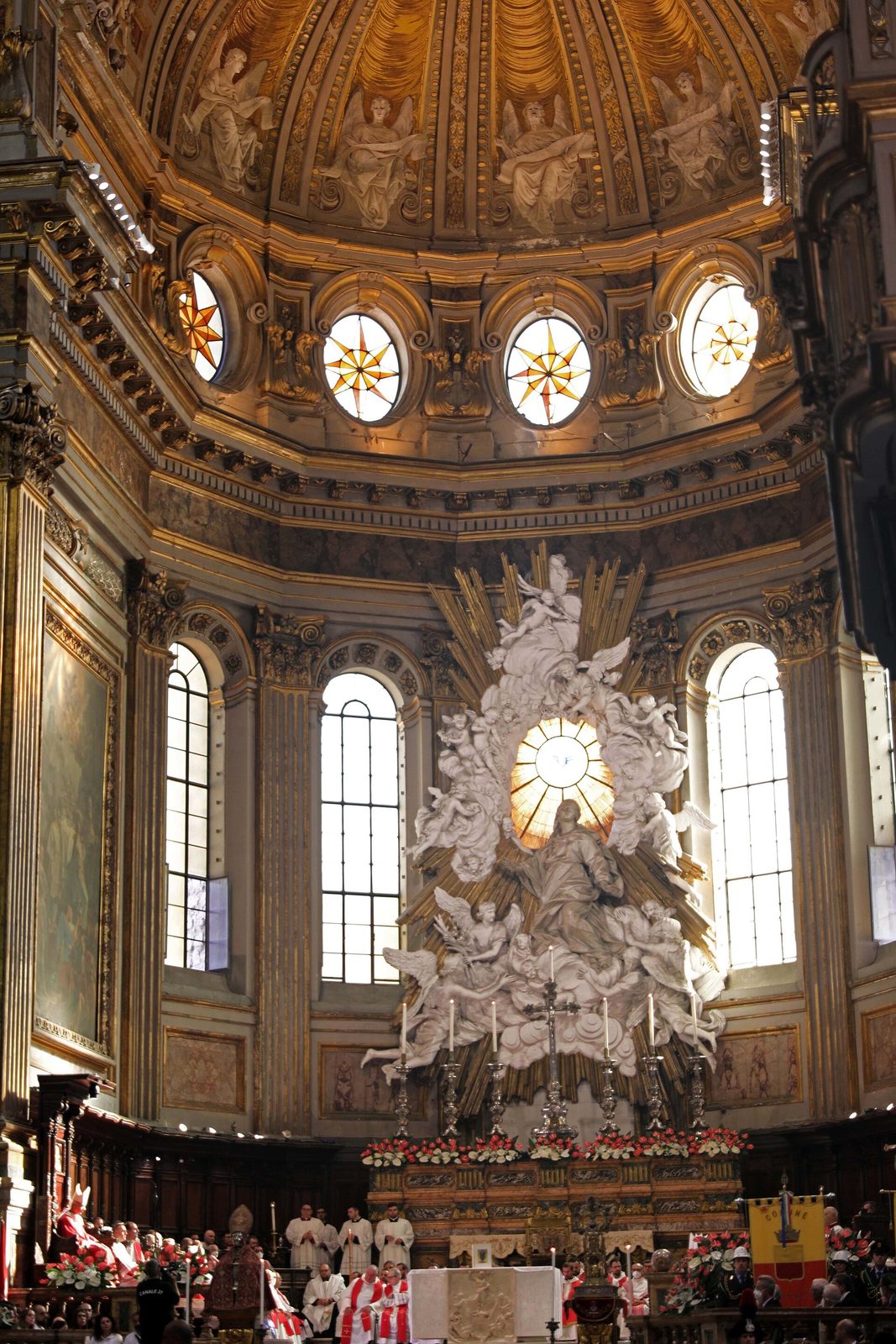
If you only experience one Neapolitan festival, make it this one. San Gennaro (Saint Januarius) was a bishop of Benevento martyred near Pozzuoli at the start of the 4th century, and he has been the patron saint of Naples for well over a thousand years. Kept in the Treasury Chapel of the Duomo are two glass ampoules said to hold his dried blood. Three times a year, in front of a packed cathedral, the dark mass inside is turned and examined until it’s declared liquid. When that happens, the city breathes out. When it doesn’t, Neapolitans worry, and they’ll remind you that one of the years it failed, 1980, was the year of the Irpinia earthquake.
Whatever you believe, it’s an extraordinary thing to witness: the archbishop, the mayor in his role as head of the lay body that has guarded the treasure for centuries, the clergy, the television cameras, and the crowd, including the elderly women known as the parenti di San Gennaro, the saint’s “relatives”, who pray aloud and have been known to scold him when he takes his time.
The three dates
- The Saturday before the first Sunday of May. The busts of the city’s co-patron saints are carried in procession from the Duomo to the church of Santa Chiara, where the liquefaction is awaited in the afternoon or evening. In 2026 it was announced at 5:04 p.m. on May 2. This is the most theatrical of the three, because you can follow the procession through the historic center.
- September 19, the feast day. The big one. The faithful start queuing at the Duomo in the early morning, and the result is announced from the altar. In 2026 the abbot of the Treasury Chapel declared the blood liquefied at 10:04 a.m., to applause and a sea of white handkerchiefs. Via Duomo and the streets around fill with stalls and lights for the festival that follows.
- December 16. The anniversary of the eruption of Vesuvius in 1631, when the saint was credited with saving the city. A quieter, more local rite, and the one most likely to be “slow”.
How to see it
Get there early. For September 19, that means being in the queue at the Duomo before the doors open, and accepting that if you arrive mid-morning you may only see the outcome on a screen outside or hear the cheer from the street. Security is tight and bags are checked. You don’t need a ticket for the rite itself, and I’d ignore anyone selling you a “miracle package”: it’s a Mass, and it’s free. After the announcement, the ampoule is shown to the faithful, who file forward to kiss the reliquary, so the cathedral stays crowded for hours.
If the crowds are too much, go back on another day. The Treasury Chapel is one of the great Baroque interiors in Naples, and next door the Museum of the Treasury of San Gennaro holds a collection of jewels, silver and reliquaries that rivals the crown jewels of most monarchies. Both are covered in the guide to Naples churches.
My verdict: September 19 is worth building a trip around if you’re curious about Naples beyond its pizza and ruins. Stay in the centro storico so you can walk to the Duomo before dawn.
Christmas in Naples: the presepe and San Gregorio Armeno
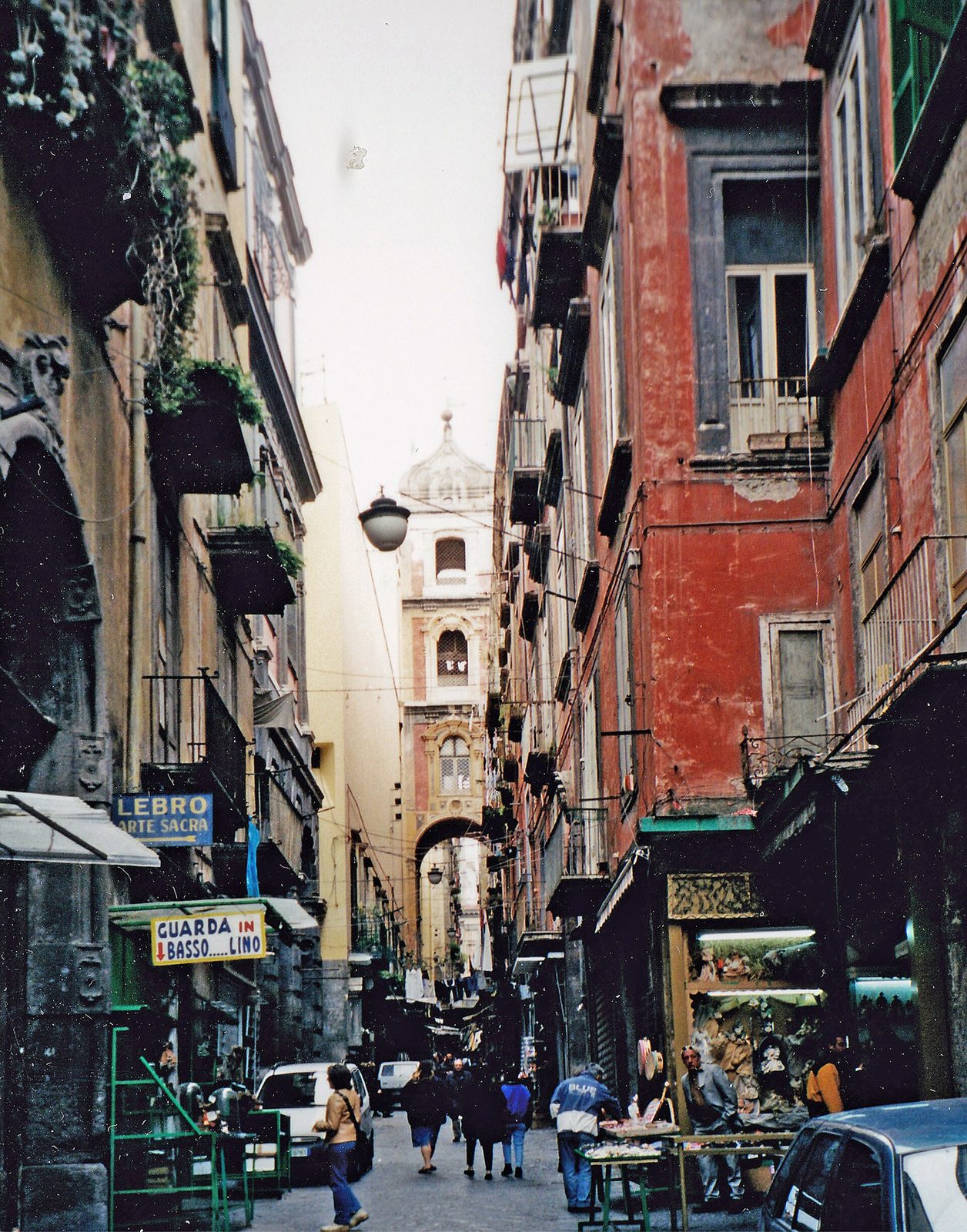
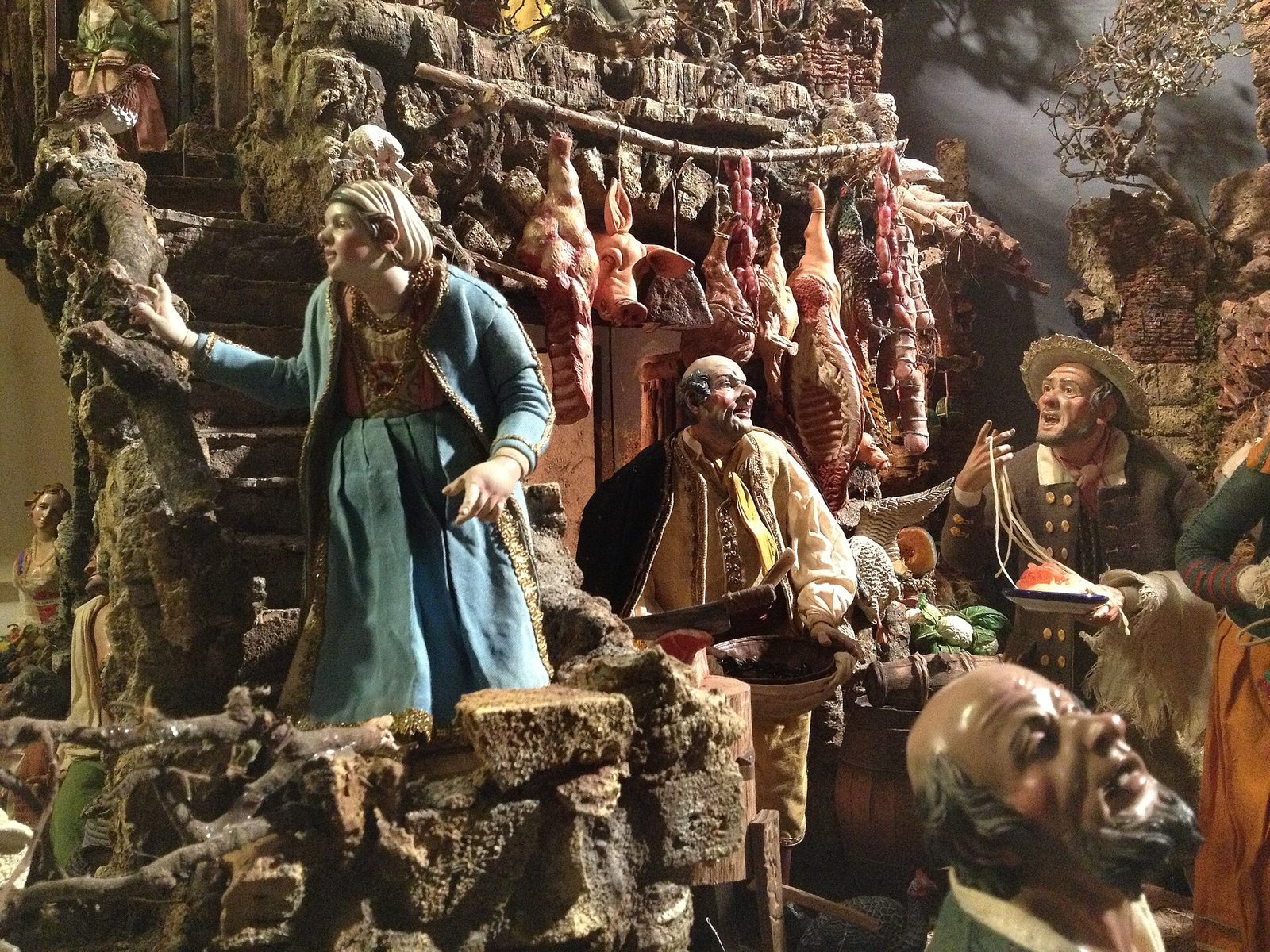
Christmas is the season Naples does better than anywhere else in Italy, and the reason is the presepe, the nativity scene. Saint Francis may have staged the first one in 1223, but it was in 18th-century Bourbon Naples that the crib became an art form: whole landscapes of grottoes, ruined temples and taverns, crowded with hundreds of terracotta and wooden figures, the pastori, dressed in silk and stitched lace, each one a character from the streets of the city. There’s the baker and the butcher, the fishmonger with his catch, the drinkers in the tavern, the musicians, and Benino, the shepherd boy asleep on the hillside, who in Neapolitan tradition is dreaming the whole scene.
Via San Gregorio Armeno, a narrow lane running off Spaccanapoli, is where those figures are still made and sold. The workshops are open all year, but from November onward the street turns into the city’s great Christmas market: stalls spilling out of every doorway, shepherds and angels and miniature ovens that really glow, and the satirical figures every year adds, with footballers, politicians and celebrities (Diego Maradona is a permanent fixture). It’s chaotic, kitsch in places, and completely Neapolitan.
When to go and how to cope with the crowds
The street gets busier as December goes on, and on weekend afternoons close to Christmas the crowd can come to a standstill. Go early on a weekday morning, keep your bag in front of you, and walk the street in both directions, because the stalls you notice going down are not the ones you notice coming back up. If you want a presepe to take home, the best workshops will pack and ship.
The great nativity scenes to see
For the art form at its peak, see the Presepe Cuciniello at the Certosa and Museum of San Martino on the Vomero hill, a vast 18th-century crib scene with hundreds of figures, arranged in the 19th century and displayed behind glass. Churches all over the city set out their own cribs from December 8 onward, and many keep them up until early February. The Naples museums guide covers San Martino.
Christmas customs and food
The season opens on December 8, the feast of the Immaculate Conception, when families put up their own presepe and tree. Christmas Eve is the big night, with a meatless feast of fish and seafood that traditionally includes capitone (fried eel), salt cod and the insalata di rinforzo, a cauliflower salad with pickles and olives. The sweets are their own world: struffoli, little fried balls of dough piled up with honey and colored sprinkles, hard spiced roccocò, chocolate-glazed mostaccioli and the honey-and-almond susamielli. Christmas Day is for lunch with the family, December 26 for visiting relatives, and the season closes on January 6 with the Epiphany and the Befana, the old woman who brings children sweets or coal. For more on what to eat, see the Naples food guide.
My verdict: Naples in December is my favorite time to be in the city. Go in the first half of the month if you can, before the peak crowds and prices of the holiday week, and book your hotel early.
New Year’s Eve in Naples
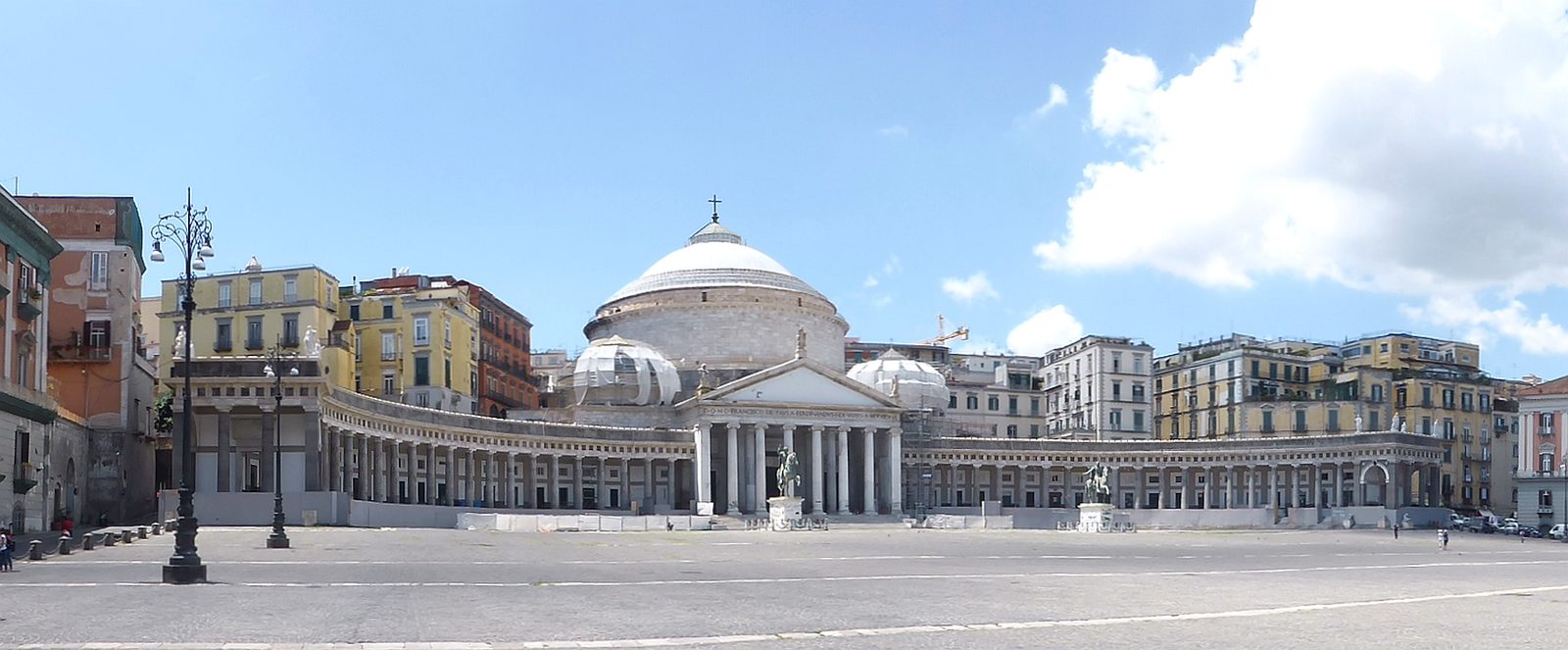
New Year’s Eve in Naples is famous, and a little notorious. The official part is a free concert in Piazza del Plebiscito: for the 2025–26 celebrations the city lined up four days of free events from December 29 to January 1, with Elodie and Serena Brancale headlining in the piazza on the 31st, DJ sets at the Rotonda Diaz and Piazza Municipio, and an official fireworks display over the water from the Castel dell’Ovo. The program for 2026–27 will be announced in December.
The unofficial part is everyone else’s fireworks. At midnight, and for a good while afterward, the whole city lets off rockets and firecrackers from balconies, rooftops and street corners, including the illegal, very loud homemade kind known as botti. It’s spectacular from a terrace and genuinely dangerous at street level, and every January the news counts the injuries. The old custom of throwing broken crockery and old furniture out of the window to see out the year is now mostly a story, but don’t walk under balconies in the narrow streets after midnight all the same.
Dinner is a long affair, with lentils for money in the coming year and plenty of fish. Most restaurants run a set New Year’s menu, and they book up weeks ahead.
My verdict: go to the concert or, better, watch from a terrace or the seafront, and keep away from the alleys of the Quartieri Spagnoli and the centro storico around midnight. If you’re traveling with young children or a dog, find somewhere quiet. For where to base yourself, see where to stay in Naples; seafront hotels in Chiaia and Santa Lucia have the best views of the official fireworks.
Easter and Holy Week
Easter moves every year (in 2027 it falls on March 28), and Holy Week is one of the most intense periods in the region’s calendar. In Naples itself, the custom on Holy Thursday is to visit the “sepulchers”, the decorated altars of repose, in an odd number of churches, and the evening walk from church to church through the center is as much a social occasion as a devotional one. Easter Sunday is for Mass and a vast lunch, and Easter Monday, Pasquetta, is the day everyone heads out of town for a picnic or a long lunch in the country.
The Misteri of Procida
Procida’s Good Friday procession is the most remarkable Holy Week event around the bay. Early in the morning, the Confraternity of the Turchini, in white robes and blue capes, leads a procession down from the old citadel of Terra Murata carrying the Misteri: tableaux of biblical scenes built by islanders, often by groups of young people who have worked on them in garages and basements for weeks. Some are traditional and some are startlingly modern, and the whole island turns out. The Procida guide covers how to get there and where to stay; boats on Good Friday are busy, so go the day before if you can.
The hooded processions of Sorrento
In Sorrento and the towns of its peninsula, confraternities process through the night in hoods and robes, carrying statues and lanterns to the sound of brass bands and choirs. The white procession leaves in the small hours of Good Friday, and the black procession, mourning the dead Christ, winds through the town on Good Friday evening. It’s solemn, beautiful and a little eerie, and it fills the town’s hotels. The Sorrento guide has the details on the town.
The fujenti of the Madonna dell’Arco
On Easter Monday, at the sanctuary of the Madonna dell’Arco at Sant’Anastasia, below Vesuvius, the pilgrimage of the fujenti takes place: devotees dressed in white with colored sashes, many of them barefoot, who run to the sanctuary carrying banners and votive offerings, sometimes collapsing in emotion at the altar. It’s one of the most intense displays of popular religion in southern Italy, and it isn’t a tourist event. If you go, go respectfully, as an observer.
Easter food
Easter means pastiera, the ricotta and cooked-wheat tart scented with orange blossom, which every family claims to make better than anyone else. The savory side is the casatiello, a rich bread ring baked with salami, cheese and whole eggs in their shells. Pastry shops sell pastiera all year, but at Easter it’s everywhere.
My verdict: if you’re in the region at Easter, spend Good Friday on Procida or in Sorrento. Book well ahead: hotels on the islands and the peninsula fill up, and Naples itself gets busy with Italian visitors.
Winter feasts: bonfires, candles and Carnival
Between the Epiphany and Easter, the calendar is quieter, but a few occasions are worth knowing about.
Sant’Antonio Abate, January 17. The feast of Saint Anthony the Abbot, protector of animals and of fire, was traditionally marked with bonfires in the neighborhoods, the cippo di Sant’Antonio, fed with old furniture and leftover Christmas trees. The city now restricts them for safety, but you’ll still see blessings of animals at churches and the odd neighborhood fire.
Candlemas at Montevergine, February 2. At the mountain sanctuary of Montevergine, above Avellino, Candlemas is the occasion of a pilgrimage with a long association with Naples’ femminielli, the city’s traditional community of feminine men and trans women, with singing and tambourines. It has become a celebration of inclusion as well as devotion, and it’s well outside the usual tourist track.
Sant’Antonino, Sorrento, February 14. Sorrento’s patron saint gets a procession, fireworks and a fair through the town. A good reason to visit the peninsula in the low season.
Carnival. Naples’ own Carnival is mostly for children, who parade in costume through the shopping streets in the days before Lent, and for pastry shops, which pile up chiacchiere, crisp fried strips of dough dusted with sugar, served with sanguinaccio, a thick chocolate cream. For floats and masked groups, go to Palma Campania, inland toward Nola, which has one of the best-known Carnivals in the region.
San Giuseppe, March 19. Saint Joseph’s day is Father’s Day in Italy, and in Naples it means one thing: zeppole di San Giuseppe, rings of choux pastry piped with custard and topped with a black cherry in syrup. Every pastry shop makes them for a few weeks around the date.
My verdict: none of these is worth a special trip on its own, but the zeppole and chiacchiere are a fine reason to step into a pastry shop if you’re here in late winter.
Spring: the Maggio dei Monumenti and a cathedral procession
Spring is the season when the city opens itself up. The Maggio dei Monumenti, the May of Monuments, is the City of Naples’ month-long program of free openings, guided routes, concerts and exhibitions. The 2026 edition ran from May 2 to June 2 under the theme “the colors of Naples”, with more than 200 free events and over 70 itineraries, ending with a Stefano Bollani concert at the Rotonda Diaz. Normally closed churches, cloisters and palaces open their doors, and many of the guided walks are free with booking. The program usually appears in late April, and it’s mostly in Italian, though a lot of the openings need no language at all.
The month also brings the first of the three San Gennaro rites, on the Saturday before the first Sunday of May, when the busts of the saints are carried through the historic center to Santa Chiara. In Capri, May 14 is the feast of San Costanzo, the island’s patron saint, with a procession down to Marina Grande. And on May 8, and again on the first Sunday of October, crowds of pilgrims fill the sanctuary of the Madonna of Pompeii for the recitation of the Supplica, a great collective prayer; if you’re visiting the ruins those days, the modern town will be packed. The Pompeii from Naples guide covers the trip.
My verdict: May is a terrific month for a first trip to Naples, and the Maggio dei Monumenti is a bonus rather than the reason to come. Check the program when it’s published and book any guided routes that interest you, because the popular ones fill fast.
Summer: saints, fire and pizza
From June to August the calendar is at its fullest, with neighborhood feasts almost every week, two of the region’s great traditional festivals, and an evening program of concerts and theater across the bay.
The Festa dei Gigli in Nola
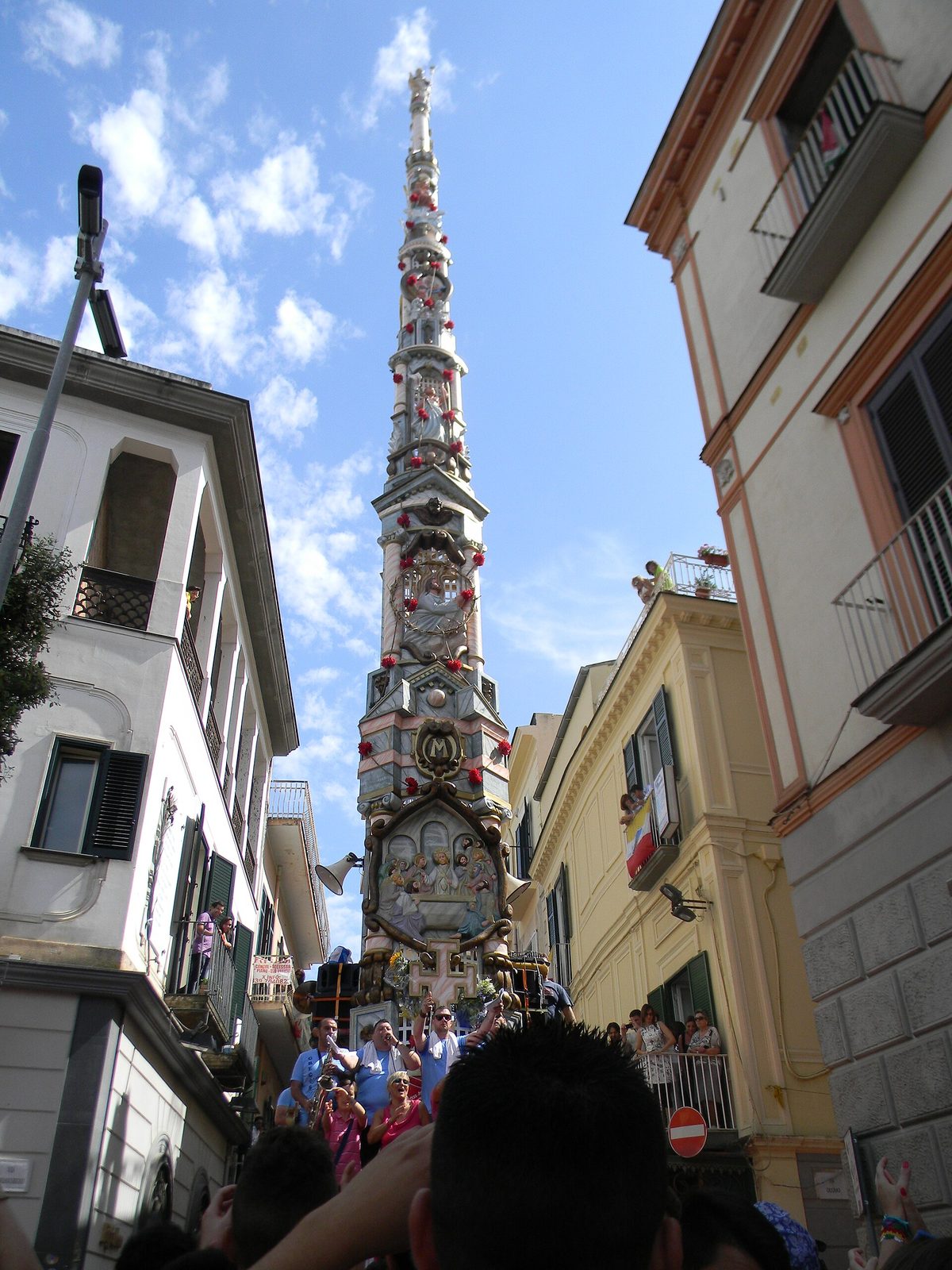
On the Sunday after June 22, the town of Nola, inland from Naples, honors its patron Saint Paulinus with one of the most spectacular festivals in Italy. Eight gigli, wooden towers about 25 meters high covered in papier-mâché decoration, each built by one of the town’s traditional guilds (the gardener, the butcher, the baker, the cobbler, the blacksmith and others), plus a great boat, are lifted onto the shoulders of teams of well over a hundred men and carried through the streets. They don’t just carry them: to the music of the band playing on the tower itself, they make the whole structure dance, turn tight corners and rock in time. It’s recognized by UNESCO as part of the Mediterranean’s tradition of shoulder-borne processional structures.
Nola is reached by the Circumvesuviana or by bus from Naples, and on the day the town fills with tens of thousands of people. Find a spot early on the route around Piazza Duomo, wear comfortable shoes, drink plenty of water, and stay for the evening, when the towers dance under the lights. The trains and the getting around Naples guide will get you there and back.
My verdict: the best traditional festival near Naples, and worth a trip in its own right.
The Madonna del Carmine and the burning bell tower
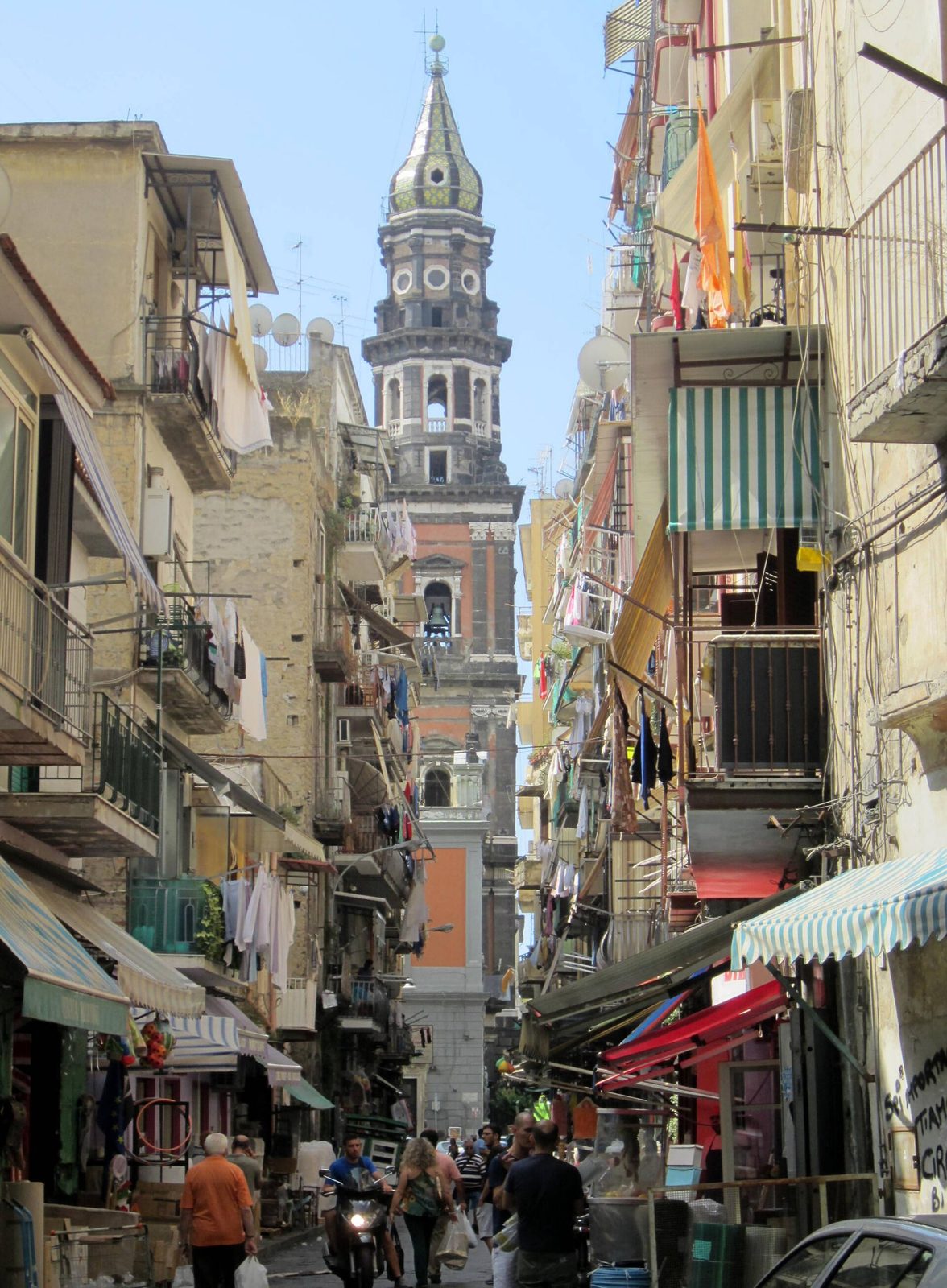
Of all the neighborhood feasts in Naples, the Madonna del Carmine is the one the whole city knows. On July 15 and 16 the area around Piazza Mercato and the basilica of Santa Maria del Carmine fills with lights, stalls and processions, and the highlight is the incendio del campanile, the “burning” of the bell tower: a fireworks display that makes the tallest bell tower in Naples look as though it’s going up in flames. The basilica’s medieval icon, the Madonna Bruna, is one of the most venerated images in the city.
The other neighborhood feasts on the city’s official calendar are smaller but follow the same pattern of Mass, procession, lights and fireworks: Saint Anthony of Padua on June 13 at San Lorenzo Maggiore, with the blessing of bread; Saint Vincent Ferrer, known in the Sanità as ‘o Munacone, on the first Tuesday of July; Saint Anne on July 26; and in early August Santa Maria della Neve in Ponticelli, with its own votive cart and bell tower fire.
Theater, music and pizza
The Campania Teatro Festival, the region’s international theater festival, usually runs from mid-June to mid-July, with well over a hundred performances of theater, dance and music, many of them in palace courtyards and open-air venues. Some shows are in English or need no language, and tickets are generally reasonable.
Along the Amalfi Coast, the Ravello Festival stages concerts through the summer on a platform jutting out over the sea in the gardens of Villa Rufolo, where Richard Wagner found inspiration in 1880. A concert there at sunset is about as good as an evening on the coast gets; see the Amalfi Coast from Naples guide for how to get there and back.
The Napoli Pizza Village is the city’s best-known food festival, with dozens of pizzerias serving from stands, plus free concerts in the evenings. It has moved around: the 2026 edition ran from July 7 to 12 on the Lungomare Pertini in Pozzuoli rather than in Naples, with free entry. It’s loud, crowded and fun, but if your goal is the best pizza, you’ll do better at the pizzerias themselves. My guide to the best pizza in Naples tells you where.
Festivals around the bay
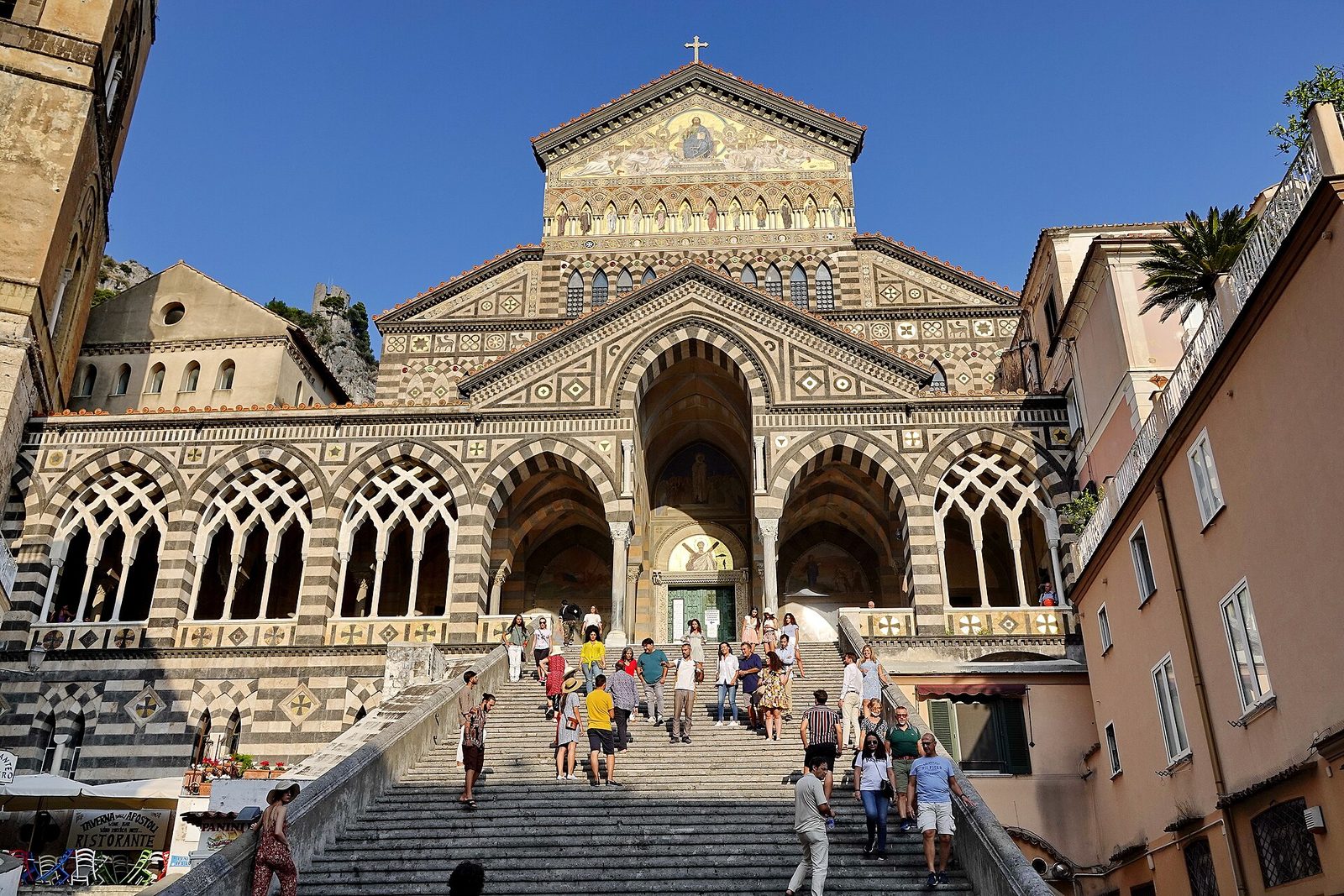
- Sant’Andrea, Amalfi, June 27: the town gives thanks for the saint’s protection against a pirate fleet in the 16th century, and the climax comes when the bearers carry his silver statue at a run up the cathedral’s long stairway. There’s a second feast on November 30.
- Sant’Anna, Ischia, July 26: a parade of decorated boats in the bay below the Castello Aragonese at Ischia Ponte, ending with a fireworks display that sets the castle “on fire”. The Ischia guide covers where to stay.
- The Assumption in Positano, August 15: the town reenacts a Saracen raid on the beach and celebrates the Byzantine icon of the Virgin at the heart of its founding legend.
Ferragosto
August 15, Ferragosto, is the peak of the Italian summer holiday. Neapolitans head for the beaches and the islands, the ferries are full, and a lot of family-run restaurants, shops and bars in the city close for a week or two around it. Big sights stay open and the center feels oddly empty. It isn’t a festival you go to so much as one you plan around: book boats and beach places ahead, and check that the restaurant you’re walking to is open.
The America’s Cup, July 2027
The biggest event on the Naples horizon isn’t a saint’s day. The 38th America’s Cup will be decided in the Bay of Naples, with the Match scheduled to begin on July 10, 2027 and run, if it goes the full distance, until July 19. The racing will take place close to the city’s seafront, with the teams based on the old industrial waterfront at Bagnoli, and the preliminary regatta in September 2026 already filled the Rotonda Diaz with crowds. If you’re planning a trip for July 2027, book accommodation as soon as you can; the whole city will be busy.
My verdict: summer is the season of the most feasts, but also of heat, crowds and high prices. If one event fits your dates, the Gigli of Nola or the Carmine’s burning bell tower is the one to catch.
Autumn: Piedigrotta, San Gennaro and the start of the crib season
Piedigrotta, early September. For centuries the feast of the Madonna of Piedigrotta, at the church by the tunnel to Fuorigrotta at Mergellina, was the most popular festival in Naples, with parades of allegorical floats and a song contest that launched many of the classics of Neapolitan song, including “Funiculì, Funiculà” in 1880. It faded in the 20th century and has been revived in recent years with concerts, processions and stalls along the Mergellina waterfront. A pleasant evening if you’re in town.
San Gennaro, September 19. The great feast, covered above, with its street festival around the Duomo. Late September also brings the feast of the Madonna della Mercede in the Quartieri Spagnoli, one of the liveliest neighborhood celebrations on the city’s calendar.
The Supplica at Pompeii, first Sunday of October. The autumn date of the great prayer at the sanctuary of the Madonna of Pompeii, with crowds of pilgrims in the modern town.
All Saints and All Souls, November 1 and 2. Families visit the cemeteries with flowers, and pastry shops sell torrone dei morti, a soft chocolate nougat made for the season. Naples has a deep, very old relationship with its dead, and in these days the city’s cult of the souls in purgatory, with its skulls and candles, is at its most visible.
The run-up to Christmas. From late October, Via San Gregorio Armeno fills with new figures for the season, and in recent years a chocolate fair has taken over Piazza Municipio for a few days in late autumn. By the second half of November the Christmas lights are going up.
Opera and football. Two other things fill the Naples calendar from autumn to spring. The Teatro di San Carlo, opened in 1737 and the oldest working opera house in Europe, runs its opera and ballet season through the cooler months. And from late summer to May, SSC Napoli plays at the Stadio Diego Armando Maradona in Fuorigrotta. After league titles in 2023 and 2025, a home match is a citywide event, and on the night of a big win the whole city celebrates as if it were a saint’s day.
Planning a trip around a festival
- Book early for the big dates. Christmas and New Year, Easter, the September San Gennaro and, above all, the America’s Cup in July 2027 push hotel prices up and availability down. The neighborhood feasts don’t.
- Stay central. Most of the action is in the centro storico, around the Duomo and Via San Gregorio Armeno, and along the seafront. A base you can walk from makes early starts and late nights easy.
- Check the program the week you go. Use the City of Naples’ tourism and events pages, the notices on church doors and local news sites. Programs for the Maggio dei Monumenti, the summer theater festival and New Year’s Eve appear only a few weeks ahead.
- Expect closures. Christmas Day, Easter Sunday, Easter Monday and Ferragosto close many shops and restaurants, and museum hours change on holidays.
- Mind your belongings in crowds. Packed piazzas and processions are where pickpockets work.
- Bring cash. Stalls at street festivals often don’t take cards.
What to skip
- Crossing the city for a small neighborhood feast. Many of the summer saints’ days on festival lists are a few streets of lights and a procession. Enjoy one if you stumble on it, but don’t spend an evening getting to Ponticelli for one.
- The alleys at midnight on New Year’s Eve. The fireworks are thrilling from a terrace and dangerous in a narrow street.
- San Gregorio Armeno on a December weekend afternoon. You’ll shuffle along in a crowd and see nothing. Go early on a weekday.
- Paid “San Gennaro miracle” packages. The rite is a free Mass. Get up early instead.
- The Pizza Village as a pizza pilgrimage. It’s a party, not the best pizza in Naples. Go for the atmosphere and eat seriously elsewhere.
- Restaurant hunting during Ferragosto week. Many of the best family-run places close. Book or check ahead.
Naples festivals: frequently asked questions
What is the biggest festival in Naples?
The feast of San Gennaro on September 19, when the city waits for the saint’s blood to liquefy in the Duomo, is the most important religious festival. For sheer scale and atmosphere, though, the Christmas season around the nativity workshops of Via San Gregorio Armeno and the New Year’s Eve celebrations are the biggest occasions of the year.
When is the San Gennaro festival in Naples?
The liquefaction rite takes place three times a year: on the Saturday before the first Sunday of May, with a procession to Santa Chiara; on September 19, the feast day, in the Duomo; and on December 16, the anniversary of the 1631 eruption of Vesuvius. The September date is the main festival.
What happens if San Gennaro’s blood doesn’t liquefy?
Nothing official, but many Neapolitans take it as a bad omen. People still point out that in 1980, one of the years the blood stayed solid, the Irpinia earthquake struck southern Italy. Sometimes the blood liquefies after a delay of hours, or is already liquid when the ampoule is brought out.
When is the best time to see the nativity scenes in Naples?
The workshops of Via San Gregorio Armeno are open all year, but the Christmas season, from November to January 6, is when the street is at its fullest. Go on a weekday morning in early December for the best balance of atmosphere and space. Churches display their cribs from December 8.
What is New Year’s Eve like in Naples?
Loud. The city usually stages a free concert in Piazza del Plebiscito and an official fireworks display over the bay, and at midnight the whole city sets off fireworks of its own, many of them illegal. Watch from a terrace or the seafront, and avoid the narrow streets of the old center after midnight.
What is the Maggio dei Monumenti?
It’s the City of Naples’ annual program of free cultural events, normally running through May: openings of churches, palaces and cloisters that are usually closed, guided walks, concerts and exhibitions. The 2026 edition ran from May 2 to June 2 with more than 200 events.
Are there summer festivals in Naples, Italy?
Yes. Summer brings the neighborhood saints’ feasts, above all the Madonna del Carmine on July 15 and 16 with its fireworks, the Campania Teatro Festival from mid-June to mid-July, and the Napoli Pizza Village in July. Nearby, the Festa dei Gigli in Nola in late June and the Ravello Festival are both outstanding.
Is Naples busy at Easter?
Yes, especially with Italian visitors, and the islands and Sorrento fill up for their Holy Week processions. Book accommodation early, expect many restaurants to be busy over Easter Sunday lunch, and plan for closures on Easter Monday.
What festivals are worth a day trip from Naples?
The Festa dei Gigli in Nola, on the Sunday after June 22, is the standout. Procida’s Good Friday procession of the Misteri, Sorrento’s Holy Week processions, Saint Andrew’s feast in Amalfi on June 27, and Sant’Anna on Ischia on July 26 are all worth the trip if your dates fit.
Photo credits
- Neapolitan nativity figures (featured image): photo by Antonio Fucito, Wikimedia Commons, CC BY-SA 2.0.
- The Duomo during the feast of San Gennaro: US Navy photo by Petty Officer 1st Class Indra Beaufort, Wikimedia Commons, public domain.
- Via San Gregorio Armeno: photo by SchiDD, Wikimedia Commons, CC BY-SA 4.0.
- Piazza del Plebiscito and San Francesco di Paola: photo by Wolfgang Pehlemann, Wikimedia Commons, CC BY-SA 3.0 DE.
- The Giglio dell’Ortolano entering Piazza Duomo, Nola: photo by Achille Battimelli, Wikimedia Commons, Public domain.
- The bell tower of Santa Maria del Carmine from Via Lavinaio: photo by Luca Aless, Wikimedia Commons, CC BY-SA 4.0.
- Amalfi, Duomo di Sant’Andrea: photo by Luciano Tronati, Wikimedia Commons, CC BY-SA 4.0.
Sources: neighborhood feast dates from the City of Naples tourism department’s calendar of patron saints’ festivals; 2026 San Gennaro rites from Italian press reports of May 2 and September 19, 2026; Maggio dei Monumenti 2026 from the City of Naples; New Year 2025–26 program from Italian press reports of December 2025; Napoli Pizza Village 2026 from the organizers; America’s Cup dates from the event’s official announcements. All checked September and October 2026.