On this page
Last updated October 17, 2026. Shop addresses, hours and prices checked against the businesses’ own sites, and tax and customs rules against Italian government sources, in October 2026.
Shopping in Naples, Italy is worth doing for things the city still makes: hand-made nativity figures on Via San Gregorio Armeno, Neapolitan tailoring, silk ties and leather gloves in Chiaia, coral and shell cameos, and food like Gragnano pasta and Gay-Odin chocolate. Skip the fridge magnets and the fake designer bags; buy where things are made.
Most souvenir guides to Naples read like they could be about any city: a high street, a mall, some magnets. That misses the point. Naples is one of the few big European cities where a lot of what you can buy is still made a few streets from where it is sold, often by families who have done it for generations. A glove workshop above a courtyard, a tie maker that opens before dawn, a lane of nativity carvers working in their shop doorways. Those are the purchases that are worth your money and your suitcase space.
This guide is built around that idea. It starts with a short list of what is worth buying, then goes through each craft with what it is, where to find the real thing and how to tell it from the cheap copy. After that come the shopping streets by neighborhood, the markets, the outlets out of town, and the practical rules: opening hours, sales, tax-free shopping and the fine you can get for buying a fake. I’ll be candid about what I think is overpriced and what I’d skip.
Shopping in Naples, Italy: what is actually worth buying
If you only read one section, read this one. The table ranks the classic Neapolitan buys by how much they are worth your time, with where to go and what to check before you pay. Where a shop publishes its own prices, I give them; otherwise the advice is about what separates good from bad, because prices for hand-made things vary too much for a single number to mean anything.
| What | Where | What to check | My verdict |
|---|---|---|---|
| Nativity figures (pastori) | Via San Gregorio Armeno and the lanes off it | Terracotta head and hands, hand-painted face, real fabric clothes; ask if it was made in the shop | The best souvenir in the city if you buy a hand-made piece |
| Silk ties | Chiaia, above all E. Marinella on Riviera di Chiaia | Hand-rolled edges, the number of folds, made in Naples | Worth it as a once-in-a-lifetime gift |
| Leather gloves | Workshops in the centro and Sanità area, such as Omega on Via Stella | Lining, stitching, fit at the fingertips; try them on | Excellent value for the quality |
| Tailored suits and shirts | Chiaia’s sartorie | Time: a real bespoke suit needs several fittings | Only if you can return or have it shipped |
| Shell cameos and coral | Galleria Umberto I area; the Torre del Greco tradition | Real shell or coral versus resin and dyed substitutes; ask for paperwork | Buy from a specialist, never a street stall |
| Chocolate | Gay-Odin’s shops, including Via Toledo and Via Chiaia | Not much: it is the real thing | The easiest good gift in town |
| Dried pasta | Food shops and delis everywhere | “Pasta di Gragnano IGP” on the pack, bronze-die drawn | Cheap, light and genuinely better |
| Limoncello and liqueurs | Delis, the centro, and the Sorrento coast | Ingredient list: lemons, alcohol, sugar, water, nothing else | Fine, but check your airline’s liquids rules |
| Red cornicello horns | Stalls across the old center | Hand-made versus mass-made plastic | A small, fun gift; buy it for someone else |
| Fake designer goods | Street sellers | Nothing; just don’t | Skip: you can be fined (see below) |
One general piece of advice: buy where things are made, not near where the cruise passengers walk. The same cornicello or cameo can be hand-made in a back-street workshop or stamped out of resin somewhere far away, and the seller on the busiest corner is rarely the maker.
Nativity figures on Via San Gregorio Armeno
The presepe, the nativity scene, is the thing Naples makes better than anywhere else, and Via San Gregorio Armeno is where it is made. It is a short, steep lane running down from Via dei Tribunali to Spaccanapoli in the heart of the centro storico, lined on both sides with the workshops and shopfronts of the pastorai, the figure makers. Shelves of tiny shepherds, sheep, fishmongers, pizza makers, angels and holy families climb up the walls and spill out into the street.
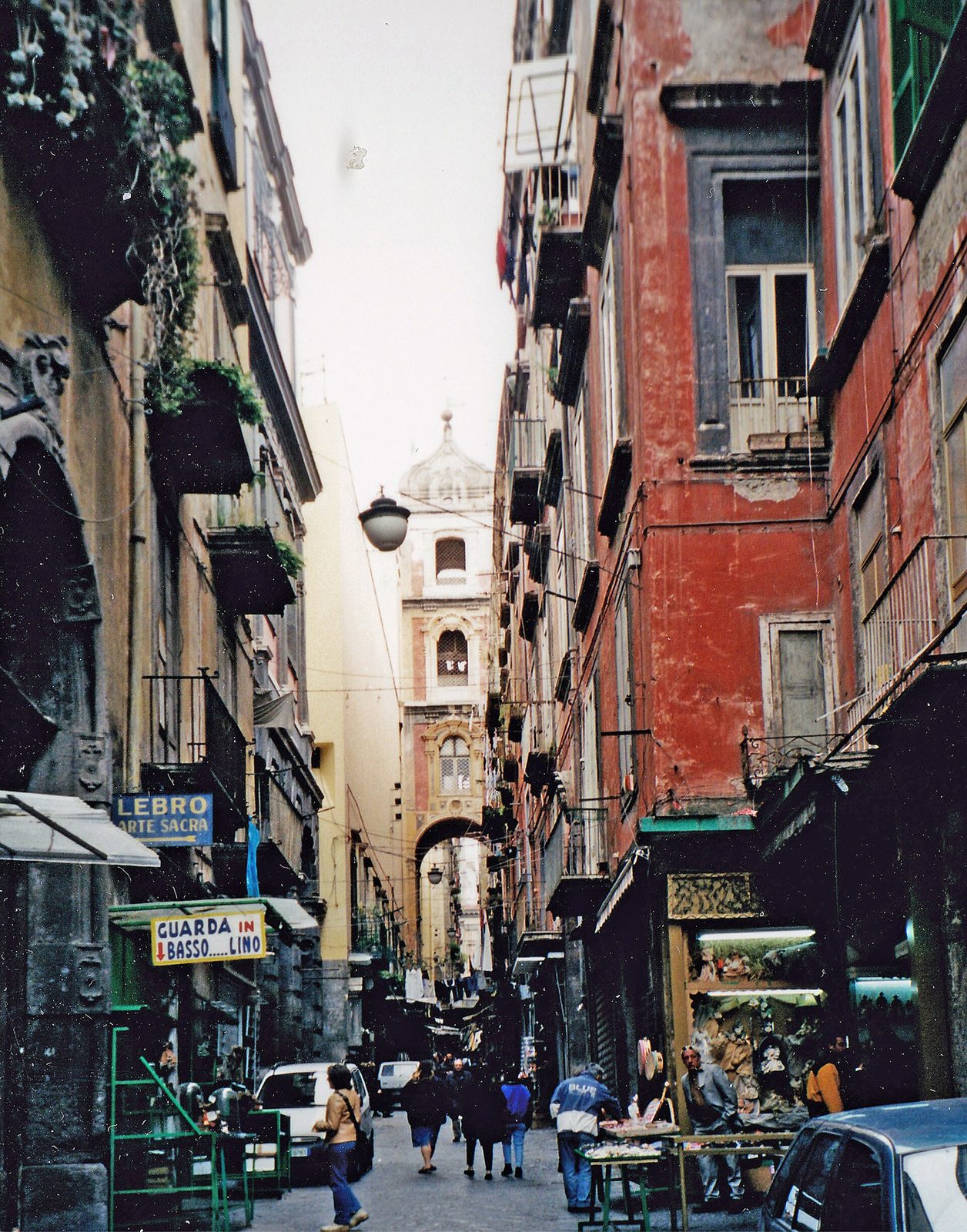
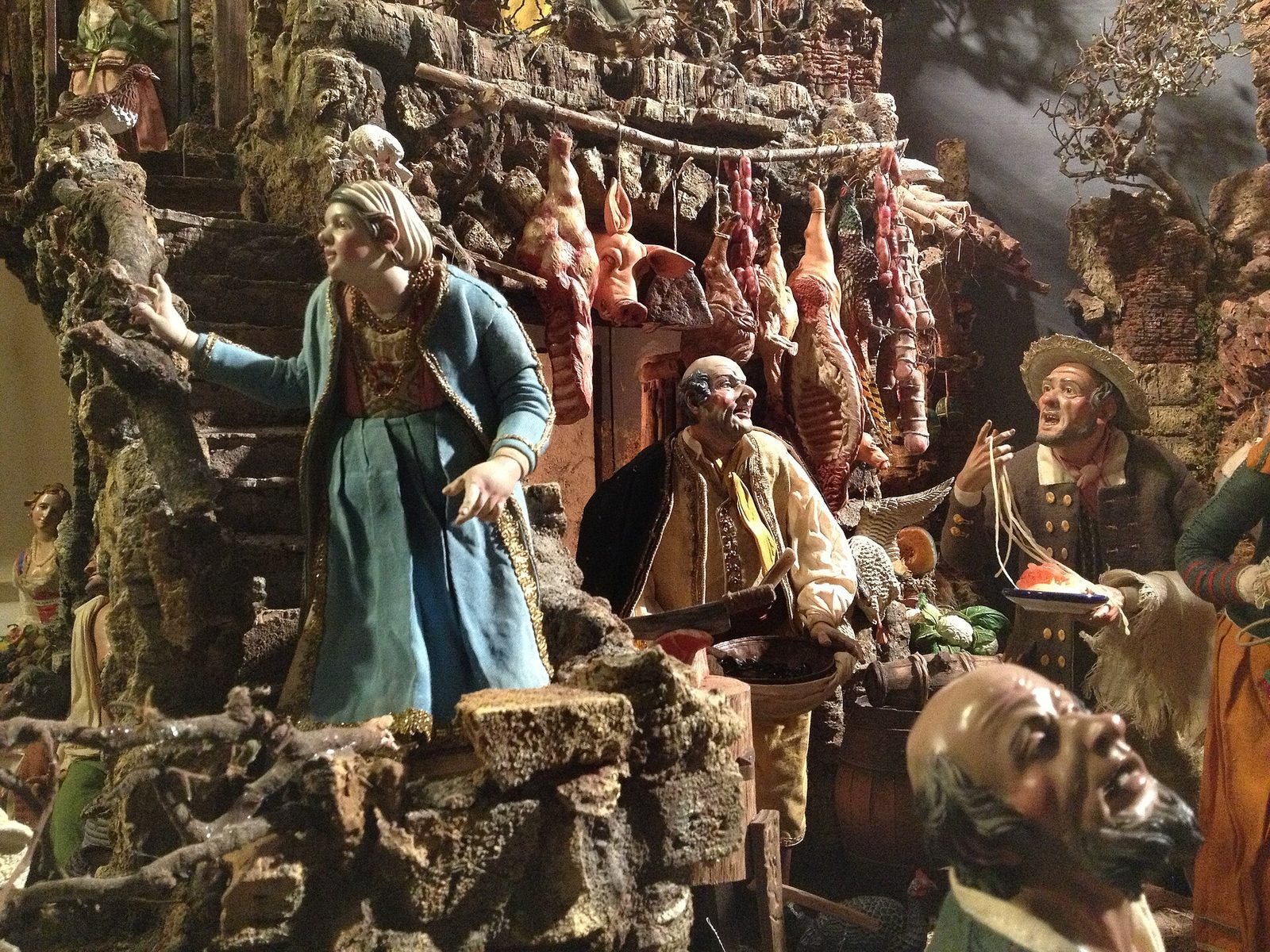
What makes the Neapolitan presepe different is that it is not just the holy family in a stable. The classic eighteenth-century version is a whole crowded Naples: taverns, market stalls, butchers with hams hanging, women at the well, beggars, card players, a Pulcinella or two, all arranged around a ruined classical temple with the nativity tucked into one corner. The figures, the pastori, have terracotta heads and hands, glass eyes on the finer ones, bodies of wire wrapped in tow, and clothes cut and sewn from real fabric. A good one is a small sculpture, and the best workshops still make them that way.
The street is also famous for its topical figures. The workshops also make caricature statuettes of whoever is in the news: footballers, politicians, singers, the pope. These are fun and very Neapolitan, but they are not the real craft, and many are cast rather than modeled. Take a photo, and spend your money on a traditional piece.
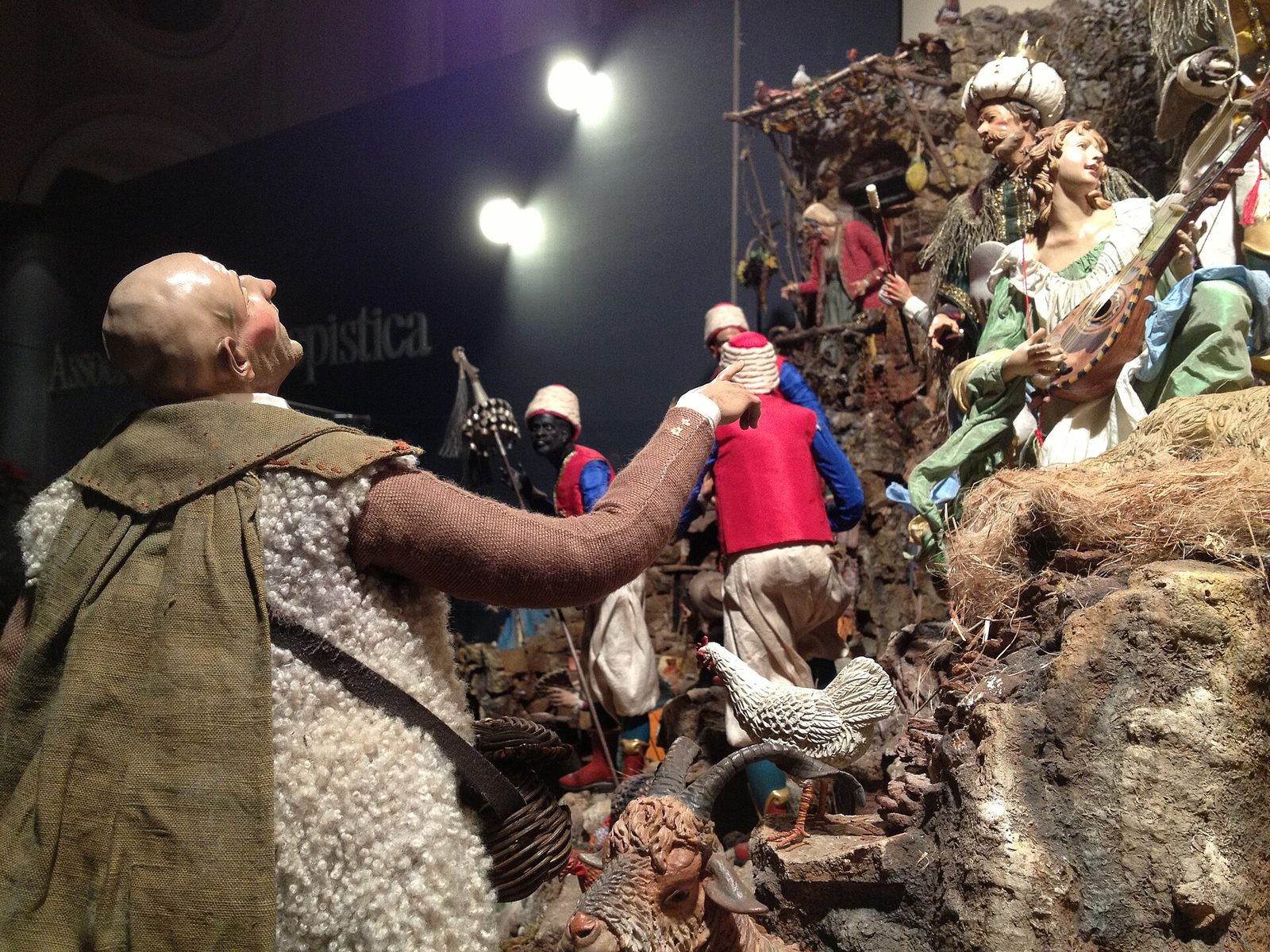
How to buy well on San Gregorio Armeno:
- Look for the workshop, not just the shop. The better places have a bench in view where someone is painting faces or sewing tiny clothes. Ask, politely, whether a piece was made in the bottega.
- Check the head and hands. Hand-modeled terracotta has slight irregularities and a hand-painted face with real expression. A smooth, identical face on twenty figures on the same shelf means a mold, and often resin.
- Start small. One good figure, a shepherd or a market seller, is a better buy than a whole cheap set. Neapolitan families build their presepe over years, adding a piece at a time, and you can do the same.
- Ask about shipping or packing. Terracotta breaks. The serious shops pack for travel and some ship abroad.
- Go early. The lane is narrow, and from late autumn into the Christmas season it gets so packed you shuffle rather than walk. A weekday morning is the time to look properly.
The workshops trade through the year, not just at Christmas, though the season is when the street is at its most theatrical. For the Christmas side of Naples, from the nativity scenes in churches to the city’s December traditions, see our Naples festivals guide; for when the crowds peak and what the weather is doing, the best time to visit Naples guide has the month-by-month view.
If you want to see what the presepe can be at its most ambitious before you buy, the Certosa e Museo di San Martino on the Vomero has a famous historic collection, including the huge eighteenth-century Cuciniello presepe. Seeing it first will make you a far more discerning shopper on San Gregorio Armeno.
Neapolitan tailoring, ties and gloves
Naples has its own school of men’s tailoring, and people who care about clothes talk about it the way food people talk about Neapolitan pizza. The Neapolitan jacket is soft and light: little or no padding in the shoulders, a sleeve set into the shoulder with a slight puckering called spalla camicia (“shirt shoulder”), high armholes, and a cut meant for a hot city where people move their arms when they talk. It is the opposite of the stiff, built-up English or American suit.
The tailoring houses, the sartorie, cluster in Chiaia, the elegant district west of Piazza del Plebiscito, around Via Chiaia, Via dei Mille, Via Filangieri and Piazza dei Martiri. Our Naples neighborhoods guide describes the area. Some of the names are internationally known, with shops in Milan, London and Tokyo; others are one-room workshops up a staircase that dress local lawyers and doctors.
Be realistic about bespoke. A true bespoke suit means measurements, a first fitting, often a second and third, and weeks of work. If you are in Naples for three days, you cannot get one made and fitted before you leave. Some houses send their tailors abroad on trunk shows or ship finished garments, so ask; otherwise, buy ready-to-wear or made-to-measure shirts and accessories, which you can take home the same week.
E. Marinella: the tie shop
The one tailoring-world address almost everyone has heard of is E. Marinella, a tiny tie shop on the seafront at Riviera di Chiaia 287, which the house dates to 1914. Its own site lists the boutique as open Monday to Saturday from 6:30 to 20:00 and Sunday from 9:30 to 13:30, with shorter hours in August. Yes, 6:30 in the morning: the early opening is part of the legend.
What you are buying is a silk tie in a house print, with hand-finished edges and the folded construction the brand is known for. They are not cheap, and they are not meant to be. I would buy one as a significant gift rather than a souvenir; check current prices on Marinella’s own site, which also lists its other boutiques.
Gloves
Glove-making was once a major Neapolitan trade, with whole neighborhoods cutting and stitching leather for export. A few family workshops keep it going. The one most visitors find is Omega, at Via Stella 12 near the Sanità, which describes itself as run by the Squillace family for five generations. Its online shop shows best-selling gloves from about €80 to €90 and luxury peccary gloves from €180 (checked October 2026). For hand-made leather gloves that fit, that is fair value.
Whatever workshop you use, try gloves on. A well-made glove fits snugly at the fingertips and across the palm without pulling, the stitching is small and even, and the lining (silk, cashmere or unlined) is a choice you should make for the climate you live in.
Umbrellas and other crafts
Naples also has a famous umbrella maker, Talarico, a family workshop near Via Toledo that builds umbrellas the old way, each shaft cut from a single piece of wood. Mario Talarico, the craftsman most associated with the name, died in 2024, and the family business continues under his nephew. Small workshops like this keep irregular hours, so check its own social pages or call before making a special trip.
The other historic Neapolitan craft is porcelain. Charles of Bourbon set up a royal porcelain factory at Capodimonte in the eighteenth century, and “Capodimonte” is still used, very loosely, for the ornate flowery porcelain sold all over Italy. The genuine historic pieces are mostly in museums, above all the Museo di Capodimonte. Most “Capodimonte” in souvenir shops is a style, not a provenance. Buy it if you like it; just don’t pay antique prices for it.
Coral and cameos: how to buy the real thing
Torre del Greco, a town on the bay at the foot of Vesuvius, has been the center of Italy’s coral and cameo carving for a very long time, and Naples is where most visitors meet the craft. A cameo is a portrait or scene carved in relief from a shell (usually a large helmet shell) or from stone, using the different colored layers to make a pale figure against a darker background. Coral jewelry uses the red Mediterranean coral the town’s fishermen once harvested.
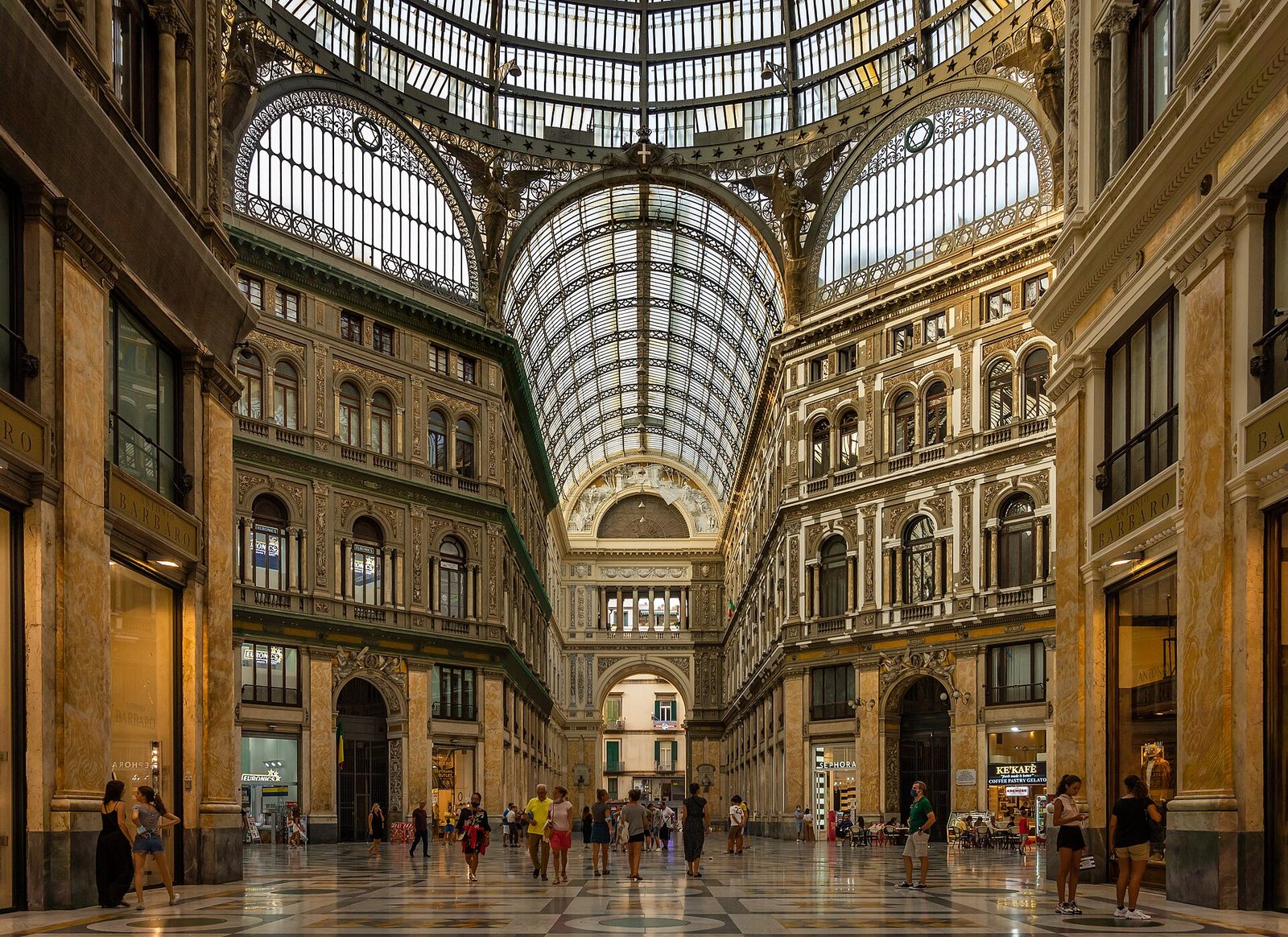
Inside the Galleria Umberto I, the glass-roofed arcade opposite the Teatro di San Carlo, the Ascione family runs the Museo del Corallo, a small museum of the coral and cameo craft. According to its own site, visits are by reservation only, so book ahead rather than walking in. It is worth it if you are thinking of buying, because you will learn more in an hour there than in a day of shop windows.
This is the category where fakes are most common and most expensive, so here is how to protect yourself:
- Shell cameos: a real shell cameo, held up to a light, usually shows some translucency in the pale layer, and the carving has fine, slightly irregular tool marks. Plastic and resin cameos are molded, often too perfect, and feel warm and light in the hand.
- Coral: natural red coral has a matte, slightly uneven color and tiny growth lines under magnification. Dyed bamboo coral, glass and plastic are the common substitutes, and dyed material can look too uniformly bright.
- Paperwork: a serious dealer will tell you what the material is and put it on the receipt. Ask for it. If a seller gets vague, walk away.
- Where: buy from a specialist shop with a fixed address, never from a street stall or a “factory visit” that a tour or a driver steers you into. Those commission-driven stops are where tourists overpay.
Cameos and coral jewelry can be beautiful and genuinely local. They are also easy to overpay for. Take your time, compare two or three shops, and don’t buy on the first day.
Food to bring home from Naples
Food is the souvenir most people actually use, and Naples is very good at it. Our Naples food guide covers what to eat while you are here; this section is about what travels.
- Pasta from Gragnano. The town of Gragnano, in the hills behind Castellammare di Stabia, has made dried pasta for centuries, and “Pasta di Gragnano IGP” is a protected designation. Look for that wording on the pack and for “trafilata al bronzo,” bronze-die drawn, which gives the pasta a rough surface that holds sauce. It is light, cheap, doesn’t break if packed in clothes, and it is a real upgrade on supermarket pasta at home. Paccheri, the wide tubes, are the Neapolitan classic.
- Gay-Odin chocolate. Gay-Odin has been making chocolate in Naples since 1894, according to the company, and has several shops in the city, including Via Toledo 427 and Via Chiaia 237. Its boxed selections of unwrapped chocolates start at €20 on its own online shop (checked October 2026). The “foresta,” a chocolate log that looks like bark, is the signature. This is my favorite food gift from the city.
- Limoncello. The lemon liqueur belongs to the whole coast, from Sorrento to Amalfi, and our Sorrento guide covers the lemon groves. The good stuff is made from just lemon peel, alcohol, sugar and water; check the label for coloring and flavorings.
- Coffee. Neapolitans take their coffee seriously and the local roasts are dark and strong. A bag of beans or ground coffee from a local roaster, and maybe a stovetop cuccumella (the Neapolitan flip coffee pot), make a good gift.
- Taralli. The crunchy ring-shaped biscuits with pepper and almonds travel well, unlike most Neapolitan pastries.
- Babà in jars. The rum-soaked cake sold in jars of syrup is a fun, if heavy, gift. Fresh sfogliatelle and pastiera don’t travel well, so eat those here.
Two warnings. First, liquids: limoncello, babà in syrup, olive oil and jarred sauces count as liquids at airport security. Check the security rules on the Naples airport site and your airline before you pack them in hand luggage, or put them in checked bags wrapped in clothes. Second, customs at home: fresh meat and dairy, including some cheeses and cured meats, may be restricted when you land, depending on where you live. Dry pasta, chocolate and coffee are usually fine, but check your own country’s customs rules.
Shopping streets in Naples by neighborhood
Naples is not a city of malls. Shopping happens on streets, and each area has its own character and price level. Here is where to go for what.
Via Toledo: the main shopping street
Via Toledo is the long, straight, mostly pedestrian street running north from Piazza Trieste e Trento, by the royal palace, toward Piazza Dante. It is where Neapolitans do their everyday shopping: international chains, shoe shops, phone shops, Gay-Odin, bookshops and cafés, with the Quartieri Spagnoli climbing the hill on one side. It is busy, cheerful and not especially Neapolitan in what it sells, but it is great for a walk, and the Toledo metro station, often listed among the most beautiful in Europe, is worth a detour on its own. Our getting around Naples guide covers the metro.
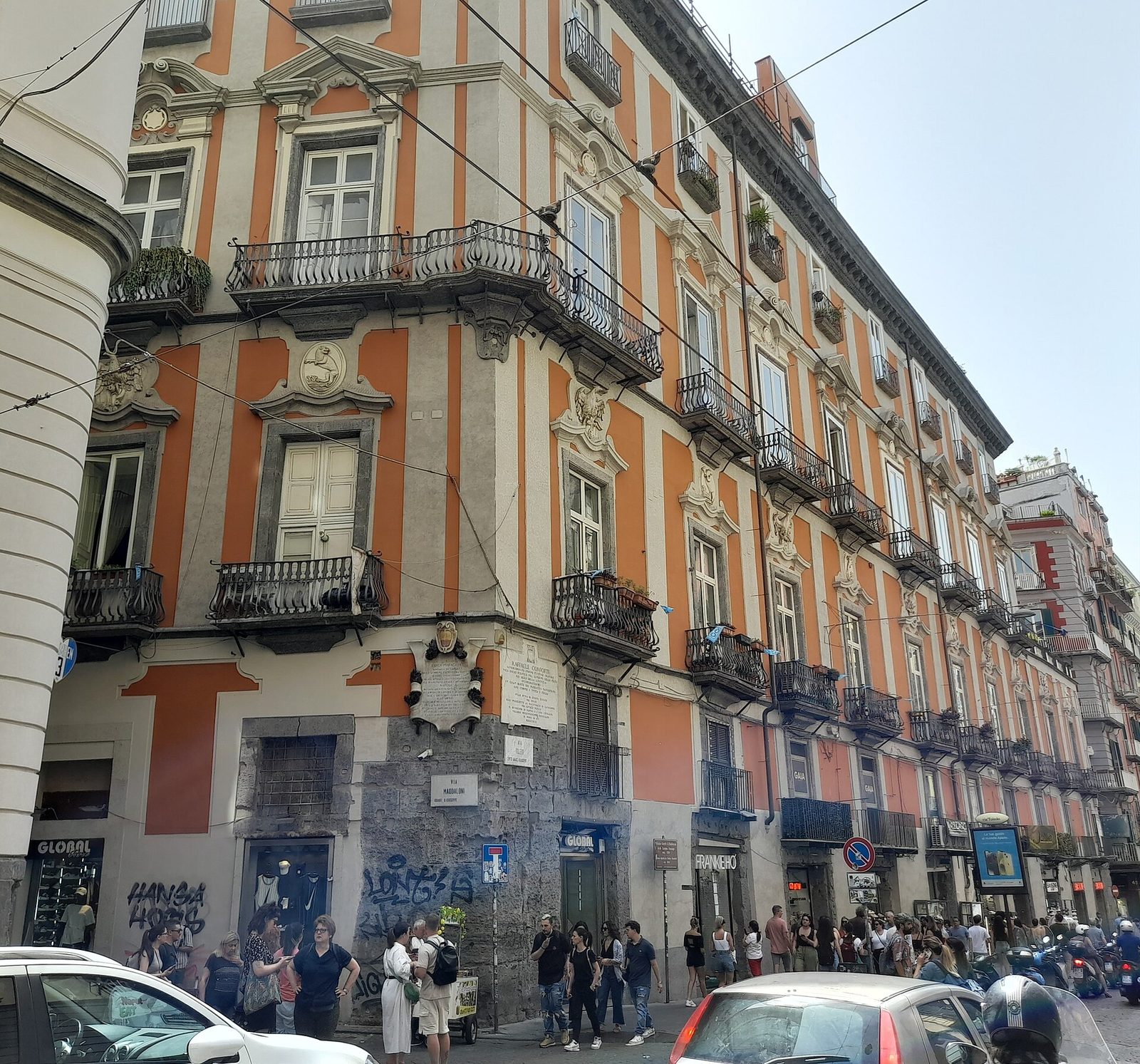
A note for anyone with an old guidebook: the Rinascente department store on Via Toledo, in the Palazzo Buono, closed in 2008.
Chiaia: the upscale end
West of Piazza del Plebiscito, Via Chiaia runs from the square toward Piazza dei Martiri, and from there Via dei Mille, Via Filangieri and the streets around them form the city’s luxury and tailoring district. This is where you find the big Italian fashion labels, the Neapolitan sartorie, jewelers, shirtmakers and Marinella on the seafront. Even if you are not buying, the window shopping and the people watching are excellent, and the area is full of good bars for an aperitivo afterward.
Vomero: where the locals shop
Up on the Vomero hill, reached by funicular or metro, Via Scarlatti and Via Luca Giordano are tree-lined shopping streets where middle-class Neapolitans buy their clothes and shoes. Prices and brands are more local and less touristy than in Chiaia, and the area is calmer. Pair it with Castel Sant’Elmo and the Certosa di San Martino for a half-day.
The centro storico: crafts, books and oddities
In the old center, the shopping is small and specialized. San Gregorio Armeno for nativity figures; Spaccanapoli for craft shops, religious goods and cornicelli; and the area around Port’Alba, the old city gate near Piazza Dante, which has been a book quarter for centuries, with secondhand and antiquarian bookshops and stalls. The student streets around the university, like Via Mezzocannone, add more bookshops. This is the best area for browsing, because nearly everything is one of a kind.
Naples markets: Pignasecca, Porta Nolana and Poggioreale
Neapolitan street markets are where you see the city at its loudest and most alive. They are not tourist markets; they are where people buy their fish, vegetables, socks and kitchenware. That is exactly why they are worth a look.
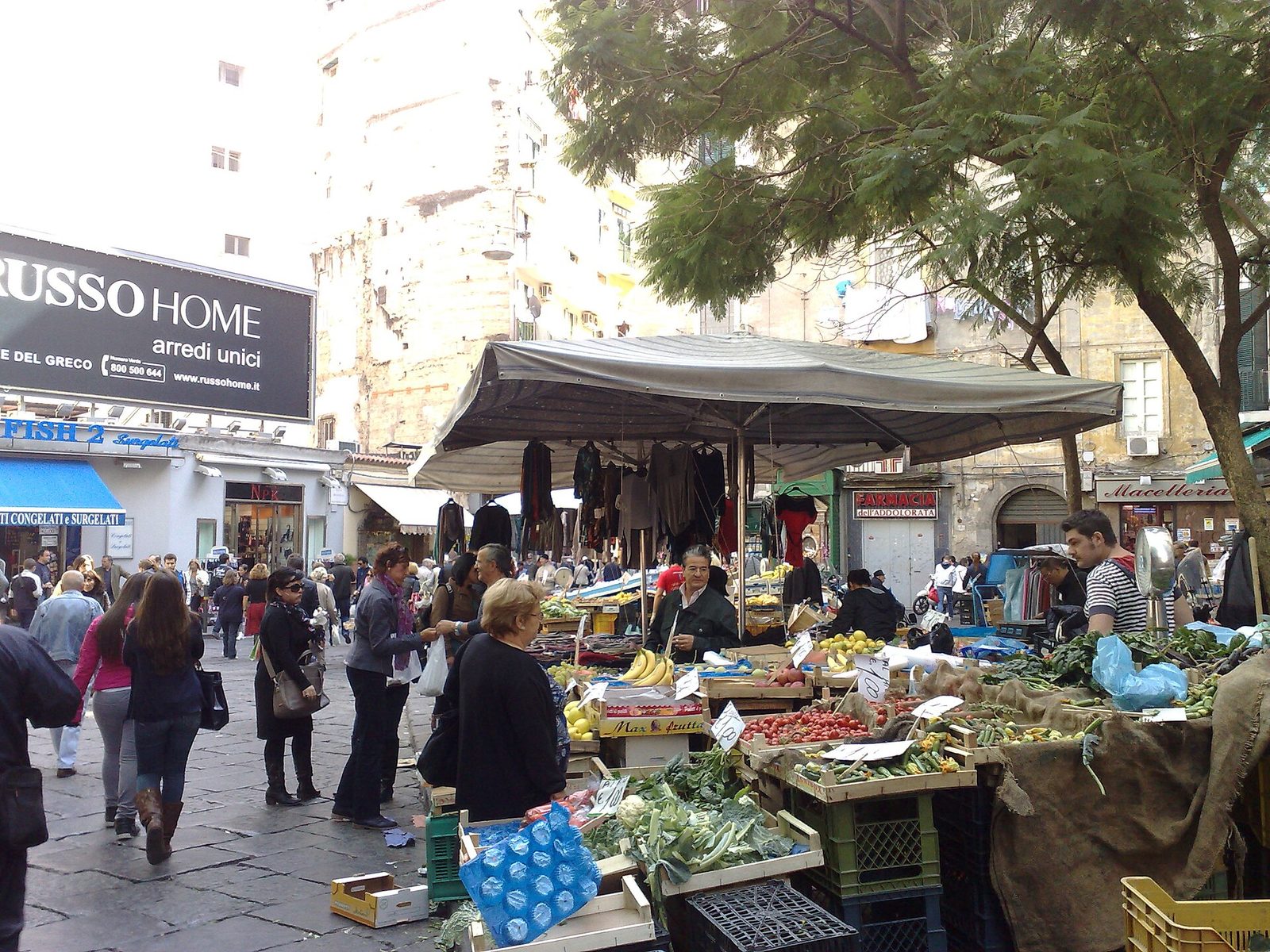
- La Pignasecca. The city’s best-known food market fills the lanes around Piazza Pignasecca, just above Via Toledo near Montesanto station. Fish, fruit and vegetables, fried food, household goods and cheap clothes, all at full volume. Go in the morning, when it is busiest and the stalls are full.
- Porta Nolana. The market around the old Aragonese gate of Porta Nolana, close to the Circumvesuviana terminus and Piazza Garibaldi, is famous for its fish: wet slabs of anchovies, octopus, clams and swordfish, with the sellers shouting prices. It is a photographer’s favorite. Keep your bag in front of you, as you would anywhere near the station.
- Poggioreale. The big clothing and shoe market on the eastern side of the city is where Neapolitans hunt for bargain shoes and surplus stock. It is large and chaotic, and the days it runs vary by source, so check the Comune di Napoli’s market listings or ask at your hotel before making the trip.
- Antignano. The neighborhood market on the Vomero, around Piazza degli Artisti and Via Antignano, is calmer and more local, with food, clothes and household goods.
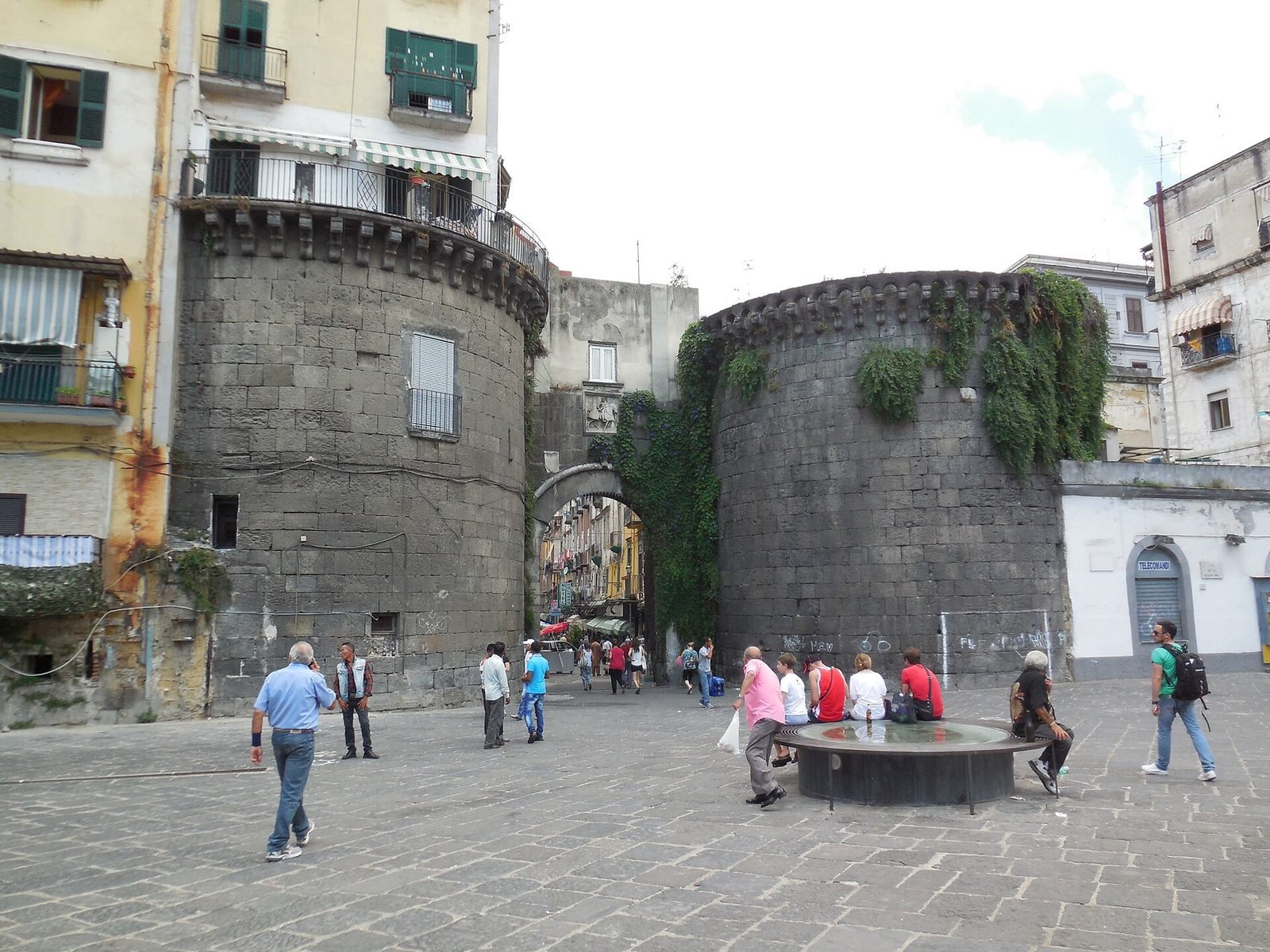
Market etiquette is simple. Don’t handle the produce unless the seller invites you to, ask before photographing a stall up close, and carry small cash. Haggling is normal for clothes and household goods at the big markets, much less so for food.
Antique hunters should note one change. The Fiera Antiquaria Napoletana, the antiques fair that used to be held on weekends along the seafront by the Villa Comunale, is not running there, according to the organizer’s own site, which lists its current events instead. Check there before planning a weekend around it.
Outlets and malls outside Naples
If designer bargains are the goal, the outlets are out of town, and you will want a car or a shuttle.
- La Reggia Designer Outlet, at Marcianise near Caserta, is the big designer outlet village for the region, off the A1 motorway at the Caserta Sud exit. Its own site lists it as open Monday to Friday 10:00 to 20:00 and weekends 10:00 to 21:00, and covers transport options. You could combine it with the palace at Caserta; our Reggia di Caserta guide covers the palace.
- Vulcano Buono, at Nola, is a huge shopping center built in the shape of a volcano, designed by Renzo Piano. Its shopping gallery is open from 10:00 to 21:00 on weekdays and 10:00 to 22:00 on weekends and holidays, according to its own site. It is a mall, not an experience, but the building is odd enough to be worth a look if you are driving past.
My honest take: unless you are serious about a particular brand, an outlet day is a poor use of a short trip to Naples. You can buy the same goods at home; you can’t buy San Gregorio Armeno.
Shopping hours, sales, paying and tax-free
Opening hours. Big chains on Via Toledo and in Chiaia generally open all day. Many independent shops and workshops still close for a long lunch break in the early afternoon and open again into the evening, and many small shops are closed on Sundays or Sunday afternoons. Hours change in August, when some family businesses close for their holidays. Check any specific shop’s hours on its own site or social page before you make a special trip.
Sales. Italy has official seasonal sales, the saldi, set by each region: the winter sales start in early January and the summer sales in early July. The Regione Campania sets the exact dates, and local news covers them every year, so check before planning around them.
Paying. Cards are accepted in nearly all shops, but keep cash for markets, small workshops and tiny purchases. For tipping, everyday costs and budgets, see our Naples, Italy cost guide.
Tax-free shopping. Visitors who live outside the European Union can reclaim Italian VAT on goods they take home. According to Italy’s customs agency (ADM), the minimum is €70 per invoice, VAT included; the threshold used to be €154.94 and was lowered in 2024. Ask for a tax-free form when you pay (the shop needs your passport), keep the goods unused, and have the form validated at customs when you leave the EU. Many shops in Chiaia and on Via Toledo display tax-free signs.
Shipping. For fragile things like terracotta pastori or porcelain, ask the shop whether it ships. Many of the serious workshops do, and that is far safer than a suitcase.
Counterfeits: why the fake bag is a bad deal
You will see sellers with sheets of fake designer bags, sunglasses and belts near the station, the port and some busy streets. Don’t buy. Apart from funding organized crime, it is illegal for the buyer as well as the seller in Italy. Under Decree-Law 35/2005, as published on the government’s Normattiva legal database, a buyer of counterfeit goods faces an administrative fine of €300 to €7,000, plus confiscation of the goods. Enforcement is patchy, but the fine is real, and a “bargain” bag is not worth the risk.
The same goes for unofficial “Napoli” football shirts sold on the street. If you want a shirt, buy it at the club’s official store. Our history of Naples explains why that shirt means so much to the city.
Small gifts that are actually Neapolitan
Not every souvenir needs to be a tie or a cameo. Some of the best small gifts in Naples cost little, fit in a pocket and still say something real about the city.
- A cornicello. The little red horn is an amulet against the evil eye, and tradition says it should be given, not bought for yourself. The stalls along Spaccanapoli and San Gregorio Armeno sell them in every size and material, from plastic to hand-shaped coral-colored ceramic. Pay a little more for one that has clearly been made and finished by hand.
- A tombola set. Tombola is the Neapolitan Christmas board game, played with numbered cards and a basket of 90 numbers, and each number has a traditional meaning drawn from the smorfia, the city’s dream-number book. A boxed tombola set, often with the meanings printed on the board, is a fun, very local gift for anyone who likes games.
- A single presepe figure. You don’t need a whole nativity scene. One hand-made figure, a fishmonger, a pizza maker or a sleeping shepherd, is a small sculpture that travels well if it is packed properly.
- Ex-voto hearts. The small silver and metal hearts, limbs and body parts left in churches as thanks for a prayer answered are made and sold in the religious-goods shops of the old center. They are beautiful objects in their own right. Buy one from a shop, of course, never take one from a church.
- A Neapolitan coffee pot. The cuccumella, the flip-over drip coffee pot the city used before the moka, is sold in kitchen shops and some markets. It makes a good gift for a coffee lover, with a bag of local beans to go with it.
- A Napoli scarf or shirt from the club. If you or someone at home follows football, a scarf or shirt from the official club store is the right souvenir. Skip the street versions.
A half-day shopping walk through Naples
If you want to fit the best of Neapolitan shopping into one walk, this route covers crafts, food and the main streets in about half a day, all on foot. It works best on a weekday morning, when the workshops are open and the old-center lanes are less crowded.
- Start on Via dei Tribunali and turn down Via San Gregorio Armeno. Take your time in the nativity workshops before the crowds build. Pick one figure, or just look.
- Turn right along Spaccanapoli. Browse the craft shops, religious-goods shops and cornicello stalls on the way west toward Piazza del Gesù. Our centro storico guide has the sights along this stretch.
- Walk up to Port’Alba and Piazza Dante for the bookshops and stalls of the old book quarter.
- Head down Via Toledo. Stop at Gay-Odin for chocolate, and if you want a market, detour up into the Pignasecca for a look at the stalls.
- Cut through the Galleria Umberto I at the bottom of Via Toledo, and look at the arcade’s glass dome even if you aren’t buying.
- Finish in Chiaia. Walk Via Chiaia to Piazza dei Martiri and the tailoring streets beyond, then down to the seafront at Riviera di Chiaia, where Marinella’s tiny shop sits on the corner. End with an aperitivo in one of Chiaia’s bars.
Carry a light bag, keep your phone and wallet in front of you in the busy lanes, and don’t buy anything big early in the walk. Go back for it at the end, or ask the shop to hold it.
What to skip
- Fake designer goods from street sellers: illegal for the buyer and a bad deal.
- Topical caricature figures on San Gregorio Armeno as your main purchase: fun to photograph, but most are not the real craft.
- “Factory visits” for cameos or coral arranged by a driver or a tour: often commission stops with inflated prices.
- Mass-produced “Capodimonte” porcelain at antique prices: it is a style, not a provenance.
- Outlet days on a short trip: you can buy the same brands at home.
- Fresh pastries for the plane: sfogliatelle and babà are best eaten here, the same day.
- Planning around the Fiera Antiquaria on the seafront until it is running there again.
Shopping in Naples: frequently asked questions
What is Naples, Italy famous for buying?
Hand-made nativity figures from Via San Gregorio Armeno, Neapolitan tailoring and silk ties, leather gloves, shell cameos and coral from the Torre del Greco tradition, and food such as Gragnano pasta, Gay-Odin chocolate and limoncello. The best buys are things still made in the city.
What is the main shopping street in Naples?
Via Toledo is the main everyday shopping street, with chains, shoe shops and cafés. For luxury brands and tailoring, head to Chiaia: Via Chiaia, Via dei Mille, Via Filangieri and the streets around Piazza dei Martiri.
When is the best time to buy nativity figures in Naples?
The workshops on Via San Gregorio Armeno trade through the year. The Christmas season is the most atmospheric, but also the most crowded, so the best time to shop calmly is a weekday morning, ideally outside the weeks just before Christmas.
Is it worth buying a suit in Naples?
Only if you have time or can have it shipped. A bespoke suit needs several fittings over weeks. On a short trip, ready-to-wear or made-to-measure shirts, ties and gloves are the practical way to take Neapolitan tailoring home.
Can I get a tax refund on shopping in Naples?
Yes, if you live outside the EU. The minimum is €70 per invoice, VAT included. Ask the shop for a tax-free form, show your passport, and get the form validated at customs when you leave the EU.
Is it illegal to buy fake designer bags in Italy?
Yes. Under Italian law a buyer of counterfeit goods can be fined between €300 and €7,000, and the goods are confiscated. Buy from real shops only.
Can I take limoncello home in my hand luggage?
Only within the liquids rules that apply at security when you fly, which can change. Check the Naples airport site and your airline before you pack it; the safest option is checked luggage, well wrapped.
Are shops in Naples open on Sundays?
Many chains on Via Toledo and in the malls open on Sundays, but many small shops and workshops close on Sundays or Sunday afternoons and for a long lunch break on weekdays. Check a specific shop’s hours before you go.
Photo credits
- Neapolitan presepe shepherds: photo by Antonio Fucito, Wikimedia Commons, CC BY-SA 2.0.
- Via San Gregorio Armeno: photo by SchiDD, Wikimedia Commons, CC BY-SA 4.0.
- Neapolitan presepe figures: photo by Antonio Fucito, Wikimedia Commons, CC BY-SA 2.0.
- Galleria Umberto I: photo by Marco Ober, Wikimedia Commons, CC BY-SA 4.0.
- Via Toledo and Palazzo Carafa di Maddaloni: photo by Argo Navis, Wikimedia Commons, CC BY-SA 4.0.
- Pignasecca market: photo by IlSistemone, Wikimedia Commons, CC BY-SA 3.0.
- Porta Nolana: photo by Ken Mayer, Wikimedia Commons, CC BY 2.0.
Sources: the shops’ and outlets’ own websites, Agenzia delle Dogane e dei Monopoli, Normattiva, the Museo del Corallo and the Fiera Antiquaria Napoletana; checked October 2026.