On this page
Last updated September 25, 2026. Alert level and seismic data checked against the Italian Civil Protection Department and the Osservatorio Vesuviano (INGV) weekly bulletin of September 22, 2026; site openings against the Campi Flegrei Archaeological Park; train services against EAV and the Campania Region. I re-check all three before every update and after any significant earthquake.
The Campi Flegrei is the volcanic caldera just west of Naples, Italy, home to Pozzuoli, Baia, Cuma and Bacoli. Is it safe to visit? As of September 2026, the alert level is yellow, the second of four, earthquakes have eased since the summer, and the main sites are open, except the Rione Terra and the Solfatara.
Twenty-five minutes from central Naples on a local train lies one of the most extraordinary landscapes in the Mediterranean. It’s a volcano you can’t see, because you’re standing inside it. The Campi Flegrei, the “burning fields,” is a vast caldera of craters, lakes and steaming ground, and for the Romans it was both a playground and the gateway to the underworld. Their emperors built pleasure palaces at Baia, now sunk beneath the sea. Pozzuoli has the third-largest Roman amphitheater in Italy. At Cuma, the oldest Greek colony on the Italian mainland, you can walk the gallery where the Sibyl gave her prophecies. And Lake Avernus was where Virgil sent Aeneas down to the dead.
Since 2024 the Campi Flegrei has also been in the international news. The ground is rising, earthquakes have become more frequent and stronger, and headlines about a “supervolcano” have made plenty of travelers wonder whether they should go at all. English-language travel coverage is thin and often out of date. This guide aims to fix that. It gives a calm, sourced, current answer on safety first, then everything you need to see the area well. If you’re still deciding how the area fits into a wider trip, the full list of things to do in Naples puts it in context.
Is the Campi Flegrei safe to visit in 2026?
The short answer: for a day visit, yes, with sensible precautions and a check of the news on the day. Here’s the longer answer, and the evidence behind it.
The alert level
Italy’s Civil Protection Department sets a volcanic alert level for the Campi Flegrei on the advice of the scientists who monitor it. There are four levels: green (base), yellow (attention), orange (pre-alarm) and red (alarm). The caldera has been at yellow since 2012, and the Civil Protection Department confirmed it remains at yellow, described as a state of medium disequilibrium, in September 2026. Yellow means scientists see changes from the volcano’s background state, so monitoring is intensified and emergency plans are kept ready. It is not an eruption warning. A move to orange would be the stage at which authorities begin preparing for possible evacuation. There has been no suggestion of that.
What the monitoring shows now
The ground in the Pozzuoli area has been rising slowly for about twenty years, in a process called bradyseism, and the rise brings swarms of earthquakes. In the summer of 2026 the activity was intense. On July 31, a magnitude 4.7 earthquake, the strongest of the current crisis, shook the area, damaged buildings, displaced several thousand residents and briefly closed the port of Pozzuoli and several archaeological sites. The Osservatorio Vesuviano recorded 668 earthquakes in July and 634 in August.
Since then, things have calmed. The weekly bulletin of September 22, 2026, recorded 160 earthquakes in September so far, most of them tiny. The ground has been rising at about 10 millimeters a month since February 2026, slower than in some earlier phases, and the total rise at the Rione Terra monitoring station since January 2025 is about 31.5 centimeters. The bulletin’s conclusion is that, on current data, there are no signs of a significant change in the short term.
What that means for a visitor
- Day trips are normal. Tens of thousands of people live and work in Pozzuoli, Bacoli and the surrounding towns. The trains, ferries and most archaeological sites are running.
- You may feel an earthquake. Most are too small to notice. Occasionally a stronger one is felt across the area, and sites and transport may close for checks afterwards, as they did after July 31.
- Some places are closed. The Rione Terra has been closed since the July quake pending inspections, and the Solfatara crater has been closed since 2017 (more below).
- Gas is a local hazard. The area around the Solfatara and the Pisciarelli fumaroles emits volcanic gases, including carbon dioxide, which collects in low places. Stay on public roads and never enter fenced areas, hollows or caves near the fumaroles.
- Check before you go. Look at the Civil Protection Department and the Osservatorio Vesuviano for the current alert level and any recent earthquakes, and at local news for closures. If the alert level ever changes, follow official instructions.
If you feel an earthquake
The Civil Protection Department’s advice is straightforward. Indoors, shelter under a sturdy table or in a doorway set in a load-bearing wall, away from windows, shelves and anything that could fall, and don’t use lifts. Outdoors, move away from buildings, walls, trees and power lines. When the shaking stops, leave the building calmly by the stairs, gather in an open space, and follow any instructions from local authorities. At an archaeological site, follow the staff.
My verdict: I’d go, and I’d check the news the evening before and the morning of. The chance of a strong quake on any given day is small, the sites and trains are running, and the Campi Flegrei is one of the most rewarding day trips from Naples.
The Campi Flegrei at a glance
The area is spread along the coast west of Naples, from Pozzuoli through Baia to Cuma and Bacoli. Here’s what’s where, and what’s open as of late September 2026.
| Site | Where | What it is | Status (Sept 2026) | Access | My verdict |
|---|---|---|---|---|---|
| Anfiteatro Flavio | Pozzuoli | Italy’s third-largest Roman amphitheater, with its underground intact | Open | Combined ticket, timed entry | The highlight of Pozzuoli |
| Macellum (“Temple of Serapis”) | Pozzuoli | Roman market whose columns record the rise and fall of the ground | Viewed from the street | Free to view | Five minutes that explain the whole area |
| Rione Terra | Pozzuoli | The ancient acropolis and Roman streets beneath it | Closed after the July 2026 earthquake | Pending inspections | Check before planning |
| Solfatara | Pozzuoli | A steaming volcanic crater | Closed since 2017 | No access | Skip |
| Terme di Baia | Baia | Terraced Roman bath complex with domed “temples” | Open | Combined ticket, timed entry | Beautiful and underrated |
| Castello di Baia and museum | Baia | Aragonese castle housing the Campi Flegrei archaeological museum | Open | Combined ticket | See the statues from the sunken city |
| Underwater park of Baia | Baia | Sunken Roman villas and streets | Seasonal boat and dive trips | Private operators | A unique experience in calm weather |
| Cuma | Cuma | Greek and Roman city, acropolis and the Sibyl’s cave | Open | Combined ticket | Magical, and rarely crowded |
| Piscina Mirabilis | Bacoli | A vast Roman cistern like an underground cathedral | Open | Check visiting arrangements | Astonishing if you like Roman engineering |
| Lake Avernus | Between Pozzuoli and Baia | Crater lake, Virgil’s entrance to the underworld | Open countryside | Free | A peaceful walk |
What the Campi Flegrei actually is
Most people expect a volcano to look like Vesuvius: a cone on the horizon. The Campi Flegrei is the opposite. It’s a caldera, a huge collapsed volcanic depression more than ten kilometers across, formed by enormous eruptions tens of thousands of years ago that emptied the magma chamber beneath and let the ground above sink. Part of the city of Naples, including Bagnoli, Fuorigrotta and the Posillipo hill, sits on its rim, and its southern half lies under the Gulf of Pozzuoli.
Inside the caldera are more than twenty smaller craters and volcanic cones, some of them now lakes, like Avernus, and some of them hills, like Monte Nuovo, which formed in a few days during the area’s last eruption, in 1538. One of the great prehistoric eruptions laid down the thick deposits of yellow tuff that all of old Naples is built from and on. So in a sense, the whole city is a product of this volcano.
Bradyseism: the ground that breathes
The Campi Flegrei’s most unusual feature is bradyseism, a slow rise and fall of the ground caused by fluids and pressure changes deep below. It has been going on for thousands of years, and the Romans lived with it too. In the 20th century it produced two major crises. In 1970 the ground rose sharply and the old Rione Terra quarter of Pozzuoli was evacuated. Between 1982 and 1984 the ground in Pozzuoli rose by almost two meters, earthquakes shook the town, and tens of thousands of people left their homes. Then the ground slowly sank again.
The current phase of uplift began around 2005 and has accelerated at times since, with a series of earthquakes above magnitude 4 in 2024, 2025 and 2026. Scientists monitor it continuously through a dense network of seismometers, GPS stations and gas sensors. The authorities keep a detailed emergency plan for a “red zone” of towns and city districts where hundreds of thousands of people live, to be activated if the alert level ever rises that far.
For a visitor, the key point is that bradyseism is a long, slow process, closely watched, and for most of any given year life goes on normally. The Macellum in Pozzuoli, described below, shows you its effects better than any explanation.
Monte Nuovo: the youngest mountain
The Campi Flegrei’s last eruption, in the autumn of 1538, built a whole new hill in about a week. After two years of earthquakes and ground movement, the earth opened near the village of Tripergole, on the shore of Lake Lucrino, and ash and pumice poured out, burying the village and the Roman baths nearby and piling up into a cone more than a hundred meters high. The Neapolitans called it simply Monte Nuovo, “new mountain,” and it’s often described as the youngest mountain in Europe. Today it’s covered in Mediterranean woodland and protected as a nature reserve, with paths up to the crater rim and views over the lakes and the gulf. Check whether the reserve’s paths are open before you go, since access has varied.
For volcanologists, 1538 matters because the ground rose sharply before the eruption, which is one reason today’s uplift is watched so closely. It’s also a reminder of how small eruptions here can be, compared with the prehistoric giants that formed the caldera.
Pozzuoli
Pozzuoli, the main town of the Campi Flegrei, was the Roman port of Puteoli, for a time the busiest harbor in Italy, where grain ships from Egypt unloaded and Saint Paul landed on his way to Rome. Today it’s a lively fishing town with a busy waterfront, good seafood restaurants, a morning fish market and ferries to Ischia and Procida. Sophia Loren grew up here. Its three great ancient sites are all within walking distance of each other and of the new Cumana station.
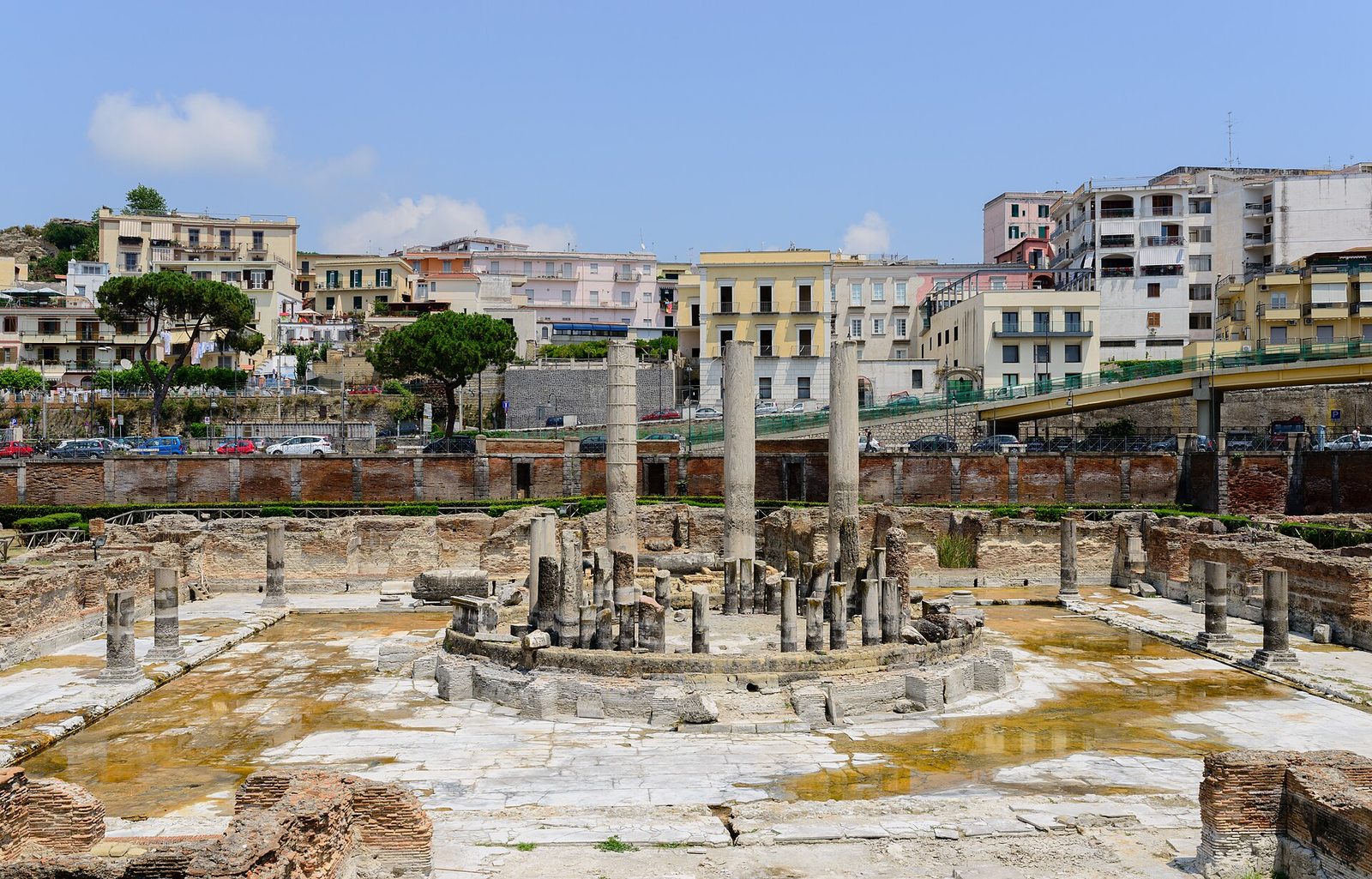
The Macellum: the “Temple of Serapis”
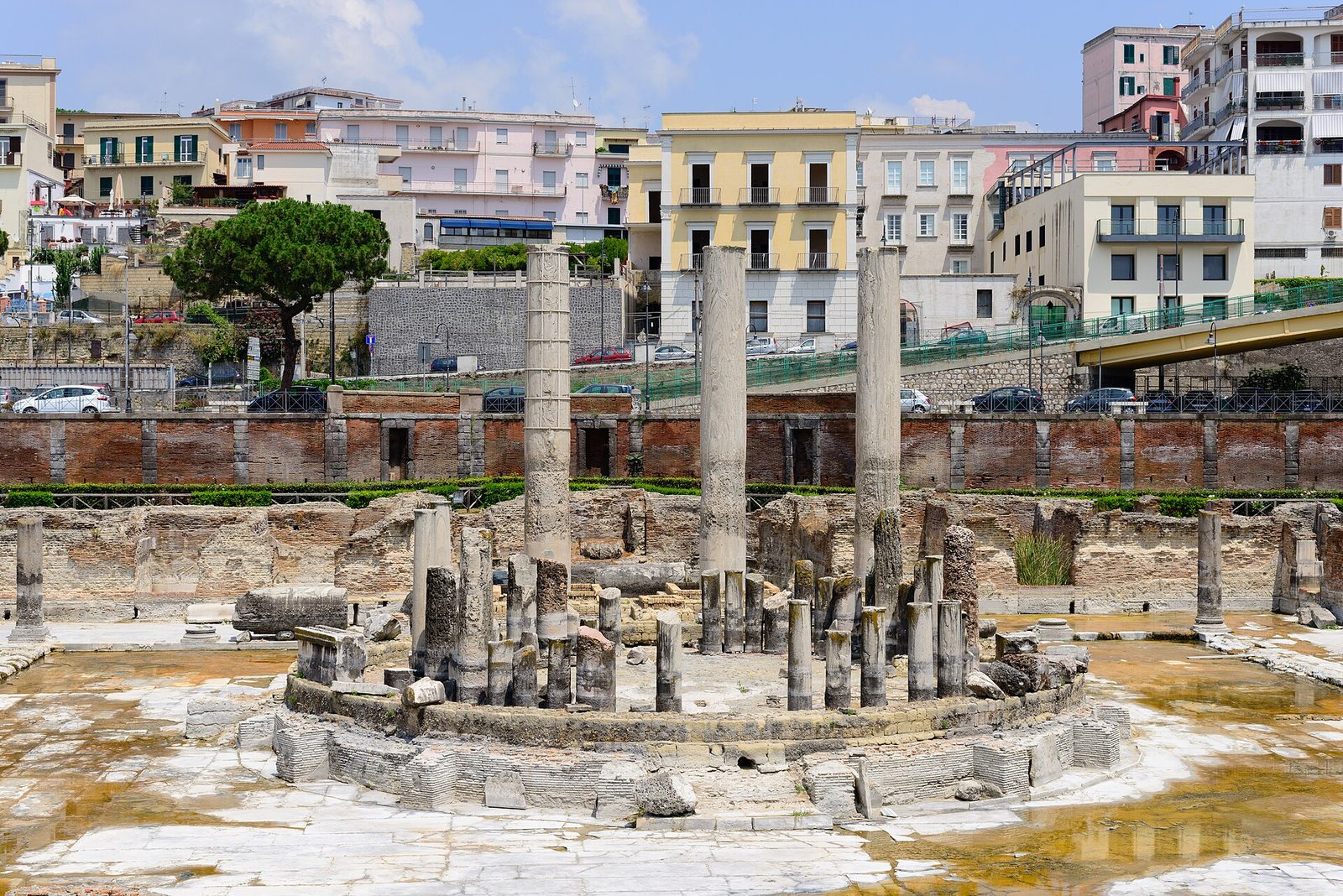
In the middle of Pozzuoli, below street level, lies the Roman market hall, long misnamed the Temple of Serapis after a statue of the Egyptian god found here. Look closely at its three tall marble columns. A few meters up, there’s a band of holes bored by marine mollusks, which could only have got there if the columns once stood underwater. The market was built on dry land, sank into the sea as the ground subsided over the centuries, and was lifted out again. It’s one of the most famous monuments in the history of geology, and it’s the clearest demonstration of bradyseism anywhere. You can see it well from the streets around it. Depending on the ground level and the rain, the floor is sometimes flooded and sometimes dry.
The Anfiteatro Flavio
Built under the Flavian emperors, who also built the Colosseum, Pozzuoli’s amphitheater is the third-largest in Italy, after the Colosseum and the amphitheater at Capua. What makes it special is the underground. Its network of corridors, cells and trapdoors, where animals and scenery were kept and hoisted into the arena, survives remarkably intact, and you can walk through it. Standing in the dim galleries beneath the arena gives a far more vivid sense of the Roman games than the Colosseum’s excavated floor.
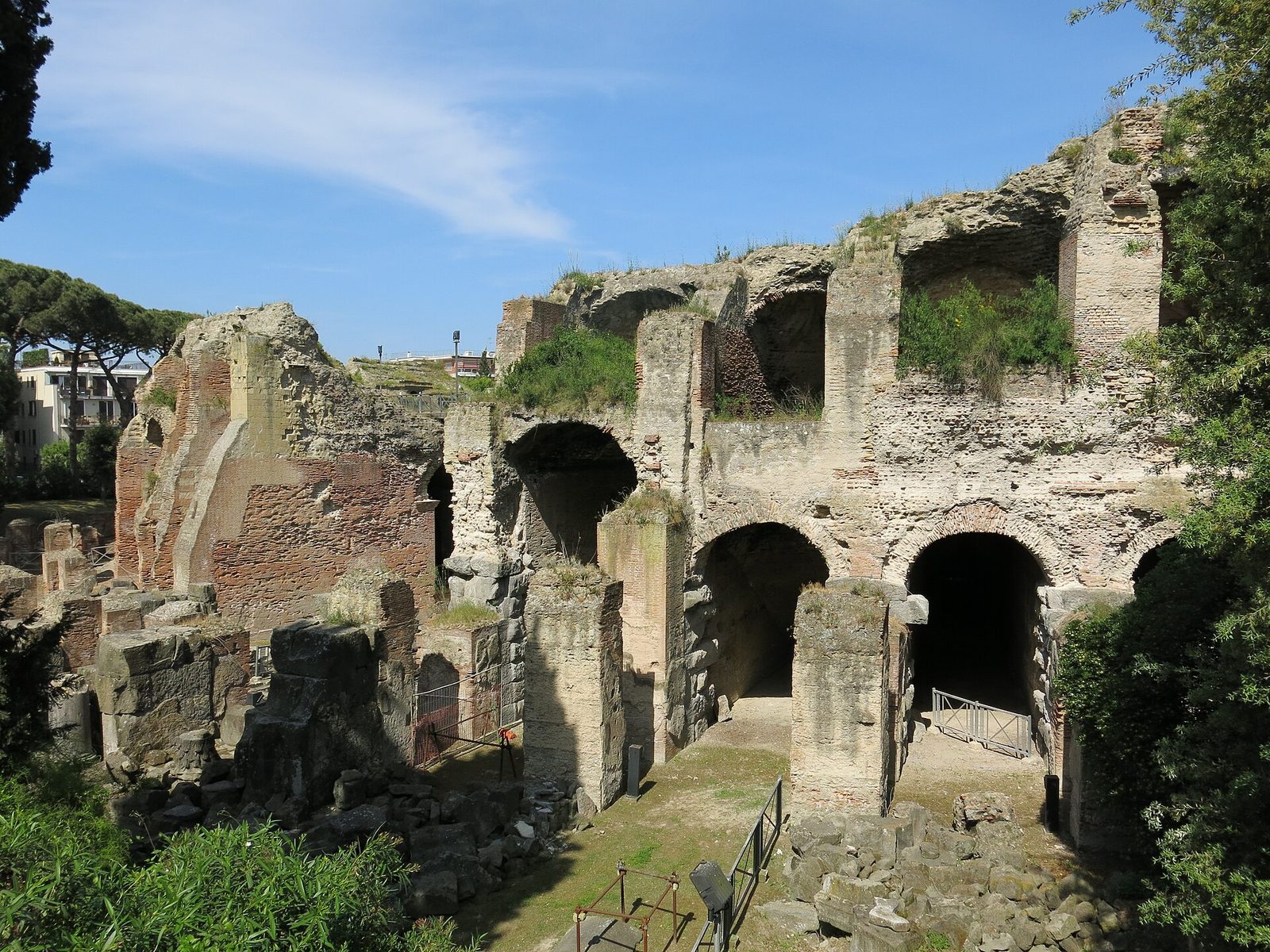
The amphitheater is open, with entry limited to small timed groups of about 25 every half hour, on the combined ticket described below. Book your slot online in advance.
The Rione Terra
The Rione Terra, the rocky promontory above the port, was the acropolis of Roman Puteoli. Beneath its buildings, excavations have revealed Roman streets, shops, bakeries and a brothel, and its cathedral was built inside a Roman temple whose marble columns are now visible again. It’s one of the most atmospheric archaeological sites in the region. However, it has been closed since the earthquake of July 31, 2026, pending safety inspections, and there’s no reopening date yet. Check before you plan around it.
The Solfatara: closed, and why
For generations the Solfatara was the Campi Flegrei’s most famous sight: a shallow crater of pale, steaming ground, bubbling mud pools and hissing fumaroles smelling of sulfur, just above Pozzuoli. It has been closed to the public since September 2017, when three members of a visiting family died after the ground gave way. After years of legal proceedings, the site’s seizure was lifted in 2025, but it remains closed, and a wildfire in July 2026 caused further damage. As of September 2026, there is no reopening date. Ignore any tour or website that still promises a visit.
Nearby, beside the road down from the Solfatara, the Pisciarelli fumaroles are currently the most active gas vents in the caldera. You can see the steam from the road, but don’t approach them. The gases they release, including carbon dioxide and hydrogen sulfide, are dangerous in high concentrations.
Baia: the sunken city
Baiae was the most fashionable resort of the Roman world, a place of hot springs, grand villas and scandal, where emperors and senators came to bathe, feast and misbehave. Nero, Caligula, Hadrian and many others had villas here. The volcanic springs that made it famous also doomed it. Over the centuries, bradyseism lowered the coast, and much of the ancient town slid beneath the sea, where it lies today, a few meters below the surface.
The Terme di Baia archaeological park
On the hillside above the modern harbor, the part of Baiae that stayed above water survives as a series of terraces of baths, halls, gardens and pools. Its great domed rooms, known by the misleading names of the Temples of Mercury, Venus and Diana, are among the largest domes built before the Pantheon. The so-called Temple of Mercury, half-flooded and with a famous echo, is magical. The park is open, with timed entry for groups of up to about 50 every half hour. It’s also a lovely, peaceful place, with views over the bay.
The underwater park
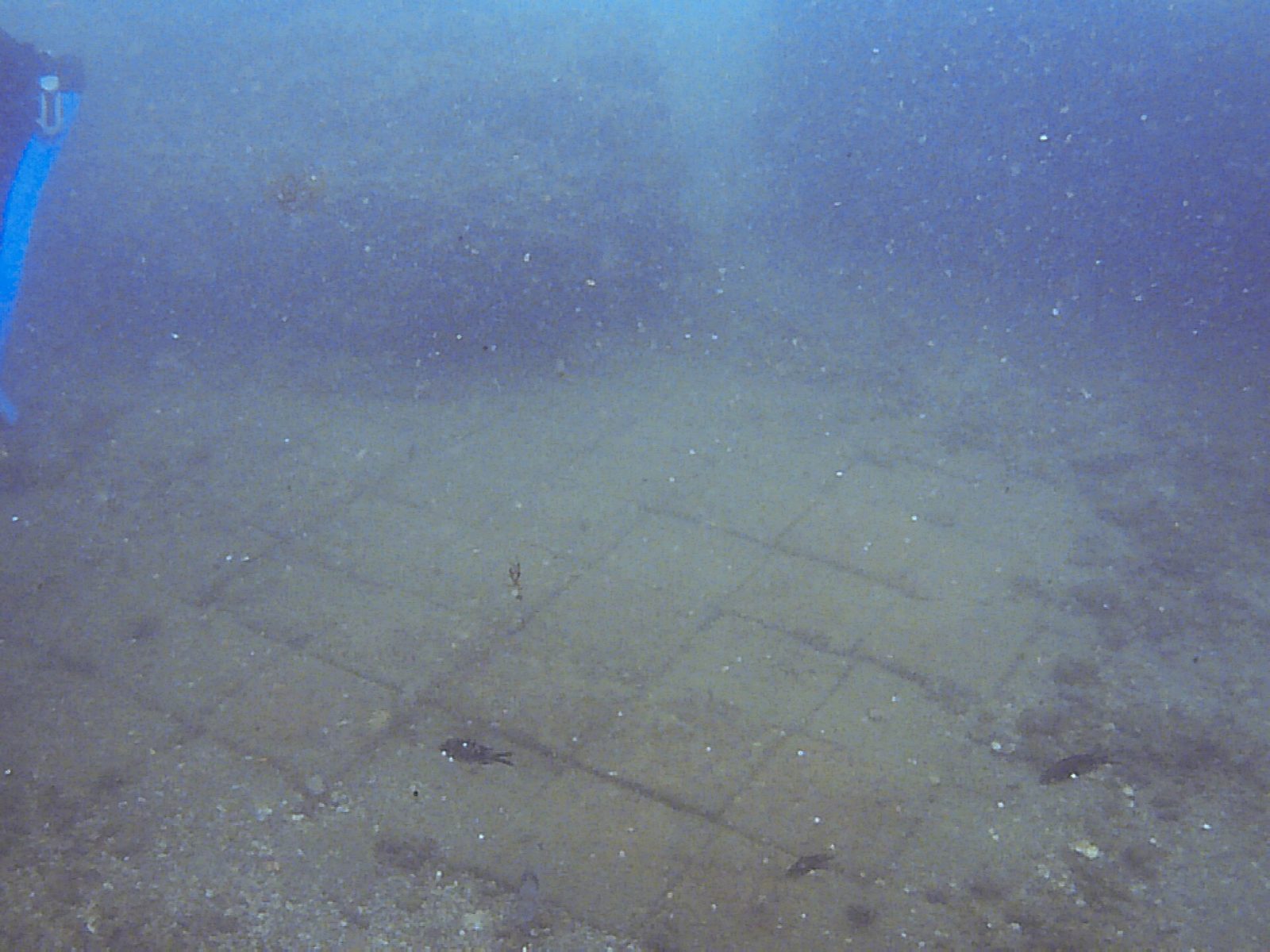
Offshore, the sunken remains of Baiae are protected as an underwater archaeological park. There are villa floors with mosaics, the outlines of streets and fishponds, and copies of the statues from the Nymphaeum of the Emperor Claudius, set back in their original positions under the sea. The originals are in the castle museum. In the warmer months and in calm weather, local operators run glass-bottom boat trips, snorkeling tours and guided dives. It’s one of the most unusual experiences in Italy: swimming over a Roman villa’s mosaic floor.
Castello di Baia and the archaeological museum
On the headland above Baia stands a great Aragonese castle, which now houses the Archaeological Museum of the Campi Flegrei. Its highlights are the reconstructed nymphaeum of Claudius, with the statues recovered from the sea, and the shrine of the Augustales from Misenum, with its bronze equestrian statue of an emperor. The castle’s terraces have wide views over the Gulf of Pozzuoli.
Cuma: the Sibyl’s cave
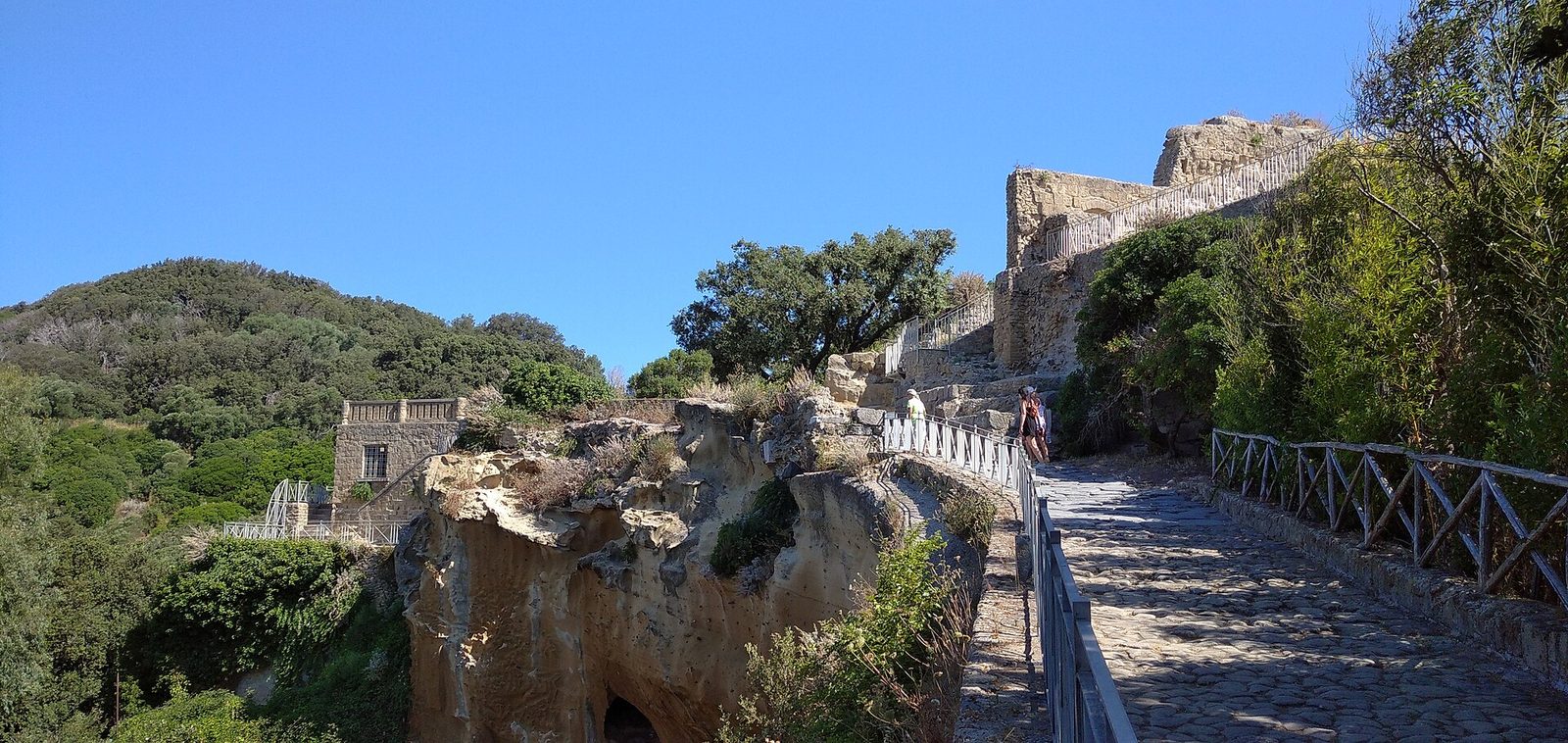
Founded by Greek settlers in the 8th century BC, Cumae was the oldest Greek colony on the Italian mainland, and for centuries one of the most important cities in the western Mediterranean. It was from here that the Greek alphabet spread to the Etruscans and the Romans. Today its ruins lie in a peaceful archaeological park among woods, fields and vineyards near the sea, far from any town, and they’re rarely crowded.
The star is the Antro della Sibilla, the Sibyl’s cave: a long gallery cut through the rock in a trapezoidal section, lit by shafts of daylight from openings along one side. It has long been identified with the cave where the Cumaean Sibyl, the most famous prophetess of the ancient world, gave her oracles, and where, in Virgil’s Aeneid, Aeneas came to consult her before descending to the underworld. Walking down it is one of the eeriest experiences in Italy. Above, a path climbs to the acropolis, with the remains of temples dedicated to Apollo and to Jupiter and views along the coast.
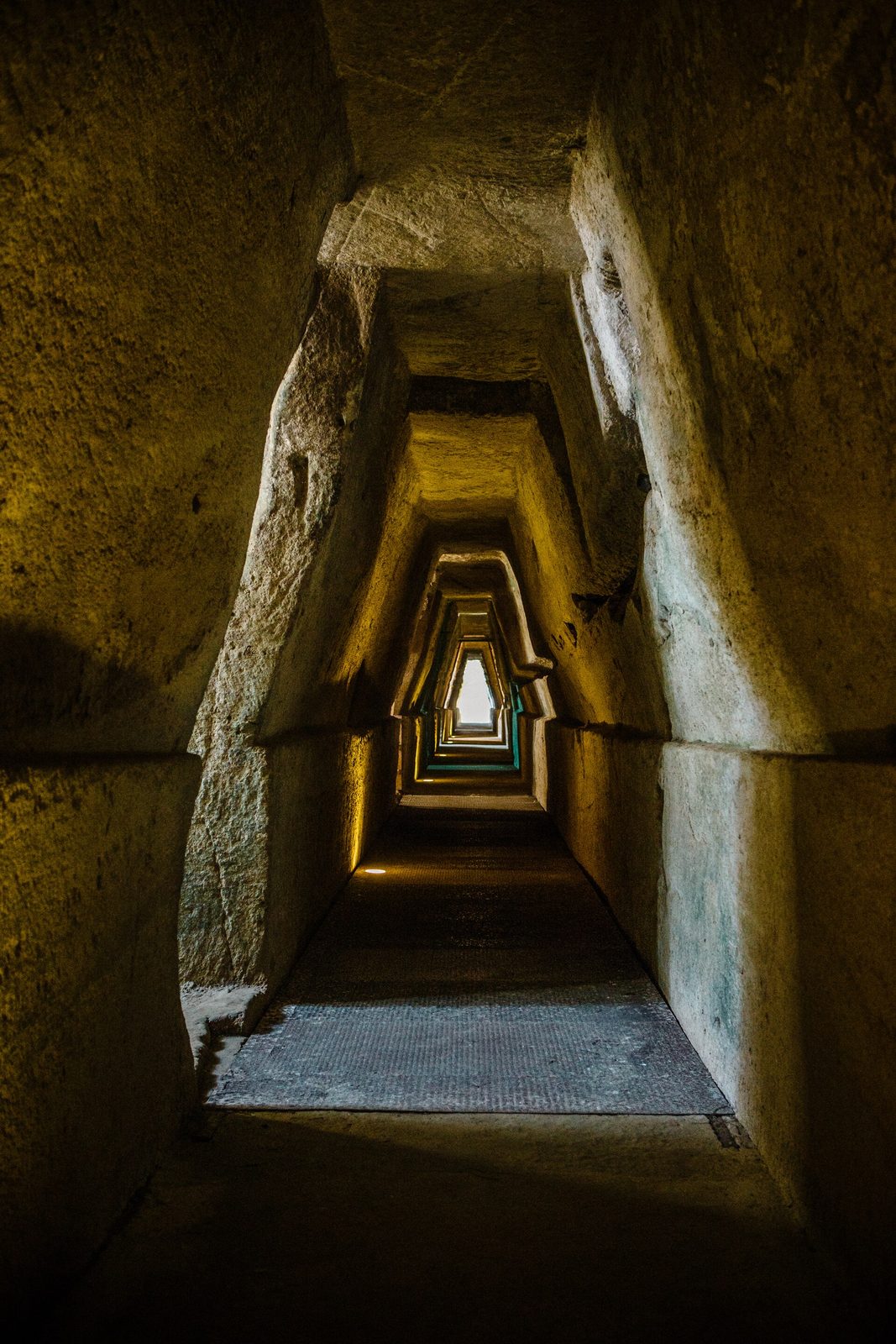
Cuma is open on the combined ticket. It’s the hardest of the major sites to reach without a car, so check the bus connections from the Cumana stations or take a taxi. Give it at least an hour and a half, and bring water, since there’s little shade on the acropolis.
Bacoli and Miseno
Beyond Baia, the coast curves round to the town of Bacoli and the headland of Capo Miseno. In Roman times this was Misenum, the base of the imperial fleet, and it was from here that the admiral Pliny the Elder sailed to his death during the eruption of Vesuvius in AD 79. His nephew, Pliny the Younger, watched the eruption from Misenum and wrote the only eyewitness account. Standing on Capo Miseno and looking across the bay to Vesuvius, you see exactly what he saw. The towns that eruption buried are covered in the Pompeii and Herculaneum guides.
The great sight here is the Piscina Mirabilis, the “wonderful pool,” a colossal Roman cistern built under Augustus to supply the fleet with water from the aqueduct. It’s an underground hall of tall arches and pillars in long rows, like a cathedral, and one of the largest Roman cisterns ever built. It’s open in 2026. Check the current visiting arrangements before you go, since they’ve changed over the years. Nearby are the Cento Camerelle, a maze of Roman tunnels and cisterns, and the long beach of Miliscola, where Neapolitans swim in summer. If you like Roman engineering, the Piscina Mirabilis is worth the whole trip. The underground theme continues in Naples itself, and the underground Naples guide covers the city’s cisterns and tunnels.
The lakes: Avernus, Lucrino and Fusaro
Lake Avernus fills an almost perfectly round crater between Pozzuoli and Baia. The Greeks and Romans believed it was an entrance to the underworld, and the name was said to mean “without birds,” because the fumes supposedly killed any that flew over. Today it’s a quiet, wooded lake with a path around the shore, the ruins of a large Roman bath hall long called the Temple of Apollo, and vineyards on the slopes. It’s a good place for a walk and a picnic away from the traffic.
Next to it, Lake Lucrino was famous in Roman times for its oyster beds. Further west, on Lake Fusaro, stands the Casina Vanvitelliana, an elegant 18th-century Bourbon hunting and fishing lodge on a tiny island, linked to the shore by a wooden bridge. It’s one of the most photographed buildings in the area. Check whether it’s open for visits if you want to see inside.
Getting to the Campi Flegrei
The Campi Flegrei begins where the city ends, and the local trains reach it quickly.
- The Cumana railway runs from Montesanto in central Naples along the coast through Bagnoli to Pozzuoli, Lucrino (for Baia and Avernus), Fusaro and Torregaveta. After its disruption during the 2026 crisis, the full line reopened on September 11, 2026, together with a new Pozzuoli station on Via Fasano. It’s the easiest way to reach Pozzuoli and Baia.
- Metro Line 2, the national rail company’s city line, usually runs to Pozzuoli too. As of September 2026, its section between Campi Flegrei station and Pozzuoli remains suspended, with a partial reopening under review after work to reduce carbon dioxide levels in the tunnel.
- Buses link Pozzuoli, Baia, Bacoli, Cuma and the Cumana stations. They’re useful but infrequent, so check times, especially for Cuma.
- A car or a driver makes it much easier to see several sites in a day, particularly Cuma and Bacoli.
- By sea, Pozzuoli is also the ferry port for Ischia and Procida, which makes the Campi Flegrei an easy stop on the way to or from the island of Ischia. See the Naples ferry guide for crossings.
For tickets and fares on the Cumana and the city network, see the getting around Naples guide.
Tickets: the CircuitoFlegreo
The main state-run sites are managed by the Campi Flegrei Archaeological Park, and one combined ticket, the CircuitoFlegreo, covers four of them over three consecutive days: the Anfiteatro Flavio in Pozzuoli, the Terme di Baia archaeological park, the museum in the Castello di Baia, and the Cuma archaeological park. It costs €10, or €5 reduced, as of September 2026. It’s one of the best-value tickets in Italy.
The crucial detail: since April 8, 2026, the sites’ ticket offices have closed, and tickets are sold only online, through the Musei Italiani app or website. Buy before you go, and book time slots where needed. The Anfiteatro Flavio admits about 25 people every half hour and the Terme di Baia about 50, so in busy periods it’s worth reserving ahead. The Piscina Mirabilis and the underwater park have their own arrangements.
A day in the Campi Flegrei
You can see the highlights in one full day from Naples, especially if you’re happy to use taxis for the longer hops. Here’s the plan I’d follow.
- Morning in Pozzuoli. Take the Cumana from Montesanto to the new Pozzuoli station. Walk to the Macellum, then to the Anfiteatro Flavio for your booked slot.
- Lunch by the port. Pozzuoli’s waterfront has good, unpretentious seafood restaurants.
- Afternoon at Baia. Take the Cumana or a bus to Lucrino or Baia. Visit the Terme di Baia archaeological park, and the castle museum if you have time, or take a glass-bottom boat over the sunken city if the sea is calm.
- Late afternoon at Cuma, by taxi or bus, for the Sibyl’s cave and the acropolis in the evening light, before heading back to Naples.
Alternatively, split it in two: Pozzuoli and Avernus one day, Baia, Bacoli and Cuma another. And check the news the evening before, in case of seismic activity or site closures. For how the Campi Flegrei compares with the region’s other excursions, see the day trips from Naples guide, and for the region’s other volcano, the Mount Vesuvius guide.
Eating in the Campi Flegrei
This is fish country. Pozzuoli’s fish market is one of the liveliest in the region, and the restaurants along its port and in Bacoli and Baia serve some of the best seafood around Naples, often at lower prices than in the city. Look for mussels and clams, fried anchovies, octopus and whatever came in that morning. The volcanic soil also produces excellent wines, above all the white Falanghina and the red Piedirosso of the Campi Flegrei denomination, made from vines on the crater slopes. A long seafood lunch with a bottle of local Falanghina is one of the best reasons to come. Many of the best places are small family-run trattorie, so ask locals where they eat.
Beaches and swimming
The Campi Flegrei coast is where many Neapolitans go to swim, and in summer its beaches are busy with locals rather than tourists. The long sandy beach of Miliscola, between Bacoli and Capo Miseno, and the beaches around Miseno and Lucrino are the most popular. Further north, beyond Cuma and Torregaveta, the coast opens into long stretches of dark volcanic sand backed by dunes and pine woods. Most beaches have a mix of beach clubs with sunbeds and free sections.
Water quality varies from beach to beach and from year to year, so check the regional bathing-water listings or ask locally before swimming, especially after heavy rain. The best swimming of all is from a boat, over the sunken city at Baia or off the cliffs around Capo Miseno.
Viewpoints worth the detour
Part of the pleasure of the Campi Flegrei is seeing how the craters, lakes and headlands fit together, and a few viewpoints make it click.
- The terraces of the Castello di Baia look across the Gulf of Pozzuoli to the town and, on clear days, to Posillipo and Vesuvius beyond.
- Capo Miseno, the headland beyond Bacoli, has the widest view of all, over Procida, Ischia and the whole bay. It’s a steep climb, best done early or late in the day.
- Monte di Procida, the high ground at the western tip of the mainland, looks straight across the water to Procida and Ischia.
- The acropolis of Cuma looks along the long, straight coast to the north, with the sea on one side and the woods on the other.
- The rim of Lake Avernus shows you the crater shape better than any map.
The late afternoon light is the best for all of them, when the sun drops toward Ischia and the whole gulf turns gold. Bring a picnic, find a bench, and give the view the time it deserves; it’s the best free experience in the whole area.
The Campi Flegrei with children
Children tend to love this area once you give it the right spin. The underground of the Anfiteatro Flavio, where the lions and gladiators waited, is a hit. So is the long, echoing Sibyl’s cave at Cuma, and a glass-bottom boat over the sunken Roman city is a highlight at any age. Pair the sites with a swim at Miliscola or a lakeside picnic at Avernus, and keep the days short, since the sites are spread out and the buses slow. Keep children well away from any fumaroles or fenced areas, and explain why. The volcanic science makes a good story in itself.
Timing your visit
Start early. The sites open in the morning, the timed slots at the Anfiteatro Flavio and the Terme di Baia fill up at busy times, and in summer the heat at Cuma’s exposed acropolis becomes serious by early afternoon. Weekdays are quieter than weekends, when Neapolitans head to the coast. For the underwater park, you need calm, clear water, which means the warmer months and a settled forecast. Outside that season, the land sites are at their most pleasant, cooler and emptier. For how the seasons compare across the region, see the best time to visit Naples.
Whatever the season, the one rule that matters in 2026 is to check the news the evening before and the morning of your visit. After a strong earthquake, sites close for inspections, sometimes for days, and it’s better to know before you set off.
What to skip
- The Solfatara. It’s been closed since 2017, and it’s still closed. Ignore any tour or listing that says otherwise.
- The Rione Terra, for now. It’s closed after the July 2026 earthquake. Check before you plan around it.
- Expecting to buy tickets at the gate. Since April 2026, the park’s tickets are online only.
- Relying on Metro Line 2 to Pozzuoli. Take the Cumana while Line 2’s Pozzuoli section is suspended.
- Approaching fumaroles or entering fenced areas. Volcanic gases collect in hollows and can be deadly.
- Visiting right after a strong earthquake. Sites close for checks, and you’ll be in the way of people dealing with it.
- Sensational “supervolcano” headlines. Read the Civil Protection Department and the Osservatorio Vesuviano instead.
Campi Flegrei frequently asked questions
Is it safe to visit the Campi Flegrei in 2026?
For a day visit, yes, with sensible precautions. As of September 2026, the alert level is yellow, the second of four, and earthquake activity has eased since the summer peak. The main archaeological sites and the Cumana railway are open. Check the Civil Protection Department and local news before you go, and follow any closures or instructions.
What is the current alert level at the Campi Flegrei?
Yellow, meaning attention. It has been at yellow since 2012 and was confirmed there in September 2026. Yellow indicates changes from the volcano’s background state and intensified monitoring, but it isn’t an eruption warning. The scale runs from green through yellow and orange to red, and orange would be the stage for preparing possible evacuations.
Is the Solfatara open?
No. The Solfatara crater in Pozzuoli has been closed to the public since September 2017, when three members of a visiting family died there. The site’s seizure was lifted in 2025, but it has not reopened, and a wildfire in July 2026 caused further damage. There’s no reopening date as of September 2026.
Could the Campi Flegrei erupt?
It’s an active volcano, and it last erupted in 1538. The scientists who monitor it say current data don’t point to a significant change in the short term. Eruptions at calderas like this are expected to be preceded by changes that the monitoring network is designed to detect, and Italy has detailed emergency plans for the surrounding towns.
How do I get from Naples to Pozzuoli?
Take the Cumana railway from Montesanto station in central Naples. The full line reopened on September 11, 2026, with a new Pozzuoli station on Via Fasano, and the ride takes around twenty-five minutes. Metro Line 2’s section into Pozzuoli remains suspended as of September 2026. A taxi is the alternative with luggage.
Can you see the sunken city of Baia?
Yes. The sunken remains of the Roman resort lie a few meters underwater in a protected archaeological park, and in the warmer months, in calm weather, local operators run glass-bottom boat trips, snorkeling tours and dives over the mosaics and villas. On land, the Terme di Baia park and the museum in the Castello di Baia show what survived above water.
What is the CircuitoFlegreo ticket?
It’s a combined ticket for four sites of the Campi Flegrei Archaeological Park: the Anfiteatro Flavio, the Terme di Baia park, the museum in the Castello di Baia and the Cuma park. It’s valid for three consecutive days and cost €10 (€5 reduced) in September 2026. Since April 2026, it’s sold online only, through the Musei Italiani app or website.
Is the Rione Terra open?
Not as of September 2026. The Rione Terra, the ancient acropolis of Pozzuoli with its underground Roman streets, has been closed since the earthquake of July 31, 2026, pending safety inspections. No reopening date had been announced. Check the Campi Flegrei Archaeological Park’s website before planning a visit.
The Campi Flegrei also have the closest real sand to Naples. Miliscola and Miseno, below the headland at Bacoli, are where the city goes when it wants a sandy beach, and the underwater park at Baia is one of the strangest swims in Italy. The beaches near Naples guide covers them alongside Posillipo, the islands and the coast.
Photo credits
- The Macellum (“Temple of Serapis”), Pozzuoli: photo by Norbert Nagel, Wikimedia Commons, CC BY-SA 3.0.
- Columns of the Macellum, Pozzuoli: photo by Norbert Nagel, Wikimedia Commons, CC BY-SA 3.0.
- Anfiteatro Flavio, Pozzuoli: photo by ho visto nina volare from Italy, Wikimedia Commons, CC BY-SA 2.0.
- Underwater floor at Baia: photo by Ruthven, Wikimedia Commons, CC0.
- Antro della Sibilla, Cuma: photo by Cimmino G, Wikimedia Commons, CC BY-SA 4.0.
- The acropolis of Cuma: photo by Baku, Wikimedia Commons, CC BY-SA 4.0.
Sources: alert level from the Italian Civil Protection Department; seismic and ground-deformation data from the Osservatorio Vesuviano (INGV) weekly bulletin of September 22, 2026; site openings, the CircuitoFlegreo ticket and online-only sales from the Campi Flegrei Archaeological Park; Cumana reopening from EAV and the Campania Region; Solfatara status from 2026 reporting. All checked September 2026.