On this page
Last updated September 10, 2026. Blue Grotto hours, the landing fee and funicular fares checked against official and island sources for 2026. Where sources disagree, notably on the Blue Grotto price, I say so rather than pick one.
Capri from Naples, Italy is a 50-minute fast ferry from Molo Beverello. Slower ferries from Calata Porta di Massa, about a kilometer away, take up to an hour and a half. Take one of the first boats, head straight for the Blue Grotto or Anacapri before the crowds arrive, and budget far more than you would for a day in Naples.
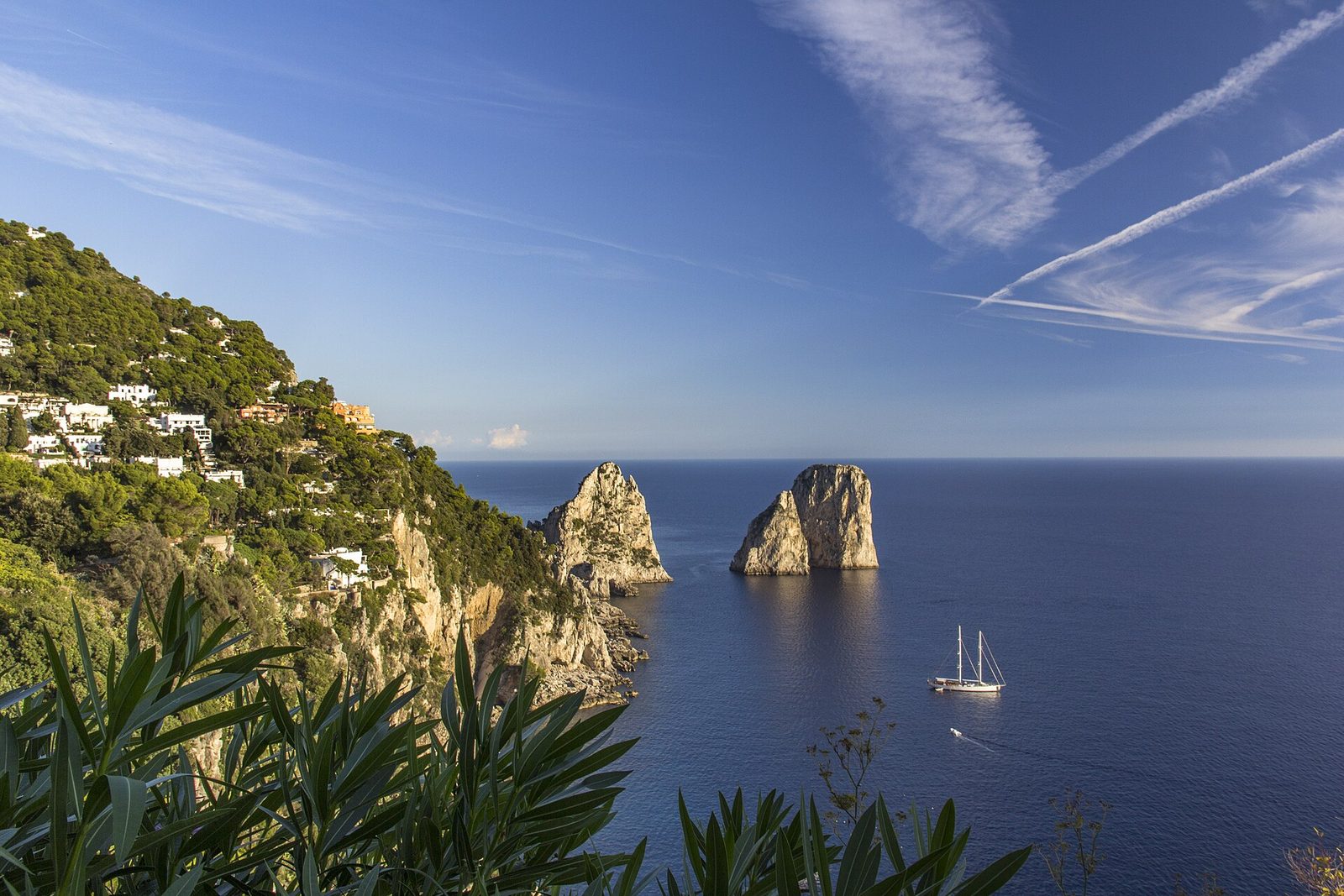
Capri is the island almost everyone adds to a Naples trip, and it deserves its reputation: sheer limestone cliffs dropping into impossibly blue water, the Faraglioni rocks standing offshore, lemon groves and bougainvillea, and views that stop you on every corner. It’s also the day trip where I see the most travelers have a bad time. And it’s almost always for one of three reasons.
First, they miss their boat because they went to the wrong pier. Naples has two departure points for Capri, a kilometer apart, and the ticket doesn’t always make it obvious. Second, they queue for two hours for a Blue Grotto that turns out to be closed for the day, or they pay a small fortune for five minutes inside it without knowing what they were buying. Third, they discover that Capri is one of the most expensive places in Italy, from the funicular queue to the price of a coffee in the Piazzetta.
This guide fixes all three. I’ve kept the ferry mechanics light, since this page is about the island rather than the boat. What you need to know is which pier, how long, and what goes wrong. The rest is about doing Capri well in a day, or deciding whether to stay the night.
Capri from Naples at a glance
| Question | Short answer (checked September 2026) | What most people get wrong |
|---|---|---|
| How long is the crossing? | About 50 minutes by fast ferry from Molo Beverello; roughly 55 minutes to 1 hour 25 minutes by slower ferry from Calata Porta di Massa | Booking the cheaper slow ferry and assuming it leaves from Beverello |
| Which pier? | Fast boats (hydrofoils and jets): Molo Beverello. Car and slow ferries: Calata Porta di Massa, about 1 km east | Arriving at the wrong one 10 minutes before departure |
| Is there a landing fee? | Yes: €5 per person from April 1 to October 31, €2.50 from November 1 to March 31, added to your ferry ticket | Not realizing it’s why the fare looks higher than expected |
| How do I get up from the port? | Funicular from Marina Grande to the Piazzetta, €2.40 a ride, about 4 minutes | Not buying the return ticket, then queuing twice |
| Is the Blue Grotto open? | Only in calm seas. 2026 hours run from 8:30 in high season, shorter in autumn and winter | Committing the whole morning without checking it’s open |
| How many hours on the island? | Six to eight on a day trip is plenty for two areas of the island | Trying to see Capri town, Anacapri, the grotto and a beach in one day |
| What does the day cost? | Much more than Naples. The boat is the biggest fixed cost, then the grotto, then food | Budgeting Naples prices for lunch |
Molo Beverello or Calata Porta di Massa: getting the pier right
This is the single most common way to ruin a Capri day before it starts, so it’s worth two minutes.
Naples has two departure points for Capri, and they’re about a kilometer apart along the port road. Molo Beverello is the hydrofoil and fast-ferry pier opposite Castel Nuovo and Piazza Municipio, in the middle of the city. This is where the fast boats (aliscafi, hydrofoils, and jet) leave for Capri, Ischia, Procida, Sorrento and, in season, the Amalfi Coast. The crossing to Capri takes about 50 minutes. Calata Porta di Massa is further east along the port, toward the station end of the city. This is where the larger, slower car and passenger ferries (traghetti) leave. They’re usually a little cheaper and take roughly 55 minutes to an hour and 25 minutes, depending on the boat.
The trap: if you book the cheapest option online, it may well be a slow ferry from Porta di Massa, and it’s easy to assume every Capri boat leaves from Beverello. Check the departure point on your ticket, and if it says Porta di Massa, allow at least 15 minutes to walk there from Beverello with luggage. Get to either pier half an hour before departure in high season. Boarding lines are long, and the boats leave on time.
For fares, timetables and the operators on each route, see the operators’ own sites or a reputable booking platform. Two practical points matter for the island: the landing fee is built into your ticket, so don’t be surprised by it. And in high season, book your return boat in advance, because the late-afternoon boats back to Naples fill first.
Other ways to reach Capri. From Sorrento, the crossing is much shorter, which is one reason Sorrento makes such a good base for the island. In season, boats also run from Positano, Amalfi and Salerno on the Amalfi Coast, so you can combine the two. There’s even a helicopter service from Naples to the heliport at Damecuta, near Anacapri, for anyone for whom the ferry lines are a step too far.
Arriving at Marina Grande
Every boat from Naples docks at Marina Grande, Capri’s main harbor, on the north side of the island. It’s a lively, slightly chaotic place when the morning boats come in, with day-trippers, tour groups, porters, taxis, and ticket booths for the island boat tours all competing for your attention. Take a breath and decide your plan before you get swept along.
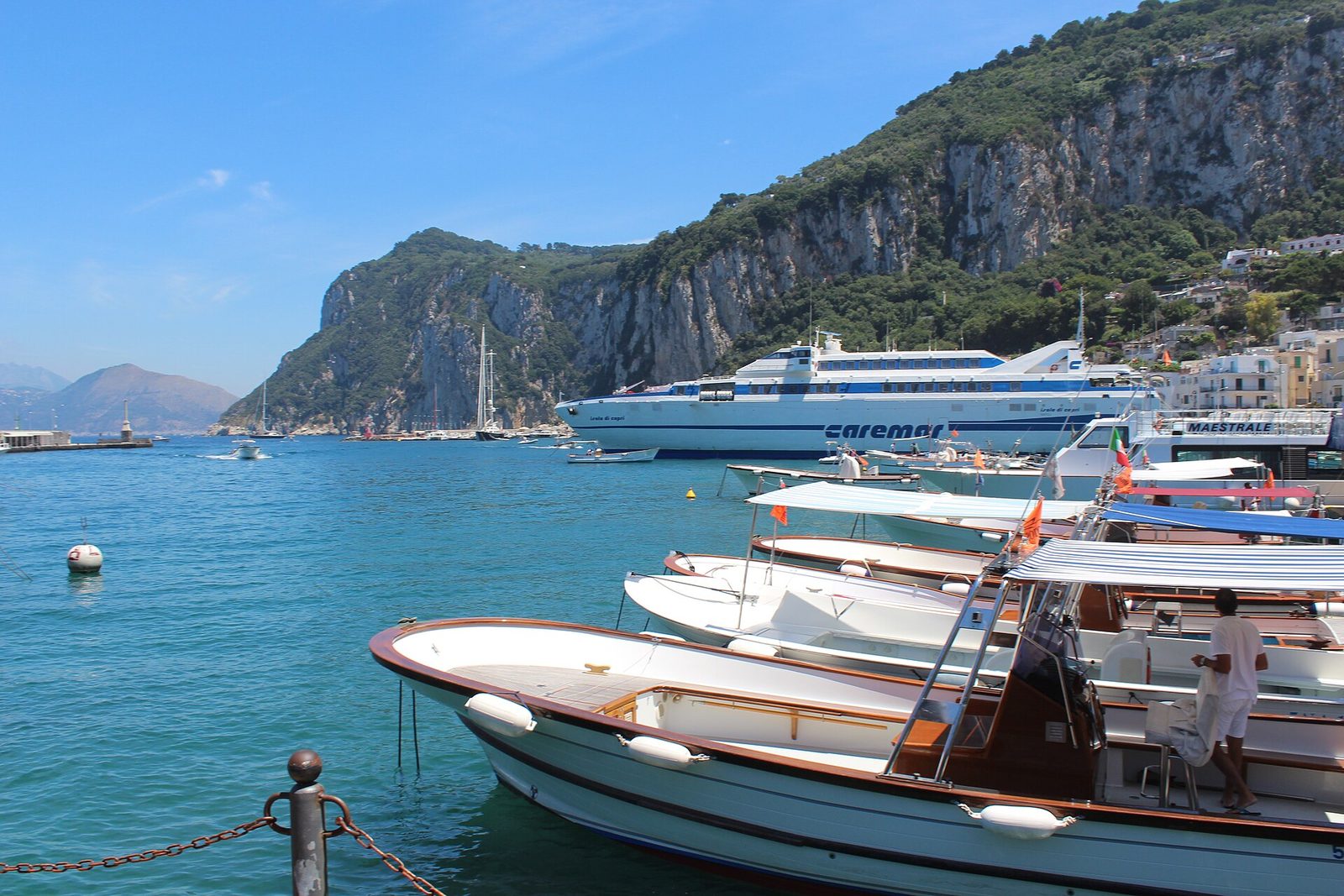
The funicular. The quickest way up from the harbor to Capri town is the funicular, which climbs to the Piazzetta in about four minutes. A single ride costs €2.40 (some sources list €2.50) in 2026, and the turnstiles take contactless card payments. In high season, the queue at the bottom can be long when several boats arrive at once. If you’re going straight to the Blue Grotto or taking a boat tour, do that first and ride the funicular later, when the queue has cleared. The funicular closes for annual maintenance from January until Easter, when a replacement bus runs.
Buses. Small orange buses run from Marina Grande to Capri town and Anacapri, and from Anacapri to the Blue Grotto and the lighthouse at Punta Carena. They’re cheap and frequent, but tiny and very crowded in high season. Expect to stand, and to watch one or two full ones leave without you at peak times.
Taxis. Capri’s taxis are mostly open-topped convertibles, and they’re genuinely useful for getting to Anacapri or a hotel with luggage. They’re also expensive. Agree the fare or check the tariff before you set off.
Luggage. If you’re staying the night, porters at the harbor will take your bags to your hotel. Day-trippers should travel light. There’s no good reason to haul a suitcase around the island’s steep lanes.
The Blue Grotto, honestly
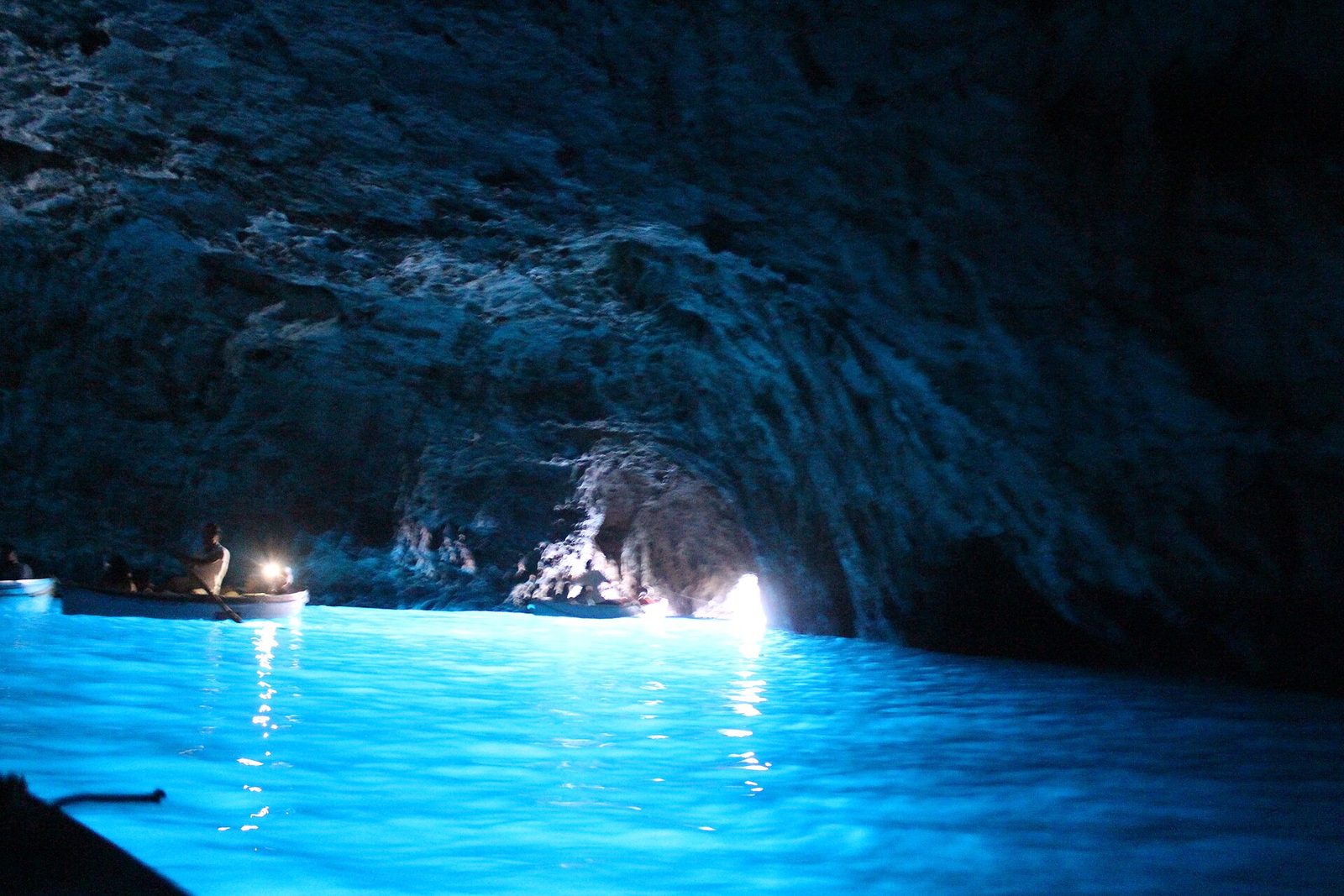
The Grotta Azzurra (Blue Grotto) is a sea cave on the northwest coast of the island, below Anacapri. Sunlight passing through an underwater opening turns the water inside an intense, glowing blue. When you’re there on a calm, sunny day, it’s a genuinely magical few minutes. But it’s also the attraction where Capri most often disappoints, and it’s worth understanding exactly how it works before you commit your morning to it.
How a visit works
The cave’s entrance is a hole in the cliff barely a meter high, so you can’t take a normal boat in. There are two ways to get to it. You can take a motorboat from Marina Grande around the coast to the grotto mouth, or take the bus to Anacapri and then the bus or a walk down to the steps above the entrance. Either way, at the entrance you transfer to a small wooden rowboat, pay the entry fees, lie back flat in the bottom of the boat while the boatman pulls you through the opening on a chain, and then glide around the cave for a few minutes while he sings. Then you’re out again.
What it costs
This is where sources don’t agree, and I’d rather tell you that than give you a false figure. The entrance ticket is listed at €14 on older official and booking listings, while several 2026 sources put it at €18–19. On top of the entrance, you pay the rowboat fee, and if you come by motorboat from Marina Grande, that boat trip too. Under-6s are free. The honest summary: by the time you’ve paid for the boat from Marina Grande, the rowboat and the entrance, the Blue Grotto is one of the more expensive few minutes you’ll spend in Italy. Check the current entrance price with the official ticket seller before you go.
When it’s open
According to 2026 information, the grotto opens from 8:30 to 18:00 from April 1 to September 30, from 8:30 to 16:00 from October 1 to 15, and from 9:00 to 14:00 from October 16 to March 31. It’s always closed on December 25 and January 1. More importantly, it closes whenever the sea is too rough to row safely through the entrance, which happens often, including on sunny days with a swell. It can also close partway through the day when conditions change.
My verdict
The Blue Grotto is worth it on a calm day, if you go early, and if you understand that you’re paying for a few minutes of something beautiful rather than a long visit. In high season, the wait at the entrance can stretch to an hour or two, with boats bobbing in the swell outside, which isn’t much fun if you get seasick. My advice:
- Check that it’s open the morning you go. Ask at the boat booths in Marina Grande, or check the island’s official information.
- Go first thing, on one of the first boats of the day, before the tour groups arrive, or late in the afternoon when the crowds have thinned.
- If the sea is rough or the wait is long, skip it without regret. The rest of Capri is more rewarding, and a boat tour around the island shows you the other sea caves anyway.
- If you’re claustrophobic or have back problems, think twice about lying flat in a rowboat through a very low opening.
The boat tour around the island
If I could only do one thing on Capri, it would be a boat trip around the island, the giro dell’isola. Capri is seen at its best from the water. The tours leave from Marina Grande and take an hour or two to circle the island, passing the Faraglioni, the three limestone stacks off the southeast coast (you’ll usually sail through the arch in the middle one). They also pass the Grotta Verde and Grotta Bianca, sea caves with green and white light, the sheer cliffs below Anacapri and the lighthouse at Punta Carena, and the villas and coves you can’t see from land. Many tours include a stop at the Blue Grotto if it’s open, where you transfer to the rowboats and pay the entry separately.
Shared boat tours are the budget option, and private boats, with or without a skipper, are a splurge that’s well worth it for a group. The shared tours are best in the morning, when the sea is usually calmer and the light is good. If you only have half a day on Capri, the boat tour plus a walk around Capri town is a better use of it than a morning in the Blue Grotto queue.
How to do Capri in a day from Naples
Capri in a day is absolutely doable, and it’s how most visitors see it. The key is to divide the island in two and not try to do everything. Capri has two towns: Capri itself, above Marina Grande, with the Piazzetta, the shops and the Gardens of Augustus, and Anacapri, higher up on the western side, quieter and greener, with Monte Solaro and Villa San Michele. The Blue Grotto and the boat tour are on the water. In a day, you can comfortably do two of these four. Here’s the plan I’d follow.
The plan: early boat, Anacapri first, Capri town in the afternoon
- Take one of the first fast ferries from Molo Beverello. Arriving early is the single biggest improvement you can make to a Capri day. You’ll have an hour or two before the main wave of day-trippers.
- Decide on the Blue Grotto at the harbor. If it’s open and the sea is calm, go straight there by boat from Marina Grande, or book a boat tour that stops there. If it’s closed or the queue is already long, skip it.
- Go up to Anacapri. Take the bus or a taxi. Ride the chairlift to the top of Monte Solaro, the highest point on the island, for the best view on Capri. Come back down and visit Villa San Michele, the house and garden built by the Swedish doctor Axel Munthe, with its famous terrace over the Bay of Naples.
- Lunch in Anacapri. It’s a little quieter and a little less expensive than Capri town.
- Afternoon in Capri town. Take the bus to Capri, walk through the Piazzetta, the little square that’s the social heart of the island, and head down to the Gardens of Augustus for the view over the Faraglioni and the south coast. If you have the energy, walk out to the Belvedere di Tragara or the Arco Naturale, a natural rock arch, both about half an hour on foot through lanes of villas and gardens.
- Aperitivo in the Piazzetta, then the funicular down to Marina Grande and your booked boat back to Naples.
The reverse order also works: Capri town first while it’s quiet, then Anacapri in the afternoon, when the day-trippers pile into the Piazzetta. Either way, the principle is to be where the crowds aren’t.
The slow version: boat tour and a swim
If you’d rather not spend the day on crowded buses, do this instead. Take the boat tour around the island in the morning, have a long lunch at one of the restaurants by the sea, and spend the afternoon swimming. The beach clubs at Marina Piccola on the south coast are lovely, and the rocks at the Faro di Punta Carena lighthouse are good for a swim at sunset if you’ve got the time. Then take the funicular or the bus back to Marina Grande for the boat home. It’s a more relaxing way to experience the island, and on a hot day it’s the better choice.
Anacapri and Monte Solaro
Anacapri is the island’s second town, higher up and to the west, and in many ways it’s the more rewarding half of Capri for a day-tripper. It’s greener, quieter, and a little less polished and expensive than Capri town, with whitewashed lanes, local shops, and some of the best views on the island.
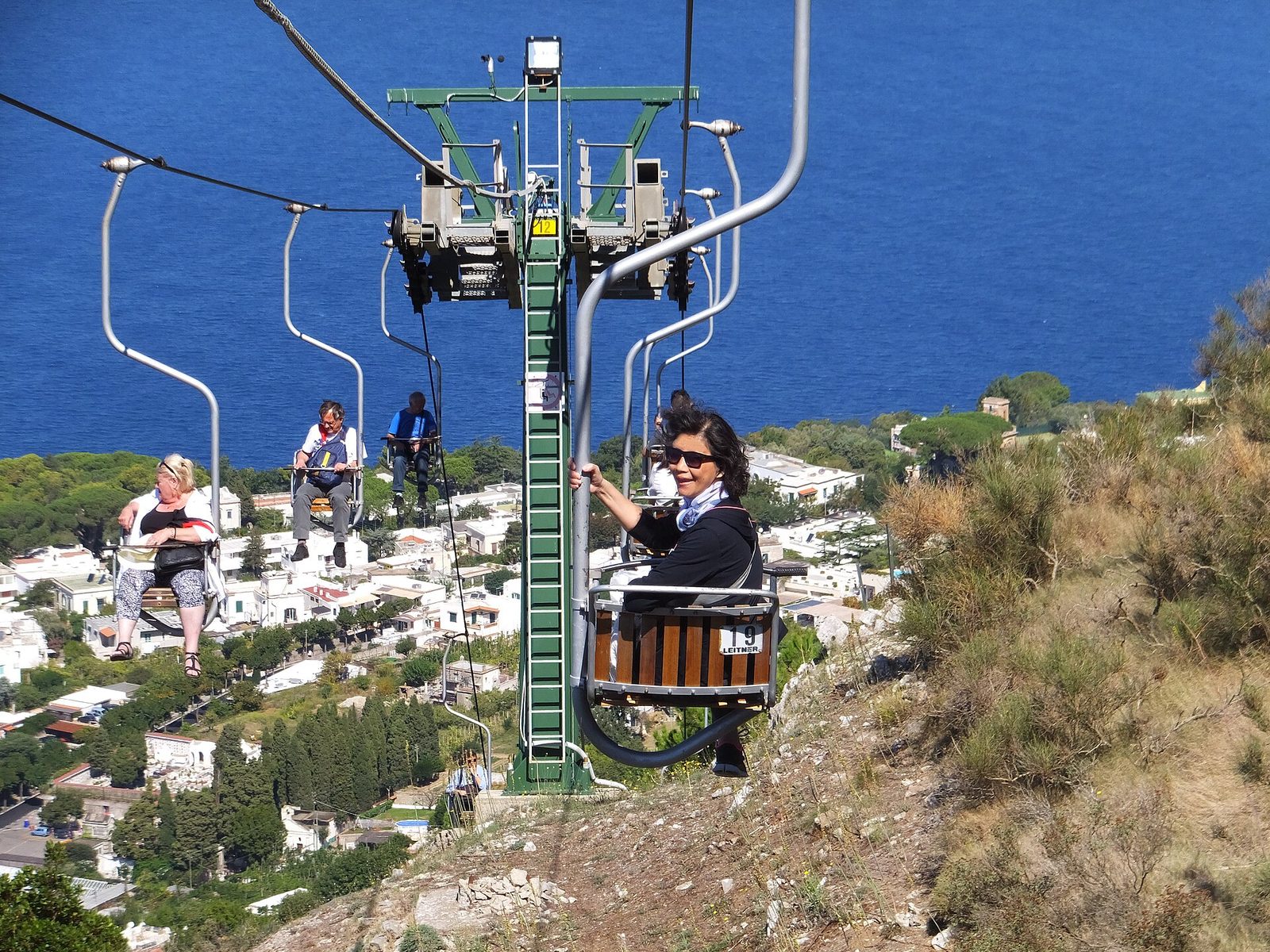
Monte Solaro is the highest point on Capri, and the chairlift from Anacapri to the summit is one of the great small pleasures of the island. It’s a single-seat chairlift that floats you up over gardens, vineyards and rocky hillside, taking around a quarter of an hour each way. At the top, the view takes in the whole island, the Faraglioni, the Bay of Naples, Vesuvius and the Sorrento peninsula. There’s a café at the top. You can also walk up or down, which takes about an hour on a steep path, and walking down is the easier option.
Villa San Michele is the house the Swedish doctor and writer Axel Munthe built on the ruins of a Roman villa, with a garden and a pergola ending at a terrace high above the Bay of Naples, and a sphinx looking out to sea. It’s one of the most beautiful places on the island, and it’s a short walk from Anacapri’s main square.
Anacapri also has the church of San Michele, with an 18th-century majolica floor depicting the Garden of Eden, and the lighthouse at Punta Carena, at the island’s southwest tip, where you can swim off the rocks.
Capri town
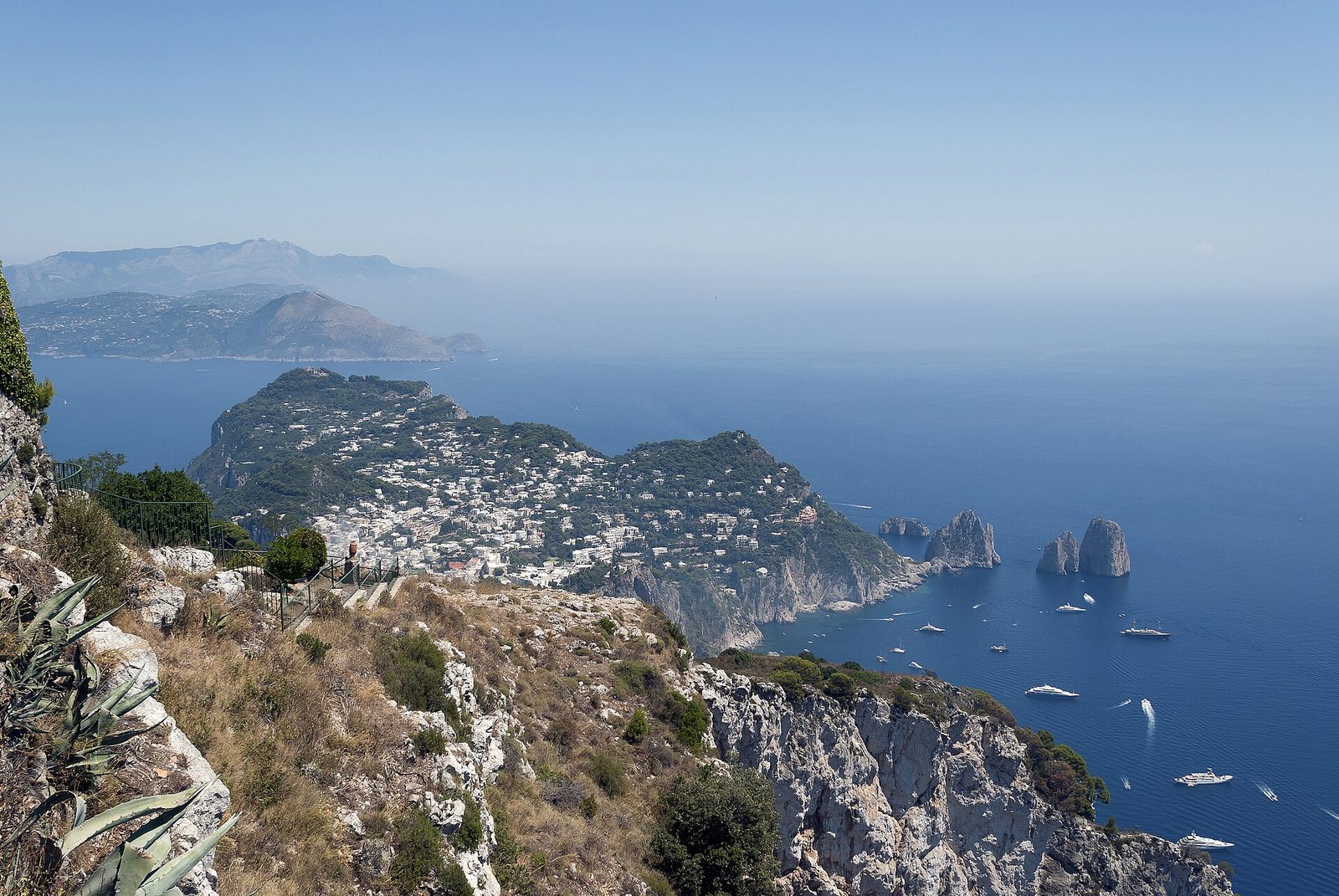
Capri town is the glamorous heart of the island: a warren of white lanes, designer boutiques and grand hotels built on a saddle between two hills, with the Piazzetta at its center. The Piazzetta (officially Piazza Umberto I) is tiny, surrounded by cafés, and famous as a place to see and be seen. A coffee there costs a lot more than in Naples, but it’s a rite of passage.
- The Gardens of Augustus (Giardini di Augusto) are terraced gardens with the island’s most famous view, over the Faraglioni and down to Marina Piccola. Below them, the Via Krupp, a spectacular zigzag path cut into the cliff, has been subject to long closures for rockfall safety works, so check locally before planning around it.
- The Certosa di San Giacomo, a 14th-century monastery near the gardens, has cloisters and a small museum, and it’s a peaceful escape from the lanes.
- Via Camerelle and Via Vittorio Emanuele are the shopping streets, lined with fashion boutiques and shops selling Capri’s handmade sandals, linen and limoncello.
- The walk to the Arco Naturale and the Belvedere di Tragara takes you away from the crowds, through lanes of villas and gardens, to a natural rock arch and to the best viewpoint over the Faraglioni.
- Villa Jovis, the ruins of the emperor Tiberius’s clifftop palace, sits on Monte Tiberio at the island’s eastern tip, a steep walk of 45 minutes or so from the Piazzetta. The views are extraordinary. Check that it’s open before you set out.
Getting around the island
Capri is small, only about six kilometers long, but it’s steep, and its roads are narrow and crowded. Non-resident cars are restricted, so you’ll get around by funicular, bus, taxi and on foot.
- The funicular (€2.40 a ride in 2026) links Marina Grande with the Piazzetta in Capri town.
- The buses link Marina Grande, Capri town, Anacapri, Marina Piccola, the Blue Grotto and Punta Carena. They’re small, cheap and very crowded in high season.
- Taxis are mostly open-topped convertibles, comfortable and expensive. They’re worth it with luggage or with a group of four.
- Walking is the best way to explore both towns and the paths between the viewpoints. Wear proper shoes, because many lanes are steep and stepped.
For a day trip, plan on the funicular, one or two bus rides and a lot of walking. The tickets are cheap. The real cost is time in the queue, so travel against the crowds where you can.
What a day on Capri really costs
Capri is expensive, and there’s no point pretending otherwise. Here’s a realistic breakdown for one person on a day trip from Naples, with the figures I’ve verified for 2026 and honest bands where prices vary.
| Item | Cost (checked September 2026) | Notes |
|---|---|---|
| Ferry from Naples, return | Your biggest fixed cost; varies by operator and boat type | Fast boats from Beverello cost more than slow ferries from Porta di Massa |
| Landing fee | €5 (April to October), €2.50 (November to March) | Included in your ferry ticket |
| Funicular, Marina Grande to the Piazzetta | €2.40 per ride | Budget two rides, up and down |
| Island buses | A few euros per ride | Budget two to four rides |
| Blue Grotto | Entrance €14–19 (sources disagree), plus the rowboat fee, plus the boat from Marina Grande if you go by sea | Only if it’s open; skip it if the sea is rough |
| Boat tour around the island | Varies widely between shared and private boats | Compare what’s included, especially whether the Blue Grotto stop is extra |
| Monte Solaro chairlift | A return ticket is a modest extra | Worth every cent |
| Food and drink | Noticeably higher than Naples, especially in the Piazzetta | A simple lunch can cost what a good dinner does in Naples |
Ways to keep the cost down: eat lunch in Anacapri rather than Capri town, and buy a sandwich from a salumeria (delicatessen) for a picnic with a view. Carry a refillable water bottle. Take the bus rather than taxis. And decide whether the Blue Grotto is really for you before you pay for a boat to get there.
Should you stay the night on Capri?
If you can afford it, yes, at least once. Capri changes completely after the last day-trip boats leave in the late afternoon. The Piazzetta empties of tour groups and fills with residents and hotel guests, the lanes go quiet, and the island becomes the romantic place of its reputation. Staying the night also means you can see the island in the early morning, before the first boats arrive, which is the most beautiful time of the day.
The downside is price. Hotels on Capri are among the most expensive in Italy, especially in high season, and many close for the winter. Anacapri has somewhat better value than Capri town. If a night on the island is out of budget, the next best thing is a base in Sorrento, with a much shorter crossing, or an early boat from Naples.
Capri, Ischia or Procida?
All three islands are reachable from Molo Beverello, and they suit very different travelers.
- Capri is the most dramatic and the most famous, with sheer cliffs, the Faraglioni, the Blue Grotto and glamour. It’s also the busiest and the most expensive. It’s best for a first visit and for people who want the classic view.
- Ischia is the largest island, greener and more relaxed, famous for its thermal spas and gardens. It rewards a stay of a night or two more than a day trip.
- Procida is the smallest, a colorful fishing island of pastel houses and quiet lanes, with far fewer crowds. It’s the one I’d suggest to anyone who’d rather wander than queue.
After the July 2026 earthquake closed the port at Pozzuoli, ferries to Ischia and Procida were diverted to Naples, which for the moment makes both easier to reach from the city center.
What to skip
- The Blue Grotto on a rough day. Don’t queue for two hours for a cave that may close before you reach it.
- Taking the funicular up as soon as you land at peak time. Do the Blue Grotto or a boat tour first, and ride up when the queue has cleared.
- Trying to see Capri town, Anacapri, the grotto and a beach all in one day. Pick two.
- Lunch in the Piazzetta on a budget. Have your coffee there for the experience, and eat somewhere else.
- A slow ferry from Porta di Massa if you’ve planned your day around arriving early. The fast boats from Beverello are worth the difference.
- Visiting Capri on the day before you fly home. A rough sea can cancel boats, and you don’t want to be stranded.
- Arriving at noon. It’s the peak of the day-tripper wave, so go early or late.
Frequently asked questions about Capri from Naples
How long is the ferry from Naples to Capri?
About 50 minutes by fast ferry or hydrofoil from Molo Beverello, and roughly 55 minutes to an hour and 25 minutes by the slower ferries from Calata Porta di Massa, depending on the boat. From Sorrento, the crossing is much shorter.
Which port in Naples do ferries to Capri leave from?
Fast ferries and hydrofoils leave from Molo Beverello, opposite Castel Nuovo in the center of Naples. Slower car and passenger ferries leave from Calata Porta di Massa, about a kilometer east along the port. Check which one your ticket names, and allow 15 minutes to walk between them.
Is Capri worth a day trip from Naples?
Yes. It’s one of the most beautiful islands in the Mediterranean, and it’s less than an hour from Naples by fast ferry. Take an early boat, split the day between Anacapri and Capri town or add a boat tour, and budget for higher prices than in Naples. If you can stay a night, even better.
Is the Blue Grotto worth it?
On a calm day, early in the morning, it’s a genuinely beautiful few minutes. But with the boat from Marina Grande, the rowboat fee and the entrance, it’s expensive for a short visit, the wait can stretch to an hour or two in high season, and it closes whenever the sea is rough. Check it’s open before you commit, and skip it without regret if it isn’t.
How much is the Blue Grotto?
Sources disagree for 2026: the entrance ticket is listed at €14 on older official listings and €18–19 in several 2026 sources. On top of that, you pay the rowboat fee, and the motorboat from Marina Grande if you arrive by sea. Under-6s go free. Check the current price with the official ticket seller before you go.
Do I need to book the Capri ferry in advance?
In high season, it’s wise to book, especially the return boat, because the late-afternoon departures to Naples fill up first. Outside the summer, you can usually buy at the pier, but check the timetable and the sea forecast before you go.
Is there a fee to visit Capri?
Yes. Non-residents pay a landing fee of €5 per person from April 1 to October 31 and €2.50 from November 1 to March 31. It’s collected with your ferry ticket, so you don’t pay it separately on arrival.
Should I visit Capri or the Amalfi Coast?
If you have only one day, Capri is easier from Naples: one boat, no roads and a compact island. The Amalfi Coast is more varied but takes more planning and travel time. With more days, do both. My Amalfi Coast from Naples guide compares the routes.
Capri is only one of the island and coastal trips you can make from the city. Procida and Ischia are quieter, and Sorrento needs no boat at all. My day trips from Naples guide ranks them all.
Naples isn’t the only jumping-off point. From Sorrento’s Marina Piccola the crossing to Capri is much shorter, which is one reason so many island-focused travelers stay there. I cover the town, its port and the base decision in my Sorrento guide.
Capri isn’t the only island worth the boat ride. Ischia, six times its size, has the best beaches in the bay, Italy’s largest cluster of thermal spa parks and a far more relaxed feel, but it works much better as a stay of a few nights than as a day trip. My guide to Ischia, Italy explains why, and how to plan it.
Before you book, check which pier your boat leaves from. The fast boats mostly use Molo Beverello, but Caremar’s Capri ferries leave from Calata Porta di Massa, a fifteen-minute walk away with luggage. The guide to ferries from Naples covers both terminals, the luggage rules on the fast boats and how weather cancellations work.
Capri is the most expensive day out in the Bay of Naples. The fast ferries, the funicular and a Blue Grotto visit can easily reach €100 per person before lunch, and the slow ferry roughly halves that. My Naples trip cost guide compares the big day trips side by side, item by item.
Photo credits
- The Faraglioni with a sailboat (featured image): photo by Flickr user 123824833@N02, Wikimedia Commons, CC BY-SA 2.0.
- Marina Grande, Capri: photo by Deror_avi, Wikimedia Commons, CC BY-SA 4.0.
- Inside the Blue Grotto: photo by Deror_avi, Wikimedia Commons, CC BY-SA 4.0.
- Monte Solaro chairlift, Anacapri: photo by lienyuan lee, Wikimedia Commons, CC BY 3.0.
- Capri and the Faraglioni from above Anacapri: photo by Mайкл Гиммельфарб, Wikimedia Commons, CC BY-SA 4.0.
Sources: landing fee from the Comune di Capri and island press; Blue Grotto hours and prices from CoopCulture, Italy’s Ministry of Culture listing and island sources (2026 prices conflict, as noted); funicular fares and closures from Capri’s 2026 transport information; crossing times from capri.com. All checked September 10, 2026. Confirm Blue Grotto opening on the day, and ferry times with the operator.