On this page
Last updated September 16, 2026. Hotels checked as operating in 2026 against their own sites and current travel listings; tourist tax from the Comune di Napoli. I haven’t slept in every room below, and I won’t pretend otherwise. What follows is what each property is, what it’s good for, and what to ask before you book.
The best hotels in Naples, Italy depend on what you want from the city. For a bay view, book a sea-view room on Via Partenope, like the Grand Hotel Vesuvio. For character, pick a converted palazzo in the centro storico, such as Costantinopoli 104. For ferries, stay by the port at Romeo Napoli.
Almost every “best hotels” list for Naples looks the same: a dozen names, a stock photo each, and descriptions that could apply to a hotel in any city. That’s a shame, because the things that make or break a hotel stay in Naples are specific to Naples. A room on a narrow old-town lane can be enchanting or sleepless depending on its windows. A “sea view” on the seafront can mean the whole bay or a sliver of it over a parking garage. A lift in a 17th-century palazzo may start one floor above the street. And a five-star room on the waterfront can cost four times as much as a perfectly lovely B&B in the old town, for reasons that matter to some travelers and not at all to others.
This guide is property-level. If you haven’t yet decided which part of the city to stay in, start with my guide to where to stay in Naples, Italy, which compares the neighborhoods. Then come back here to pick the building.
Best hotels in Naples Italy at a glance
Cost bands are relative, for a standard double room outside the very peak weeks: € is budget, €€ mid-range, €€€ upscale, €€€€ luxury. Rates in Naples swing widely with the season and events, so treat them as a guide to the tier, not a quote.
| Hotel | Area | Style | Cost band | Best for | Ask before booking |
|---|---|---|---|---|---|
| Grand Hotel Vesuvio | Seafront (Via Partenope) | Classic grand hotel | €€€€ | Bay views, a special occasion | Is the room actually sea-facing? |
| Romeo Napoli | Port | Contemporary design | €€€€ | Ferry days, modern luxury, spa | Harbor view or city side? |
| Grand Hotel Parker’s | Corso Vittorio Emanuele, above Chiaia | Historic grand hotel | €€€–€€€€ | Old-world elegance, views from the hill | How you’ll get down into town |
| Royal Continental | Seafront (Via Partenope) | Mid-century modern | €€€ | Sea views with a design twist | Pool season and room category |
| Eurostars Hotel Excelsior | Seafront (Via Partenope) | Classic seafront | €€€ | The seafront for less than the Vesuvio | Sea view versus side view |
| De Bonart Naples | Chiaia | Upscale modern (Hilton Curio Collection) | €€€–€€€€ | Chiaia shopping and dining | View category |
| San Francesco al Monte | Corso Vittorio Emanuele | Former convent | €€€ | Character, terraces, views | Transport into the center |
| Costantinopoli 104 | Centro storico, near Piazza Bellini | Boutique villa with pool | €€–€€€ | Walking to MANN and the old town | Room size; which rooms face the garden |
| Decumani Hotel de Charme | Centro storico | Palazzo hotel | €€ | Historic atmosphere at a fair price | Lift access and floor |
| Hotel Piazza Bellini | Centro storico | Design hotel in a palazzo | €€ | Old town nightlife on the doorstep | Quiet room away from the square |
| La Ciliegina Lifestyle Hotel | Near Via Toledo and the port | Small boutique | €€–€€€ | Central location, rooftop | Room size |
| Hotel Art Resort Galleria Umberto | Inside Galleria Umberto I | Rooms in a 19th-century arcade | €€ | Novelty and a very central base | Access hours and noise from the arcade |
| UNAHOTELS Napoli | Piazza Garibaldi, by the station | Business hotel in a historic building | €€ | Early trains, one-night stays | Walking the area at night |
What actually matters in a Naples hotel
Before the list, the checklist. These are the questions that separate a good Naples hotel stay from a disappointing one, and most booking pages won’t answer them unless you ask.
Noise
Naples is loud: scooters in the lanes, late-night conversations under your window, church bells, garbage collection before dawn, and in summer, a city that doesn’t really go to bed. In the centro storico and the Quartieri Spagnoli, the difference between a good and a bad night is the windows. Ask whether the room faces the street or an internal courtyard, and whether the windows are double glazed. Courtyard rooms are darker but far quieter. On the seafront, rooms facing the water are generally quieter than those facing the city streets behind, because the lungomare is pedestrianized.
Lifts and stairs
Many of the city’s most charming hotels and B&Bs occupy a floor or two of an old palazzo. The building’s shared lift may be tiny, may start from a mezzanine half a flight above the courtyard, or may not exist. If you’re traveling with heavy luggage, children or anyone who struggles with stairs, ask specifically: “Is there a lift, and does it reach your floor without steps?”
The view you’re paying for
A true sea view from Via Partenope, across the water to Vesuvius, Castel dell’Ovo and Capri, is one of the great hotel views in Europe, and it’s what you’re paying the premium for on the seafront. But “sea view” on booking sites can mean anything from a full frontal panorama to a corner glimpse. Ask for the room category by name, and if a view is the point of the stay, book the category that guarantees it. Otherwise, you may be better off in a cheaper hotel with a rooftop terrace that everyone can use.
Air conditioning and heat
Summers are hot and humid. Any hotel you book for the warm months needs working air conditioning in the room, not just in the lobby. Older B&Bs sometimes have units that are noisy or that only run at certain hours.
Check-in hours
Hotels have 24-hour reception. Many B&Bs and guesthouses don’t. If your flight lands late or your ferry arrives in the evening, confirm how late you can check in, whether there’s a fee, and how you’ll get in. Italian law requires hosts to register every guest’s ID, so be ready to show your passport.
Parking and the ZTL
If you’re arriving by car, parking matters more than almost anything else. Much of the center is a limited traffic zone with camera enforcement. Ask whether the hotel has its own garage or an agreement with one, what it costs per night, and whether the hotel can register your plate for ZTL access. Better still, don’t bring a car into the city at all.
The tourist tax
Naples charges a per-person, per-night tourist tax on top of your room rate, usually payable at the hotel. From May 1, 2026, it’s €6 a night in four- and five-star hotels and short-term rentals, €5.50 in three-star hotels and B&Bs, €4.50 in two-star hotels and €4 in one-star hotels, for guests over 14 and up to 14 nights (checked September 2026). It’s often not included in the price you see online.
What your money buys in Naples
Naples is still one of the best-value cities in Western Europe for hotels, but the tiers are more distinct than in places where every hotel has been refurbished to the same standard. Here’s roughly what each level gets you, so you can decide where the extra money is worth spending.
Budget: hostels, simple B&Bs and one- and two-star hotels
You’ll get a clean room, often small, frequently on an upper floor of an old building, sometimes with a shared bathroom in hostels and the simplest guesthouses. Air conditioning is common but not universal, so check it for summer. Breakfast, if included, is usually basic. The location can be excellent, because many of the city’s budget places are in the centro storico and around the port. The variable is quality control, so recent reviews matter more here than anywhere.
Mid-range: good B&Bs, boutique guesthouses and three-star hotels
This is where Naples shines. For a moderate budget you can stay in a converted palazzo with high ceilings, original tiles and a host who knows every pizzeria in the neighborhood. Rooms are usually comfortable and characterful rather than large, and the best of these places are warmer and more memorable than many four-star chains. What you may give up is 24-hour reception, a lift that reaches your floor, and soundproofing.
Upscale: four-star and boutique hotels
Here you’re paying for consistency: reception around the clock, lifts, reliable air conditioning, double glazing, a proper breakfast, often a rooftop terrace, and staff who can arrange transfers and tickets. In Naples, the upscale tier also includes the historic palazzo hotels and villa hotels described above, which add character to comfort. For most travelers this is the sweet spot.
Luxury: five-star hotels
At the top end, you’re buying the view, the service and the sense of occasion: sea-view rooms facing Vesuvius, spas and pools, rooftop restaurants, concierges who can get you into a sold-out chapel slot. It’s worth the money if you’ll spend real time in the hotel, and less so if you’ll be out from breakfast to midnight. A good rule: if the view is what you want, pay for luxury; if the city is what you want, spend the difference on food and experiences.
Luxury hotels on the seafront
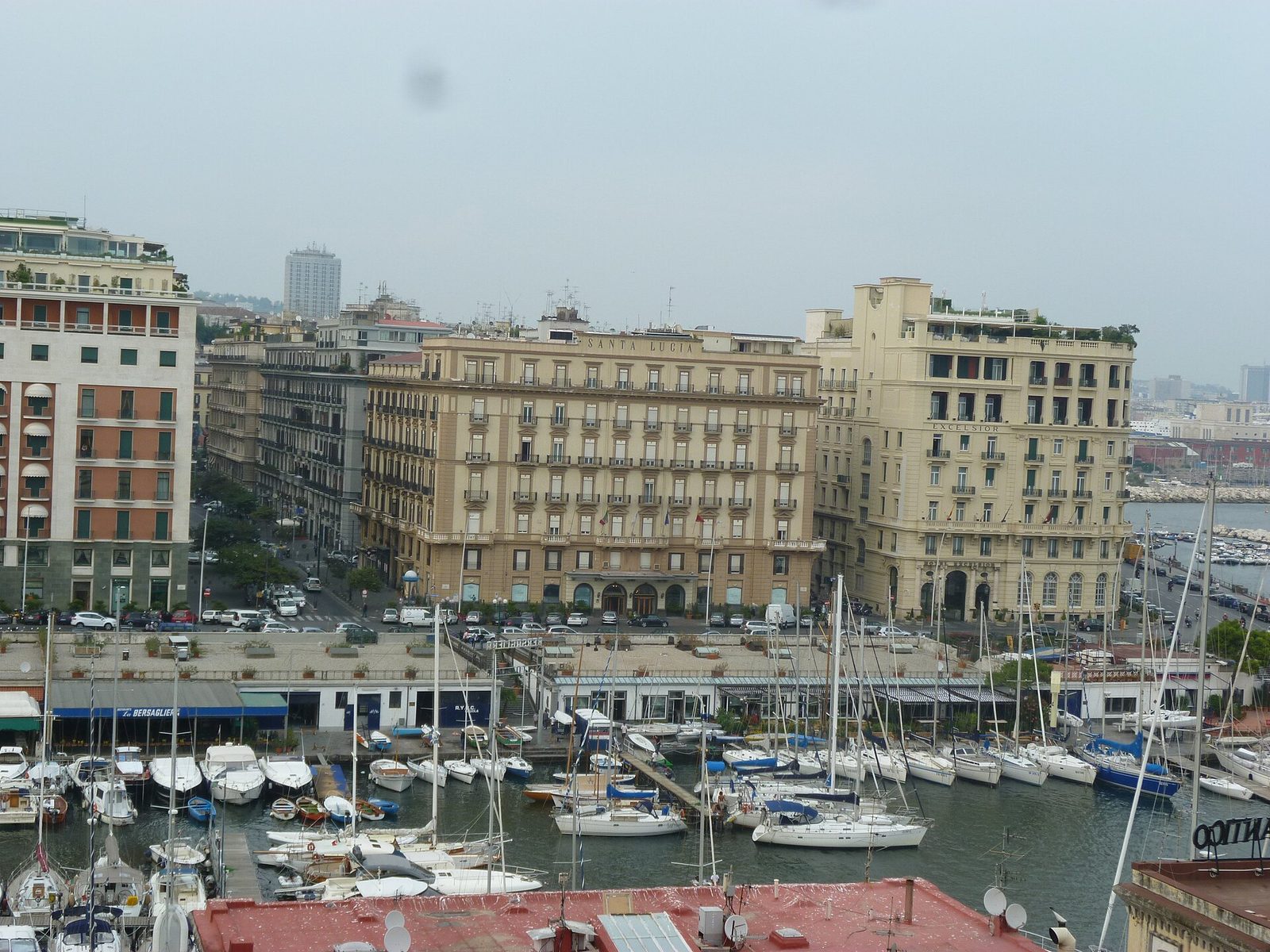
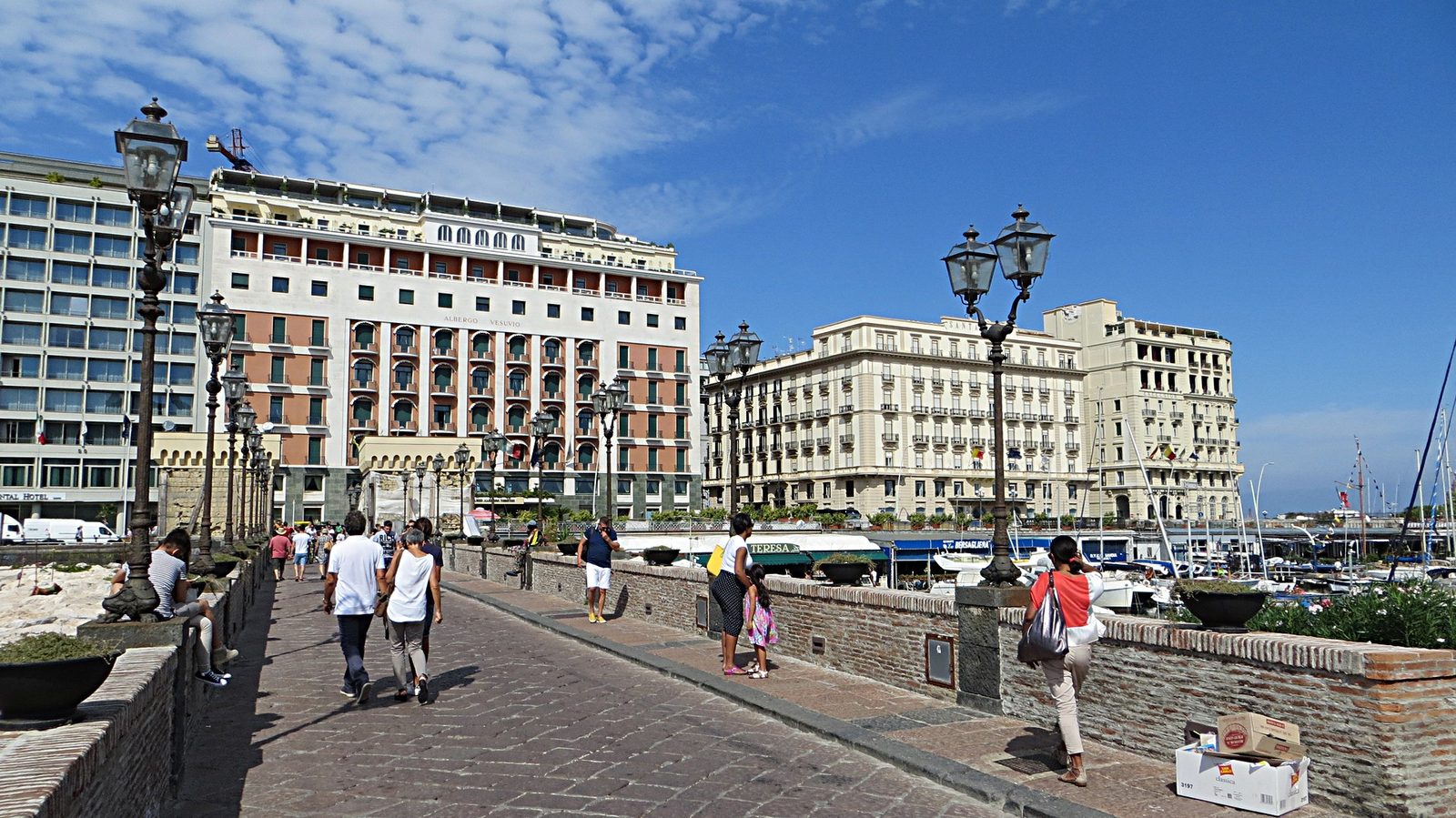
The stretch of Via Partenope facing Castel dell’Ovo is where Naples’ grand hotels have stood since the late 19th century. It’s pedestrianized along the water, it’s close to Piazza del Plebiscito and the elegant Chiaia streets, and the best rooms look straight across the bay to Vesuvius. The trade-off is distance from the historic center: allow a 25- to 30-minute walk to Spaccanapoli, or use the metro from Municipio.
Grand Hotel Vesuvio
The oldest and most famous of the seafront hotels, the Vesuvio opened in the 1880s and has a guest list full of opera singers, film stars and royalty. Enrico Caruso spent his last days here in 1921, and the rooftop restaurant bears his name, looking over the bay from the top floor. It’s the classic choice for a honeymoon or a milestone trip: traditional rooms with antiques and marble, a spa, and white-jacketed service.
My take: this is a hotel where the view category decides whether the money is well spent. A sea-view room here is an experience in itself. A city-side room is an expensive room in a nice building. If the budget only stretches to the latter, have dinner or a drink on the roof instead and stay somewhere cheaper.
Royal Continental
A few doors along, the Royal Continental is the seafront’s modernist alternative, a postwar building with rooms and suites that nod to the Italian design of the 1950s, including pieces associated with Gio Ponti. It’s known for its rooftop pool, open in the warmer months, with views to the castle and the bay. A good choice if you want the location and the view with more personality and less formality than the grand dames.
Eurostars Hotel Excelsior
Another historic name on Via Partenope, now run by the Spanish Eurostars group, with a rooftop breakfast terrace looking over the bay. It’s typically priced below the Vesuvio, which makes it a sensible way to get the seafront experience. As with all of these, check what the room faces before you pay extra for it.
Grand Hotel Santa Lucia
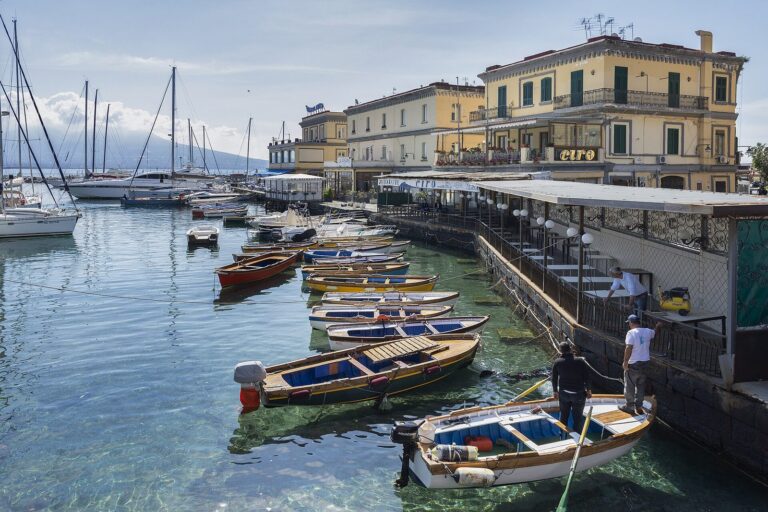
Right at the corner by the small Santa Lucia marina, this is the most understated of the historic seafront group, a classic late-19th-century building with elegant, traditional rooms. Its position, looking across the marina to Castel dell’Ovo, is superb.
Luxury by the port and in the center
Romeo Napoli
If the Vesuvio is old Naples, Romeo is its opposite: a sleek, contemporary five-star in a building designed by the Japanese architect Kenzo Tange, facing the port where the ferries leave for Capri and Ischia. It has an art collection, a spa and pool, a rooftop, and a strong food program. It’s the most practical luxury hotel in the city for island day trips, because Molo Beverello is across the road.
My caveat: the port road outside is busy with traffic and trucks, and the immediate surroundings are more commercial than charming. Once inside, that doesn’t matter. Ask for a harbor-facing room, which is the reason to stay. Watching the hydrofoils slip out toward Capri and the cruise ships come in, with Vesuvius behind them, is a very different Naples view from the classic one on Via Partenope, and many travelers prefer it.
Hotel Art Resort Galleria Umberto
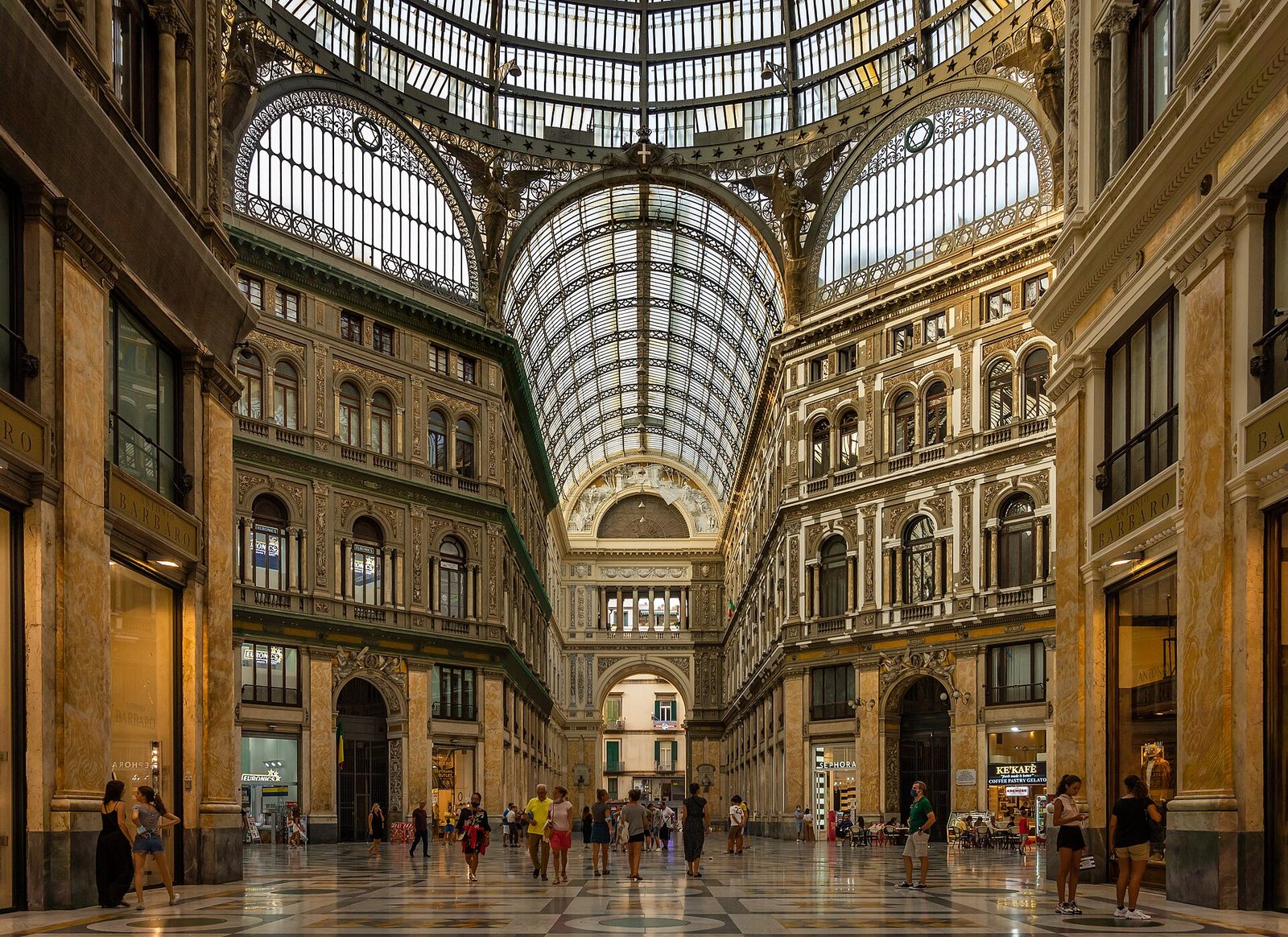
This small hotel occupies part of an upper floor inside the Galleria Umberto I, the great glass-roofed shopping arcade opposite the Teatro di San Carlo. Waking up inside a 19th-century landmark is the novelty, and the location, between Via Toledo, Piazza del Plebiscito and the port, is about as central as Naples gets. Ask how you access the hotel late at night, and how much noise carries from the arcade below.
La Ciliegina Lifestyle Hotel
A small boutique hotel on a side street between Via Toledo and the port, with bright, modern rooms and a rooftop terrace. It’s popular with couples and first-time visitors who want to walk everywhere. Rooms in small boutique properties like this tend to be compact, so check the size if you need space to spread out.
On the hill: Corso Vittorio Emanuele and Chiaia
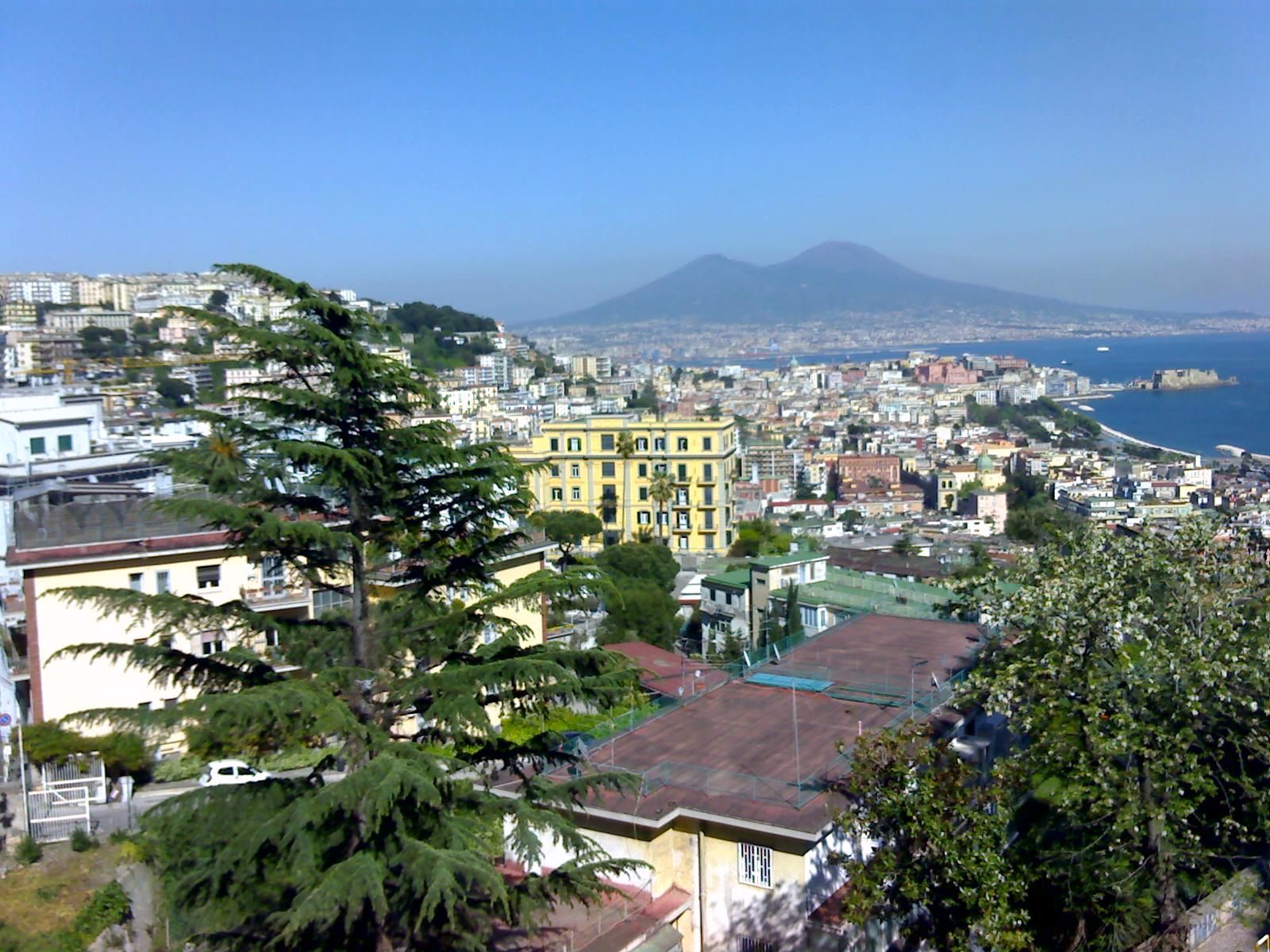
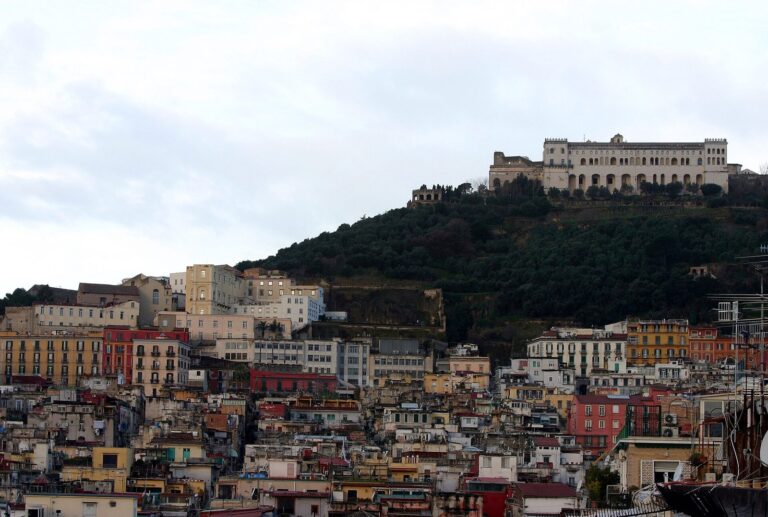
Corso Vittorio Emanuele is a long, winding 19th-century road carved along the hillside between the city center and Mergellina. Hotels here trade easy walking for elevation, which buys two things: quiet and views. Below it lies Chiaia, the city’s smartest neighborhood, full of boutiques, cafés and aperitivo bars.
Grand Hotel Parker’s
Open since 1870, Parker’s is one of the most storied hotels in Naples, a grand old house on the Corso with antique-filled salons, a library atmosphere, a rooftop restaurant and sweeping views over the bay from the upper floors. It has hosted writers, statesmen and artists for well over a century, and it has the feel of a private club rather than a chain hotel.
The honest drawback is its position. It’s a pleasant but hilly walk down into Chiaia, and a longer one to the centro storico, so you’ll be using the funicular, the metro from Piazza Amedeo or taxis more than you would from a hotel downtown. If you want calm, views and old-world service more than you want to step straight out into the street life, that’s a fair trade.
San Francesco al Monte
Also on the Corso, this hotel occupies a 16th-century Franciscan convent built into the hillside, and it makes the most of it: vaulted corridors, rooms converted from the monks’ cells, and terraced gardens and a pool high above the city. It’s one of the most atmospheric places to stay in Naples, with some of the best views. The same caveat as Parker’s applies about getting down into town, and cells, even converted ones, aren’t huge.
De Bonart Naples, Curio Collection by Hilton
A newer upscale option in Chiaia, part of Hilton’s Curio Collection of independent-style hotels. It suits travelers who want international-standard rooms and loyalty points with a Naples address in the shopping and dining district, a short walk from the seafront and Via dei Mille.
Boutique hotels in the centro storico
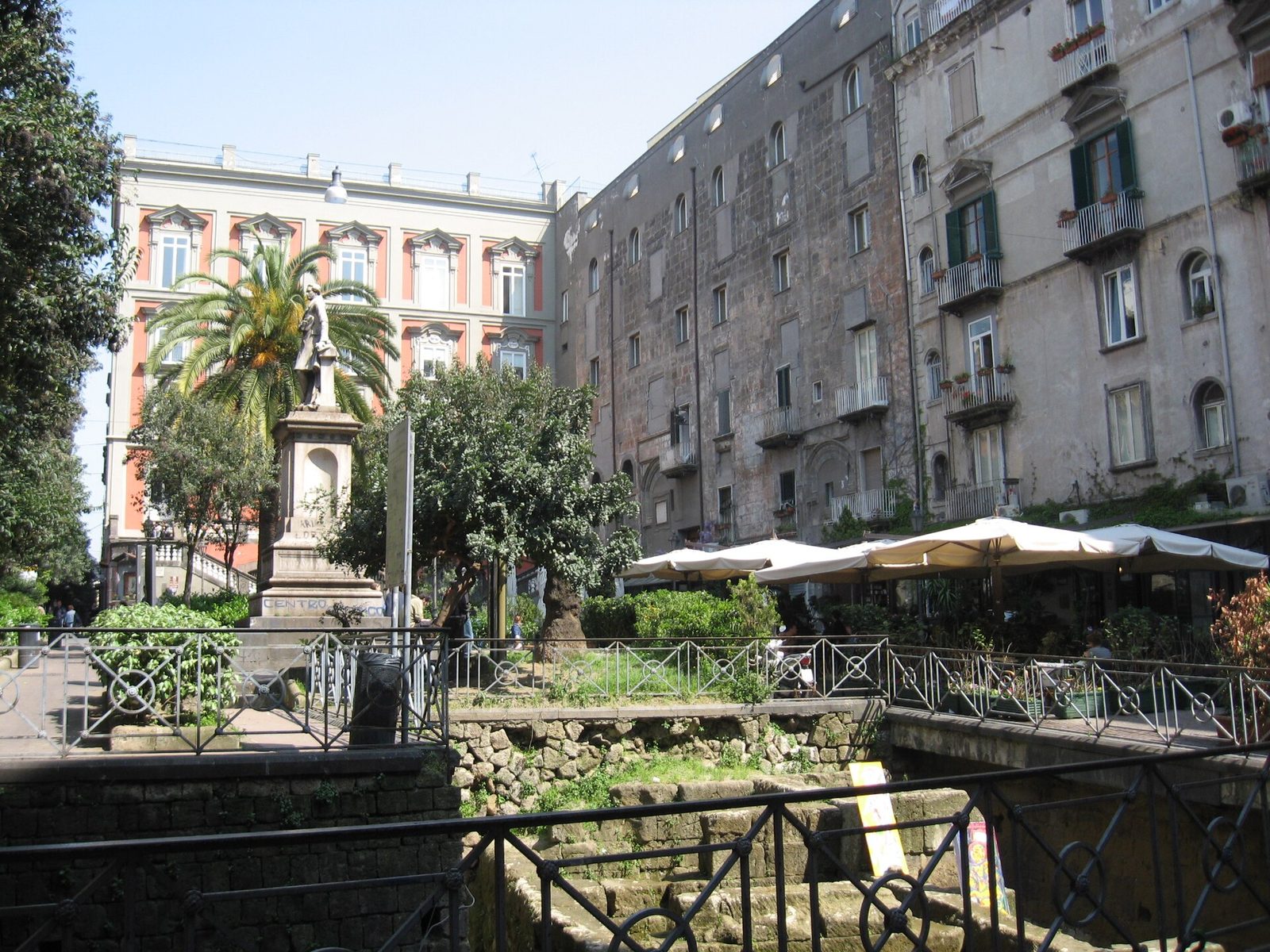
Staying in the historic center puts you inside the Naples most people come for: the pizzerias of Via dei Tribunali, the churches, the street life, and MANN within walking distance. The best hotels here are converted palazzi and villas with far more character than the seafront chains. The compromises are noise, smaller rooms, stairs and the occasional scooter at 1 a.m. For more on the area itself, see my centro storico guide.
Costantinopoli 104
Tucked behind a gate on Via Santa Maria di Costantinopoli, a short walk from Piazza Bellini and the archaeological museum, this is a small hotel in an Art Nouveau (Liberty-style) villa with a garden and a swimming pool, which is a rare luxury in the old town. The stained-glass window and the pool are what regulars remember. It’s my pick for someone who wants the centro storico on the doorstep and a quiet green refuge to come back to.
Decumani Hotel de Charme
Set in Palazzo Capece Zurlo, the former residence of Cardinal Sisto Riario Sforza, the last archbishop of Naples under the Bourbon kings, this hotel keeps the palazzo’s high ceilings and period furnishings, and serves breakfast in a gilded, frescoed former ballroom. It’s usually priced well below the seafront hotels, which makes it one of the best-value historic stays in the city. Ask about the lift and your floor.
Hotel Piazza Bellini
A contemporary design hotel inside an old palazzo just off Piazza Bellini, with white, minimalist rooms, a courtyard and some rooms with private terraces. The square outside is one of the liveliest evening spots in the old town, with bookshops, students and bars. That’s wonderful if you want to be in the middle of it and less so if you’re a light sleeper, so ask for a room away from the street.
Palazzo Caracciolo
Listed as part of Accor’s MGallery collection, this hotel occupies a large historic palazzo on Via Carbonara, near Porta Capuana on the eastern edge of the old town. It has spacious public areas and a courtyard, and it’s a comfortable, reliable upscale choice with good access to the station. The surrounding streets are grittier than those around Piazza Bellini, so it suits travelers comfortable with a real, working corner of the city.
Near the station
UNAHOTELS Napoli
On Piazza Garibaldi directly opposite Napoli Centrale, in a restored historic building with a rooftop terrace. It’s the most comfortable way to handle an early train, a late arrival or a one-night stopover. I wouldn’t choose the station area for a longer stay; it’s busy, chaotic and the least charming part of central Naples, and I’d be alert walking around it late at night. My Naples travel tips explain why.
B&Bs, guesthouses and apartments
Naples has thousands of B&Bs, guesthouses and short-term apartments, and they’re a big part of why the city is still good value. The best of them are run by locals who’ll tell you where to eat and how to avoid the bus. The worst are anonymous rooms with a key box and no one to call. A few things to check:
- The CIN code. Every legal short-term rental in Italy must display a national identification code (CIN) in its listing. If it isn’t there, book elsewhere.
- Check-in arrangements. Hosts must register your ID, and some now require a video call or an in-person meeting. Confirm how and when you’ll get in, especially after a late arrival.
- The floor and the lift. Many apartments are on upper floors of old buildings without lifts.
- Recent reviews about noise and cleanliness. Read the last few months, not the average score.
- The street, not just the neighborhood. A B&B on a busy vicolo in the Quartieri Spagnoli and one on a quiet courtyard two blocks away are very different experiences.
- The tourist tax. Short-term rentals pay the top rate in Naples, €6 per person per night in 2026.
For budget travelers, the city also has a handful of well-reviewed hostels, mostly near the port, the station and the centro storico, with dorms and private rooms. They’re a good option for solo travelers who want company.
Mergellina, Posillipo and Vomero
Three more areas have a scattering of hotels and B&Bs worth knowing about, each suited to a particular kind of traveler.
Mergellina, at the western end of the seafront, is a lively local neighborhood with a small harbor, waterfront kiosks, and a station on Line 2 and Line 6. Hotels and B&Bs here are generally cheaper than on Via Partenope while still close to the sea, and the evening walk along the lungomare toward Castel dell’Ovo is one of the best in the city. It’s a good compromise for repeat visitors who want the sea without the seafront prices.
Posillipo, the green headland beyond Mergellina, is the city’s most exclusive residential area, with villas, hidden coves and views across to Capri. Accommodation here is mostly in small villa B&Bs and guesthouses, some with terraces straight over the water. It’s beautiful and peaceful, but you’ll depend on buses, taxis or a car to reach the center, so it suits a slower, longer stay.
Vomero, on the hill above the center, is a calm, residential, middle-class neighborhood with good shopping, the Villa Floridiana park, Castel Sant’Elmo and the Certosa di San Martino. Accommodation is mostly B&Bs and apartments. The funiculars and Metro Line 1 connect it quickly with Via Toledo and the old town, and it’s one of the quieter bases in Naples for families.
Breakfast in Naples hotels
Italian breakfast is sweet, quick and centered on coffee, and a hotel buffet in Naples may look sparse if you’re expecting eggs and bacon. Larger and international hotels offer cooked options, but in smaller hotels and B&Bs expect pastries, bread, jam, yogurt, fruit, cold cuts and cheese, and good coffee.
Some B&Bs in the center don’t serve breakfast at all and instead give you a voucher for the bar on the corner. Don’t see that as a downgrade. A warm sfogliatella and an espresso standing at a Neapolitan counter is a better breakfast than most hotel buffets, and it’s how the city starts its day. If a rate “without breakfast” is noticeably cheaper, it’s usually worth taking; see my guide to Naples food for what to order.
Families, accessibility and special requirements
For families, the main questions in Naples are space, stairs and noise. Family rooms and connecting rooms are more common in the larger seafront and business hotels than in palazzo B&Bs, and apartments with a lift can be the most comfortable option for longer stays. A hotel near the pedestrian seafront gives children somewhere to run in the evening, and a pool, even a small rooftop one, is a real asset in summer. Ask about cribs, extra beds and whether the tourist tax applies to your children; in Naples it applies from age 14.
For travelers with reduced mobility, prioritize larger modern or fully renovated hotels with confirmed step-free access and adapted rooms, and ask specific questions: the number of steps at the entrance, the lift’s width, the bathroom’s shower type. Many historic buildings simply can’t offer full accessibility, however welcoming the staff. The seafront hotels have the advantage of flat surroundings; the centro storico’s uneven paving and the hillside hotels’ slopes make both harder to navigate.
Before or after a cruise
Cruise ships dock at the Stazione Marittima, the maritime terminal beside Piazza Municipio, a few minutes’ walk from Molo Beverello and the foot of Via Toledo. If you’re spending a night in Naples before or after a cruise, a hotel near the port or on the seafront makes boarding simple, and a taxi ride with luggage is short. Romeo Napoli, La Ciliegina and Hotel Art Resort Galleria Umberto are all close. Allow plenty of time on boarding day, as traffic around the port can be slow.
Is there anywhere worth staying near the airport?
Not really. Capodichino airport is only a few kilometers from the center, so even for an early flight, most travelers are better off staying in town and taking a taxi or the airport bus. The station area is the most practical compromise if you have a very early departure and want the shortest possible journey. My airport guide will cover the transfer options in detail.
Staying outside the city
Some travelers pair a few nights in Naples with a resort stay on the coast. A notable luxury option within easy reach is Capo la Gala, a small hotel cut into the rocks at the water’s edge near Vico Equense, between Castellammare and Sorrento, with a seawater pool. If the coast is the core of your trip, it’s worth reading my guide to Sorrento, Italy before you decide how to split your nights.
The best Naples hotel for your kind of trip
| If you are… | Look at | Why |
|---|---|---|
| A first-time visitor who wants to walk everywhere | Costantinopoli 104, Decumani Hotel de Charme, La Ciliegina | Old town and Via Toledo on your doorstep |
| A couple celebrating something | Grand Hotel Vesuvio (sea-view room), Romeo Napoli | Views, service and a sense of occasion |
| Taking ferries to Capri or Ischia | Romeo Napoli, La Ciliegina, Hotel Art Resort Galleria Umberto | A short walk to Molo Beverello |
| Catching early trains to Pompeii or Rome | UNAHOTELS Napoli, Palazzo Caracciolo | Minutes from Napoli Centrale |
| A family | Seafront hotels with larger rooms; apartments with lifts | Space, and the pedestrian seafront for evening walks |
| Looking for calm and views | Grand Hotel Parker’s, San Francesco al Monte | Above the noise, with the bay below |
| Traveling on a budget | Centro storico B&Bs, hostels | Good value and central |
| Into design | Romeo Napoli, Royal Continental, Hotel Piazza Bellini | Contemporary and mid-century interiors |
Questions to send the hotel before you book
A short, polite email in English gets a reply from almost every hotel and B&B in Naples, and the answers tell you more than the photos. Copy the ones that matter to you:
- Which way does this room category face: the street, a courtyard or the sea?
- Are the windows double glazed?
- Which floor is the room on, and does the lift reach it without steps?
- Is there air conditioning in the room, and does it run all day?
- Is reception staffed 24 hours? If not, how do I check in after a late arrival?
- Is the tourist tax included in the price, and can I pay it by card?
- Is breakfast served in the property, or is it a voucher for a nearby bar?
- Do you have parking or an arrangement with a garage, and can you register my car for the ZTL?
- Is there a better rate or an extra (breakfast, late checkout) for booking directly?
How a hotel answers is part of the answer. Quick, specific replies usually signal a well-run place. Vague ones, or no reply at all, are worth noting before you commit.
Three ways to decide
If you’re still torn, here’s how I’d reason through the most common dilemmas.
“We have three nights and want to see everything.” Stay in the centro storico or near Via Toledo, in a mid-range palazzo hotel. You’ll walk to most sights, eat at the best pizzerias without planning, and save the time you’d otherwise spend on transport. Book a courtyard room.
“It’s our anniversary and we want to feel it.” Book a sea-view room on Via Partenope, and don’t compromise on the view category. Walk the lungomare in the evening, have a drink on the roof, and take taxis into the old town for dinner. If the seafront is beyond the budget, a hillside hotel with a terrace on Corso Vittorio Emanuele gives you the view for less.
“We’re here mainly for Capri, Pompeii and the coast.” Stay near the port for Capri days and near the station for Pompeii days, or consider splitting your stay with Sorrento. A central hotel between Via Toledo and Molo Beverello is the best all-rounder, a short walk from the ferries and one metro stop from the trains.
When to book and how to get a better rate
Naples has become far more popular over the last few years, and good hotels fill up. For peak periods, including Easter, summer weekends, major holidays and big events, book early, and particularly early for seafront sea-view rooms and small boutique hotels with only a handful of rooms. Large events, such as major regattas and football matches, can push up prices across the city at short notice.
A few ways to pay less without settling for less:
- Compare booking sites with the hotel’s own site. Many independent hotels offer a better rate, breakfast or a room upgrade for direct bookings, and it’s always worth an email asking.
- Book the view you want, not the view you might get. Paying a little more for a guaranteed sea-view category beats hoping for an upgrade.
- Look at the shoulder seasons. Naples is a year-round city, and rates outside the busiest periods can be much lower; see my guide to the best time to visit Naples, Italy.
- Consider splitting the stay. A couple of nights in a cheaper old-town B&B plus one night of seafront splendor gives you both sides of the city.
- Read the cancellation terms. The cheapest rates are often non-refundable, which is risky if your plans depend on ferries and weather.
What to skip
- Paying seafront prices for a city-view room. If you’re not getting the bay, stay somewhere cheaper with more character and have a drink on a rooftop.
- Staying near Piazza Garibaldi for a long visit. Handy for trains, not for enjoying Naples.
- Ground-floor rooms on busy old-town lanes. Noise and passing scooters, all night.
- Apartments without a CIN code. They may not be legal, and you have fewer protections.
- Bringing a car to a centro storico hotel. The ZTL, the lanes and the parking fees will outweigh any convenience.
- Trusting “sea view” or “Vesuvius view” without a room category. Ask exactly what you’ll see.
Best hotels in Naples, Italy: frequently asked questions
What is the best area to stay in Naples for a hotel?
For first-time visitors, the centro storico or the area around Via Toledo, for walking to most sights. For views and a calmer, upscale atmosphere, the seafront on Via Partenope or Chiaia. For ferries, near the port. Avoid the station area except for short stays.
What is the most famous hotel in Naples?
The Grand Hotel Vesuvio on Via Partenope, opened in the 1880s, is the most famous. Enrico Caruso spent his last days there, and its rooftop restaurant looks across the bay to Vesuvius and Capri.
Which Naples hotels have a view of Vesuvius?
The seafront hotels on Via Partenope, including the Grand Hotel Vesuvio, Royal Continental, Eurostars Hotel Excelsior and Grand Hotel Santa Lucia, have sea-view rooms facing Vesuvius, as do hillside hotels like Grand Hotel Parker’s and San Francesco al Monte. Book the sea-view category.
Are there hotels with pools in Naples?
A few. Romeo Napoli has a spa pool, the Royal Continental a seasonal rooftop pool, San Francesco al Monte a hillside pool, and Costantinopoli 104 a garden pool in the old town. Check opening seasons before you book.
Is it better to book a hotel or an apartment in Naples?
Hotels offer 24-hour reception, lifts and easier check-in. Apartments offer space and kitchens at lower prices, but check for a CIN code, the floor, whether there’s a lift and how check-in works.
How much is the hotel tax in Naples?
From May 1, 2026, €6 per person per night in four- and five-star hotels and short-term rentals, €5.50 in three-star hotels and B&Bs, €4.50 in two-star and €4 in one-star hotels, for guests over 14 and up to 14 nights.
What is the best hotel near the ferry port in Naples?
Romeo Napoli faces the port directly, a short walk from Molo Beverello. More affordable options within a few minutes’ walk include La Ciliegina Lifestyle Hotel and Hotel Art Resort Galleria Umberto.
Are Naples hotels noisy?
Many are, especially in the centro storico. Ask for a room facing an internal courtyard or with double-glazed windows, and avoid ground-floor rooms on busy lanes. Seafront rooms facing the pedestrian lungomare tend to be quieter.
If you’re traveling with children, or with anyone who finds stairs hard, choose the hotel for its location and its lift as much as its rooms. The seafront hotels in Santa Lucia and Chiaia put you on the flat, car-free promenade, while many centro storico guesthouses sit up flights of stone steps. My guide to Naples for families and every kind of traveler explains what to ask before you book.
If your cruise starts or ends in Naples, a night or two in the city before or after is well worth it, and the hotels around the port, Via Toledo and the seafront are only minutes from the terminal. For getting between the ship, the station and the airport, and how to use a day ashore, see my guide to the Naples cruise terminal.
Photo credits
- Grand Hotel Vesuvio and Via Partenope from the Castel dell’Ovo causeway: photo by Mister No, Wikimedia Commons, CC BY 3.0.
- Santa Lucia marina and the seafront hotels: photo by Antoine Pitrou, Wikimedia Commons, FAL.
- The bay from Corso Vittorio Emanuele: photo by IlSistemone, Wikimedia Commons, CC BY-SA 3.0.
- Piazza Bellini: photo by Istvánka at Hungarian Wikipedia, Wikimedia Commons, CC BY-SA 3.0.
- Galleria Umberto I: photo by Marco Ober, Wikimedia Commons, CC BY-SA 4.0.
Sources: hotel operating status and features from each hotel’s own website and 2026 travel listings; tourist tax from the Comune di Napoli; short-term rental CIN rules from Italian national regulations. Checked September 2026. Hotels change ownership, renovate and rebrand; confirm details directly before booking.