On this page
Last updated September 10, 2026. Travel times, opening days and ticket rules checked against the sites’ official pages and operator timetables, and the Campi Flegrei situation against Italy’s Civil Protection Department and the regional archaeological park. Ticket prices for each sight live on its own guide, so here I give rough bands.
The best day trips from Naples, Italy are Pompeii and Herculaneum, both under 45 minutes by train, Capri, under an hour by fast ferry, then Vesuvius and the Amalfi Coast. For something quieter, choose Procida, the Reggia di Caserta or the Greek temples of Paestum. Two in one day only works in the right pairs.
Naples is, I’d argue, the best day-trip base in Italy. Within an hour or two of the city center are two of the most famous archaeological sites on earth, an active volcano you can walk up, three islands, the most celebrated coastline in the Mediterranean, a royal palace built to rival Versailles, and some of the best-preserved Greek temples anywhere, all reachable by train, boat or bus. The problem isn’t finding a day trip. It’s choosing between them, and every guide I’ve read gives you a list without telling you which ones are actually worth the day.
So this page ranks them. For every option, I’ve weighed the travel time, the cost, the effort and the reliability (boats cancel, volcano paths close) against the payoff. Then I’ve sorted them into tiers: the ones almost everyone should do, the ones worth it if you have time, and the ones for particular interests. You’ll also find which trips combine well in a single day, when a tour beats going independently, and the practical details that decide whether a day out goes smoothly.
Each destination has its own detailed guide. This page is the comparison that ties them together, so you can decide how to spend the days you’ve got. If you haven’t decided how long to stay, my Naples, Italy itinerary guide covers that.
Day trips from Naples, ranked
| Rank | Day trip | How from central Naples | Travel time each way | Main cost band | Effort | Verdict |
|---|---|---|---|---|---|---|
| 1 | Pompeii | Circumvesuviana train to Pompei Scavi | About 35–40 minutes | €20–25 entry | Medium: big site, lots of walking, little shade | Essential. The day trip if you only do one. |
| 2 | Herculaneum | Circumvesuviana to Ercolano Scavi | About 20 minutes | €15–20 entry | Low: compact and easy | Essential for anyone interested in Rome. Better preserved than Pompeii. |
| 3 | Capri | Fast ferry from Molo Beverello | About 50 minutes | Boat is the main cost; the island is expensive | Medium: crowds, queues, hills | Essential in good weather. Go early. |
| 4 | Mount Vesuvius | Train to Ercolano, then shuttle | About 1 hour to the car park | About €10–15 entry, plus shuttle | Medium: short, steep walk | Worth it on a clear day, paired with Herculaneum. |
| 5 | Amalfi Coast | Direct ferry in season, or train and bus | 1½–3 hours | Ferry around €30 each way; bus much cheaper | High: long travel, crowds | Spectacular, but better with a night there. |
| 6 | Procida | Fast ferry from Molo Beverello | Typically under an hour | Boat fare | Low: small, walkable, calm | The best low-stress island day. |
| 7 | Sorrento | Circumvesuviana to the end of the line | Just over an hour | Train fare only | Low | Pleasant, easy, and a good add-on to Pompeii. |
| 8 | Reggia di Caserta | Train from Napoli Centrale | Under an hour | €15–20 for palace and park | Medium: the park is huge | A royal palace to rival Versailles, and far quieter. |
| 9 | Paestum | Train from Napoli Centrale | About 1 hour 20 minutes | Train fare plus entry | Low to medium | Three magnificent Greek temples. A must for history lovers. |
| 10 | Ischia | Ferry from Naples | About an hour | Boat fare, plus spa entry if you go | Medium: a big island | Better for a night or two than a day. |
| 11 | Campi Flegrei | Cumana railway or bus toward Pozzuoli | Under an hour, disruption permitting | Low | Medium: spread-out sites | Fascinating, but check the current situation first. |
The best day trips from Naples for you
The ranking above is my general order, but the right choice depends on who you are and what you came for. Here’s how I’d pick by type of traveler.
- First-time visitors: Pompeii first, then Capri if the weather is good, and Herculaneum with Vesuvius if you have a third day. That’s the classic trio for good reason.
- Families with children: Herculaneum is compact and easy to see before small legs give out. Vesuvius thrills most kids who can manage a short, steep walk. Procida’s calm harbors and small beaches make a gentle island day. Pompeii works too, but go early, bring a lot of water and plan shade breaks.
- Archaeology and history lovers: Herculaneum, Pompeii and Paestum, in whichever order suits you, then Oplontis and the Campi Flegrei on a second trip. Visit the National Archaeological Museum in Naples first to see what was taken from the sites.
- Beach and island lovers: Capri for the drama, Procida for the calm, and Ischia for the spas if you can stay over. Late spring to early fall is the season.
- Palace and garden lovers: the Reggia di Caserta, then Ravello’s villa gardens on an Amalfi Coast day.
- Travelers on a budget: Pompeii, Herculaneum, Sorrento, Caserta and Paestum are all reached by inexpensive trains, and under-18s get into the state sites free. The islands and the Amalfi Coast are where costs climb.
- Travelers with limited mobility: the Reggia di Caserta’s palace, Herculaneum’s viewing walkways and a boat trip around Capri are more manageable than Pompeii’s long, uneven streets or the Vesuvius path. Pompeii does have a signposted step-free route, so ask for its map at the gate.
- If you only get one trip: Pompeii, unless you’ve already been, in which case Herculaneum.
How I ranked them
A great day trip isn’t just about the destination. It’s about what the day costs you in time, money, energy and risk. These are the factors I weighed:
- Travel time. Every hour on a train or boat is an hour not spent at the sight. Herculaneum’s 20-minute ride puts it near the top. The Amalfi Coast’s long journey pulls it down, whatever its beauty.
- Cost. Pompeii by train costs little beyond the entry ticket. Capri means a ferry, and then some of the highest prices in Italy.
- Effort. Pompeii is a long, hot walk. Procida is a gentle stroll. The Amalfi Coast bus in summer is an endurance test.
- Reliability. Boats cancel in rough seas, the Blue Grotto closes whenever the swell rises, and the Vesuvius path closes in high wind. Trains are more predictable, strikes aside.
- Payoff. Some trips give you something you’ll find nowhere else on earth, like Pompeii, Herculaneum and Paestum. Others are lovely but replaceable.
Your own priorities may shift the order. A beach lover will rank Capri and Procida higher, and an archaeology enthusiast will put Paestum and the Campi Flegrei nearer the top. But if you’re wondering where to start, start at the top of the table.
Tier 1: the essentials
Pompeii
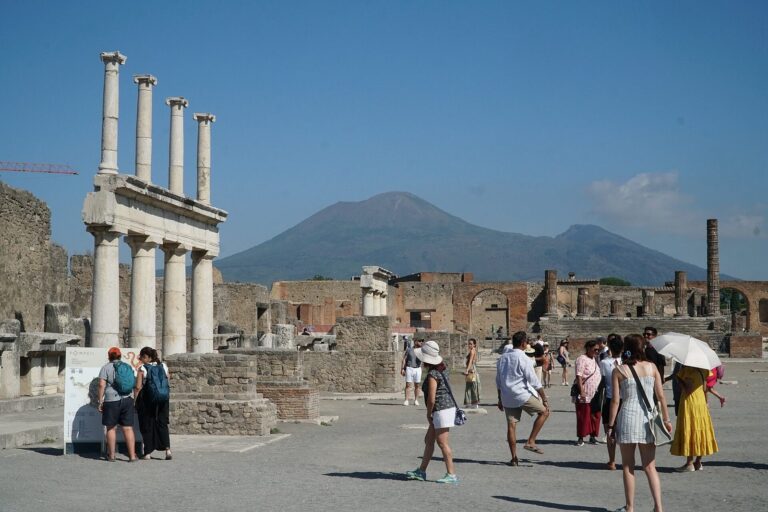
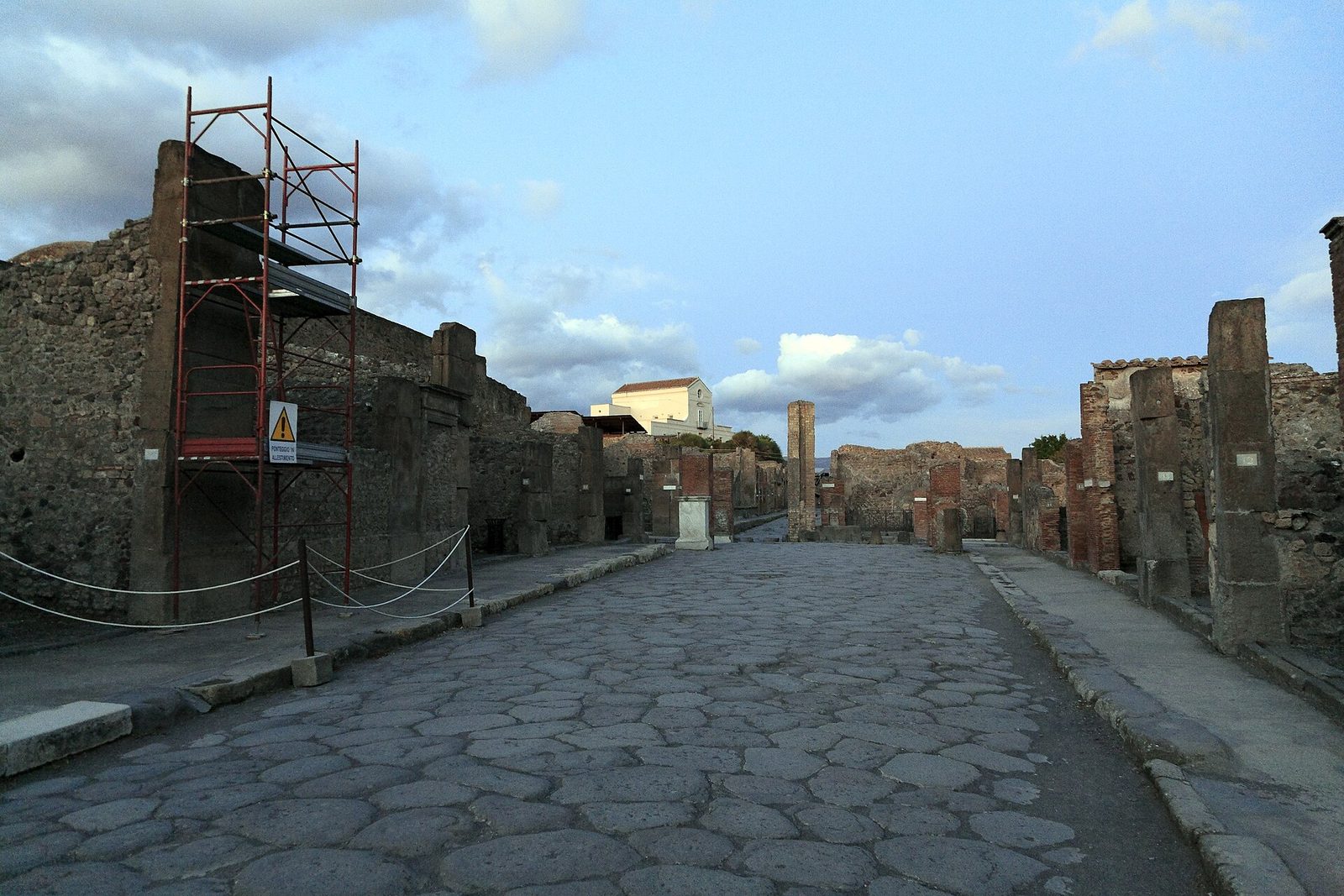
If you only take one day trip from Naples, make it Pompeii. It’s the most complete picture of an ordinary Roman town that survives anywhere: streets, shops, bars, bakeries, brothels, temples, theaters and houses, frozen by the eruption of AD 79. It’s also enormous, exposed and tiring, and it’s easy to waste the day with the wrong ticket, the wrong gate or the wrong route. Pompeii now sells timed tickets in your name, with a daily cap of 20,000 visitors split between morning and afternoon windows during the long-hours season.
How: the Circumvesuviana train to Pompei Scavi–Villa dei Misteri takes about 35–40 minutes from central Naples, and the entrance is a few minutes’ walk from the station. Allow: three to four hours on site, five or six with the Villa of the Mysteries. Best for: everyone. Everything you need, from tickets and gates to the two stations called Pompei and a route through the ruins, is in my guide to visiting Pompeii from Naples.
Herculaneum
Herculaneum is Pompeii’s smaller, better-preserved sibling, and for many people who’ve seen both, it’s the more moving of the two. Buried under a deep flow of superheated volcanic material rather than ash, the town survived with its upper floors, wooden beams, doors, furniture and even food turned to charcoal. The houses feel lived in, and the boat sheds on the ancient shoreline, where hundreds of people sheltered and died, stay with you long after you’ve left.
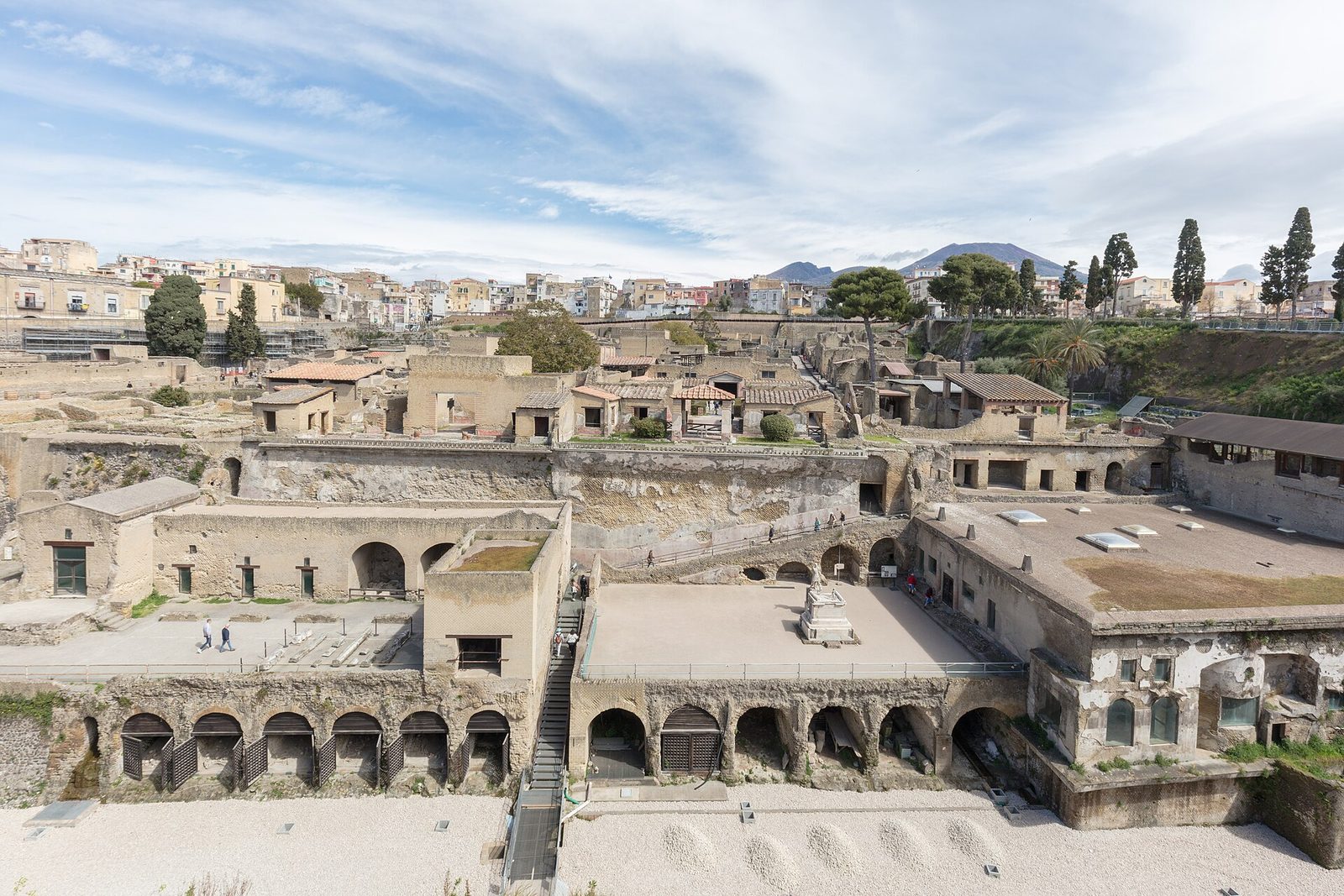
How: the Circumvesuviana to Ercolano Scavi takes about 20 minutes, then it’s a ten-minute walk downhill to the site. Allow: two to three hours. It’s open every day of the week, which makes it a great fallback when other sites are closed. Best for: anyone with an interest in the Roman world, anyone short on time, and anyone who finds the scale of Pompeii daunting. Pairs with: Vesuvius, whose shuttle leaves from the same station.
Capri
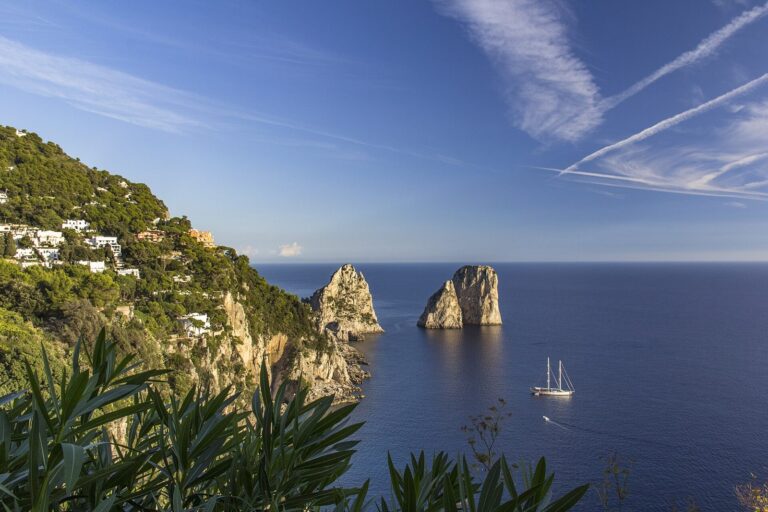
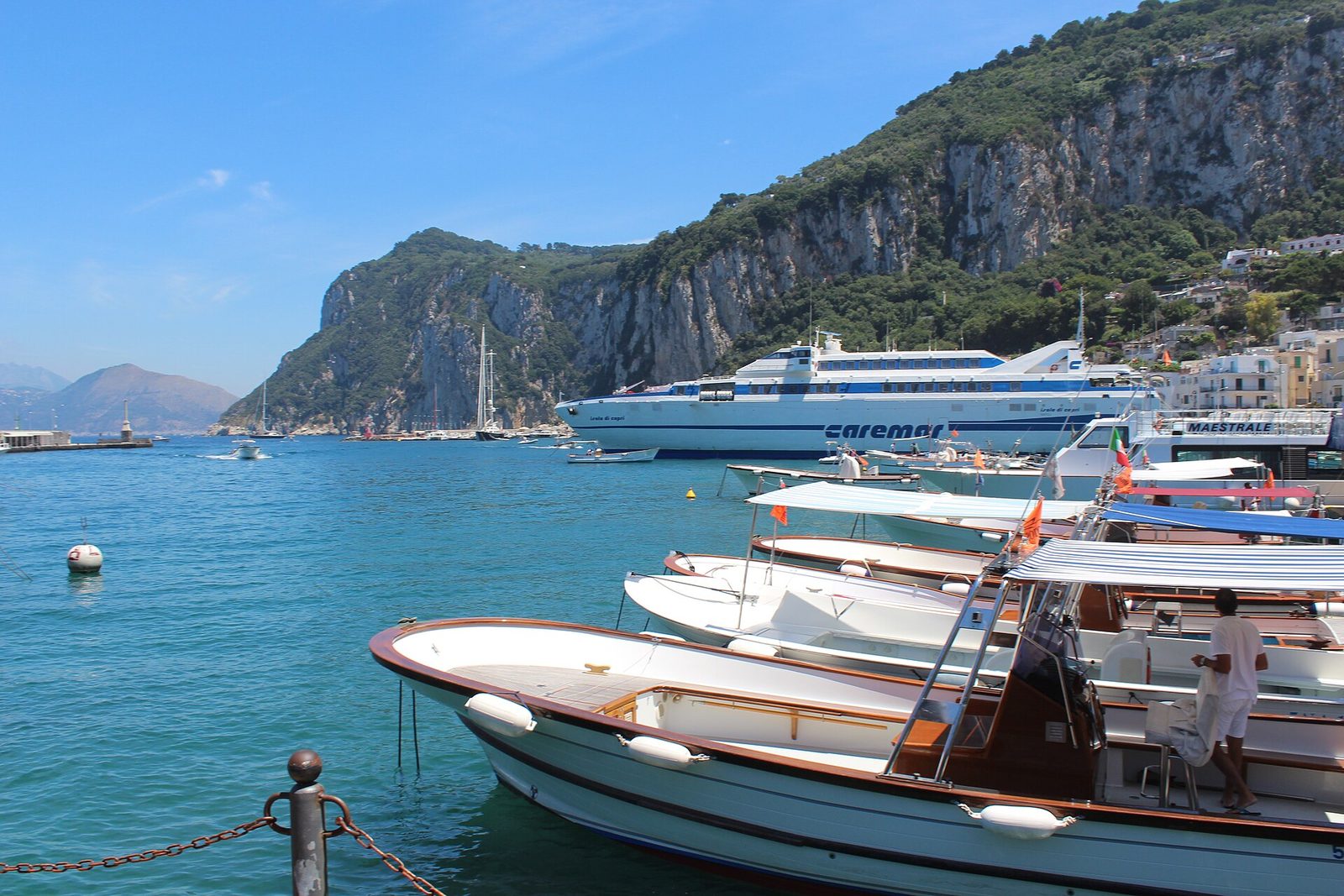
Capri earns its reputation: sheer limestone cliffs, the Faraglioni rocks, the Blue Grotto, lemon groves, and the views from Anacapri and Monte Solaro. It’s under an hour from Naples by fast ferry, with no roads involved, which makes it the easiest island day in the region. It’s also crowded from late morning, expensive, and at the mercy of the sea. Boats can be cancelled, and the Blue Grotto closes whenever the swell is up.
How: fast ferries from Molo Beverello take about 50 minutes, and slower ferries leave from Calata Porta di Massa, about a kilometer away. Check your ticket. Allow: the whole day. Best for: first-time visitors who want the classic island. My advice: take one of the first boats, split the day between Anacapri and Capri town or take a boat trip around the island, and don’t lose your morning to the Blue Grotto queue. The full plan is in my guide to Capri from Naples.
Tier 2: worth it if you have the time
Mount Vesuvius
Walking up to the crater of the volcano that destroyed Pompeii, with the whole Bay of Naples spread out below, is a genuine highlight on a clear day. The walk from the car park is short but steep, on loose volcanic gravel. The catches are logistics and weather. Tickets are sold online only, in timed slots, and there’s no convenient public bus to the start of the path. The path also closes at short notice when the wind is high.
How: the Circumvesuviana to Ercolano Scavi, then a private shuttle up to the car park at around 1,000 meters. Allow: four to five hours door to door, or a full day with Herculaneum. Best for: clear days, and travelers who’ve booked early in their trip so they have time to try again. Skip it if the forecast is hazy or windy. My Mount Vesuvius guide covers the tickets, the shuttles and what happens when it closes.
The Amalfi Coast
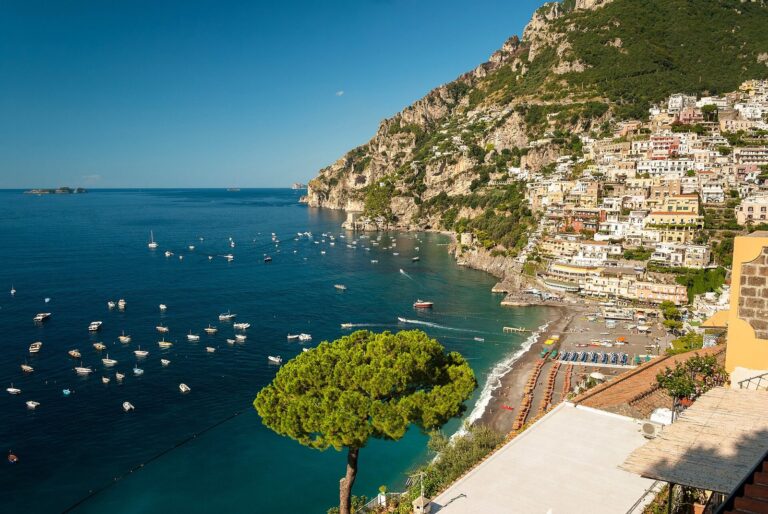
The Amalfi Coast is one of the most beautiful places in the Mediterranean, and it’s ranked fifth here only because of the travel. From Naples, you’re looking at around an hour and a half each way on the direct ferry in season, and closer to three hours on the train-and-bus route via Sorrento. That leaves time for two towns, Positano and Amalfi, or Amalfi and Ravello, but not the whole coast. In high season, the coast road and its buses are heavily congested.
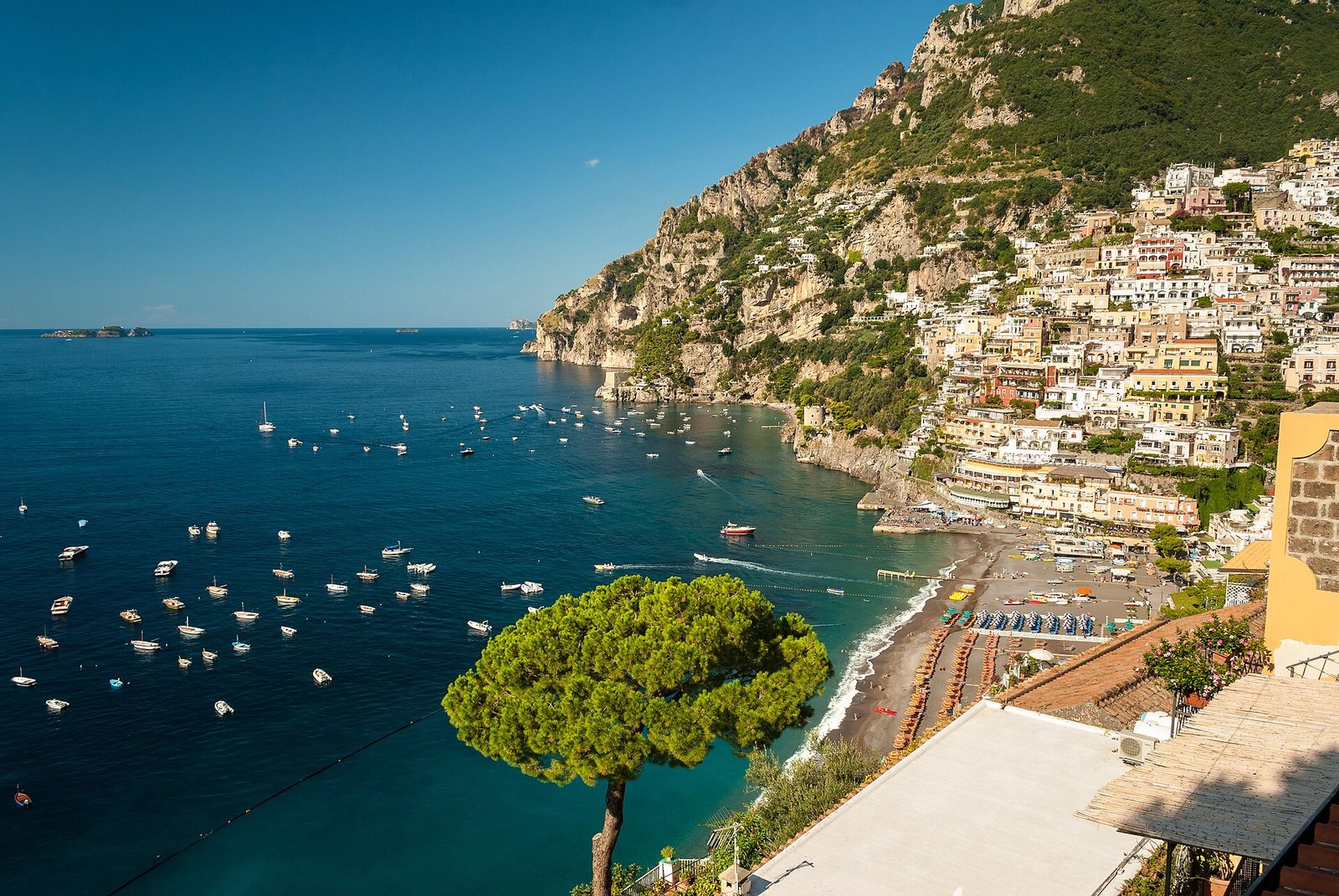
How: the direct ferry from Molo Beverello (roughly April to October), the Circumvesuviana to Sorrento plus the SITA bus, or the train to Salerno plus a ferry or bus for Amalfi and Ravello. Allow: the whole day, from early morning. Best for: travelers who can’t stay on the coast. If you can, sleep there for a night or two instead. Every route is compared, with real costs, in my guide to the Amalfi Coast from Naples.
Procida
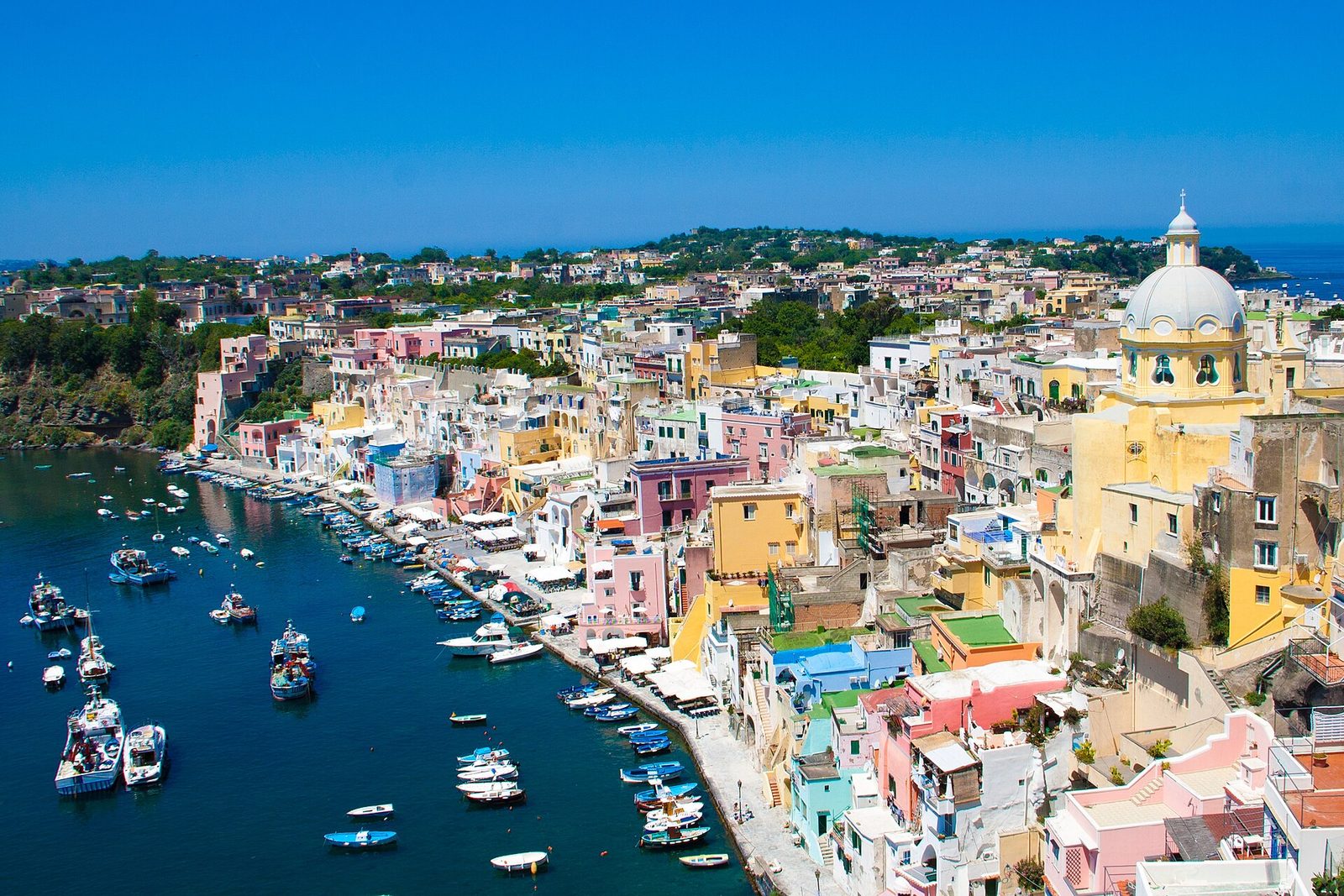
Procida is the smallest of the three islands in the Bay of Naples, and the one I’d recommend to anyone who wants an island day without the crowds and prices of Capri. It’s a working fishing island of pastel houses, lemon gardens and quiet lanes, famous for the Marina Corricella, a tiny harbor of colorful houses stacked around the water that has starred in several films. It was Italy’s Capital of Culture in 2022. There’s not a lot to “do,” which is exactly the point: wander, eat seafood by the harbor, swim at one of the small beaches, and watch the ferries come and go.
How: fast ferries from Molo Beverello, typically under an hour. Since the July 2026 earthquake closed the port at Pozzuoli, ferries that used to leave from there have been diverted to Naples. Allow: most of the day, at a slow pace. Best for: travelers who want to relax, photographers, and anyone who’s already done Capri.
Sorrento
Sorrento sits on cliffs above the Bay of Naples at the end of the Circumvesuviana line, and it’s an easy, pleasant day out: a lively old town, lemon groves and limoncello, cliff-top gardens with views of Vesuvius, and the little fishing harbor of Marina Grande below. It’s not as dramatic as Capri or the Amalfi Coast, and it can feel touristy, but it’s relaxed, and it needs no boat at all.
How: the Circumvesuviana from Naples, just over an hour, or the Campania Express tourist train until its suspension from October 1, 2026. Allow: half a day to a full day. Best for: an easy day, or an afternoon add-on after a morning at Pompeii, which is on the same line.
Tier 3: for particular interests
The Reggia di Caserta
The Reggia di Caserta, the royal palace of Caserta, is one of the largest royal palaces ever built. The Bourbon kings of Naples began it in the 1750s to rival Versailles, and it’s a UNESCO World Heritage Site. Inside are some 1,200 rooms, of which you visit the grandest: a monumental staircase, sumptuous royal apartments and a jewel of a court theater. Outside, a park stretches for three kilometers up the hillside, lined with fountains, cascades and statues, ending at a great waterfall with an English Garden beside it. It’s magnificent, and remarkably uncrowded compared with the Vesuvian sites.

How: trains from Napoli Centrale reach Caserta in under an hour, and the palace stands right in front of the station. Cost: in the €15–20 band for the palace and park together, with a much cheaper park-only ticket. Under-18s go free, and EU citizens aged 18–25 pay a reduced rate. Allow: a full day if you want to walk the whole park. It’s a long way up to the waterfall, and there are bikes and a shuttle to help. Note: the palace is closed on Tuesdays, and the park’s hours vary with the season. Best for: lovers of palaces and gardens, film fans (it has doubled for royal palaces in several major films), and anyone who wants a big sight without the crowds.
Paestum
South of Salerno, on the plain by the sea, Paestum has three of the best-preserved Greek temples in the world: the two temples of Hera, one of them long called the Temple of Neptune, and the Temple of Athena, all built in the 6th and 5th centuries BC by Greek colonists. They stand among meadows and the ruins of the ancient city, and seeing them for the first time stops most people in their tracks. They’re more complete than anything in Greece itself apart from a handful of sites. The museum next to the site holds the famous Tomb of the Diver, a rare surviving Greek painting of a young man diving into water.
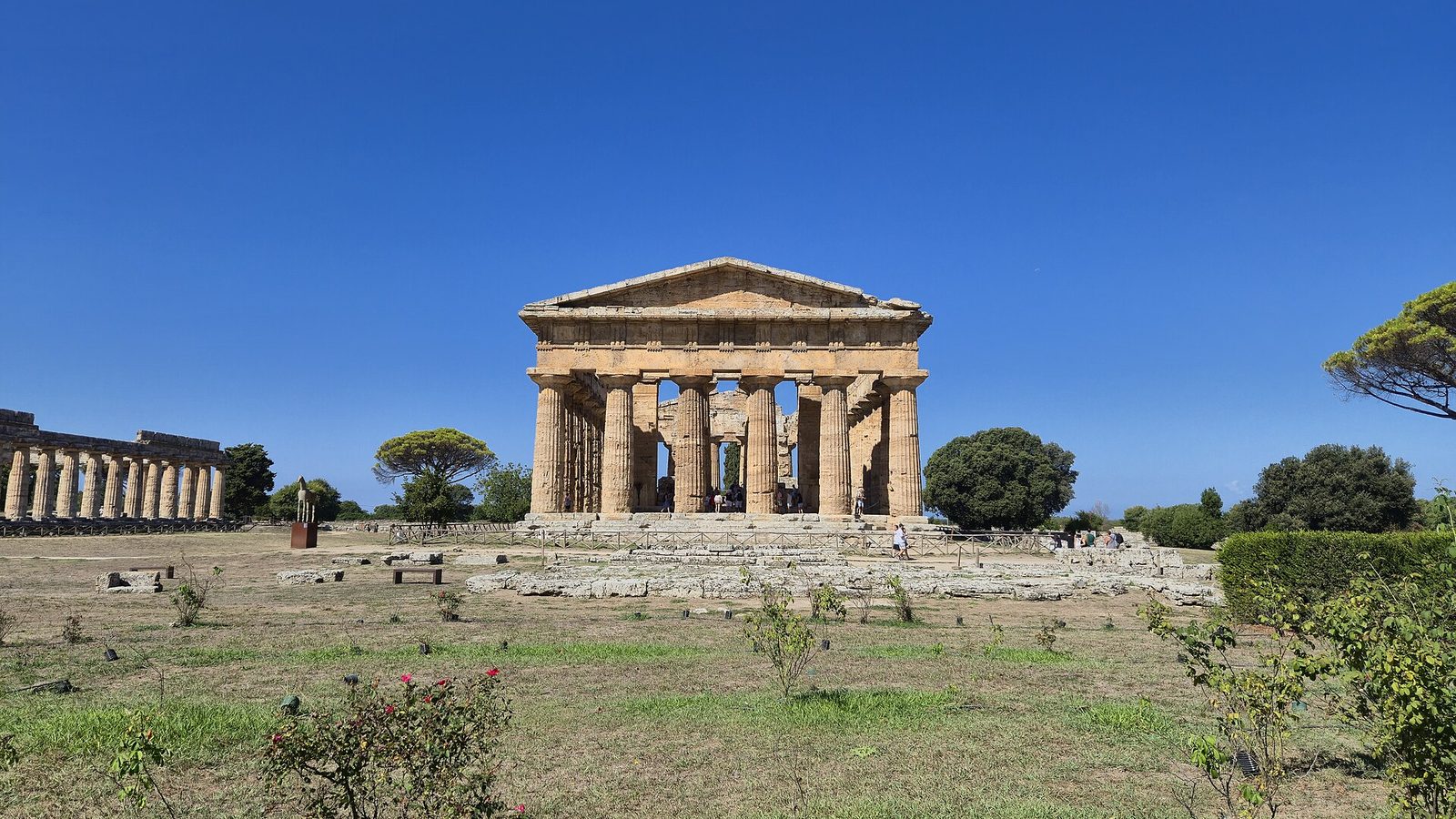
How: trains from Napoli Centrale to Paestum take about an hour and 20 minutes, with Trenitalia and Italo running a number of services a day. The station is a short walk from the site. Cost: the train fare plus the site ticket. Check the current price on the park’s official site, paestumsites.it. Allow: most of the day, including the museum. Best for: anyone who loves ancient history, and anyone who’d like a quieter, more spacious archaeological site than Pompeii. Pairs with: an hour in Salerno on the way back, or the long, sandy beaches near the site in summer.
Ischia
Ischia is the largest island in the bay: greener, bigger and more relaxed than Capri, and famous for its volcanic hot springs and thermal spas. The thermal gardens, with their pools of different temperatures set in lush grounds, are the main draw, along with the Aragonese Castle on its rock, the gardens of La Mortella, and good beaches. It’s a wonderful island. It’s just too big to get much from in a day, and the best of it, the spas and slow evenings, rewards a stay of a night or two.
How: ferries from Naples take about an hour, and ferries that used to leave from Pozzuoli have been diverted to Naples since the July 2026 earthquake closed Pozzuoli’s port. Best for: spa lovers. If you’re only doing it as a day trip, pick one thermal garden and one town rather than touring the island.
The Campi Flegrei
West of Naples, the Campi Flegrei (Phlegraean Fields) are a vast volcanic area of craters, hot springs and ancient ruins that the Romans treated as the entrance to the underworld. The highlights are Pozzuoli, with its Roman market (the Macellum or “Temple of Serapis”) and the huge Flavian Amphitheater. Then there’s Baia, whose Roman villas and baths now lie partly underwater in an archaeological park you can visit by glass-bottomed boat or on a dive. And there’s Cuma, the oldest Greek colony on the Italian mainland, with its acropolis and the cave long identified as the home of the Sibyl.
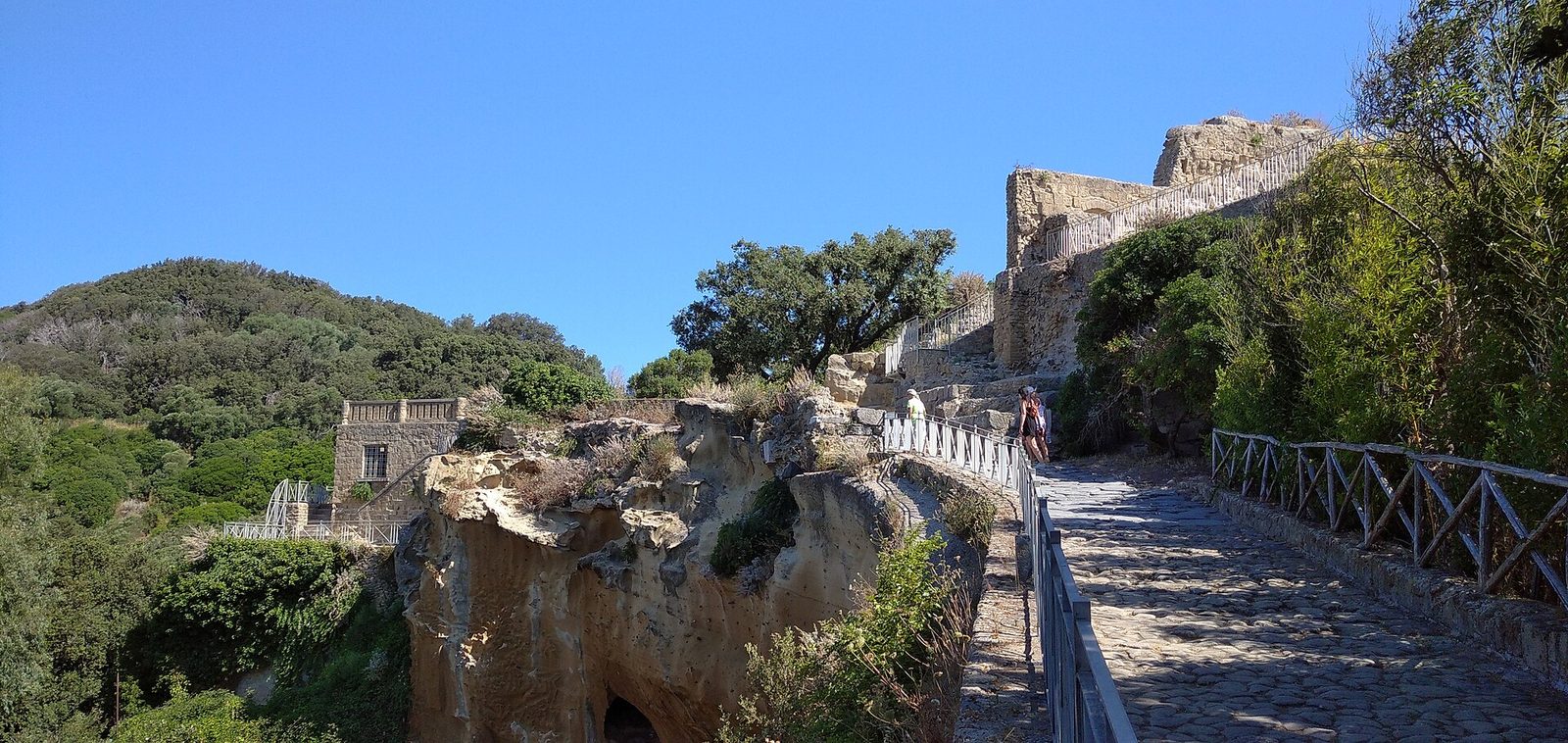
The current situation, and why it’s ranked last. The Campi Flegrei are in the middle of a long bradyseismic crisis, a slow rise of the ground with frequent small earthquakes. As of September 2026, Italy’s Civil Protection Department keeps the area on yellow alert, the second of four levels. A magnitude 4.7 earthquake on July 31, 2026, the strongest in decades, closed the port of Pozzuoli. After safety checks, the Castello di Baia museum, the Baia baths park and the Cuma archaeological park have reopened, but the Flavian Amphitheater in Pozzuoli was still awaiting clearance when I checked. The Solfatara crater has been closed to the public since 2017. Transport is disrupted too. The Cumana railway to Pozzuoli was scheduled to reopen on September 11, 2026, with a new Pozzuoli station, so check that it’s running before you travel. Metro Line 2’s Campi Flegrei–Pozzuoli section remains suspended.
None of that makes a visit to Cuma or Baia unwise in itself, but it does mean this isn’t a trip to do on a whim. Check the latest official updates and site openings the week you travel. Best for: archaeology enthusiasts on a second visit to Naples.
Oplontis, Stabiae and the quieter Vesuvian villas
If you’ve fallen for Pompeii, the Pompeii archaeological park also looks after a string of quieter sites nearby, covered by its three-day pass. They include the enormous, lavishly frescoed Villa of Poppaea at Oplontis in Torre Annunziata, the villas of ancient Stabiae at Castellammare di Stabia, and the country estates of Boscoreale. They’re rarely crowded, and they show a side of Roman life, the luxury seaside villa, that Pompeii itself doesn’t.
Which day trips can you combine in one day?
Doubling up is tempting, and some pairs work beautifully. Others turn two great experiences into one exhausting blur.
| Combination | Works? | How | My advice |
|---|---|---|---|
| Herculaneum + Vesuvius | Yes, the best pairing | Both start from Ercolano Scavi station | Vesuvius first thing, Herculaneum in the afternoon |
| Pompeii + Vesuvius | Yes, but long | Pompeii in the morning, a shuttle up the volcano in the afternoon | Book the Vesuvius slot with plenty of margin |
| Pompeii + Sorrento | Yes | Same Circumvesuviana line | Great if you’re moving base to Sorrento; mind the small-bags rule at Pompeii |
| Amalfi + Ravello | Yes | Train to Salerno, then bus or ferry to Amalfi and bus up to Ravello | The best Amalfi Coast day out of ferry season |
| Positano + Amalfi | Yes, in ferry season | Ferry to Positano, coastal ferry to Amalfi, ferry home | Check the last boat back before you go |
| Paestum + Salerno | Yes | Same railway line | An easy, relaxed day |
| Pompeii + Herculaneum | Possible, but I wouldn’t | Same railway line | Two ancient cities in one day is too much. Do them on separate days |
| Pompeii + the Amalfi Coast | No | Only with a driver or a coach tour | You’ll rush both. Give each its own day |
| Capri + the Amalfi Coast | No, from Naples | Boats connect them in season | Only sensible if you’re based on the coast or in Sorrento |
| Pompeii + Herculaneum + Vesuvius | No | Sold by some tours | Far too much for one day |
Tour or independent?
Most day trips from Naples are easy to do independently, and cheaper and more flexible that way. Pompeii, Herculaneum and Sorrento are a straightforward train ride. Capri and Procida are a ferry from the city center. Caserta and Paestum are simple rail journeys. For all of these, a tour mainly adds a guide, which can be worth it at Pompeii and Herculaneum, where context brings the ruins to life. You can also hire a licensed guide on site.
Tours and private drivers earn their keep in a few situations:
- The Amalfi Coast out of ferry season, or for anyone who doesn’t want to deal with the Sorrento bus queue. A small-group tour with a boat leg is the best of the organized options.
- Vesuvius, where the transport to the car park is the hard part.
- Travelers with limited mobility, for whom door-to-door transport makes a real difference.
- Groups of four or more, for whom a private driver can cost less per head than you’d expect and removes all the logistics.
Be wary of coach tours that cram three sights into one day, like Pompeii, Sorrento and Positano. You’ll see a lot of the road and not much of anything else. Check how long you’ll actually spend at each stop, whether entry tickets are included and in your name where required, and what happens if a boat or the volcano path is cancelled.
Practical tips for day trips from Naples
- Start early. The first train or boat of the morning gets you ahead of the crowds at almost every destination on this list.
- Book the timed sights ahead. Pompeii has timed tickets in your name and a daily cap. Vesuvius sells online only, in small slots released 30 days ahead.
- Check the last train or boat home before you set out, especially for islands and the Amalfi Coast, and plan your day backwards from it.
- Watch the weather. Rough seas cancel boats and close the Blue Grotto, and high wind closes Vesuvius. Keep your island and volcano days flexible, and never schedule them for the day before you fly home.
- Know the closing days. The Reggia di Caserta closes on Tuesdays. Herculaneum and Pompeii are open daily, which makes them good Tuesday choices when many Naples museums are shut.
- Travel light. Pompeii admits only small bags. If you’re moving between bases, sort out luggage storage first.
- Check for strikes. Italian transport strikes are announced in advance. Look at the news a few days before a big rail or ferry day.
- Consider a transport-inclusive pass. The Campania Artecard’s 3-day regional card (€41, checked September 2026) is one of the few options that include public transport. If you’re doing several rail day trips in three days, check whether it covers your routes and sights.
- Pick the right season. Ferries to the Amalfi Coast run only for part of the year, and the heat of high summer makes the ruins hard work. My guide to the best time to visit Naples, Italy goes through it month by month.
When things go wrong: weather, strikes and the last ride home
Day trips from Naples depend on trains, boats and the weather, and it’s worth knowing your plan B before you need it.
Rain. A wet day is a good day for the Reggia di Caserta, whose palace interiors take hours to see properly, and for the Paestum museum and Herculaneum, which is compact enough to see between showers. It’s also the perfect day for the National Archaeological Museum back in the city. Heavy rain makes Pompeii’s stone streets slippery and can close the Vesuvius path, and it’s a poor day for the islands and the Amalfi Coast.
Rough seas. If the forecast shows strong wind or a big swell, boats to Capri, Procida, Ischia and the Amalfi Coast may be delayed or cancelled, and the Blue Grotto won’t open. Swap your island day with a rail trip such as Pompeii, Herculaneum, Caserta or Paestum, all of which run whatever the sea is doing, and try the island later in the week.
Wind on the volcano. The Vesuvius path closes in high wind, even on bright days. If it does, head to Herculaneum or Oplontis, which are both on the same railway line as the Ercolano shuttle.
Strikes. Italian transport strikes are announced in advance, and they often guarantee a minimum service at peak commuter times. If one falls on your day, check which services are running, or switch to a trip you can do by a different operator. The national railway and the Circumvesuviana are run by different companies, so a strike on one doesn’t always affect the other.
The last ride home. The most common day-trip mistake is losing track of time. Before you set out, find the last direct ferry back to Naples from the islands or the Amalfi Coast, which can be surprisingly early outside high summer, and the last convenient train. Aim to be at the pier or station with a comfortable margin, because boats fill up and full buses on the Amalfi Coast skip stops. If you do miss the last direct boat from the coast, the bus to Sorrento and the Circumvesuviana, or the bus to Salerno and the train, will still get you back. It just takes longer.
Where to stay for day trips
Naples itself is the best base for most of these trips. Almost everything on the list is reached from the Circumvesuviana at Garibaldi, the main station at Napoli Centrale, or the ferry piers at Molo Beverello and Calata Porta di Massa. Staying on the Toledo strip or near Piazza Municipio puts you a short walk or one metro ride from all of them. If most of your day trips are to the Amalfi Coast and Capri, though, consider moving to Sorrento or the coast for part of your stay. My guide to where to stay in Naples, Italy covers the best bases in the city.
What to skip
- Three-in-one coach tours. Pompeii, Herculaneum and Vesuvius, or Pompeii, Sorrento and Positano, in a single day is too much.
- Pompeii and Herculaneum on the same day. Both deserve a fresh pair of legs and a fresh mind.
- The Amalfi Coast as a day trip if you can stay there instead. A night on the coast transforms the experience.
- Ischia as a rushed day trip. Save it for an overnight stay with time for the thermal spas.
- The Blue Grotto on a rough day, and Vesuvius on a windy or hazy one.
- A Campi Flegrei day on a first, short visit, while the area is on yellow alert and transport is disrupted.
- Driving to the day trips. Trains and ferries are easier, and parking at Pompeii, Positano and Amalfi is scarce and expensive.
Frequently asked questions about day trips from Naples
What is the best day trip from Naples?
Pompeii. It’s the most famous archaeological site in the world, it’s about 35–40 minutes from Naples by train, and it’s unlike anything else you’ll see. If you’ve already been, or want something smaller and better preserved, Herculaneum is just 20 minutes from the city and arguably even more rewarding.
Can you do Pompeii and the Amalfi Coast in one day?
Only on a coach tour or with a private driver, and I wouldn’t. Pompeii needs three to four hours on its own, and the Amalfi Coast needs a full day to be enjoyed. Doing both in one day means rushing both. Give each its own day.
Is Capri or the Amalfi Coast the better day trip from Naples?
For a day trip, Capri is easier: one boat of about 50 minutes and no roads. The Amalfi Coast involves more travel time and more planning, and it’s much better with a night on the coast. If you can only do one as a day trip, choose Capri. If you can stay over, choose the coast.
How do you get to Pompeii and Herculaneum from Naples?
By the Circumvesuviana railway from Porta Nolana or Napoli Garibaldi, beneath the main station. Take a train toward Sorrento and get off at Ercolano Scavi for Herculaneum (about 20 minutes) or Pompei Scavi–Villa dei Misteri for Pompeii (about 35–40 minutes).
Is the Reggia di Caserta worth a day trip?
Yes, especially if you like palaces and gardens. It’s one of the largest royal palaces in the world, with a spectacular park, under an hour by train from Naples, and far less crowded than the Vesuvian sites. Remember that it’s closed on Tuesdays.
How do you get to Paestum from Naples?
By train from Napoli Centrale, about an hour and 20 minutes, with the station a short walk from the temples. It’s an easy, rewarding day trip for anyone interested in ancient Greece.
Which island is best for a day trip from Naples?
Capri for the classic, dramatic island. Procida for a calm, colorful, uncrowded day. Ischia is better for a night or two than a day. All three are reached by ferry from Naples, with the fast boats leaving from Molo Beverello.
Do I need a tour for day trips from Naples?
No. Most day trips are easy by train or ferry, and cheaper and more flexible independently. A tour or driver makes most sense for the Amalfi Coast outside ferry season, for Vesuvius, for travelers with limited mobility, and for groups sharing the cost.
Is it safe to visit the Campi Flegrei?
The area is on yellow alert because of ongoing bradyseismic activity, and a magnitude 4.7 earthquake struck on July 31, 2026. Cuma and the Baia sites have reopened after safety checks, but some sites and transport links remain closed. It isn’t forbidden, but check the official situation the week you go, and I’d save it for a second visit.
Most of these trips start on the Circumvesuviana, the Cumana or a ferry, and each one runs on a different ticket. Before you set off, read my rundown of Naples trains, metro and fares so you don’t end up on the wrong branch line.
Of all the island day trips from Naples, Procida is the easiest and the most relaxing. It’s close, it’s small enough to see in a day, and it costs far less than Capri. The Procida guide sets out a day plan from the first boat to the sunset at Chiaiolella.
For something few visitors see, try the Campi Flegrei, twenty-five minutes west of the city on the Cumana railway. It has an amphitheater with its underground intact, the sunken Roman resort of Baia and the Sibyl’s cave at Cuma, all on one cheap combined ticket. The Campi Flegrei guide has the current safety picture and a day plan.
For something completely different from the coast, go inland. The Reggia di Caserta is the easiest big day trip from Naples, with its station right opposite the palace. Paestum’s temples make a longer but richly rewarding day south, best with a stop at a buffalo mozzarella farm. The Reggia di Caserta and inland Campania guide covers both, plus Casertavecchia, the Cilento and the wine country.
Photo credits
- Marina Corricella, Procida (featured image): photo by DIANA.GRYGAROVA, Wikimedia Commons, CC BY-SA 4.0.
- Herculaneum and Vesuvius: photo by Diego Delso, Wikimedia Commons, CC BY-SA 4.0.
- The Reggia di Caserta: photo by Twice25 & Rinina25, Wikimedia Commons, CC BY 2.5.
- A Greek temple at Paestum: photo by GPR74, Wikimedia Commons, CC BY-SA 4.0.
- The acropolis of Cuma: photo by Baku, Wikimedia Commons, CC BY-SA 4.0.
- Via dell’Abbondanza, Pompeii: photo by Falk2, Wikimedia Commons, CC BY-SA 4.0.
- Marina Grande, Capri: photo by Deror_avi, Wikimedia Commons, CC BY-SA 4.0.
- Positano above the Spiaggia Grande: photo by Mihael Grmek, Wikimedia Commons, CC BY-SA 4.0.
Sources: travel times and ticket rules from the official sites of the Pompeii and Herculaneum archaeological parks, the Vesuvius National Park, the Reggia di Caserta and the Paestum archaeological park, plus EAV, Trenitalia and ferry operator timetables; Campi Flegrei alert level from Italy’s Civil Protection Department, and site reopenings from the Campi Flegrei Archaeological Park as reported in September 2026. All checked September 10, 2026. Individual ticket prices are on each destination’s own guide.