On this page
Last updated September 10, 2026. Event dates checked against the City of Naples and organizers, seasonal opening hours against Pompeii, the Vesuvius National Park and the island authorities, and climate figures against long-term averages. This is the page on the site that covers months. Other guides link here for timing.
The best time to visit Naples, Italy is May, with warm days, a swimmable sea by the end of the month and the free Maggio dei Monumenti festival. September is a near-equal second. August is the hardest month, with fierce heat and the Ferragosto closures. Winter is underrated: mild, uncrowded and bright with Christmas nativity scenes.
Most “best time to visit” guides give you the same bland answer: spring and fall are nice, summer is hot, winter is quiet. That’s true, but it doesn’t help you choose. Naples has a much more specific rhythm than that, and it doesn’t always match what you’d expect of a Mediterranean city.
This guide goes further. It covers what the weather is actually like each month and when the crowds and cruise ships peak. It covers the festivals worth planning around, and the seasonal calendar that decides whether the Amalfi Coast ferries are running, how long Pompeii stays open and whether the Blue Grotto is worth the trip. And it gives you a straight recommendation for every kind of traveler, including the ones who can only go in August.
If you already know when you’re going and want to plan the days, my Naples, Italy itinerary guide covers how to spend them. For the full list of what to see, start with things to do in Naples, Italy.
The best time to visit Naples, Italy: the short answer
| Season | Weather | Crowds | What’s special | My verdict |
|---|---|---|---|---|
| Spring (March–May) | Mild in March, warm by May; showers early in the season | Building steadily, busy around Easter | Easter, the May San Gennaro, Maggio dei Monumenti, ferries restarting | May is the best month of the year. April is excellent too. |
| Summer (June–August) | Hot, increasingly humid, very little rain | High, with cruise ships and European holidays | The sea, the islands, long evenings, the Pizza Village | June is lovely. July is hot. August is the hardest month. |
| Fall (September–November) | Warm in September, mild in October, wetter by November | Busy in September, easing in October, quiet in November | Warm sea, the September San Gennaro, harvest food, fewer crowds | September is the near-equal of May. October is a great compromise. |
| Winter (December–February) | Mild but changeable, with the most rain; occasional snow on Vesuvius | Low, except over Christmas and New Year | Christmas nativity scenes, New Year in the Plebiscito, empty museums | Underrated. Great for the city, museums and ruins, not for islands. |
Why May is the best month
If you can choose any time, choose May. The weather is warm enough to sit outside in the evening and cool enough to walk the city and the ruins all day without wilting. The sea has started to warm up, and by the end of the month it’s swimmable for most people. The days are long. The ferries to the Amalfi Coast and the islands are running, but the high-summer crowds haven’t arrived.
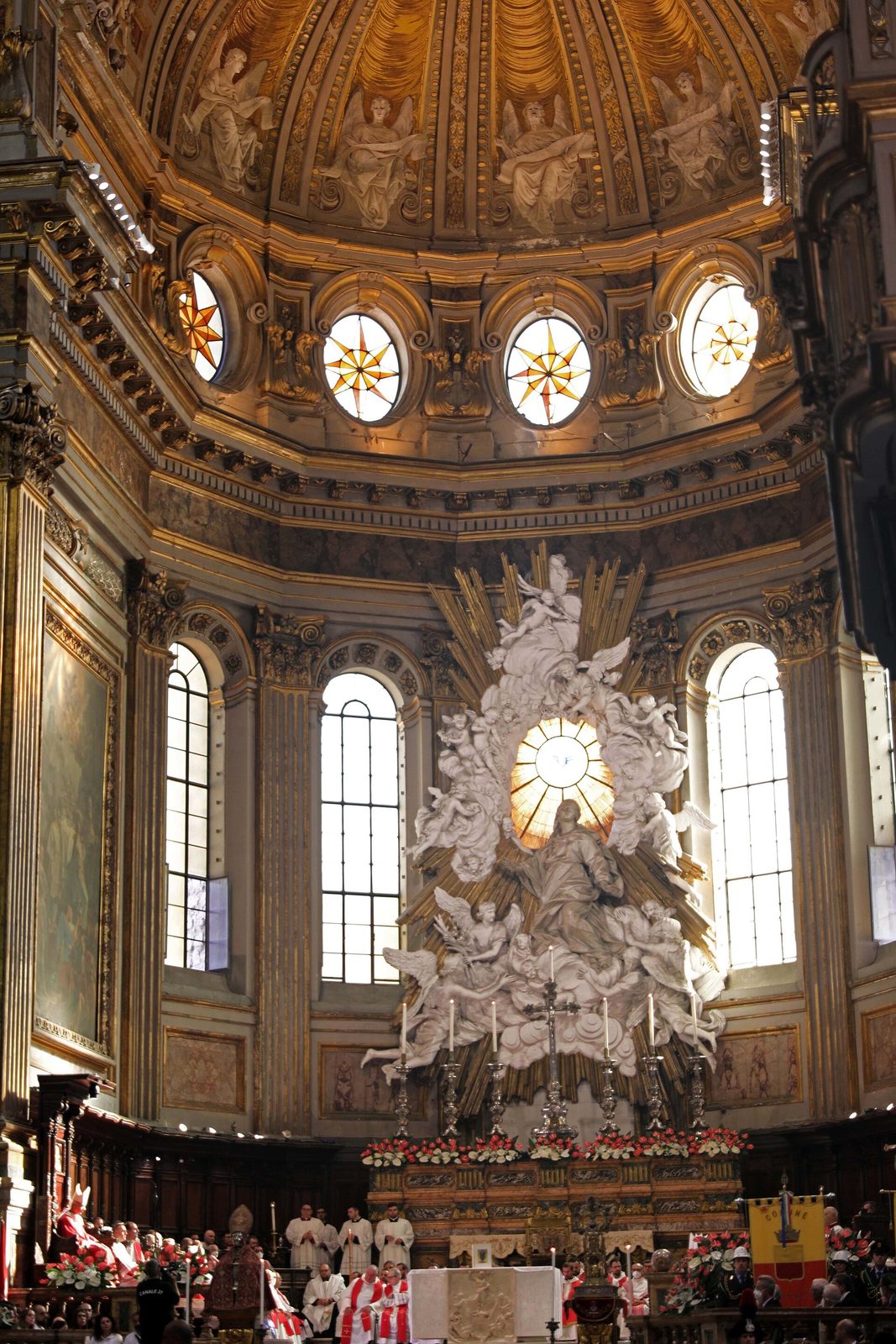
And May has Naples’ best festival season. Maggio dei Monumenti, “Monuments May,” fills the month with special openings of churches and palaces normally closed to the public, guided itineraries, concerts and exhibitions, most of them free. In 2026 it ran from May 2 to June 2, with over 200 free events. Early in the month comes the first of the year’s three San Gennaro celebrations, when the cathedral displays the relic of the saint’s blood, which the faithful wait to see liquefy. It’s held on the Saturday before the first Sunday in May, with a procession through the historic center.
The downsides are modest. May is popular, so book accommodation early, especially for weekends and the late-April and early-May holiday periods, when Italians travel too. And you’ll be sharing Pompeii with a lot of school groups on weekday mornings.
Why September is the near-equal
September is May’s mirror image, and some people prefer it. The heat of August breaks gradually through the month, the sea is at its warmest of the year, and the ferries and islands are in full swing without the crush of August. The city comes back from its summer break with energy. September 19 is the feast of San Gennaro, the most important of the three liquefaction days, with a Mass in the cathedral and celebrations across the city.
The trade-offs: the first half of the month can still be hot, cruise traffic is high, and September is a popular month for weddings and conferences, so accommodation fills. Late September and early October are, for my money, the sweet spot of the second half of the year.
Why August is the hardest month
August is the month I’d steer most people away from, and it’s worth understanding why, because it isn’t just the heat.
- The heat. August is the hottest month of the year in Naples, and the city’s dense stone streets hold the heat day and night. Record highs have touched 40°C. Walking the historic center at midday, or Pompeii in the early afternoon, is genuinely punishing, and there’s very little shade at the ruins.
- Ferragosto. August 15 is Ferragosto, the great Italian midsummer holiday, and much of the country goes on vacation around it. In Naples, many smaller family-run restaurants, shops and businesses close for a week or two in the middle of the month. The city can feel oddly empty of locals and full of visitors.
- The crowds are in the wrong places. While the city empties, the islands and the Amalfi Coast are at their absolute busiest, with the highest prices, the longest ferry queues and the fullest buses of the year. In 2026, the odd/even number plate rule was in force every day on the Amalfi Coast road for all of August.
If August is your only option, it can still be a great trip: plan around the heat (see my month-by-month notes below), book everything early, spend the middle of the day in museums and the afternoons in or near the sea, and base yourself somewhere with good air conditioning.
Why winter is underrated
Winter is the season most guides dismiss, and I think they’re wrong, at least about the city. Naples in December is one of the most atmospheric places in Italy. Via San Gregorio Armeno, the street of nativity-scene workshops in the historic center, is at its most crowded and magical in the weeks before Christmas. The churches set up elaborate presepi (nativity scenes), and the whole city takes on a festive glow. New Year’s Eve in Naples is famously loud, with fireworks across the city and a big public celebration in Piazza del Plebiscito.
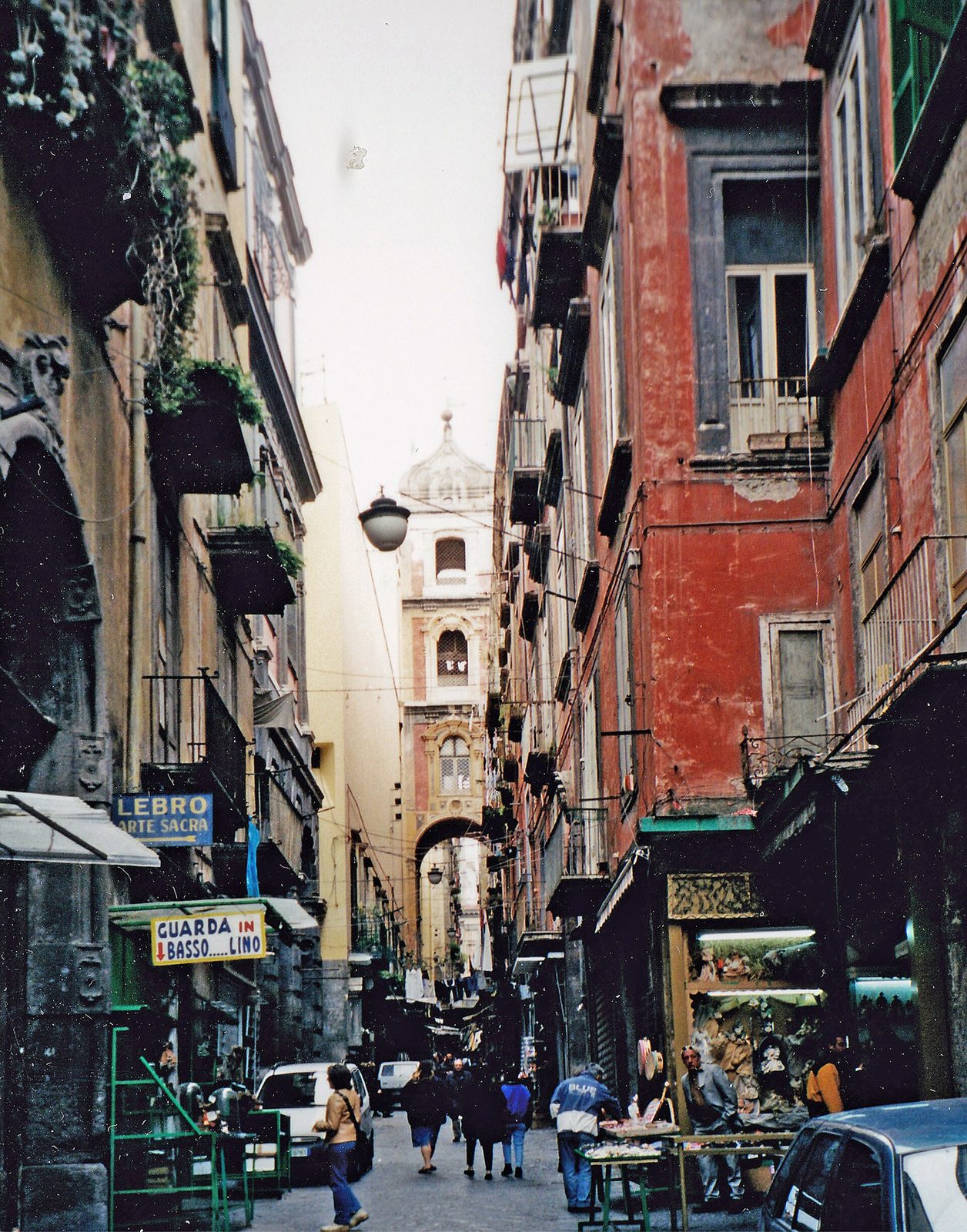
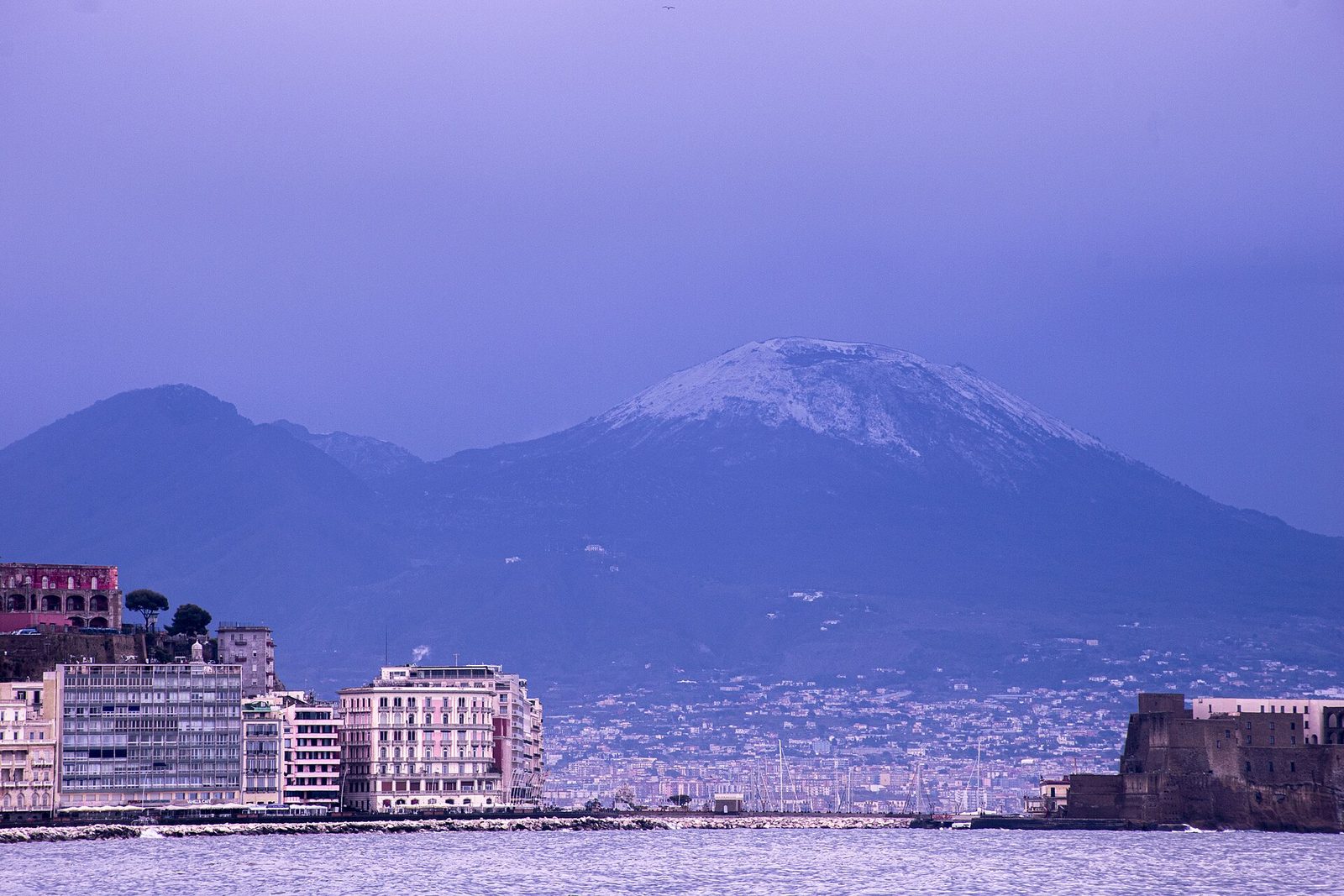
Outside the Christmas weeks, winter is the quietest time of year. The museums, churches and Pompeii are as empty as they ever get, prices are lower, and on a clear winter day, with snow on Vesuvius above the bay, the city is stunning. Temperatures are mild by northern standards.
The honest downsides: winter is the wettest time of year, with some days of heavy rain; the ferries to the Amalfi Coast from Naples don’t run; many hotels and restaurants on Capri and the Amalfi Coast close for the season; and the days are short, so Pompeii and Vesuvius close earlier. Winter is a season for the city, the museums and the ruins, not for the islands and the coast.
April or October? The shoulder months compared
If May and September are booked up or too expensive, the next best choices are April and October. They’re both excellent, and they suit slightly different trips.
April is fresher and greener. Temperatures run a little lower, the countryside is in flower, and the season is just getting going, so the ferries and beach clubs are waking up rather than winding down. The sea is still too cold for most swimmers. The catch is the holidays. Easter often falls in April, and April 25 and May 1 bring Italian travelers out in force, so prices and crowds jump around those dates. Outside them, April is one of the best-value times to see the city and the ruins in comfortable weather.
October is warmer and more settled at the start, with the sea still holding its summer heat in the first half of the month. It’s a better choice if you want to swim or see the islands and the coast while everything’s still running. But the season is winding down. Pompeii switches to shorter hours from October 15, the Blue Grotto’s hours shorten, the Amalfi Coast ferries thin out toward the end of the month, and the autumn rains begin. Early October is one of my favorite times of year here. Late October is better for the city than for the coast.
The short version: choose April for the city, the ruins and spring color on a budget, and October, ideally the first half, for a last taste of summer by the sea.
Festivals and events calendar
These are the events worth planning a trip around, or at least knowing about before you book.
| When | Event | What to expect |
|---|---|---|
| January 1 | New Year | Fireworks across the city at midnight; a quiet, closed-up New Year’s Day |
| January 6 | Epiphany (La Befana) | A public holiday that ends the Christmas season |
| February or early March | Carnival | Children in costume and local parades; a smaller affair than in Venice |
| March or April (March 28 in 2027) | Easter | Processions, Easter pastries like pastiera, busy hotels; Easter Monday is a holiday when Neapolitans head out of town |
| Saturday before the first Sunday in May | San Gennaro, first celebration | A procession from the cathedral through the historic center with the saint’s relics |
| May to early June (May 2–June 2 in 2026) | Maggio dei Monumenti | Special openings, free itineraries, concerts and exhibitions across the city |
| July (July 7–12 in 2026) | Napoli Pizza Village | A big free pizza festival with concerts. In 2026 it moved to the Pozzuoli seafront |
| August 15 | Ferragosto | The national midsummer holiday; many businesses close around it |
| September 19 | Feast of San Gennaro | The main liquefaction day, with a Mass in the cathedral and celebrations across the city |
| November to early January | Nativity season | Via San Gregorio Armeno and the church presepi at their best |
| December 16 | San Gennaro, third celebration | The winter liquefaction day, commemorating the 1631 eruption of Vesuvius |
| December 31 | New Year’s Eve | Fireworks, a big public celebration in Piazza del Plebiscito, and a lot of noise |
| First Sunday of every month | Free state museums | Free entry to state museums and sites, including MANN, Capodimonte and Pompeii, with much bigger crowds |
The seasonal calendar: what opens, closes and changes
This is the part of trip timing that most guides skip, and it can make or break a plan. Many of the region’s big experiences run to seasonal timetables.
- Amalfi Coast ferries from Naples run roughly from April to October, with one or two operators continuing into early November. Outside that window, you reach the coast by train and bus.
- Pompeii opens from 9:00 to 19:00 (last entry 17:30) from March 16 to October 14, and from 9:00 to 17:00 (last entry 15:30) from October 15 to March 14. The daily visitor cap is split into morning and afternoon windows in the long-hours season.
- Vesuvius opens every day from 9:00, but last access varies from mid-afternoon in winter to early evening in July and August, and wind, snow and heavy rain close it more often in winter.
- The Blue Grotto on Capri opens from 8:30 to 18:00 from April to September, 8:30 to 16:00 in the first half of October, and 9:00 to 14:00 from mid-October to March, and only when the sea is calm. Rough seas close it far more often in winter.
- Capri’s funicular from the port to the Piazzetta closes for maintenance from January until Easter, when a replacement bus runs.
- The Amalfi Coast road runs an odd/even number plate rule for non-resident cars from 10:00 to 18:00 on set days: over the spring holidays, on summer weekends in June and July, every day in August and September, and at weekends in October (the 2026 calendar).
- The Campania Express tourist train to Pompeii and Sorrento is suspended from October 1, 2026, until further notice.
- Beach clubs on the coast and islands typically open from late spring to early fall.
Naples weather by month
Naples has a classic Mediterranean climate: hot, dry summers and mild, wetter winters, with a long, pleasant spring and fall in between. The figures below are long-term averages from the Copernicus climate service (1991–2020). Treat them as a guide. The dense streets of the historic center often feel several degrees hotter than the averages in summer, and a sunny winter afternoon can feel much warmer than the numbers suggest.
| Month | Average daytime high | Rain | Sea | Crowds | Verdict |
|---|---|---|---|---|---|
| January | 13°C (55°F) | Wet | Cold | Very low | Good for museums and bargains |
| February | 14°C (57°F) | Wet | Coldest, about 14°C | Very low | Quiet; Carnival |
| March | 15°C (59°F) | Showery | Cold | Low, rising at Easter | Spring arrives; variable |
| April | 18°C (64°F) | Some showers | Cool | Medium to high | Excellent |
| May | 21°C (70°F) | Mostly dry | Warming | High | The best month |
| June | 25°C (77°F) | Dry | Warm | High | Lovely, before the heat peaks |
| July | 28°C (82°F) | Driest, about 16 mm | Warm | Very high | Hot; best for the sea |
| August | 29°C (84°F) | Dry, with occasional storms | Warmest, about 26°C | Islands packed, city half-closed | The hardest month |
| September | 25°C (77°F) | Storms return, about 96 mm | Very warm | High | Near-equal of May |
| October | 22°C (72°F) | Wetter | Still swimmable early on | Medium | A great compromise |
| November | 18°C (64°F) | Wettest, about 190 mm | Cooling | Low | Quiet; nativity season begins |
| December | 15°C (59°F) | Wet | Cold | Low, busy at Christmas | Atmospheric; underrated |
Night-time lows range from around 8°C (46°F) in the depths of winter to around 23°C (73°F) in high summer. Naples gets plenty of sun, with over ten hours a day in July and about three and a half in December. The highest temperature ever recorded at the city’s main weather station was 40.0°C, in August 1981.
Naples month by month
January
After the Epiphany holiday on January 6, Naples goes quiet. This is one of the least crowded months of the year: the museums, churches and even Pompeii feel almost private, and hotel prices are at their lowest. The weather is mild but changeable, with sunny days and heavy rain in roughly equal measure, and daytime highs around 13°C. Pompeii closes at 17:00, with last entry at 15:30, so start early. On Capri, the funicular is closed for maintenance and many hotels and restaurants are shut. January is a month for the city: its museums, its food, its underground sites, and its winter sales, which start early in the month. It’s not a month for islands.
February
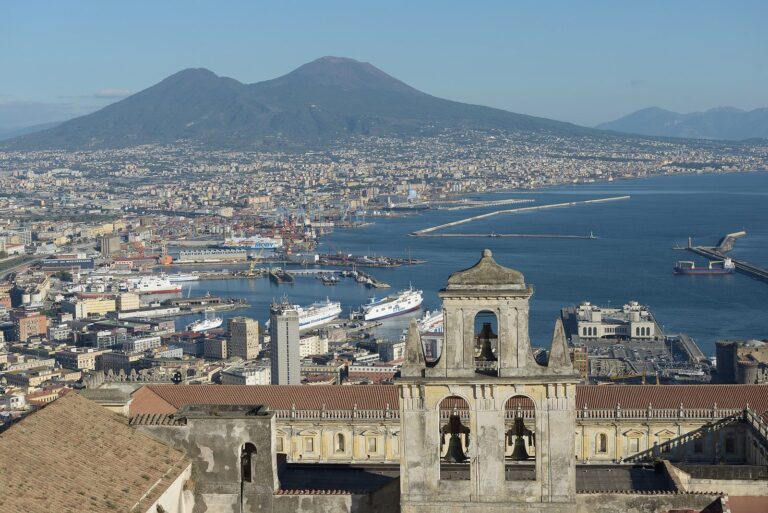
February is similar to January, and it’s the month when the sea is at its coldest, around 14°C. It’s still quiet, with low prices. Carnival falls in February or early March, and it’s a local, family affair in Naples, with children in costume and small parades rather than the grand spectacle of Venice. Occasionally, a cold spell dusts the top of Vesuvius with snow, and the sight of a white-capped volcano above the bay on a clear day is one of the most beautiful views in Italy.
March
Spring arrives in March, although the weather can swing between warm sunshine and cold rain in the same week. From March 16, Pompeii switches to its longer hours, open until 19:00. Easter sometimes falls in March (it’s March 28 in 2027), bringing processions, the classic Easter pastries, especially pastiera, a ricotta and wheat tart, and a spike in visitors and prices. Outside Easter week, March is still quiet and good value, and the almond and citrus blossom in the countryside is lovely.
April
April is an excellent month, and the start of the season proper. Temperatures reach around 18°C, the countryside is green and flowering, and the ferries to the Amalfi Coast and the islands restart their regular timetables. Easter often falls in April, and the spring holidays (Liberation Day on April 25 and Labor Day on May 1) bring Italian travelers to the coast. In 2026, the Amalfi Coast road ran its odd/even plate rule every day from April 24 to May 2. Book ahead for Easter and late April, and enjoy the rest of the month.
May
The best month of the year. Temperatures reach around 21°C, with warm days and fresh evenings. The sea is warming, and it’s swimmable by the end of the month for most people. The ferries and islands are running, and Maggio dei Monumenti fills the city with free openings, itineraries and concerts from early May into June. The first San Gennaro celebration falls on the Saturday before the first Sunday in May. May is popular, so book accommodation early, but it rarely feels overwhelming. If you can choose any month, choose this one.
June
June brings the start of summer: temperatures around 25°C, long days, a warm sea and very little rain. Italian schools break up for the summer in mid-June, and the coast and islands get busier. June 2 is Republic Day, a national holiday. The first half of the month is one of the loveliest times of year to combine the city with the sea. By the end of the month, the heat is building, and midday at Pompeii becomes hard work.
July
July is hot, sunny and dry. It’s the driest month of the year, with only a few days of rain, and averages over ten hours of sunshine a day. Daytime highs average around 28°C, but the city center feels hotter. It’s the best month for swimming and island-hopping, and the worst for walking the historic center at midday. In 2026, the Napoli Pizza Village ran from July 7 to 12, moving from Naples to the seafront in nearby Pozzuoli. Cruise traffic and European summer holidays make the big sights busy, so book ahead, go early and rest in the afternoon.
August
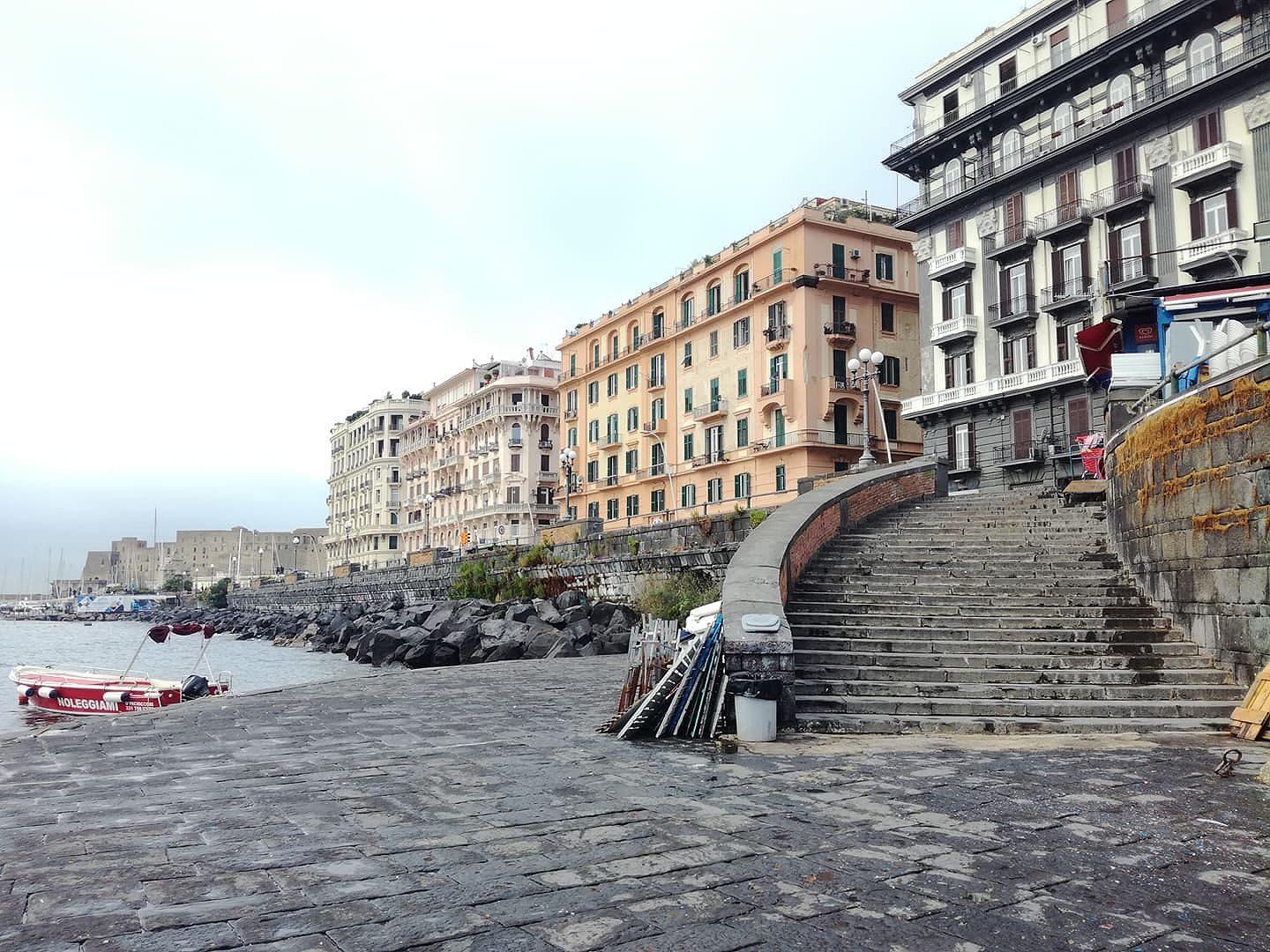
August is the hottest month, with daytime highs around 29°C on average and much hotter spells. The sea is at its warmest, around 26°C. It’s also the month of Ferragosto on August 15, when much of Italy goes on vacation and many smaller Neapolitan restaurants and shops close for a week or two. The islands and the Amalfi Coast are at their busiest and most expensive, and in 2026 the coast road ran its odd/even plate rule every day. If you go, plan the day around the heat: early starts, museums at midday, the sea in the afternoon and late dinners. Book accommodation with good air conditioning, and check that the restaurants you want to try aren’t closed for their summer break.
September
September is the near-equal of May. The heat eases through the month, the sea is at its warmest, and the city comes back to life after the summer break. September 19 is the feast of San Gennaro, the most important of the three liquefaction days. The weather is mostly glorious, although late-summer thunderstorms return, and the month averages around 96 mm of rain, often in short, heavy bursts. It’s popular, so book early. Late September is one of my favorite times of year in Naples.
October
October is a great compromise: mild weather with daytime highs around 22°C, a sea that’s still swimmable in the first half of the month, and noticeably fewer visitors. It’s also the month when the region shifts toward its winter timetable. From October 15, Pompeii closes at 17:00 instead of 19:00. The Blue Grotto’s hours shorten from October 1. The Amalfi Coast ferries wind down toward the end of the month. The coast road’s plate rule applies only at weekends and on holidays. And in 2026, the Campania Express tourist train was suspended from October 1. Plan around those changes and October is lovely.
November
November is the wettest month of the year, averaging around 190 mm of rain over about 15 days, often in heavy downpours. It’s also one of the quietest and cheapest months, and a good one for museums, underground sites and food. All Saints’ Day on November 1 is a public holiday. And November is when the nativity season begins: the workshops on Via San Gregorio Armeno start to fill with figures and crowds, building toward Christmas. Bring an umbrella and good shoes, and enjoy having the city more or less to yourself.
December
December is Naples at its most atmospheric. The weather is mild but often wet, and the days are short, with about three and a half hours of sunshine on average. But the city glows. The nativity scenes are everywhere, Via San Gregorio Armeno is packed, and the churches set up their presepi. The feast of the Immaculate Conception on December 8 is a public holiday, and December 16 is the third San Gennaro celebration. Christmas is a family occasion, and many places close on December 25 and 26. New Year’s Eve is famously loud, with fireworks across the city and a big public celebration in Piazza del Plebiscito. Book ahead for Christmas and New Year, and don’t plan island or coast days.
If you can only go in July or August: a heat-proof day
Plenty of travelers, especially families tied to school holidays, can only visit in high summer. It can still be a wonderful trip if you stop fighting the heat and work with it, the way Neapolitans do.
- Start early. Be out by 8:00 and do your hardest walking, Spaccanapoli and the historic center or Pompeii at opening time, before about 11:00.
- Go indoors at midday. The late morning and early afternoon are for air-conditioned museums like MANN or Capodimonte, cool churches, and the underground sites beneath the historic center, which stay at a steady, cool temperature all year.
- Take a long lunch and a rest. Eat lunch in the shade, then go back to your hotel for an hour or two in the hottest part of the afternoon. It isn’t wasted time, it’s how the city lives.
- Head for the sea in the late afternoon. Swim off the rocks along the seafront or at Posillipo, or take an afternoon boat to an island and come back in the evening.
- Eat late and walk at night. Dinner at 9:00 or later, followed by the evening walk along the seafront, when the air finally cools and the whole city is out.
Carry water everywhere and refill it often. Wear a hat and light, loose clothing. And don’t plan Pompeii and Vesuvius on the same summer day.
Crowds, cruise ships and prices through the year
Naples’ crowds don’t follow the neat summer peak of many Mediterranean destinations. They move around the region through the year.
- The city is busiest from April to October, with spikes at Easter, over the late-April and early-May holidays, in September, and at Christmas and New Year. Oddly, it can feel quieter in mid-August, when many locals leave.
- The islands and the Amalfi Coast are busiest from June to September, peaking in August, and very quiet in winter, when many hotels and restaurants close.
- Pompeii is busy almost all year, with school groups in spring, cruise passengers from spring to fall and big crowds on the free first Sunday of every month. Arrive at opening time whatever the season.
- Cruise ships call at Naples through much of the year, most heavily from spring to fall. On days when several ships are in port, the historic center, Pompeii and Capri all feel it. If you’re flexible, check the port’s cruise calendar and avoid the busiest days for your big sights.
Prices follow the crowds. Hotels in the city are most expensive at Easter, in September and over Christmas and New Year, and cheapest from mid-January to early March and in November. On the islands and the coast, prices peak in August. Italy’s national holidays (January 1 and 6, Easter Monday, April 25, May 1, June 2, August 15, November 1, December 8, 25 and 26) bring Italian travelers out in force, so check whether one falls during your trip.
The best time for…
- Sightseeing in the city: April, May, October and November, when it’s cool enough to walk all day.
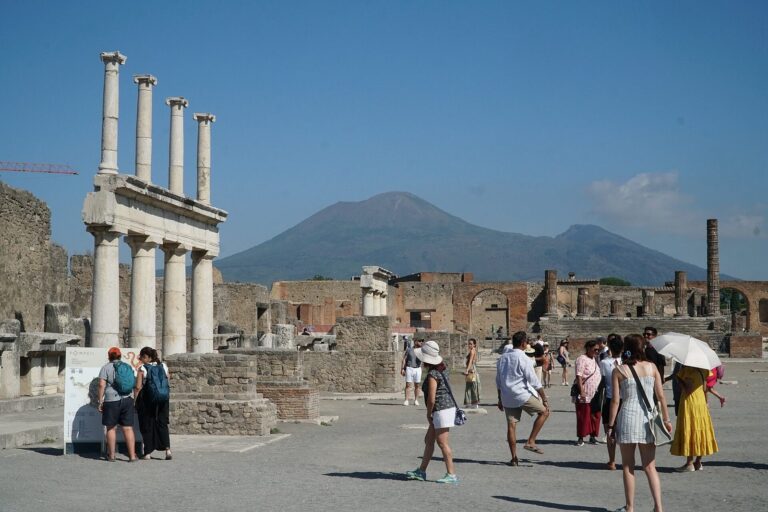
- Pompeii and Herculaneum: spring and fall, early in the morning. Avoid midday in July and August, when the ruins are ferociously hot.
- Vesuvius: clear spring and fall days, when the view is sharpest. Summer haze often blurs the bay.
- Swimming and beaches: late June to September. The sea is at its warmest in August and September.
- The islands and the Amalfi Coast: May, June and September, when everything is running and the crowds are manageable.
- Festivals: May for Maggio dei Monumenti and San Gennaro, September for the main San Gennaro feast, December for the nativity season.
- A budget trip: mid-January to early March, and November.
- Avoiding crowds: January, February and November.
- Families: June and September, when the sea is warm and the heat is bearable. Families tied to school holidays should build the day around the heat in July and August.
What to pack for each season
- Spring and fall: layers, a light jacket for the evenings, a compact umbrella and comfortable walking shoes. Bring a swimsuit from late May and into October.
- Summer: light, breathable clothes, a hat, sunscreen and a refillable water bottle. For churches, bring a scarf or a layer to cover your shoulders, and avoid very short shorts. Swim shoes are useful for the rocky beaches.
- Winter: a warm, waterproof jacket, a sweater, an umbrella and shoes that can cope with wet, slippery stone streets. Old buildings can be chilly inside, so bring warm layers for the evenings too.
Christmas and New Year in Naples
If you’re thinking about a winter trip, the Christmas season is the one to choose. Naples takes Christmas more seriously than almost anywhere in Italy, and it’s centered on the presepe, the nativity scene. The Neapolitan tradition goes far beyond a manger. Whole miniature towns are crowded with shepherds, bakers, fishmongers, taverns and, these days, figures of footballers, politicians and celebrities alongside the Holy Family. Via San Gregorio Armeno, in the historic center, is lined with the workshops that make them, and in the weeks before Christmas it’s so packed you shuffle along shoulder to shoulder. Go on a weekday morning if you can.
Christmas Eve is a seafood feast in Neapolitan homes, and restaurants that open that evening book up early. Christmas Day and December 26 (Santo Stefano) are family days, so many restaurants, shops and some sights close, and Pompeii is closed on December 25. Plan a quiet day, book any meal well in advance, and don’t count on museums being open. New Year’s Eve is the opposite: the city erupts in fireworks and firecrackers at midnight, with a big free celebration in Piazza del Plebiscito. Then January 1 is sleepy, with Pompeii and many other sites closed. The Christmas season ends with the Epiphany on January 6.
What to skip
- The historic center and Pompeii at midday in July and August. Go early, rest in the afternoon, and come back out in the evening.
- Island and coast days in winter. Ferries to the Amalfi Coast don’t run from Naples, many places close, and rough seas cancel boats. Save them for spring to fall.
- Mid-August if you want to eat your way around Naples. Many of the best small restaurants close for their summer break around Ferragosto.
- The free first Sunday of the month at Pompeii, unless the saving really matters to you. It’s the busiest day of the month.
- Late-afternoon Pompeii visits after October 15. The site closes at 17:00, with last entry at 15:30.
- Assuming “shoulder season” means empty. Easter, the spring holidays, September and the Christmas weeks are all busy. Book ahead.
Frequently asked questions about the best time to visit Naples
What is the best month to visit Naples, Italy?
May. It has warm days, mild evenings, a warming sea, the islands and ferries in full swing without the summer crush, and the free Maggio dei Monumenti festival. September is a very close second, with the warmest sea of the year and the feast of San Gennaro on September 19.
Is Naples too hot in summer?
July and August are hot, with average daytime highs of 28–29°C and much hotter spells, and the historic center feels hotter still. It’s manageable if you start early, visit museums and churches at midday, spend the afternoons near the sea and eat dinner late. Pompeii in the early afternoon is the hardest part.
Is Naples worth visiting in winter?
Yes, for the city. Winter is quiet, mild and good value, the museums and Pompeii are uncrowded, and December brings the nativity season and a famously loud New Year’s Eve. It’s the wettest time of year, though, and not a good time for Capri or the Amalfi Coast, where ferries are limited and many places close.
When is the rainy season in Naples?
Rain is spread from October to March, with November the wettest month, averaging around 190 mm over about 15 days. Summer is very dry: July averages only about 16 mm of rain. September brings the first late-summer thunderstorms.
Can you swim in Naples in October?
In early October, yes. The sea stays warm from the summer and is still comfortable for most swimmers in the first half of the month. By late October it’s cooling, and most beach clubs have closed for the season.
When do the ferries to the Amalfi Coast run?
Direct ferries from Naples to Positano and Amalfi run roughly from April to October, with one or two operators continuing into early November. Out of season, reach the coast by train and bus via Sorrento or Salerno.
Is August a bad time to visit Naples?
It’s the hardest month, not a bad one. The heat is intense, many small restaurants and shops close around Ferragosto on August 15, and the islands and coast are at their busiest and most expensive. If August is your only option, plan the days around the heat and book early.
When is Naples least crowded?
January, February and November, outside the holiday weeks. Hotel prices are lowest then too, and you’ll have the museums, churches and even Pompeii almost to yourself on weekdays.
What is the best time to visit Naples and the Amalfi Coast together?
May, June and September. The ferries from Naples to Positano and Amalfi are running, the weather is warm enough for the sea, and the coast isn’t yet, or is no longer, at its August peak. Late April and early October also work, with fewer boats and cooler water.
Whatever season you choose, a few things don’t change: the tourist tax at your hotel, the long lunchtime closures, and the transport strikes that turn up a few times a year. I’ve gathered those, along with honest safety advice, in my Naples travel tips.
Timing affects your budget as much as your weather. Rooms cost far more in the busiest weeks and over the big holidays, while pizza and coffee cost the same all year. For how the whole budget adds up, from beds to day trips, see how much a trip to Naples costs.
The calendar of feasts can tip the balance between two months. September brings the feast of San Gennaro, December the presepe season and a famously loud New Year’s Eve, and summer the neighborhood saints’ days with their fireworks. The Naples festivals calendar has the dates and my verdict on each.
Photo credits
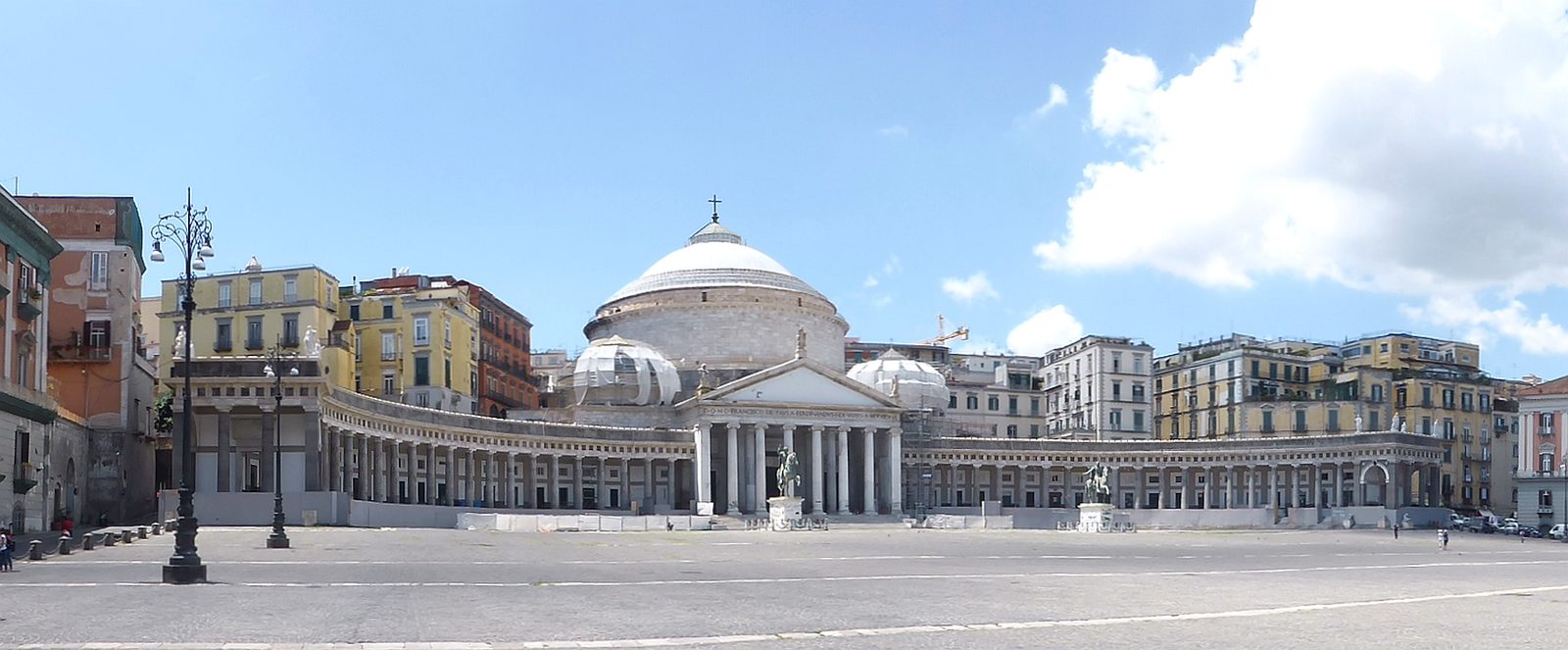
- Piazza del Plebiscito and San Francesco di Paola (featured image): photo by Wolfgang Pehlemann, Wikimedia Commons, CC BY-SA 3.0 DE.
- The Duomo during the feast of San Gennaro: US Navy photo by Petty Officer 1st Class Indra Beaufort, Wikimedia Commons, public domain.
- Via San Gregorio Armeno: photo by SchiDD, Wikimedia Commons, CC BY-SA 4.0.
- Snow on Vesuvius above the seafront: photo by Cinzia la fotografa, Wikimedia Commons, CC BY-SA 4.0.
- Steps to the sea on Via Caracciolo: photo by Baku, Wikimedia Commons, CC BY-SA 4.0.
Sources: climate averages from the Copernicus climate service (1991–2020) and records from the Napoli-Capodichino station; Maggio dei Monumenti 2026 from the City of Naples; Napoli Pizza Village 2026 from the organizers; seasonal opening hours from the Pompeii Archaeological Park, the Vesuvius National Park and Capri’s island authorities; Amalfi Coast road restrictions from the 2026 ANAS ordinance. All checked September 10, 2026. Event dates change from year to year: confirm before you book.