On this page
Last updated September 16, 2026. Tickets, hours, free days and closures checked against the Herculaneum Archaeological Park’s official site; the minor Vesuvian sites against the Pompeii Archaeological Park. Circumvesuviana fares are listed differently by different sources in 2026, so I send you to the fare table rather than print a number I can’t confirm.
Herculaneum is the best-preserved Roman town on the Bay of Naples, and in many ways better than Pompeii. It’s smaller, quieter and walkable in 2–3 hours. From Naples, Italy, take the Circumvesuviana to Ercolano Scavi (under 20 minutes). Tickets cost €16, €2 for ages 18–25, and it’s open daily (checked September 2026).
Almost everyone who comes to the Bay of Naples goes to Pompeii. Far fewer make the shorter trip to Herculaneum, and that’s a mistake I’d love to talk you out of. Buried by the same eruption of Vesuvius in AD 79, Herculaneum was entombed in a different way, under a deep, hot flow of volcanic material that sealed it and preserved things that simply vanished at Pompeii: wooden beams, doors, beds and screens, upper floors, rooftops, food, and the bones of hundreds of people who waited on the beach for a rescue that never came.
It’s also a fraction of the size. You can see the whole excavated area in a morning without the exhausting distances, the crowds or the confusion that wear visitors down at Pompeii. If you only have time for one ancient site, there’s a real case for choosing this one.
This guide covers everything you need: how Herculaneum compares with Pompeii, how to get there, tickets and hours, a route through the best houses, what’s closed right now, how to combine it with Vesuvius, and the smaller Vesuvian sites nearby at Oplontis, Stabiae and Boscoreale, which are almost empty and wonderful.
Herculaneum at a glance
| Question | Answer (checked September 2026) | What catches people out |
|---|---|---|
| Where is it? | In the modern town of Ercolano, about 8 km southeast of central Naples | Looking for “Herculaneum” on train boards instead of Ercolano |
| How do I get there? | Circumvesuviana to Ercolano Scavi, then a 10-minute walk downhill | Taking a train on the wrong branch at Garibaldi |
| How much? | €16 full; €2 for ages 18–25; free for under-18s | Thinking it’s on the same ticket as Pompeii |
| When is it open? | Daily. 8:30 a.m.–7:30 p.m. (last entry 6 p.m.) from March 16 to October 14; 8:30 a.m.–5 p.m. (last entry 3:30 p.m.) from October 15 to March 15 | Arriving after last entry in winter |
| Closed days? | Only December 25 | Assuming it closes like the city museums |
| Free days? | First Sunday of each month, plus April 25, June 2 and November 4 | Free tickets are issued at the ticket office on the day only |
| How long do I need? | 2–3 hours | Budgeting a full day as for Pompeii |
| What’s closed? | The Villa dei Papiri and the ancient theater | Expecting to visit either |
Herculaneum vs Pompeii: which should you visit?
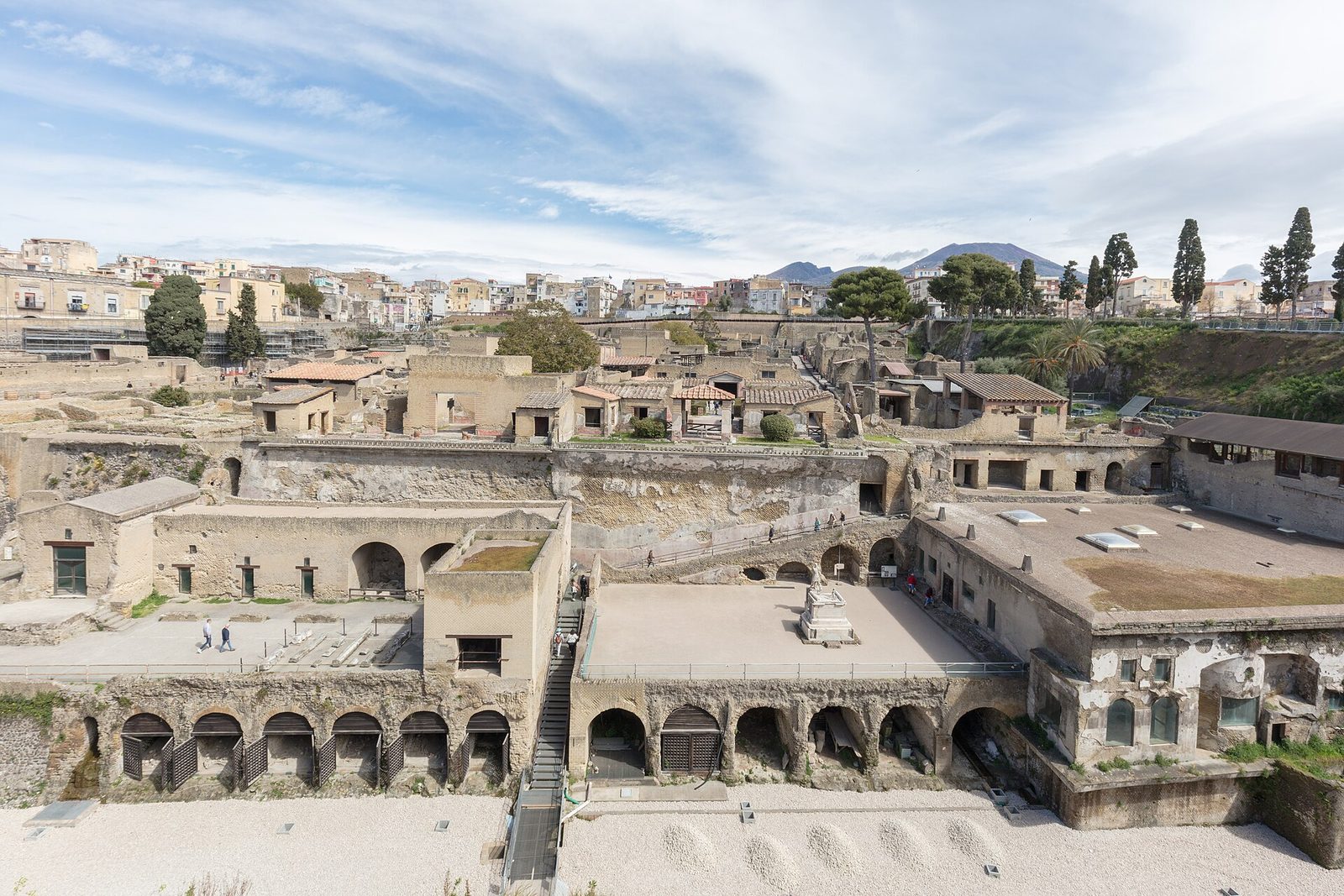
This is the question everyone asks, and the honest answer is that they’re different experiences, both extraordinary. If you can, see both. If you can only choose one, here’s how I’d decide.
| Herculaneum | Pompeii | |
|---|---|---|
| Size | Small: the excavated area is compact and walkable | Huge: a whole city, with long distances between highlights |
| Preservation | Exceptional: upper floors, wood, roofs, organic remains | Mostly ground floors and walls; wood long gone |
| Time needed | 2–3 hours | 4–6 hours, or a full day |
| Crowds | Moderate, rarely overwhelming | Heavy, especially in high season |
| Famous sights | Houses with original wood, the Neptune mosaic, the boat houses with skeletons | The Forum, the amphitheater, the plaster casts, the Villa of the Mysteries |
| Shade and heat | Hot in summer, but the short walk helps | Very exposed; heat is a serious issue |
| Ticket cost | €16 (checked Sept 2026) | A similar band, more for the extended tickets |
| From Naples | Under 20 minutes by train | About 35–40 minutes by train |
| Best for | Detail, atmosphere, short visits, families, heat-sensitive visitors | Scale, the sense of a whole city, the iconic sights |
Choose Herculaneum if you’re short on time, visiting in the heat of summer, traveling with children or anyone who struggles with long walks, or if you want to feel what a Roman house was actually like inside.
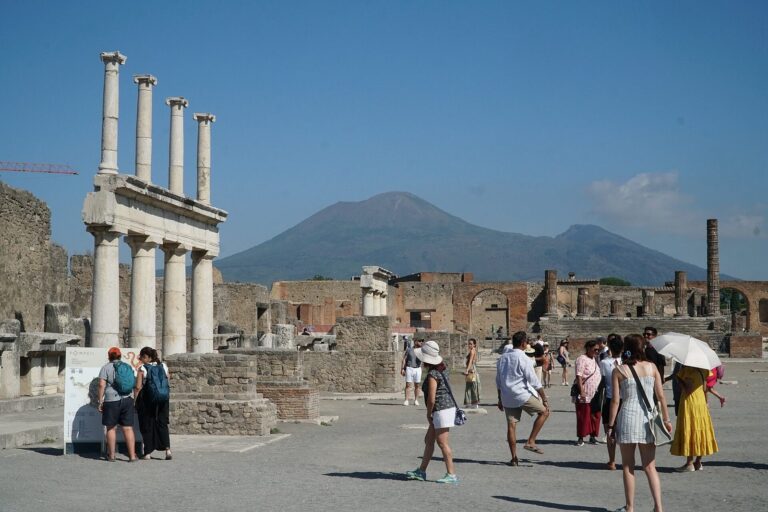
Choose Pompeii if you want the scale of a whole city, the amphitheater and forum, and the iconic images, and you have the day and the energy for it. My Pompeii from Naples guide covers the tickets, gates and route.
Do both if you can, on separate days. They complement each other perfectly: Pompeii shows you the city, Herculaneum shows you the home.
What happened at Herculaneum in AD 79
Herculaneum was a small, prosperous seaside town, with perhaps around 5,000 inhabitants, built on a promontory above the shore with views across the bay. Wealthy Romans had villas here, and the town was known more for comfort than commerce, unlike busy Pompeii on the other side of Vesuvius.
When Vesuvius erupted, the wind carried the first fall of pumice and ash southeast, toward Pompeii. Herculaneum, to the west, received relatively little at first, and many residents seem to have fled. But during the night, the eruption column collapsed, sending pyroclastic surges and flows, avalanches of superheated gas, ash and rock, racing down the mountain’s flanks. They reached Herculaneum first. Over the following hours the town was buried under layer upon layer of volcanic material, reaching around 20 meters deep in places, which later hardened into rock.
That deep, hot burial is what makes Herculaneum special. The heat carbonized wood and food rather than destroying them, and the mass of material sealed the town airtight. Roofs, balconies, upper floors, furniture, doors and even loaves of bread survived in forms that disappeared at Pompeii.
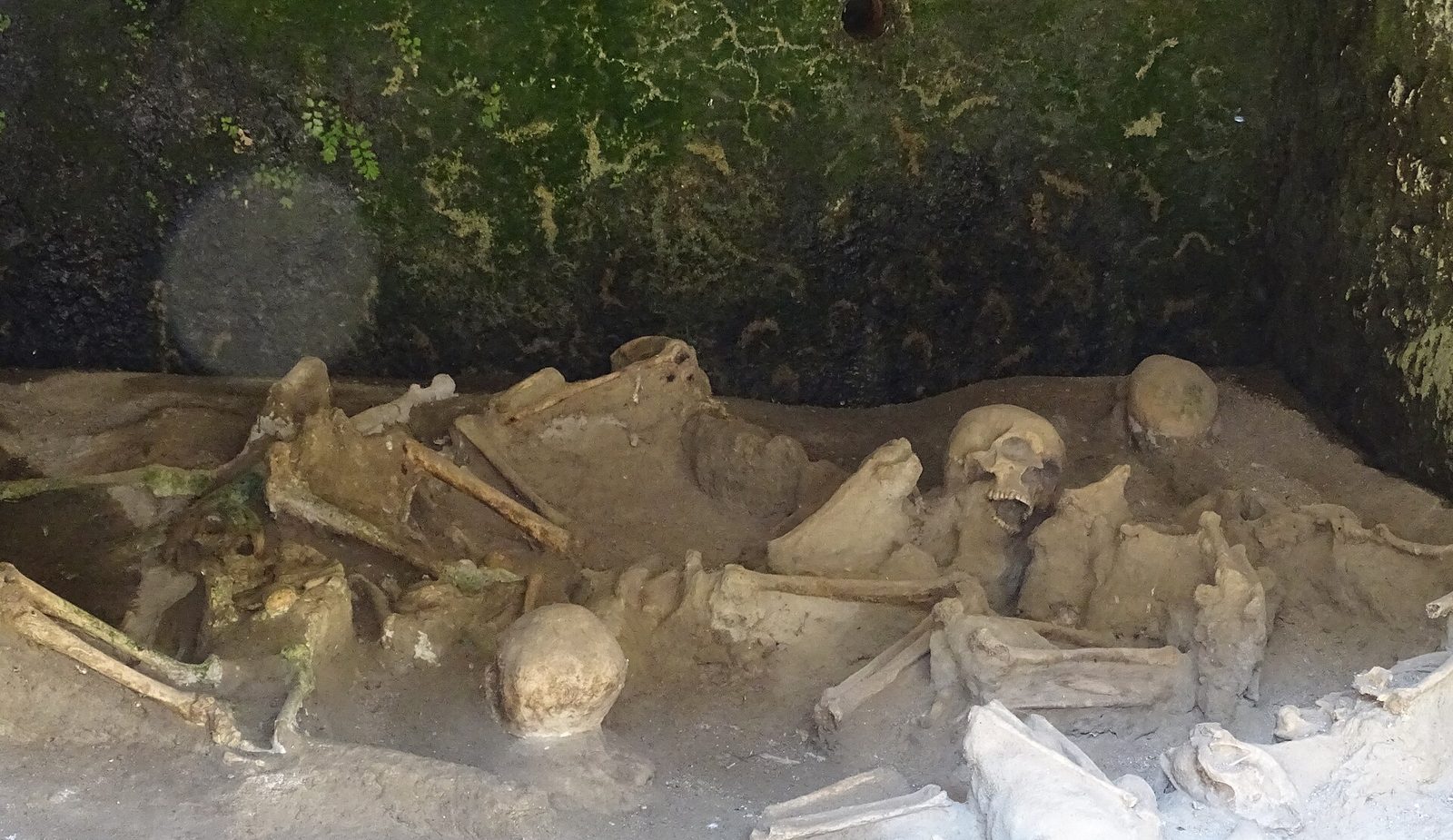
For centuries, archaeologists believed nearly everyone at Herculaneum had escaped, because so few bodies were found in the town. Then, in the 1980s, excavations along the ancient shoreline uncovered the vaulted boat houses and the beach in front of them, and found the skeletons of around three hundred people: men, women and children who had crowded into the arches waiting to be taken off by sea. Their bones have since told scientists an enormous amount about Roman diet, health and life expectancy. Seeing them is sobering, and for many visitors it’s the most moving moment of any site on the bay.
Life in Roman Herculaneum
It’s easier to picture daily life here than almost anywhere else in the Roman world, because so much of it survived. The town was built on a grid of paved streets running down toward the sea, with houses of every size, from grand seafront mansions with private terraces to cramped apartments above shops. Public fountains stood at street corners, and most people drew their water there. Shops opened onto the main street, selling wine, bread, hot food and cloth, and the baths were a daily social ritual.
The town’s wealth came partly from the sea and partly from its elite. Fishing was important, and the remains of fishing gear and boats have been found. Wealthy families, Roman aristocrats among them, built villas with views over the bay. Local benefactors paid for public buildings in return for honor and influence: Marcus Nonius Balbus, a senator and patron of the town, was commemorated with statues and a funerary altar near the Suburban Baths.
Herculaneum also preserved something almost unknown elsewhere: wooden writing tablets. Carbonized tablets found in the houses record legal disputes, contracts and loans, including a long-running court case over the freeborn status of a young woman, giving historians a rare glimpse into the everyday legal lives of ordinary townspeople, freed slaves and women. Add the graffiti scratched on the walls, the price lists painted on shop fronts and the food left on tables, and the town becomes startlingly human.
What the skeletons revealed
The discovery of hundreds of skeletons on the ancient beach transformed what scientists know about the Roman population of the Bay of Naples. Because the people who died there were a cross-section of the town, including children and older adults, their bones have been studied for decades.
Analysis of the remains has shed light on diet, with evidence that seafood was an important part of what people ate; on health and injuries, visible in worn joints and healed fractures; and on the heat of the surge that killed them, which studies agree was extreme enough to cause death almost instantly, although researchers still debate the exact temperature. One of the best-known individuals, a well-dressed woman found with gold rings on her fingers, is often called the Ring Lady.
Research is ongoing inside the town too. Scientists studying the remains of the man found on a bed in the College of the Augustales reported glassy material in his skull that they interpreted as brain tissue turned to glass by the heat, a sign of how sudden and violent the end was. When you stand in front of the boat houses, it’s worth remembering that the people inside them are still teaching us about how Romans lived.
A short history of the excavations
Herculaneum was rediscovered by accident. In the early 18th century, well diggers struck marble from the ancient theater, and treasure hunters began tunneling into it. From 1738, the Bourbon kings of Naples organized systematic excavations through underground shafts and tunnels, hauling out statues, bronzes and paintings for the royal collections. The most spectacular discovery was the Villa dei Papiri, a luxurious villa outside the town with a library of carbonized papyrus scrolls and a superb collection of bronze sculptures, now the pride of the National Archaeological Museum in Naples.
Open-air excavation began in the 19th century and was carried forward on a large scale from 1927 by the archaeologist Amedeo Maiuri, who uncovered much of what you see today. Only part of the ancient town has been exposed; much still lies under the modern town of Ercolano. Since the early 2000s, the Herculaneum Conservation Project, a partnership between the archaeological authorities and the Packard Humanities Institute, has worked on protecting the fragile site, which is one reason it’s so well presented.
Herculaneum, Pompeii and Oplontis were inscribed together as a UNESCO World Heritage Site in 1997.
Getting to Herculaneum from Naples
The Circumvesuviana train is the easy way. From Napoli Garibaldi, on the lower level of the main station, or Porta Nolana, one stop earlier, take a train on the Sorrento line and get off at Ercolano Scavi. The ride takes less than 20 minutes. Make sure the train is heading for Sorrento or a stop on that line, because several branches share the same station.
From Ercolano Scavi station, walk straight downhill along Via IV Novembre for about 10 minutes to the entrance on Corso Resina. It’s an easy, signposted walk. Ticket fares on the Circumvesuviana were listed inconsistently in 2026, and the current fares, platforms and contactless options are all in my guide to getting around Naples, Italy. Ercolano Scavi is one of the stations with contactless Tap&Go gates.
By car, Ercolano is a short drive from Naples on the A3 motorway, with paid parking near the site. By taxi, it’s a reasonable fare from the center for a small group. Some tours combine Herculaneum with Vesuvius or Pompeii by minibus, which saves the logistics at a higher price.
Herculaneum tickets, hours and free days
All figures below are from the Herculaneum Archaeological Park’s own ticket page, checked in September 2026.
| Ticket | Price | Notes |
|---|---|---|
| Full ticket | €16 | Single entry to the archaeological park |
| Reduced, ages 18–25 | €2 | Until the day before your 26th birthday; bring ID |
| Free | €0 | Under-18s and other categories set by Italian law |
| Annual pass, individual | €30 | Worth it if you’ll visit twice |
| Annual pass, family | €58 | Two adults plus minors |
| Annual pass, ages 18–25 | €5 | A bargain for students returning to study the site |
Opening hours
- March 16 to October 14: 8:30 a.m. to 7:30 p.m., last entry 6 p.m.
- October 15 to March 15: 8:30 a.m. to 5 p.m., last entry 3:30 p.m.
- Open every day of the week. Closed only on December 25.
Free days
Entry is free on the first Sunday of every month and on three national dates: April 25, June 2 and November 4. On free days, tickets can’t be booked online; you collect them at the ticket office on the day. Expect bigger crowds and a queue at opening.
Buying tickets
You can buy tickets at the ticket office on arrival or online through the park’s official booking system, which issues a QR code to scan at the turnstiles on your phone or printed. Herculaneum rarely sells out in the way Pompeii can, but booking online saves queuing in high season. Buy from the official site linked from ercolano.cultura.gov.it rather than a reseller. The site also accepts the Campania Artecard.
What’s closed
According to the park, the Villa dei Papiri and the ancient theater, the underground theater that started the whole excavation, are closed for maintenance. Both have opened only occasionally for special visits in the past, so treat any reopening as a bonus and check the park’s news before you go. The park has also announced that guided visits to the Suburban Baths are returning, with tickets going on sale from September 29, 2026; if you’d like to see them, check availability on the official site.
A route through the best of Herculaneum
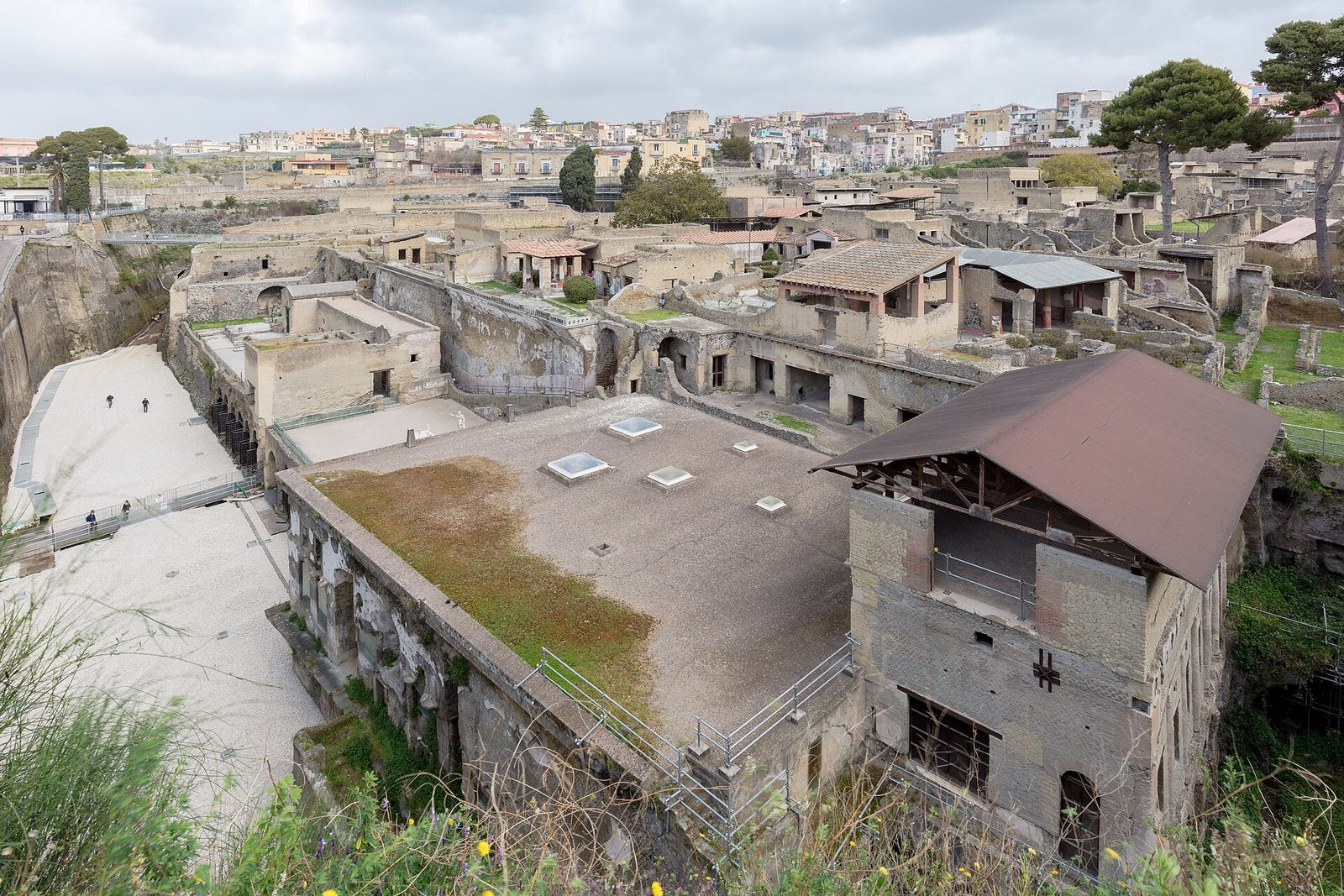
Herculaneum’s grid is small and logical, with three main streets running down toward the old shoreline, crossed by two main avenues. You enter from above, walking down a long ramp that gives you a first view over the whole excavation with the modern town perched on the cliffs above it, and a sense of how deep the town was buried. Here’s the route I’d follow, taking in the essentials in about two and a half hours.
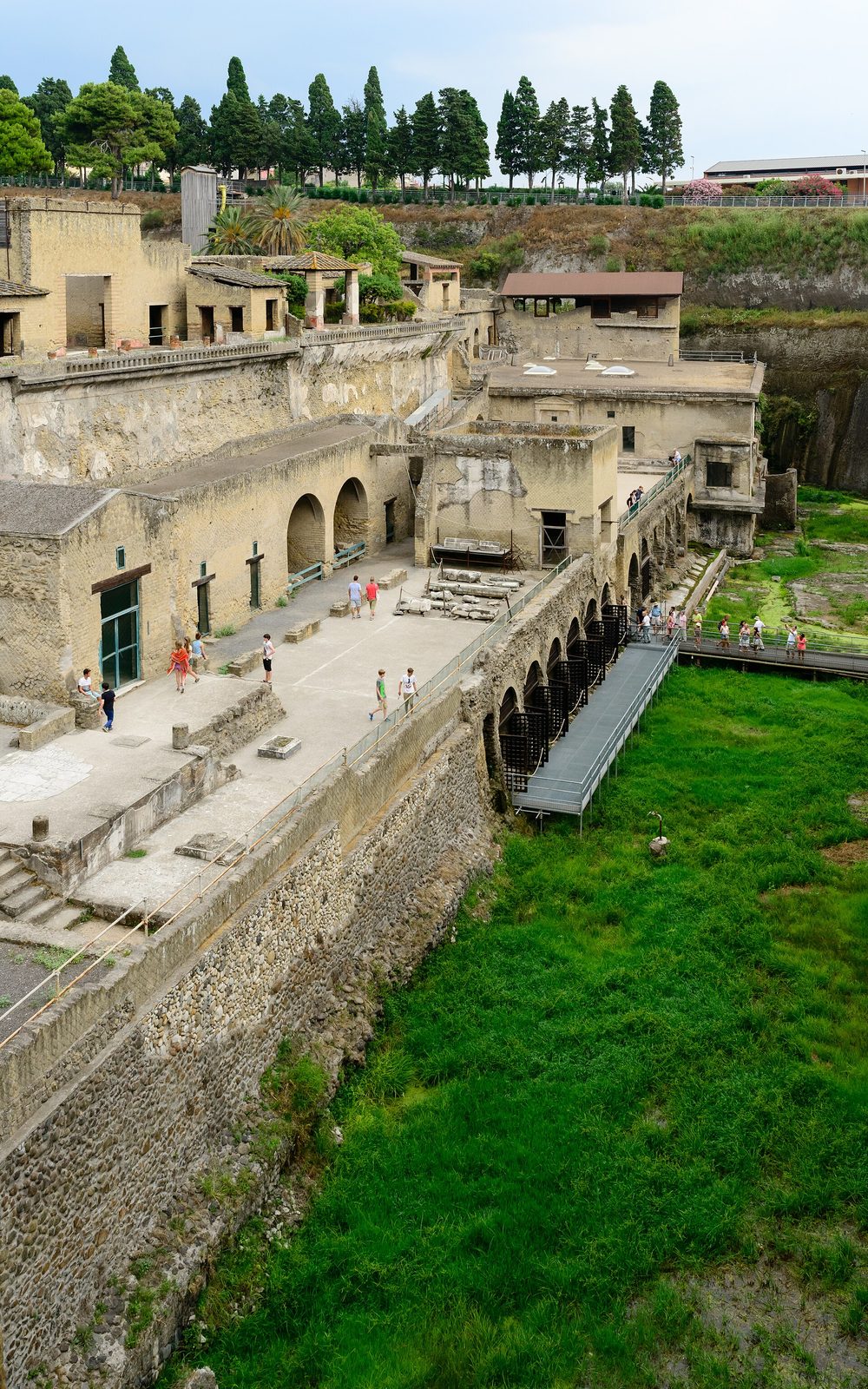
1. The ancient shoreline and the boat houses
Start at the bottom, if the route allows it on the day, where the town met the sea. The ancient beach now lies several hundred meters from the water, because the eruption pushed the coastline out. Along it run the vaulted boat houses where people sheltered and died, with skeletons still in place. Above them is the Suburban Baths complex and a terrace dedicated to Marcus Nonius Balbus, one of the town’s great benefactors, whose statue stands nearby.
2. The House of the Stags
One of the grandest houses in town, facing the sea from the edge of the promontory. It’s named after its marble sculptures of stags being attacked by hunting dogs, and it has a garden, a long enclosed corridor and a terrace that once looked straight out over the bay. Standing here gives you a real sense of the luxury of the town’s seafront homes.
3. The House of the Wooden Partition
This house has one of the site’s most astonishing survivals: a carbonized wooden screen with folding doors that separated the atrium from the reception room, still standing where it was in AD 79. It’s the kind of everyday domestic detail that makes Herculaneum feel lived in rather than ruined. Look closely and you can still see the grain of the wood and the way the folding panels were hinged together, nearly two thousand years after the screen was last folded shut.
4. The House of the Bicentenary
A large, richly decorated house, excavated in 1938, the 200th anniversary of the start of the Bourbon excavations. On an upper floor, a cross-shaped mark in the plaster has fueled a long debate about whether it’s one of the earliest Christian symbols in the Roman world or simply the scar of a wall fitting. You’ll hear both views; nobody has settled it.
5. The House of Neptune and Amphitrite
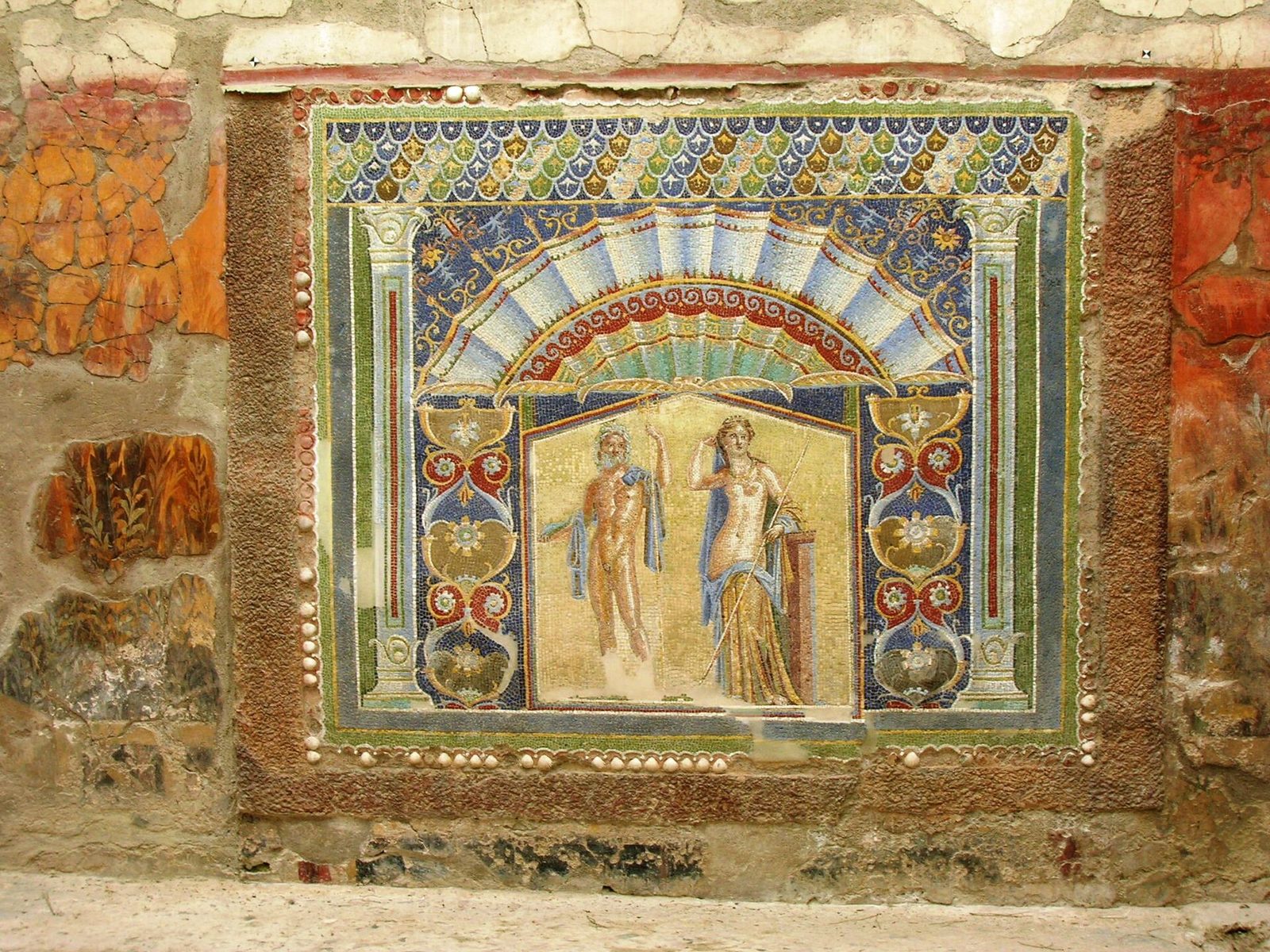
This is the image of Herculaneum many people remember. In a small summer dining room at the back of the house, a wall mosaic in brilliant blue, green and gold glass shows the sea god Neptune and his wife Amphitrite, framed by a scallop shell, beside a fountain decorated with hunting scenes. Just as remarkable is the shop at the front of the house, a wine and food shop with wooden shelving and a rack of amphorae still in place.
6. The House of the Mosaic Atrium
Its atrium floor is laid with a black-and-white checkerboard mosaic that the weight of the volcanic flow warped into waves, a vivid illustration of the force that buried the town. The house also had a garden and rooms facing the sea.
7. The Trellis House
A modest, two-story house built with a cheap timber-and-rubble technique called opus craticium, divided into apartments for several families. Its survival is almost unique: it shows how ordinary people lived, not just the rich, and it’s a reminder that Roman towns weren’t all marble and mosaics.
8. The baths
The Central Baths, near the middle of town, had separate sections for men and women, with changing rooms, a cold room, a warm room and a hot room. Look for the shelves where bathers left their clothes, the benches, and the black-and-white floor mosaics, including a sea creature in the women’s section. They’re among the best-preserved public baths anywhere in the Roman world.
9. The Decumanus Maximus and the shops
The town’s main street is wide, paved for pedestrians and lined with shops, some with their counters, jars and signs still visible. There’s a painted notice listing wine prices, public fountains and a bakery with its mill and oven. Walking along it, you can picture a busy Roman shopping street in a way that’s hard to do anywhere else.
10. The College of the Augustales
A hall used by the priests of the imperial cult, decorated with bright frescoes of Hercules, the town’s legendary founder. In a small room off the hall, excavators found the skeleton of a man lying on a bed, thought to be the building’s custodian, who apparently never left.
Also worth finding: the Palaestra
On the eastern side of the site, the town’s large sports ground, the Palaestra, was only partly excavated, and much of it still runs under the modern town through tunnels. In the part you can see, look for the cross-shaped pool and, where it’s on display, the bronze fountain in the form of a many-headed serpent coiled around a tree trunk, a reminder of the Hercules myths the town loved. It’s a quieter corner that many visitors miss on the way out.
Practicalities at the entrance
A few small things make the visit smoother.
- Bags. Large bags and suitcases aren’t practical on the site’s steps and narrow streets. If you’re arriving with luggage, leave it at your hotel or a storage service in Naples, or ask at the entrance about current left-luggage arrangements before you rely on them.
- Water. Bring a refillable bottle. There’s little shade in the excavation, and summer temperatures in the pit can feel higher than in the town above.
- Toilets. Use the facilities near the entrance before you start; there are few inside the ancient town.
- Maps. Pick up a site plan or download one before you go, and note which houses are open that day, since individual buildings sometimes close for conservation work.
- Shoes. Wear something with grip. The ancient paving stones are uneven and can be slippery.
Why you’ll see scaffolding and closed doors
Herculaneum is one of the most fragile archaeological sites in the world. Its carbonized wood, painted plaster and mosaics are exposed to sun, rain, plants, pigeons and the vibrations of the modern town above, and some houses are always being stabilized, roofed or restored. Since the early 2000s, the Herculaneum Conservation Project has worked with the park on long-term care rather than emergency repairs, including drainage, protective roofs and maintenance of the ancient structures.
The practical upshot for visitors is that on any given day a handful of houses may be closed or partially covered. It’s frustrating when a building you wanted to see is shut, but it’s also why so much of the town is still there to see. If a particular house matters to you, ask at the entrance before you set off.
Getting back to Naples
Walk back up Via IV Novembre to Ercolano Scavi station and take any train toward Napoli; all of them stop at Garibaldi, under the main station, and terminate at Porta Nolana. In the late afternoon, trains from Sorrento and Pompeii can arrive crowded, so keep your bag in front of you. If you’re heading straight to the port or the seafront, a taxi from Ercolano is an option for a small group, but in traffic it’s rarely faster than the train plus the metro.
How long to spend and when to go
Two to three hours is enough for most visitors to see the highlights at a comfortable pace, with time to stop and look properly. Archaeology enthusiasts with a good guidebook can easily spend longer.
Go early in the day in the warmer months, when the park opens at 8:30 a.m. and the light and temperature are both kinder. Midday in summer can be very hot in the enclosed excavation, with little shade. Tour groups tend to arrive mid-morning. Late afternoon is quieter too, but check last entry, especially from mid-October, when it moves back to 3:30 p.m.
Bring water, a hat and good shoes: the ancient streets are uneven, and there are steps between some levels. There’s no large café inside the excavations, so eat before or after in Ercolano.
Guides, audio guides and apps
Herculaneum is easier to understand than Pompeii, but the stories behind each house bring it alive. Options include licensed guides, who can often be found near the entrance or booked in advance, audio guides, and good guidebooks or apps. The information panels at the site are clear and helpful, largely thanks to the conservation project.
Visiting with children and accessibility
Herculaneum is one of the best Roman sites in Italy for children. It’s small enough that they won’t flag before the end, the houses feel real, and the skeletons on the ancient beach, though sobering, tend to fascinate older kids. For very young children, a baby carrier is much easier than a stroller on the uneven streets.
The site slopes down from the modern town via a ramp, and parts of the main streets can be managed with assistance, but many houses have thresholds, steps and rough paving. Contact the park in advance for the current accessible route and arrangements.
Herculaneum and the Naples archaeological museum
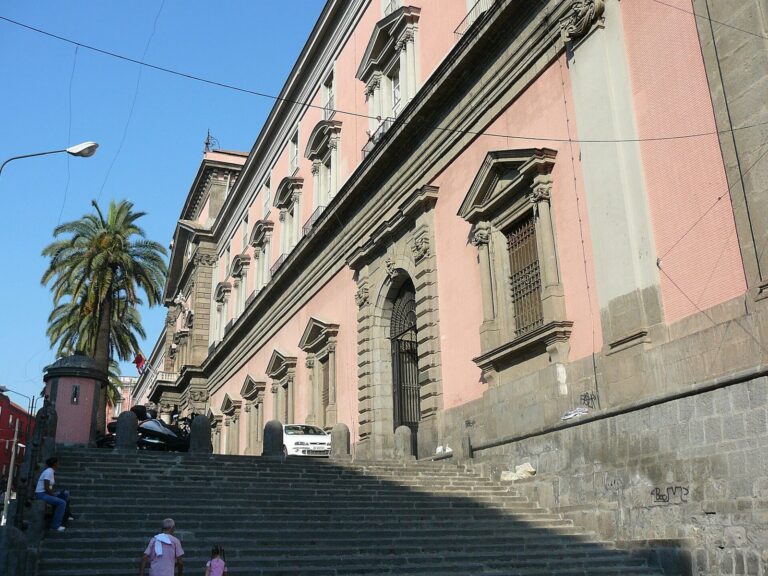
Much of what was found at Herculaneum is no longer on site. The Bourbon excavators carried off the finest statues, bronzes and frescoes, and the most famous finds of all, the bronzes and papyrus scrolls of the Villa dei Papiri, are in Naples. Seeing them at the National Archaeological Museum, either before or after your visit, completes the picture. The bronze runners, the group of women known as the Dancers, and the Resting Hermes are all from the villa just outside the town you’ll walk through. My guide to the museums of Naples covers what’s on view there.
The Villa dei Papiri and the scrolls being read today
The Villa dei Papiri is closed to visitors, but its story is one of the most exciting in modern archaeology, and it’s worth knowing as you walk past the excavation. The villa, a vast seaside residence probably owned by Lucius Calpurnius Piso, the father-in-law of Julius Caesar, held the only library to survive intact from the ancient world: more than a thousand papyrus scrolls, carbonized by the eruption into fragile black cylinders that look like lumps of charcoal.
For more than two centuries, scholars tried to unroll them, with mixed and often destructive results. Many of those that were opened turned out to be works of Greek philosophy, much of it by Philodemus, an Epicurean philosopher associated with the villa’s owner. Hundreds of scrolls remain unopened, because unrolling them would destroy them.
In recent years, that has changed. Researchers have used high-resolution X-ray scanning to capture the inside of rolled scrolls, then applied machine-learning techniques to detect the faint traces of ink on the carbonized papyrus. An international competition launched in 2023, the Vesuvius Challenge, led to the first readable passages of text from inside an unopened scroll being revealed in 2024, and work on more scrolls continues. It’s possible that lost works of ancient literature are still sitting in the rolls from Herculaneum. Most of the scrolls are kept in the National Library in Naples.
A half-day at Herculaneum, planned
If you’re coming from Naples for a morning, this is how I’d structure it.
- 8 a.m. Take the Circumvesuviana from Porta Nolana or Garibaldi to Ercolano Scavi.
- 8:30 a.m. Walk down to the entrance and go in at opening, before the tour groups arrive.
- 8:45 a.m. Pause on the entrance ramp for the view over the whole excavation, then head down to the ancient shoreline and the boat houses.
- 9:30 a.m. Work up through the houses: the House of the Stags, the Wooden Partition, the Bicentenary, and Neptune and Amphitrite.
- 10:30 a.m. Walk the Decumanus Maximus, the shops and the Central Baths, and finish at the College of the Augustales.
- 11:15 a.m. Leave the site, stop at MAV if you have children with you, and have an early lunch in Ercolano.
- Afternoon. Take the Vesuvio Express up the volcano with a pre-booked crater ticket, or head back to Naples for the archaeological museum.
Photography at Herculaneum
Personal photography is allowed across the excavations, and Herculaneum is a joy to photograph, with its layered views and intact interiors. The best overall shots come from the entrance ramp and the modern street above the site, looking down over the roofs with the town of Ercolano behind. Inside the houses, the light is low and contrasty, so expose for the mosaics and frescoes rather than the bright doorways. Don’t use flash on the paintings, don’t step over barriers for a better angle, and be respectful at the boat houses. Tripods and drones typically need permission, so check the park’s rules before bringing either.
Combining Herculaneum with Vesuvius
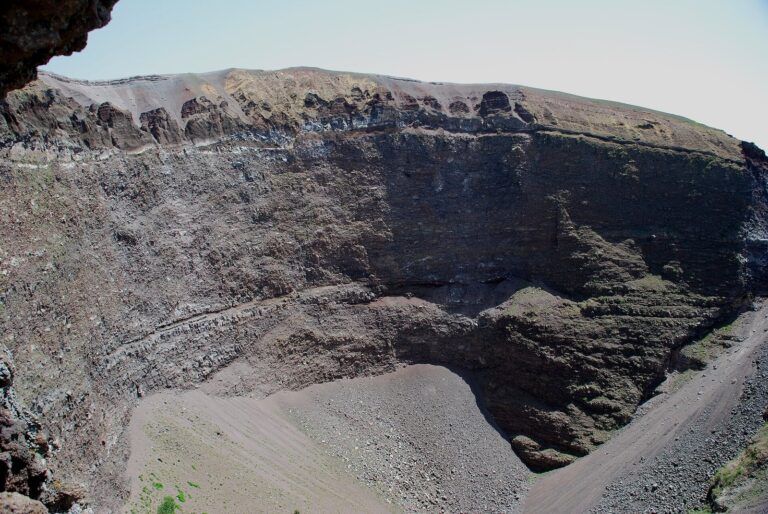
Herculaneum and Mount Vesuvius make an excellent day together, because the shuttle buses to the volcano’s car park leave from Ercolano. The Vesuvio Express shuttle departs from the forecourt of Ercolano Scavi station and climbs to the car park near the summit in about 20 minutes each way, from where you walk up to the crater rim.
A good plan is to visit the crater in the morning, while it’s cooler and before an afternoon wind closure can catch you out, and Herculaneum after lunch. You’ll need a timed crater ticket booked online in advance, and the crater path can close at short notice for wind. Everything you need to know is in my Mount Vesuvius guide.
Herculaneum and Pompeii on the same day?
It’s possible, since both are on the same Circumvesuviana line about 20 minutes apart, but I’d only recommend it outside the hottest months, for visitors with plenty of energy, and with an early start. See Herculaneum first, when you’re fresh, in two hours; take the train to Pompei Scavi for a lunch break; and give Pompeii the afternoon, which will be too short to see much more than the highlights. Most people are better off splitting them over two days.
Beyond Herculaneum: Oplontis, Stabiae and Boscoreale
Along the same stretch of coast, the eruption also buried a series of luxurious Roman villas and country estates. These smaller sites are among the most rewarding and least visited in Italy, and you’ll often have them almost to yourself. Unlike Herculaneum, they’re managed by the Pompeii Archaeological Park, and access to them is included in some of Pompeii’s own tickets, including its multi-day pass, so check the current ticket options on Pompeii’s official site before planning.
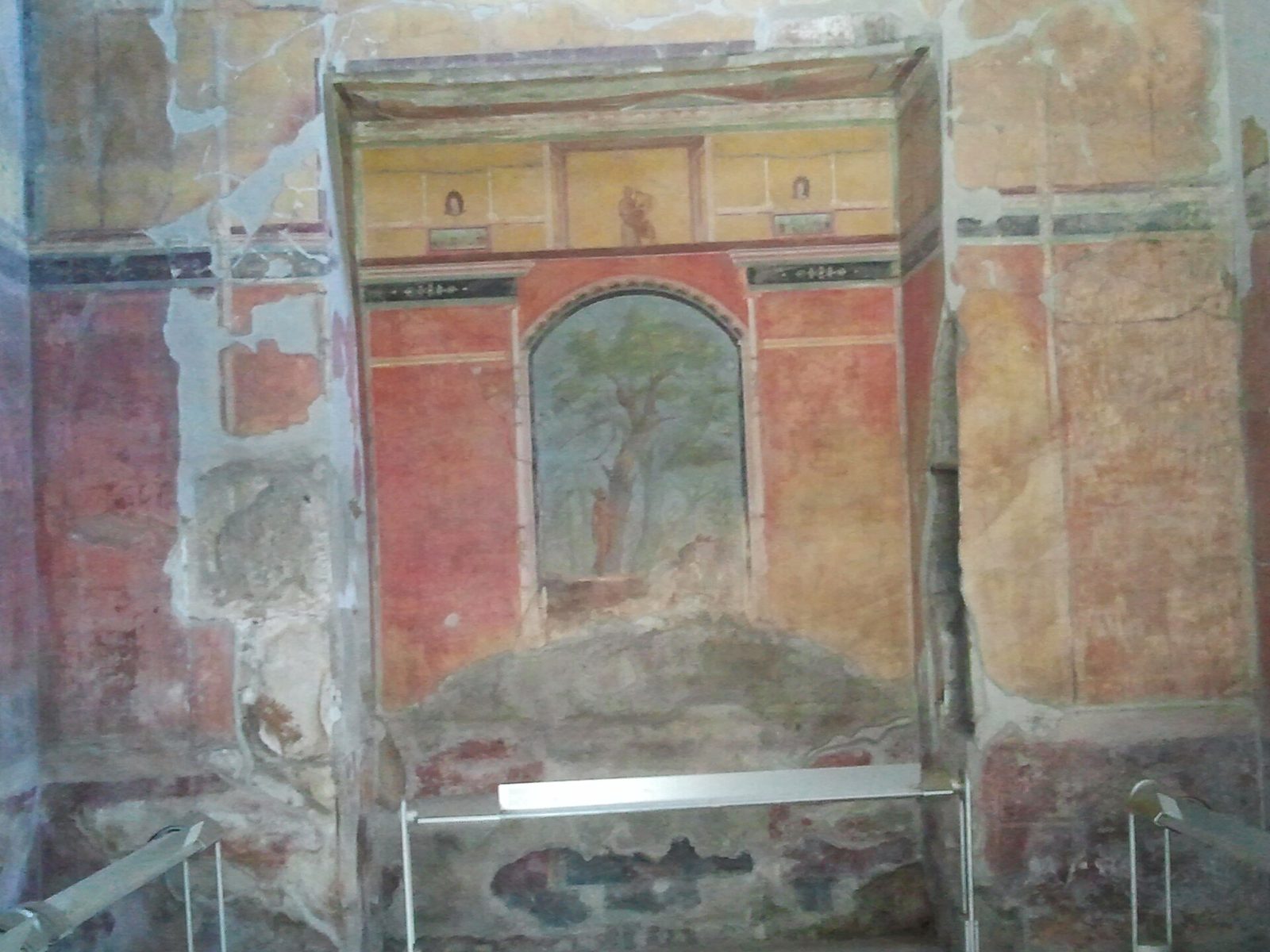
Oplontis: the Villa of Poppaea
In the town of Torre Annunziata, a short walk from the Torre Annunziata Circumvesuviana station, lies one of the most splendid Roman villas ever excavated. Known as Villa A, or the Villa of Poppaea, it’s traditionally associated with Poppaea Sabina, the second wife of the emperor Nero. It’s enormous, with painted rooms, gardens and a large swimming pool, and its frescoes, particularly the illusionistic architectural paintings that make flat walls look like columned halls and distant views, are extraordinary. Oplontis is part of the UNESCO listing with Pompeii and Herculaneum, yet it sees a small fraction of their visitors. If you love Roman painting, this is the site I’d most urge you to add.
Stabiae: Villa Arianna and Villa San Marco
On the hill of Varano above Castellammare di Stabia, the ancient town of Stabiae was a resort of aristocratic villas with panoramic views over the bay. Two are open to visitors. Villa Arianna, named after a fresco of Ariadne abandoned by Theseus, has elegant painted rooms. Villa San Marco is one of the largest Roman villas known, with colonnaded gardens, a pool and baths. Many finds from Stabiae are displayed in a museum in the royal palace of Quisisana above Castellammare. It was at Stabiae that Pliny the Elder, the Roman admiral and naturalist, died during the eruption, trying to rescue people by sea.
Boscoreale: Villa Regina
Inland, on the slopes of Vesuvius, Boscoreale was farming country, and its villas were working estates as much as homes. Villa Regina is a small farmhouse with its wine-making equipment and a courtyard of large storage jars sunk into the ground, alongside an antiquarium displaying finds about daily life and agriculture in the Vesuvian area. Nearby villas gave up the famous Boscoreale Treasure of Roman silverware, now in the Louvre. Boscoreale is harder to reach without a car or a shuttle, so check the Pompeii park’s transport options.
Other things to see in Ercolano
- MAV, the Virtual Archaeological Museum. On Via IV Novembre, between the station and the excavations, MAV uses projections, reconstructions and interactive displays to show Herculaneum and Pompeii before the eruption. It’s a good introduction for children and a nice complement to the real site, though not essential.
- The Vesuvian Villas of the Miglio d’Oro. In the 18th century, Neapolitan aristocrats built grand villas along the road between Naples and Torre del Greco, a stretch nicknamed the Golden Mile. Villa Campolieto, on Corso Resina not far from the excavations, is one of the most important. Opening arrangements vary, so check before you go.
- The Royal Palace of Portici. Next door in Portici, the Bourbon palace where the first finds from Herculaneum were displayed, now home to a university and its gardens.
- The Resina market. Near Pugliano, one of Italy’s best-known second-hand and vintage clothing markets, a local institution and fun for a browse.
Eating in Ercolano
There’s no restaurant inside the excavations, but you don’t need to go far. Ercolano’s streets near the site and the station have pizzerias, cafés and trattorias used by locals, and prices are lower than in central Naples. Bring water and a snack into the site, eat properly before or after, and if you’re heading up Vesuvius the same day, pick up something to eat near the station before boarding the shuttle. For what to order, see my Naples food guide.
What to skip
- Treating Herculaneum as a Pompeii consolation prize. For many visitors it’s the better site.
- Planning around the Villa dei Papiri or the ancient theater. Both are closed for maintenance.
- Arriving after 3:30 p.m. between mid-October and mid-March. Last entry is early in the low season.
- Reseller tickets at inflated prices. Herculaneum rarely sells out; buy at the office or on the official site.
- Cramming Pompeii and Herculaneum into one summer day. You’ll do neither justice.
- Skipping Oplontis if you love Roman art. Its frescoes are some of the best anywhere, and it’s nearly empty.
- Driving into Ercolano at rush hour. The train is quicker and cheaper.
Herculaneum: frequently asked questions
Is Herculaneum better than Pompeii?
It’s better preserved and much easier to visit, with upper floors, wooden furniture and fewer crowds, and you can see it in two or three hours. Pompeii is bigger, with the forum, amphitheater and plaster casts. If you only have half a day, choose Herculaneum; ideally, see both.
How much is the ticket to Herculaneum?
A full ticket costs €16 and a reduced ticket for ages 18 to 25 costs €2; under-18s enter free (checked September 2026). Entry is free for everyone on the first Sunday of the month.
How do I get from Naples to Herculaneum?
Take the Circumvesuviana train from Napoli Garibaldi or Porta Nolana on the Sorrento line to Ercolano Scavi, a ride of under 20 minutes, then walk about 10 minutes downhill to the entrance.
How long do you need at Herculaneum?
Two to three hours covers the highlights at a relaxed pace. Enthusiasts may want longer, but it’s far more compact than Pompeii.
Is Herculaneum open every day?
Yes. It’s open daily and closed only on December 25. Hours are 8:30 a.m. to 7:30 p.m. from March 16 to October 14 and 8:30 a.m. to 5 p.m. the rest of the year, with last entry 90 minutes before closing.
Is Herculaneum included in the Pompeii ticket?
No. Herculaneum is a separate archaeological park with its own ticket. Pompeii’s extended tickets cover sites such as Oplontis, Stabiae and Boscoreale instead.
Can you see skeletons at Herculaneum?
Yes. In the vaulted boat houses along the ancient shoreline, you can see the skeletons of some of the roughly three hundred people who sheltered there and died in the eruption.
Can I visit Herculaneum and Vesuvius on the same day?
Yes, and it’s a good combination. Shuttles to the Vesuvius car park leave from Ercolano Scavi station. Book your timed crater ticket online in advance, visit the volcano first and Herculaneum afterward.
What’s closed at Herculaneum?
As of September 2026, the park lists the Villa dei Papiri and the ancient theater as closed for maintenance. Guided visits to the Suburban Baths were announced to return, with tickets on sale from September 29, 2026.
What is Oplontis?
An archaeological site in Torre Annunziata with the Villa of Poppaea, a vast Roman villa with some of the finest surviving wall paintings. It’s part of the UNESCO site with Pompeii and Herculaneum and is managed by the Pompeii park.
Photo credits
- Herculaneum overview: photo by Diego Delso, Wikimedia Commons, CC BY-SA 4.0.
- Neptune and Amphitrite mosaic: photo by Mentnafunangann, Wikimedia Commons, CC BY-SA 3.0.
- Boat houses with skeletons: photo by Ad Meskens, Wikimedia Commons, CC BY-SA 4.0.
- The ancient shoreline: photo by Norbert Nagel, Wikimedia Commons, CC BY-SA 3.0.
- Fresco in the Villa of Poppaea, Oplontis: photo by Carlo Romis, Wikimedia Commons, CC BY-SA 4.0.
Sources: tickets, hours, free days, closures and events from the Herculaneum Archaeological Park; Oplontis, Stabiae and Boscoreale access from the Pompeii Archaeological Park; Vesuvio Express shuttle from the operator’s 2026 listings. Checked September 2026. Check the park’s news page before visiting for temporary closures.