On this page
Last updated September 16, 2026. Dishes, seasons and ordering customs checked against Neapolitan food writing and the city’s historic producers; coffee and pastry prices from 2026 Italian consumer reporting. I name places only where they’ve been institutions for decades, and I don’t quote menu prices that change every season.
Naples food is far bigger than pizza. In Naples, Italy, eat a sfogliatella and an espresso at the bar, a paper cone of fried street food (a cuoppo), pizza fritta and a frittatina di pasta, then Sunday ragù, onion-rich genovese, pasta e patate, fried anchovies, parmigiana, buffalo mozzarella and a rum-soaked babà. Most of it costs a few euros.
That list is the short answer, and it still leaves out half the city’s table. Naples has the deepest street-food tradition in Italy and a home-cooking culture built on long-simmered sauces, cheap vegetables turned into something wonderful, and the fish that comes into the bay each morning. English-language coverage tends to stop at “eat the pizza, try a sfogliatella.” That’s good advice. It’s also a bit like visiting Paris and being told to try the bread.
This guide is the longer version. It explains what each dish actually is, where and when Neapolitans eat it, how to order without pointing helplessly at a glass case, and which famous things I think you can skip. I’ll keep the pizza short, because it has its own full guide to the best pizza in Naples, and spend the rest of the page on everything else.
Naples food at a glance
If you’ve only got a couple of days, this table is your eating plan. Price bands are rough, for a single portion at a normal Neapolitan place rather than a tourist trap, and reflect 2026.
| Dish | What it is | Where you eat it | Rough cost | My verdict |
|---|---|---|---|---|
| Pizza margherita | Soft, blistered Neapolitan pizza with tomato, mozzarella and basil | Pizzeria | €5–8 | Non-negotiable |
| Pizza fritta | Pizza dough stuffed with ricotta, cicoli or provola and deep-fried | Friggitoria or pizzeria | €3–7 | Better than it sounds. Share one. |
| Frittatina di pasta | A fried disk of bucatini in béchamel with peas and ham | Friggitoria, pizzeria starter | A few euros | The best street snack in the city |
| Cuoppo | A paper cone of mixed fried things, land or sea | Friggitoria, street stands | €4–10 | Get one, walk, eat |
| Sfogliatella | Shell-shaped pastry filled with ricotta, semolina and candied peel | Pasticceria or bar, morning | A couple of euros | Eat it warm |
| Babà | Mushroom-shaped yeast cake soaked in rum syrup | Pasticceria | A couple of euros | Love-it-or-leave-it, but try it |
| Ragù napoletano | Tomato sauce cooked for hours with large cuts of meat | Trattoria, especially Sunday | €10–16 as a first course | The real taste of home cooking |
| Genovese | Pasta with a sauce of onions melted down with beef for hours | Trattoria | €10–16 | My pick of the pasta dishes |
| Pasta e patate con provola | Pasta and potatoes cooked together with smoked cheese | Trattoria, home cooking | €8–12 | Humble, creamy, brilliant |
| Alici fritte or marinate | Anchovies fried whole or marinated in lemon or vinegar | Trattoria, seafood places | €8–14 | Order whenever you see it |
| Parmigiana di melanzane | Layers of fried eggplant, tomato, mozzarella and basil, baked | Trattoria, rosticceria | €8–12 | Better the day after, as locals say |
| Mozzarella di bufala | Fresh buffalo-milk mozzarella from Campania | Latticini shop, restaurant antipasto | Varies | Eat it the day it was made |
| Espresso | Short, dense, often pre-sweetened coffee | At the bar counter | About €1.10–1.30 | Several a day, standing up |
How eating works in Naples
The most useful thing to understand about Naples food isn’t a single dish. It’s that different kinds of places sell different things, at different times of day, and you’ll eat better if you go to the right one.
The bar is a café, not a pub. It’s where you drink coffee standing at the counter, grab a pastry in the morning, and maybe have a sandwich at lunch. Standing at the counter is almost always cheaper than sitting at a table, sometimes by a lot.
The pasticceria is the pastry shop: sfogliatelle, babà, pastiera and whatever is in season. Many double as bars.
The friggitoria is a fry shop, usually a counter open to the street, selling cones of fried dough, vegetables, rice balls and pasta fritters to eat as you walk. This is where Naples street food lives.
The pizzeria is exactly what it sounds like, but know that a proper Neapolitan pizzeria often opens mainly in the evening, and many of the best ones also sell fried starters and pizza fritta.
The rosticceria sells ready-cooked dishes and fried snacks by the piece: arancini, crocchè, slices of parmigiana, pizzette, calzoni. Good for a quick, cheap lunch.
The trattoria and osteria are the everyday sit-down restaurants, with handwritten menus that change with the market and the day of the week. A ristorante is usually more formal and more expensive, though the words are used loosely.
The salumeria and latticini shops sell cured meats and fresh dairy. A latticini counter is the place to buy mozzarella that was made that morning.
Mealtimes run later than in the US. Lunch is typically from about 1 p.m. to 3 p.m., and dinner starts around 8 p.m., often later in summer. Many trattorie close between lunch and dinner, and some close for a day each week or for part of August. Sit-down restaurants may add a coperto, a per-person cover charge for bread and table setting, which is legal and should be on the menu. Tipping isn’t expected in the way it is at home; rounding up or leaving a few euros for good service is plenty.
Pizza, briefly
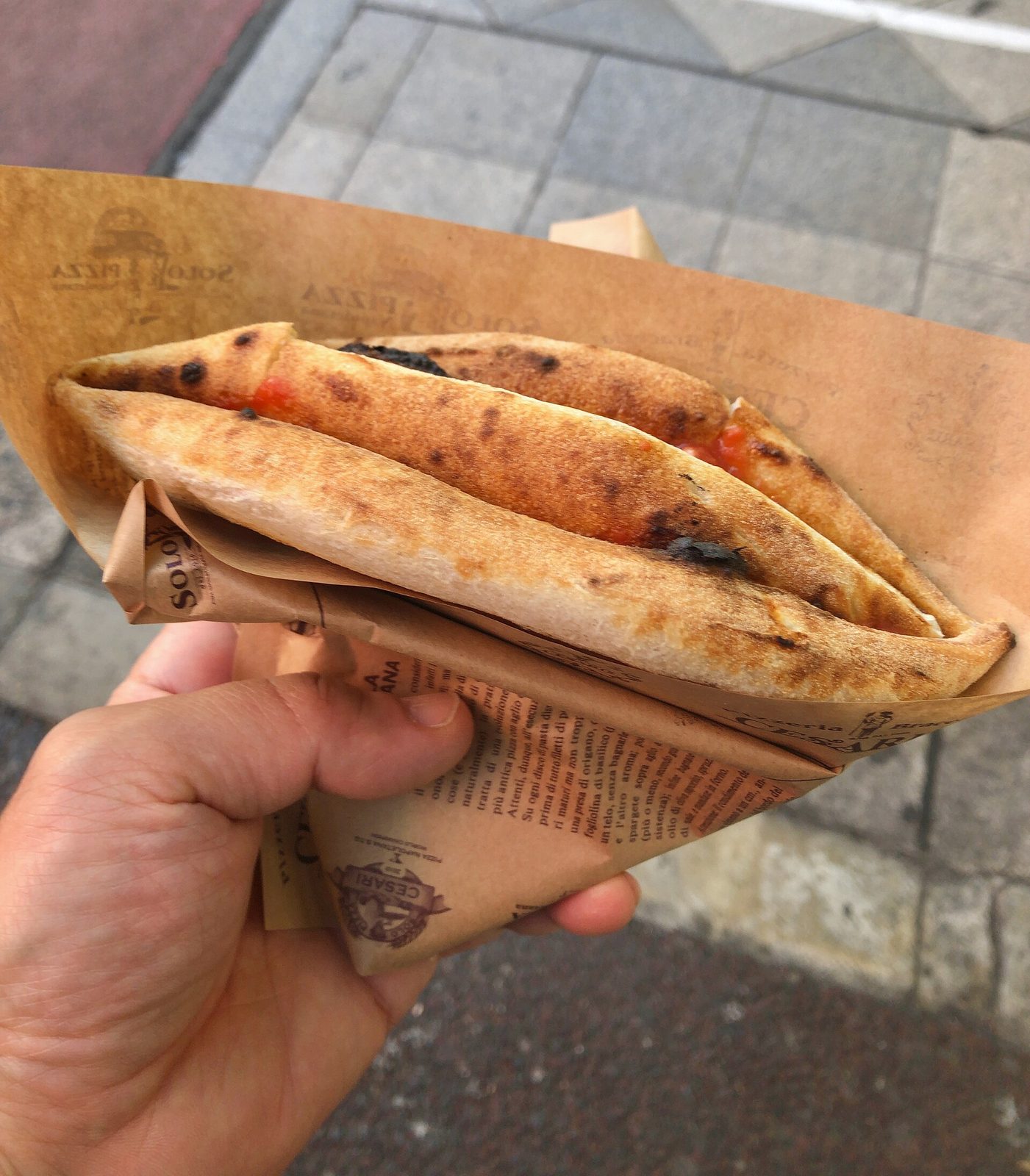
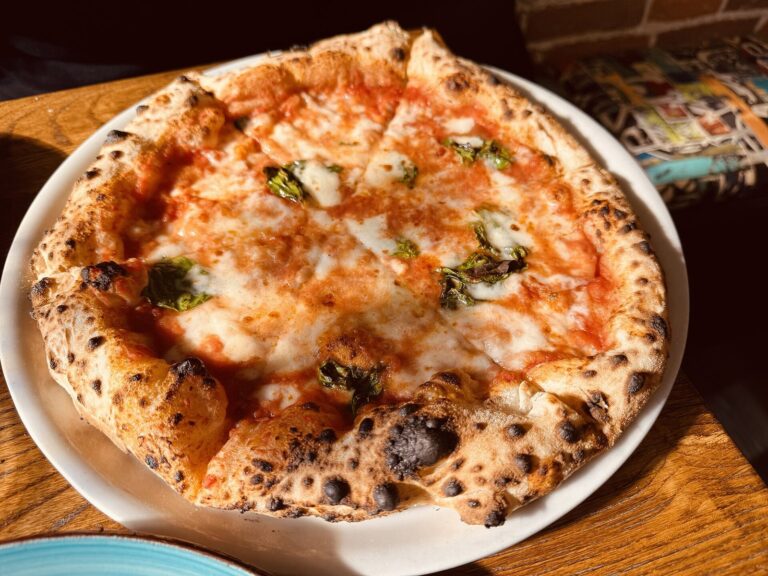
Naples invented modern pizza, and the Art of the Neapolitan pizzaiuolo has been on UNESCO’s list of intangible cultural heritage since 2017. A true Neapolitan pizza has a soft, puffy, leopard-spotted rim (the cornicione), a thin, slightly soupy center, and bakes in a wood-fired oven in about a minute. You eat it with a knife and fork, or fold it, and nobody minds either way.
The two classics are the margherita (tomato, fior di latte or buffalo mozzarella, basil, olive oil) and the marinara (tomato, garlic, oregano and oil, with no cheese at all). Beyond those, look for three variations that are pure Naples:
- Pizza fritta: dough folded around fillings such as ricotta, cicoli (pork cracklings), provola and tomato, then deep-fried. It was the pizza of the postwar years, when many families couldn’t afford a wood oven, and it’s still a street-food star.
- Pizza a portafoglio: a small pizza folded into quarters, “like a wallet,” and wrapped in paper to eat as you walk. Cheap, fast and messy.
- Montanara: a disk of dough quickly fried, then topped with tomato and cheese and finished in the oven. Lighter than it sounds.
For which pizzerias are worth the queue, what to order in each and the ones I’d skip, see my full best pizza in Naples guide.
Naples street food: the fried and the portable
This is where Naples beats every other city in Italy. Street food here isn’t a trend or a food-truck scene. It’s centuries of feeding working people cheaply and well, and most of it is fried.
Cuoppo
A cuoppo is a cone of rolled paper filled with mixed fried food. The land version (cuoppo di terra) might hold zeppoline (little balls of fried dough, sometimes with seaweed), panzarotti (potato croquettes), arancini, sciurilli (battered zucchini flowers), eggplant slices and scagliozzi, triangles of fried polenta. The sea version (cuoppo di mare) holds small fried fish, calamari rings, shrimp and anchovies. You point at what you want, pay, and eat it walking down the street, which is exactly the right way to do it.
Frittatina di pasta
If I could only eat one Naples street food again, it would be this. A frittatina is a thick disk of bucatini or spaghetti bound with béchamel, peas, ham and sometimes ground meat, breaded and deep-fried until the outside crackles. It’s rich, it’s hot, and it’s what Neapolitans do with leftover pasta taken to its logical extreme. You’ll find it at friggitorie and as a starter at many pizzerias.
Arancini and crocchè
Neapolitan arancini (also called palle di riso) are rice balls, usually filled with ragù, peas and cheese, closely related to the Sicilian version but typically smaller and rounder. Crocchè, also known as panzarotti, are fingers of mashed potato with a string of melted cheese inside, breaded and fried. Both are cheap, filling and everywhere.
Taralli sugna e pepe
These are ring-shaped savory biscuits made with lard (sugna), lots of black pepper, and whole almonds pressed into the dough. Traditionally they’re eaten on the seafront in the evening with a cold beer, and they’re a good souvenir because they travel well. The best are crumbly and warm from the oven; the packaged ones are fine but not the same thing.
‘O pere e ‘o musso
Not for everyone, but very Naples: boiled pork and beef offcuts (feet, snout, tripe) sliced cold and sold from street stalls with salt and a squeeze of lemon. It’s the survival of an old poor people’s trade, and the stalls with their hanging displays are part of the city’s street theater even if you don’t order.
Lupini, pannocchie and the seasonal carts
Look out for vendors selling brined lupin beans in paper cones, boiled or roasted corn on the cob in summer, and roasted chestnuts in winter. None of these will be the highlight of your trip, but they’re part of the texture of eating on the streets here.
Neapolitan pasta: the dishes to look for
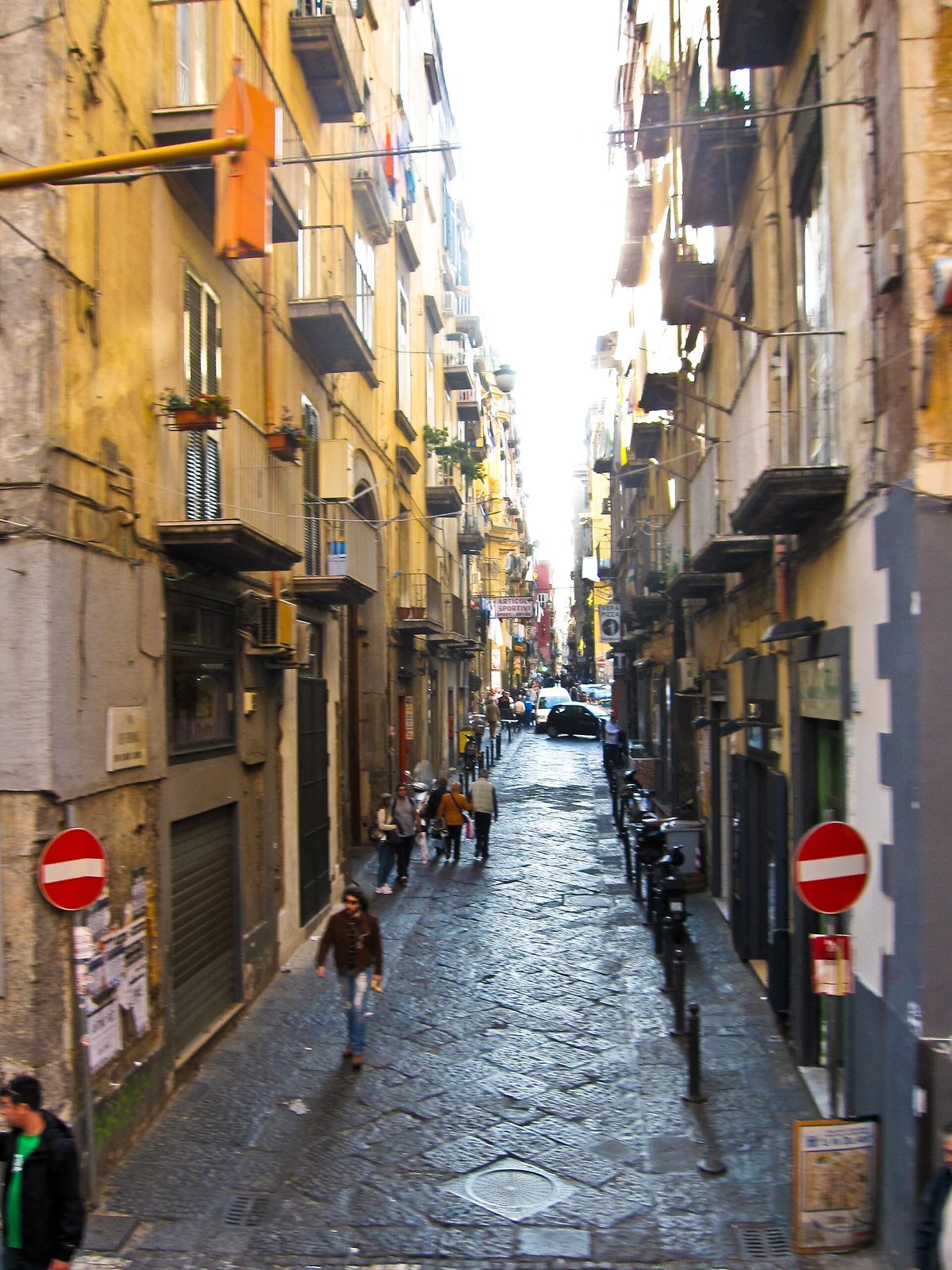
Naples was where dried pasta became a mass food in Italy. Nearby Gragnano, on the Sorrentine peninsula, has made it for centuries, and the city’s nickname for its people was once mangiamaccheroni, the macaroni-eaters. Neapolitans take pasta shapes seriously; a sauce is matched to a shape, and some pairings are fixed by tradition.
Ragù napoletano
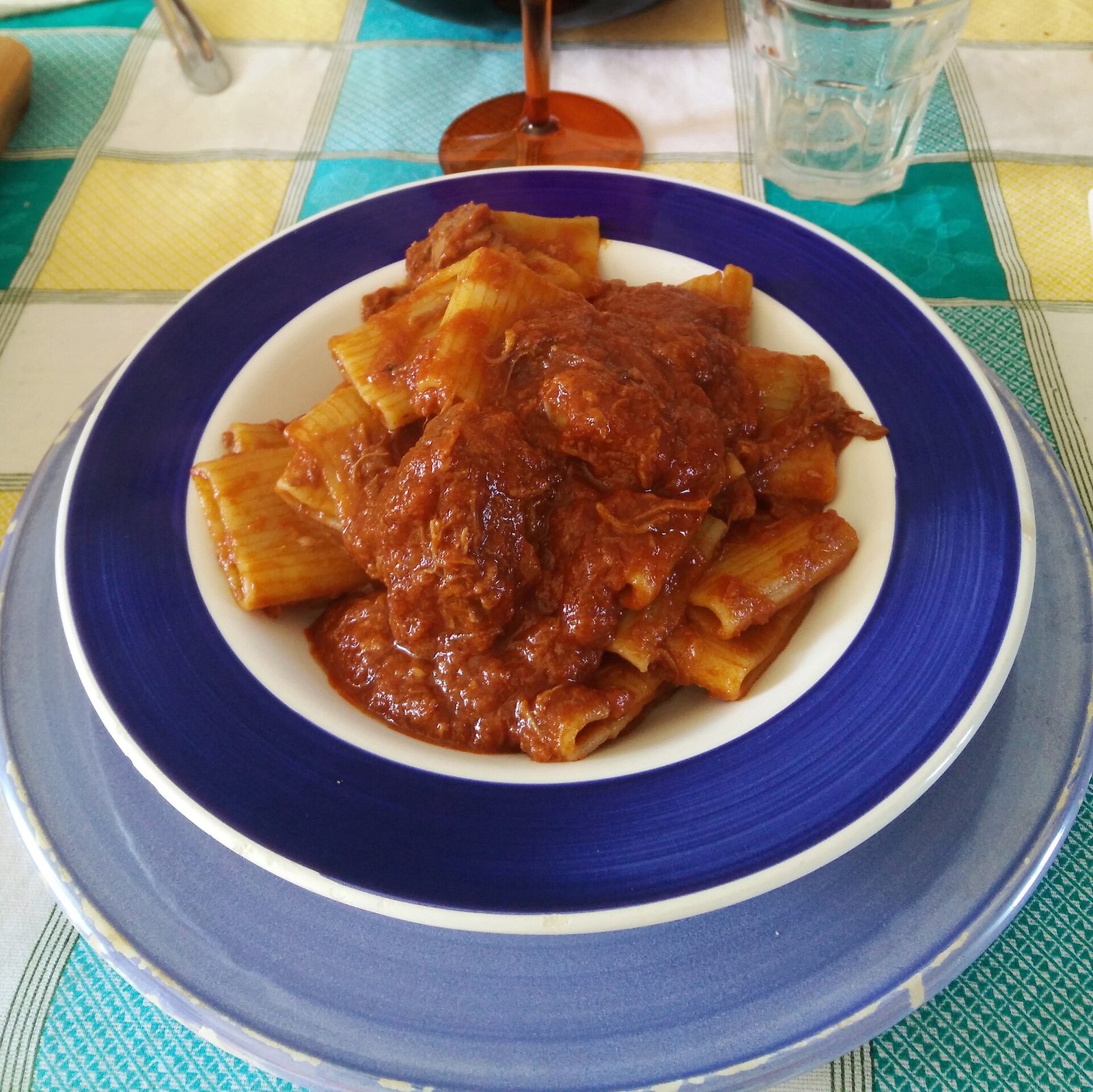
Forget Bolognese. Neapolitan ragù is a tomato sauce cooked very slowly, for hours, with large pieces of meat such as beef, pork ribs and braciole (rolled beef or pork slices stuffed with garlic, parsley, pine nuts and raisins). The sauce is served on pasta, often ziti or paccheri, as the first course, and the meat follows as the second. It’s the traditional Sunday lunch, and many trattorie cook it only on Sundays or at the weekend. The sauce is supposed to pippiare, to barely bubble, for the whole morning.
Genovese
Despite the name, genovese has nothing to do with pesto or Genoa, and nobody agrees on how it got the name. It’s a sauce of a huge quantity of onions, cooked down with beef for hours until they collapse into a sweet, savory, almost jammy mass. It’s usually served on ziti spezzati (long tubes broken by hand) or on large tubes like paccheri or candele. It’s the dish I’d send any visitor to Naples to find, because it’s little known abroad and unlike anything else in Italian cooking.
Pasta e patate con provola
Mixed short pasta (pasta mista, historically the broken ends at the bottom of the packet) cooked risotto-style with potatoes, a little tomato and celery, then finished with smoked provola cheese that melts into long strings. It’s a working-class classic, filling and cheap, and on a winter day it’s the best thing in the city. Neapolitans like it azzeccata, sticky and thick.
Pasta e fagioli and pasta e ceci
More of the same philosophy: legumes and pasta cooked together until thick, flavored with garlic, olive oil and sometimes a little tomato or pork rind. Look for them on trattoria menus in the cooler months, often as the cheapest first course and frequently the best.
Spaghetti alle vongole
Spaghetti or vermicelli with small clams, garlic, olive oil, parsley and a little chili, either in bianco (without tomato) or with a few cherry tomatoes. On Christmas Eve it’s practically compulsory in Naples. It lives or dies on the freshness of the clams, so it’s a good test of a seafood trattoria.
Spaghetti alla puttanesca and alla scarpariello
Puttanesca brings tomato, black olives from Gaeta, capers and garlic together into a quick, punchy sauce. Scarpariello, “the shoemaker’s pasta,” uses cherry tomatoes, grated pecorino and Parmesan, basil and chili, supposedly because shoemakers were paid partly in cheese. Both are simple enough that the quality of the tomatoes decides everything.
Frittata di maccheroni
Leftover spaghetti bound with egg, cheese and often salami, fried into a thick cake and eaten cold or at room temperature. It’s the traditional food of a trip to the beach or a picnic on the first of May, and you’ll see wedges of it in rosticcerie.
Sartù di riso and gattò di patate
These two are the aristocratic side of the Naples kitchen, dating to when French-trained chefs, the monzù, cooked for noble families. Sartù is a domed rice timbale stuffed with meatballs, peas, mushrooms, eggs and cheese. Gattò (from the French gâteau) is a baked potato cake with salami, ham and mozzarella. Neither is common on everyday menus, so order them when you see them.
Minestra maritata
“Married soup,” a marriage of greens and meat: bitter leafy vegetables such as escarole and chicory simmered in a rich broth made with pork and beef. It’s a winter and Christmas-season dish, and a glimpse of how the city ate before tomatoes took over.
Seafood from the Bay of Naples
A city on a bay eats fish, and Naples has a whole second cuisine built around the cheaper, oilier fish that local boats bring in. You won’t need to spend a fortune on sea bream to eat well.
Alici
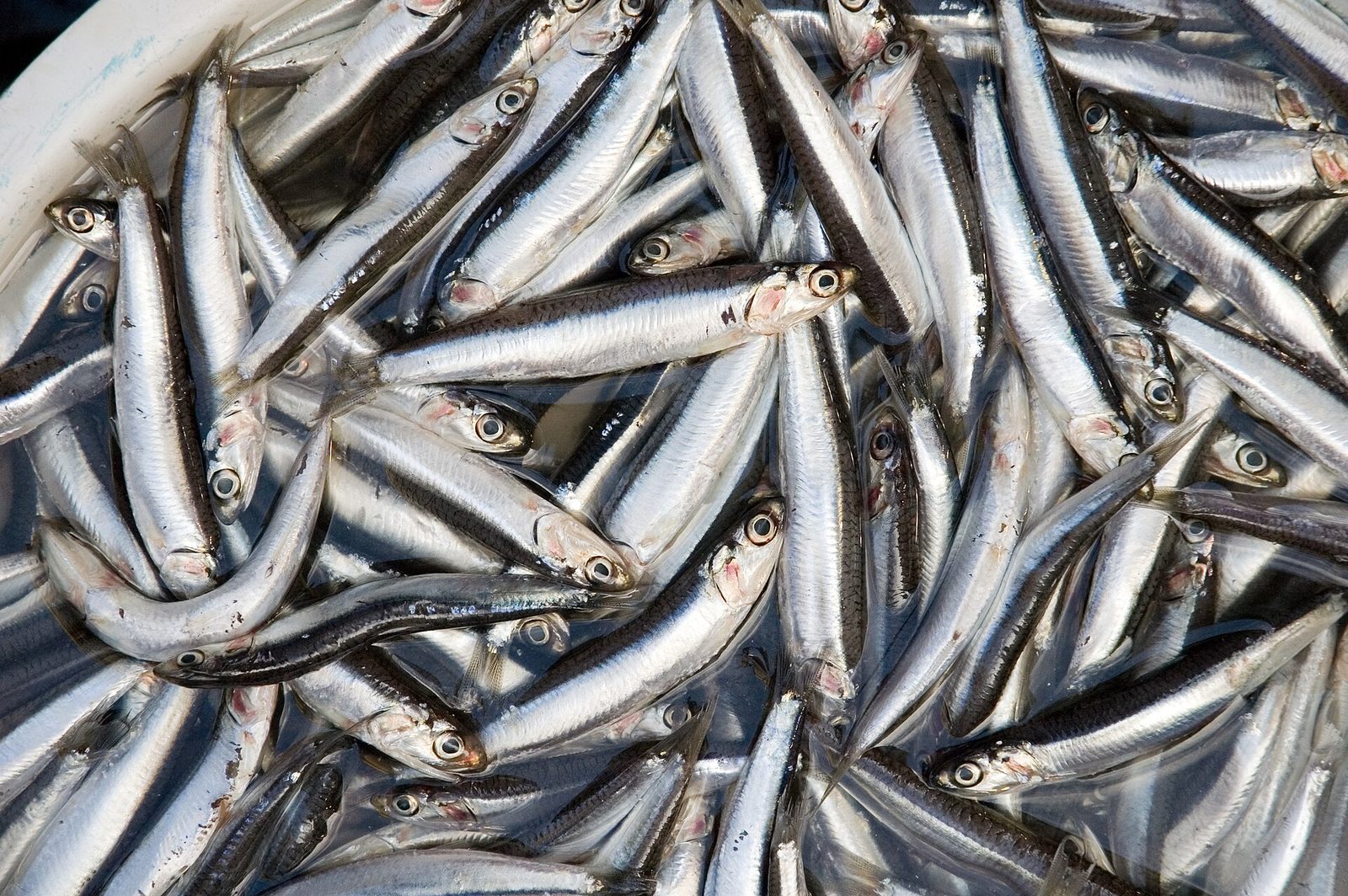
Fresh anchovies turn up everywhere: floured and fried whole (alici fritte), opened flat and marinated raw in lemon or vinegar with garlic and parsley (alici marinate), or baked in a dish with breadcrumbs, oregano and garlic (alici arraganate). They’re cheap, sustainable, and if you only know them from salty tins, they’ll be a revelation.
Polpo alla luciana
Octopus stewed slowly in tomato with olives, capers and garlic, named after Santa Lucia, the old fishermen’s quarter by the seafront. The octopus is traditionally cooked in its own juices in a covered clay pot, and the old saying is that it “cooks in its own water.”
Impepata di cozze
Mussels steamed open with lots of black pepper, a little garlic and parsley, served with bread for mopping up the juices. It’s a summer dish, and it’s one of the quickest ways to see how good the local shellfish is.
Frittura di paranza
A mixed fry of whatever small fish came up in the trawl net (the paranza), battered lightly and fried. It’s the sea cuoppo on a plate, and in a good trattoria it arrives crisp, hot and barely greasy.
Baccalà
Salt cod, soaked and then fried, stewed in tomato with olives and capers, or served as a salad with oil and lemon. It’s a staple of Christmas Eve dinner in Naples, but many trattorie serve it year-round, and fried baccalà is a common street snack.
Vegetables, meat and the second course
Parmigiana di melanzane
Southern Italy argues over who owns eggplant parmigiana. Naples makes a strong claim: slices of fried eggplant layered with tomato sauce, fior di latte or provola, basil and grated Parmesan, then baked. It’s rich and deeply savory, and many Neapolitans swear it’s better cold the next day. You’ll find it in trattorie and by the slice in rosticcerie.
Friarielli and salsiccia
Friarielli are the tender, slightly bitter shoots of a broccoli-rabe-type plant, sautéed with garlic, olive oil and chili. Their natural partner is grilled or pan-fried pork sausage, and the pairing turns up on plates, in sandwiches and on pizza. If you see salsiccia e friarielli anywhere, order it.
Polpette and braciole
Neapolitan meatballs are large, soft and often cooked in ragù; in some homes they’re fried first and eaten on their own. Braciole, the stuffed meat rolls, are the other half of a Sunday ragù. On a menu they’ll usually appear as the second course after the pasta dressed with their sauce.
Peperoni imbottiti and scarola ‘mbuttunata
Peppers stuffed with breadcrumbs, olives, capers and anchovies, and escarole heads stuffed with olives, capers, pine nuts and raisins, then braised. Both show how Naples turns cheap vegetables into full meals. The escarole filling also goes into pizza di scarola, a covered pie that’s a Christmas classic.
Zuppa forte
Also called zuppa ‘e zoffritto, this is a spicy, thick, dark stew of pork offal cooked with tomato paste and chili, eaten on bread or stirred into pasta. It’s winter food, old-fashioned and hard to find on menus aimed at visitors. If you’re adventurous and you see it, it’s a real piece of Naples history.
Cheese: mozzarella and its relatives
Campania is mozzarella country. The best known is mozzarella di bufala campana, made from water buffalo milk, which has protected origin status (DOP). Most comes from the plains around Caserta to the north and Battipaglia and the Sele plain to the south, and it reaches Naples fresh every morning. It should be soft, milky and slightly springy, and it’s at its best the same day it’s made, never straight from a fridge.
Fior di latte is mozzarella made from cow’s milk. Many pizzaioli prefer it on pizza because it releases less water. Provola is a firmer, often smoked version, and it’s what gives pasta e patate its strings. Treccia is mozzarella braided into a rope, and bocconcini and ciliegine are small balls.
Look also for caciocavallo, a pear-shaped stretched cheese aged in pairs tied over a pole, and fresh ricotta, which fills sfogliatelle and pastiera. One note: burrata comes from Puglia, not Naples. It’s delicious, but if a menu sells it as “traditional Neapolitan,” the menu is fibbing.
Neapolitan pastries and sweets
Sfogliatella: riccia and frolla
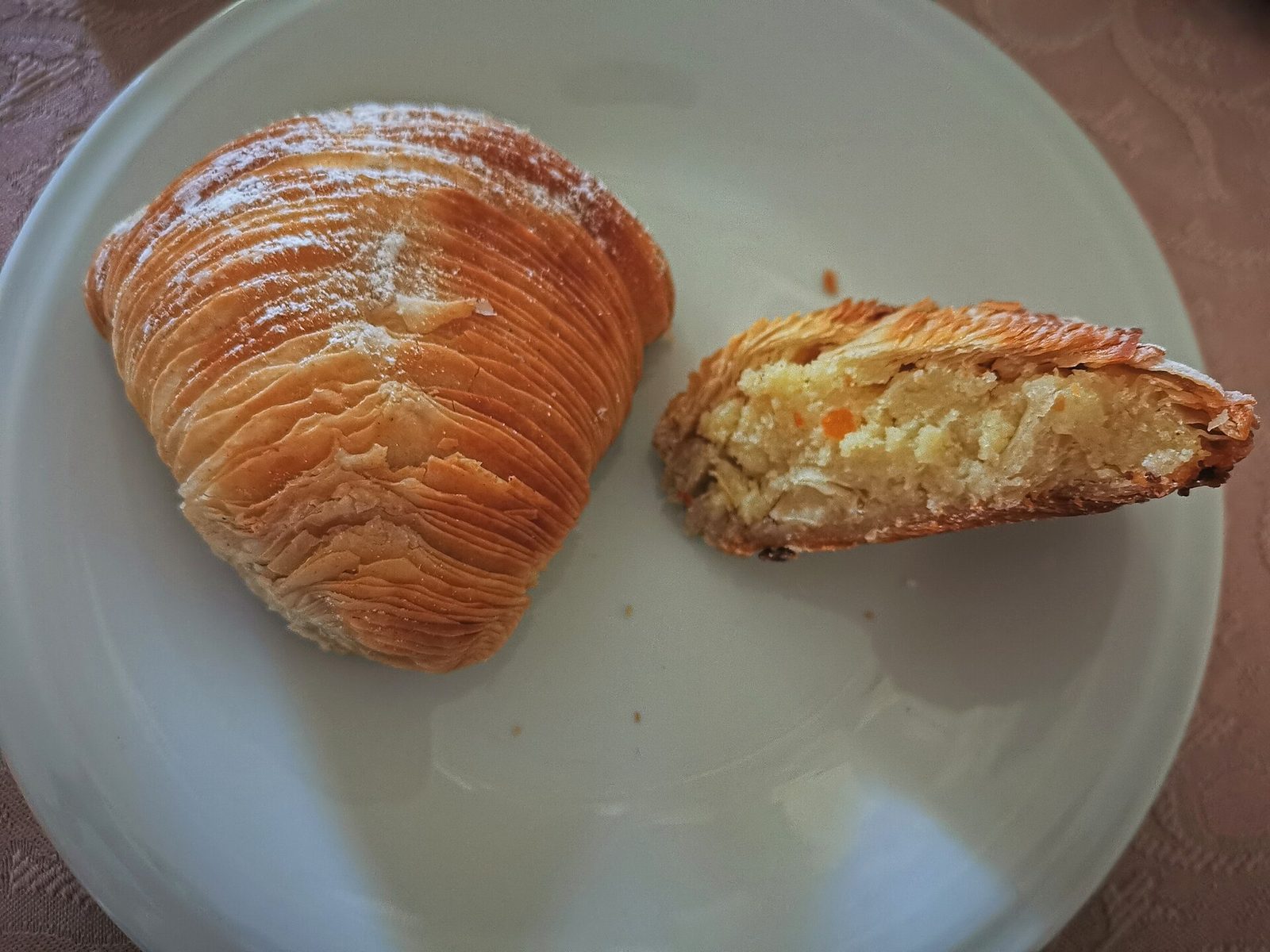
The sfogliatella is the pastry of Naples. There are two kinds. The riccia is the famous shell shape, made from paper-thin layers of dough rolled, stretched and baked until it shatters when you bite it. The frolla has a smooth shortcrust shell and is softer and less messy. Both share the same filling: ricotta, semolina, sugar, candied orange peel and a hint of cinnamon or vanilla.
The single biggest tip is to eat it warm, ideally straight from a tray that’s just come out. A cold sfogliatella from a glass case in the afternoon is a lesser thing. Locals have strong loyalties about who makes the best, and the old names you’ll hear most often are Attanasio near the train station, Scaturchio in Piazza San Domenico Maggiore, and Sfogliatelle Mary at the Via Toledo entrance of the Galleria Umberto I. You won’t eat a bad one at any of them. Prices in historic bars have long sat at a couple of euros or less, which makes this one of the cheapest great things you can eat in Europe.
Look out too for the santarosa, a riccia filled with pastry cream and topped with sour black cherries, invented in a convent on the Amalfi Coast, and the coda d’aragosta (“lobster tail”), a longer riccia-style pastry filled with cream.
Babà
A light, yeasted cake baked in a mushroom shape and soaked in rum syrup until it’s dripping. It arrived in Naples via French and Polish royal kitchens and was adopted so completely that “sei nu babà,” “you’re a babà,” is Neapolitan for “you’re a sweetheart.” It comes plain, split and filled with cream, or giant and sliced. It’s divisive: some people find it too boozy and sticky. Try a small one before committing to a large one.
Pastiera
The Easter tart of Naples: a shortcrust shell filled with ricotta, wheat berries cooked in milk, eggs, candied peel and orange-flower water, topped with a lattice. It’s made in huge quantities before Easter, but many pasticcerie sell it year-round. The orange-flower scent is the thing you’ll remember.
Christmas and saints’ day sweets
Around Christmas, pastry shops fill with struffoli (tiny fried dough balls coated in honey and colored sprinkles), roccocò (hard, spiced almond rings), mostaccioli (soft spiced cookies glazed in chocolate) and susamielli (S-shaped honey cookies). On March 19, the feast of San Giuseppe, it’s zeppole di San Giuseppe, fried or baked choux rings piped with custard and topped with a sour cherry. Year-round, the graffa, a sugared potato doughnut, is the snack of choice with a morning coffee.
Fiocco di neve and the newer classics
Not every Naples sweet is centuries old. The fiocco di neve, a small soft brioche bun filled with a sweet ricotta and cream filling, was created at Poppella, a pastry shop in the Sanità neighborhood, and became one of the city’s most queued-for treats in the last decade. It’s a good excuse to explore the Sanità.
From the wider region, look for torta caprese, a flourless chocolate and almond cake from Capri, and delizia al limone, a lemon-cream dome from the Amalfi Coast.
Neapolitan coffee
Coffee in Naples is a ritual as much as a drink. An espresso here is short, dense and usually served very hot in a heated cup, sometimes already sweetened unless you ask for it amaro (unsweetened). Many bars serve a small glass of water alongside; drink it first to clean your palate. You pay at the till (cassa), take the receipt to the counter, and drink it standing. The whole thing takes about two minutes.
Prices have risen. Italian consumer reporting in 2026 found espresso at the bar up by more than a third in Naples over five years, with most central bars charging somewhere around €1.10 to €1.30 at the counter (checked September 2026). Sitting at a table, particularly on a famous square, costs more.
A few Naples variations to try:
- Caffè con la crema: espresso topped with a thick, sweet cream made by whipping sugar with the first drops of coffee.
- Caffè alla nocciola: espresso with a hazelnut cream, sometimes with a little foam. Sweet, and very popular.
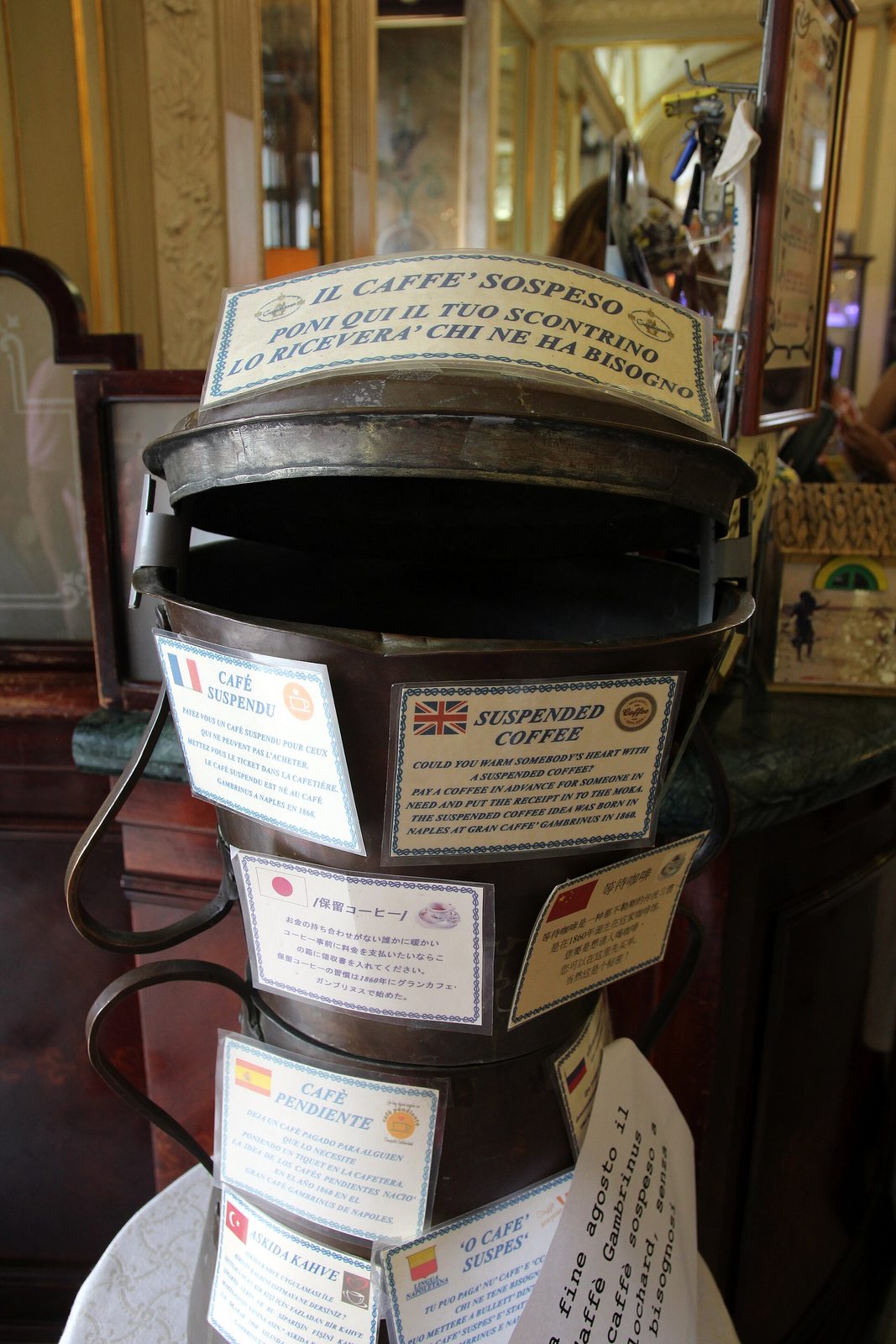
- Caffè sospeso: the “suspended coffee.” You pay for two, drink one, and the second is left for someone who can’t afford one. It’s a tradition the city is proud of, and some bars keep a board or box to record them.
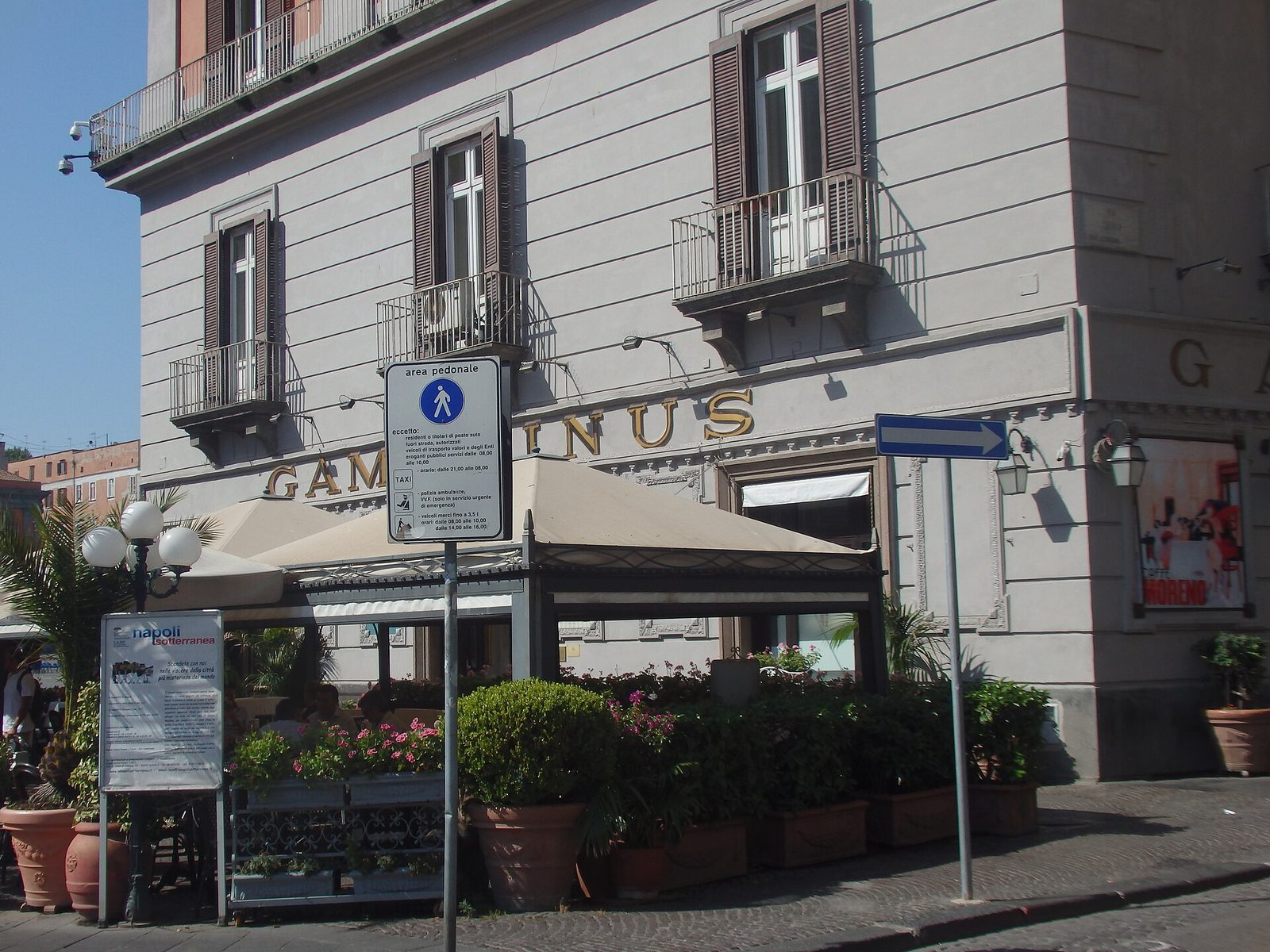
Should you go to Gran Caffè Gambrinus? For the Belle Époque rooms and the history, yes, once. Drink at the counter unless you want to pay for the table and the view.
What to drink with Naples food
Campania is one of Italy’s most interesting wine regions, and prices in Naples trattorie are usually fair. Whites to look for include Falanghina, Fiano di Avellino and Greco di Tufo, and from the slopes of the volcano, Lacryma Christi del Vesuvio in white and red. The great red is Aglianico, at its most serious as Taurasi. With pizza, many Neapolitans drink beer, but the local choice is Gragnano, a lightly sparkling, fruity red from the Sorrentine peninsula served cool.
Limoncello comes from the lemon groves of Sorrento, the Amalfi Coast and Capri, and is drunk ice cold after dinner. For something non-alcoholic, look for the old kiosks that squeeze fresh lemons; the limonata a cosce aperte (“open-legged lemonade”) is lemon juice and water with a pinch of bicarbonate of soda, drunk fast as it foams, and it’s the traditional cure for too much fried food.
Gelato, granita and the summer sweets
Naples doesn’t get the gelato hype of Florence or Rome, but it eats a great deal of it, and the seafront between Mergellina and the Castel dell’Ovo is lined with places selling it late into warm evenings. The old Neapolitan specialty is the spumone, a molded, layered semifreddo, and the chalets at Mergellina have long been famous for their frozen desserts. Granita, which Neapolitans once shaved from snow brought down from the mountains, turns up as lemon or coffee ice in summer, usually from kiosks.
Two simple tests help you avoid the worst gelato anywhere in Italy. Pistachio should be a dull olive-brown, not bright green, and banana should be grayish-cream, not yellow. Towering, fluffy mounds in steel tubs usually mean air and stabilizers. The best places often keep their gelato in covered metal pozzetti, where you can’t see it at all.
Eating through the Naples year
Much of Naples food is tied to the calendar of saints and feasts, and a dish that’s everywhere in one season can be hard to find in another. Here’s what to expect around the big dates; for the weather and crowds in each season, see my guide to the best time to visit Naples, Italy.
- Christmas. Struffoli, roccocò, mostaccioli and susamielli in every pastry shop; minestra maritata and pizza di scarola at home. On Christmas Eve, the traditional dinner is fish rather than meat: spaghetti alle vongole, fried baccalà, capitone (eel) and insalata di rinforzo, a pickled cauliflower salad.
- Carnival. Lasagna napoletana, layered with meatballs, ricotta and sausage, and chiacchiere, fried ribbons of dough dusted with sugar and dipped in a chocolate cream called sanguinaccio.
- March 19, San Giuseppe. Zeppole di San Giuseppe, fried or baked, in every pastry shop.
- Easter. Pastiera everywhere, and casatiello, a rich, ring-shaped bread packed with salami and cheese with whole eggs baked into the top.
- Summer. Impepata di cozze, frittata di maccheroni for the beach, fresh anchovies, granita and gelato, and the lightest seafood pasta on every menu.
- Autumn and winter. Pasta e patate, pasta e fagioli, roasted chestnuts from street carts, genovese and zuppa forte, with friarielli at their best in the cold months.
Food souvenirs worth carrying home
Some of the best things you can bring back from Naples are edible and travel well. My shortlist:
- Pasta di Gragnano IGP. Bronze-die pasta from the town on the Sorrentine peninsula with protected status. It has a rough surface that holds sauce, and a good bag weighs almost nothing in your suitcase.
- Taralli sugna e pepe. Buy them in sealed packs from a proper bakery rather than tourist shops.
- Neapolitan coffee. Local roasters sell ground coffee blends for the moka pot, and a small cuccumella, the traditional Neapolitan flip coffee pot, makes a charming gift.
- San Marzano tomatoes. Look for the DOP mark “Pomodoro San Marzano dell’Agro Sarnese-Nocerino” on the tin; plenty of cans just use the name.
- Colatura di alici di Cetara. An amber anchovy sauce from the Amalfi Coast, descended from the Roman garum, used a few drops at a time on pasta. Small bottles, huge flavor.
- Limoncello. From a producer that uses Sorrento or Amalfi lemons, not a mass-produced souvenir bottle.
Fresh mozzarella doesn’t travel, and if you’re flying home to the US, check US Customs and Border Protection’s current rules before packing any meat or cheese; cured meats in particular are generally not allowed. Sealed dry pasta, coffee, tinned tomatoes and baked goods are usually the safe choices, and liquids over 100 ml must go in checked baggage.
A day of eating in Naples on a budget
Naples is one of the few places in Western Europe where you can eat superbly for very little. A day that I’d happily repeat looks something like this: an espresso and a warm sfogliatella standing at a bar in the morning; a pizza a portafoglio or a frittatina di pasta from a Via dei Tribunali counter around midday; a coffee and a babà mid-afternoon; taralli and a beer on the seafront at sunset; and a margherita at a pizzeria in the evening. You’ll have eaten some of the most famous food in Italy, and the total will likely come in below the cost of one mid-range dinner in many other European capitals.
The splurge I’d make instead of a fancy restaurant is a long Sunday lunch at a trattoria that cooks ragù, with a bottle of Aglianico and nowhere to be afterward. That’s the meal Neapolitans themselves plan their week around.
Where to eat it: Naples food neighborhoods
You can eat well almost anywhere in Naples, but some areas are better for certain things.
- Via dei Tribunali and the centro storico. The richest concentration of pizzerias, friggitorie and pastry shops in the city, and the right place for a first street-food crawl. Busy with visitors, but still genuinely local. My centro storico guide covers the streets themselves.
- The Pignasecca market in Montesanto. The oldest street market in the city, with fish counters, fruit, vegetables, fry shops and bars along a narrow street off Via Toledo. Go in the morning.
- Porta Nolana. The fish market near the Circumvesuviana terminus, loud and theatrical, best early.
- The Quartieri Spagnoli. Small, cheap trattorie, where menus are handwritten and plastic tablecloths are a good sign.
- The Sanità and the Vergini. A working neighborhood with pastry shops and pizzerias beloved by locals, and fewer visitors.
- Chiaia and Vomero. More polished bars, aperitivo spots and gelaterie, and some of the city’s best-known fry shops up the hill in Vomero.
- Mergellina and the seafront. Waterfront chalet kiosks selling ice cream, granita and babà, and the evening passeggiata with taralli and beer.
How to order like a local
- “Un caffè, per favore.” In Italy, caffè means espresso. Ask for un caffè amaro if you don’t want it sweetened.
- “Una sfogliatella riccia (or frolla), calda se c’è.” A riccia or frolla, warm if there is one.
- “Un cuoppo di terra / di mare.” A cone of fried land things or sea things.
- “Da portare via.” To take away.
- “Il conto, per favore.” The bill, please. Waiters won’t bring it until you ask.
At a friggitoria or pastry counter, it’s normal to pay first at the till, then take your receipt to the counter. If there’s no obvious line, stand your ground politely and make eye contact; queues in Naples can be more of a crowd than a line.
If you have an allergy or a dietary need, say it plainly and early. “Sono celiaco” (I’m celiac), “sono vegetariano” (I’m vegetarian) and “sono allergico alle noci” (I’m allergic to nuts) are understood everywhere, and gluten-free pizza has become common in Naples. Fried street food is the hardest thing to make safe, because the same oil fries everything, so ask before you order from a friggitoria.
Naples food tours: worth it?
A good food tour is a fast way to eat a dozen things in three hours with someone who knows which counter makes what, and it’s particularly useful if you’re only in the city for a day or two. The downside is cost: you’ll pay many times what the same food would cost you on your own, and the fried food in this city is cheap. If you’re comfortable walking into a friggitoria and pointing, the table above plus a morning on Via dei Tribunali will get you most of the way there for a fraction of the price.
What to skip
- Menus with photos and six languages near the station and the port. They exist to feed people who don’t know better. Walk five minutes into the side streets.
- “Spaghetti Bolognese” and fettuccine Alfredo. Neither is a Naples dish. Order ragù or genovese instead.
- Cold sfogliatelle in the afternoon. Go in the morning, or ask if a warm batch is coming.
- Table service for a single coffee on a famous square. Stand at the counter like everyone else.
- Burrata sold as a Naples specialty. It’s from Puglia. Get fresh mozzarella di bufala.
- Neon-yellow limoncello in novelty bottles. Good limoncello is pale and cloudy-bright, and it’s worth buying from a proper producer.
- Restaurant lists that are secretly about Naples, Florida. Search results mix the two cities. Check the address says Napoli before you set off.
Naples food: frequently asked questions
What food is Naples, Italy famous for?
Pizza above all, especially the margherita and marinara, followed by the sfogliatella and babà pastries, espresso, fried street food such as the cuoppo and frittatina di pasta, ragù and genovese pasta sauces, and buffalo mozzarella from Campania.
What is the most popular street food in Naples?
Pizza a portafoglio and pizza fritta are the most iconic, followed by the cuoppo (a paper cone of fried food), the frittatina di pasta, arancini and crocchè. Most are sold at friggitorie and cost a few euros.
What is a sfogliatella?
A Neapolitan pastry filled with ricotta, semolina and candied citrus. The riccia version has a crisp, shell-shaped layered crust; the frolla has a smooth, soft shortcrust shell. Both taste best warm, and they’re traditionally a breakfast pastry.
What should I eat in Naples besides pizza?
Try pasta alla genovese, Sunday ragù, pasta e patate con provola, fried or marinated anchovies, parmigiana di melanzane, salsiccia e friarielli, a frittatina di pasta, a warm sfogliatella and a babà. Pair them with Falanghina or Aglianico wine.
Is food expensive in Naples?
No, by Italian and European standards Naples is one of the cheapest places to eat very well. Espresso costs around €1.10–1.30 at the counter, street food a few euros, and pizza margherita usually well under €10.
What do Neapolitans eat for breakfast?
Typically an espresso at the bar with a pastry: a sfogliatella, a cornetto, a graffa doughnut or a slice of pastiera. It’s quick, taken standing, and sweet rather than savory.
What is a cuoppo?
A cone of rolled paper filled with mixed fried food. A cuoppo di terra holds fried dough balls, potato croquettes, rice balls and vegetables; a cuoppo di mare holds small fried fish, calamari and shrimp. You eat it as you walk.
Can vegetarians eat well in Naples?
Yes. Pizza margherita and marinara, pasta e patate, pasta e fagioli, parmigiana di melanzane, stuffed peppers and escarole, friarielli, most fried street food and all the pastries are vegetarian. Ask about lard and meat broth in some traditional dishes.
What time do people eat dinner in Naples?
Usually from about 8 p.m., and often later in summer. Many pizzerias fill up after 9 p.m., and many trattorie close between lunch, which runs from roughly 1 p.m. to 3 p.m., and dinner.
Knowing what to order is half of it; knowing where is the other half. Naples has a sharp line between the trattorias that feed locals and the photo-menu places that feed people passing through, often a block apart. My guide to the best restaurants in Naples, Italy covers the long-running trattorias, the seafood spots, the Michelin stars and how the tourist traps work.
A street food tour is one of the best ways into all this, especially on your first day. A good guide takes you to the friggitorie and pastry shops you’d never find alone, and afterwards you know what to order. The Naples tours guide covers what to look for in a food tour, along with pizza-making classes.
Photo credits
- Sfogliatella riccia: photo by Saggittarius A, Wikimedia Commons, CC BY-SA 4.0.
- Paccheri with ragù napoletano: photo by CristianoMay, Wikimedia Commons, CC BY-SA 4.0.
- Fresh anchovies: photo by Paul Asman and Jill Lenoble, Wikimedia Commons, CC BY 2.0.
- Caffè sospeso at Gran Caffè Gambrinus: photo by Bex Walton, Wikimedia Commons, CC BY 2.0.
- Pizza folded to eat while walking: photo by KKPCW, Wikimedia Commons, CC BY-SA 4.0.
- Gran Caffè Gambrinus: photo by Nemo bis, Wikimedia Commons, CC BY-SA 3.0.
Sources: dish histories and ordering customs from Neapolitan food writing and the city’s historic producers; espresso prices from 2026 Italian consumer reporting (fanpage.it, August 2026); UNESCO listing of the Art of the Neapolitan pizzaiuolo (2017); mozzarella di bufala campana DOP from the protection consortium. Checked September 2026. Opening hours of individual shops change; check before making a special trip.