On this page
Last updated September 11, 2026. Rankings checked against the 2026 50 Top Pizza guide, prices against the 2026 Neapolitan Pizza Observatory, and opening arrangements against current listings for each pizzeria. Hours and house rules change often, so confirm before you queue.
The best pizza in Naples, Italy is a wood-fired margherita. Get it from an old-city classic like Da Michele, Starita or Da Attilio, or from a new-wave star like 50 Kalò. Expect to pay around €6–7, give your name at the door and wait, and eat the soft, wet center with a knife and fork. That’s how it’s meant to be.
Naples invented pizza as we know it, and eating it here is one of the great food experiences in the world. It’s also more confusing than you’d expect. Almost every list you’ll find names the same two pizzerias, explains nothing about how their queues actually work, and never mentions the thing that surprises nearly every first-time visitor: the center of a real Neapolitan pizza is soft, wet and floppy, and it’s supposed to be.
This guide fixes that. It gives you my ranking of where to eat, from century-old classics to the pizzerias the independent guides rate among the best in Italy, and explains the name-at-the-door queue systems at the famous places. It also covers what a pizza costs, how to order and eat like a Neapolitan, and, finally, why the middle of your margherita is swimming.
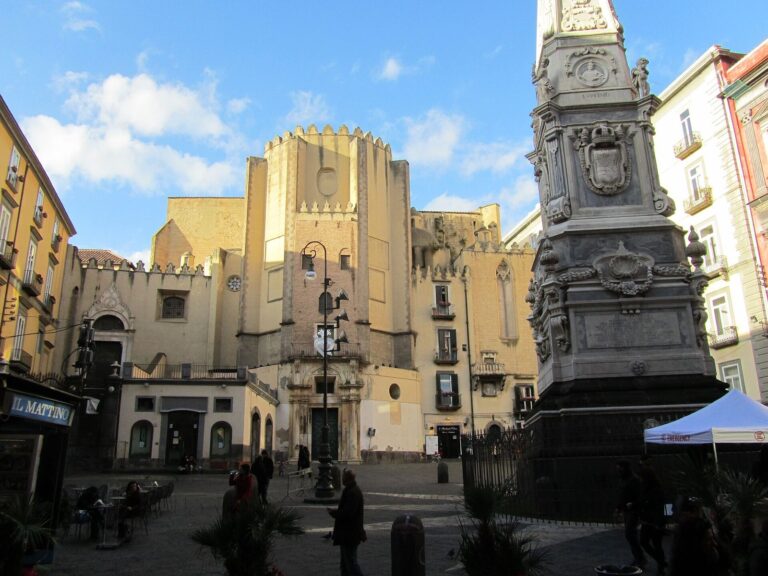
Most of the classic pizzerias are in or near the old city, and Via dei Tribunali is the historic pizza street. My guide to the centro storico of Naples shows you how that part of the city fits together.
The best pizza in Naples: my ranking
This is my ranking, weighing each pizzeria’s reputation among Neapolitans, its consistency, the verdict of the independent guides, and how much of the experience is the pizza rather than the queue. Tastes differ, and plenty of Neapolitans would argue about the order. They argue about pizza the way other cities argue about football.
| Rank | Pizzeria | Area | Style | Why go | Watch out for |
|---|---|---|---|---|---|
| 1 | Pizzeria Da Attilio | Pignasecca, near Montesanto | Classic, family-run | A local favorite since the 1930s; superb, balanced margherita | Small and busy; go early |
| 2 | L’Antica Pizzeria da Michele | Forcella, near Corso Umberto | Old-school, tiny menu | Since 1870; the purest margherita and marinara in the city | Long queues, walk-in only, shared tables |
| 3 | 50 Kalò | Mergellina | New wave, light, airy dough | Ciro Salvo’s pizzeria, 5th in Italy in the 2026 50 Top Pizza guide | Out of the old center; busy in the evenings |
| 4 | Palazzo Petrucci Pizzeria | Naples (check the current address) | New wave | Davide Ruotolo’s pizzeria, 3rd in Italy in the 2026 50 Top Pizza guide, the highest-placed in Naples | Book or arrive early |
| 5 | Starita a Materdei | Materdei | Classic, since 1901 | Famous for its fried montanara as well as its margherita | A short walk out of the tourist center |
| 6 | Concettina ai Tre Santi | Rione Sanità | Traditional roots, modern flair | Ciro Oliva’s pizzeria, a pillar of the Sanità’s revival | Popular; allow time |
| 7 | Pizzeria La Notizia | Western Naples | Pioneering “contemporary” Neapolitan | Enzo Coccia, one of the pizzaioli who modernized the craft | A taxi or bus ride from the center |
| 8 | Di Matteo | Via dei Tribunali | Classic, with a fried-food counter | A historic pizza-street stop, with great fried snacks at the front | Crowded at lunch |
| 9 | Gino Sorbillo | Via dei Tribunali | Classic, large, soft-rimmed | The most famous name on the pizza street | Some of the longest waits in the city, and divisive with locals |
| 10 | La Masardona | Near the main station | Fried pizza specialist | A family institution for pizza fritta | Limited hours; check before you go |
Worth knowing too: Trianon da Ciro, right across the street from Da Michele and a good choice when the queue opposite is too long. Pellone, near Piazza Garibaldi, loved for its huge pizzas. Brandi, near Via Toledo, which claims the birth of the margherita. Dal Presidente on Via dei Tribunali. And Zia Esterina Sorbillo for fried pizza to eat on the street.
The truth is that the standard of pizza in Naples is so high that you’ll eat well almost anywhere with a wood-fired oven and a queue of locals outside. The rankings matter less than the experience. Don’t waste an hour of your trip waiting for one specific name if the place next door is full of Neapolitans.
Why Neapolitan pizza is wet in the middle
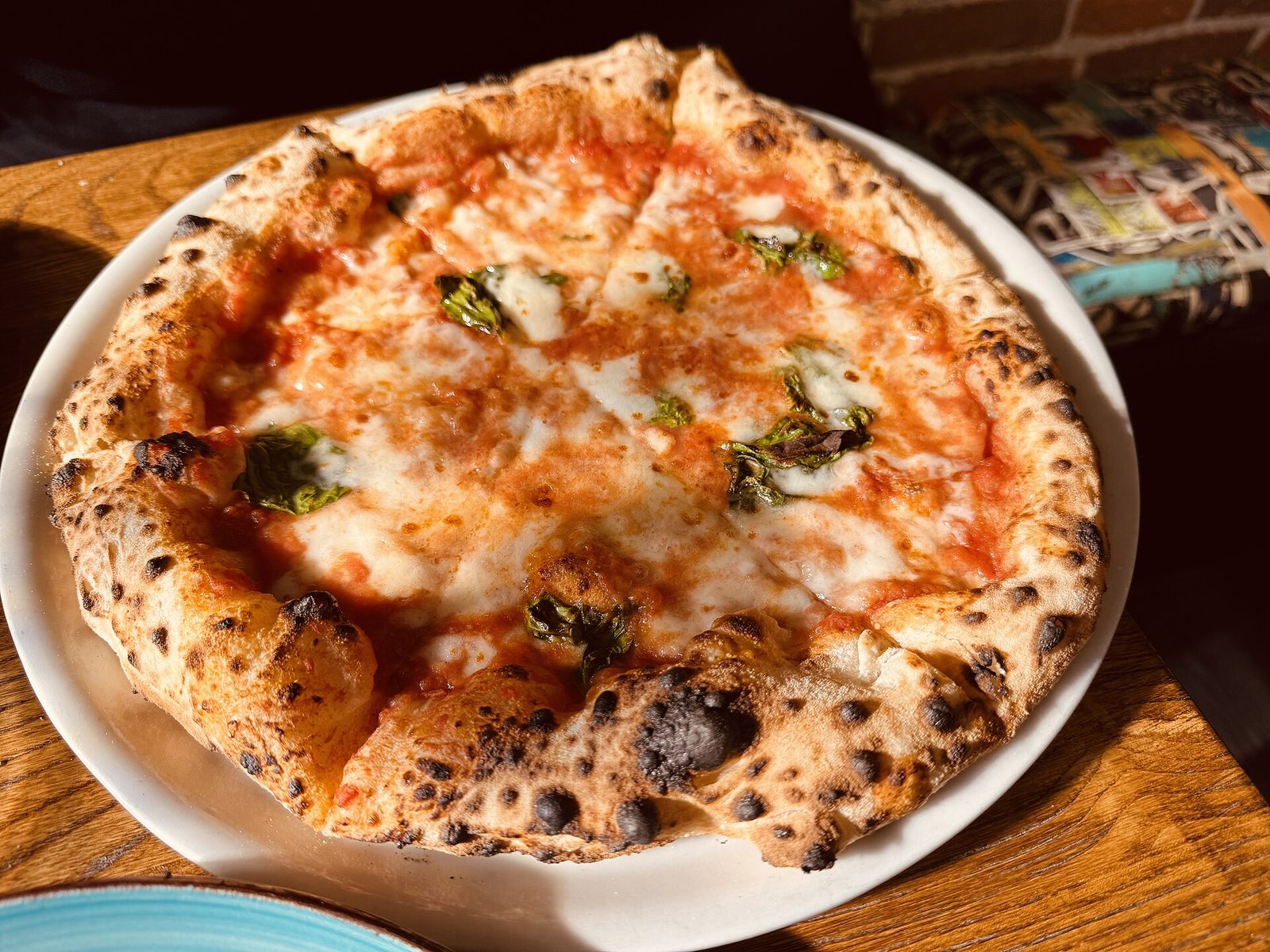
This is the most common complaint from first-time visitors, and the one no pizza list explains. You sit down, your margherita arrives, and the center is soft, floppy and slick with tomato and melted mozzarella. You pick up a slice and it droops, dripping onto the plate. Is it undercooked? No. It’s exactly how a traditional Neapolitan pizza is meant to be, and once you understand why, you’ll probably love it.
- The dough is soft and wet. Neapolitan dough is made from flour, water, salt and yeast, left to rise slowly for many hours. It holds a lot of water, which makes it light, puffy and tender rather than crisp.
- The center is paper-thin. The pizzaiolo stretches the dough by hand, pushing the air out to the edge. That leaves a raised, puffy rim, the cornicione, and a center only a few millimeters thick. There’s no structure in the middle to hold anything up.
- The oven is ferociously hot and the bake is very short. A wood-fired Neapolitan oven runs well over 400°C, and a pizza bakes in about a minute. That’s enough to blister the rim and cook the dough through, but not enough to dry out the center.
- The toppings are fresh and wet. The tomato is raw, crushed tomato rather than a cooked-down sauce. The mozzarella, either fior di latte (cow’s milk) or buffalo mozzarella, is fresh and releases its milky liquid as it melts. Add a swirl of olive oil, and the center of the pizza becomes a pool of tomato, milk and oil.
The result is what Neapolitans love: a rim that’s chewy, charred and airy, and a center that’s soft, juicy and full of flavor. It isn’t meant to be crisp, and it isn’t meant to be picked up by the slice.
How to eat it
Do what Neapolitans do. Use a knife and fork for the soft center, cutting from the middle outward, then pick up the rim with your hands. Or fold it: a slice folded in half, or the whole pizza folded in four a libretto (“like a booklet”), is the way to eat it on the street, which is why street pizza is called a portafoglio, “wallet-style.” Nobody will blink if you use your hands, but trying to hold a Neapolitan slice flat like a New York one ends in tomato on your shirt.
If you really don’t like the soft center, some pizzerias will bake your pizza a little longer if you ask for it ben cotta (well done). But try it the proper way first. For most people, the wet center goes from surprising to the best part within two or three pizzas.
What makes a pizza truly Neapolitan
You’ll see the words verace pizza napoletana, “true Neapolitan pizza,” on signs and menus all over the city, and they mean something specific. The Associazione Verace Pizza Napoletana and the European Union’s Traditional Speciality Guaranteed rules set out how the real thing is made. In plain terms:
- Only four ingredients in the dough: wheat flour, water, salt and yeast. No oil, no sugar, no shortcuts.
- A long, slow rise, so the dough develops flavor and becomes light and digestible.
- Stretched by hand, never with a rolling pin, so the air is pushed out into the rim rather than squeezed out of the dough.
- Baked in a wood-fired oven, directly on the hot stone floor, for a very short time.
- Round, soft and foldable, with a raised, puffy rim and a thin, tender center. A true Neapolitan pizza should fold without cracking.
- Simple, specified toppings for the classics: tomatoes, mozzarella (buffalo or fior di latte), basil, olive oil, garlic and oregano.
Pizzerias certified by the association display its sign by the door. But plenty of excellent classic pizzerias have never bothered with certification, so treat it as a guarantee of method rather than a ranking of quality.
How the queues work at Da Michele, Sorbillo and the famous names
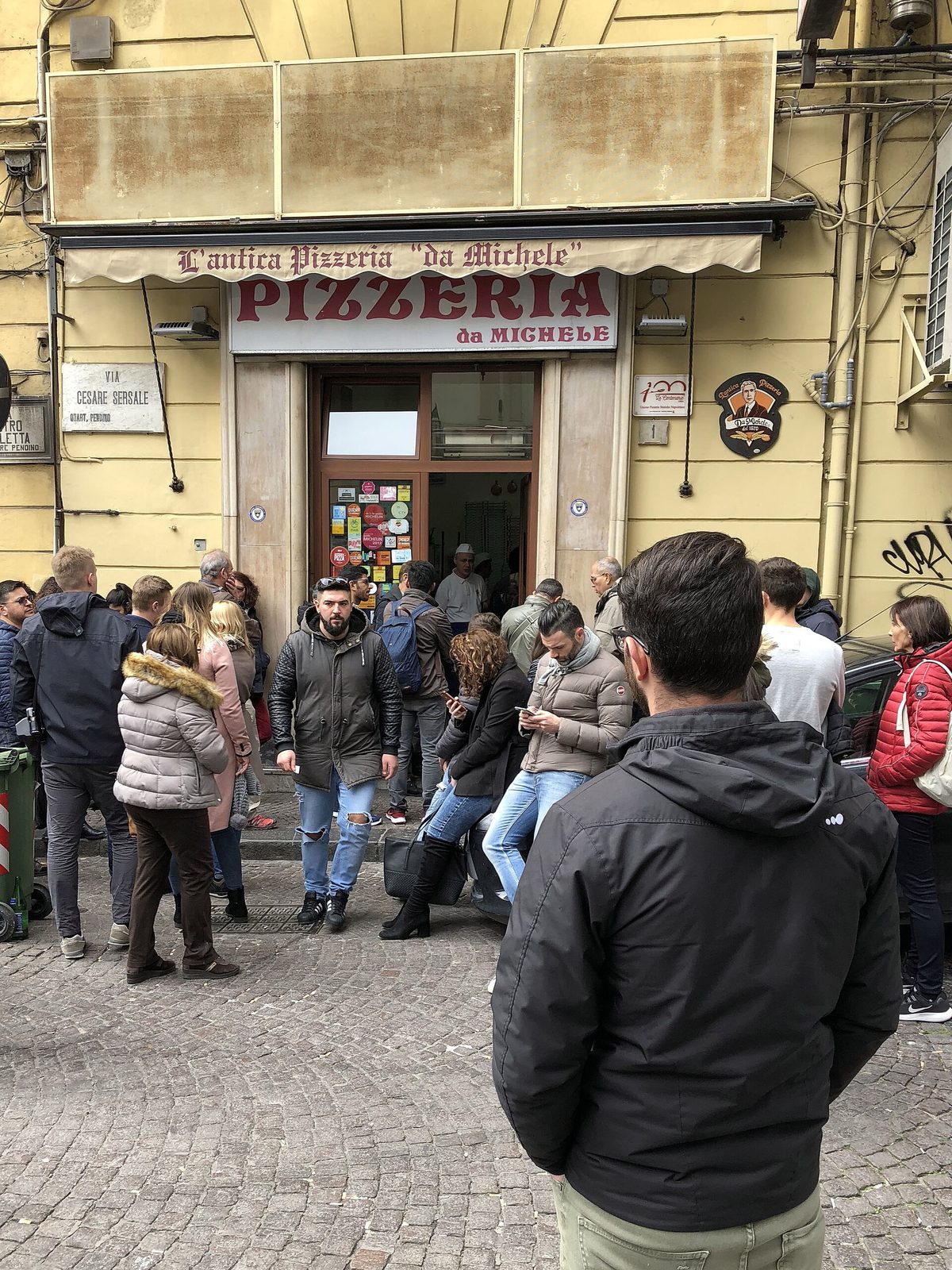
At the best-known pizzerias, the queue is part of the experience, and it helps to know how it works before you arrive. Most of them don’t take reservations. They work on a first-come, first-served basis, managed by a member of staff at the door.
L’Antica Pizzeria da Michele
Da Michele, on Via Cesare Sersale near Corso Umberto I, has been making pizza since 1870. It became world-famous after it appeared in the film Eat Pray Love. It’s walk-in only. When you arrive, find the person managing the door, give your name or get a number, and wait nearby until you’re called. The menu is famously short and built around the two classics, the margherita and the marinara (tomato, garlic, oregano and olive oil, no cheese), and the pizzas are big, soft and cheap. Seating is basic, at shared marble tables, and nobody lingers. You eat and you go.
How to beat the queue: the pizzeria is open through the day rather than only at mealtimes, so go at opening time in the late morning or in the mid-afternoon lull, and avoid weekend evenings. If the wait is long, many of the famous pizzerias, Da Michele included, sell takeaway pizzas, and the takeaway line often moves faster. Eat it folded on the street, Neapolitan style.
Gino Sorbillo
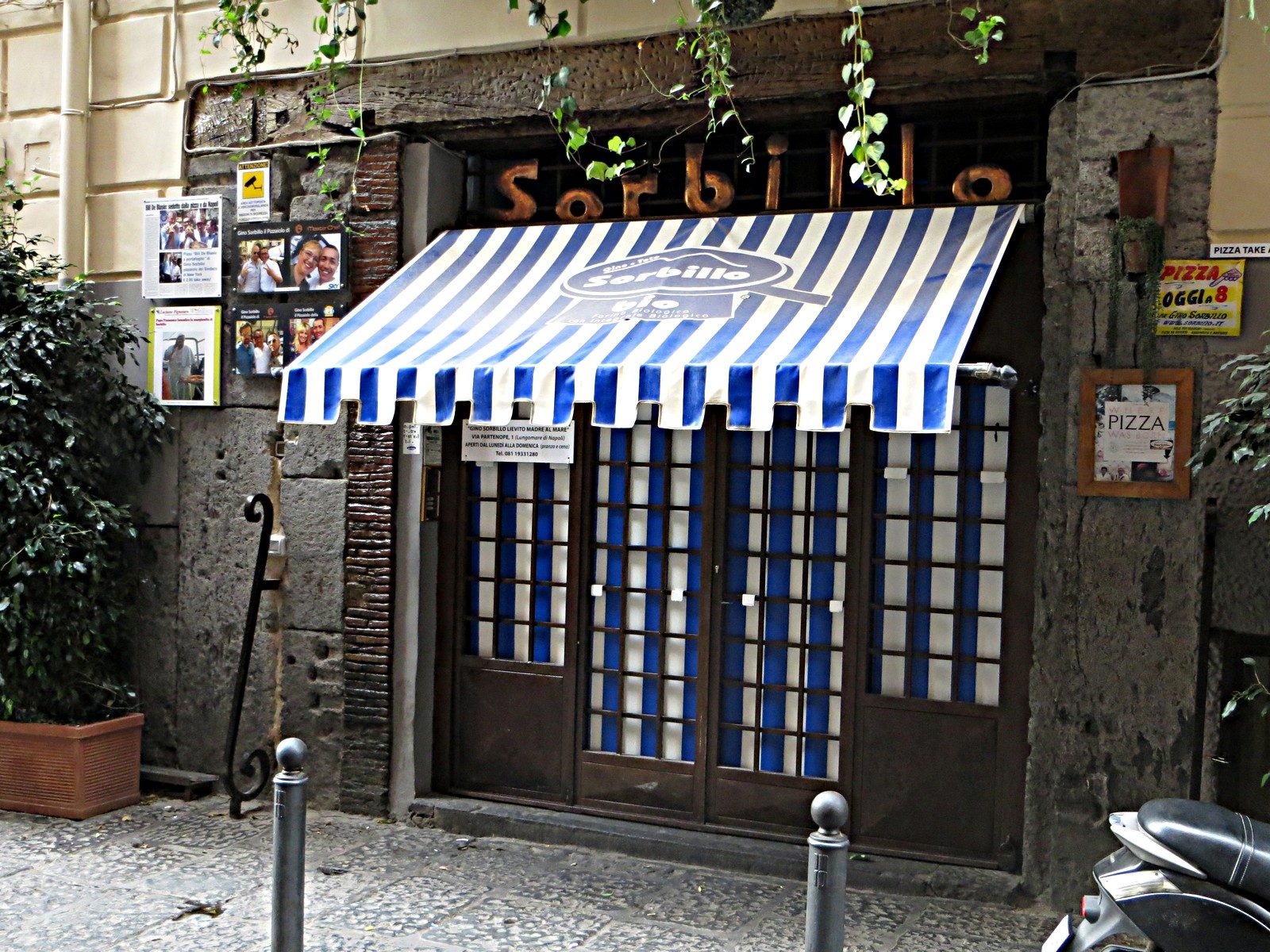
Gino Sorbillo, on Via dei Tribunali, is the most famous name on the historic pizza street, and the crowds outside its door are part of the street’s scenery. Here too, you give your name to the staff at the door and wait to be called. At peak times, expect around half an hour to get in and more at the table. Weekdays before the evening rush are much easier. According to current listings it opens for lunch and dinner and closes on Sundays, but check before you go. The pizzas are large, with a soft, wide rim. Locals are divided on whether it lives up to the fame, but it’s an experience, and the pizza is good.
Everywhere else
- Give your name, then stay close. If you wander off and miss your call, you’ll usually go to the back of the line.
- Go early or late. Neapolitans eat lunch from about 1:00 and dinner from about 8:30 or 9:00. Arrive before the rush, or late in the evening when the first wave has left.
- Expect to share a table at the busiest classic pizzerias.
- Book the new-wave places. The more contemporary pizzerias, like 50 Kalò and Palazzo Petrucci Pizzeria, are more likely to take bookings, and it’s worth trying.
What pizza costs in Naples
One of the joys of pizza in Naples is how little it costs. According to the 2026 figures from the Neapolitan Pizza Observatory (Osservatorio della Pizza Napoletana), a margherita in Naples costs €6.74 on average, less than the national average of €7.04, and well below the north of Italy. In the historic center, a classic margherita typically costs €6–7 (checked September 2026). The new-wave pizzerias charge more, especially for their signature pizzas with premium toppings, but even at the most celebrated places, a pizza is one of the cheapest good meals you’ll eat in Italy.
A few things can add to the bill. Some pizzerias add a small cover charge (coperto) per person, drinks are extra, and pizzas with buffalo mozzarella or special toppings cost more than a basic margherita. Tipping isn’t expected in the Italian sense, but rounding up for good service is appreciated.
A short history of pizza in Naples
Pizza began as street food for the poor of Naples in the 18th and 19th centuries: flatbreads topped with whatever was cheap, such as garlic, lard, salt, cheese or small fish, baked in wood-fired ovens and sold from the street or from tiny shops. Tomato, which arrived from the Americas, became the defining topping, and pizza became one of the city’s great popular foods.
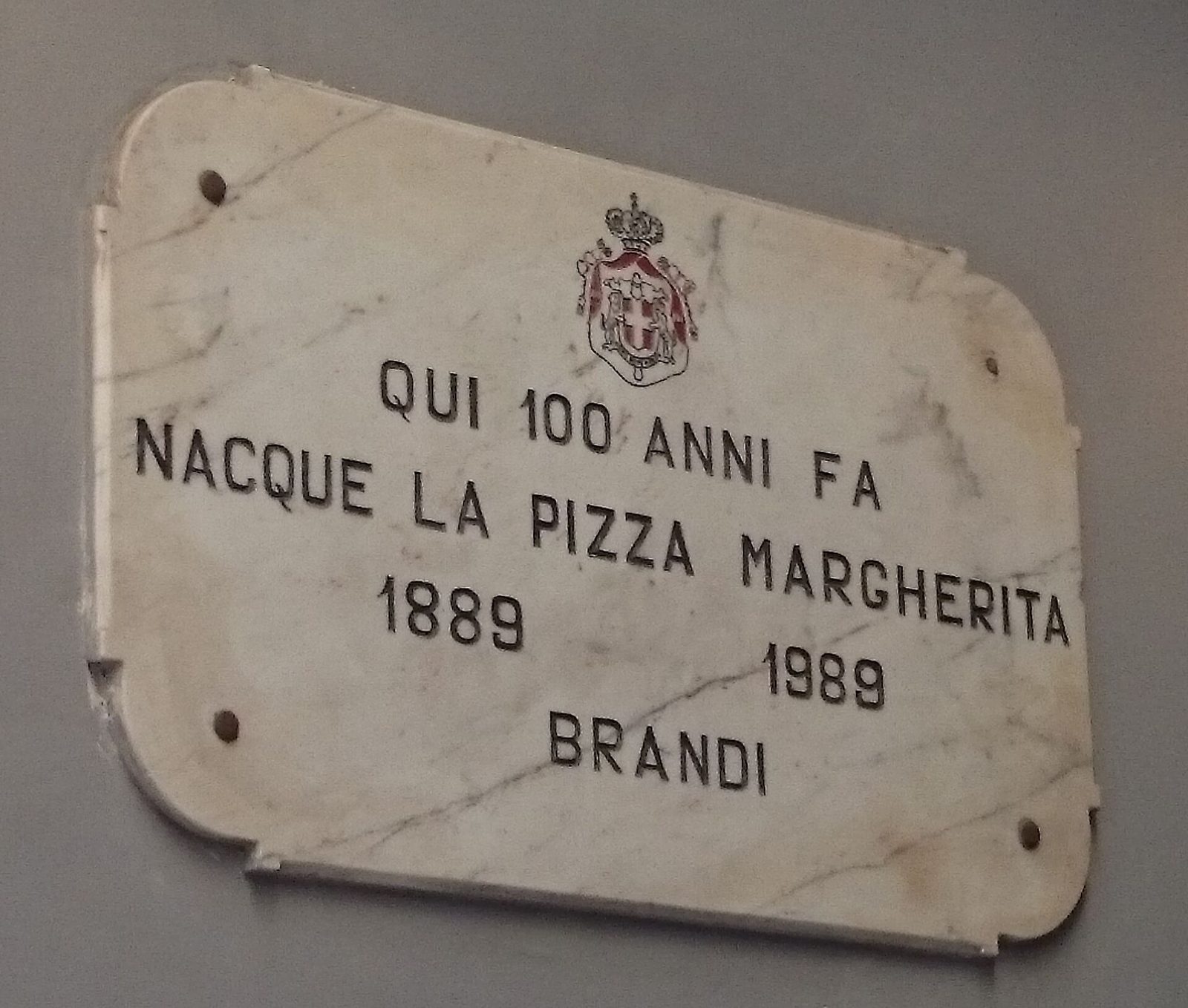
The most famous story in pizza history is set here. In 1889, according to tradition, the pizzaiolo Raffaele Esposito made a pizza for Queen Margherita of Savoy on her visit to Naples, topped with tomato, mozzarella and basil in the red, white and green of the Italian flag, and named it after her. Historians have questioned how much of the story is true, since pizzas with those toppings existed before 1889. But the pizzeria now called Brandi, near Via Toledo, still claims the honor, with a plaque on its wall.
In the 20th century, pizza went global, carried by Neapolitan emigrants, and Naples began to defend its original. The Associazione Verace Pizza Napoletana was founded in 1984 to set out and protect the rules of true Neapolitan pizza. The European Union registered “Pizza Napoletana” as a Traditional Speciality Guaranteed in 2010. And in 2017, UNESCO added the art of the Neapolitan pizzaiuolo to its list of the Intangible Cultural Heritage of Humanity, recognizing the skill, songs and social traditions of the city’s pizza makers.
That social side is still very much alive. For generations, the pizzeria was where working families could afford to eat out, and pizza was sold on credit in the poorer quarters under the custom of pizza a oggi a otto, “eat today, pay in eight days.” Sophia Loren made the pizza seller who worked that way famous in the 1954 film L’oro di Napoli. Today, pizzerias like Concettina ai Tre Santi in the Sanità run social projects in their neighborhoods, and on any evening you’ll see three generations of a family sharing a table.
What to order: the pizzas every visitor should know
Menus at the classic pizzerias are short, and that’s a good sign. These are the pizzas worth knowing before you sit down.
- Margherita. Tomato, mozzarella (usually fior di latte, cow’s-milk mozzarella), basil and olive oil. It’s the benchmark, and the pizza to judge any pizzeria by. Order it on your first visit anywhere.
- Margherita con bufala. The same, with buffalo mozzarella, which is richer, tangier and wetter. It costs a little more.
- Marinara. The oldest of the classics: tomato, garlic, oregano and olive oil, with no cheese at all. It’s simple, intense and, for many Neapolitans, the real test of a pizzaiolo.
- Cosacca. An old Neapolitan pizza of tomato, grated pecorino and basil, without mozzarella. It’s a favorite of purists.
- Salsiccia e friarielli. Sausage with friarielli, a slightly bitter local broccoli rabe. It’s the classic Neapolitan combination, usually made “white” (without tomato).
- Ripieno or calzone. A folded, stuffed pizza, typically with ricotta, salami, mozzarella and tomato. It can be baked or fried.
- Montanara. A small disk of dough fried, then topped and finished in the oven, so it’s crisp and puffy at once. Starita is famous for it.
- Pizza fritta. Fried pizza, folded around a filling like ricotta, cicoli (pork cracklings), provola and tomato. It’s the original cheap street food of the poorer quarters, and a must.
If you’re sharing a table with friends, order one classic each and something different to pass around. But at the old pizzerias, the Neapolitan norm is one whole pizza per person. They’re light enough that it’s easier than it sounds.
Where to eat pizza in Naples, by neighborhood
Via dei Tribunali and the historic center
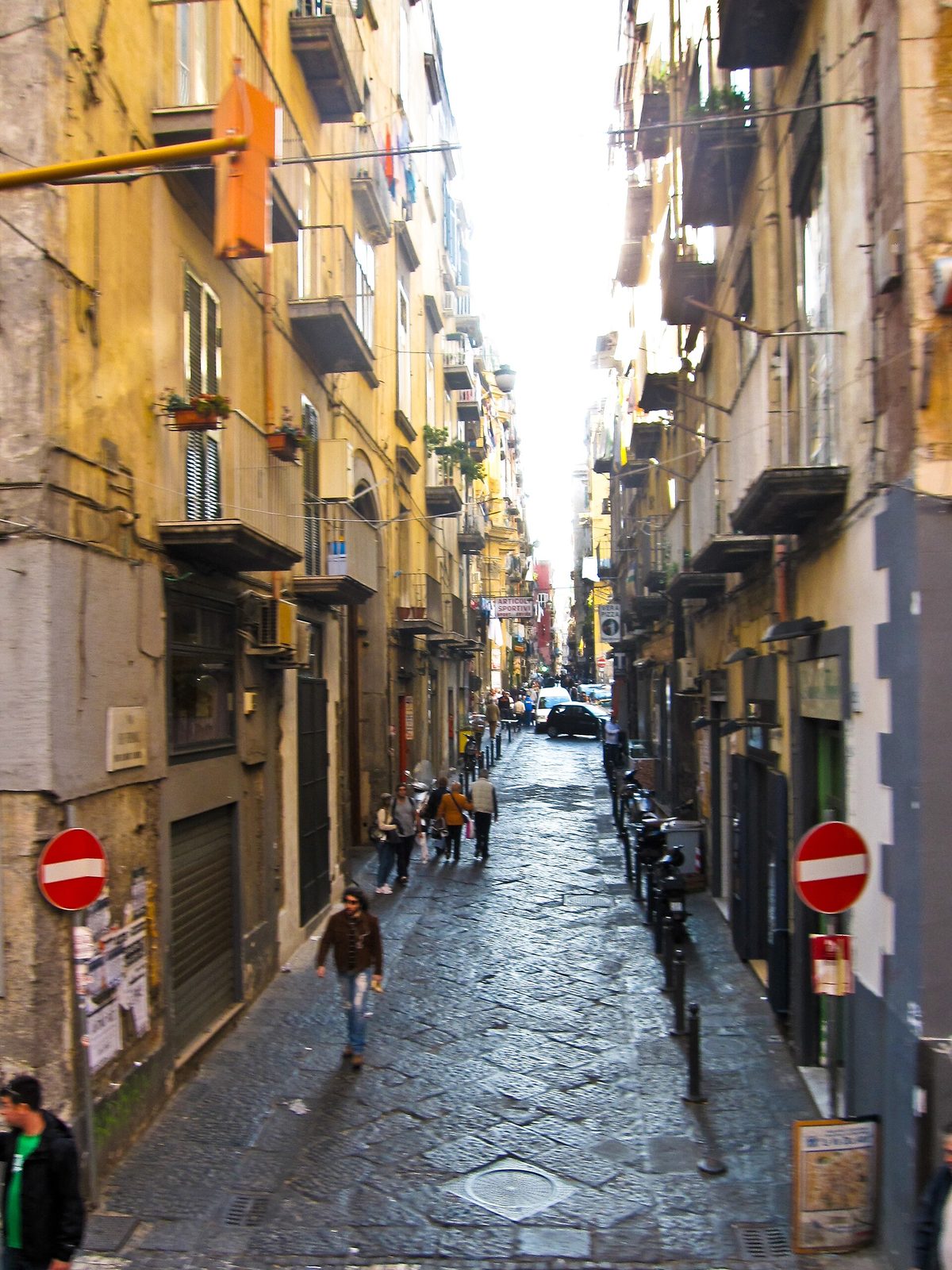
The historic pizza street runs through the heart of the old city, lined with famous names: Gino Sorbillo, Di Matteo, Dal Presidente and Zia Esterina Sorbillo for fried pizza, among many others. It’s the most atmospheric place to eat pizza in Naples, especially in the evening, and the most crowded. Arrive before the lunch and dinner rushes, or be ready to wait.
Forcella and Piazza Garibaldi
East of Via Duomo, around Corso Umberto I and the main station, are some of the oldest names in pizza. Da Michele and Trianon da Ciro face each other across the street, Pellone is known for its huge pizzas, and La Masardona is a fried-pizza institution. It’s a busy, gritty area, perfectly fine by day and early evening. Take the main streets back after dark.
Materdei and the Sanità
Just north of the historic center, these two traditional neighborhoods are home to Starita a Materdei, open since 1901, and Concettina ai Tre Santi, whose pizzaiolo Ciro Oliva has become a symbol of the Sanità’s revival. They’re less touristy than Via dei Tribunali, and they’re easy to combine with a visit to the Sanità’s catacombs.
Pignasecca, Toledo and the royal center
Near the Pignasecca market at Montesanto, Da Attilio has been making superb classic pizza for generations. Toward Piazza del Plebiscito, Brandi claims to be the birthplace of the margherita. These are handy if you’re staying on the Toledo side of the center.
Chiaia, Mergellina and the seafront
West along the seafront, the scene is more modern. 50 Kalò, on Piazza Sannazaro in Mergellina, is one of the most celebrated pizzerias in Italy. Gino Sorbillo also has a seafront outpost on Via Partenope, and Chiaia’s streets have plenty of good contemporary pizzerias for an evening out after the passeggiata.
Beyond the center
Some of the most acclaimed pizzerias in Campania are outside the city. La Notizia, Enzo Coccia’s pizzeria, is in the western part of Naples, a taxi ride from the center. And I Masanielli, Francesco Martucci’s pizzeria in Caserta, ranked joint second in Italy in the 2026 50 Top Pizza guide, which makes it a perfect dinner after a day at the Reggia di Caserta. My guide to day trips from Naples covers the palace.
How to order and eat like a Neapolitan
- One pizza each. At the classic pizzerias, that’s the norm, not an appetizer to share.
- Drink beer, soft drinks or water. These are the usual pizza drinks in Naples. Wine is fine too, but save the cappuccino for the morning.
- Don’t customize too much. The classic places have short menus for a reason. Asking to add toppings to a margherita, or requesting pineapple, will earn you a look.
- Knife and fork for the center, hands for the rim, or fold it. See above.
- Eat it hot. A Neapolitan pizza is at its best in the first few minutes, so don’t wait for everyone else’s to arrive.
- Pizza is for lunch too. Neapolitans eat pizza at any time of day, and lunch is often the easiest time to get a table at a famous place.
- Try it on the street. A pizza a portafoglio, folded in four and wrapped in paper, or a pizza fritta from a street counter, is how many Neapolitans eat it.
- Gluten-free and dietary needs. Some pizzerias offer gluten-free dough or separate preparation, but it’s far from universal in the classic places. Ask ahead, and check how seriously they handle cross-contamination if you have celiac disease.
Old school or new wave?
Naples’ pizza scene has two broad camps, and both are worth trying.
The old school is the pizzeria as it has been for generations: a short menu, a wood-fired oven, marble tables, fast service, low prices and no fuss. The pizzas are soft and thin in the center with a modest rim, and the margherita and marinara are the stars. Da Michele, Starita, Da Attilio and the historic names on Via dei Tribunali are the benchmarks. This is the experience most visitors come for.
The new wave, sometimes called contemporary Neapolitan pizza, keeps the traditional method but pushes the dough further: longer fermentation, higher hydration and a big, airy, puffy rim, sometimes called a canotto (“like an inflatable dinghy”). It also uses carefully sourced toppings from small producers across Campania. Pizzerias like 50 Kalò, Palazzo Petrucci Pizzeria and Concettina ai Tre Santi dominate the independent rankings, and they’re more likely to have wine lists, bookings and seasonal specials.
My advice: have at least one of each. Start with an old-school margherita to understand the classic, then try a new-wave pizzeria to see where the craft has gone. The contrast is part of the pleasure.
How to spot a good pizzeria in a hurry
You won’t always be near one of the famous names, and you don’t need to be. These are the signs I look for when I’m hungry and choosing on the spot.
- A wood-fired oven you can see, usually a domed brick or tiled oven near the front, with a pizzaiolo working at the marble counter in front of it.
- Trays of dough balls resting on the side. It means the dough is made on the premises, in batches, the traditional way.
- A short menu. A margherita, a marinara and a handful of classics is a better sign than a laminated book of forty pizzas.
- Neapolitans inside, or in the queue. Families, workers on their lunch break and groups of friends are the best recommendation there is.
- Classic prices. A margherita priced like the rest of the city, around €6–7 in the center, tells you the place is serving locals as well as visitors.
- No photo menus and no one touting at the door. Good pizzerias rarely need to pull people in.
If a place ticks most of those boxes, go in. In Naples, the odds are heavily in your favor.
A perfect pizza day in Naples
If you want to understand Naples through its pizza, give it a whole day. This is the order I’d eat it in.
- Late morning: the classic. Be at Da Michele, or one of the other old-school pizzerias near Corso Umberto I, when it opens in the late morning. The queue is at its shortest, and a margherita or marinara before noon is a perfectly Neapolitan thing to eat.
- Midday: walk it off. Head west into the old city along Spaccanapoli, past Santa Chiara and the Gesù Nuovo. Stop for a coffee at the bar, and for a sfogliatella if you have room.
- Afternoon: street pizza. On Via dei Tribunali, buy a pizza fritta or a pizza a portafoglio from a street counter and eat it standing up, the way generations of Neapolitans have. Share it if you’re pacing yourself.
- Evening: the new wave. Book a table at one of the contemporary pizzerias, in Mergellina, Chiaia or the Sanità, and taste how far the craft has come: the big, airy rim, the long-fermented dough, the carefully sourced toppings. Walk the seafront afterward.
That’s three pizzas in a day. Neapolitans would approve, and the light, well-fermented dough makes it more manageable than it sounds.
Pizza tours and pizza-making classes
You don’t need a tour to eat great pizza in Naples. The famous places are all in the center, and walking between them is easy. But a guided food walk can be worth it if you’d like context, want to try several places without queuing at each, or would enjoy fried pizza, street food and pastries alongside. A pizza-making class, where a pizzaiolo shows you how to stretch the dough and work a wood-fired oven, is a fun, hands-on way to understand why Neapolitan pizza is what it is, and it’s great for families. Check reviews carefully, and choose a small group run by working pizzaioli rather than a generic tour company.
Pizza and the rest of your trip
Pizza fits neatly around the big day trips from Naples, and a few pairings work especially well.
- After Pompeii. The Circumvesuviana brings you back to Garibaldi, a short walk from the old pizzerias around Corso Umberto I. A pizza dinner after a long, hot day in the ruins is one of the great simple pleasures of a Naples trip. My guide to Pompeii from Naples covers the day itself.
- After Vesuvius and Herculaneum. The same train line, the same easy return to the old city. Materdei and the Sanità are a short taxi ride from the station if you’d like to eat somewhere less touristy. My Mount Vesuvius guide explains the logistics.
- After Capri. The boats come back to Molo Beverello, a short walk from Via Toledo and the Pignasecca. That makes an evening pizza at Da Attilio, or one of the places near Piazza del Plebiscito, an easy end to an island day. See my guide to Capri from Naples.
- On the Amalfi Coast. The coast is seafood, lemon and pastry country. You’ll find pizza there, but save your serious pizza eating for Naples. My guide to the Amalfi Coast from Naples covers getting there and back.
- In July. The Napoli Pizza Village, a big free pizza festival with concerts, runs for several days in early summer. In 2026 it moved from Naples to the seafront in nearby Pozzuoli.
Beyond pizza: what else to eat in Naples
Pizza is the headline, but it’s only the start of eating in Naples, which has one of the richest food cultures in Italy. Save room for these.
- Ragù napoletano, the slow-cooked Sunday meat sauce that simmers for hours, served with pasta and then the meat as a second course.
- Genovese, which despite its name is thoroughly Neapolitan: a deep, sweet sauce of onions slow-cooked with beef until they melt, usually served with long, tube-shaped pasta.
- Pasta e patate con provola, pasta and potatoes cooked together until creamy, with smoked provola cheese. It’s the ultimate Neapolitan comfort food.
- Fried street food: the frittatina, a fried disk of pasta with béchamel and peas, the cuoppo, a paper cone of fried seafood or vegetables, and potato croquettes.
- Mozzarella di bufala from the plains north and south of the city, best eaten fresh the day it’s made.
- Pastries: the sfogliatella, shell-shaped and filled with ricotta, in its crisp riccia or soft frolla versions, the rum-soaked babà, and at Easter the pastiera, a tart of ricotta and wheat scented with orange blossom.
- Coffee, strong, short and drunk standing at the bar. Naples is also home to the caffè sospeso, the “suspended coffee,” paid for in advance by one customer for a stranger who can’t afford one.
What to skip
- Queuing an hour for one specific famous name. If the line at Da Michele or Sorbillo is huge, try Trianon da Ciro, Di Matteo or the next pizzeria down the street. The standard is so high that you’ll eat well.
- Tourist-menu restaurants with photo menus in the busiest squares. Look for a wood-fired oven, a short menu and Neapolitans eating inside.
- Judging Neapolitan pizza by crispness. It isn’t meant to be crisp. The soft center is the point.
- Ordering “pepperoni.” In Italian, peperoni means bell peppers. If you want spicy salami, look for salame piccante or a diavola.
- Eating pizza only once. Try an old-school classic and a new-wave pizzeria, and don’t miss a fried pizza.
- Skipping lunch pizza. A lunchtime pizza at a famous place often means half the wait of the evening.
Frequently asked questions about pizza in Naples
What is the best pizza in Naples?
There’s no single answer, and Neapolitans love arguing about it. Among the classics, Da Attilio, Da Michele and Starita are outstanding. Among the new wave, 50 Kalò and Palazzo Petrucci Pizzeria are ranked among the best in Italy by the 2026 50 Top Pizza guide. Start with a margherita at any of them.
Is Da Michele worth the wait?
For the experience of eating a simple, perfect margherita or marinara in a pizzeria that has barely changed since 1870, yes, if you go at a quiet time. Arrive at opening in the late morning or mid-afternoon, give your name at the door, and consider the takeaway line if the wait is very long.
Is Sorbillo overrated?
It’s divisive. Its fame means long queues and a lot of tourists, and some locals prefer other pizzerias. But the pizza is good, and eating on Via dei Tribunali is an experience in itself. Go on a weekday before the evening rush, and don’t wait an hour if there are good options nearby.
How much does pizza cost in Naples?
A margherita in Naples costs €6.74 on average, according to the 2026 Neapolitan Pizza Observatory, and typically €6–7 in the historic center. New-wave pizzerias and pizzas with premium toppings cost more. Some pizzerias add a small cover charge, and drinks are extra.
Why is Neapolitan pizza soggy in the middle?
Because it’s made that way. The dough is soft and wet, the center is stretched very thin, the pizza bakes for only about a minute in an oven well over 400°C, and the raw tomato and fresh mozzarella release liquid as they cook. The result is a charred, airy rim and a soft, juicy center, which is exactly what Neapolitans want.
Do you eat Neapolitan pizza with a knife and fork?
Often, yes, at least for the soft center. Many Neapolitans cut from the middle with a knife and fork and eat the rim by hand. On the street, pizza is folded in four, a portafoglio, and eaten from paper. Either way is correct.
Do I need to book a pizzeria in Naples?
Not at the classic pizzerias, most of which don’t take bookings. You give your name at the door and wait. The new-wave pizzerias are more likely to accept reservations, and it’s worth booking them for weekend evenings.
Where was the pizza margherita invented?
According to tradition, in Naples in 1889, when the pizzaiolo Raffaele Esposito made a pizza in the colors of the Italian flag for Queen Margherita. The pizzeria now called Brandi claims the honor with a plaque on its wall, though historians note that similar pizzas existed earlier.
Can I eat pizza at lunchtime in Naples?
Absolutely. Neapolitans eat pizza at lunch as happily as at dinner, and many of the classic pizzerias open from late morning. Lunch is often the easiest time to get into a famous place without a long wait, especially on weekdays.
What should I drink with pizza in Naples?
Beer is the most common choice, along with soft drinks and water. Wine is fine, especially at the new-wave pizzerias with proper wine lists. Leave the cappuccino for breakfast and finish with an espresso instead.
What is pizza fritta?
Fried pizza: a disk of pizza dough folded around a filling, typically ricotta, cicoli (pork cracklings), provola and a little tomato, then deep-fried until puffed and golden. It was the cheap, everyday pizza of the poorest Neapolitans, and it became especially popular in the hard years after the Second World War. It’s still sold from street counters and specialist pizzerias across the city.
Is pizza in Naples really better than elsewhere in Italy?
Great pizza is now made all over Italy, and the top spot in the 2026 50 Top Pizza guide went to a pizzeria in Milan. But Naples still has more ranked pizzerias than any other city, and nowhere else packs so many excellent, affordable, traditional pizzerias into such a small area. For the classic Neapolitan margherita, Naples remains the place.
Pizza is only the start. The same counters that fold you a pizza a portafoglio also fry frittatine di pasta and fill paper cones with zeppoline and crocchè, and the pastry shop next door will have warm sfogliatelle. My guide to Naples food beyond pizza explains what each dish is and how to order it.
One practical note for the pizza crawl: the queues outside the famous places on Via dei Tribunali are exactly where pickpockets like to work, so keep your phone in a front pocket while you wait. My guide to staying safe in Naples covers the rest.
When you’ve had your fill of pizza, and it does happen, the city’s trattorias are the next thing to explore, from Sunday ragù to fried anchovies. Here’s where to eat in Naples beyond the pizzerias.
Photo credits
- A Neapolitan-style margherita (featured image): photo by Missvain (Sarah Stierch), Wikimedia Commons, CC0.
- The queue outside Da Michele: photo by Husky, Wikimedia Commons, CC BY 4.0.
- The Margherita plaque at Brandi: Wikimedia Commons contributor, Wikimedia Commons, CC0.
- Gino Sorbillo on Via dei Tribunali: photo by Mister No, Wikimedia Commons, CC BY 3.0.
- Via dei Tribunali: photo by Armando Mancini, Wikimedia Commons, CC BY-SA 2.0.
Sources: rankings from the 50 Top Pizza Italia 2026 guide (published July 2026); prices from the 2026 Neapolitan Pizza Observatory as reported by Italia a Tavola; pizzeria opening arrangements from current public listings; UNESCO’s 2017 inscription of the art of the Neapolitan pizzaiuolo. Checked September 11, 2026. Pizzeria hours and house rules change often: confirm before you go.