On this page
Last updated September 10, 2026. Ticket prices and booking rules checked against the Vesuvius National Park and its official ticket seller; volcano status against INGV’s Vesuvius Observatory and Italy’s Civil Protection Department. Shuttle times and prices come from the operators’ 2026 listings, and I flag anything I couldn’t confirm at the source.
To visit Mount Vesuvius from Naples, Italy, book a timed ticket online (€10, or €11.68 with the booking fee), reach the car park near the summit by shuttle from Ercolano, car or tour, and walk about 30 minutes up to the crater rim. The path closes at short notice in high wind, so book early in your trip.
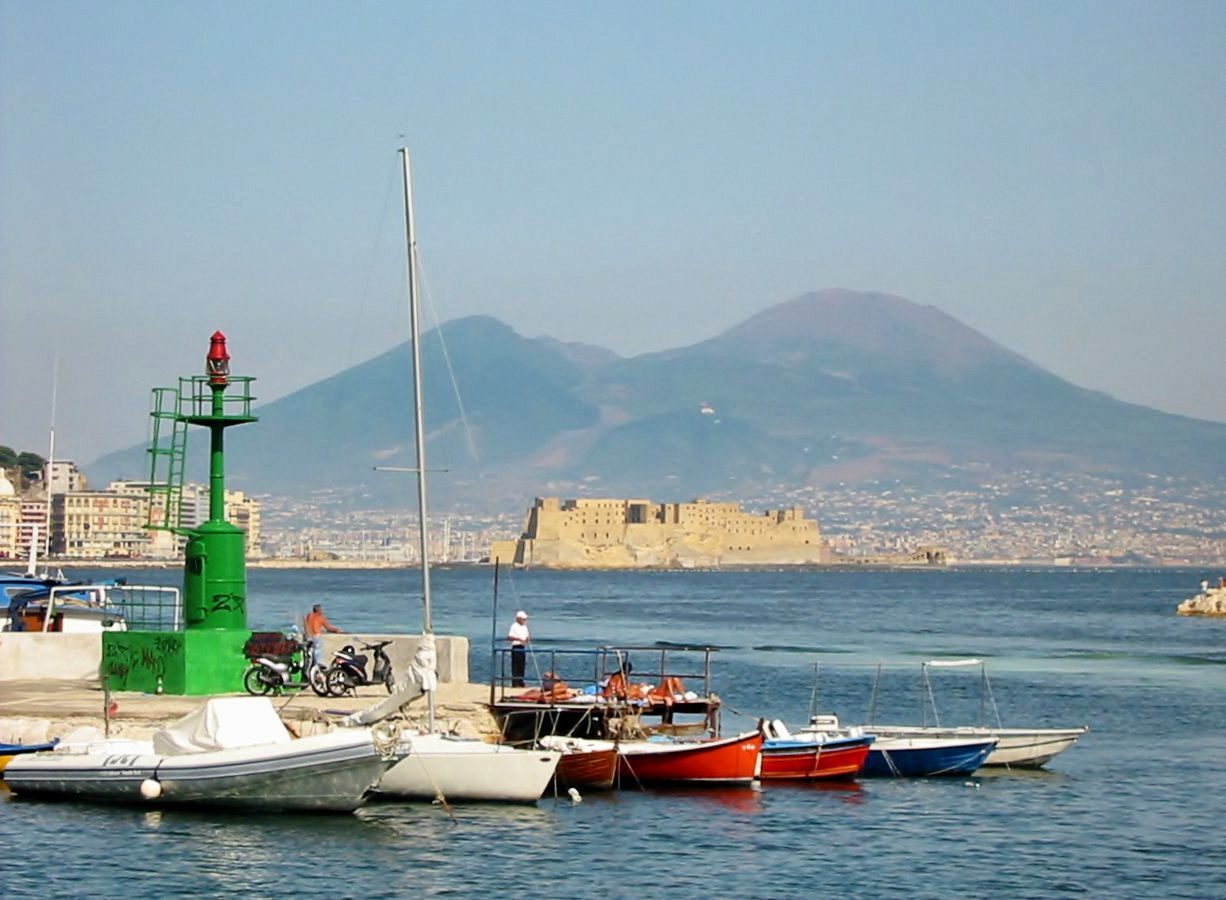
Vesuvius is the mountain that defines the Bay of Naples. It’s in the background of every seafront photograph, it buried Pompeii and Herculaneum in AD 79, and it’s still an active volcano, watched around the clock. Walking up to its crater and looking down into it, with Naples, Capri and the whole bay spread out below, is one of the great experiences of a trip to this part of Italy.
It’s also one of the most frustrating to organize. Almost every page about the volcano covers the walk and ignores the three things that actually trip visitors up. First, tickets are sold online only, in small timed slots, and they sell out. Second, the car park where the walk begins sits around 1,000 meters up the mountain, and no convenient public bus serves it, which is the problem that most often strands people. Third, the path closes at short notice for wind and bad weather, and you need to know what happens to your ticket when it does.
This guide covers all three first, then the walk itself, how to combine the volcano with Pompeii and Herculaneum, a little of the science and history, and an honest verdict on whether it’s worth it.
Mount Vesuvius at a glance
| Question | Answer (checked September 2026) | What catches people out |
|---|---|---|
| Where do I buy tickets? | Online only, from the park’s official seller, vesuviopark.vivaticket.it | Arriving at the car park expecting a ticket office |
| How much? | €10 official price (€8 reduced), €11.68 (€9.55 reduced) with the booking fee | Paying more on reseller sites for the same ticket |
| When are tickets released? | Up to 30 days before your visit, in timed slots | Leaving it until the day in high season |
| How do I get to the start? | Private shuttle from Ercolano Scavi station, car, taxi or tour | Assuming a public bus goes up the mountain |
| How long is the walk? | Roughly 30 minutes up to the rim, then a walk along part of it; allow 1½–2 hours at the top | Underestimating the steep, loose gravel |
| When is it open? | Every day from 9:00; last access varies from mid-afternoon in winter to early evening in high summer | Not realizing wind or rain can close it with little warning |
| Is the volcano safe? | Yes. It’s on green alert, the lowest of four levels, and constantly monitored | Confusing it with the Campi Flegrei, the other volcanic area west of Naples |
Vesuvius tickets: how the booking actually works
The walk to the crater, officially path no. 5, the Gran Cono (Great Cone), is run by the Vesuvius National Park. Since the park introduced online timed ticketing, you can’t just turn up and pay at a booth.
- Buy online, from the official seller. The only authorized seller is the park’s page on Vivaticket, vesuviopark.vivaticket.it. The official price is €10 (€8 reduced), which comes to €11.68 (€9.55 reduced) once Vivaticket’s booking fee is added. You’ll find the same ticket on reseller and tour sites for more. Buy direct unless the reseller is bundling something you actually want, like transport.
- Tickets are released up to 30 days ahead, in timed slots of ten minutes, each with a limited number of places (around 50 per slot). Your ticket is for a specific entry time, so plan your transport to arrive in good time for it.
- There’s a small last-minute allowance. A handful of places in each slot (around ten) are held back and sold on the day at the site, bought on your phone using the Wi-Fi at the start of the path. Since April 11, 2026, these last-minute tickets are issued in your name. They’re a useful safety net on a quiet day, but in high season I wouldn’t make the journey up relying on them.
- Book early in your trip. Because the path closes for weather, the best strategy is to book Vesuvius for one of your first days in the area. If it’s closed, you’ll still have time to try again.
When the weather closes the mountain
Vesuvius is a 1,281-meter volcano standing on its own above the sea, and the summit is exposed. The path closes when the wind is too strong, after heavy rain, when there’s snow, and when the regional authorities issue an orange weather alert. That can happen on sunny days as well as stormy ones, and sometimes the decision is made on the morning itself.
If the park closes the path because of an official weather alert, tickets bought through the official channel are refunded automatically, according to the park’s rules. If you bought through a tour company or reseller, the refund depends on its own terms, so read them before you book. Either way, the practical advice is the same: check the park’s official channels on the morning of your visit before you set off, and have a plan B for the day, such as Herculaneum or Pompeii, which are on the way.
Choosing your time slot
Which slot you book matters more than people think. The first slots of the morning usually have the clearest air, the coolest walk and the emptiest rim. By late morning the tour groups have arrived and, in the warmer months, the haze over the bay has thickened. Early slots also leave your afternoon free for Herculaneum or Pompeii. Afternoon slots can be quieter, but they come with two risks. The wind often picks up as the day goes on. And in the shorter winter season the path’s last access is mid-afternoon, so a late slot leaves you no margin if your train or shuttle runs late.
Work backwards from your transport. If you’re taking the shuttle from Ercolano, allow for the train from Naples, the walk across the square, a possible wait while the shuttle fills, and the ride up. An hour and a half from central Naples to the start of the path is a sensible buffer. If you’re driving, allow extra time to find parking at busy times.
Booking, step by step
- Go to the park’s official ticket page on Vivaticket (vesuviopark.vivaticket.it). Don’t use a search ad, which may well be a reseller.
- Pick your date and a ten-minute entry slot. Slots open up to 30 days ahead.
- Choose full-price or reduced tickets. The reduced categories are set by the park, so if you claim one, carry proof of eligibility.
- Pay, and keep the ticket on your phone, with a screenshot in case there’s no signal on the mountain, or print it.
- On the day, check the park’s official channels for closures before you leave, then arrive at the start of the path a little before your slot.
Getting to the crater without a tour
This is the part that strands people. The Gran Cono path starts from a car park and visitor area at about 1,000 meters up the mountain, reached by a long, winding road. There’s no train, and no convenient public bus to it. So you need one of the options below, and it’s worth sorting out before you book your time slot.
The Vesuvio Express shuttle from Ercolano
The most straightforward option without a car is the Vesuvio Express, a private shuttle service that leaves from the square in front of Ercolano Scavi station on the Circumvesuviana line, the same station you use for Herculaneum. According to its 2026 listings, the round trip with the shuttle alone starts from €15 per person, or from €31 including your Vesuvius entrance ticket. The ride takes around 20 minutes each way. The service runs roughly from 9:00 to 17:00 in the summer season and from 9:30 to 14:00 in winter.
How to do it: take the Circumvesuviana from Naples (Garibaldi or Porta Nolana) to Ercolano Scavi, which takes about 20 minutes. Walk to the Vesuvio Express office on the square outside, and take the shuttle up. Confirm your return time with the driver before you set off on the walk, and leave yourself a margin. Shuttles won’t wait if you’re late.
Shuttles from Pompei
Other private shuttle services run to the volcano from the Pompei side, and they’re useful if you’re combining Vesuvius with the ruins. Services and prices change from year to year, and I couldn’t verify 2026 prices at the source, so check the operator’s current timetable and exactly what’s included (entrance ticket or not, and return times) before you go. The Ercolano shuttle is the better-established option, and Herculaneum is closer to Naples.
Driving
You can drive up to the car park below the Gran Cono. It’s a narrow, twisting mountain road, and parking near the top is limited and paid, so it fills up at busy times. If you have a car, go early, ideally for one of the first time slots of the day. Remember that driving in and out of central Naples is its own challenge, and much of the center is a restricted traffic zone.
Taxis and private drivers
A taxi from Ercolano or Pompei, or a private driver from Naples, will take you to the car park and wait while you walk. It’s the most flexible option and makes sense for a group, but it’s expensive. Agree the price, including waiting time, before you set off.
Tours from Naples
Plenty of tours from Naples combine Vesuvius with Pompeii or Herculaneum, including transport to the car park and usually your entrance ticket. If you don’t want to organize the logistics, it’s the easiest way to do it. Check that the Vesuvius ticket is included and for which time slot, how much time you actually get at the top, and what the operator’s policy is when the path closes for wind. A tour doesn’t change the weather.
Which option should you choose?
| Option | Starts from | Cost (checked September 2026) | Best for | Watch out for |
|---|---|---|---|---|
| Vesuvio Express shuttle | Ercolano Scavi station | From €15 return; from €31 with your entrance ticket | Independent travelers, especially pairing with Herculaneum | Fixed return times and the last shuttle down |
| Shuttles from Pompei | Pompei | Check with the operator (2026 prices not verified at source) | Pairing the volcano with Pompeii | Whether the entrance ticket is included |
| Your own car | Anywhere | Fuel plus paid parking near the top | Travelers who already have a car | Narrow road, limited parking at busy times |
| Taxi or private driver | Ercolano, Pompei or your hotel | Agreed in advance, including waiting time | Groups and travelers short on time | Cost for couples; agree the pickup before you walk |
| Tour from Naples | Your hotel or a meeting point | Varies; usually includes the entrance ticket | Anyone who wants zero logistics | Time at the top and the closure policy |
My pick: the Vesuvio Express if you’re traveling by public transport, a tour if you want no logistics at all, and a private driver if there are four of you to share the cost.
The walk to the crater
From the car park, the Gran Cono path climbs the side of the cone on a wide track of volcanic gravel and ash, zigzagging up to the rim. It’s steep in places and the surface is loose, like walking on coarse sand, but it’s not technical, and people of all ages do it. Allow around 30 minutes to reach the rim at a steady pace, with stops to catch your breath and look at the view, which gets bigger with every bend.
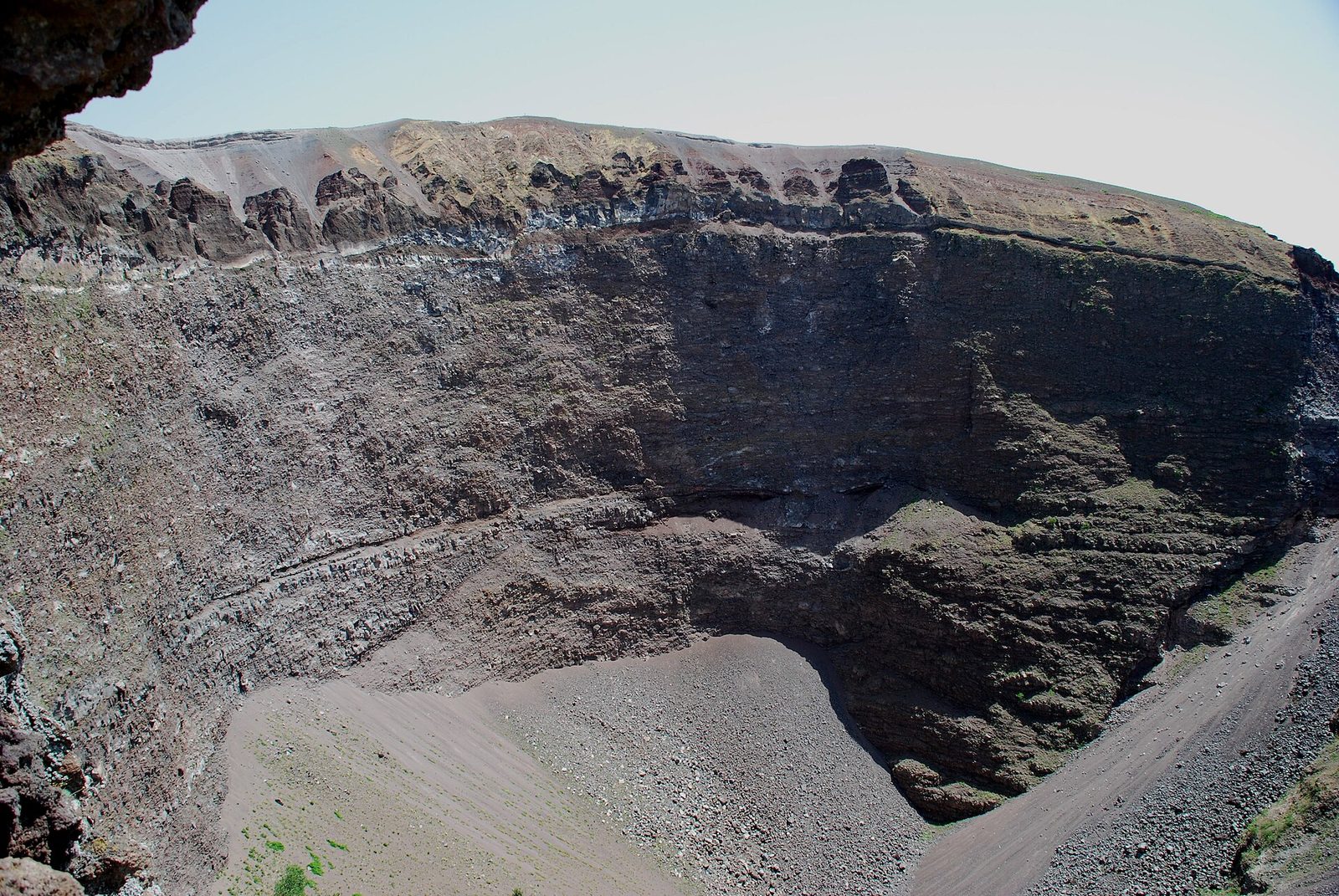
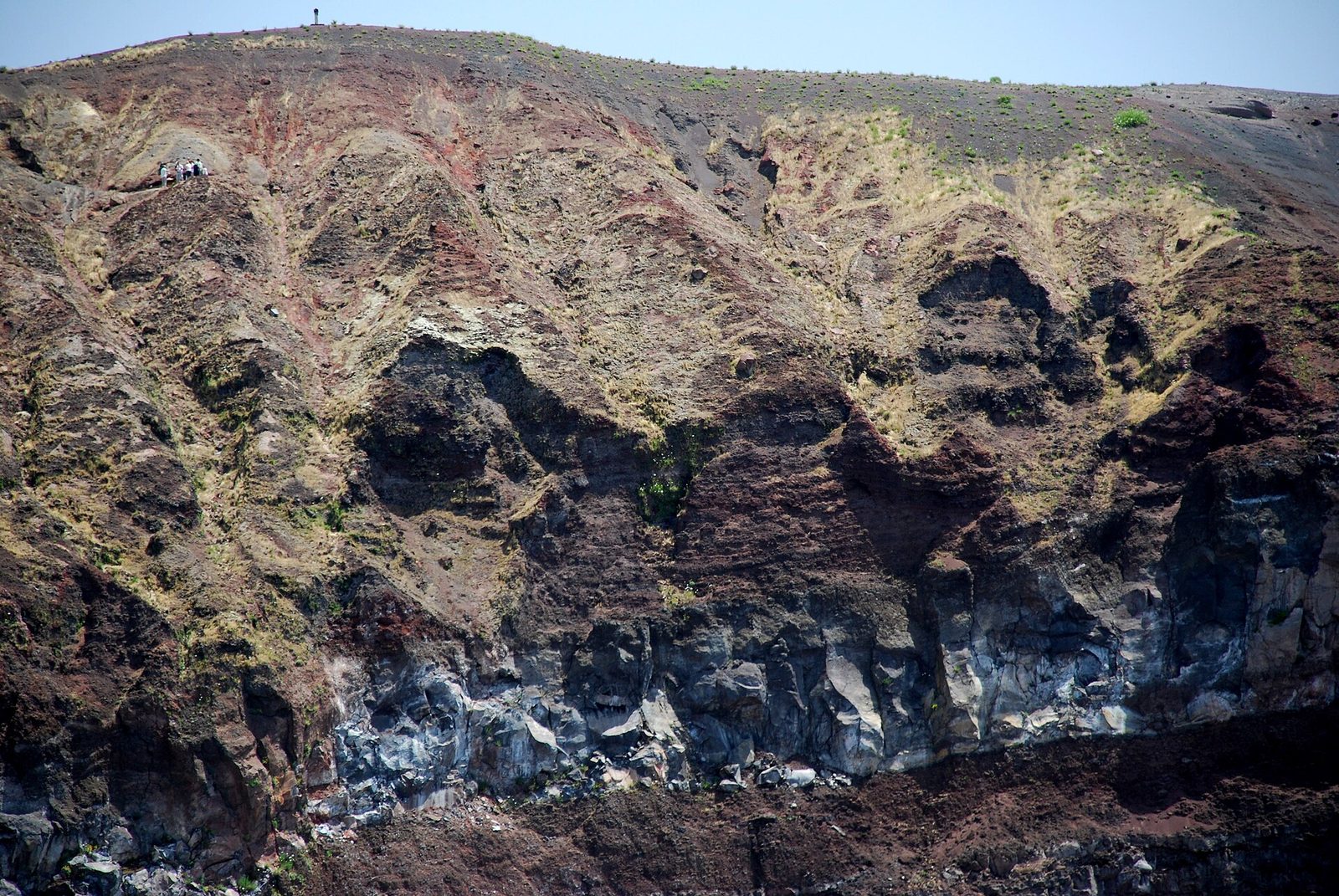
At the top, the path follows part of the crater rim to a series of viewpoints. The crater is a huge, steep-sided bowl of reddish-gray rock and scree, with wisps of steam from a few fumaroles on its walls. Park volcanologist guides stationed along the rim give short explanations of the volcano’s history and activity, included in your ticket. On a clear day, the view takes in the whole Bay of Naples: the city, the Sorrento peninsula, Capri, Ischia and Procida, and the ruins of Pompeii and Herculaneum far below. Then you walk back down the same way.
All in, allow an hour and a half to two hours from leaving the car park to getting back to it, more if you linger at the viewpoints. There’s a small café and souvenir stalls at the top, and toilets near the car park.
What you’ll see from the rim
On a clear day, the rim is the best viewpoint in Campania. Facing west, Naples fills the curve of the bay, with the hill of Posillipo beyond it and, further still, the Campi Flegrei and the islands of Procida and Ischia. To the southwest, the Sorrento peninsula runs out into the sea toward Capri. South and east, the plain below the volcano is dense with towns, and among them are the ruins of Pompeii. Beyond rise the Lattari mountains, the spine of the Sorrento peninsula and the Amalfi Coast. Turn north and you’re looking at the jagged ridge of Monte Somma, the rim of the older volcano. Below it lies the Valle del Gigante, the valley between the two cones, a landscape of old lava flows that shows how the younger Vesuvius grew up inside its ancestor.
Inside the crater, look for the bands of color in the walls, each the trace of a different eruption, and for the small fumaroles, vents where steam and gas still escape. The park guides along the rim will point out what you’re looking at and answer questions, and it’s worth stopping to listen.
What to wear and bring
- Proper shoes. Trainers or walking shoes with grip, not sandals or flip-flops. The loose gravel gets into everything, and it’s slippery on the way down.
- A warm layer. It’s often windy and noticeably colder at the rim than at sea level, even on a hot day in Naples.
- Water and sun protection. There’s no shade on the path.
- Cash. Useful for walking sticks, which are often available to borrow at the bottom for a small donation, and for the café at the top.
- Your ticket and ID. Have your ticket on your phone or printed, with your time slot, and ID if it’s a named last-minute ticket.
Is the walk hard?
For most reasonably active adults, no. It’s a short, steep walk rather than a hike. It’s harder than it looks because of the loose surface, and the climb can feel tough in the heat of the day. Children who are used to walking usually manage it well. It isn’t suitable for wheelchairs or strollers, and anyone with serious mobility, heart or breathing problems should think carefully, because there’s nowhere to sit and nothing to shelter under along the way.
Tips for photographers
Morning light is best. The sun is behind you as you look west over the bay, and the haze is usually at its thinnest. The classic shot looks along the curve of the crater rim with the bay beyond, so walk as far along the open section of the path as you can for the widest angle. A polarizing filter helps cut through haze. Drones need authorization inside the national park, so don’t plan on flying one. And keep a firm grip on your camera or phone in the wind at the rim. If it goes over the edge into the crater, you won’t be getting it back.
Is Mount Vesuvius worth it?
On a clear day, yes, without hesitation. Standing on the rim of the volcano that destroyed Pompeii, looking down into its crater and out over the whole Bay of Naples, is something you’ll remember long after the details of a dozen churches have blurred together. The scale is what gets people: the size of the crater, the height above the sea, and the realization that the city of three million people spread out below is living on the flank of an active volcano.
But it’s worth being honest about what you’ll see, because expectations are the difference between a highlight and a letdown.
- There’s no lava. Vesuvius hasn’t erupted since 1944. The crater is a vast bowl of rock and scree, with a few gentle wisps of steam. If you’re imagining glowing magma, you’ll be disappointed. If you’re coming for the scale, the geology and the view, you won’t be.
- The view depends on the weather. On hazy days, which are common in the hotter months, the bay can be a gray blur, and on cloudy days the summit can be inside the cloud. The crater itself is impressive in any weather, but the panorama is half the point.
- It takes half a day. Once you’ve added the train to Ercolano, the shuttle, your time slot, the walk and the journey back, Vesuvius takes four to five hours from central Naples. That’s fine if you combine it with Herculaneum or Pompeii, and less appealing on a short trip.
My verdict: if you have four or more days in the region, a clear forecast, and you can pair it with Herculaneum, go. If you only have two days in Naples, I’d rather you spent them on the city and one of the archaeological sites. You can see Vesuvius from almost everywhere anyway.
Combining Vesuvius with Pompeii and Herculaneum
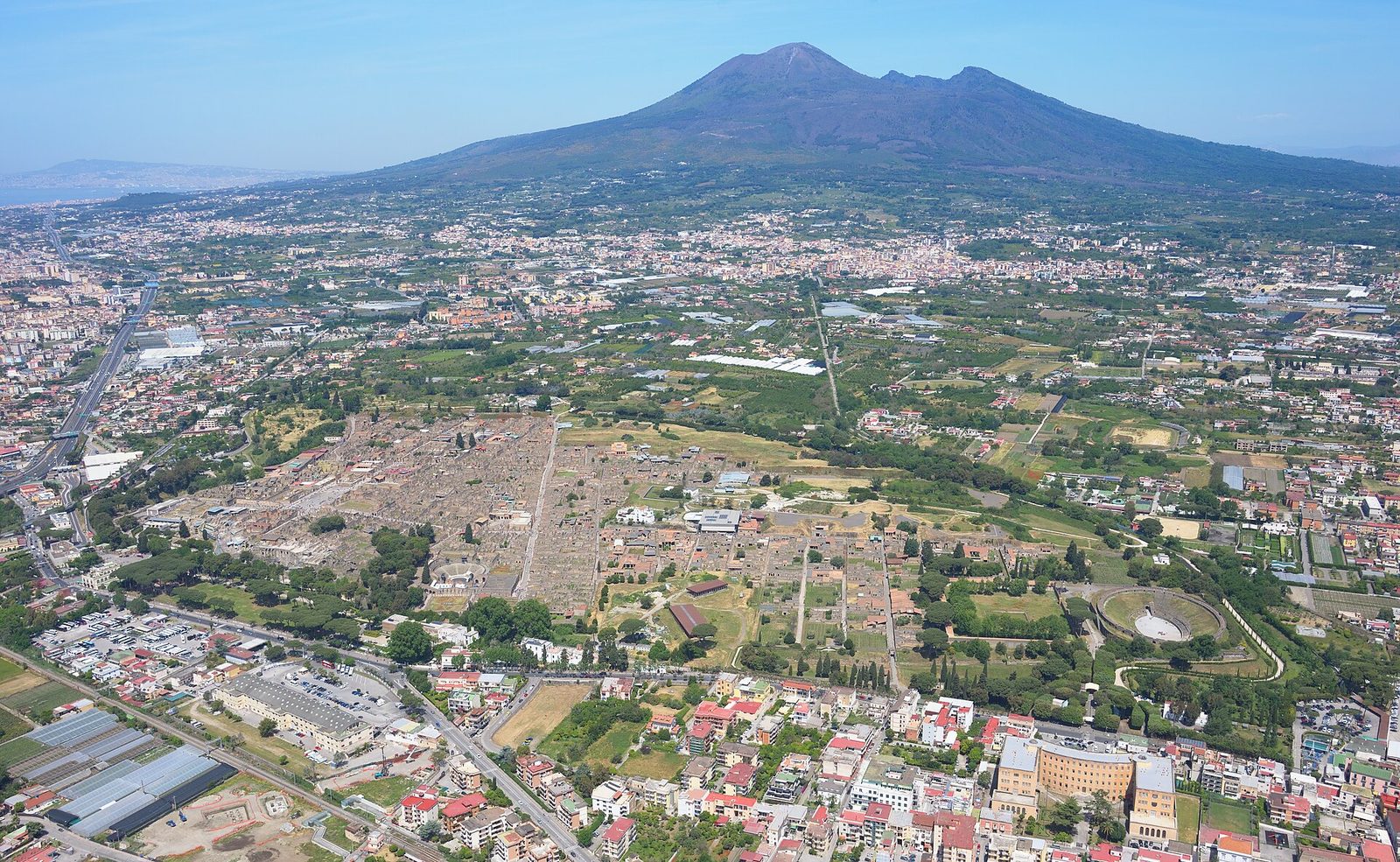
The volcano and the cities it destroyed make a natural pair, and seeing them on the same day is one of the most satisfying ways to understand what happened in AD 79. But do it the right way round, and don’t try to do all three.
Herculaneum and Vesuvius: the easiest pairing
This is the combination I’d recommend. Herculaneum and the Vesuvio Express shuttle both start from Ercolano Scavi station on the Circumvesuviana, about 20 minutes from Naples. Book an early Vesuvius time slot, take the shuttle up first thing while the air is clearest and the path is coolest, come back down around midday, have lunch in Ercolano, and spend the afternoon in Herculaneum, which is open every day of the week. Herculaneum is compact enough to see well in two to three hours, and its extraordinarily well-preserved houses are a perfect counterpoint to the raw scale of the volcano.
Pompeii and Vesuvius: possible, but a long day
Pompeii plus Vesuvius is the classic combination sold by tours, and it’s doable independently too: Pompeii in the morning, then a shuttle from the Pompei side up to the crater in the afternoon. It’s a long, hot day with a lot of walking, because Pompeii alone is three to four hours on your feet. If you do it, book a Vesuvius slot that leaves you plenty of margin after Pompeii, and check the shuttle’s last return. Everything you need for the Pompeii half is in my guide to Pompeii from Naples, including which ticket and which gate to choose.
All three in one day: don’t
You’ll see tours offering Pompeii, Herculaneum and Vesuvius in a single day. It’s too much. You’ll rush all three, and by the third you’ll be too tired to care. Split them across two days.
A sample day: Vesuvius from Naples by public transport
- Morning: Take the Circumvesuviana from Porta Nolana or Garibaldi toward Sorrento and get off at Ercolano Scavi, about 20 minutes from Naples.
- At Ercolano: Walk to the Vesuvio Express office on the square in front of the station and take the shuttle up the mountain, about 20 minutes, timed to arrive comfortably before your ticket slot.
- At the car park: Borrow a walking stick if you want one, use the toilets, and start the climb at your slot time. Allow about 30 minutes to the rim.
- At the top: Walk the rim path to the viewpoints, listen to the park guides, and take in the view. Allow an hour or so.
- Midday: Walk down, take the shuttle back to Ercolano, and have lunch in town.
- Afternoon: Visit Herculaneum, a ten-minute walk from the station, then take the Circumvesuviana back to Naples.
If the path is closed for wind that morning, flip the day: Herculaneum first, and try Vesuvius on another day if your ticket is refunded and you have one to spare.
A short history of Vesuvius
Vesuvius is what geologists call a somma-stratovolcano: a younger cone, Vesuvius proper, rising inside the collapsed remains of an older, much bigger volcano, Monte Somma, whose ridge still curves around its northern side. From the crater rim, you can see how the two fit together.
AD 79. The eruption that buried Pompeii, Herculaneum, Stabiae and Oplontis is one of the most famous natural disasters in history, partly because it was described by an eyewitness. Pliny the Younger watched from across the bay at Misenum and later wrote two letters describing the towering cloud of ash and pumice, and the death of his uncle, Pliny the Elder, who had sailed toward the eruption to help. Volcanologists still call this kind of explosive eruption “Plinian” in his honor. Pompeii was buried under meters of falling pumice and ash, and Herculaneum under a deep flow of superheated volcanic material, which is why it’s so well preserved.
1631. After centuries of relatively minor activity, a violent eruption in December 1631 killed thousands of people in the towns around the mountain and marked the start of the volcano’s modern active period.
The Grand Tour. From the 18th century, Vesuvius became one of the great sights of the European Grand Tour. Travelers climbed it by mule and on foot to watch its lava flows, and in 1880 a funicular railway was built up the cone. It was celebrated in the song “Funiculì, Funiculà,” written for its opening, and it was later destroyed by the volcano.
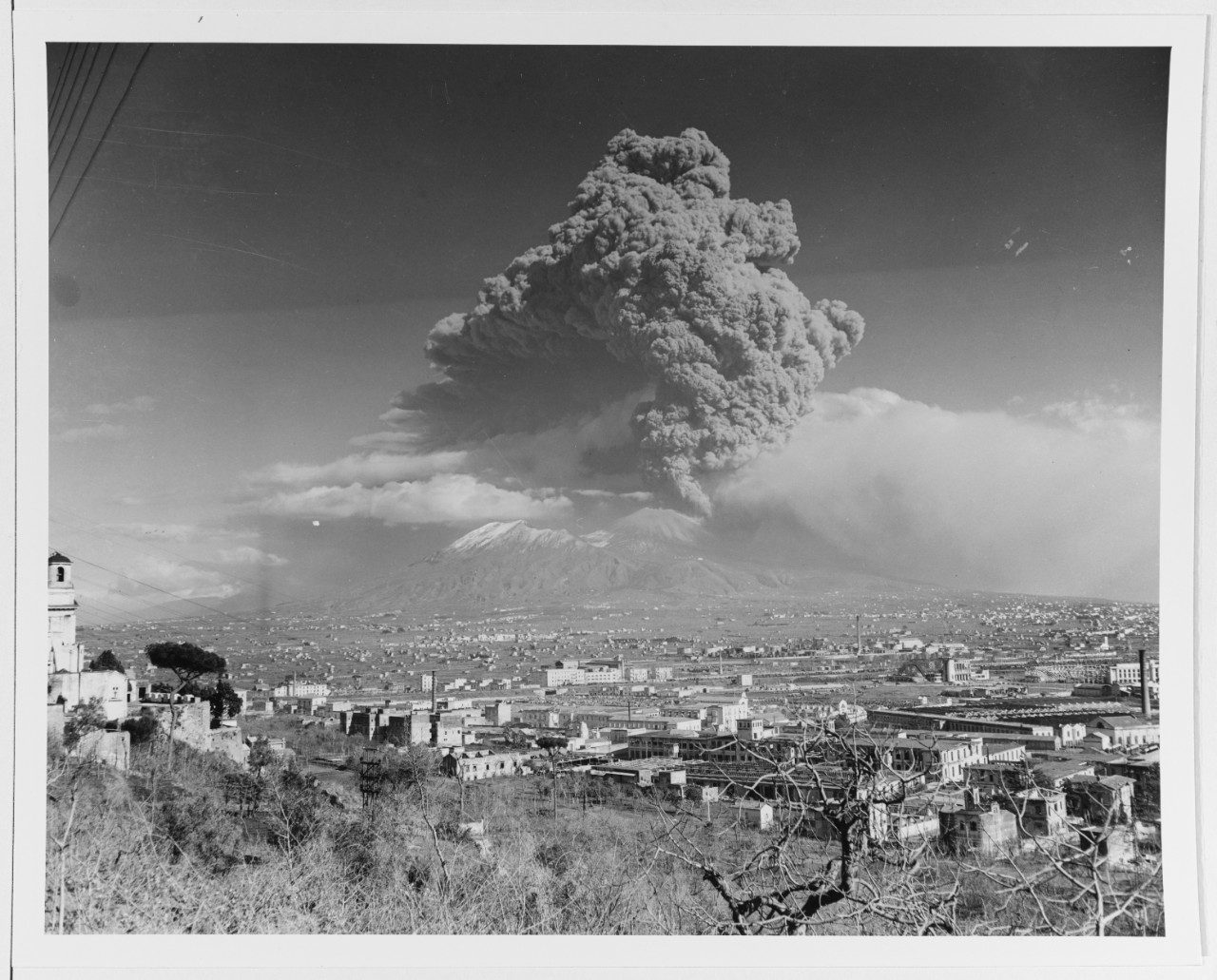
1944. Vesuvius last erupted in March 1944, in the middle of the Second World War, when Naples was under Allied control. Lava flows destroyed several villages on its slopes, and falling ash wrecked dozens of American bombers parked at an airfield near the mountain. Since then, the volcano has been quiet, and the open vent of the pre-1944 years has closed.
Is Vesuvius dangerous? Monitoring, alert levels and the evacuation plan
Visiting the crater is safe. Vesuvius is one of the most closely monitored volcanoes on earth, and the Gran Cono path would be closed long before any change in its behavior could put visitors at risk.
The monitoring is done by the Vesuvius Observatory (Osservatorio Vesuviano), now part of Italy’s National Institute of Geophysics and Volcanology, INGV. Founded in 1841, it’s the oldest volcano observatory in the world, and its original building still stands on the mountain’s slopes. Today, a network of seismometers, GPS stations, tiltmeters and gas sensors watches the volcano continuously.
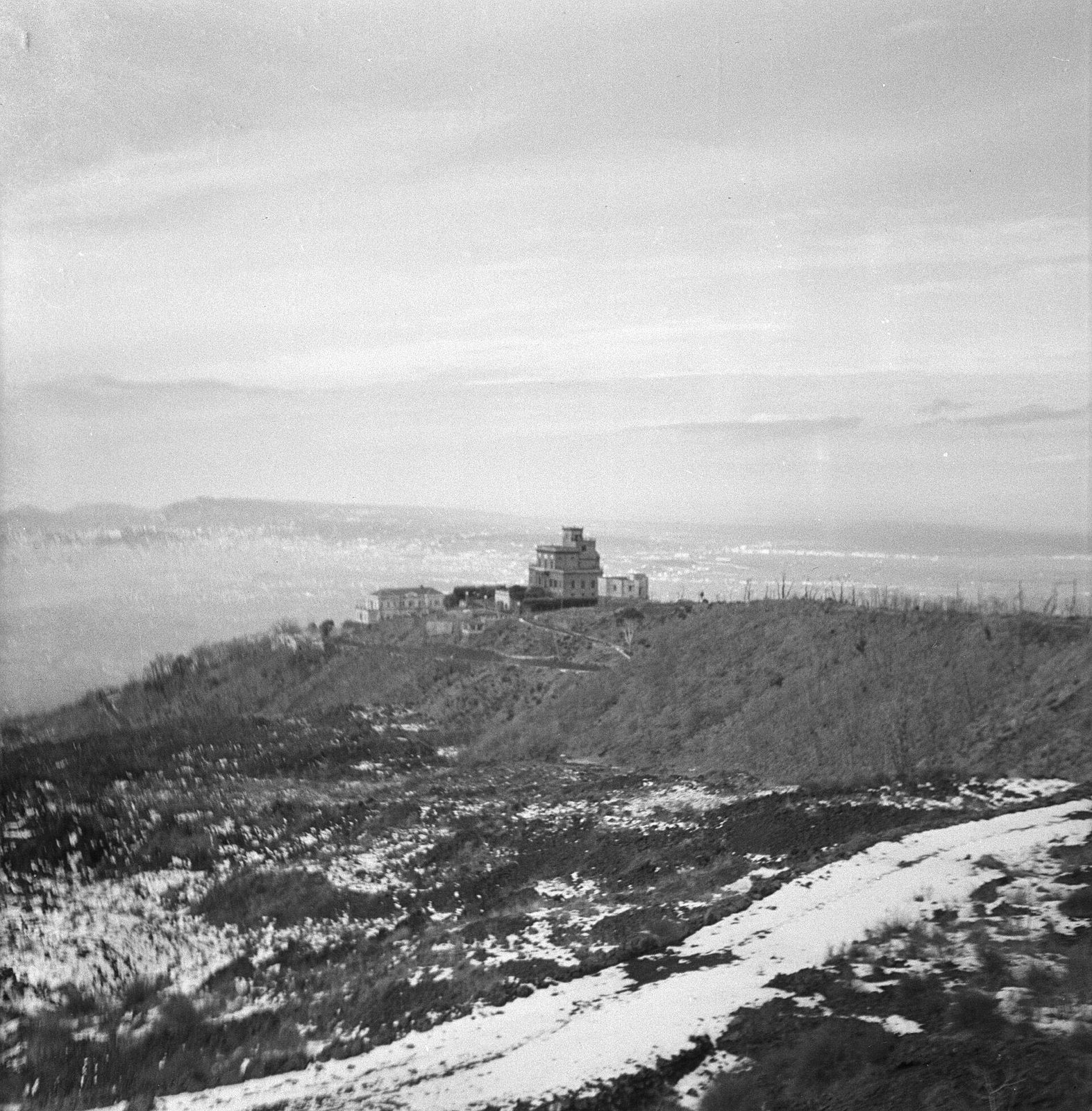
Italy’s Civil Protection Department sets a four-level alert system for the volcano, running green, yellow, orange and red. As of September 2026, Vesuvius is at green, the lowest level, meaning its activity is normal. In July 2026, INGV recorded 93 small earthquakes, the largest of magnitude 2.0, with no ground deformation linked to magma and a continuing long-term decline in hydrothermal activity in the crater.
The long-term risk is real, which is why Italy maintains a national emergency plan for Vesuvius, with a “red zone” of towns around the mountain that would be evacuated before an eruption. That’s a question of planning over decades, not of the safety of a morning’s visit.
What would the other alert levels mean for a visitor? Green is normal activity, the state Vesuvius has been in for decades. Yellow would mean monitoring had picked up changes worth watching more closely, with scientists and the Civil Protection Department on a heightened footing. Orange and red are the stages at which the emergency plan moves toward protecting and then evacuating the population around the mountain. Long before anything like that, the crater path would close to visitors. In practice, if Vesuvius is open to walkers, it’s because the people whose job is to watch it are satisfied it’s in its normal, quiet state. The Osservatorio Vesuviano publishes regular bulletins on its website if you’d like to read the monitoring data yourself.
Don’t confuse Vesuvius with the Campi Flegrei, the separate volcanic area west of Naples around Pozzuoli. The Campi Flegrei is currently on yellow alert because of an ongoing bradyseismic crisis, a slow rise of the ground with frequent small earthquakes, and has had significant disruption in 2026. Vesuvius, on the other side of the city, is at green.
The national park beyond the crater
The Gran Cono path is the park’s star attraction, but the Vesuvius National Park covers the whole of the mountain and Monte Somma, with a network of other marked trails through pine woods, old lava flows and the valley between the two cones. Some were damaged in the major wildfires that swept the mountain in 2017, and trail status changes, so check the park’s official site for which paths are open before you plan a longer walk.
The volcano’s slopes are also wine country. The fertile volcanic soil produces the Vesuvio DOC wines, the best known of which is Lacryma Christi del Vesuvio, “tears of Christ,” red, white and rosé. Several wineries on the lower slopes offer tastings and lunches. A tasting is a lovely way to finish a Vesuvius day, if someone else is driving.
Seeing Vesuvius without climbing it
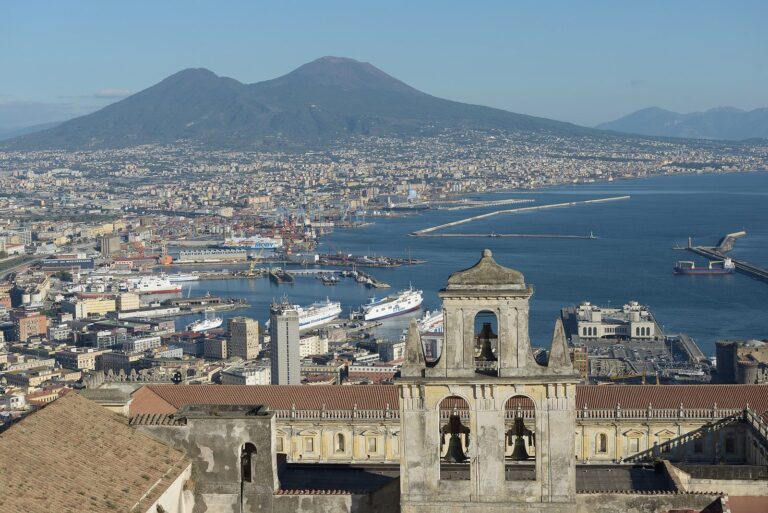
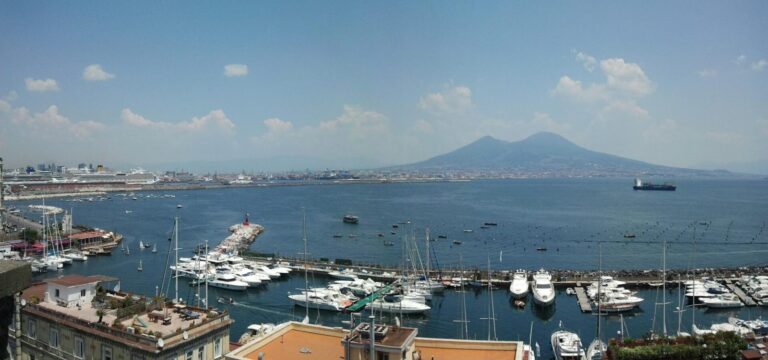
If the path is closed, the weather is wrong or the climb isn’t for you, you can still see Vesuvius at its best. In many ways the volcano is more beautiful from a distance than from its own rim, because from the bay you see its whole shape, the twin profile of Vesuvius and Monte Somma rising straight out of the plain.
- The Naples seafront. Walk Via Partenope and Via Caracciolo, or out to the Borgo Marinari below Castel dell’Ovo, for the classic view of the volcano across the water. It’s the view on half the postcards in Naples, and it’s best in the late afternoon.
- Castel Sant’Elmo and the Vomero. From the ramparts of the castle above the city, Vesuvius rises beyond the rooftops and the port, with the whole bay in front of you.
- Posillipo. From the hill west of the city, especially at sunrise, Vesuvius sits at the far end of the bay with Naples curving toward it.
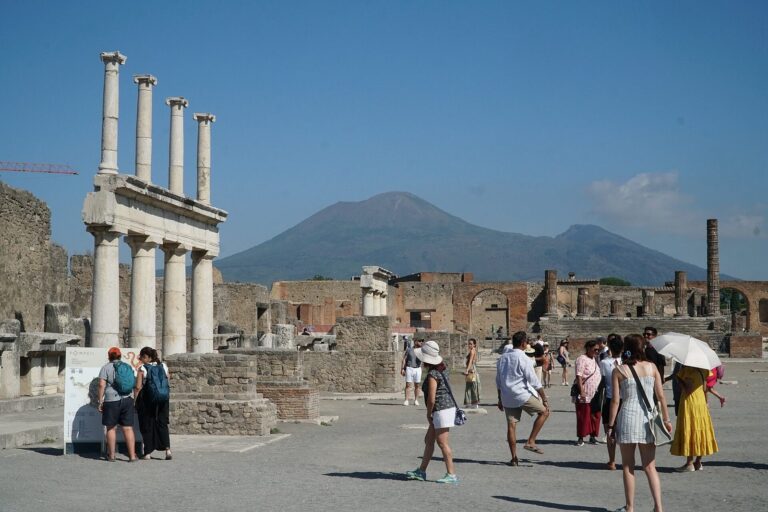
- The Forum at Pompeii. The volcano looms at the northern end of the ancient city’s main square, a reminder of what happened here. It’s one of the most powerful views in Italy.
- Capri and Sorrento. From the islands and the peninsula, Vesuvius dominates the horizon across the bay.
Staying in Naples with a view of the volcano is a treat in its own right. My guide to where to stay in Naples, Italy covers the seafront hotels that face it.
Vesuvius with children
Most children who are used to walking enjoy Vesuvius. The idea of standing on a real volcano is exciting, the walk is short, and the park guides at the top are good at explaining what happened. A few tips: go early, before the heat builds; bring snacks and water; make sure small children wear proper shoes, since the gravel is slippery; and bring a layer, because it’s windy at the top. The path isn’t suitable for strollers, so bring a carrier for very small children. And set expectations about the lava. Pairing the volcano with Herculaneum or Pompeii the same day helps children understand what the mountain did.
The mistakes that strand people on Vesuvius
Most bad Vesuvius days come down to logistics, not the volcano. These are the ones I’d guard against.
- Missing the last shuttle down. Private shuttles run to fixed return times, and the last one leaves earlier than you might expect, especially in winter. Confirm it with the driver before you start walking, and don’t linger at the top past it. The walk down the road is long, and there’s no taxi rank at the car park.
- Arriving after your time slot. Timed tickets are just that. If the train is late or the shuttle is slow to fill, you can miss your window. Build in a buffer, especially for an early slot.
- Buying from a reseller whose terms you haven’t read. If the path closes, refunds on the official channel are automatic for weather alerts. Resellers set their own rules.
- Taking the wrong Circumvesuviana train. Ercolano Scavi is a few stops out of Naples on the line toward Sorrento. Check the destination on the front of the train before you board, because several branches share the first stretch of track out of the city.
- Relying on your phone. Signal can be patchy on the mountain. Screenshot your ticket, and bring a charged phone for the last-minute ticket system if you’re relying on it.
- Arranging a taxi up but not back. If you arrive by taxi, agree the pickup time and price before you set off up the path, or you may find yourself stuck at the top.
- Not checking for closures on the morning. The path can close at short notice, so look at the park’s official channels before you leave your hotel.
What to skip
- Turning up without a ticket in high season. Most places are sold online in advance, and the last-minute allowance is small.
- Reseller tickets sold for more than the official price, unless they bundle transport you actually want.
- Booking Vesuvius for your last day in the area. If the wind closes the path, you won’t get another chance.
- Pompeii, Herculaneum and Vesuvius in one day. It’s too much. Split them.
- Going up on a hazy or cloudy day if you can move it. The crater is still impressive, but you’ll miss the view that makes it special.
- Sandals and flip-flops on the gravel path.
- Driving from central Naples unless you already have a car. The Circumvesuviana and the Ercolano shuttle are easier.
- Expecting lava. Go for the crater, the geology and the view.
Frequently asked questions about Mount Vesuvius
Do you need tickets to visit Mount Vesuvius?
Yes. The walk to the crater requires a timed ticket bought online in advance from the park’s official seller, vesuviopark.vivaticket.it. Tickets are released up to 30 days ahead in ten-minute slots. A small number of last-minute tickets are sold on the day at the site, but don’t rely on them in high season.
How much does it cost to visit Vesuvius?
The official ticket price is €10 (€8 reduced), which comes to €11.68 (€9.55 reduced) with the booking fee, as of September 2026. Transport to the car park is extra. The Vesuvio Express shuttle from Ercolano starts from €15 return, or from €31 including the entrance ticket.
How do you get to Mount Vesuvius from Naples?
Take the Circumvesuviana from Naples to Ercolano Scavi (about 20 minutes), then the Vesuvio Express shuttle up to the car park (about 20 minutes), and walk to the crater from there. Alternatively, drive to the car park, take a taxi or private driver, or join a tour from Naples that includes transport.
How long does it take to climb Vesuvius?
About 30 minutes from the car park up to the crater rim on a steep gravel path, then time to walk part of the rim. Allow an hour and a half to two hours in total from the car park and back, and four to five hours for the whole trip from central Naples.
Can you see lava at Vesuvius?
No. Vesuvius hasn’t erupted since 1944, and there’s no lava in the crater, just a huge bowl of rock and scree with a few small steam vents. The appeal is the scale of the crater and the view over the Bay of Naples.
Is it safe to visit Vesuvius?
Yes. Vesuvius is on green alert, the lowest of four levels, and it’s one of the most closely monitored volcanoes in the world. The path is closed whenever conditions are unsafe, most often because of wind or bad weather.
When did Vesuvius last erupt?
In March 1944, during the Second World War. It has been quiet since then. Its most famous eruption, in AD 79, buried Pompeii and Herculaneum.
Can you visit Pompeii and Vesuvius in one day?
Yes. It’s a popular combination, with Pompeii in the morning and Vesuvius in the afternoon, but it’s a long, tiring day. The easier pairing is Herculaneum and Vesuvius, because the shuttle and the ruins both start from Ercolano Scavi station.
What happens if Vesuvius is closed on the day of my visit?
The path closes for strong wind, heavy rain, snow and official weather alerts, sometimes on the morning itself. When it closes because of an official alert, tickets bought from the official seller are refunded automatically. Tour and reseller refunds depend on their own terms. Book early in your trip so you have time to try again.
Is Vesuvius open in winter?
Yes. The Gran Cono path is open every day of the year from 9:00, but last access is earlier in the shorter winter season, around mid-afternoon, and snow, heavy rain or strong wind close it more often. The Vesuvio Express shuttle also runs shorter hours in winter, so book an early slot.
Can you climb Vesuvius without a guide?
Yes. You don’t need a private guide or a tour. With a timed ticket you walk the path independently, and park volcanologist guides stationed along the rim give short explanations as part of your ticket. A tour adds transport and company, not access.
How high is Mount Vesuvius?
The cone stood at 1,281 meters (4,203 feet) in 2013, and its height changes after major eruptions. The walk starts from a car park at about 1,000 meters, so you only climb the last part of the mountain on foot.
Vesuvius pairs naturally with Herculaneum or Pompeii, but it’s only one of a dozen day trips within easy reach of the city. I rank them all, with the combinations that work and the ones that don’t, in my guide to the best day trips from Naples, Italy.
Because the shuttles start in Ercolano, the crater pairs naturally with the ruins of Herculaneum at the bottom of the hill. Do the volcano in the morning and the ancient town after lunch; here’s how to visit Herculaneum, with the 2026 hours and what’s closed.
If juggling the timed ticket, the shuttle and the weather sounds like too much, a combined Vesuvius and Pompeii tour is one of the few coach day trips from Naples I’d recommend. My guide to tours and tickets in Naples compares it with doing both sites yourself.
Vesuvius isn’t the only volcano around Naples. To the west, the Campi Flegrei is a vast caldera with no cone to climb, where the ground rises and falls and steam still rises from the fumaroles. It’s also full of Roman sites, from Pozzuoli’s amphitheater to sunken Baia. The Campi Flegrei guide explains how the two volcanoes differ and whether it’s safe to visit in 2026.
Photo credits
- The crater of Vesuvius (featured image): photo by Simona.cerrato, Wikimedia Commons, CC BY 3.0.
- Vesuvius from the Naples waterfront: photo by Justraveling.com, Wikimedia Commons, CC BY-SA 4.0.
- The crater walls: photo by Simona.cerrato, Wikimedia Commons, CC BY 3.0.
- Pompeii and Vesuvius from the air: photo by Carsten Steger, Wikimedia Commons, CC BY-SA 4.0.
- The March 1944 eruption: US Navy photograph, National Archives 80-G-54410, Wikimedia Commons, public domain.
- The historic Osservatorio Vesuviano: photo by Willem van de Poll, Wikimedia Commons, CC0.
Sources: ticket prices and booking rules from the Vesuvius National Park and its official seller on Vivaticket; path hours and closures from park information and 2026 visitor listings; Vesuvio Express times and prices from the operator’s 2026 listings; alert level and July 2026 activity from INGV’s Osservatorio Vesuviano and Italy’s Civil Protection Department. All checked September 10, 2026. Check the park’s official channels on the morning of your visit.