On this page
Last updated September 10, 2026. Opening days, booking rules and closures checked against the official sites of each museum and monument, the City of Naples and Italy’s Civil Protection Department. Anything I couldn’t confirm at the source is flagged in the text.
The right Naples, Italy itinerary depends on how many days you have: give the city itself three days, five if you also want Pompeii, Herculaneum or Vesuvius, and seven to add an island and the Amalfi Coast. One day works only as a sampler: the historic center, a pizza and the seafront.
Most people give Naples too little time. It gets treated as a transit stop, a night near the station before the ferry to Capri or the train to Sorrento, and then travelers wonder why they never “got” the city. Naples doesn’t reveal itself on a walk from the station to the port. It’s a dense, layered, loud, generous place with more major churches than most capitals, one of the best archaeological museums on earth, a Greek street grid you can still walk, and a food culture that repays every meal. It takes a couple of days just to adjust to its rhythm.
This page is the planning spine for the whole site. Below you’ll find a straight answer to how many days you need, the day-of-the-week closures that wreck more Naples itineraries than anything else, what to book before you fly, and day-by-day plans for one, two, three, five and seven days. I’ve been blunt about what I’d cut, because the fastest way to hate Naples is to try to see all of it at once.
If you want the full menu of sights before you plan, start with my guide to things to do in Naples, Italy. This page is about sequencing them.
How many days in Naples? Choosing your Naples, Italy itinerary
Here’s the short version. It assumes you want to see the city properly, not tick boxes, and that you’re willing to walk.
| Days | What actually fits | Who it suits | My verdict |
|---|---|---|---|
| 1 day | Spaccanapoli and Via dei Tribunali, the Sansevero Chapel, a pizza, Via Toledo to Piazza del Plebiscito and the seafront | Cruise passengers, travelers in transit to the islands | A sampler. Better than nothing, but you’ll leave knowing you missed the point. |
| 2 days | The historic center plus the National Archaeological Museum, then a hill day (Vomero or the Sanità) and the seafront | Weekenders, people adding Naples to a longer Italy trip | The minimum I’d recommend for the city alone. |
| 3 days | Everything above plus the underground sites, Capodimonte or the Sanità catacombs, and room to eat and wander | First-time visitors who want to understand the city | The right amount of time for Naples itself. This is the one I’d plan. |
| 4–5 days | Three city days plus Pompeii, Herculaneum or Vesuvius | Most travelers, especially anyone interested in Roman history | The sweet spot for the city plus the Vesuvian sites. |
| 7 days | City and ruins plus Capri or Procida, and two or three days on the Sorrento peninsula or the Amalfi Coast | A full week in the region | Best split across two bases: Naples, then Sorrento or the coast. |
If you’re torn between two lengths, take the longer one and plan less into each day. Naples punishes over-scheduling. Distances on the map look short, but the historic center is a maze of narrow streets full of scooters, people and distractions. Everything takes longer than you think, and the best moments are usually unplanned: a courtyard you wander into, a church you didn’t know about, a coffee that turns into an hour.
Before you plan: the rules that shape every Naples itinerary
Four practical realities decide what goes on which day. Get them right and everything else falls into place.
1. The closing days: don’t put your big museum day on a Tuesday
This is the mistake I see most. Several of Naples’ headline sights close on the same weekdays, so a badly chosen day can knock out half your plan. Here’s how it breaks down, checked against each site’s own information in September 2026:
| Day | Main sights closed | Plan instead |
|---|---|---|
| Monday | Gallerie d’Italia on Via Toledo | A good day for the Archaeological Museum, the Sansevero Chapel and Capodimonte |
| Tuesday | National Archaeological Museum (MANN), Sansevero Chapel, Castel Sant’Elmo | Pompeii or Herculaneum, the Sanità catacombs, Capodimonte, an island |
| Wednesday | Capodimonte, Catacombs of San Gennaro, Cimitero delle Fontanelle, Certosa di San Martino (one source says Tuesday) | MANN, Sansevero, Pompeii or Herculaneum |
| Thursday–Saturday | Nothing major | Your densest city days |
| Sunday | Castel Nuovo (also closed on holidays) | The seafront, Sunday lunch, the Galleria Borbonica (which runs Friday to Sunday) |
Two more calendar traps. On the first Sunday of every month, state museums and sites, including MANN, Capodimonte and Pompeii, are free, which makes them much busier. And if a holiday falls on a Tuesday, MANN shifts its closure to the Wednesday. If your trip is short, check each site’s calendar for your exact dates before you commit.
2. What to book before you fly
Most of Naples is walk-in, but a handful of places have compulsory booking, and they’re exactly the ones people most want to see.
- The Sansevero Chapel and the Veiled Christ. Timed booking is compulsory. Slots go on sale 60 days ahead, with a second small release two days before. In busy periods, book the moment your dates are fixed. The ticket office has temporarily moved to Via Raimondo di Sangro 12, around the corner from the chapel, but don’t count on walking in.
- Pompeii. Tickets are now timed, in your name and capped at 20,000 a day. The details are in my guide to visiting Pompeii from Naples.
- Mount Vesuvius. Tickets for the crater path are online only, released 30 days ahead in small timed slots. There’s no ticket office at the top worth relying on.
- The Catacombs of San Gennaro and the Cimitero delle Fontanelle (the ossuary in the Sanità, reopened in April 2026). Both require booking.
- The Galleria Borbonica. Tours of the Bourbon tunnel run only Friday to Sunday and on holidays, at fixed times, and must be booked.
Everything else, including the Duomo, Santa Chiara, the Archaeological Museum, Capodimonte, San Martino and Sant’Elmo, you can buy on the day.
3. Naples is vertical: use the funiculars
The historic center and the seafront are at sea level, but the Vomero district, with Castel Sant’Elmo and the Certosa di San Martino, sits on a hill some 250 meters above them. Four funiculars climb it: the Centrale from near Via Toledo, the Chiaia, the Montesanto and, farther west, the Mergellina. Metro Line 1 threads the center, and several of its stations (Toledo, Università, Dante, Museo) are part of the city’s “Art Stations” project. Toledo station in particular is worth seeing even if you don’t need a train. Build the funiculars into your plan rather than walking the stairways up. Save the stairs for coming down.
4. The Campi Flegrei situation
West of the city, the Campi Flegrei (Phlegraean Fields) volcanic area around Pozzuoli is in the middle of a long bradyseismic crisis: a slow, repeated rise and fall of the ground with frequent small earthquakes. As of September 2026, Italy’s Civil Protection Department keeps the area at yellow alert, the second of four levels. A magnitude 4.7 quake on July 31, 2026 was the largest of the crisis so far, and it led to the closure of Pozzuoli’s port and the diversion of Ischia and Procida ferries to Naples. The Solfatara crater has been closed to the public since 2017.
For a visitor based in central Naples, this doesn’t change the city itinerary. It does mean I wouldn’t build a Campi Flegrei day into a short trip right now without checking the latest official updates the week you travel. The Cumana railway to Pozzuoli is due to reopen on September 11, 2026 with a new Pozzuoli station, while Metro Line 2’s Campi Flegrei–Pozzuoli section remains suspended.
Naples in a day
One day in Naples is a sampler, and I’d plan it as one. You won’t see the museums properly, so don’t try. Instead, walk the historic center, see the single most astonishing sculpture in the city, eat the pizza it’s famous for, and finish on the seafront with Vesuvius across the bay. This plan works for cruise passengers docking at the Stazione Marittima, for travelers with a night in the city before an island, and for anyone who wants the essence of Naples in one long, happy walk.
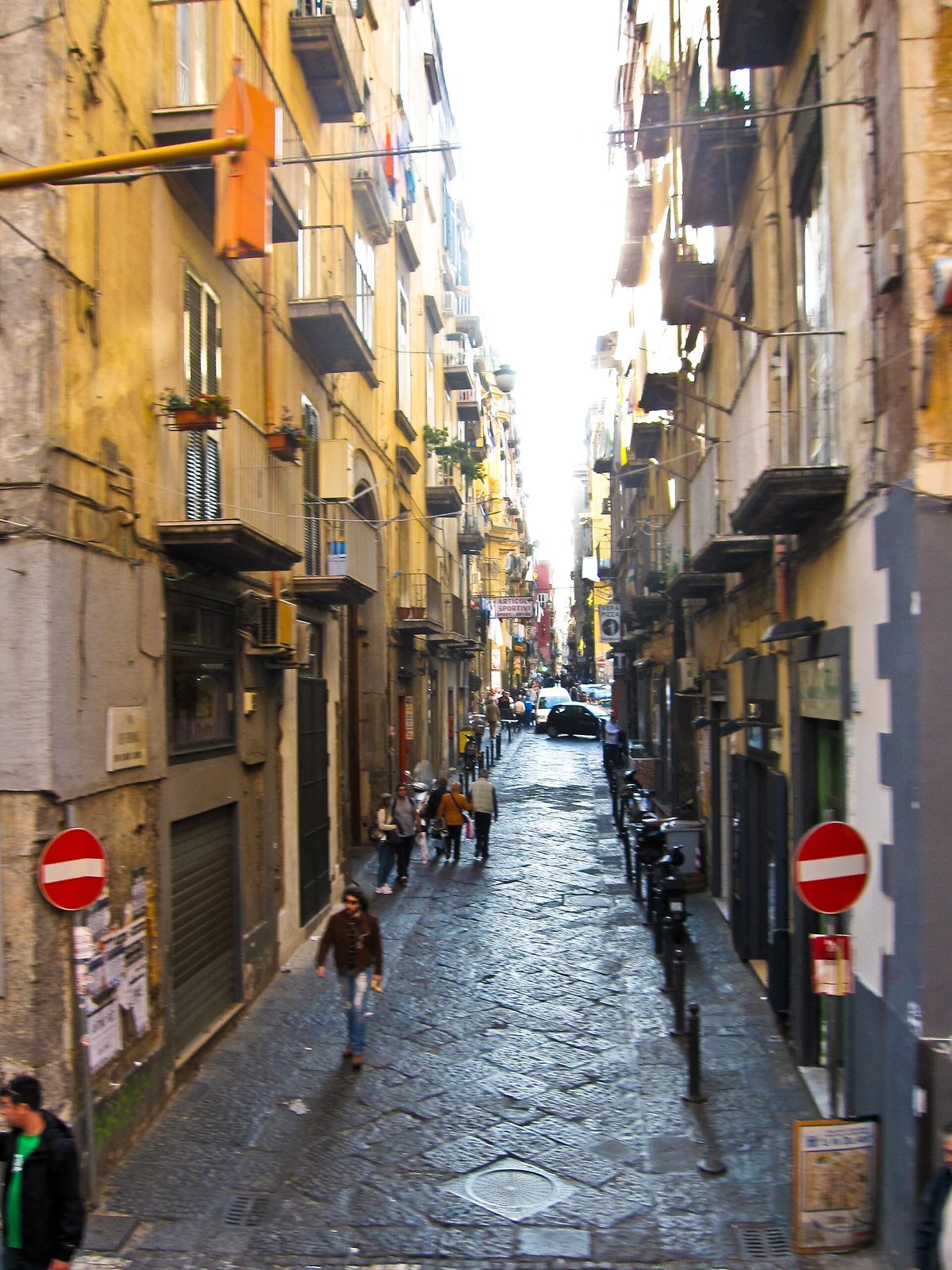
Morning: Spaccanapoli and the Sansevero Chapel. Start at Piazza del Gesù Nuovo, with its strange diamond-pointed church facade. Cross the street into the church and cloister of Santa Chiara, whose majolica-tiled cloister garden is one of the loveliest spaces in the city. Then walk east along Spaccanapoli, the long straight street that slices the old town in two, past Piazza San Domenico Maggiore to the Sansevero Chapel for your booked slot. The Veiled Christ, a marble figure under a shroud so fine it looks like fabric, is the one thing I’d tell a one-day visitor not to miss.
Late morning: San Gregorio Armeno and the Duomo. Turn north up Via San Gregorio Armeno, the street of nativity-scene workshops, which are busy all year and packed in the weeks before Christmas. Come out on Via dei Tribunali and walk to the Duomo, the cathedral of San Gennaro, the city’s patron saint. The cathedral is free. The Treasury of San Gennaro museum next door costs extra and is worth it if you have time.
Lunch: pizza on Via dei Tribunali. This is the historic pizza street. Expect queues at the famous names at peak lunch hours, and consider eating a little early or late. A classic Neapolitan margherita is cheap, fast and nothing like the pizza you know at home.
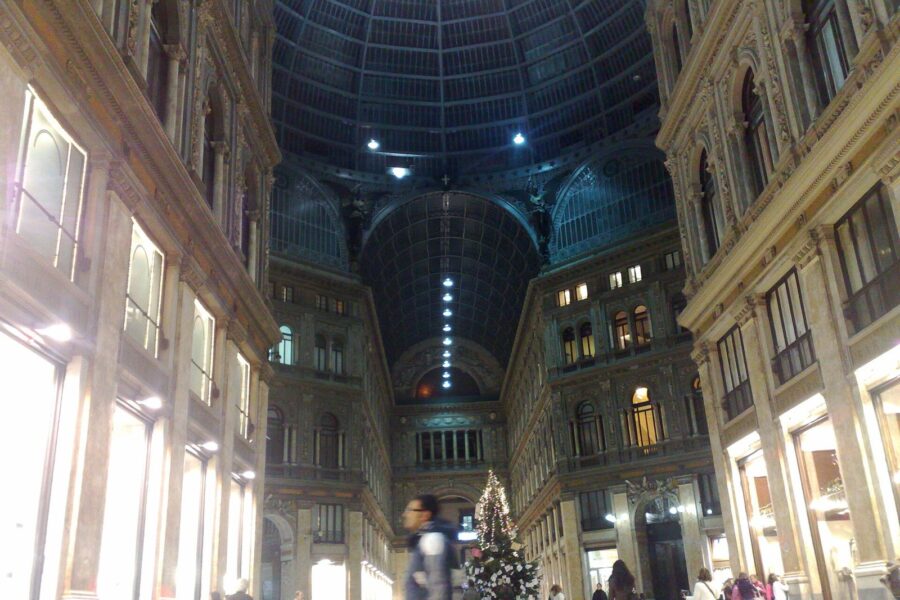
Afternoon: Via Toledo, the Galleria and Piazza del Plebiscito. Walk west to Via Toledo, the city’s main shopping street, and follow it south. Duck into the Galleria Umberto I, the glass-domed 19th-century arcade, then continue to Piazza del Plebiscito, the city’s grand ceremonial square, with the Royal Palace on one side and the colonnaded church of San Francesco di Paola on the other. Stop for coffee at Gambrinus, the historic café on the corner.
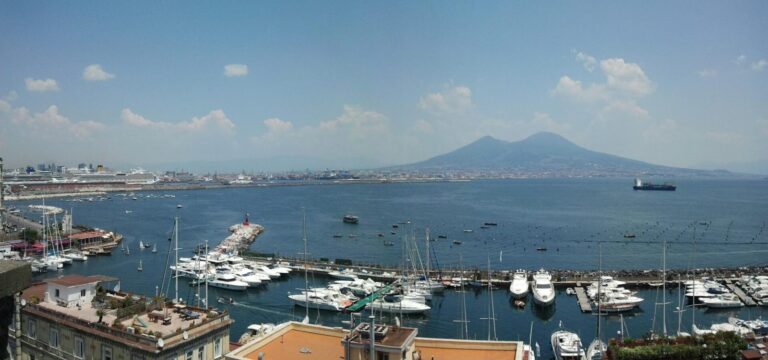
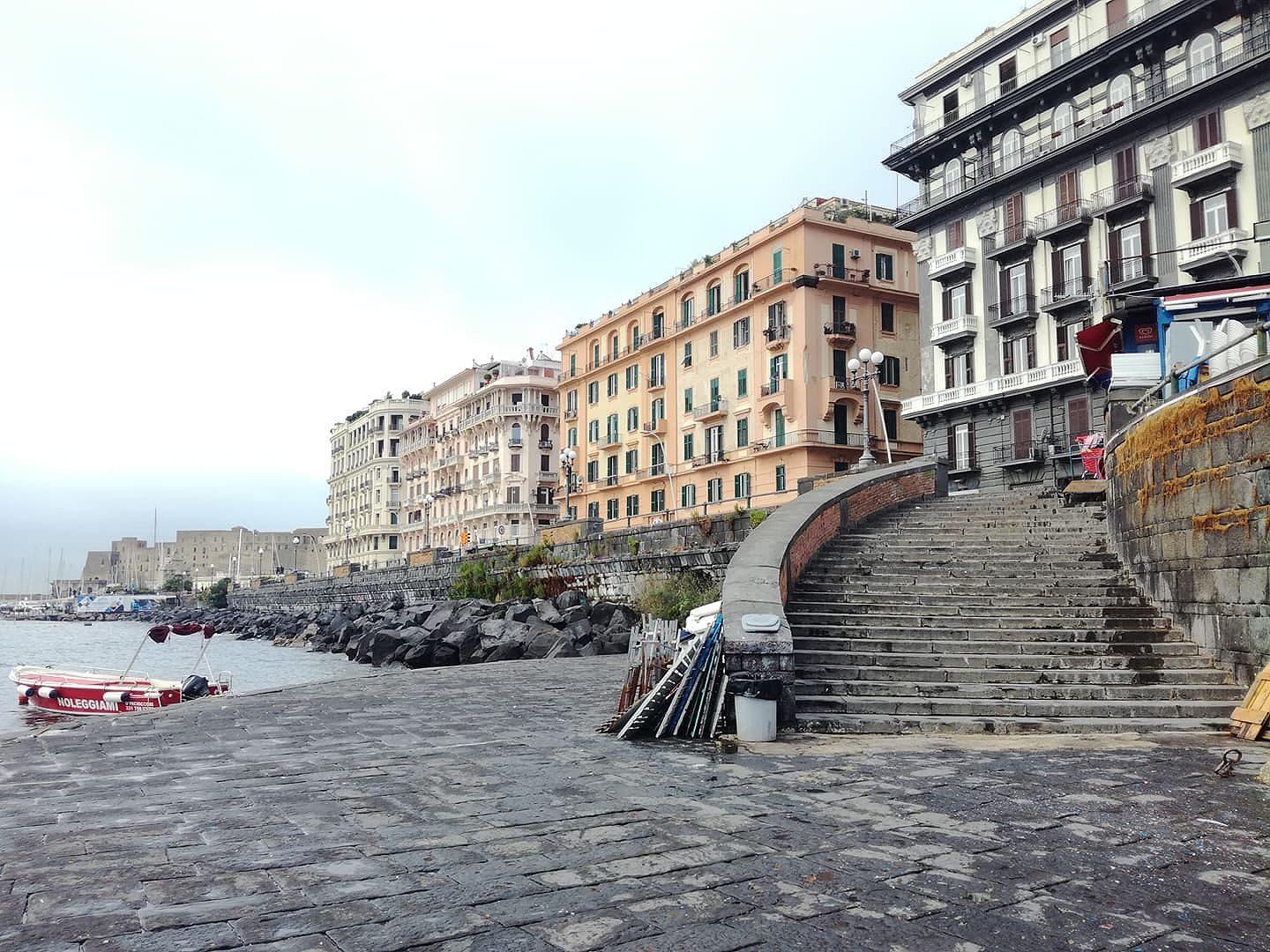
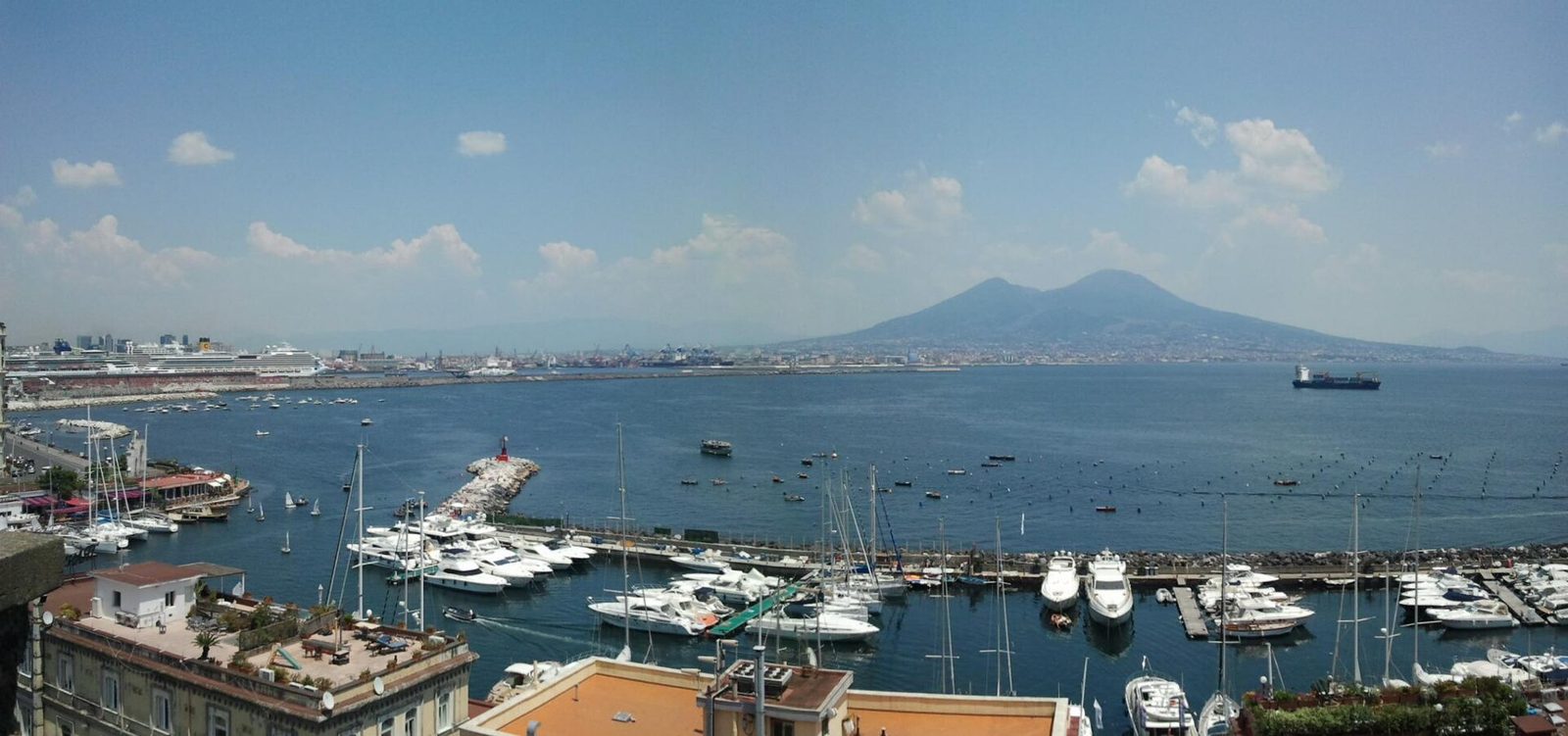
Late afternoon to sunset: the seafront. From the square, walk down to the seafront along Via Partenope and out to the Borgo Marinari, the little harbor of fishing boats and restaurants at the foot of Castel dell’Ovo. The castle itself has been closed to visitors since storm damage in January 2023. A reopening has been announced more than once, most recently for Easter 2026, but I couldn’t confirm it happened. The walk out and the view back to Vesuvius are the point anyway. Continue along Via Caracciolo toward Mergellina as the light goes.
If your ship or train leaves early, cut the seafront and finish at Piazza del Plebiscito. If you have an evening, stay for dinner in Chiaia or back in the historic center.
2 days in Naples
Two days is the minimum I’d suggest for the city on its own. It lets you give the historic center and the Archaeological Museum proper time on day one, and then climb out of the center on day two for the views, the neighborhoods and the seafront. Don’t put day one on a Tuesday. That’s MANN and the Sansevero Chapel both closed.
Day 1: the ancient city and the Archaeological Museum
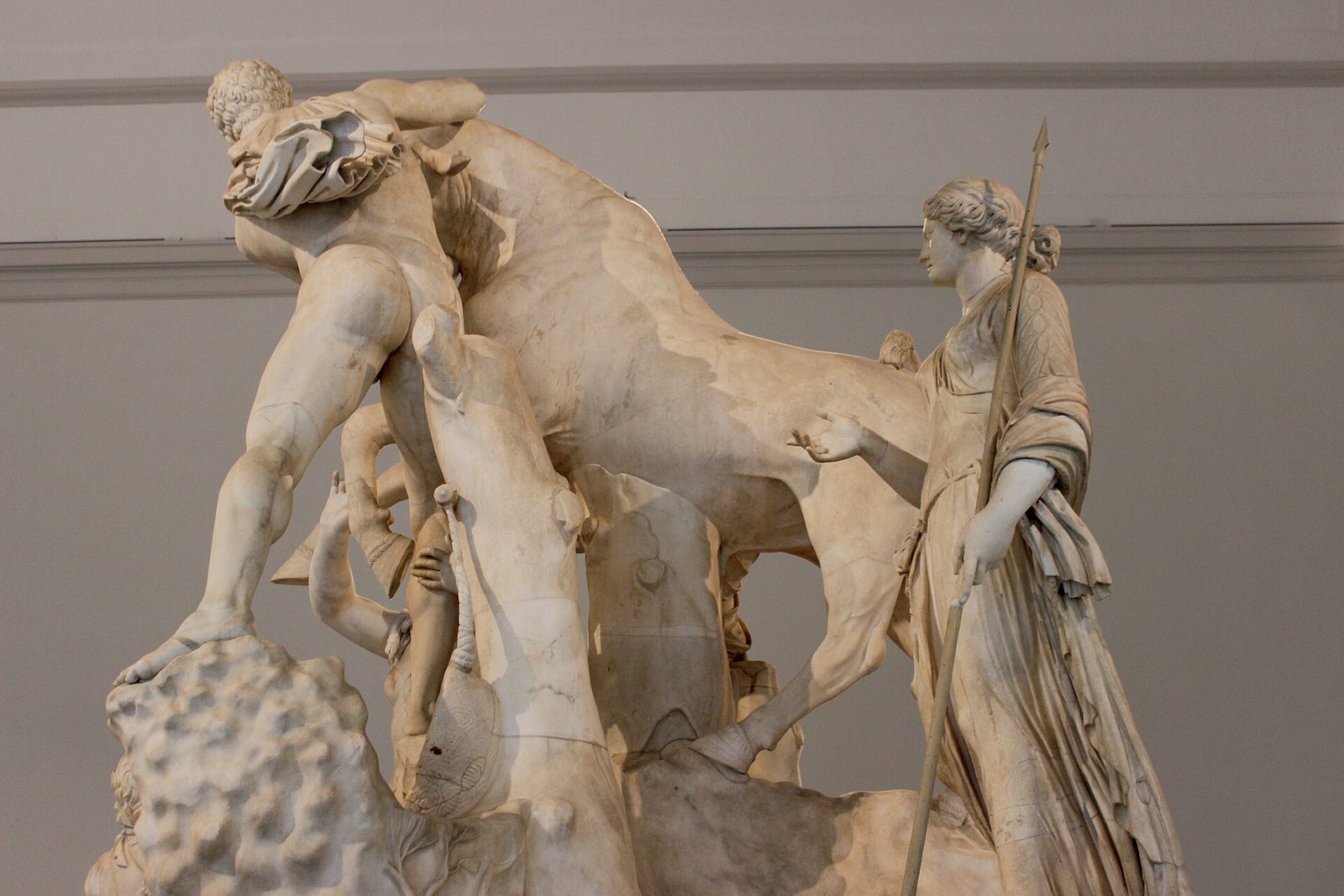
Morning: the National Archaeological Museum (MANN). Start early at MANN, the Museo Archeologico Nazionale, one of the most important classical collections anywhere. It holds the mosaics and frescoes lifted from Pompeii and Herculaneum, including the Alexander Mosaic from the House of the Faun, the Farnese marbles and the notorious Secret Cabinet of erotic art. Allow at least two and a half hours, and three if you’re going to Pompeii later, because it will make the ruins make sense.
Midday: down into the historic center. Walk south from the museum through Piazza Dante and Port’Alba into the historic center. Have lunch on or near Via dei Tribunali.
Afternoon: Spaccanapoli, the Sansevero Chapel and the Duomo. Follow the one-day route above in reverse: the Duomo, San Gregorio Armeno, the Sansevero Chapel at your booked time, then Santa Chiara and Gesù Nuovo. If you’re still standing, add Pio Monte della Misericordia, a small church near the Duomo that holds Caravaggio’s Seven Works of Mercy, one of the great paintings in the city, where it has hung since it was painted.
Evening: underground Naples, or a long dinner. The tuff rock beneath the historic center is riddled with Greek and Roman cisterns, tunnels and a buried Roman market. Guided tours of Napoli Sotterranea, or of the excavations under San Lorenzo Maggiore, fit neatly into a late afternoon. If you’re tired, skip it and eat.
Day 2: the hill, the royal center and the seafront
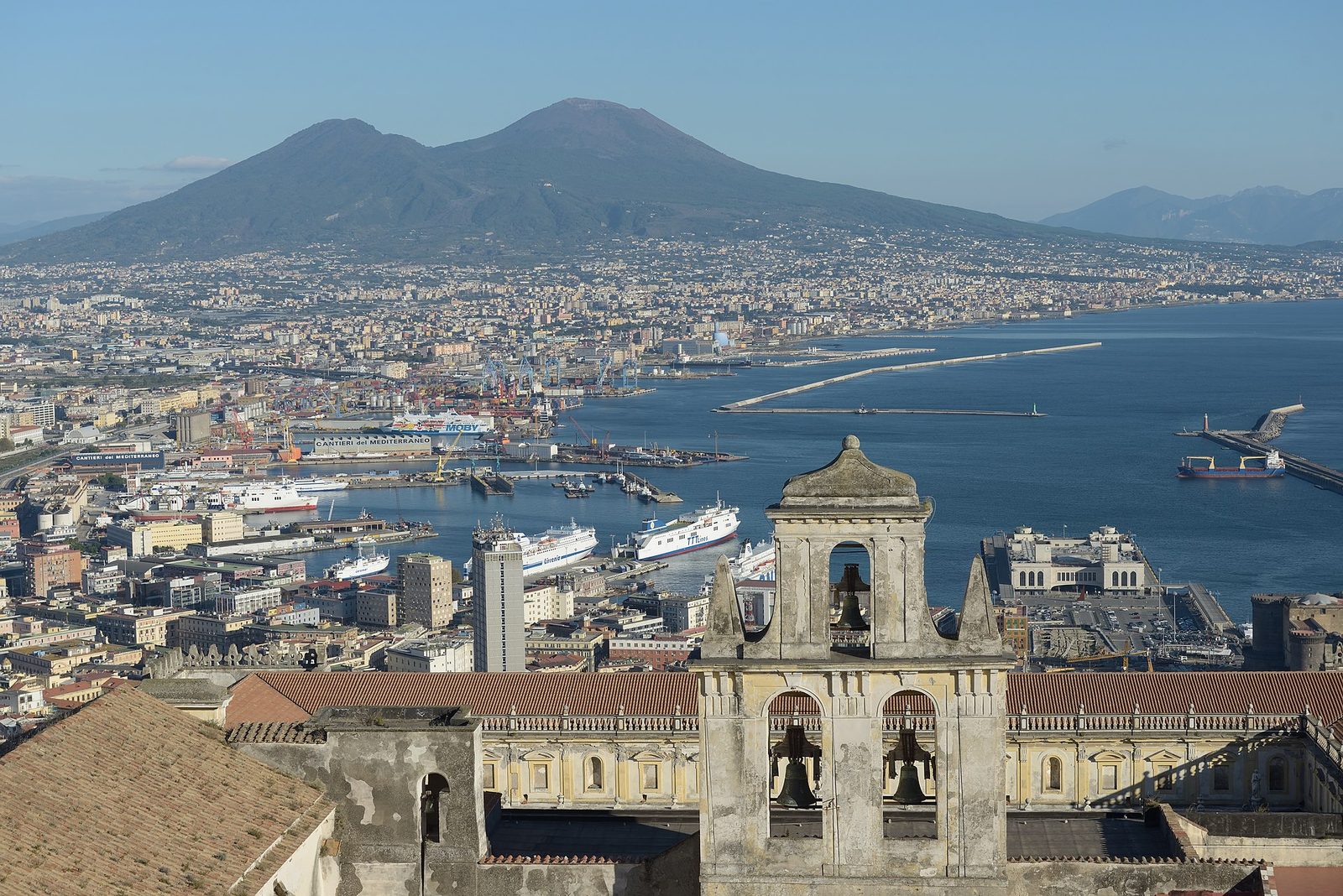
Morning: Vomero, Castel Sant’Elmo and the Certosa di San Martino. Ride a funicular up to the Vomero, walk to Castel Sant’Elmo, the star-shaped fortress on the summit, and see the whole city spread below you, with Vesuvius, the port, and on clear days Capri on the horizon. Entry has been via the moat and a lift since a rockfall closed the castle for a week in late August 2026, so check it’s open before you climb. Next door, the Certosa di San Martino, a former Carthusian monastery, has a great cloister, sumptuous chapels, a remarkable collection of nativity scenes and one of the best balcony views in Naples. Check its opening days. Sources currently disagree on whether it closes on Tuesday or Wednesday.
Midday: down to Via Toledo and lunch. Take the stairs down (the Pedamentina runs from San Martino toward Montesanto), or the funicular if your knees disagree, and have lunch near Via Toledo or in the Quartieri Spagnoli, the dense grid of alleys west of Toledo. It’s lively and full of laundry lines, street shrines and small restaurants.
Afternoon: Piazza del Plebiscito, the Royal Palace and the San Carlo. Visit the Royal Palace (Palazzo Reale), or take a guided tour of the Teatro di San Carlo, the oldest continuously active opera house in Europe (tours in English run twice a day). Walk through the Galleria Umberto I, then down to the Castel Nuovo, the five-towered castle by the port. It’s closed on Sundays and holidays.
Sunset: the seafront. Walk the seafront from Via Partenope out to the Borgo Marinari and along Via Caracciolo, and finish with dinner in Chiaia or down at Mergellina.
That’s two very full days. If you prefer a gentler pace, move the Royal Palace and the San Carlo to a third day, which is exactly what the three-day plan below does.
Naples 3 day itinerary: the one I’d plan
Three days is the right amount of time for the city of Naples. Use the two-day plan above for days one and two, but slow it down: move the Royal Palace and the Teatro di San Carlo off day two, take a long lunch, and leave the evenings free for the neighborhood you’re staying in. Then give day three to the part of Naples most short-stay visitors never reach: the Rione Sanità and the hill of Capodimonte. Just don’t make it a Wednesday, when the catacombs, the Fontanelle and the Capodimonte museum are all closed.
Day 3: the Sanità, the catacombs and Capodimonte
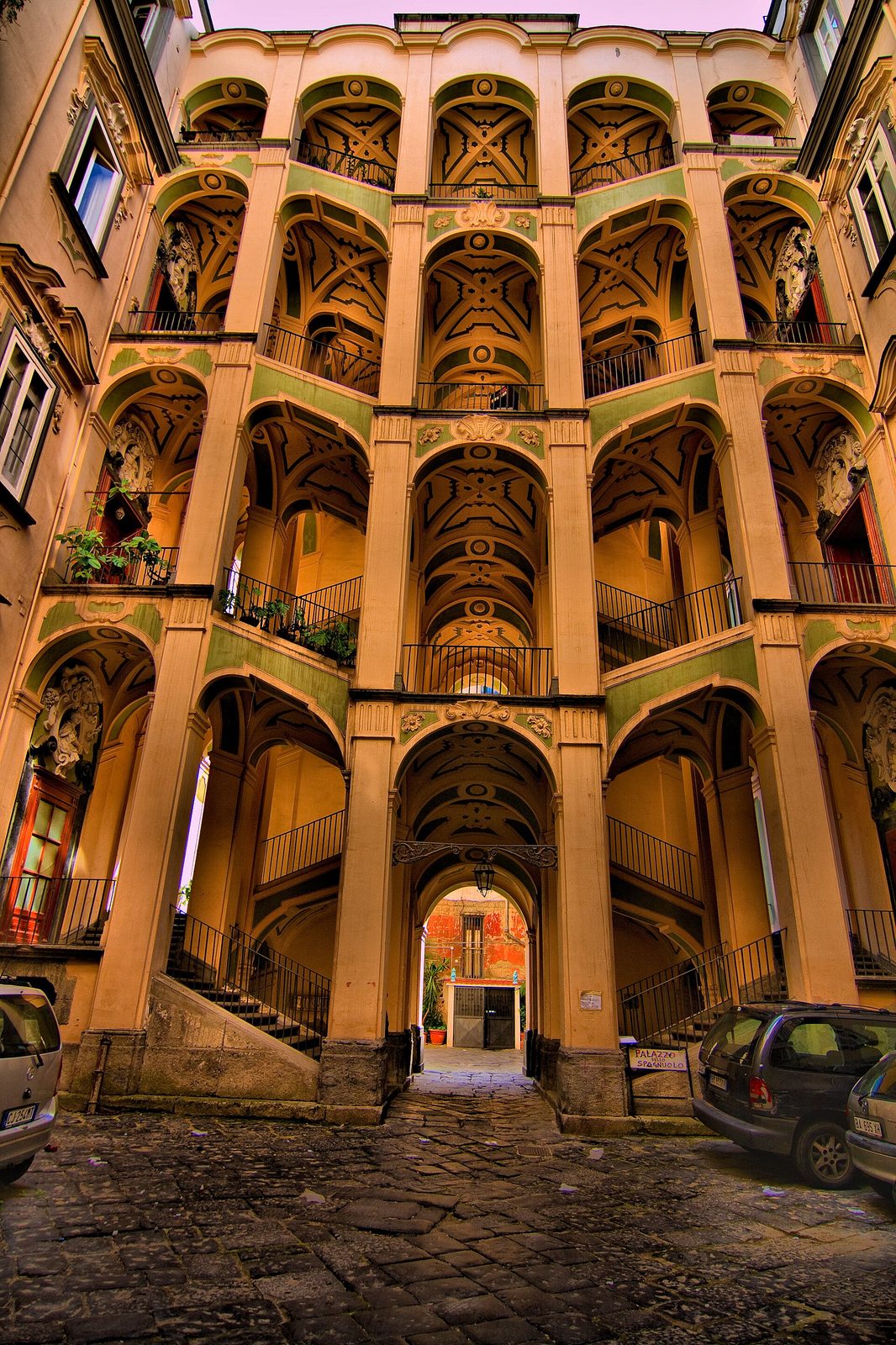
Morning: the Rione Sanità. The Sanità is the valley just north of the historic center, outside the old city walls, where for centuries Neapolitans buried their dead in the soft tuff rock. It had a rough reputation for decades and still looks gritty. It’s also one of the most characterful neighborhoods in the city, and a community-led revival has turned its underground heritage into some of the best-run sites in Naples. Start at the Basilica of Santa Maria della Sanità and the Catacombs of San Gaudioso beneath it, then walk to the Palazzo dello Spagnolo, whose open “hawk-wing” double staircase is one of the signature sights of Neapolitan Baroque. If you’ve booked, add the Cimitero delle Fontanelle, a vast cave ossuary lined with thousands of skulls, which reopened in April 2026 after years of closure.
Late morning: the Catacombs of San Gennaro. Walk up to the Catacombs of San Gennaro at the foot of the Capodimonte hill for your booked tour. These are the largest and most important catacombs in southern Italy: two levels of early Christian burial galleries and basilicas carved into the rock, with some of the oldest known images of San Gennaro. A combined ticket often covers San Gaudioso too, so check when you book.
Lunch: pizza in the Sanità. The neighborhood has its own serious pizza scene, and eating here rather than in the historic center feels a lot less like being part of a queue.
Afternoon: Capodimonte. Carry on uphill to the Museo di Capodimonte, the former Bourbon royal palace that now holds one of Italy’s great painting collections, with works by Titian, Raphael, Masaccio, Bellini, Parmigianino and Caravaggio’s Flagellation of Christ, among many others. It’s rarely crowded, which is part of its charm, and the park around it is a huge green escape from the city. Allow two to three hours for the museum and then walk the park.
Evening: the Royal Palace or the San Carlo, then Chiaia. Come back down into town. Taxis and buses make more sense than walking this far. If you moved the Royal Palace or the opera house off day two, see them now. Then have dinner in Chiaia, the elegant shopping district between Via Toledo and the seafront.
An alternative day 3: art, tunnels and Posillipo
If you’re not drawn to catacombs, or it’s a Wednesday, try this instead. Start at the Gallerie d’Italia on Via Toledo (closed Mondays), which holds Caravaggio’s Martyrdom of Saint Ursula, the last painting he’s known to have made. It’s free for under-26s and over-65s. From Friday to Sunday, add a booked tour of the Galleria Borbonica, the Bourbon-era tunnel under the Monte Echia hill that was later used as a wartime air-raid shelter. Then spend the afternoon on the Posillipo coast west of Mergellina: villas, gardens and small coves, ending at the little fishing hamlet of Marechiaro for a seafood dinner above the water.
4 and 5 days in Naples: adding Pompeii, Herculaneum and Vesuvius
With four or five days, you keep the three city days above and add the Vesuvian sites, the reason many people come to this part of Italy in the first place. The good news is that Naples is the best base for them. The Circumvesuviana railway runs from the city to both Pompeii and Herculaneum in well under an hour.
Day 4: Pompeii
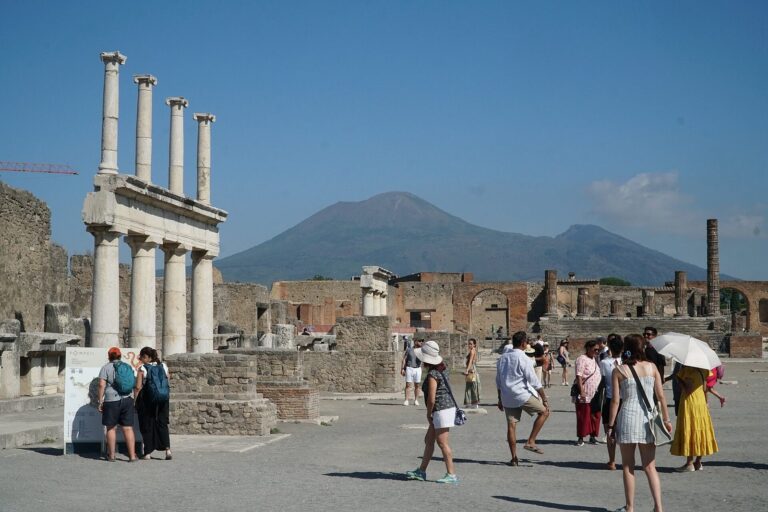
Give Pompeii a full day, or at least a full morning. It’s enormous, exposed and tiring, and it deserves more than the 90 minutes a coach tour allows. Take the train early, enter at opening time, and follow a route that takes in the House of the Vettii, the Villa of the Mysteries and the Garden of the Fugitives. Everything you need, from which ticket and which of the two stations called Pompei to use, to which gate to enter by, is in my complete guide to Pompeii from Naples. The one thing I’ll repeat here: visit MANN in Naples before Pompeii, not after. Seeing the mosaics and frescoes first turns the ruins from walls into rooms.
Pompeii doesn’t close on Tuesdays, so it’s the perfect way to rescue a Tuesday from the MANN and Sansevero closures. It’s also far better to avoid the free first Sunday of the month, when it’s at its most crowded.
Day 5: Herculaneum and Vesuvius, or an island
Herculaneum is smaller and far better preserved than Pompeii: whole houses with upper floors, wooden beams, furniture turned to charcoal, and a seafront where hundreds of skeletons were found in the boat sheds. It’s open every day of the week and takes two to three hours. Stop at Ercolano Scavi on the same Circumvesuviana line, closer to Naples than Pompeii.
From Herculaneum, you can go on up Mount Vesuvius in the afternoon. Shuttle buses run from Ercolano to the car park below the crater, and from there it’s a steep, dusty walk of about half an hour to the rim. The crater path needs a timed ticket bought online in advance (roughly €10–15 including booking fees, checked September 2026), and it closes at short notice when the wind is high. Have a backup plan for the afternoon in case it does.
I’d do Herculaneum and Vesuvius together, but not Pompeii and Herculaneum together. Two ancient cities in one day is too much. The second always gets short-changed, and by mid-afternoon you’re too hot and tired to care.
If ruins aren’t your thing, use day five for an island instead (see below), or for the Reggia di Caserta, the colossal Bourbon royal palace and gardens inland from Naples, under an hour by train from Napoli Centrale. It’s the Italian answer to Versailles, and much quieter.
One week in Naples: the city, an island and the coast
With seven days, you can see the city properly, visit the ruins, and add an island and the Amalfi Coast. My strong advice is to split the week between two bases: about four nights in Naples, then three on the Sorrento peninsula or the Amalfi Coast. Doing the whole week from Naples means spending a lot of time on buses and boats that you could spend on a terrace.
A sample week
- Day 1: The historic center and MANN (day one of the two-day plan).
- Day 2: Vomero, Sant’Elmo, San Martino, Via Toledo and the seafront.
- Day 3: The Sanità, the catacombs and Capodimonte.
- Day 4: Pompeii, then back to Naples, or on to Sorrento if you’re changing base that night.
- Day 5: Capri, by hydrofoil from Naples or Sorrento.
- Day 6: The Amalfi Coast: Positano, Amalfi and Ravello.
- Day 7: A slow day, or Herculaneum and Vesuvius on the way back toward Naples and the airport.
Pompeii works as a day to change base, because it’s on the Circumvesuviana line between Naples and Sorrento. The one catch is luggage: the site admits only small bags, so arrange storage or send bags ahead before you arrive at the gate.
Which island?
Capri is the famous one: dramatic cliffs, the Faraglioni rocks, the Blue Grotto (weather permitting), Anacapri and Monte Solaro. It’s beautiful and it’s busy, especially from late morning when the day-trippers arrive. Go early and head up to Anacapri to escape the crowds in the Piazzetta. Procida is small, colorful and gentle, the island I’d recommend to anyone who’d rather wander a fishing village than join the crowds. Ischia, bigger and famous for its thermal spas, rewards a night or two more than a day trip. Since the July 2026 earthquake closed the port at Pozzuoli, Ischia and Procida ferries have been diverted to Naples, which actually makes both easier to reach from the city for now. Hydrofoils for all three leave from Molo Beverello in the center.
The Amalfi Coast from Naples
Here’s the honest version: the Amalfi Coast is a long day trip from Naples. Whether you go by train and bus via Sorrento, or by seasonal ferry, you’ll spend a big share of the day in transit and in lines for the coastal bus. It’s doable, but you’ll enjoy it far more with two or three nights based in Sorrento, Positano or Amalfi. If you only have a week and must choose, I’d rather give the coast two full days from a local base than cram it into one from Naples.
Tweaks for different travelers
First-time visitors
Follow the three-day plan and resist the urge to add more. Stay in or near the historic center or in Chiaia so you can walk to most things, and plan one sit-down meal a day that isn’t pizza. The fried food, the seafood, the pasta with potatoes and provola cheese and the ragù are just as much a part of Naples.
Families with kids
Children tend to love Naples’ underground sites, the funiculars, Castel Nuovo, the seafront and Pompeii (with a good guide and plenty of shade breaks). Under-18s get into state museums and sites free. Napoli Sotterranea isn’t suitable for children under 10, and some tunnel passages are narrow, so check age limits for every underground tour before you book. Build in pizza, gelato and the playground at the Villa Comunale, the seafront park, and keep days shorter than you would on your own.
Food lovers
Add a food-focused walk through the historic center and the Pignasecca market near Montesanto, compare two or three of the famous pizzerias, and take a pastry tour of sfogliatelle (shell-shaped ricotta pastries) and babà (rum-soaked yeast cakes). Save room for a coffee standing at the bar, the Neapolitan way. And don’t leave without eating a pizza fritta (fried pizza) from a street counter.
Art and archaeology fans
Push MANN to a full morning, add the Gallerie d’Italia and Pio Monte della Misericordia for Caravaggio, and give Capodimonte an afternoon. Then choose the three-day pass at Pompeii, which adds Oplontis, Stabiae and Boscoreale, and spend a second archaeology day on the quieter sites. Seven days in Naples could be entirely archaeology and you wouldn’t run out.
Cruise passengers
Ships dock at the Stazione Marittima, right in the center next to Molo Beverello. You can walk to Piazza del Plebiscito in 10 minutes, and the one-day plan above works from the ship. If your ship offers Pompeii, check how much time you actually get at the site. Many shore excursions are rushed, and going independently by train can give you more time for less money if you’re confident about getting back.
If you hate crowds
Skip Via dei Tribunali at lunchtime and the famous pizzerias at peak hours. Visit Pompeii in its afternoon window rather than the morning rush, and choose Procida over Capri. Put the Sanità, Capodimonte and the Certosa di San Martino high on the list. They’re three of the best experiences in Naples and rarely crowded.
How to pace a day in Naples
Naples runs on its own clock, and an itinerary that ignores it will be fighting the city all day. A few rhythms are worth building in from the start.
- Start early where there are lines. MANN, the Sansevero Chapel and the famous pizzerias are all calmer first thing. Tour groups tend to arrive mid-morning, and by 11:00 the historic center is at its most congested.
- Expect some churches to close in the early afternoon. Many of the smaller churches in the historic center shut for a few hours after lunch and reopen later in the afternoon, while the big museums stay open straight through. Put churches in the morning and museums in the afternoon, not the other way round.
- Lunch is the main meal, and dinner is late. Neapolitans rarely sit down to dinner before 8:30 or 9:00 in the evening, and many restaurants don’t really fill up until then. Arrive at 7:00 and you’ll have the dining room to yourself, which isn’t always the recommendation it sounds like. Pizzerias are the exception and serve through the day and evening.
- Save the seafront for the evening. The passeggiata, the evening stroll along Via Caracciolo and through Chiaia, is when the city comes out, and the light over the bay is at its best.
- Sundays are different. Sunday lunch is a long family occasion, the center is quieter in the morning, and the seafront fills up in the afternoon. It’s a lovely day for a slow walk and a long meal, and less good for anything that depends on shops being open.
- Leave a gap every afternoon. An hour with nothing in it (a coffee, a rest at the hotel, an aimless wander) is what keeps day three from feeling like a forced march. Naples is tiring in the best way, and you’ll enjoy the evenings more if you pace the afternoons.
Rainy days and plan B
Naples gets real rain, sometimes torrential, and the bay can turn rough enough to cancel hydrofoils. A good itinerary has its swaps ready before anything goes wrong.
- Rain in the city. Move MANN, Capodimonte, the underground sites (Napoli Sotterranea, the excavations under San Lorenzo Maggiore, the catacombs), the Royal Palace and a Teatro di San Carlo tour to the wet day. The Galleria Umberto I and the Metro Line 1 art stations make good covered stops in between.
- Rough sea on island day. Keep your island day movable. If hydrofoils are canceled or the forecast looks bad, swap it with a ruins day, since Pompeii and Herculaneum are reached by rail and don’t depend on the sea, and try the island later in the week. That’s the main reason I’d never put Capri on the last full day of a trip.
- Wind on Vesuvius day. The crater path closes when the wind is high, even on clear, sunny days. Have Herculaneum or Oplontis ready as your fallback. Both are on the same railway line, so the day isn’t wasted.
- A transport strike. Italian transport strikes are announced in advance, so check the news a few days before your Pompeii or island day. If one hits the Circumvesuviana, the Trenitalia regional train to the modern town of Pompei may still be running, or you can swap with a city day and walk everywhere.
- Serious heat. On the hottest days, turn the day inside out: outdoor sights early and late, museums and churches in the middle of the day, and a long lunch somewhere shaded. Pompeii in full midday sun is nobody’s best memory.
Arrival and departure days
Don’t schedule anything you’ve booked for your arrival day. Flights run late, and there’s still no rail or metro link from Naples Capodichino airport to the city. You’ll arrive by the Alibus airport shuttle or by taxi, and traffic can be heavy. The best arrival-afternoon plan is a gentle walk: the seafront, Piazza del Plebiscito, a coffee at Gambrinus, pizza for dinner.
On departure day, leave luggage at the hotel or at a luggage-storage service and fit in one last thing near your base, such as a museum you missed or a final lunch. Allow plenty of time to get to the airport or the station, because traffic in Naples is never predictable. If you’re flying out, the Alibus runs from near the port and Piazza Garibaldi.
What to skip
Every itinerary is also a list of what you’re not doing. Here’s where I’d cut.
- Trying to see Naples in one day on the way to somewhere else. If you only have one night, stay in the historic center and just walk. Don’t try to fit in museums as well.
- Pompeii and Herculaneum on the same day. Choose one per day. Your feet and your brain will thank you.
- Doing the Amalfi Coast as a day trip from Naples if you can avoid it. Base yourself on the coast for two nights instead.
- Coach tours that bundle Pompeii, Sorrento and Positano into a single day. Too much time on the bus, not enough at any of the sights.
- A big museum day on a Tuesday. MANN, the Sansevero Chapel and Castel Sant’Elmo are all closed.
- Planning around going inside Castel dell’Ovo. It has been closed since 2023, with reopening dates announced and missed more than once. Walk out to the Borgo Marinari and enjoy the view either way.
- A Campi Flegrei day on a short trip right now. With the area on yellow alert, the Solfatara closed and transport disrupted, it’s a day for your second visit, and even then only after checking the latest official advice.
- Queuing an hour for one specific famous pizzeria. The standard of pizza in Naples is so high that the place next door is almost always excellent too.
Frequently asked questions about planning a Naples itinerary
How many days do you need in Naples, Italy?
Three days is right for the city itself: the historic center and the Archaeological Museum, the hill with Sant’Elmo and San Martino, and the Sanità and Capodimonte. Add two days for Pompeii, Herculaneum and Vesuvius, and another two or three for an island and the Amalfi Coast, ideally from a second base.
Is 2 days in Naples enough?
Two days is enough to see the essentials: the historic center, the Sansevero Chapel, the Archaeological Museum, the Vomero hill and the seafront. It’s the minimum I’d suggest for the city alone. It doesn’t leave time for Pompeii, the Sanità or Capodimonte, so if any of those matter to you, stay a third day.
Can you see Naples in one day?
You can see a slice of it. Walk Spaccanapoli and Via dei Tribunali, see the Veiled Christ in the Sansevero Chapel (book ahead), eat pizza, then follow Via Toledo to Piazza del Plebiscito and the seafront. It’s a great day, but treat it as a sampler rather than a visit.
Is it better to stay in Naples or Sorrento?
For the city, Pompeii and Herculaneum, Naples is the better base: more to do, more places to eat and more transport links. For the Amalfi Coast and Capri, Sorrento is more convenient and calmer. On a week-long trip, I’d split your nights between the two.
Should I visit Pompeii or Herculaneum?
If you can only do one, most first-timers should choose Pompeii for its scale and fame. Herculaneum is smaller, better preserved, less crowded and easier to see in a morning, and some people prefer it. With five days in the region you can do both, on separate days.
What day are museums closed in Naples?
Tuesday and Wednesday are the problem days. MANN, the Sansevero Chapel and Castel Sant’Elmo close on Tuesdays. Capodimonte, the Catacombs of San Gennaro and the Fontanelle close on Wednesdays, and so, according to most sources, does the Certosa di San Martino. Castel Nuovo closes on Sundays and the Gallerie d’Italia on Mondays. Check each site before you go.
Can you do Capri as a day trip from Naples?
Yes. Hydrofoils leave from Molo Beverello in the city center and take under an hour, so Capri is an easy day trip from Naples. Go early to beat the crowds, head up to Anacapri, and don’t count on the Blue Grotto, which closes whenever the sea is rough.
Is Naples safe for tourists?
Yes, with the ordinary precautions you’d take in any big city. Petty theft is the main risk, especially on crowded trains and buses and around the main station, so keep valuables out of sight and your phone out of your back pocket. The bigger everyday hazard is traffic: scooters go everywhere, so look both ways, even on streets that look pedestrian.
Should the Campi Flegrei earthquakes stop me visiting Naples?
For a visit to central Naples, no. The bradyseismic activity is centered on the Pozzuoli area west of the city, which Italy’s Civil Protection Department keeps at yellow alert, the second of four levels. It does mean checking official updates before any trip into the Campi Flegrei itself, and being aware that some transport to that area is disrupted.
Where you sleep changes all of this. A base in the historic center or on the Toledo side puts days one to three on foot, while a hotel up in the Vomero or out in Posillipo adds a funicular or a bus to every morning. My guide to where to stay in Naples matches each neighborhood to the kind of trip you’re planning.
If you do decide to see the coast from Naples, choose your route before you choose your towns. A direct ferry to Positano, the train to Sorrento plus a SITA bus, and the Salerno approach for Amalfi and Ravello make for very different days. My Amalfi Coast from Naples guide compares every option.
When you go changes what fits into each day. Ferries to the Amalfi Coast only run for part of the year, Pompeii’s closing time drops by two hours in mid-October, and the city is at its liveliest during Maggio dei Monumenti and the Christmas nativity season. My guide to the best time to visit Naples, Italy goes through it month by month.
Days one and two of these plans run through the historic center, and they’re easier to follow once you know how it’s laid out: three parallel ancient streets crossed by narrow lanes. My guide to Naples’ old town and its decumani walks you through each one.
Choosing which day trips to add to the city days is the hardest part of planning a longer stay. My ranking of the best day trips from Naples compares travel time, cost and effort for each one, and shows which pairs fit in a single day.
Every one of these plans includes at least one pizza stop, and choosing where is half the fun. My Naples pizza guide ranks the classics and the new wave, and explains how to order like a local.
Photo credits
- Naples from Castel Sant’Elmo with the Certosa di San Martino, the port and Vesuvius: photo by Wolfgang Moroder, Wikimedia Commons, CC BY-SA 3.0.
- Via dei Tribunali, Naples: photo by Armando Mancini, Wikimedia Commons, CC BY-SA 2.0.
- Steps to the sea on Via Caracciolo: photo by Baku, Wikimedia Commons, CC BY-SA 4.0.
- Farnese Bull at MANN: photo by Miguel Hermoso Cuesta, Wikimedia Commons, CC BY-SA 4.0.
- Palazzo dello Spagnolo: photo by alterdimaggio1957, Wikimedia Commons, CC BY-SA 2.0.
- Borgo Marinari harbor: photo by Poiesia, Wikimedia Commons, CC BY-SA 4.0.
Sources: opening days and booking rules from the official sites of MANN, the Sansevero Chapel, Capodimonte, the Catacombs of San Gennaro, Castel Sant’Elmo, the Certosa di San Martino, the Gallerie d’Italia and the Galleria Borbonica; Castel dell’Ovo status from the City of Naples; Campi Flegrei alert level from Italy’s Civil Protection Department and INGV Osservatorio Vesuviano; Pompeii from pompeiisites.org; Vesuvius from the Vesuvius National Park. All checked September 10, 2026. Closures change: confirm before you travel.